Cimarosa: Il Matrimonio Segreto
Popup Opera
London Museum of Water and Steam. 25 May 2017
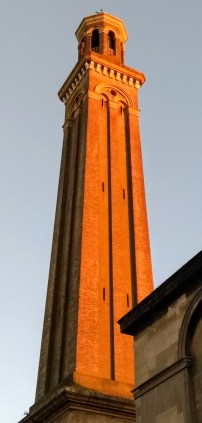 In a rather stark contrast to the glitz and glamour of the opening night of Glyndebourne Festival Opera (reviewed here), a few days later saw me in the industrial surroundings of the London Museum of Water and Steam, near Kew Bridge. The event was one of the touring one-night performances by Popup Opera of Cimarosa’s Il Matrimonio Segreto (The Secret Marriage), one of the most popular comic operas from the 18th century. It was first performed in at the Imperial Theatre in Vienna, and is famed for having the longest encore known, when Emperor Leopold II demanded that the whole thing be repeated from the start, feeding the musicians before their return. In contrast to the elaborate Posh Frocks & Picnics atmosphere of the other place, pre-event dining at this venue seemed to be restricted to eating something unrecognisable out of a cardboard box. The setting was a cleared floor area in the Steam Hall of what, since its construction in 1838, was once a pumping station supplying parts of London with water. Continue reading
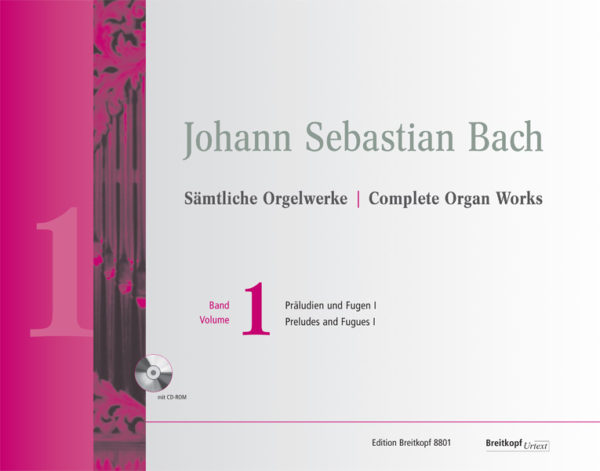 Further to my reviews of Volumes 3 and 8 of the Breitkopf & Härtel complete Bach organ works (see
 the sons of his brother Egitto, King of Egypt. As it happened, Danao had 50 daughters, so married them all off to his nephews with the instruction that they must all murder their husbands on their wedding night. With one exception, Danao’s plan worked, the exception being his daughter Hipermestra and her new husband Linceo, who had fallen for each other. The subsequent plot of Cavalli’s 1658 opera is based on the complex series of events that occurred after the 50 potential murderous nephews were now reduced to a more manageable one.
  After reforming, renaming, and regrowing itself from the long-running Lufthansa Festival, the London Festival of Baroque Music has become, phoenix-like, one of the most important early music festivals in London. Under the banner of ‘Baroque at the Edge: pushing the boundaries‘, this year’s LFBM used the music of Monteverdi and Telemann, from either end of the Baroque (and both with anniversaries this year) to explore ‘some of the chronological, geographical and stylistic peripheries of Baroque Music’. With one exception, all the concerts were held in the Baroque splendour of St John’s, Smith Square.
  One of the key events of the London Festival of Baroque Music was final concert of the current incarnation of the European Union Baroque Orchestra, and orchestra I have been reviewing enthusiastically for many years. After extensive annual training auditions attracting around 100 applicants, aided by leading period performers, around 30 instrumentalists are selected each year to tour a series of concerts around Europe. But this concert was also, very sadly, the very last EUBO concert in its present state as a UK-managed organisation. Founded 32 years ago as a UK initiative (during the 1985 European Music Year), and managed ever since from its base near Oxford, the vote by a small percentage of the UK population to drag the UK out of the European Union means that it is no longer viable to run an EU venture from the UK. In its 32 years, EUBO has encouraged and nurtured around 1000 young musicians, giving some of the finest period instrumentalists around an early grounding in performance practice at the start of their careers. For the future, after a hiatus of a year to allow for the transfer, when there will be no auditions or orchestra , EUBO will restart from a new base, and with new management, based in the music centre AMUZ in Antwerp.
 The Masque was a form of aristocratic entertainment with medieval roots that reached its English peak in the early 17th century during the reigns of James I and Charles I. Closely related to similar continental forms such as the Italian Intermedio, it included music, dance, acting, mime and singing, often to elaborate sets. They were usually based on Classical mythology combined with more than a hint of current political or royal intrigues. As well as professional performers, the promoters or subjects of the masque were often also involved in the production. For many years, Elizabeth Kenny and her group Theatre of the Ayre have studied the genre, and this is their latest manifestation of that research.
 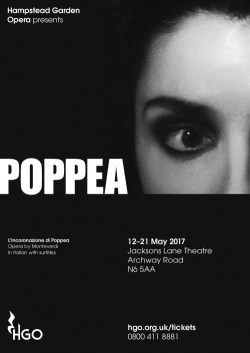 The 450th anniversary of Monteverdi’s birth will include many performances of L’incoronazione di Poppea. It was his last known opera, first performed just months before his death. But I think this one, by the young singers and instrumentalists of Hampstead Garden Opera and Musica Poetica, will prove to be one of the most memorable for me. An impressively simple staging, excellent singing and acting, and an exceptionally well judged realisation of the instrumental accompaniments, combined with the friendly acoustic of the Jacksons Lane Theatre to produce an absorbing and thought-provoking interpretation of Monteverdi’s exploration of love, lust, and power.
  For many years the only way to hear French Baroque music performed with any degree of authenticity was by listening to French performers. Although that is still the case to an extent, the level of understanding of French performing techniques has become far better known throughout the world. One example is the series of recordings from Budapest from the Orfeo Orchestra and Purcell Choir under their founder and director György Vashegyi. I reviewed their CD of Mondonville’s Grands Motets
 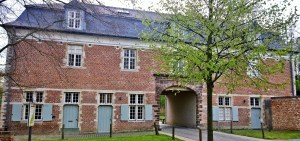 ly appropriate that since 1991 it has been the home of the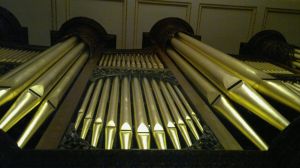
 Having been not entirely enthusiastic about
 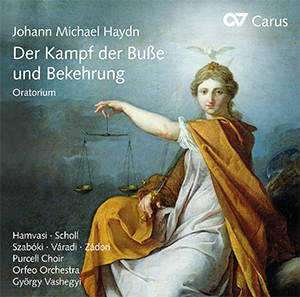 Despite being a lesser-known work by a lesser-known composer, the oratorio Der Kampf der Buße und Bekehrung (The Struggle for Penance and Conversion) is well worth getting to know. It is the second, and only surviving part, of a three-part oratorio, each part written by a different composer – not unusual in the fast-paced musical world of Salzburg at the time. The reason was the arrival of three sopranos bought back from Italy by the Archbishop of Salzburg in 1768. A piece was quickly required to show off their musical talents and, because of the lack of time, three composers agreed to compose a part of the libretto. Johann Michael Haydn (the younger brother of Joseph) took the central part, and this oratorio is the result.
 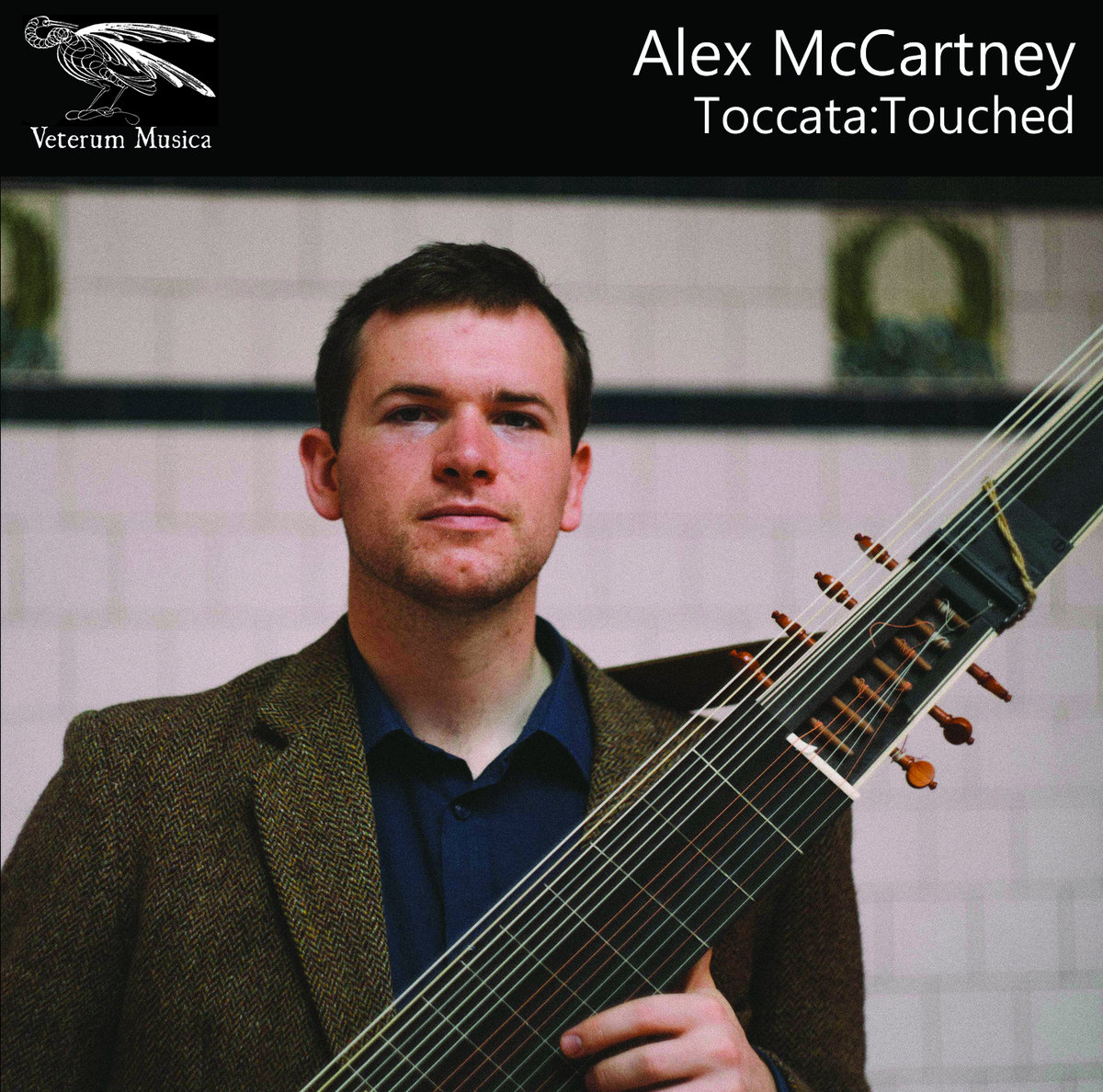 This recording is clearly something of a labour of love, albeit a rather short one, at just 45’27. Giovanni Girolamo Kapsberger (c1580-1651) was the son of an Austrian colonel, and was possibly born in Venice. He spent much of his musical life in the household of Cardinal Barberini in Rome (alongside Frescobaldi, amongst others) where he quickly built a reputation for virtuoso theorbo playing. To what extent his published theorbo pieces reflect his live performances is unclear, but they are sometimes frankly rather odd, not least with his unconventional use of rhythm and harmony. Contemporary commentators hinted strongly that his compositions were not as good as his performances.
  The St John’s, Smith Square Holy Week Festival (also reviewed
 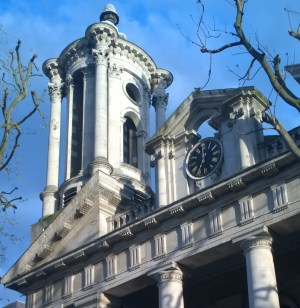 After the Holy Week Festival showcase Good Friday afternoon St John Passion came a concert focussed on one of England’s finest composers, Thomas Tallis. Living though the reigns of five monarchs (from Henry VII to Elizabeth), and composing in the latter four of them, Tallis managed to negotiate the complex religious twists and turns of Tudor life. The highlights of the evening came at the end, with the first modern performance of David Skinner’s reconstruction of a piece composed by Tallis (an early version of the famous Gaude gloriosa Dei mater), but with new words (See, Lord, and behold) added by Katherine Parr, Henry VIII’s eighth and final Queen.
  The link between music and archaeology is a comparatively new field of study, helped in recent years by the enterprising
  . It still includes the annual favourite Good Friday afternoon Bach Passion from Polyphony and the Orchestra of the Age of Enlightenment, but has also introduced some other new faces to the Eastertide Smith Square festivities. I was away for several of the events, but did manage to catch three contrasting events, starting with a curious concert by Tenebrae themselves, together with the Aurora Orchestra, both of whom seem to have caught the public imagination in recent years, not least by some impressive publicity.
  The Baldwin Partbooks were copied in the 1570s and 80s by a member of the choirs of St George’s Windsor and the Chapel Royal, John Baldwin. They included printed pieces as well as Baldwin’s manuscript copies of music, from an earlier age, resulting in one of the most important surviving collections of polyphony from the reigns of Henry VIII and Mary Tudor. This, combined with a focus on music dedicated to the Virgin Mary, is the focus of the music on this volume, the second in the Contrapunctus series on music of the Baldwin Partbooks (the first was In the Midst of Life, SIGCD408).
  his recording stems from a series of semi-staged performances in Cleveland and New York in March 2016. Videos of extracts of a live event can be viewed
  The catchy title of this recording (which quotes a 1688 pamphlet) is based a brief, but curious, incident during the turbulent Tudor times when, in April 1555, it was announced that Queen Mary had given birth to a son. The following day this was revealed to be the 16th century version of fake news. The complex history and importance of this event is beyond the scope of this review, but is easily obtainable and is covered in the detailed CD notes. Curiously, no author is credited for these notes, although I think it was Magnus Williamson, whose ‘insight and guidance’ is a credited elsewhere.
  Preceding the two recordings of Handel in Italy (reviewed
  The new 10 volume Breitkopf & Härtel critical edition of Bach’s organ music is arriving in dribs and drabs. I reviewed volume 8
