2026 York Early Music International Young Artists Competition
National Centre for Early Music
York, 9-11 July 2026

The biennial York Early Music International Young Artists Competition was founded in 1985. It takes place in the National Centre for Early Music (NCEM) in the impressively restored and extended former church of St Margaret’s, Walmgate in York. It forms the conclusion of the annual York Early Music Festival, celebrating its 50th birthday this year. A few events from the Festival are reviewed here.The theme for the festival was Beyond Borders, which perfectly sums up the focus of the Young Artists Competition, with its international cohort of performers presenting music from around the world, ranging from the Middle Ages to the nineteenth century, using historically informed playing techniques, instruments and stylistic conventions. The competition is open to ensembles of at least three people, with performers aged 36 years or under, with an average age of 35 years or under on the day of the final. During the two days before the final, the nine ensembles gave informal concerts, with no judges present, all compared by Steven Devine. The final was livestreamed and recorded by BBC Radio 3. Highlights will be broadcast on the Early Music Show on 30 August at 5pm, and will be available afterwards on BBC Sounds.

The first group to appear were the Swiss-based but international Ossian’s Dream, (Jaume Guri Batlle & Léa Al-Saguir, violins, Anne Sophie van Riel, viola, Martin Egidi, cello, Claudia Reyes Segovia, historical clarinet, Pau Fernández Benlloch, fortepiano), their name inspired by the romantic Ingres painting of the mythical Celtic Bard draped over a harp. Their programme, An Evening at Louis’s, was of salon music as might have been heard in Leipzig around the 1811 date of the Ingres painting. Such gatherings of the likes of Mendelssohn, Weber, Spohr, Wagner, and Joachim sometimes took place in a building on the site of Bach’s Leipzig home, and contrasted reverence for Bach with exploration of contemporary compositions. The explosive opening to their own clever arrangement of Mendelssohn’s Overture, Die Erste Walpurgisnacht, was a dramatic introduction to this musical world. They continued with an extract from a Clarinet Quintet by Weber, a Mozart reworking of a Bach organ Trio Sonata movement (the Prelude to his String Trio in E flat (K404a/5) and the Finale of Mendelssohn’s Op.66 Trio.
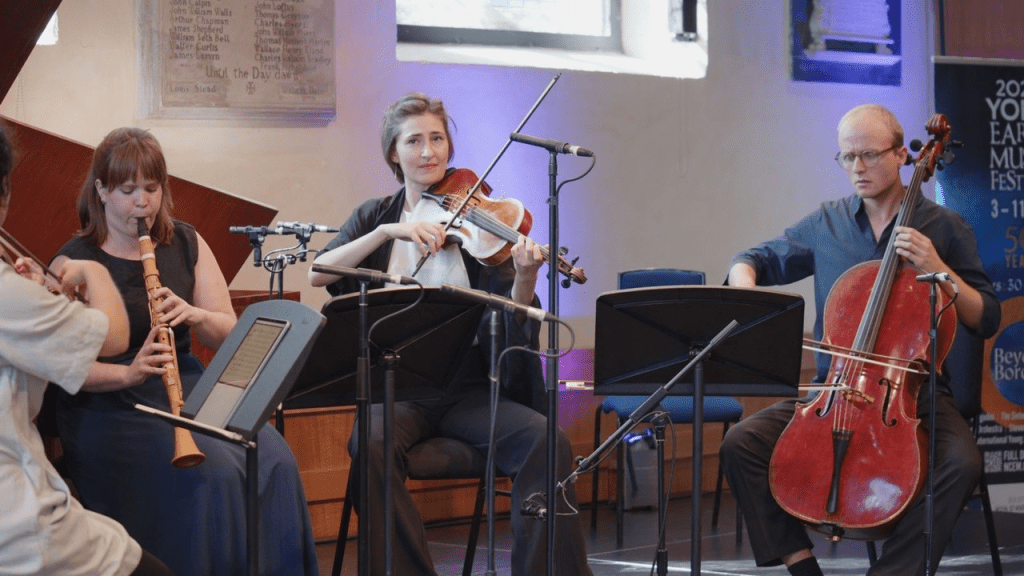
I was very impressed with their performance and their very professional approach to aspects of performance, including their stage management and clever linking of pieces (by cello and piano) to avoid audience applause. The two violinists swapped places between pieces, which I thought was a nice touch, given the prominence of the first violin in this era. After Claudia Reyes Segovia’s impressive performance of the Fantasia from Weber’s Clarinet Quintet Op.34, with her exquisitely shaded cadenzas, Anne Sophie van Riel gave an informative introduction to the music. The Mozart version of Bach was, appropriately, played in the style of Mozart rather than Bach, with the distinctive articulation and phrasing of the period. Pau Fernández Benlloch’s spectacular fortepiano playing came to the fore in the Finale of Mendelssohn’s Op.66 Trio, which he prefaced with what sounded like an improvised link. Mendelssohn’s use of a Lutheran chorale and the Geneva melody known in England as the Old 100th gave an appropriate insight into the zeitgeist of the period. The fortepiano had sounded underpowered when used with the full complement of instruments, but was audible against Léa Al-Saguir’s violin and Martin Egidi’s cello.
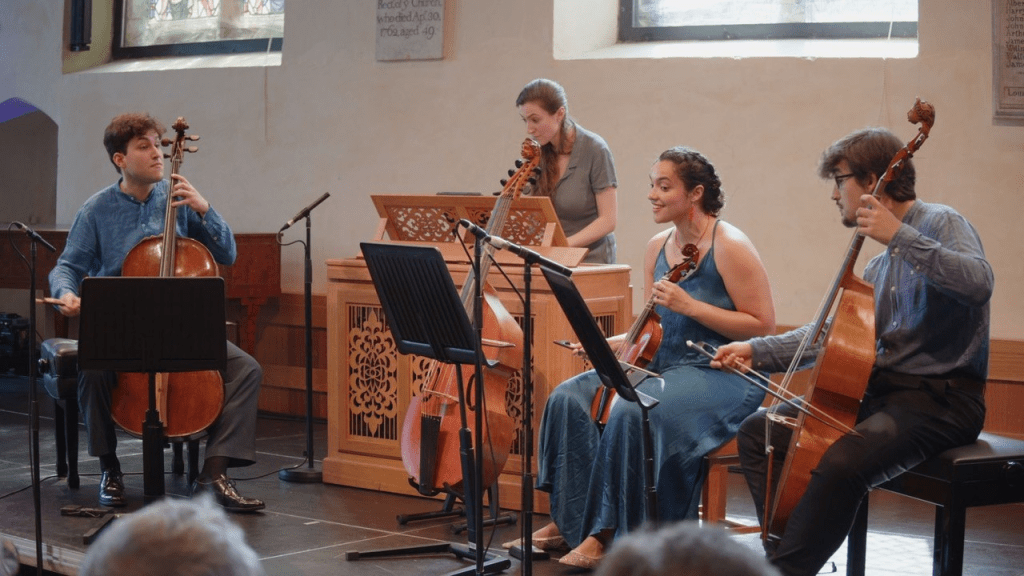
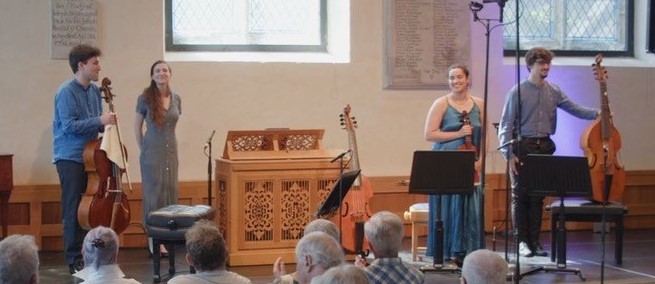
They were followed by I Mastricelli (Marino González García, bass viola da bamba, Bianca Cucini, bass & soprano viola da gamba, Antonio Pellegrino, violoncello, and Agata Sorotokin, organ), a group founded at the Royal Conservatoire in The Hague, their name based on the young musicians of the Neapolitan conservatories who assisted composers such as Domenico Scarlatti and Nicola Porpora. Their programme, The Art of Diminution, took us back a few centuries with its focus on mid to late 16th-century composers and their exploration of ornamentation and improvisation. They opened with Tobias Hume’s lively The Lady Canes Delight, the dance-like mood reinforced by organist Agata Sorotokin’s ankle bells. The Bayle del Gran Duque is a version of Cavalieri’s 1589 Ballo del Granduca that Martín y Coll included in his 1707 Flores de Música. Originally a keyboard piece, their arrangement worked well with the melodic line transferring effortlessly between the various instruments. The earliest pieces were two contrasting Recercadas by Diego Ortiz, the first, based on the well-known melody Douce Mémoire was played with particular sensitivity in contrast to the lively second example, based on the La Spagna dance. Both started with the organ, with the string instruments joining in later. I liked Agata Sorotokin’s sensitively unobtrusive organ continuo realisations, well balanced with the generally bass instruments she was accompanying.
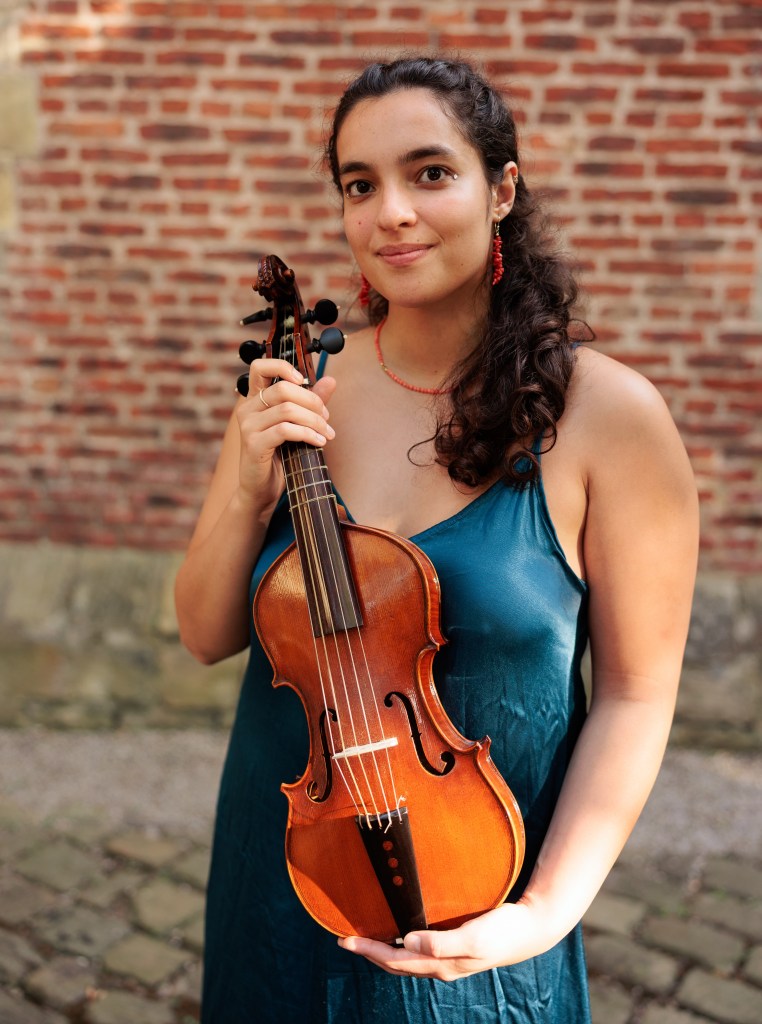
One interesting instrument played by Bianca Cucini was listed for this concert as a ‘soprano viola da gamba’, although (she was one of three players in I Mastricelli who appeared with other groups) it was referred to in the later concert (I think more accurately) as a ‘quinton’. It looked like a violin, but had five gamba strings and neck and was played with a gamba bow hold. As I understand it, the quinton became popular in France between 1730 and 1770 as gamba makers tried to compete with the increasing popularity of the violin. It was also considered a more lady-like version of the violin, as it was played on the lap rather than on the shoulder. The tone was noticeably different from the normal treble viol and didn’t always blend well with the bass gamba. I did wonder if it really suited 16th-century music or, indeed, the slightly later repertoire of the Tra Noi concert. That said, Bianca Cucini’s playing of that, and the more usual bass viola da gamba, was excellent.
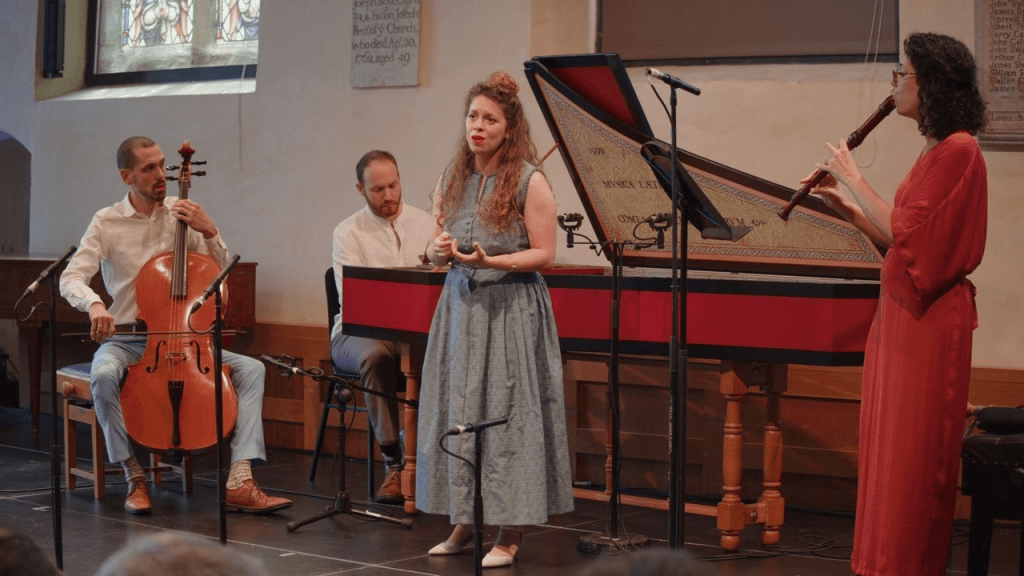
They were followed by the Israel-based Nari Baroque Ensemble (Liron Givoni, soprano, Naomi Hassoun, recorders, Yotam Haran, cello, and Guy Pardo, harpsichord). Their programme, A Shepherd’s Dream of Love, created a well-planned mini-opera from a sequence of pieces composed in the decades around 1800. They started with the harpsichord player seated on stage as the others entered one by one, with cellist Yotam Haran giving a theatrical introduction to the storyline of the Arcadian tales to come, set against a backdrop of nightingale sounds from Naomi Hassoun’s recorder. The music, by Pietro Torri, Handel, Alessandro Scarlatti, Pepusch and Boismortier (all born within a 40 year period), reflected the mini-opera’s tale of a shepherd falling asleep by a river first dreaming of becoming a nightingale (Pietro Torri’s Son rosignolo) and then transforming into Zeus (for Handel’s Endless pleasure, endless love from Semele), before awakening to the moonlight shimmering the waves (Scarlatti’s Onde chiare che spargete) and recollections of the apparent cruelty of his beloved (Pepusch’s Why shou’d I love) before realising that, as May Day approaches, there will be many beautiful maidens who would relish a dance with a young shepherd (Boismortier’s Regne Amour from Le Printemps). Soprano Liron Givoni beautifully expressed the contrasting emotions of the texts and music of the six songs with her agile voice, expressive singing and well-judged hand gestures. I liked the way she stayed in role between the pieces, thereby successfully discouraging unwanted audience applause. Towards the end, Liron Givoni intervened to announce that love would trouble her no more with the exclamation “I am strong”.
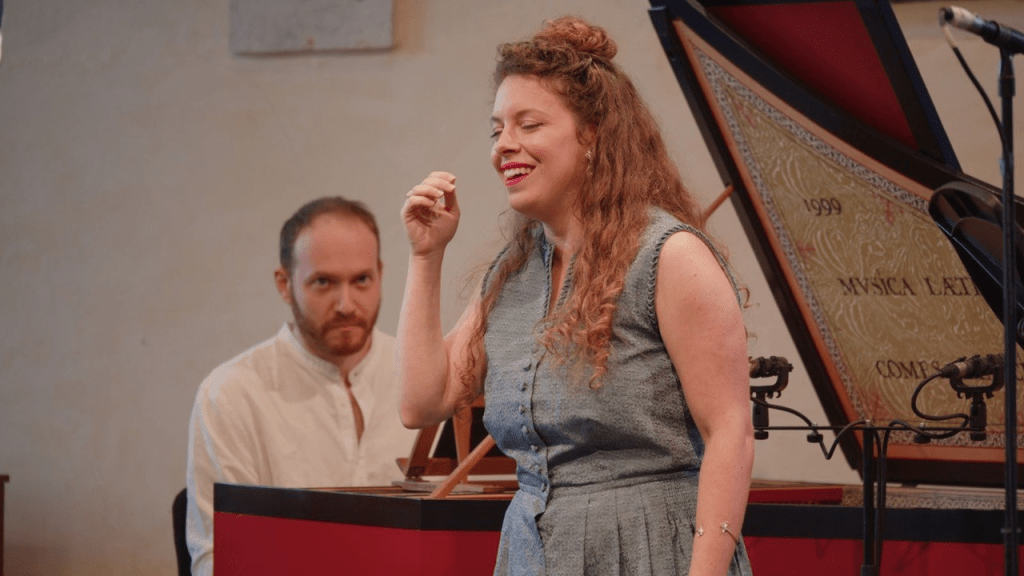
With a solo singer, the role of the instrumentalists was different to most of the other groups, and they took that role sensitively. Naomi Hassoun excelled in balancing her recorder playing to the singer, and demonstrated virtuoso skills in Pepusch’s Why shou’d I love, which also featured a particularly powerful Recit. Unusually for these competitions, the programme notes were not written by the group, but by Alon Schab, an associate professor of music at the Bar-Ilan University in Israel.
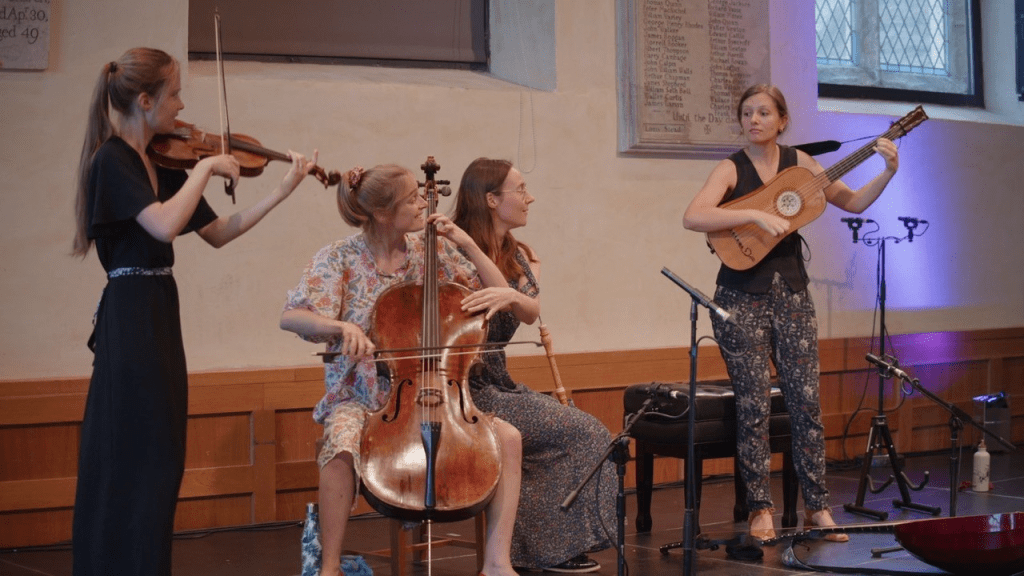
The next group were La Mandorle (Victoire Delnatte, oboe, Clotilde Sors, violin, Camille Sors, cello, Élodie Brzustowski theorbo, guitar), a French-based family affair with two sisters (one of whom will shortly become an aunt) joined by two friends, their name being the Italian for almond. As well as reflecting the “art of conversation” between their instruments, their programme, The Conversation, aimed to immerse us in “the intimacy of an early eighteenth-century French salon, where whispered exchanges, circulating rumours and impassioned debates animate every gathering at Court”. The music, composed within a five year period, was connected with the French court at the close of the Grand Siècle as Italian influence strengthened its hold on French music. The musical focus was the concluding piece, La Mandorle’s own arrangement of Robert de Visée’s six-movement Suite in A minor, based on the 1699 theorbo version. The Allemande of that suite is subtitled The Conversation, giving the title to La Madorle’s programme. It was preceded by a four-movement Sonata in G minor by Elisabeth Jacquet de La Guerre (a welcome appearance of a female composer) and the six-movement La Félicité by Louis-Nicolas Clérambault.
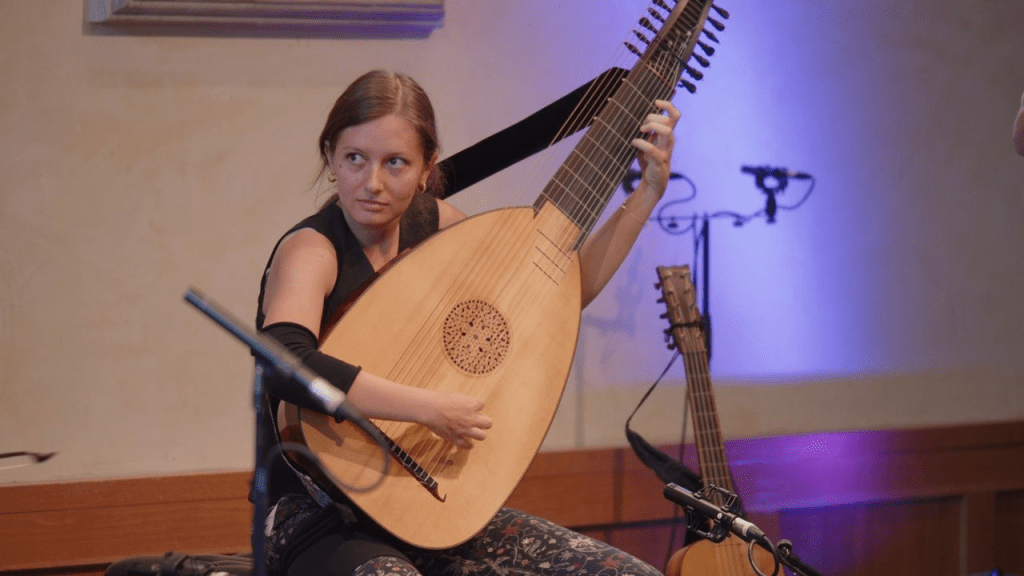
Playing entirely from memory, the four musicians were totally engaged with, and took evident delight in, the music they were playing, the rapport between them adding to the intimacy of the music. Élodie Brzustowski‘s impressive playing of her distinctive swan-neck theorbo/lute was always sensitive to the musical context, as evidenced by her moving her gaze towards whichever player was about to take the lead. I particularly liked the free improvisatory feel of her solo Prélude at the start of the Visée Suite. The use of a theorbo rather than a keyboard as continuo gives the group flexibility in performance opportunities, which includes playing in schools and hospitals. Although Victoire Delnatte didn’t always quite match the volume of her oboe to the violin, her consort playing was otherwise impeccable. The violin and cello sisters, Clotilde and Camille Sors, had a delightful musical bond. Their programme notes were some of the best of the competition.

The Swiss-based Tra Noi ensemble (Silvia Berchtold, recorders, Bianca Cucini, bass viola da gamba, quinton, Rafaela Salgado, harpsichord) presented their programme Diverse Bizzarrie: from popular genre to music at Court, with music designed to demonstrate the flexibility of their instruments. This included the unusual quinton instrument (here correctly named) that I mentioned in my review of I Mastricelli above, where it was referred to as a ‘soprano viola da gamba’. It looks like a violin, but has five gamba strings and is played on the lap with a gamba bow hold. As explained above, the quinton was popular in France between 1730 and 1770 and has a noticeably different tone from the normal treble viol, which, in my view, did not suit the repertoire of this Tra Noi concert or the earlier I Mastricelli one. That said, Tra Noi made effective use of the instruments at their disposal in their programme of 17th-century pieces by Falconieri, Dowland, Castello and Matteis from Naples, Venice and England, all arranged for their instruments. They opened and closed with pieces built on an ostinato bass, starting with a Passacaglia and ending with two Ciacconas. Silvia Berchtold used recorders appropriate to the style and period of the music, ranging from Renaissance to Baroque style models. Rafaela Salgado provided a neat harpsichord link between the first two pieces, thereby avoiding audience applause, although they did manage some applause before the last piece.
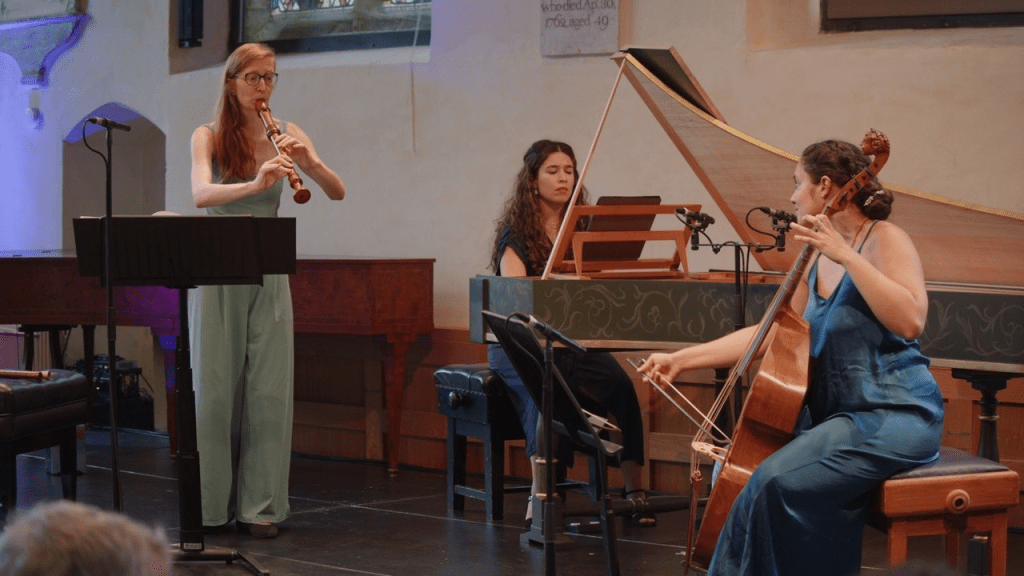
The concluding piece, Nicola Matteis’s Diverse bizzarrie sopra la vecchia sarabanda o pur ciaccona, gave the concert its title of Diverse Bizzarrie (‘several quirks/extravagancies’), which, as the name promised, included several playful moments, as did Castello’s Sonata with its anarchic structure and characteristically wild cadence. John Dowland’s Sir Henry Upton’s Funeral, from his 1604 ‘Lachrimae or Seven Tears’ collection, provided a moment of calm before Falconieri’s rhythmic Ciaccona.
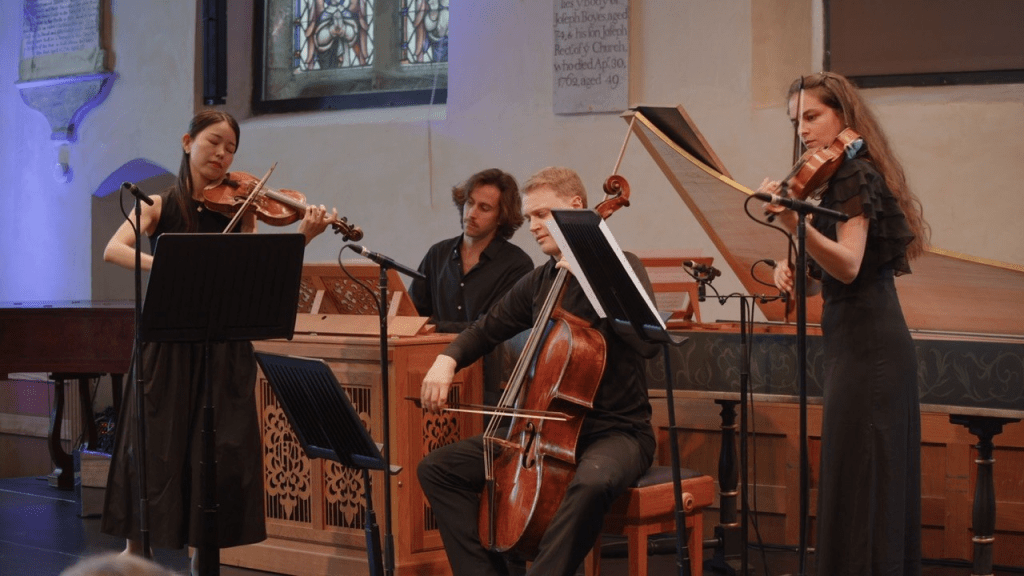
Il Parrasio (Eriko Nagayama and Ajda Porenta, Baroque violins, Luka Stefanović, Baroque cello, Alessandro Papa, harpsichord and organ) are based in the Netherlands but, like several of the ensembles in the competition, are international. Their name is derived from Il Bosco Parrasio, the hilly grove of trees overlooking the city of Rome, where poets met to discuss Italian art and culture and the influence of the ancient Greek notion of Arcadia. Their programme, Handel and his Italian rivals, focused on three London-based composers born within 2 years of each other, Handel, Porpora and Geminiani, the latter two Italian, the former returning from his inspirational years in Italy. They opened with Porpora’s Sinfonia da camera in G minor, Op.2/3, a piece with more than a hint of an earlier style. The opening Adagio Sostenuto featured some extraordinarily sensitive playing from violinists Eriko Nagayama and Ajda Porenta, their sotto voce playing sometimes verging on the very edge of audible tone. The two Allegro movements featured unison violin playing, the brisk first Allegro had a particularly effective cadence, with a much lighter final triple-time Allegro. Luka Stefanović spoke about the programme before Handel’s Trio Sonata in A major, Op.5/1. Alessandro Papa moved from organ to harpsichord, providing an effective link between the Handel and the concluding arrangement of the Andante affettuoso in D from Geminiani’s 1761 concertante version of his pantomime The Enchanted Forest.

As in their informal concert two days earlier, Il Parrasio presented themselves as an extremely professional ensemble, one example being the way they calmly rearranged all the on-stage seating and music stands from the curious arrangement that the busy stage staff had set up. They played with a fine sense of the structure of the music, helped by sensitive continuo playing from Luka Stefanović and Alessandro Papa.
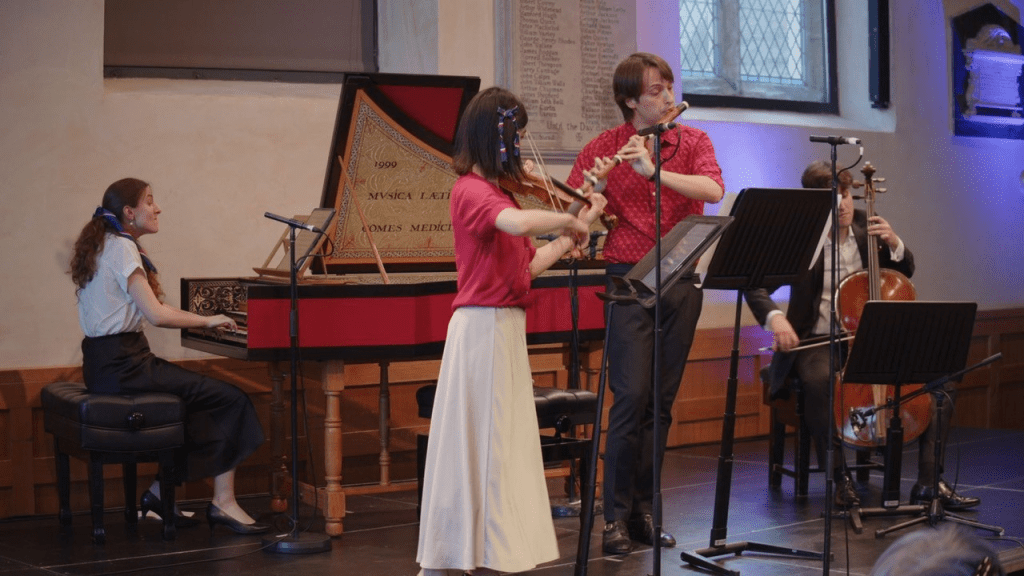
The Swiss-based ensemble Quarterino (Tomasso Simonetta Sandri, flute, Miyu Nohashi, violin, (replacing Lorenzo Molinetti) Antonio Pellegrino, cello, and Agata Sorotokin, organ and harpsichord) met through their involvement in the recent incarnation of the European Union Baroque Orchestra (EUBO). Their programme, Baroque Crossings: Britannia and the Italian Virtuosi explored the influence of Italian music on 18th-century Britain through three composers, two Italian, one English. They opened with Geminiani’s arrangement of the Scottish folk melody Lady Ann Bothwell’s Lament (published in his 1749 ‘Treatise of Good Taste in the Art of Musick’), the haunting melody enriched by Italian-style ornaments (influenced by Corelli, Geminiani’s teacher), and beautifully played by Tomasso Simonetta Sandri on piccolo and flute, with gentle accompaniment from Agata Sorotokin, organ. After an introduction to the programme, they followed this with an Italian-inspired Trio Sonata by the Newcastle-based composer Charles Avison. After a French Overture flourish, the opening Largo is built on a repeated 5-note bass motif underpinning harmonies. The following Allegro lightened the mood with its arpeggio figuration. A curious hiatus before the following Adagio, with its intense chromatic bass line, rather reduced the structure of the whole Sonata, although the bouncy triple-time final Allegro lightened the mood.
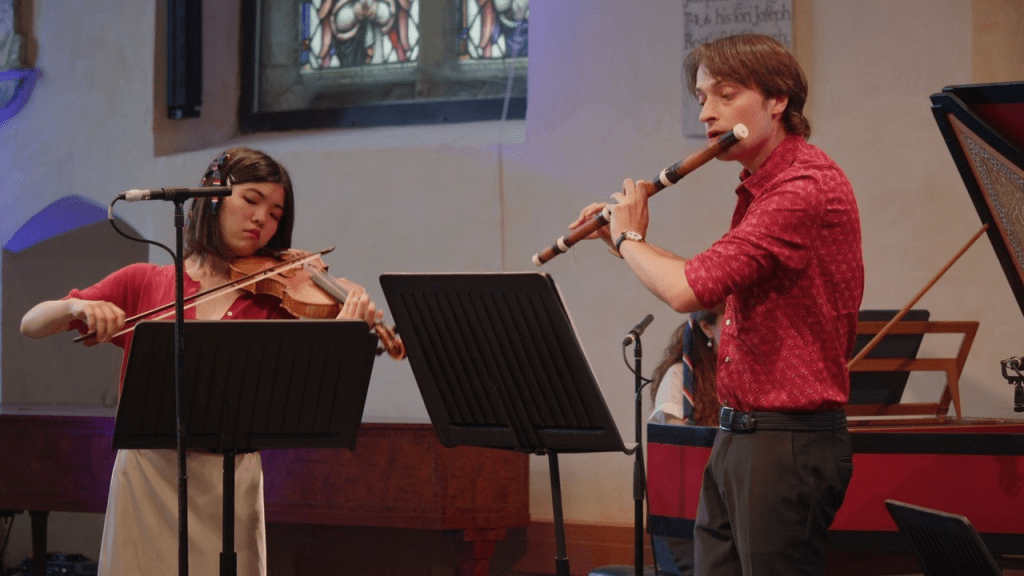
The concluding Vivaldi Trio Sonata introduced the direct Italian style. I particularly liked Quarterino’s colouring of the central Andante, with the harpsichord buff stop and plucked bass line underpinning the gently intertwinning melodic flute and Miyu Nohashi’s violin. My only reservation was the rather prominent cello playing, which, along with frequent over-articulation, seemed out of kilter with the mood and sound of the other three musicians.

Lagrime (Franziska Blömer, soprano, Maximilien Brisson, trombone, and Barbora Hulcová, theorbo) is based in Switzerland. It is centred on music for the trombone, and very obviously led by trombonist Maximilien Brisson, who draws on a wide range of fellow performers in Canada and Europe to make up the group. On this occasion, the incarnation of Lagrime was his currently preferred collaborators for concerts in Europe, with a soprano and theorbo. Their programme, Vulnerasti cor Meam (Thou hast ravished my heart) included music published in Rome, Venice and Milan between 1625 and 1638 all based on the erotic poetry in the biblical Song of Songs. A rather theatrical approach to presentation and staging saw the trombonist initially sitting alone on stage before the theorbo and singer arrived, with later presentations making full use of the very wide stage and its environs. Monteverdi’s O quam pulchra es was performed as a trombone solo with theorbo, during which the singer walked from one side of the stage to the other. The other pieces featured the impressive soprano Franziska Blömer, whose expressive voice caught the underlying mood of the text. Although the trombone managed to negotiate a wide range of volume, issues of balance were evident throughout, as were issues of the usual musical convention of giving a singer the principal concert role.

One of the most successful pieces was Giovanni Paolo Caprioli’s In lectulo per noctes, which tells of a lover who wakes to find her partner has left, and wanders the streets to find him. Was it a theatrical gesture that the trombonist left the stage at the start of this piece, leaving the music to the singer and theorbo? The concluding piece, Giovanni Felice Sances’ Vulnerasti cor meum, included a passage built on a descending ground base that sounded very similar to Pur ti miro, the conclusion to Monteverdi’s 1643 L’incoronazione di Poppea. One of the advantages of being the last two or three performers is that the earlier players are gathered to one side and enthusiastically welcome the last couple of groups with friendly whoops and yells.

The Lyons Mouth must be unique in the history of the York International Young Artists Competition in being founded at the University of York, just a couple of miles away from the National Centre for Early Music, the venue of the final. Their name is inspired by the university’s concert hall. They describe themselves as a “feral vocal consort … devoted to vivid musical storytelling, crafting emotionally immersive performances that draw audiences into the dramatic heart of the repertoire”. Given their performing and presentation style, I think it is reasonable to assume that the title of their programme, Victoria’s Secret, was as much a nod to the seductive lingerie store as to the composer of their final piece. In a singing and presentational style that could be described as ‘early music meets contemporary musical theatre’, they performed five pieces from the decades around 1600, based on the ups and downs of love, each given dramatised interpretations of the various texts, not all of which were entirely obvious, at least to me. They had clearly been trained in a very specific style of singing and concert presentation, which they had adopted with relish. Alongside the theatrical nature of the presentations, their singing was bold, expansive, emotionally intense, and individualistic, with a relaxed approach to the use of vocal conventions such as vibrato that are usually considered more appropriate to a later repertoire.
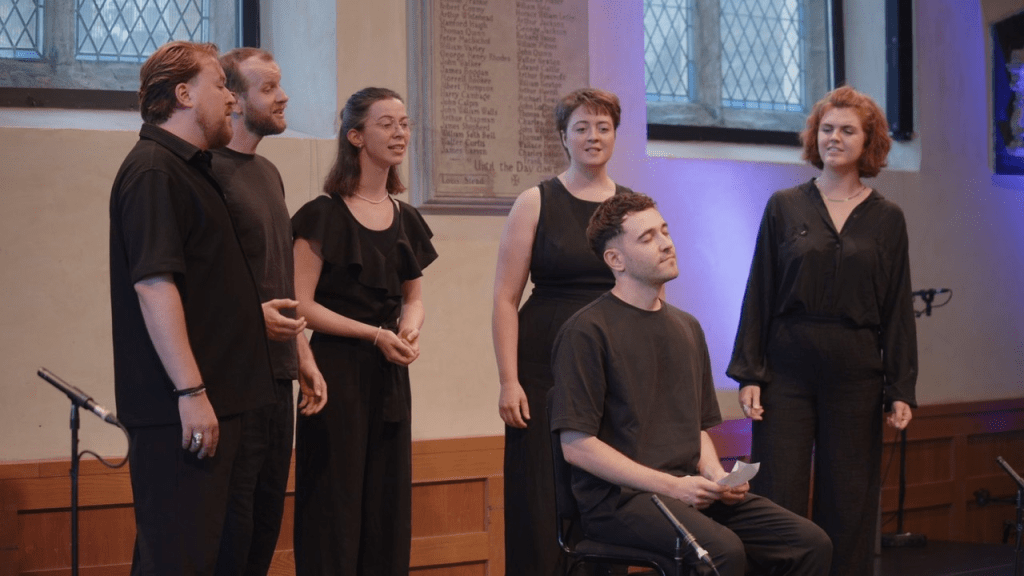
The opening Svogava con le stelle by Monteverdi tells of a love-sick man crying to the stars in grief, and was performed with a non-singing tenor sitting on a chair, presumably crying to the stars. Raffaella Aleotti was a very welcome appearance of a female composer, although the confusion over her identity remains a puzzle – it seems that she was either the sister of Vittoria Aleotti, or changed her name from Vittoria to Raffaella. She was a nun, organist and composer in Ferrara. Her short imitative Vidi speciosam, based on the Song of Songs, envisages “the fair one” rising from the water with her “priceless fragrance clinging to her garments”. The slithering harmonies of Monteverdi’s Sì, ch’io vorrei morire tells of somebody wishing to die as they are crushed to their lover’s white breast (to a delightful rocking musical motif) whilst, apparently, kissing their luscious lips at the same time. For reasons that escaped me, a note was passed around all the singers during this piece, before being thrown away at the start of Sigismondo d’India’s death-wish madrigal Dispietata pietate. They finished with Victoria’s Vadam et circuibo civitatem, a musical depiction of what must be the silliest of all the Songs of Songs, when a young lady seeks the help of the “daughters of Jerusalem” to find her “white and ruddy” lover, who, it turns out, had climbed a palm tree.

And so finished the final of the 2026 York Early Music International Young Artists Competition, another example of the noticeable increase in the musical experience and standards of finalists in recent years. Many had already done well in various competitions, had already recorded CDs, and had an impressive list of concerts in their CVs. I usually end these competition reviews with comments on issues that applied to several ensembles, but these have been getting less and less each year. One still seems to be the fact that performers have control over when, and if, the audience applauds. One or two asked for applause to be kept until the end, others tried various musical and visual devices to discourage applause, to varying degrees of success.
Credit must go to Andrew Wooderson, who not only provided and tuned the two harpsichords and the organ but also assisted in moving them on and off the stage between acts.

The prizes offered are a first prize of a £1,000 cash prize, a professionally produced CD recording by Linn Records, and a paid concert as part of the 2027 York Early Music Festival. The Friends of York Early Music Festival awards a cash prize of £500, decided by ballot. Representatives of the EUBO Development Trust award £1000 to the most promising individual instrumentalist or to the most promising ensemble, specialising in baroque repertoire. A paid concert in Cambridge is also offered. Detailed rules can be read here.
Competitors are assessed on the following criteria:
choice of repertory, and a sustainable interesting repertory for future performances
application of historical style of performance
musicianship, interpretation, creativity of programme planning, technical ability
presentation: stage presence, rapport with audience, professionalism
quality of programme notes
overall contribution to the early music scene, eventual professional viability
professionalism of dealings with the NCEM office.
The panel of judges were:
Paul Agnew (British tenor, conductor and Co-Director of Les Arts Florissants)
Anna Danilevskaia (director of Sollazzo Ensemble, competition winners in 2015)
Veerle Declerck (Artistic Co-ordinator at Concertgebouw Brugge and former REMA President)
Kati Debretzeni (violinist and a leader of the Orchestra of the Age of Enlightenment)
Philip Hobbs (Producer, Linn Records)
The Lyons Mouth won the main prize and the Friends Prize
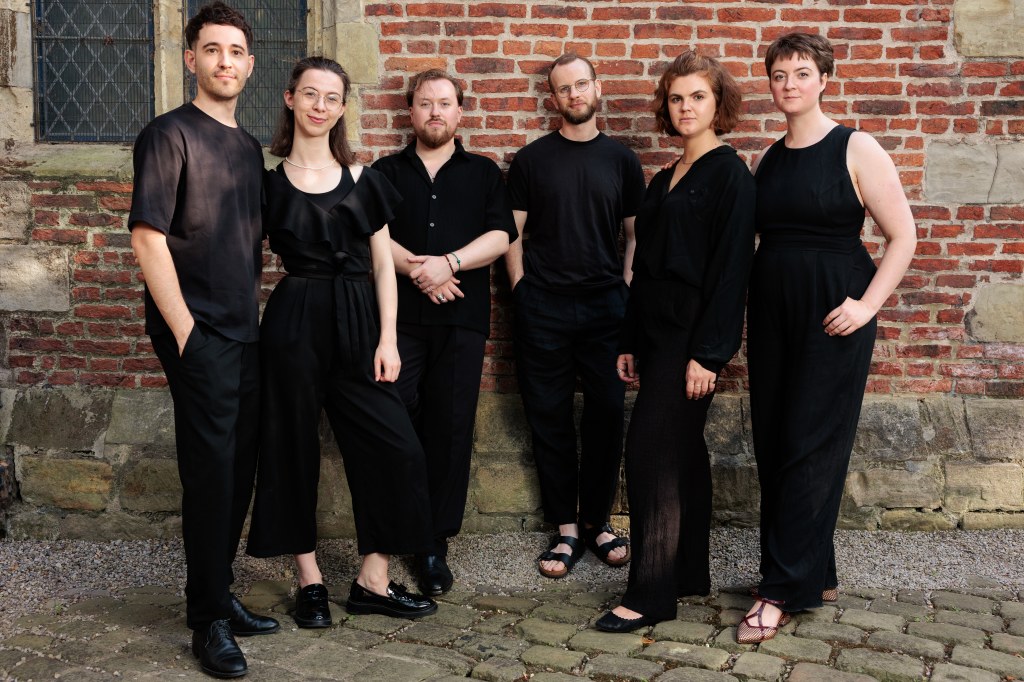
The EUBO prize was divided between two ensembles, Tra Noi

and Ossian’s Dream.
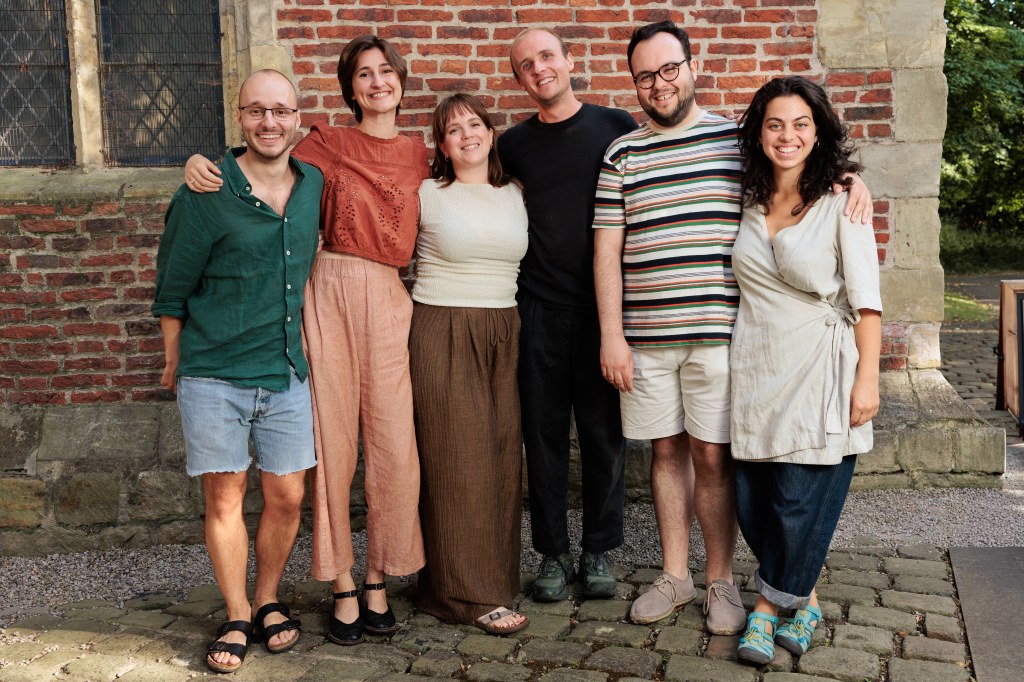
The Cambridge Music Prize was awarded to Lagrine.

The jury also announced a brand new award of their own volition, a Jury Prize, which was awarded to Bianca Cucini for her outstanding musicianship, in the competition with Tra Noi and I Mastricelli.