Bach: Christmas Oratorio

Bach Christmas Oratorio
The Hanover Band and Chorus, Andrew Arthur
Philippa Hyde, Tim Morgan, Bradley Smith, Edward Grint

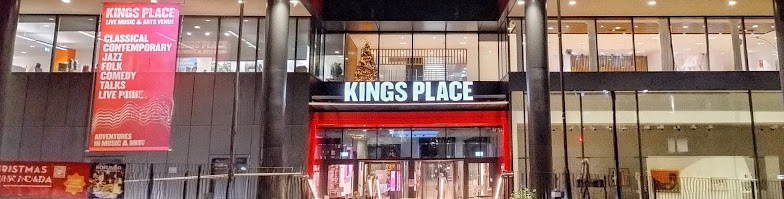
Kings Place, 22 December 2025

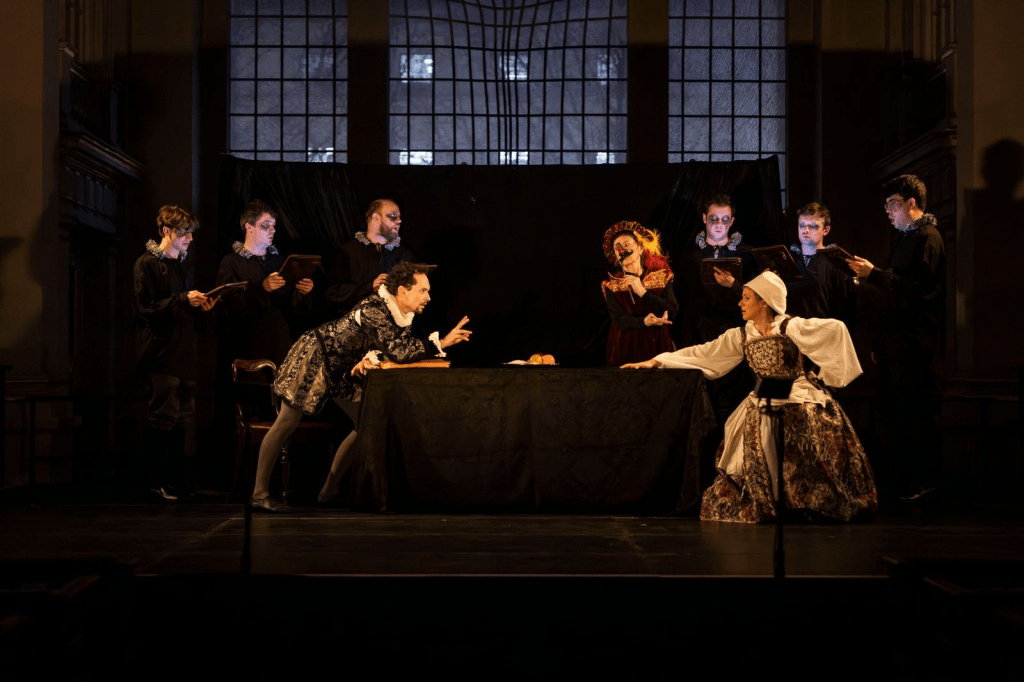
Bach’s Christmas Oratorio (Weihnachtsoratorium, BWV 248) is a collection of six cantatas performed in Leipzig on six separate occasions over the 1734 Christmas period. Each cantata was performed twice, in the Thomaskirche and the Nikolaikirche. They were performed on December 25th, 26th, and 27th, New Year’s Day, the first Sunday in the New Year, and finally Epiphany (6 January), covering the complete Lutheran Christmas season. Despite the separate nature of the performance schedule, it seems clear from the autograph title page that Bach saw the six cantatas as a unified whole. There is a logical sequence of keys, moving from D major, G, D, F, A and back to D, and the first and last cantatas are connected by Bach reuse of the chorale melody of Part I’s Wie soll ich dich empfangen for the last chorus of Part VI, Nun seid ihr wohl gerochen. That choral melody is the same as the Passion Choral in the St Matthew Passion. The different instrumentation would have made it difficult for Bach to have performed them all as a continuous whole, as is usually done nowadays in concert performances. On this occasion, as is usually the case, the 4th cantata, for New Year’s Day (the circumcision and naming of Jesus), was omitted.

Continue reading

Medieval Carols by Candlelight

Medieval Carols by Candlelight
Angela Hicks
Patricia Hammond, May Robertson, Louise Anna Duggan, Jean Kelly
St Giles Camberwell, 11 December 2025


The vast church of St Giles Camberwell was packed with an enthusiastic audience for a magical concert of Medieval Carols by Candlelight given as part of a UK-wide tour arranged and directed by singer Angela Hicks with Patricia Hammond, voice, May Robertson, fiddle and voice, Jean Kelly, harp, and Louise Anna Duggan, percussion, all playing under the banner of Ancient Music Promotions. Their wide-ranging choice of music covered most of the genres of medieval music, ranging from the 12th-century mystic Hildegard von Bingen to the mid-17th-century, together with the music for a 15th-century poem set to music specially for this tour by the group’s percussionist, Louise Anna Duggan.

Continue reading

AAM: Messiah

Handel: Messiah
Academy of Ancient Music, Lawrence Cummings

Nardus Williams, Reginald Mobley, Thomas Walker, Ashley Riches
Barbican Hall, 15 December 2025


The Academy of Ancient Music (AAM) has a long and distinguished history with Handel’s Messiah, not least in being one of the first period instrument orchestras to record the piece in anything like the form, and with the soundworld of the original performance. After a stunning Messiah performance last year in the same Barbican venue, they returned for another sell-out performance with a new line of soloists Nardus Williams, Reginald Mobley, Thomas Walker, and Ashley Riches. I was impressed with all four of the coloists, although I did find the vibrato of the soprano a little disturbing, not least because the persistent pulse interfered with semiquaver runs. But, as with her colleagues, she expressed the words clearly and with meaning. The 18-strong choir similarly impressed, again with very clear diction and impressive consort. All four soloists excelled in adding historically appropriate ornaments and embellishments to the musical text. Of course, Messiah has no recognisable characters, as would be the case in an opera, so each recitative, accompagnato, and aria is a projection of the words, an essential component of Laurence Cummings’ interpretation, which he describes as a ‘Theatre of the Mind’.

Continue reading

Un niño nos es naçido – An Iberian Christmas

Un niño nos es naçido – An Iberian Christmas
The Renaissance Singers, David Allinson
St Sepulchre-without-Newgate (Holy Sepulchre), 13 December 2025


J.G de Padilla Christus Natus Est
C. de Morales Sancta et immaculata virginitas
F. Guerrero Missa Sancta et immaculata
C. de Morales Ave Maria, gratia plena

T.L. de Victoria Ecce Dominus veniet
R. de Ceballos O Virgo Benedicta
A. de Silva Alma redemptoris Mater
P. Ruimonte Luna que reluces
F. Guerrero Al resplandor de una estrella; Niño Dios d’amor herido; Alma mirad vuestro Dios
Diego José de Salazar ¡Salga el torillo hosquillo!

This imaginative programme from the always excellent Renaissance Singers aimed “to dispel the cynicism of modern Christmastide with a mixture of superb motets, mass music and villancicos drawn from the Spanish golden age”. Most of the music was based on musicians of Seville’s Cathedral, Santa Maria de la Sede, notably the composer Cristóbal de Morales and his pupil Francisco Guerrero, whose Missa Sancta et immaculata was the focus of the first half of the concert.

Continue reading

Claire M Singer: Gleann Ciùin

Gleann Ciùin
Claire M Singer, LCO
Queen Elizabeth Hall, 7 December 2025

Solas; Ode to Saor;
56.9500° N, 3.2667° W; Maps; 57.0908° N, 3.6939° W;
Forrig; Gleann Ciùin.

Claire M Singer is a Scottish composer, cellist and performer of acoustic and electronic music who “draws inspiration from the dramatic landscape of her native Scotland, exploring rich harmonic textures and complex overtones that create ever-shifting melodic and rhythmic patterns disappearing almost as soon as they emerge”. Although she had previously composed some pieces for organists, her own introduction to the organ world came in her imaginative appointment in 2012 as music director at the Union Chapel, an enormous Congregational church and events venue in Islington, and home to a famous 1877 ‘Father’ Willis organ. She has since managed a major restoration of the organ and an impressive series of organ-related events, not least curating the annual Organ Reframed festival, focused on encouraging experimental music based on the organ. This event at the Queen Elizabeth Hall featured music from three of her five CDs (Solas, Saor and Gleann Ciùin), played on the Queen Elizabeth Hall organ with added electronics and orchestrations played by members of the London Contemporary Orchestra.

Continue reading

JS Bach: Two organ Chaconnes

Johann Sebastian Bach: Two organ Chaconnes
Ciacona ex d BWV 1178, Ciacona ex g BWV 1179

Ed. Peter Wollny
Supplement to Bach Complete Organ Works, Volume 4

 24 pages, 32x23cm, 137g, ISMN: 979-0-004-19141-5, Saddle Stitch
Edition Breitkopf 9648, 2025

The much hyped promotion by the Bach Archive Leipzig of two organ Chaconnes that have recently been attributed to the young J.S. Bach has resulted in a torrent of internet posts raising every possible view of the music and how it should be performed. This commenced with the first performance of the new attributions given by Ton Koopman, playing the 2000 Bach organ at an official ceremony on 17 November 2025, livestreamed from Bach’s own Thomaskirche Leipzig. The two pieces have been available for a while on IMSLP, in facsimile and typeset, under the tentative attribution to Johann Christoph Graff. They are now published by Breitkopf in an edition by Peter Wollny, director of the Bach Archive Leipzig and the scholar who attributes the two pieces to JS Bach. A detailed Preface in German and English (four pages each) outlines the voyage of discovery over a period of more than 30 years. The new Breitkopf edition of the two pieces is beautifully produced and presented, with clear musical text.

Continue reading

Buxtehude: Complete organ works

Dieterich Buxtehude: Complete organ works
Urtext: Critical Source Edition
Ed. Harald Vogel
Breitkopf & Härtel. 2025


The release of the third and final volume of the Edition Breitkopf complete organ works (the choral works, in two sub-volumes) of Dieterich Buxtehude marks a considerable achievement in the complicated history of the transmission of the Lubeck master’s organ works. Edited by Harald Vogel, one of the pioneers of the modern interpretation of Buxtehude and his North German organ composer predecessors, the new edition answers many of the questions that Buxtehude interpretation has raised over the years. One of the many problems is that there are no autograph copies of any of Buxtehude’s organ pieces. We only have copies, which may or may not be based on authentic autographs. This new edition is a “pure source” edition, with no attempts to combine different transmissions or to apply editorial “corrections” to the texts.

Continue reading

HGO: Monteverdi – Poppea

Monteverdi: Poppea
HGO, Seb Gillot, Ashley Pearson
Jacksons Lane. 15 November 2025


Monteverdi’s L’incoronazione di Poppea explores themes of power, ambition, greed, intrigue, toxic relationships, vengeance, moral decadence and, viewed with modern eyes: mental health. Busenello’s libretto adopted a relaxed approach to historical facts in a manner that would likely result in several lawsuits if the protagonists were still alive to launch them. The events of seven years are compressed into a single day’s action and the characters are adapted to suit the plot. which, shorn of direct historical relevance, allows a focus on the characters and their interaction with each other. Much about the opera is conjecture, including how much of it was actually composed by Monteverdi. It was his last opera, and was first performed in Venice shortly before his death in November 1643. A revival in Naples in 1651 was the last known performance until the late 19th century. It is now considered as one of the most important 17th-century operas. Following HGO’s well-reviewed 2017 production, this was a new staging, directed by Ashley Pearson with musical direction from Seb Gillot.

Continue reading

London International Festival of Early Music

London International Festival of Early Music
Double Book Launch, Dorothee Oberlinger & Peter Kofler
Blackheath Halls. 13 November 2025


What is now the London International Festival of Early Music has been through several incarnations since its inception in 1973. Originally housed at the Royal College of Music, it moved to the Royal Horticultural Halls and then to the sumpuous surroundings of the Old Royal Naval College in Greenwich as the Royal Greenwich International Early Music, which then moved to Blackheath Halls, eventually changing to the current name. Run by the Early Music Shop, the main focus is on the three-day exhibition of instrument makers, retailers, publishers, record companies, early music forums, the National Early Music Association and other related societies, which combine with concerts of various types. Every other year, it hosts a solo recorder competition.

Continue reading

London Festival of Baroque Music

“Immortal Harmony”
London Festival of Baroque Music
Arcangelo, Spiritato, Les Demoiselles Couperin,
Choir of New College Oxford, Ensemble Marguerite Louse Versailes,
Smith Square Hall, 1, 7 & 8 November 2025

The London Festival of Baroque Music was founded in 1984 as the Lufthansa Festival of Baroque Music by conductor Ivor Bolton and musicologist Tess Knighton, its Artistic Director until 1997. Kate Bolton was Artistic Director from 1997 to 2007, succeeded by Lindsay Kemp. The first concerts took place at St James’s, Piccadilly, before settling into the fine Baroque church of St John’s, Smith Square, now renamed variously as Smith Square Hall or Sinfonia Smith Square. This year’s festival was given the overall title of “Immortal Harmony”. I attended the first and final three concerts, featuring Bach’s Brandenburg Concertos, Bach’s Leipzig legacy, vocal music by Couperin, and ceremonial music by Purcell, Lalande, and Charpentier.

Continue reading

Gabrieli: Purcell – Fairy Queen

Purcell: The Fairy Queen
Gabrieli Consort & Players, Paul McCreesh
St Martin-in-the-Fields. 7 November 2025

The Fairy Queen is one of Gabrieli’s calling cards, with many performances over the years. I last reviewed them in 2018 at St John’s, Smith Square, shortly before they recorded it (SIGCD615). Several of the singers and players from that recording remain for their latest London performance in St Martin-in-the-Fields.

Continue reading

Mozartists: Mullova plays Mozart

Mullova plays Mozart
Mozart 250: 1775
The Mozartists

Viktoria Mullova, Ian Page
Cadogan Hall. 4 November 2025


Haydn: Symphony No. 68 in B flat major
Mozart: Violin Concerto No.3 in G major, K.216
CPE Bach: Symphony in D major, Wq.183/1
Mozart: Violin Concerto No.4 in D major, K.218

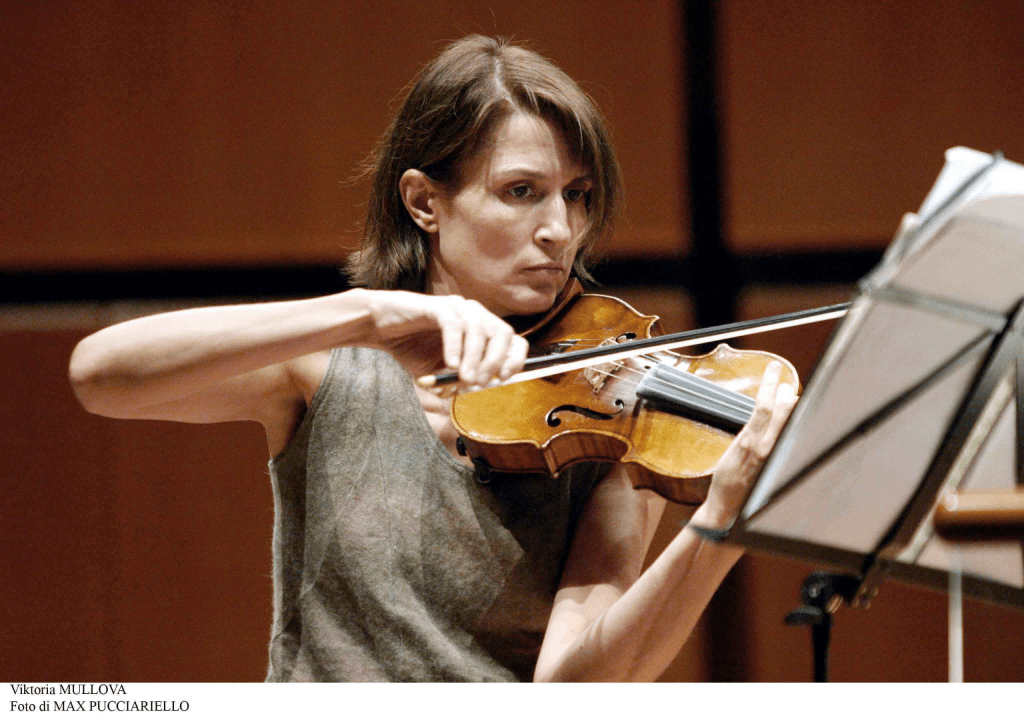
The Mozartists‘ enterprising MOZART 250 project has reached its 10th anniversary, with concerts this season focusing on the year 1775, when Mozart turned 19. The project started in 2015 on the 250th anniversary of Mozart’s childhood visit to London and follows Mozart’s musical life and that of his contemporaries year by year until the 250th anniversary of his death in 2041. It has been described as a “journey of a lifetime”, and will probably outlive many members of current classical music concert audiences. Following their Wigmore Hall concert in June (reviewed here), when Rachel Podger played two (2 & 5) of Mozart’s five violin concertos, this concert in the larger Cadogan Hall featured the other two concertos composed during 1775 (3 & 4) performed by Viktoria Mullova, making her debut with The Mozartists.

Continue reading

OAE: Solomon

Handel: Solomon
Orchestra and Choir of the Age of Enlightenment
, John Butt
Nardus Williams, Helen Charlston, Hugo Hymas, Florian Störtz
Queen Elizabeth Hall. 12 October 2025


The Orchestra of the Age of Enlightenment opened its 40th anniversary season in impressive style with a performance of Handel’s 1748/9 Solomon in London’s Queen Elizabeth Hall. Described as one of “the most human and spectacular of Handel’s oratorios”, Handel’s colossal work tells the (rather sanitised) story of one of the Bible’s most prominent characters, King Solomon. The three Acts explore themes of leadership through illustrations of Solomon’s qualities. In Act I, his devoutness in consecrating the Temple and (bizarrely, considering the Biblical account of his amours) marital bliss are celebrated “amid flowers, sweet breezes and nightingales’ songs”. Act 2 recognises Solomon’s wisdom as he resolves the famous dispute between two women claiming to be the mother of the same child, whilst the final act highlights the splendour of Solomon’s kingdom through a lavish masque presented to the visiting Queen of Sheba, whose arrival is announced with the now well-known Sinfonia.

Continue reading

Organ recital: Byrd to Blow

The Friends of St Lawrence
Byrd to Blow”
17th-century English organ music,
for the 30th anniversary of the Goetze & Gwynne ‘Handel’ organ


Andrew Benson-Wilson

St Lawrence, Whitchurch
Whitchurch Lane, Edgware HA8 6QS
Sunday 19 October, 2025. 3pm


30 years ago, Andrew Benson-Wilson gave the all-Handel opening recital on the new Goetze & Gwynne ‘Handel’ organ, a reconstruction of the 1716 Gerard Smith instrument using the original Grinling Gibbons case and surviving elements of the original organ. Handel used the original 1716 organ when he worked for the Duke of Chandos at Cannons in 1717/18.

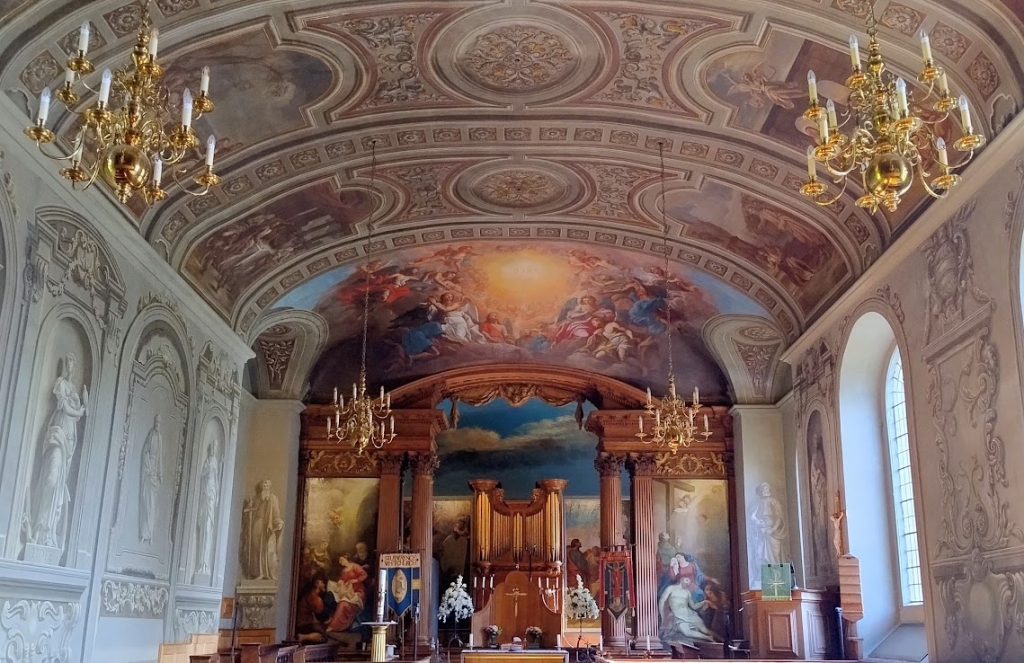
Having given two subsequent recitals of music by Handel, Andrew now returns to explore English organ music from the century leading up to Handel’s time, ranging from Byrd to Blow, with music by William Byrd, John Bull, Orlando Gibbons (d1625), Thomas Tomkins, John Lugge, Matthew Locke and John Blow. It will feature pieces for “double organ”, a genre that developed during the 17th-century. The recital will also honour the lives of the organ builders, Martin Goetze and Dominic Gwynne. Click here to find out more about the organ.

Continue reading

Ricordanze: a record of Love

Ricordanze: a record of Love
Music of the Biffoli-Sostegni manuscript
Musica Secreta, Laurie Stras
Lucky Music Ltd. LCKY005. 2CDs 50’28 + 51’20

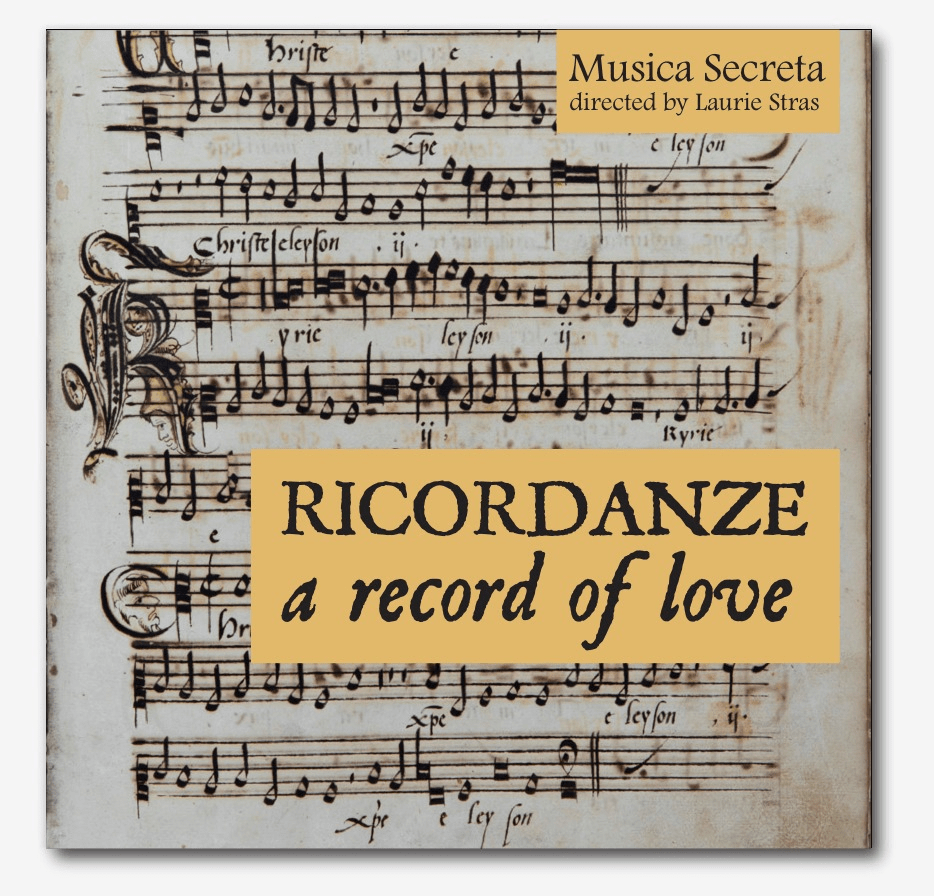
This recording from Musica Secreta is the result of serious musicological research combined with a labour of love – a fulfilling combination. Ricordanze: a record of Love is an audible culmination of a decade or more of research by Musica Secreta’s director, Laurie Stras (Emeritus Professor of Music at the University of Southampton), into the Biffoli-Sostegni manuscript (Bibliothèque du Conservatoire royal de Bruxelles, MS 27766). It dates from 1560, and is the only surviving manuscript of polyphony from a sixteenth-century convent. The title comes from the names of two nuns embossed on its binding. It belonged to San Matteo in Arcetri, a small convent community in the hills just south of Florence. It was where Suor Maria Celeste Galilei, the eldest daughter of Galileo Galilei, spent her life. Through the “haunting and extraordinary music of sixteenth-century nuns who sang their community through siege, plague, and deprivation”, the recording narrates the convent’s history, from the 1530 Siege of Florence to the final letters written by Suor Maria Celeste Galilei (a later convent choirmistress) to her father in 1634. The San Matteo is depicted in the left foreground (the red building) in Vasari’s painting of the 1530 Siege of Florence.

Vasari: Siege of Florence.

Continue reading

I Fagiolini: Monteverdi Vespers

Monteverdi Vespers of 1610
I Fagiolini, English Cornett & Sackbut Ensemble
Robert Hollingworth
St Martin in the Fields, 26 September 2025

The Monteverdi Vespers of 1610 is one of those enigmatic pieces with a complicated back story and fascinating performance quandaries, not unlike the Bach B minor Mass. Under the title of Vespers for the Blessed Virgin, it is part of a larger publication, Mass for the Most Holy Virgin for six voices, and Vespers for several voices with some sacred songs, suitable for chapels and ducal chambers. It combines music for a Mass and the Vespers together with “a few sacred songs” and a largely instrumental Sonata. It does not fit into either a traditional Mass or Vespers ritual. At the time, Monteverdi was maestro di capella to the Gonzaga Dukes of Mantua, but the score was personally dedicated and presented to the Borghese Pope Paul V in Rome, suggesting that it was a not-so-subtle calling card for preferment, representing as it does the wide scope of his compositional powers. Despite that, within three years, he was appointed maestro di capella at St Mark’s in Venice. It is unlikely that it was ever heard the Vespers in the form that we know it today. Indeed, it might never have been intended to be heard in that form.

Continue reading

Laus Polyphoniae 2025, Antwerp

Laus Polyphoniae 2025
Ars Antiqua – Ars Nova – Ars Subtilior
Polyphony from the age of cathedral builders (1140-1440)

AntwerpFlanders
22 August – 31 August 2025

Laus Polyphoniae is the annual festival organised by AMUZ  (Flanders Festival Antwerp), dedicated to the music of the Middle Ages and Renaissance era. Since its inception in 1994, the festival has grown to become the largest festival dedicated to the European heritage of polyphony. The rebirth of Notre Dame in Paris following the fire was an ideal moment to explore the musical heritage of Europe’s cathedrals – architectural masterpieces that sparked a revolution in music. Under the title of Ars Antiqua – Ars Nova – Ars Subtilior: Polyphony from the age of cathedral builders (1140-1440), Laus Polyphoniae 2025 told the story of how cathedrals became musical laboratories where the greatest composers and performers of their time created the sounds of the Middle Ages. The programme covered different periods of medieval music history: the ‘old style’, or ars antiqua, with its search for new ways of notating rhythms; ars nova, in which polyphony became ever richer and more complex; and ars subtilior, with its exquisite musical renderings of outstanding poetry. Alongside this sacred repertoire, the festival also explored the secular world of the troubadours and minnesingers. Laus Polyphoniae also focuses on young up-and-coming talent through the International Young Artist’s Presentation (IYAP), reviewed here, held on the first Saturday of the Festival.

Continue reading

IYAP 2025: International Young Artist’s Presentation

International Young Artist’s Presentation
Laus Polyphoniae 2025
AMUZ, Antwerp. 23 August 202
5

The annual International Young Artist’s Presentation (IYAP) is a coaching and presentation scheme promoted by AMUZ (Flanders Festival Antwerp) and the Musica Impulscentrum. Its aim is to help promising young musicians “grow into tomorrow’s stars”. Six young early music ensembles are invited to three days of coaching by early music specialists before performing short programmes during public concerts on the first Saturday of the Laus Polyphoniae festival (reviewed here). Unlike many similar young artist events, it is not a competition but an informal opportunity for young musicians to develop their performing style. An invited Feedback Committee of concert promoters and others comment privately on these public performances. Scarily for me (and possibly them) my reviews are far from private, but I hope they will be equally helpful.

Continue reading

Organ Recital. Mr. Stanley, I Presume!

Mr. Stanley, I Presume!
“The best organist in Europe, maybe in the world”

Andrew Benson-Wilson

Christ Church Spitalfields
Commercial St, London E1 6LY
Monday, 8 September, 2025. 7.30

Experience country house saloon soirees; the hunting horns, shepherd songs
and birdsong of the English countryside; the trumpets of military marches;
and London’s opera houses and pleasure gardens,

through the organ music of John Stanley (1712-1786).

Continue reading

Fugue State Films & RCO Cinema: Bach – The Great Toccata

The Great Toccata
Daniel Moult
Fugue State Films & RCO Cinema

I have reviewed several of the excellent films produced by Will Fraser’s award-winning Fugue State Films (see here). Their latest offering heralds a new and welcome collaboration with the Royal College of Organists in a new RCO initiative, RCO Cinema, which aims to bring “high-quality films about the organ and its music available to the widest possible audience around the world” Fugue State films on RCO Cinema will be available to watch, free, for around six to eight weeks. Future films will include pairs of films on the organ music of Olivier Messiaen and César Franck, giants of the 20th and 19th centuries. In the meantime, the first film to be offered on RCO Cinema is Fugue State Films’ The Great Toccata, featuring the distinguished English organist and teacher, Daniel Moult, Head of Organ Studies at the Royal Birmingham Conservatoire and an RCO Trustee. The film can be viewed on RCO Cinema here until the end of August 2025. If you are too late reading this to view it on RCO Cinema, streaming and box-set purchase and options are available here.

Continue reading

Programme notes: Schlick: Tabulaturen etlicher lobgesang (1512)

Mayfair Organ Concerts – The Grosvenor Chapel
5 August 2025

Andrew Benson-Wilson
Arnolt Schlick
Tabulaturen etlicher lobgesang (1512)


Salve Regina (5 verses) 12’
(Salve regina – Ad te clamamus – Eia ergo, advocata- O pia – O dulcis Maria)
Pete quid vis 3’, Hoe losteleck 3’, Benedictus 2’30,
Primi toni 2’, Maria zart 2’30, Christe 1’30
Da pacem (3 settings) 7’

Title page of Spiegel der Orgelmacher und Organisten, 1511

Arnolt Schlick (c1455-c1525) has been described as”one of the greatest masters who have left their imprint on the history of organ music“. He was one of the most important members of the influential group of German late Renaissance organ composers, known as the Colourists. Others include Conrad Paumann and Paul Hofhaimer. Schlick lived and worked in the important university city of Heidelberg. In his late 20s, he was appointed court organist to the Palatinate Elector. In 1486 he played the organ for the coronation of the Habsburg Maximilian I as the King of the Romans. In 1511, he published the Spiegel der Orgelmacher und Organisten, the first German treatise on organ building and performance. The following year he published the Tabulaturen etlicher lobgesang und lidlein uff die orgeln un lauten (Tablatures of Several Canticles and Songs for the Organ and Lute). The collection shows the early development of keyboard music. Conveniently, the organ pieces fit into the length of a lunchtime recital.

Continue reading

Organ Recital. Schlick: Tabulaturen etlicher lobgesang (1512)

Andrew Benson-Wilson
The Grosvenor Chapel
South Audley Street, Mayfair, London W1K 2PA
Tuesday 5 August 2025, 1:10


Arnolt Schlick
Tabulaturen etlicher lobgesang (1512)

Salve Regina (5 verses)
Pete quid vis, Hoe losteleckBenedictusPrimi toniMaria zartChriste
Da pacem (3 settings)

Described as “one of the greatest masters who have left their imprint on the history of organ music”, Arnolt Schlick (c1455-c1525) was one of the most important members of the influential group of late Renaissance German organ composers known as the Colourists, together with Conrad Paumann and Paul Hofhaimer. He lived and worked in the important university city of Heidelberg. In his late 20s, he was appointed court organist to the Palatinate Elector. In 1486 played the organ for the coronation of the future Holy Roman Emperor, Maximilian I, as King of the Romans.

Title page of Spiegel der Orgelmacher und Organisten, 1511

Continue reading

Oxford early music day

Oxford early music day
Continuo Foundation & Oxford Festival of the Arts,
Linarol Consort of Viols, Bellot Ensemble, Sir Nicholas Kenyon
Grove Auditorium, Magdalen College. 12 July 2025


As part of the Oxford Festival of the Arts, the Continuo Foundation promoted an Early Music Day, or more accurately, an afternoon, in the nether regions of Magdalen College. The three events included two concerts, contrasting more established musicians with a recently formed group, both recipients of Continuo Foundation grants, and concluded with a talk by Sir Nicholas Kenyon exploring “A Century of Revolution in Musical Taste”.

Continue reading

Melomania: Bojan Čičić & Stéphanie Brochard

Melomania
Bojan Čičić & Stéphanie Brochard

Oxford Festival of the Arts
Festival Hall, Magdalen College School. 10 July 2025


melos = music | mania = madness

It was Goethe who suggested that “Music is liquid architecture and Architecture is frozen music”. Something very similar could be said of the link between dance and music. From medieval times up to the present day, most music has been linked in some way to dance, with many pieces directly related to a specific dance form. For example, the well-known Baroque Suite genre with an opening Prelude followed by a sequence of dance movements, traditionally allemande, courante, sarabande, and gigue. The traditional musical forms of Passacaglia and Ciacona are both dance-based. This extraordinary duo performance between violinist Bojan Čičić and dancer and choreographer Stéphanie Brochard, commissioned by the Oxford Festival of the Arts, presented a unique combination of music for violin and a range of dance movements. It was called Melomania and was described as neither a dance performance nor a concert but a “danced concert that embodies an intense passion for music, awakening the senses”.

Continue reading

AAM: Beethoven’s 5th

Beethoven’s 5th
Academy of Ancient Music
Laurence Cummings, David Blackadder, trumpet
Academy of Ancient Music

Barbican Hall. 27 June 2025


Maria Theresia Ahlefeldt: Telemachus on Calypso’s Isle
Haydn: Trumpet Concerto
Beethoven: Symphony No. 5

In what was billed as “struggles, seduction and sparkling wit”, Laurence Cummings and the Academy of Ancient Music (AAM) gave another of their enterprising concerts, this time in the Barbican Hall. They opened with music from Maria Theresia Ahlefeldt, a composer little known today whose nationality seems to confuse many people. She was born in 1755 in Regensburg (then the permanent seat of the Imperial Diet of the Holy Roman Empire) as Princess Maria Theresia of Thurn and Taxis, the princely house that, since 1812, has had its seat in Regensburg’s Schloss Thurn und Taxis. After an ‘interesting’ early life of royal culture, privilege and intrigue, she eventually married a Danish Count against the wishes of her family (a criminal offence at the time for a royal), leading to her flight to Ansbach, part of the Brandenburg domains. In 1792, her husband later became director of the Royal Danish Theatre, where the ballet-opera Telemachus on Calypso’s Isle was first performed later the same year.

Continue reading

Bach: The Art of Fugue

Bach: The Art of Fugue
on Bach’s Original Instruments

Collegium Musicum ’23
OUTHERE/RAMEE
RAM2406. 82’41


Bach left many unanswered questions with his monumental Art of Fugue, one of which was which instruments they were intended to be played on – if, indeed, they were intended to be played at all. It was presented in open score, with a separate line for each line of music. This was common practice for many decades for music intended for scholarly or didactic purposes, particularly for organists. Samual Scheidt, for example, used the same format in his 1624 Tabulatura Nova, asking organists to copy the music into their own preferred format for performance. The instruments chosen for this interpretation by Collegium Musicum ’23 are very special: two 1729 violins and a viola by Johann Christian Hoffmann from the Leipzig Thomaskirche’s own collection of instruments of Bach’s time. The anonymous cello is from 18th-century Central Germany from the same collection. They are all usually displayed behind glass in the side room of the church.

Continue reading

Mozart 250: 1775

Mozart 250: 1775
The Mozartists, Ian Page, Rachel Podger
Wigmore Hall. 18 June 2025

Photo: The Mozartists

Haydn: Symphony No. 66 in B flat
Mozart: Violin Concerto No.2 in D major, K.211
Symphony in D major, K.196+K. 121/207a
Violin Concerto No.5 in A major, K.219


The Mozartists‘ enterprising MOZART 250 project has reached its 10th anniversary, with concerts this season focusing on the year 1775, when Mozart was about 19. The project started in 2015 on the 250th anniversary of Mozart’s childhood visit to London and will follow Mozart’s musical life and that of his contemporaries year by year until the 250th anniversary of his death in 2041. It has been described as a “journey of a lifetime”, but it will probably outlive many members of the current concert audience. Given the noise the audience made during tuning up, I am not sure if they deserve to see the project through to the end. Perhaps surprisingly, given their status in the repertoire, Mozart completed all of his violin concertos by the time he was 19. This concert included two of them, with two more coming in November. The soloist, making her debut with The Mozartists, was the distinguished violinist Rachel Podger.

Continue reading

OAE: Elgar

Elgar
Orchestra of the Age of the Enlightenment
Dinis Sousa, Frances Gregory
The Anvil, Basingstoke. 6 June 2025

In the South (Alassio)
Sea Pictures
Enigma Variations

The Orchestra of the Age of the Enlightenment has long since expanded their musical interests well beyond the bounds of the historical (18th-century Age of Enlightenment, not least into the music of the last 150 years or so, on this occasion focusing on the music of Edward Elgar from the years around 1900. Their conductor, the Portuguese Dinis Sousa, was making his debut with the orchestra. This must be a terrifying experience for any conductor, given the extraordinary musical knowledge of the OAE musicians and their willingness, in true Enlightenment manner, to question percived musical wisdom. It was also possibly his debut conducting an all-Elgar concert. Both experiences proved to be memorable for him; his rapport with the OAE players was obvious, as was his refreshing take on Elgar, notably his most famous piece, the Enigma Variations.

Continue reading

Rune & Ensemble Gamut!

Rune & Ensemble Gamut!
St Mary’s Church, Rotherhithe
Sunday 1 June 2025

There is medieval music, and there is medieval music, as demonstrated by this double-bill concert in the 18th-century riverside church of St Mary, Rotherhithe, a church known to organists for its 1764 John Byfield organ. The medieval music in the first half came from Rune, a recently formed London-based group of five musicians, but on this occasion, four: Angela Hicks, soprano & harp, Daniel Thomson, tenor, May Robertson, vielle, and Daniel Scott, recorders. Their name originates from the Old English ‘rūn’, meaning a mystical spell-song, and reflects their fascination with music from 700 years ago. Their programme was based on stories from the 14th-century Decameron, described in the concert flyer as “portraying various aspects of human nature and experience through some of the most beautiful music of the time”.

Photo: Ben Tomlin

Continue reading

My London organ recitals: August to October 2025

My London organ recitals
August to October 2025

Tuesday 5 August, Grosvenor Chapel, 1:10.
For the anniversary of Arnolt Schlick (c1455-c1525), I will play all the pieces from his 1512 Tabulaturen etlicher lobgesang, including the large-scale Da pacem and Salve Regina, the latter described as “one of the truly great masterpieces of organ art”. 


Monday 8 September, Christ Church, Spitalfields 7.30.
Under the title of “Mr. Stanley, I Presume!” this will be an exploration of English 18th-century life through the organ music of John Stanley (1712-1786) – “the best organist in Europe, maybe in the world”. It will include music reflecting country house saloon soirees; the hunting horns, shepherd songs and birdsong of the English countryside; the trumpets of military marches; and jovial London pleasure gardens. Played on the internationally renowned 1735 Richard Bridge organ.

Sunday 19 October, St Lawrence (Little Stanmore) Whitchurch HA8 6QS, 3pm.
Thirty years ago, I gave the opening recital on this Goetze & Gwynne organ, based on the surviving parts of the 1716 Gerard Smith organ that Handel played when he worked for the Duke of Chandos at Cannons. This anniversary recital of English 17th-century music will honour the lives of Martin Goetze and Dominic Gwynne. The church is a short walk from Canons Park underground station. 

More details to follow in due course, including booking details for the Spitalfields and Whitchurch concerts.