York Early Music Festival
3-11 July 2026

The 2026 York Early Music Festival celebrated its 50th birthday with a week of performances from Monteverdi’s 1610 Vespers to Bruhn’s/Keiser’s St Mark Passion, including a commemoration of the 400th anniversary of John Dowland. I was there to review the closing event of the festival, the two days of informal concerts and the final of the biennial York Early Music International Young Artists Competition (reviewed here), but managed to take in a few of the festival events.
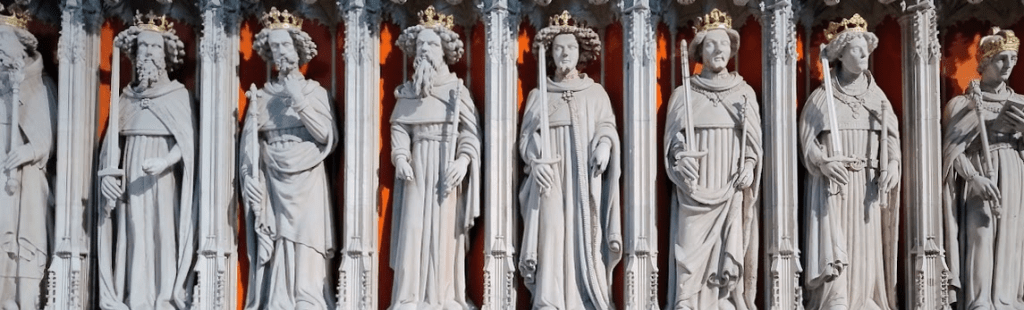
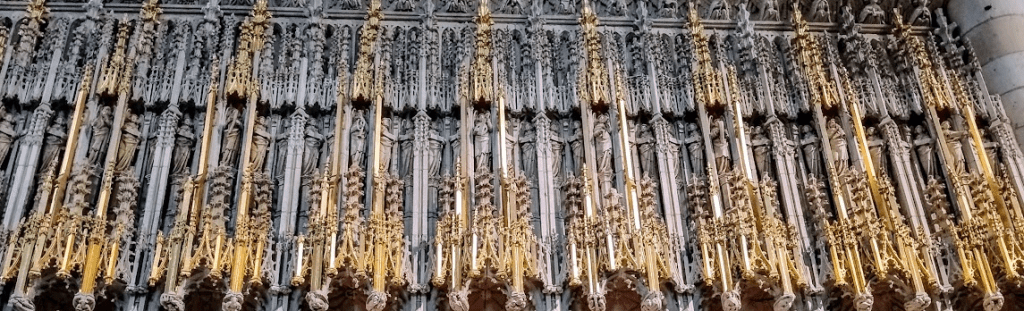
By far the most important of the festival concerts I attended was the final one, on 10 July in The Quire of York Minster, when Solomon’s Knot presented their version of a St Mark Passion. This was composed in Hamburg around 1700, copied out by Bach in the early 1710s, and revived ot exactly 400 years ago in Leipzig on Good Friday 1726. This is the version performed, although Bach also adapted it for a performance in the mid-1740s. Originally billed in the Festival as by Bruhns (not the earlier North German organist, but the music director at Hamburg Cathedral), but more usually referred to as by Kaiser, the far more likely composer. The link to the programme notes for this, and other festival concerts, can be found here. Whoever composed it, it is a remarkable piece, with fascinating insights into the Passion tradition in North Germany during Bach’s youth. It also raised interesting aspects of performance in a huge space like York Minster.
The style of composition was very different to Bach’s own Passions. Although sticking to the recently established alteration of gospel narration in recitative, arias, chorus and chorales, the links to an operatic style were far more evident than in Bach’s Leipzig Passions. Elements such as the halo of strings surrounding Christ’s words were present, although not as routinely applied. As the detailed programme notes mentioned, the composer of this Passion intensifies the emotional intensity of Christ’s cry from the cross Eli, Eli, lama asabthani? with pulsating chords, in contrast to Bach’s removal of any accompaniment altogether. Similar instrumental reinforcement of emotional content was evident in several other sections, notably towards the end. Several of the chorale melodies were familiar through the Bach Passions, but there were a few that were new to me. The instrumental forces were pairs of violins and violas, together with extended continuo forces of theorbo, cello, double bass and organ/harpsichord. George Clifford led the instruments and provided many solo moments, some from within the orchestra, others front-stage alongside the singers.
Other impressive instrumental contributions came from Kate Conway, cello, Jan Zahourek, double bass, Toby Carr, theorbo, and William Whitehead, organ and harpsichord. The acoustics of the Minster Quire were interesting. The harpsichord, theorbo and double bass were very audible, while the cello could hardly be heard. In more traditional performing spaces, it is normally the other way round. I have often wondered if the role of the harpsichord in sacred music of this era was to give a clear sense of pulse to the nearby singers, without being really audible to the congregation, whereas the organ, usually the large church organ rather than a little box organ, was very audible.
The performance by the eight singers of Solomon’s Knot was outstanding. They sang, as usual, from memory; their subtle stage movements responding to what was happening, thereby pulling the audience into the personal world of the events being depicted. Generally speaking, about half of the singers were standing at any one time, observing the singers in recitative or aria mode – a useful reminder that most of the events depicted took place within company. Gwilym Bowen took the role of the storytelling Evangelist, while Jonathan Sells giving a powerful portrayal of Jesus. The choice of singers for the other roles was fascinating, including several gender confusing choices, for example, a countertenor Judas and soldier, and a mezzo High Priest and Centurian.
I am not a biblical scholar, but there were some interesting variations in the text from the familiar Bach Passions, including a description, just after the ear-cutting incident, of a young man clothed in a linen cloth who, when challenged, “left the linen cloth behind and fled naked”. When Peter is challenged on his knowledge of Jesus, he apparently “began to curse and to swear”. There is a reference to the “onion fare of Goshen” in one of the arias, and Simon of Cyrene, who carried the cross, is described as the “father of Alexander and Rufus”.
The first of the other festival events I attended, on Wednesday, 9 July, was all’improvviso with Duo Gambelin, an unusual combination of early music and jazz-inspired contemporary music. The duo consists of Lucile Boulanger, playing viola da gamba, and Christian Elin, playing bass clarinet and soprano saxophone. As well as versions of pieces by Diego Ortiz, Monteverdi and the Sieur de Sainte Colombe, there was the (delayed) world premiere of Avner Dorman’s 2013 Rhapsody on Diwan Songs and several pieces by Christian Elin himself. This was a rather curious event for a festival devoted to early music, but it drew a good crowd to the candlelit undercroft of the medieval Merchant Adventurers’ Hall. The three ‘early music’ pieces had Lucile Boulanger’s viola da gamba playing ‘straight’, while the mellow tone of the bass clarinet intervened in a more contemporary style, generally managing a reasonable balance with the delicate tone of the gamba. The soprano saxophone was a more strident intervention, but was only used occasionally. Lucile Boulanger’s viola da gamba playing was impressive in both period and contemporary pieces, with several moments of virtuosity contrasting with more sensitive textures. Christian Elin’s own pieces were way out of my comfort zone, and sounded rather derivative, with several nods to Philip Glass combined with unsettling rhythmic complexities. The concluding Rhapsody on Diwan Songs had, as the title suggests, a Sephardic influence and was, as the title also implies, rhapsodic in structure.
The first of two concerts on Thursday, 9 July was A Gentle Air given by Helen Charlston, mezzo, Paul Agnew, tenor, and Sergio Bucheli archlute and lute, in the Merchant Taylors’ Hall (which, I realised just in time, is not to be confused with the Merchant Adventurers’ Hall). Under heatwave conditions affecting audience and performers alike, a strong band of evening sunlight stretching across the hall made for awkward performing and viewing conditions. An impressive-looking lute took the full blast of the sun to the extent that it self-destructed at the first twang of what was supposed to be two solo lute pieces. The benefit of digital scores was that with a couple of touches of the screen of his tablet, Sergio Bucheli was able to call up music by Kapsberger, which he played on the archlute. His playing was key to the success of the concert, as the two very different voices worked through a programme of French music from the likes of Lambert, Charpentier, and Rameau.
Although I have watched him conduct many times, I have not heard Paul Agnew sing for many years, when I admired him as being one of the very few English singers who could manage the distinctive French operatic haute-contre voice, a high tenor voice that does not go into the falsetto or countertenor register. Although he did not use it during this event, the power of his voice was very evident in the relatively small space, albeit balanced by some extremely quiet moments. Helen Charleston’s distinctive mezzo voice remained more balanced without losing any emotional power, her fluid vocal style incorporated elaborate French ornaments into the melodic line as the pair of voices moved around and through the notes.
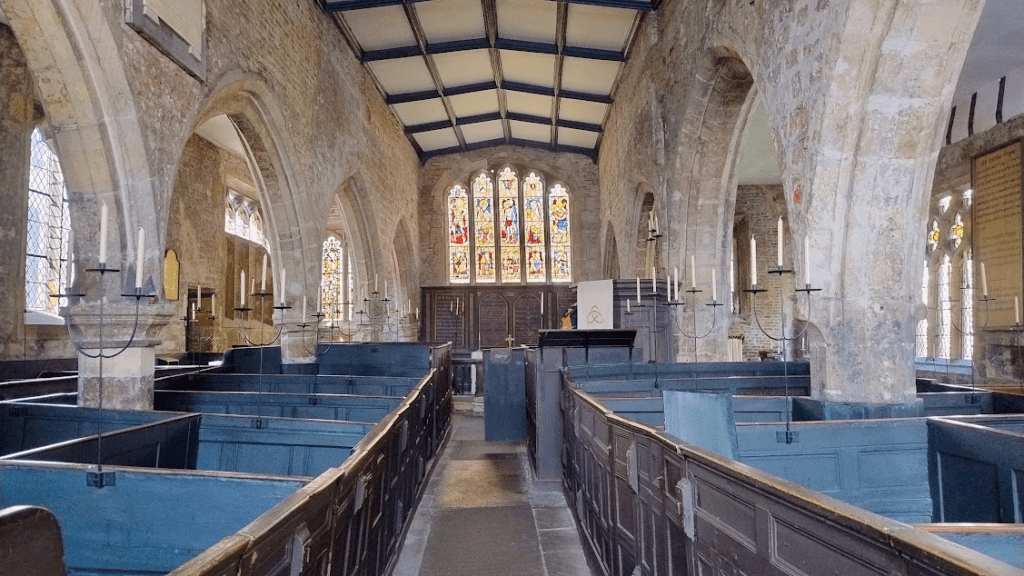
Later the same evening, the concert Love from Afar of ‘Music from the courts of Medieval France’ took place in the haunting and more-or-less candlelit church of Holy Trinity, Goodramgate (an extraordinary box-pewed church in the care of the Churches Conservation Trust) with a programme based on “an innovative collaboration” between scholars connected to the project, Musical Lives: Towards an Historical Anthropology of French Song, 1100-1330 and members of the vocal ensemble Siglo de Oro as part of “a five-year project led by Emma Dillon in the Music Department at King’s College London”. The extensive programme notes and the lengthy narration by Emma Dillon during the concert (with her promise to “create a musical cosmos”) reinforced the feel of a rather intense university project. It made for a rather tough evening, even for this seasoned concertgoer, although that was perhaps not helped by the fact that I had already been reviewing for nearly 12 hours that day. The music itself, mostly by anonymous 13th-century French composers, had a limited range of musical interest, not least because all the melodies were contained within a compass of an octave and all, at first hearing, sounded more or less similar to each other. The movement of the three singers around the space created some aural and visual contrast. There were no translations of the texts issued (I was promised an email with the texts, but they did not arrive), although we were given a rough idea of what the texts referred to in the introductions.