
Mozart Requiem: The Portuguese Historical Score
Americantiga Ensemble, Ricardo Bernardes
Americantiga AAE2601. 45′
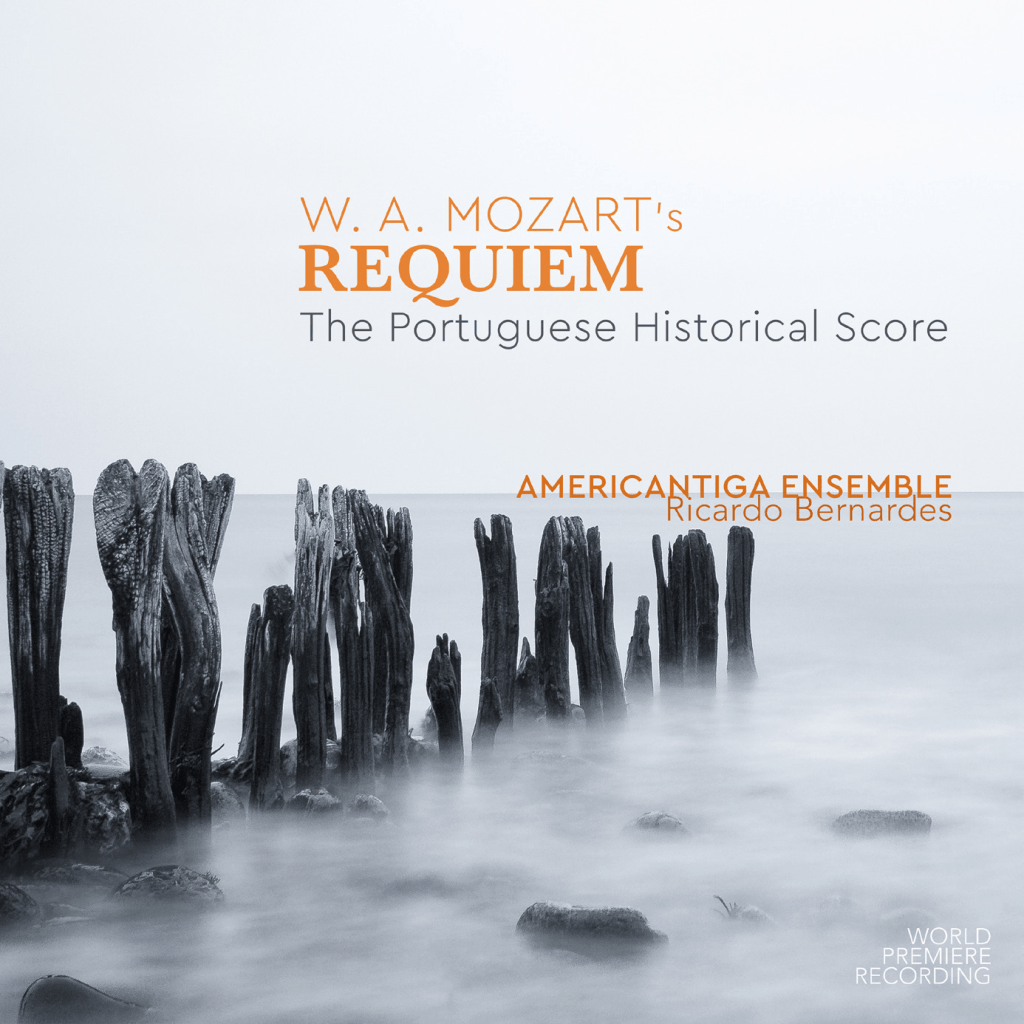
As the 2020 Covid lockdowns started, I reviewed a livestreamed concert from Portugal that a cellist friend of mine was playing in. You can read that review here, That concert, given by the Americantiga Ensemble under the local Covid restrictions of the time (which allowed a maximum of 10 people and no audience), included the première of an anonymous early 19th-century version of Mozart’s Requiem based on a manuscript found in the Cathedral of Évora. That included the vocal text of Mozart’s original, but required just four singers and a completely different chamber-style accompaniment based on basso continuo instruments (cello, two bassoons, double bass, and organ) – the cello part (played by Pedro Massarrão) is particularly prominent. They have now realised a world premiere recording of that Requiem, as part of the 30th anniversary of the Americantiga Ensemble.
This version of Mozart’s Requiem is an example of a significant yet long-neglected practice in Portugal and Brazil at the turn of the 19th century. There are similar surviving arrangements of Italian and Portuguese composers, usually intended for funerary and Holy Week services. The chamber-style instrumental accompaniment is inventive and along with the limited vocal parts, reveals a particular “transparency of the musical texture, the clarity of the contrapuntal writing, and the intimate dialogue between voices and instruments, which brings into sharp relief the work’s archaic, contrapuntal and dramatic character.”
The historical instruments use the sixth-comma meantone temperament and 415 Hz pitch typical of 18th-century Portuguese organs and matching the mid-18th-century organ (belonging to the Americantiga Ensemble), housed in the Church of the Chagas in Lisbon. The recording retains the soprano and alto, the bassoonists and bass of the live-streamed performance (Mariana Castello-Branco (sop), Arthur Filemon (alt), Frederico Projecto (ten), Hugo Oliveira (bass), with Pedro Massarrão (vc), Nathaniel Harrison (bn), Mélodie Michel (bn), Duncan Fox (db), and Sérgio Silva (org), directed by Ricardo Bernardes. A YouTube video of the 2020 performance, with Poppy Walshaw as cellist, can be viewed here.
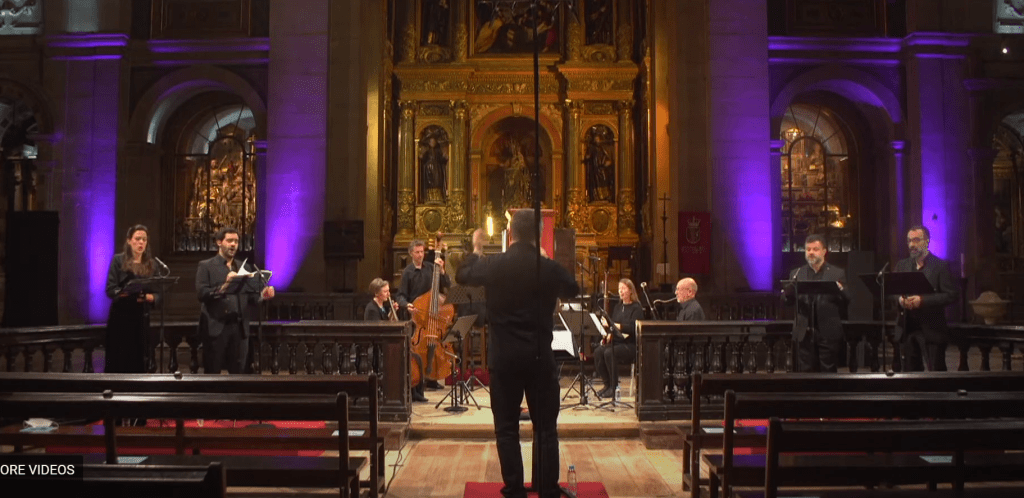
Photo of the 2020 livestream concert, with Poppy Walshaw as cellist.

