
Rune
Lost in Contemplation: Saints and Miracles
St. Bartholomew the Great, Smithfield. 26 May 2026
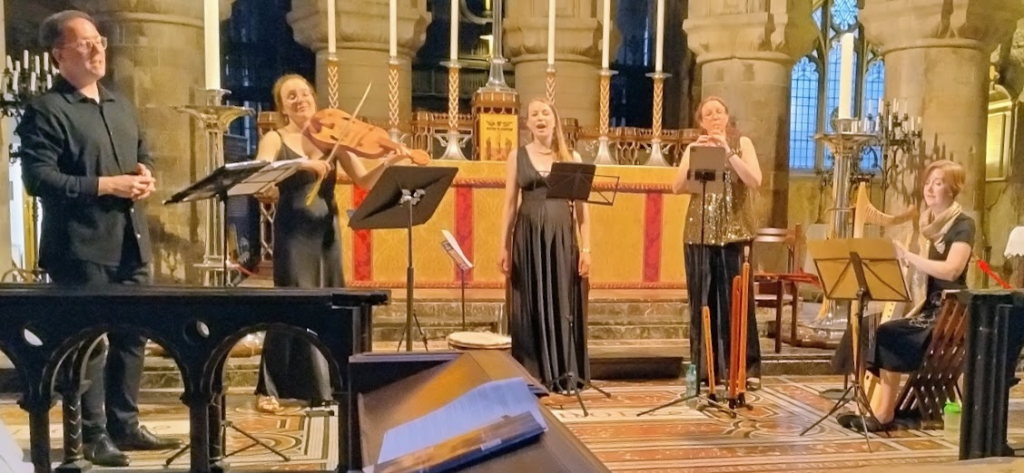
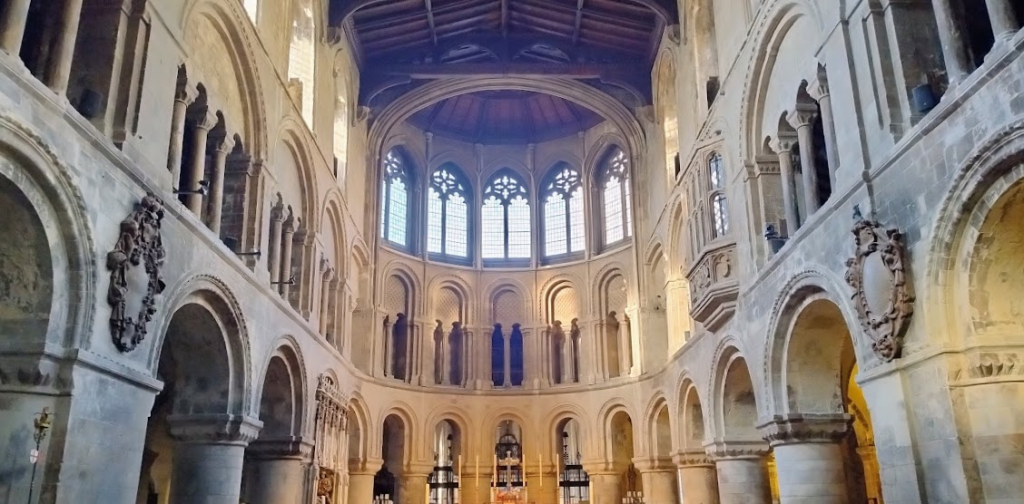
Rune, the five-strong group specialising in music “from 700 years ago and beyond”, completed a UK tour at their home base of St. Bartholomew the Great in London’s Smithfield, one of the finest medieval buildings in London, where they are Medieval Ensemble in Residence. Their concert was based on four stories of miracles, each illustrated by sequences of music, sacred and secular, ranging from 12th century Occitan Troubadour songs to the 15th century polyphony of Machaut, with birdsong-related and Marian music in between. The four stories were narrated by the members of the group, to the varying degrees of comprehension allowed by the microphone and loudspeaker situation.
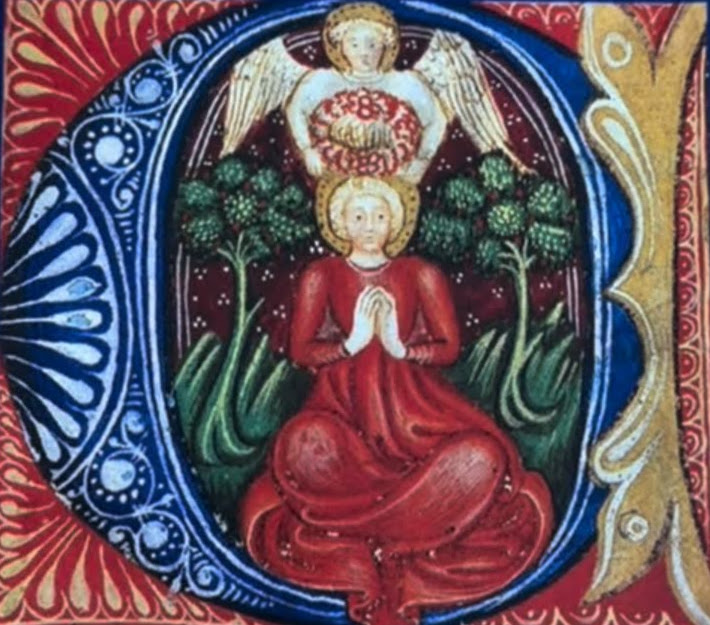
The four miracle stories started with that of Ero of Armenteira, a pious Galician nobleman who founded a monastery. Pleading with the Virgin Mary for some insight into what paradise was like, he went for a walk in the forest, where he stopped to listen to some birdsong. He returned to his monastery to find that he had been away for 300 years.
St Elizabeth of Hungary, 13th century wife of the King of Thuringia, seems to have been posthumously credited with a story that originated with her great-niece Elizabeth of Portugal, in which her charitable habit of taking bread to the poor was disguised from her/their husband/s by being turned into roses. There are many similar such miracles, dating back to the 4th century and, earlier, to the Virgin Mary. Joseph of Schönau was (apparently) a German monk who, prior to entering a monastery, led an eventful life that included being condemned to death for robbery, being saved by surviving the ordeal of the red-hot iron, only to be hanged by the real robber’s friends. Surviving that, he joined an abbey, but on his death was found to be female.
The final story was based on the Virgin Mary herself, Marian devotions having been the subject of several pieces – rather appropriately, as she (apparently) appeared at St. Bartholomew the Great in the 12th century to admonish the canons of the foundation for not praising her, or her son, enough.
These four medieval miracle stories were each paired with music from across Europe. Music from the Cantigas de Santa Maria, Machaut, Landini, Oswald von Wolkenstein, and the Buxheimer Orgelbuch accompanied their stories of faith, transformation, and the intersection of the miraculous with human experience – a “rich blend of story, sound, and history”.
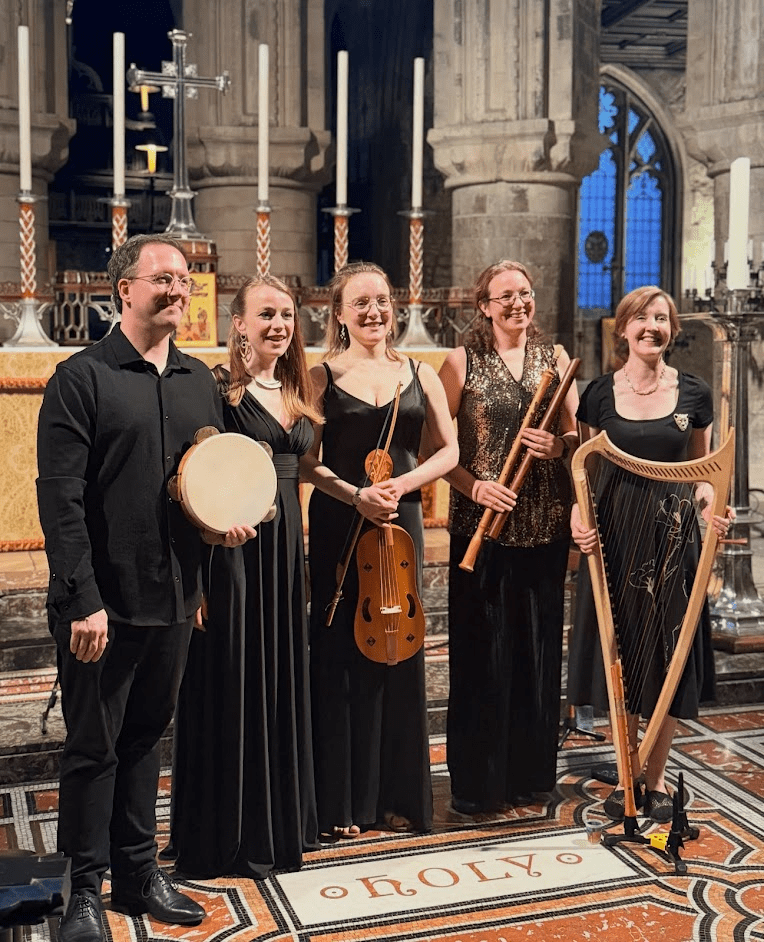
Musically, this was particularly impressive, albeit as befitting its Lost in Contemplation title, a rather meditative exploration of medieval music. Even with the appearance of the bagpipes in the second half, the mood remained restrained. One suitably restrained instrument that I had just about heard of, but had never actually seen or heard, was demonstrated by Emily Baines – the douçaine, an instrument of possible Armenian/Azerbaijan/Turkish origin related to the duduk, balaban and bey. There are no surviving examples or pictures, although a shawm-like instrument found on the upper deck of the Mary Rose has been described as a douçaine. The sound of Emily’s reconstruction is as far from a shawm as you can get, the subtle sound approaching that of a muted oboe or clarinet, matching a medieval description of being “mellow and sweet sounding”. It appeared, perhaps appropriately, in the 12th-century Occitan Can vei la lauzeta mover, a song of unrequited desire.
There were two purely instrumental pieces, the first being one of the two estampies from the c1360 Robertsbridge Codex, generally considered one of the earliest examples of keyboard music, and usually thought to be intended for organ. The complex hocketing and mind-boggling system of repeated sections with alternating overt and clos endings, rather supports the notion that estampies were intended to concentrate the minds of youth from less cerebral thoughts. The title is usually referred to as “Retrove”, but on this occasion, it was given under an alternative name of “Petrone”.
The other instrumental piece was Machaut’s rondeau Ma fin est mon commencement, an example of the extraordinary mathematical tricks of the late medieval composers. Two players (May Robertson, vielle, and Emilt Baines, recorder) play the same tune, but one starts at the end and works backwards until they meet in the middle while a third player (Jean Kelly, Gothic harp) plays another line forwards and backwards three times.
Vocally, the honours went to Daniel Thomson and Angela Hicks, their voices well-matched when singing together. Sometimes they sang alternative verses of a song, which in one case caused a change of gender from the text when the “noble lady” of the text was sung in two verses as a male. Even in these enlightened times, it did make me wonder who was doing what to whom. Incidentally, that song was “Unter den Linden”, well known to keyboard players through Sweelinck’s variations, although I wonder how many players know what the text of the song was.
Rune returns to St Bartholomew the Great on 16 October.

