
MOURN
Figure, Alkanna Graeca
Frederick Waxman, Alexandra Achillea
Stone Nest. 17 April 2026

Event promotional photo: “Nyx (the night),” 2019 by Ioanna Sakellaraki
Stone Nest is not a typical early classical music venue, and this wasn’t a typical early classical music concert. A former Welsh Presbyterian church, since 1982 it has been a nightclub, a pub, a squat, and, since 2012, a new (work in progress) home for performing arts in central London. The smoke-filled space prevented me from appreciating the architecture of the internal space, but gave a clue as to the nature of the performance to come. That was a joint production between Frederick Waxman’s “forward-thinking” historical performance ensemble, Figure, who are “committed to reaching new and existing audiences through immersive musical experiences”, and the three singers of Alkanna Graeca, specialists in polyphonic music from the Balkans, the Mediterranean, and the Black Sea, blending “raw folk traditions with soundscapes and improvised sounds”. Their programme brought together these seemingly disparate strands in an extraordinary musical-theatrical exploration of the experience of loss, imaginatively staged by Alkanna Graeca’s Alexandra Achillea and Konstantina-Maria Spyropoulou, with musical direction by Frederick Waxman.
In theory, the two genres alternated, although the clever production segued most of the pieces with improvisatory instrumental links. The evening started with the three singers of Alkanna Graeca (Alexandra Achillea, Irini Arabatzi, and Dunja Botic) standing on a balcony above the stage singing Mirgangula, an engaging polyphonic folk song from Georgia. Their richly textured and tightly focused voices would become one of the highlights of the evening. The repeated descending four-note bass motif ( a motive that appeared in several of the classical pieces) underpinned the Passacaille from Lully’s Armide, given a free interpretation by the instrumentalists of Figure – Naomi Burrell and James Toll, violins, Sergio Bucheli, theorbo, Jan Zahourek, double bass, with Frederick Waxman playing chamber organ. The Balkan songs featured various permutations of the classical instruments, together with a prominent contribution from Konstantinos Glynos playing the Kanun, an evocative plucked zither-like instrument with roots dating back to the 19th-century BCE Assyrian Empire, popular in the wider Arabic Middle-eastern world, Armenia and Greece. Its name is based on the Greek word for law, and is apparently the root of the musical term ‘canon’, a quasi-legal musical construction that Bach often used to underline his settings of text involving the law or lawyers.
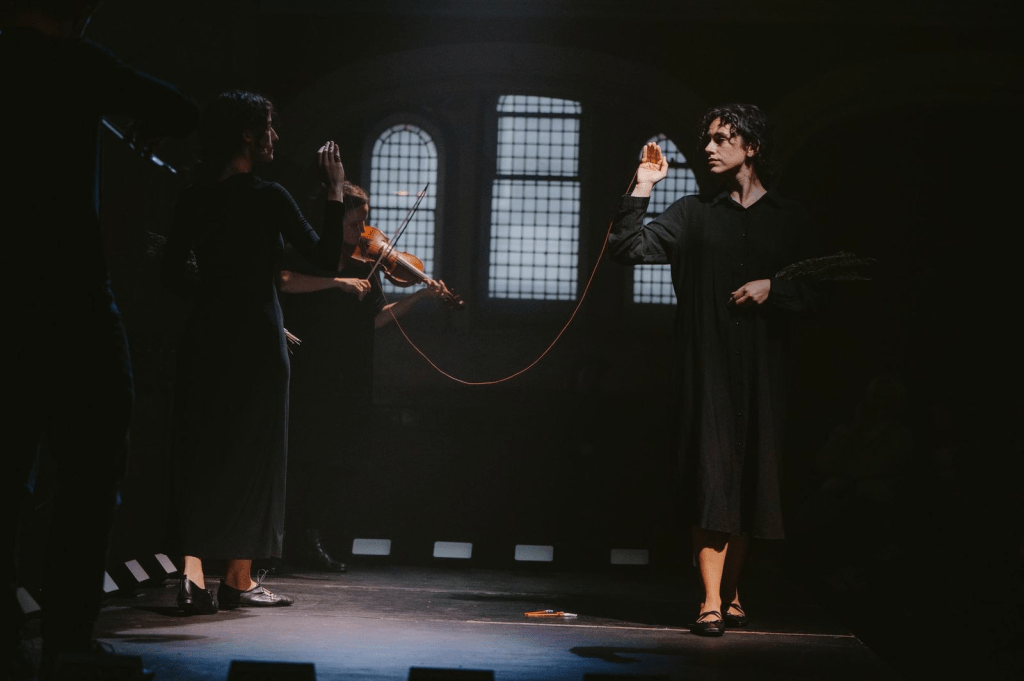
Alexandra Achillea and Irini Arabatzi, Skaros. Photo: Karolina Wielocha
Music from Albania and Epirus (Skaros, a shepherd song performed as an intricate dance with Alexandra Achillea and Irini Arabatzi linked by string and holding the grasses mentioned in the text) led to the dramatic highlight of the evening, a moving and theatrically compelling performance of Monteverdi’s Lamento della ninfa (The Nymph’s Lament) segued into Cesti’s Disseratevi abissi from the opera L’Argia, the descending bass line now intensely chromatic. Monteverdi’s score asks that the Lamento be sung al tempo dell’affetto del animo (at the tempo of her emotions/soul), something achieved to an extraordinary degree in both these dramatic pieces. Alexandra Achillea and Irini Arabatzi produced one of the most emotionally engaging performances I have ever heard. A very apt theatrical device used the multiple symbolism of the pomegranate to reinforce the text, before becoming a very effective representation of the self-inflicted love-lost harm.
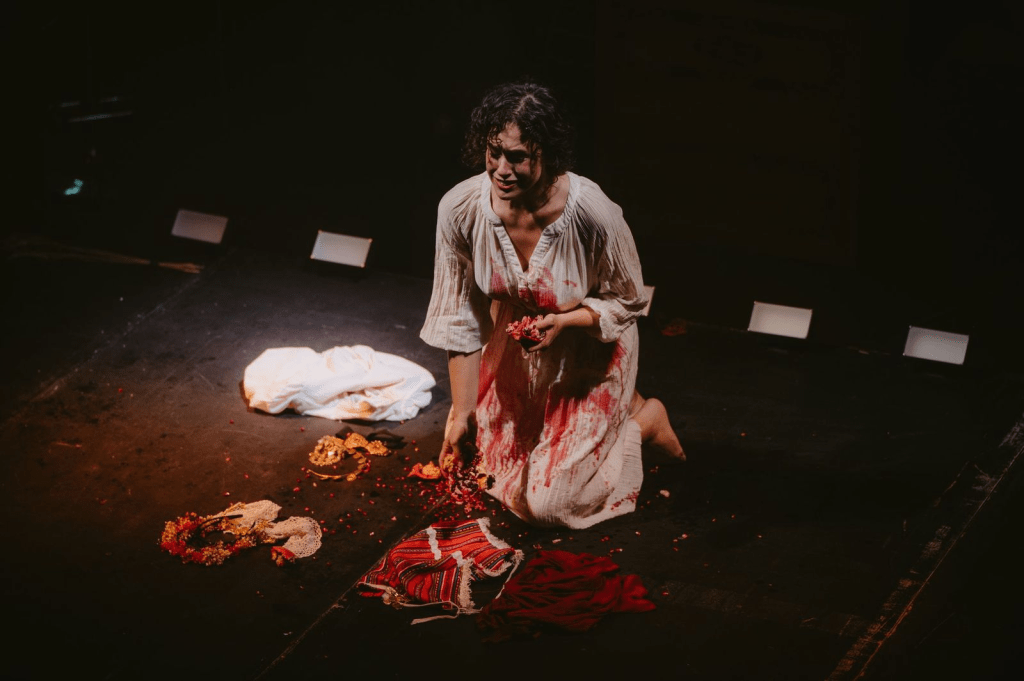
Irini Arabatzi: Cesti’s Disserratevi abissi. Photo: Karolina Wielocha
Strozzi’s Lagrime mie was contrasted with folk pieces from Thrace, the Vlach peoples and Epirus, the latter the polyphonic lament Lemonanthous se stolisa, sung by Dunja Botic. A freely improvisatory instrumental version of Handel’s Lascia ch’io pianga (with notable contributions from violinists Naomi Burrell and James Toll) led to the concluding Croatoslenian Drijema mi se, drijema and the conclusion of an extraordinary musical and theatrical evening. Performed over two evenings, with sell-out audiences of a distinctly different profile from the usual classical music concert, covering a wide age range and a refreshing mix of ‘types’, this event showcased an innovative way of presenting music to a wider audience, searching out the links between music of different genres.
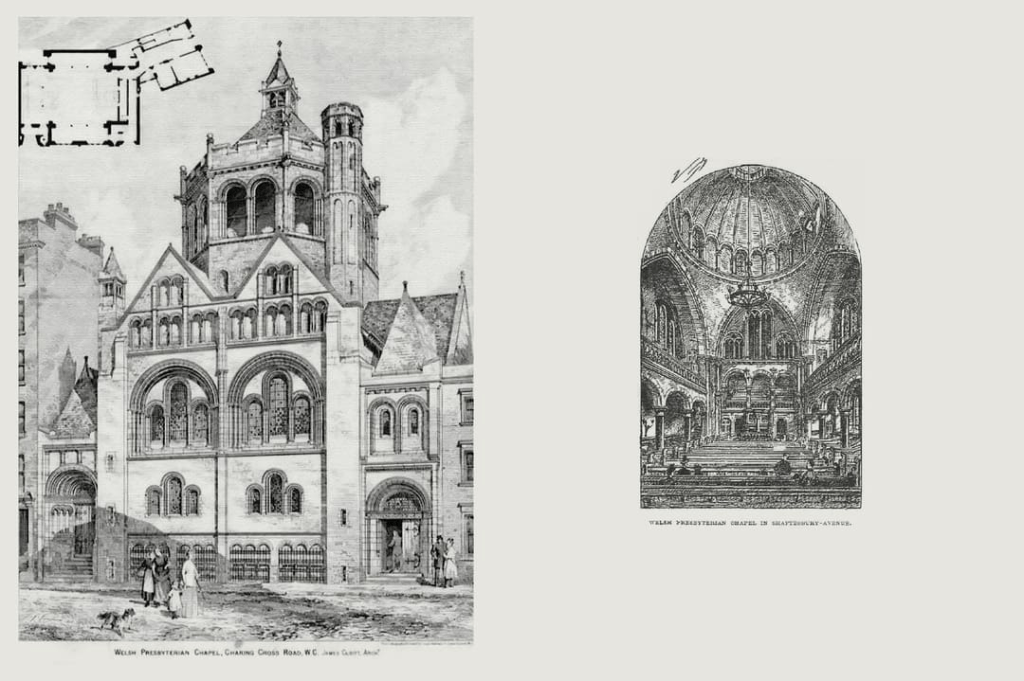
The former Welsh Presbyterian church, now Stone Nest
 Andrew Benson-Wilson : Early Music Reviews +