
London Festival of Baroque Music
Shut the Gate Against my Thoughts: An Exploration of Melancholy
Nardus Williams & Liz Kenny
Smith Square Hall. 30 October 2026
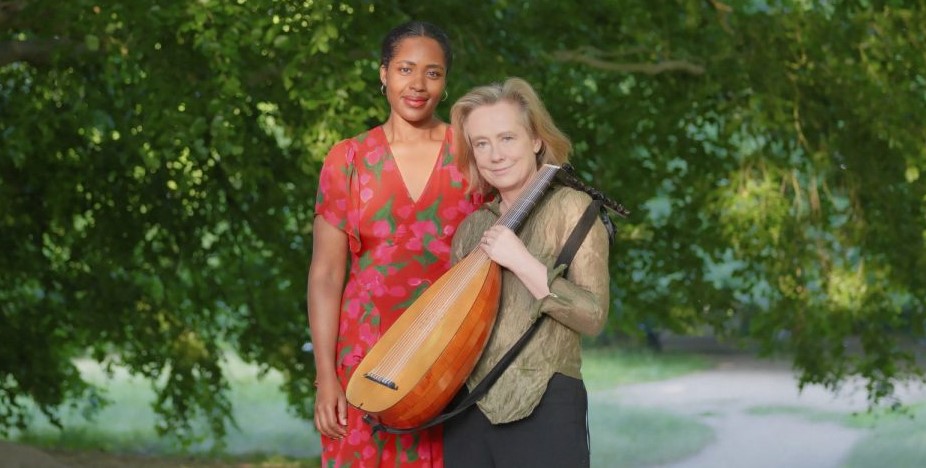
Photo: Camilla-Greenwell
This early evening concert took its title from the opening piece, John Danyel’s If I could shut the gate against my thoughts, the second line of which is And keep out sorrow from this room within. A noble sentiment, but not an appropriate on for a hour of music devoted to melancholy in its various musical forms. Billed as providing “Moments of profound lament lifted by flashes of wit and light, revealing melancholy not merely as sadness, but as a rich and complex emotional landscape”. That rich emotional landscape included music by John Dowland, Robert Johnson, Francesca Caccini, Claudio Monteverdi, and Barbara Strozzi with a focus on 16th and 17th Europe, the peak of the lute song repertoire.
Nardus Williams’ programme note set this period within the wider context of the focus on melancholy, noting its roots in antiquity and the four humours of the Ancient Greeks. With the exception of Lucrezia Vizzana’s Christmas-themed O Magnum Mysterium, the textural themes were generally of a love lost secular genre. I do find the texts of these lute songs a bit of a struggle to follow, let alone understand, but the musical expression does help to make the mood more apparent, in this case, aided in particular by Liz Kenny’s excellent lute and theorbo accompaniments. She also provided well-judged interludes segueing pieces together (neatly avoiding unwanted applause) and covering key-shifts. Her only solo spot was one of Kapsberger’s extravagant and freely improvisatory Toccatas, the music getting more and more anarchic and virtuosic as it developed.
Nardus Williams seems to have caught the attention of many leading early music directors and orchestra, and went down well with the audience, but I confess that I found her persistent and deep vibrato both unsettling and not within my understanding of early music practice, where vibrato is generally seen as an ornament to be applied occasionally, rather than all the time.
A more sensible seating arrangement in the Smith Square Hall than the two previous concerts meant that most of the audience had a good view of the performers, although the row and seat numbering was just as complex as before, leading to one couple arguing about where their seats were before deciding that they were just going to sit where they wanted, regardless. Another interesting contribution from the audience was a woman who disturbingly chatted to various neighbours, then, despite the very professional way that the performers had controlled audience applause, very appropriately, given the mood of the occasion, loudly announced to all and sundry that she “had wanted to clap before” at the first applause point and then, at the end, demanded that we all clap louder, despite not actually applauding herself. I think she enjoyed it.
The encore was Dowland’s Come again, introduced with the comment that “not all lute songs are miserable”, an interpretation of the text that I didn’t quite follow, with its I sit, I sigh, I weep, I faint, I die / In deadly pain and endless misery line and the wish for death from the unrequited lover.

