Charpentier: David and Jonathan
New Sussex Opera, Bellot Ensemble, Toby Purser
Theatre Royal, Winchester. 25 October 2026
New Sussex Opera and the Bellot Ensemble completed a short South-East England tour of Charpentier’s David and Jonathan with a performance in the Theatre Royal, Winchester on World Opera Day. This follows their 2024 tour of the The Dragon of Wantley, reviewed here. The first performance of David et Jonathas was at the Jesuit Collège of Louis-le-Grand, Paris in February 1688 when it was performed together with the play, Saul, with each of the five Acts of the Charpentier’s tragédie en musique interspersed with sections of the play. A huge success at the time, it was reprised at several other Jesuit colleges over the following 50 years, but was then more or less forgotten until recent times. New Sussex Opera is a community opera company based in Lewis, the community providing the chorus and various subsidiary solo roles in this production and, presumably, also helping to raise the funds for touring performances like this. Some of those funds went towards engaging the Bellot Ensemble, currently Radio 3 New Generation Baroque Ensemble and the six principal soloists for this production: Harun Ellis Tekin, David, Tom Lilburn, Jonathan, Massimo Modoni, Saul,Daniel Chomiak, Achis/Samuel, Nadiia Chaichenko, Pythoness, and Ambrose Chiu, Joabel.
Taking on French Baroque opera is a brave venture for any opera company, not least becaus of its distinctive performing directions and voice types, florid musical lines and a plethora of complex ornaments. The seven principal soloists demonstrated an understanding of these issues, and the community Chorus of New Sussex Opera made a valient attempt at following the French idiom, with varying degress of success both as a chorus and in the subsidiarty roles. As the saying goes, when they were good, they were very very good, but their ‘bad’ was very far from horrid! I wouldn’t be surprised if one or two of the step out soloists (some of which were part of NSOs new Emerging Artist scheme) soon make the ranks of bought-in principals.
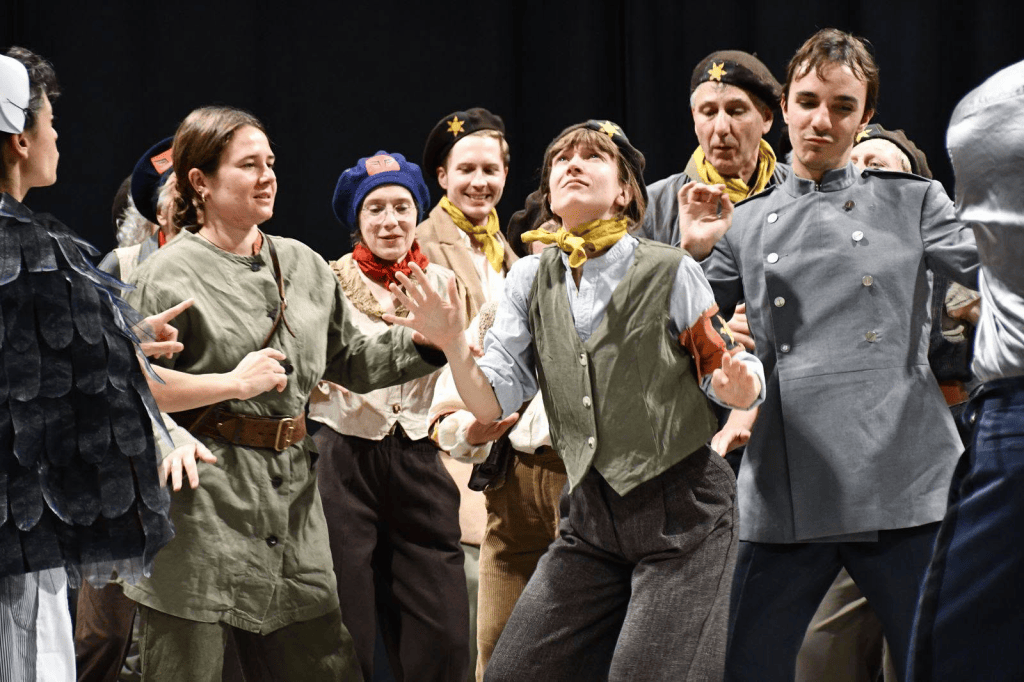
On top of the musical challenges, the distinctive school of French 18th century opera brings many challenges in direction and production. One of these challenges is how to deal with the range of dances that concludes each Act. This was done with a mixture of chorus hand movements to one or two actual dance sequences. Bearing in mind that this was intended for performance in a Jesuit institution rather than a grand Parisian opera house, this could well have been not far from what happened at the original productions.
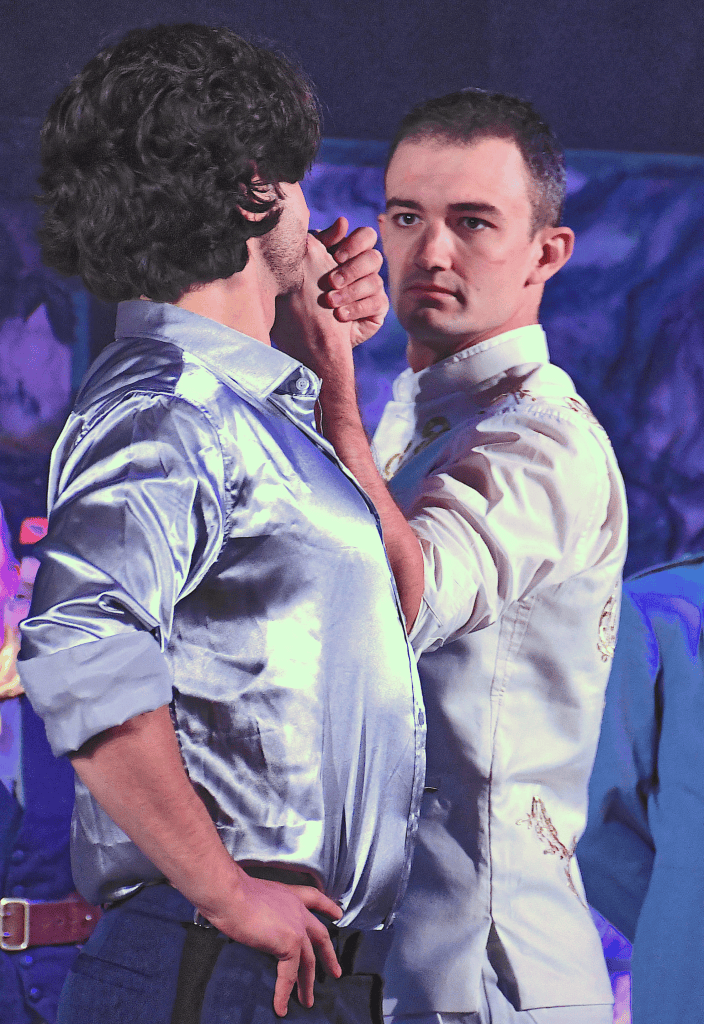
Charpentier’s opera is not an easy work to direct, not least because of its rather loose dramatic structure which in its original performance may have been aided by the intervening play on Saul. Although director Paul Higgins grasped the difficulties impressively, I had a number of concerns. One key directorial decision that I would question was the use of an English translation and the lack of English surtitles. French, like Italian, is a very particular language with many implications for musical performance, not least the limited use of consonants, allowing musical and textural lines to flow in a way that is much harder in English. But on this occassion, even when sung in English, the words were frequently difficult, and often impossible, to discern. With the bizarre exception of Saul, the costumes placed the action in or around a second world war Dad’s Army, a welcome alternative to setting it within the complex Middle Eastern battles of recent years, although I not sure if many of that era would have dressed entirely in white, as Jonathan did on this occasion. Saul was cosplayed as an extravagent Louis XIV complete with a bizzare looking crown that made it look as though his wig had caught fire.
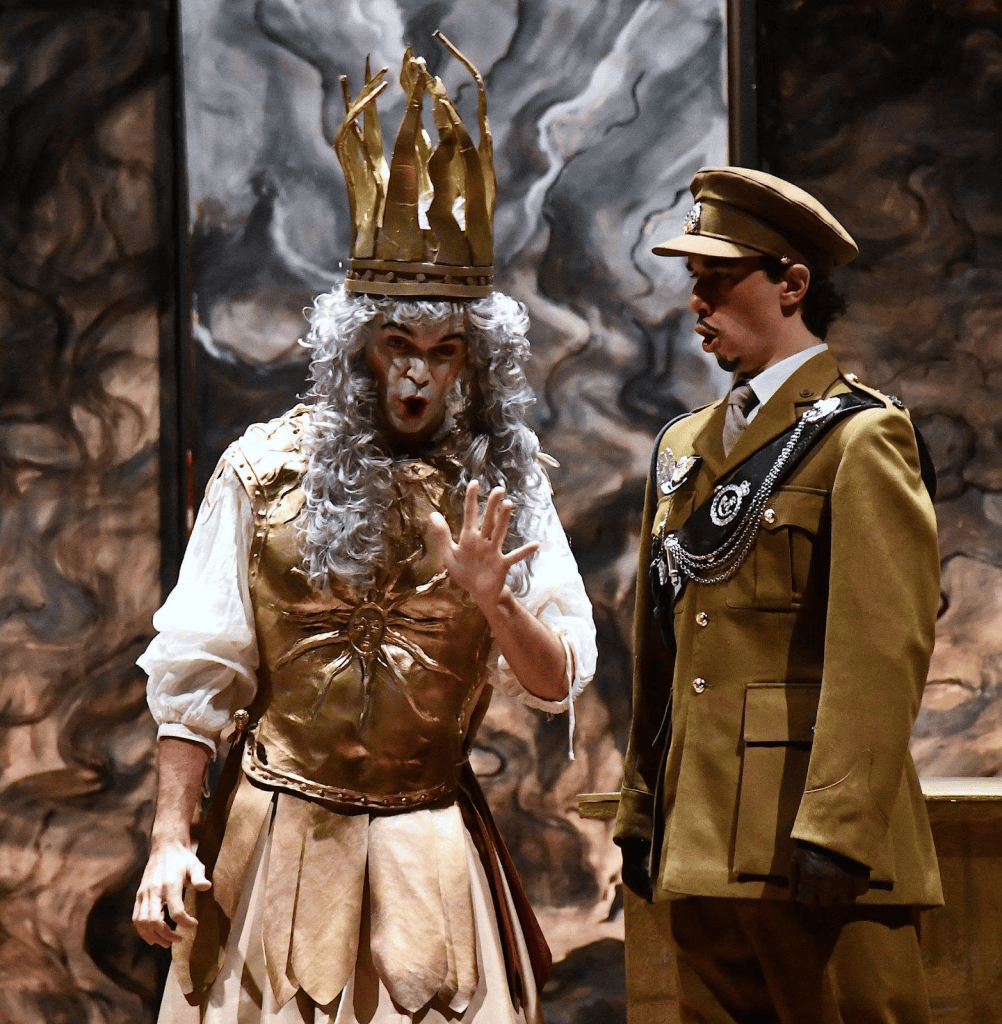
Conductor Toby Purser kept eveything together well and was excellently supported by the impressive 12-strong Bellot Ensemble. Notable instrumental contributions came from the principal continuo players, Matthew Brown, harpsichord, and Madison Marshall, cello, Hannah Parry, recorders, and Liam Fleet, bassoon. I did wonder if there should have been more use of the distinctive French Baroque use of notes inégales (the subtle lilt given to notes) and ornaments from the orchestra and soloists. Charpentier intended the role of Jonathan to be sung by a boy treble, with David in the very special French timbe of the haute-contre. a high tenor that avoids slipping into a countertenor register. This David only very occasionally managed the haute-contre voice, notable in the touching, if overlong, scene of Jonathan’s death.
The enormous list of acknowledgements in the programme indicates the work involed on putting on a opera like this, which ranged from Christopher Cowell, translation, Mollie Cheek, designer, Daisy Hardwick, lighting design, Namiko Gahier-Ogawa, choreographer, and Benjamin Poore, dramaturg, to various assistant and subsidiary roles, the compiler and writers of the excellent programme booklet, and the important fund-raisers and supporters.