Handel: Serse
Academy of Ancient Music, Laurence Cummings
Barbican Hall, 19 June 2026
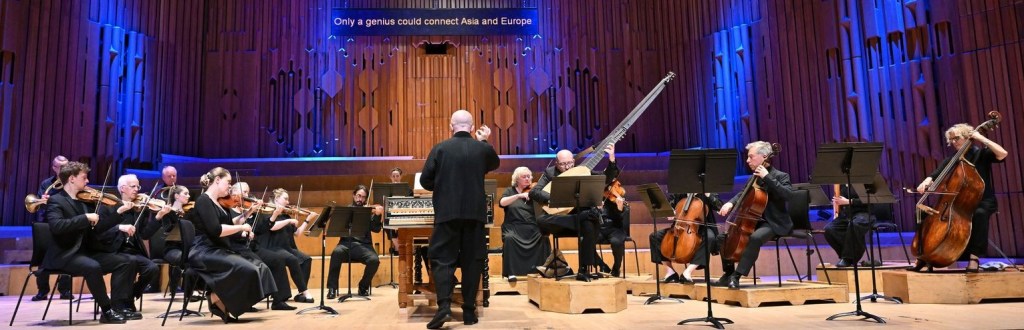
Perhaps one day somebody will compose an opera about a magalomaniac world leader wreaking havoc on the state of Persia (aka Iran), while constructing vast self-promotional construction projects at home. If so, that might trump the storyline of Handel’s Serse, an opera based on the antics of Xerxes I, the successor of Darius the Great of the Achaemenid Empire, first performed in London in April 1738. Xerxes was depicted in Aeschylus’ play The Persians, first performed in 472 BCE, shortly after Xerxes ill-fated invasion of Greece. The play presents him as an effeminate figure whose “hubristic effort to bring both Asia and Europe under his control leads to the ruin of both himself and his kingdom”. Later commentators describe him as “a power-crazed despot, inept, ridiculous, self-serving, self-loving, narcissistic ruler of the free world, with claims to be a god-king”.
Handel’s Serse takes a more detached view of the life of Xerxes, with passing references to his apparent infatuation with a tree (via the famous opening aria Ombra mai fu), and the bridging of the Hellespont. His focus is on the complicated interactions between Serse (betrothed to the jilted Amestre, who is disguised as a man) and his brother Arsamene (in love with Romilda), the sisters Romilda and Atalanta (both in love with Arsamene), Arsamene’s comedic servant Elviro (sometimes disguised as a flower-seller), and Ariodate, the bemused father of the sisters. Apart from Elviro’s flowers, the only prop was a letter that passed between all the wrong people.
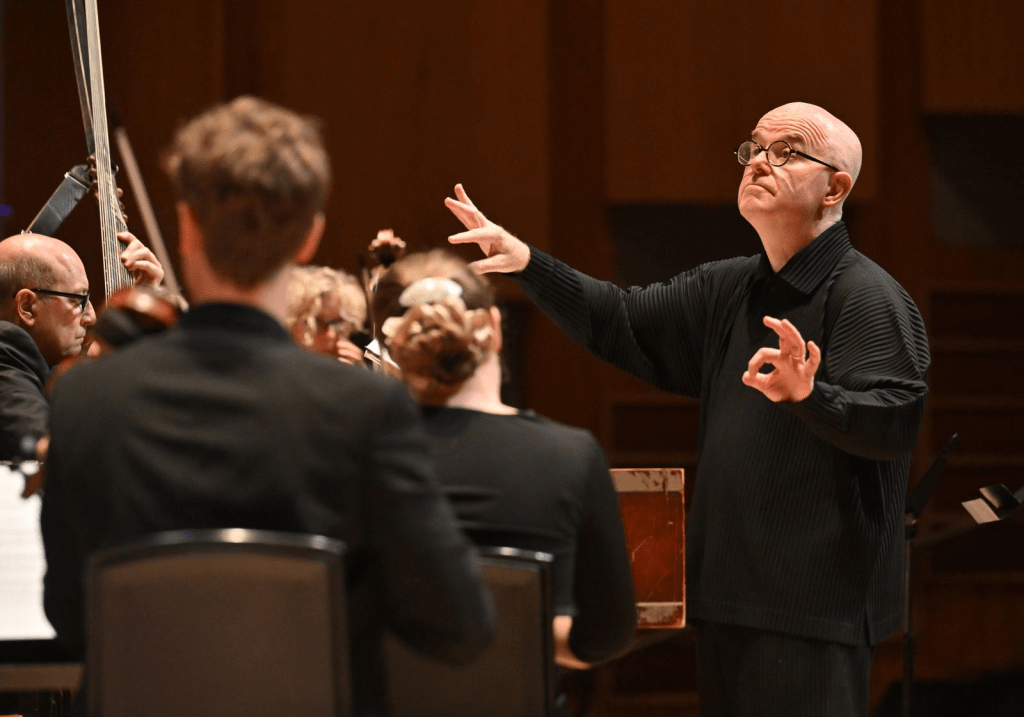
Laurence Cummings
Serse is one of Handel’s more curious operas. Written in 1738 towards the end of his opera-writing career, its innovative compositional style was rather lost on the audience, as was the libretto, with Charles Burney calling it “one of the worst Handel ever set to Music”, containing “a mixture of tragic-comedy and buffoonery”: exactly what Handel intended. Other commentators noted Handel’s use of many short arias, without the usual convention of the da capo, linking it to the musical style of the many ‘ballad-operas’ that had become the rage. It only managed five performances, but after its modern resurrection has become one of Handel’s best known operas, perhaps because of Handel’s many innovations.
The first of the short arias is the opening Ombra mai fù, which became one of Handel’s most famous pieces, albeit under the spurious name of Handel’s Largo (it is marked Larghetto). I wonder how many people outside the opera-loving world realise that this aria is sung by a clearly dotty King to a tree, albeit in praise of the shade it provides? Serse’s dottiness continues throughout the opera, to the bemusement of the other characters. Although in this concert performance there was little specific ‘acting’, the singers reacted visibly to the text with excellent interaction between the characters, not least in avoiding the often-witnessed ‘walking off when you are being sung to’.
The singers were Paula Murrihy, Louise Alder, Rachel Redmond, Rebecca Leggett, Claudia Huckle, Luca Tittoto, and Thomas Chenhall, all of whom excelled in the varying complexities of their roles and of Handel’s music. Cadenzas were well judged, as were ornaments, despite the reduction of da capo arias, where singers normally show their wares. Acting-wise, Rachel Redmond stood out in her portrayal of the coquettishly scheming Atalanta, along with Thomas Chenhall, who relished the comedic aspects of his role.
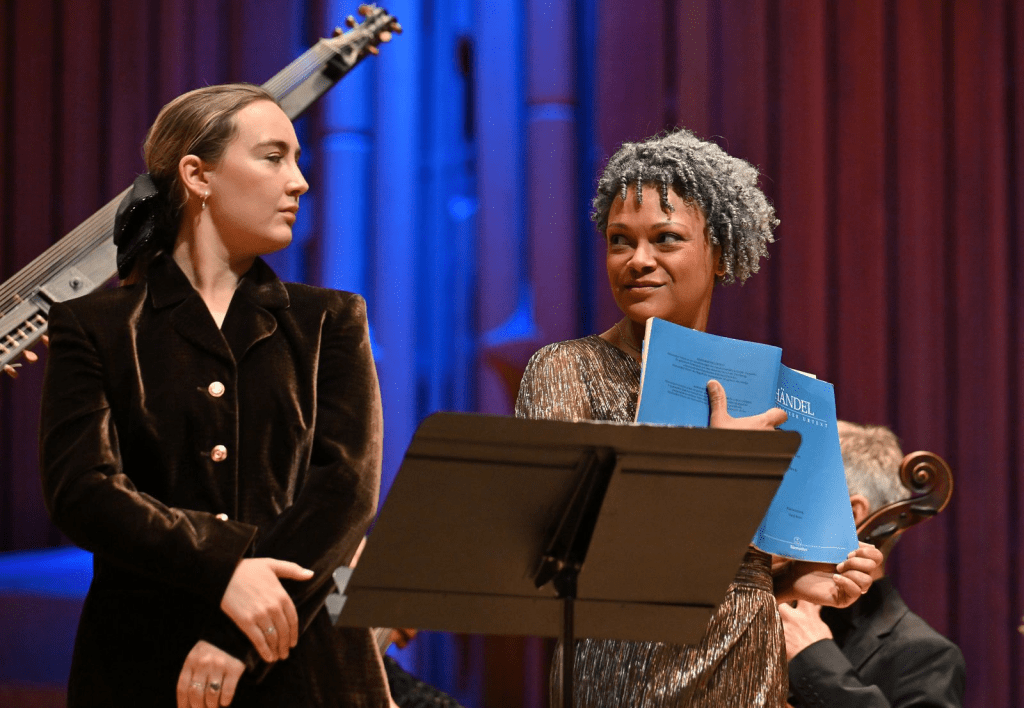
Rebecca Leggett and Rachel Redmond
There were very few opportunities for individual instrumentalists to excel, although I did like the recorder and oboe playing of Joel Raymond and Grace Scott Deucher, notably on flutes in the extended sequence following the tree incident. Joseph Crouch had a leading role as continuo cellist, with support from Judith Evenas, bass and Ursula Levaux, bassoon. The orchestra was small by Barbican standards (with strings of 4,4,2,2,1), but exactly right for Handel purposes. I am not sure how well the sound would have carried into the upper reaches of the circle, but I liked the way the delicate sounds drew the ear into the music.
Laurence Cummings took sensible tempos throughout, although I did wonder if he would take Ombra mai fù a little faster given its Larghetto tempo marking. Cummings is a consummate Handelian and seems to live the music. His surtitles helped us try to follow what was going on, and were visible from the audience without having to look well above the musicians, as is often the case. This concert Fconcluded the AAM’s London season. The opening concert of the next season is on 1 October in Milton Court.
Production photos: Mark Allen

