
AAM: Handel Serse

Handel: Serse
Academy of Ancient Music, Laurence Cummings
Barbican Hall, 19 June 2026
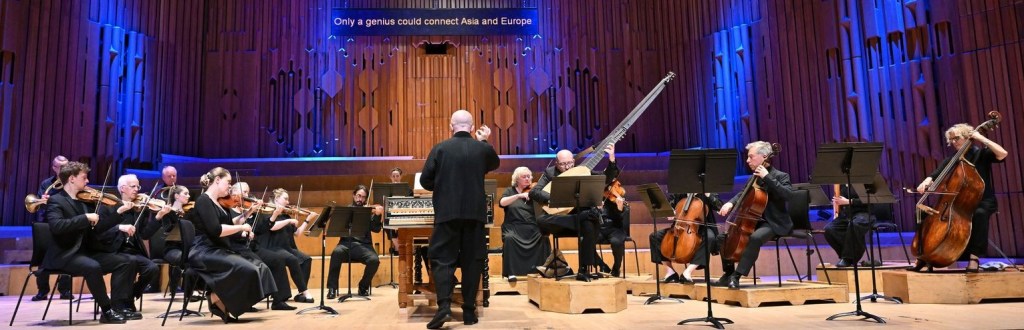
Perhaps one day somebody will compose an opera about a magalomaniac world leader wreaking havoc on the state of Persia (aka Iran), while constructing vast self-promotional construction projects at home. If so, that might trump the storyline of Handel’s Serse, an opera based on the antics of Xerxes I, the successor of Darius the Great of the Achaemenid Empire, first performed in London in April 1738. Xerxes was depicted in Aeschylus’ play The Persians, first performed in 472 BCE, shortly after Xerxes ill-fated invasion of Greece. The play presents him as an effeminate figure whose “hubristic effort to bring both Asia and Europe under his control leads to the ruin of both himself and his kingdom”. Later commentators describe him as “a power-crazed despot, inept, ridiculous, self-serving, self-loving, narcissistic ruler of the free world, with claims to be a god-king”.

Continue reading

BBC Prom 74: Handel – Theodora

Handel: Theodora
Arcangelo, Jonathan Cohen
Royal Albert Hall, 7 September 2018

Of all Handel oratorios, the one that is probably most likely to put you off Christianity (or put you even further off Christianity) is Theodora. Set during the reign of the Emperor Diocletian, the story is of two love-struck Christians who refuse to honour the Roman gods, and then vie with each other as to which of them is to be put to death as a result, each insisting on taking the place of the other until the exasperated Valens, President of Antioch, has them both sent to their heaven. It was unusual for an opera or oratorio to end badly for the leading lights, which perhaps explains its lack of success at the time. The text doesn’t bear much scrutiny either, the earlier arias of the Christian contingent and their confidence that the Lord would provide protection ‘here and everywhere’,  and the chorus’s response that the Everlasting One was ‘Mighty to save in perils, storm and death’, seemed a little ill-judged in the forthcoming circumstances.   But, setting aside the silly plot, the text and music express aspects of love, religious freedom, bloody-mindedness, and the assumptions that Christians are far more musically intelligent than ‘heathens’. The latter is a particular feature of Handel’s music, with the choir switching between Heathen and Christian to distinctly different music, the former generally rather four-square, clumpy, and harmonically unadventurous, the latter tuneful and svelte.  Continue reading