Mozart 250
“Ronald Brautigam plays Mozart“
The Mozartists, Ian Page, Ronald Brautigam
Cadogan Hall, 30 June 2026
Serenata notturna, K.239
Piano Concerto No. 6 in B flat major, K.238
Piano Concerto No. 8 in C major, ‘Lützow’, K.246
Divertimento in D major, K.251
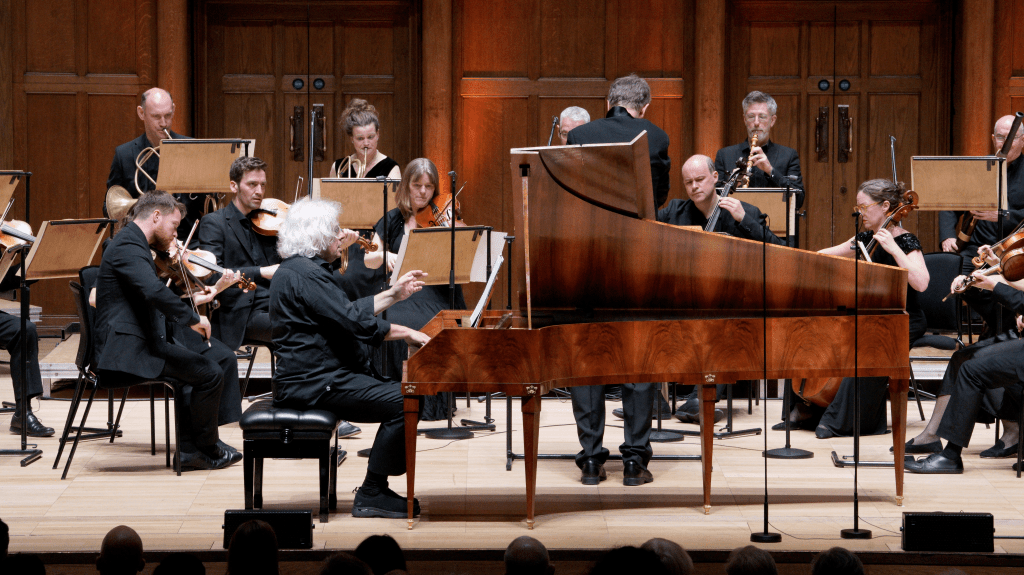
The Mozartists’ innovative MOZART 250 project travels 250 years back in time to follow the chronological trajectory of Mozart’s life, works and influences. Starting on the 250th anniversary of Mozart’s childhood visit to London in January 2015, the project is now following Mozart’s musical life, year by year, up to 2041, the 250th anniversary of his death. Ronald Brautigam is one of the world’s leading fortepianists, with an award-winning discography of the complete concertos and sonatas of Mozart, Haydn and Beethoven. For this, his twice Covid delayed début with Ian Page and The Mozartists, he performed two concertos that Mozart wrote in Salzburg during the first half of 1776, bookended by two other pieces from 1776: the Serenata notturna K.239 and the Divertimento in D major, K.251. Playing a reproduction of an 18th-century Viennese Walter fortepiano (by Paul McNulty), this was a rare opportunity to experience the sound-world of the 20-year-old Mozart.
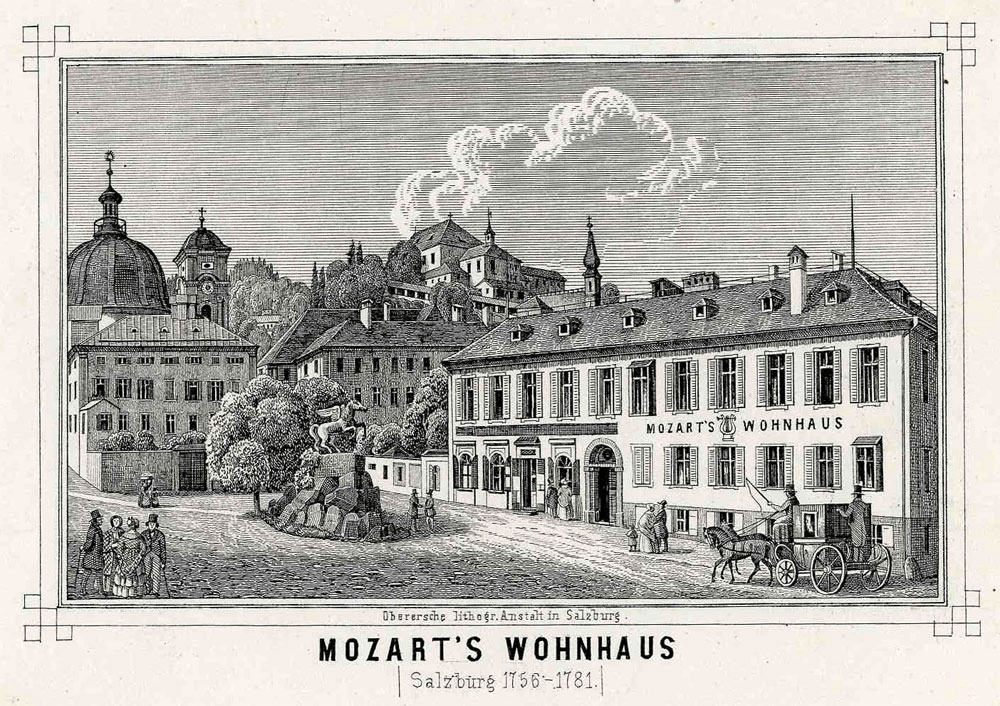
Unusually for one of the Mozartists’ non-opera events, the whole concert was devoted to Mozart, without the addition of music by other composers from the same 250th anniversary year. This gave us a chance to focus on the development of Mozart’s own style over a period of seven months, an aspect that Ian Page elaborated on in one of his always fascinating pre-concert talks. For only the second time in his life, the entire year of 1776 was spent in Salzburg, meaning that there are very few family letters to help understand what he was up to during that year. We do know that the family had moved into the entire first floor of a larger property three years earlier (pictured), and that he had already completed more than 30 symphonies, half of his operas, and all of his violin concertos. And, as one commentator has opined, it was the year that saw “the full blossoming of his rarest gifts of music and poetry”.
The Serenata notturna and Divertimento that opened and closed the concert are related in genre, both composed for specific occasions in Salzburg life, the former being part of the end-of-university-term high jinks. Both seem to have been composed with specific musical colleagues in mind, notably the timpanist in the Serenata notturna who, uniquely, appears as a semi-comedic soloist without his usual pair of trumpet companions – it is an extraordinary piece. As is usual with this type of composition, it opens with a march, apparently intended to actually be marched to, as the players processed to their eventual performing position. In the form of the early style of concerto grosso, with a solo quartet of two violins, viola and double bass, the latter seemingly as it was easier to march with than a cello. The interplay between the solo quarter, timpani and orchestra was magical, with Mozartists’ leader, violinist James Toll and timpanist Tom Lee having most of the work to do, although second violin Daniel Edgar had some virtuosic accompanying passage work to negotiate in this, and the concluding Divertimento. The latter also featured some fine solo oboe playing from James Eastaway, notably in the humorous concluding Rondeau where every phrase seemed to give the last word or, more accurately, note, to the oboe.
The two piano concertos were composed for different performers, and the difference showed. The first played, No 6 in B flat, K238, was intended for Mozart to perform, while the other, No 8 in C, K246, seems intended for the 26-year-old high-ranking pupil, Countess Antonie von Lützow, niece of the Prince-Archbishop Colloredo, the ruler of Salzburg, and wife of the commander of the foreboding Hohensalzburg fortress that still loom over the city. Clearly a talented pianist, this concerto also became a favourite of Mozart, despite it harking back to the slightly earlier galant musical style, a simpler reaction to the even earlier ornate baroque era.
Ronald Brautigam’s playing was perfectly suited to the fortepiano and the music; the delicate and sensitive tone of the instrument and his playing blended beautifully with the orchestral accompaniment, drawing the ear of the listener into Mozart’s sound world. The cadenzas in both concertos were apparently Mozart’s own and were object-lessons in style, short, and within sensible harmonic and stylistic bounds. As ever, Ian Page conducted with a commendable and modestly authoritative respect to Mozart’s music.
Performance photo: Oliver Pooley

