
AAM: Handel Serse

Handel: Serse
Academy of Ancient Music, Laurence Cummings
Barbican Hall, 19 June 2026
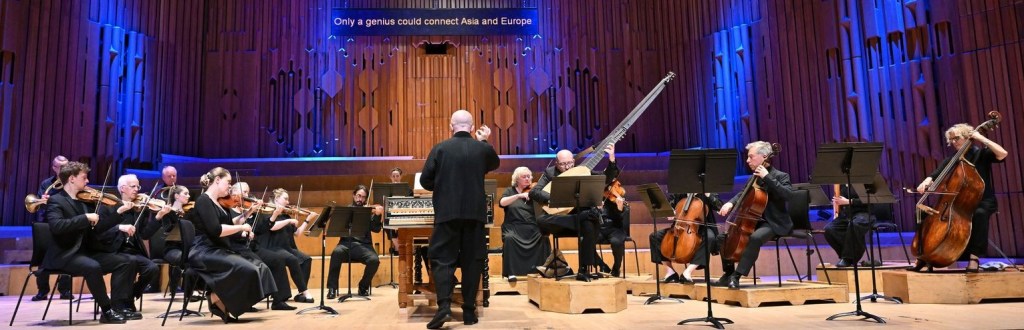
Perhaps one day somebody will compose an opera about a magalomaniac world leader wreaking havoc on the state of Persia (aka Iran), while constructing vast self-promotional construction projects at home. If so, that might trump the storyline of Handel’s Serse, an opera based on the antics of Xerxes I, the successor of Darius the Great of the Achaemenid Empire, first performed in London in April 1738. Xerxes was depicted in Aeschylus’ play The Persians, first performed in 472 BCE, shortly after Xerxes ill-fated invasion of Greece. The play presents him as an effeminate figure whose “hubristic effort to bring both Asia and Europe under his control leads to the ruin of both himself and his kingdom”. Later commentators describe him as “a power-crazed despot, inept, ridiculous, self-serving, self-loving, narcissistic ruler of the free world, with claims to be a god-king”.

Continue reading

Handel: Serse

Handel: Serse
Early
Opera Company, Christian Curnyn
St John’s, Smith Square. 18 November 2016

Serse was the first opera that the newly formed Early Opera Company performed, some 22 years ago. A well-received recording was released in 2013*, and they returned to it for their latest appearance at St John’s, Smith Square, an ideal space for baroque music. Serse is one of Handel’s more curious operas. Written in 1738 towards the end of his opera-writing career, its innovative compositional style was rather lost on the audience, as was the libretto, with Charles Burney referring to the latter as “one of the worst Handel ever set to Music”. He identified the issue as being that the work contained “a mixture of tragic-comedy and buffoonery”, which is exactly what Handel intended. Other commentators noted Handel’s use of many short arias, without the usual convention of the da capo, linking it to the musical style of the many ‘ballad-operas’ that had become the rage. It only managed five performances, but after its modern resurrection has become one of Handel’s best known operas.

The first of the short arias is the opening Ombra mai fù, which became one of Handel’s most famous pieces, albeit under the incorrect name of Handel’s Largo (it is marked Larghetto). I wonder how many people outside the opera-loving world realise that this aria is sung by a clearly dotty King to a tree that he has taken a fancy to? Serse’s dottiness continues throughout the opera, to the bemusement of the other characters. In this concert performance, the only prop Continue reading