London International Festival of Early Music
Blackheath Halls, St Michael & All Angels Church
11-14 November 2026
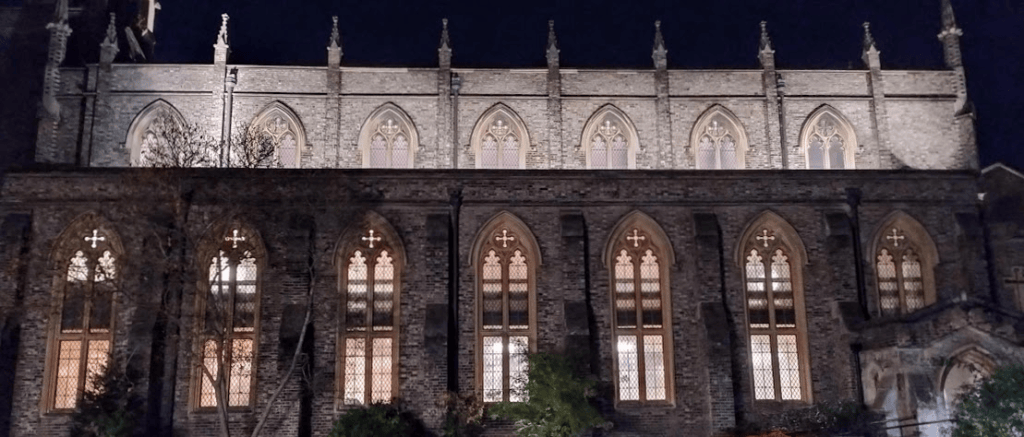
The London International Festival of Early Music has settled well into its most recent home in Blackheath, with events shared between their home base of Blackheath Halls and the church of St Michael & All Angels Church, a short walk away amongst the palatial dwellings of the private Blackheath Park estate. The Festival was founded in 1973 and had earlier spells at the Royal College of Music, the Royal Horticultural Halls, and the architectural and historic splendours of the Old Royal Navy College in Greenwich. The Friday (13 November 2026) opened with a lunchtime concert by the prize winner of last year’s Moeck/SRP Solo Recorder Competition, Eun Sol Lee, with her programme Bamsæ (Overnight) based around four stages of night.
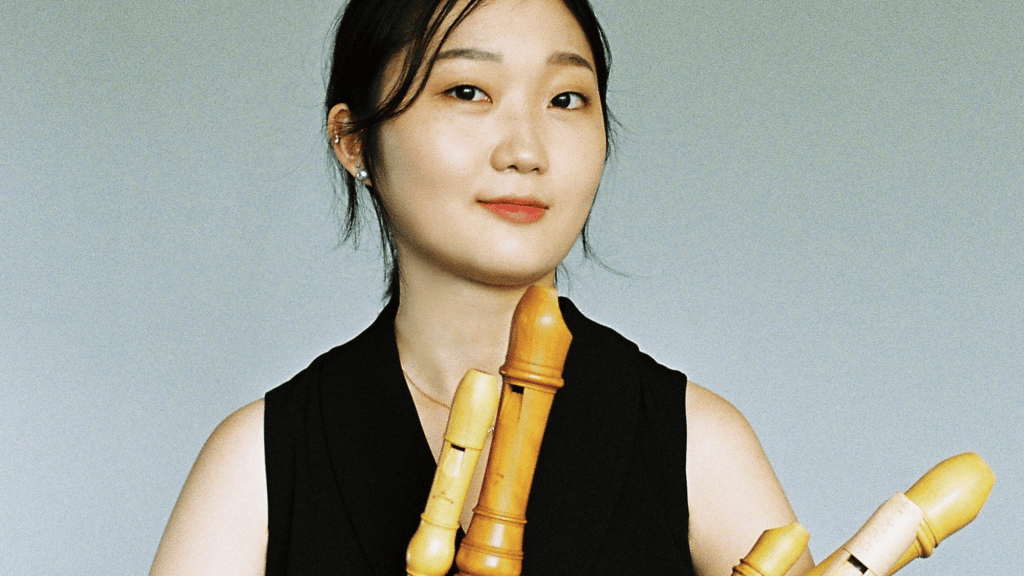
Eun Sol Lee started, appropriately, with music from her own country with the evocative traditional Korean piece, Changbu-Taryeon, Song of the traveling entertainer (창부타령) which neatly segued into Bach’s Sonata in e (BWV1023). Accompanied by Réka Nagy, viola da gamba, and Sophie Esterbauer, theorbo, the programme continued from Darkness, through Sighs of Love, Sleep to a final Wake-up call. Nightingales featured strongly in the Sighs of love sequence, which concluded with the section of Jean Hotteterre’s La Noce Champêtre: The country wedding that reflects the scene of love of the couples first night together – a rather short occasion, it seems. The Sleep section was centered around Markus Zahnhausen’s rhapsodic 1999 Traumspiel: Dream play, based on Telemann’s 3rd Fantasy for flute, while the Wake-up conclusion was devoted to a version of the start of Jorge Sánchez-Chiong 2009 Final Girl, an extraordinarily virtuosic tour de force that were it not for a couple of encores would have been a real show-stopper.
* * *
The afternoon was taken up with the Final of the biennial Early Music Young Ensemble Competition which alternates with the Solo Recorder Competition. Three finalists were selected from around 40 applicants, the first to appear being Quarterino, a five-strong ensemble who met at the European Union Baroque Ensemble. Their programme of Baroque Dreams included music by Scarlatti, Handel, and Vivaldi. It opened with Scarlatti’s chilling lullaby Dormi, o fulmine di guerra from his 1697 La Giuditta, set as Giuditta lulls Holofernes to sleep, but with the sinister slow tread of the accompaniment indicating that all is not as it seems. I liked the subtly melodic organ continuo from Agata Soretokin, although the cello continuo was far too prominent. The exquisite sound of the combined violin and traverso featured in Handel’s Tacerò, purché fedele, while virtuoso traverso playing by Anna Gambino was a feature of Vivaldi’s Sol da te, mio dolce amore. They ended with Handel’s Awake Saturnia. The highlight of their performance was the exotic singing of contralto Federica Moi, a true contralto with exceptional control over her timbre. Although the cellist got a special mention from the chair of the judges for his “strong” continuo playing, I am afraid that I found it disturbing, both aurally and visually, not least from his inapprorpriate foot tapping in the delicate final piece.
They were followed by Les Arcanes Baroques, a four-strong instrumental group from The Netherlands. They contrasted music by Telemann (paying homage to Corelli), Clerambault, and Purcell in their well-balanced and well-performed programme C’est Magnifique, the title from the central Clerambault Trio Sonata. The three pieces, and the movements within them, included some clever harpsichord linking passages by Elias Tulchynsky. They demonstrated instrumental versatility by having the two violinists swap their violins for violas, and the harpsichord player take up a violin for their concluding performance of Purcell’s exqusite Three parts apon a ground – one of highlights of the afternoon. The grasped the musical conventions of the three different musical traditions well, notably in their use of the distinctive notes inégales in the Charpentier. An impressive performance.
The final group was the Nari Baroque Ensemble (winners of the International Handel Competition in Göttingen) whose programme A Shepherd’s Dream of Love took us on a metaphorical insight into the dreams of a shepherd, his story dramatised by readings alongside music by Torri, Telemann, Scarlatti, and Boismortier. Clear-toned soprano Yael Ender was supported by recorder, cello and harpsichord. Alongside the vocal pieces, we heard Couperin’s La Gazouillement played by harpsichordist Guy Pardo, and the Allegro from Handel’s Recorder Sonata HWV 362 played by Naomi Hassoun. The songs took us through a range of emotions, al well expressed.
The three judges, Erik Bosgraaf, Tomoe Badiarova, and Jane Chapman awarded the three prizes in the descending order of Quarterino, Nari Baroque Ensemble, and Les Arcanes Baroques. The winning group will return for a concert next year.
* * *
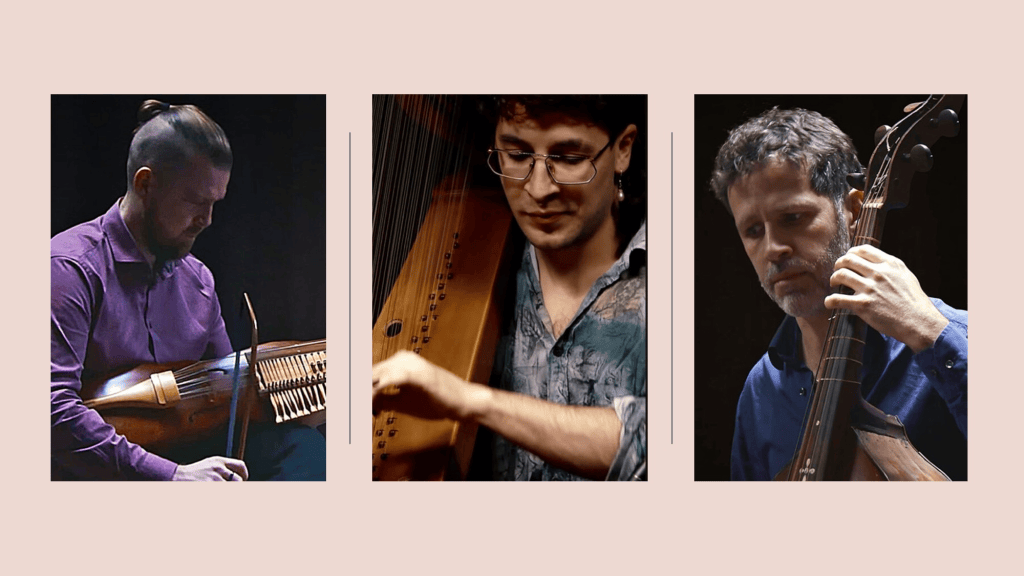
The final event of the day was the evening concert by L’Artefice under the title of Capriccio et Invenzione, a key feature of which was their choice of instruments with Filip Rekieć playing the nyckelharpa and baroque violin, Leonardo Bortolotto, bass viol, and Vincent Kibildis, triple harp.
A wide range of music from the 16th and17th centuries included pieces by Frescobalsi, Bassano, Ortiz, Trabaci, van Eyck, Merulo and Bertali, amongst others, many played in clever arrangements for their instruments. The music flowed from piece to piece very effectively, with the group controlling audience applause well – often a difficult task for musicians. Their programme notes gave far more information about the music played than could easily be absorbed during the concert, although they made for fascinating reading afterwards. One sequence was focussed on music inspired by the melody of La Spagna, with Ortiz and Trabaci basing their pieces on the melody while two of two of Resta’s 125 musical studies on different ways of incorporating the melody as a cantus firmus hidden within the contrapuntal texture.
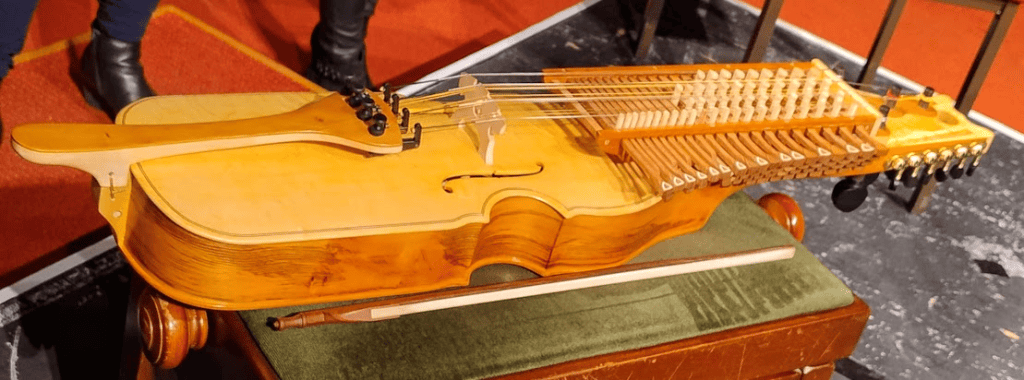
The instrument that really attracted the audience was the nyckelharpa, an instrument with a folk history and a current following in Sweden, where its name translates as key-harp. It has structural links with the hurdy-gurdy, but with its entrails exposed and with a bow replacing the wheel, and many more tangent/keys to create the notes over the four principal strings. The viola-shaped body, along with additional resonant strings, help to produce a sonorous sound. The tone is mellow with a slightly plaintive tone and, on this occasion, it complemented the sound of the bass viol well.

