Meister: Il giardino del piacere
Ensemble Diderot, Johannes Pramsohler
St John’s Smith Sq. 8 May 2016
Meister: Il Giardino del piacere: La Musica Nona, Duodecima & Terza; Pachelbel: Partie II (Musicalische Ergötzung) & Partie V; Keller Chaconne; Biber: Partia VI (Harmonia artificioso-ariosa)
For the launch concert of their latest CD (of the music of Johann Friedrich Meister, reviewed here), Ensemble Diderot contrasted three of Meister’s 1695 La Musica sonatas with music by his near contemporise Pachelbel, Keller and Biber. We know little of Meister. He seems to have come from Hanover or thereabouts, and certainly worked in the Ducal Court there. After a dispute about pay, he moved to the Lübeck area before moving north to Flensburg in Schleswig (then part of Denmark and now the most northerly city in Germany) where he was organist of the Marienkirche and also work for the local Ducal Court. His collection Il giardino del piacere, overo Raccolta de diversi fiori musicali, come sonate, fughe, imitationi, ciaccone, passagaglie, allemande, correnti &c. was published in Hamburg in 1695, shortly before his death.
His music seems to sum up the varied and exciting music of that period in German musical history, a time still dominated by the stylus phantasticus, or fantasy style of free and often rather anarchic musical structures. The latter is shown in the fact that none of the three pieces played had the same format. Although all open with a Sonata, usually with a central fugal section, the following dances seem to be in almost random order and style, although they all end with a Gigue. The two pieces by Pachelbel were similar in structural style, although they both included a distinctive and lively Treza movement. The Biber Partita VI (that ended the concert) was built around an imaginative central set of 13 variations, with an opening Praeludium and closing Finale. The Pachelbel Musicalische Ergötzung was played with two piccolo violins, with scordatura tuning, making a nice tonal contrast to the sound of normal baroque violins.
 Johannes Pramsohler and his three fellow musicians of Ensemble Diderot relished the contrast between and within the various pieces, playing with an exquisite combination of consort and individuality. Their intonation was perfect throughout, and they managed to bring exaggeration to the already exciting music without ever pushing things too far. I particularly liked the fact that, despite having a clear group leader, his playing never dominated. These were true Trio Sonatas, where the balance between the three voices is vital – and Roldán Bernabé and Gulrim Choi had important contributions on second violin and cello. Philippe Grisvard’s harpsichord continue was delicate and sensitive, correctly avoiding the temptation to do too much.
Johannes Pramsohler introduced the music in a delightfully informal, but occasionally rather lengthy manner.

 this distinguished orchestra has built an enormous international reputation, not least during the years from 1998 to 2011 when Sir Roger Norrington was their chief conductor, bringing his noted ‘historically informed’ performance practice to this modern instrument orchestra, producing a distinctive style – the ‘Stuttgart sound’. The two merging orchestras are both under the auspices of Südwestrundfunk (South West Radio), the public broadcaster for Baden-Württemberg and Rhineland-Palatinate, and have very different repertoires and styles. It was entirely appropriate that Roger Norrington, now their Conductor Emeritus, was the conductor for their final concert.
 Grange Park Opera has been one of the UK’s musical successes since it first set up shop in 1998 in the derelict shell of The Grange, a country house in the centre of Hampshire. Owned by the Baring banking family, The Grange dates from the early nineteenth century when William Wilkins, architect of the British Museum, transformed an earlier 17th century brick building into Britain’s most important example of the Greek revival architecture, notable for its imposing temple-style portico. It was saved from demolition in 1975 after a public outcry and the intervention of the Government, who spot-listed the exterior shell of the building, in recognition of its important as a landscape feature. English Heritage took over custodianship of the building, although the ownership remained with the Baring family.
 Jeremy Summerly’s comprehensive programme note opens with the suggestions that “Early Tudor England was insular and the attitude of its people xenophobic”, quoting an Italian visitor in 1497 that “they have a antipathy to foreigners”, an unfortunate habit that sadly still seems to be the case, at least for around 52% of the population. John Taverner was very clearly an exception to this view, at least musically, for he relished the music coming from the continent. This CD indicates two particular influences, with the complex polyphony and imitative writing of the likes of Josquin featuring in the Missa Mater Christi sanctissima and, in the Western Wynde Mass, as Summerly puts it “a Lutheran dexterity in his use of a secular model for a piece of sacred music”.
 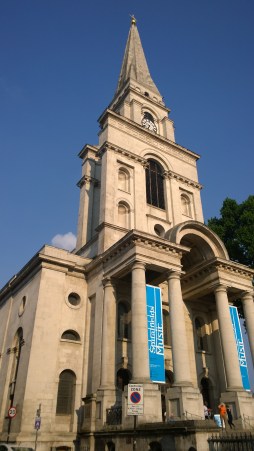 Spitalfields Music has been an extraordinary musical and community success since its foundation 40 years ago. Starting life with a 1966 concert to help save Nicholas Hawksmoor’s architecturally important Christ Church Spitalfields (which was then, unbelievably, under threat of demolition) it soon grew into a ‘Summer Festival of Music’ led by Richard Hickox. Initially under the auspices of the Friends of Christ Church, it became an independent organisation and charity in 1989, setting up their continuing community and education programme two years later. Under the artistic and managerial leadership of the likes of Judith Serota, Michael Berkely, Judith Weir, Jonathan Dove, Diana Burrel, Abigail Pogson and the current Chief Executive, Eleanor Gussman, it has grown into an major musical and community force in London, sharing their passion for music with nearly half and million people, attracting more than 325,000 audience members to events in more than 70 venues in the Spitalfields and Tower Hamlets area. Alongside their Summer and Winter Festivals, they run an enormous Learning & Participation programme involved more than 125,000 people.
 The Orchestra of the Age of Enlightenment have been celebrating their 30th anniversary year with a remarkably wide range of music, culminating with this Birthday Concert performance of Weber’s Der Freischütz. Perhaps most noted for their exploration of Baroque and Classical music, it can be forgotten that the OAE have also performed many pieces from the Romantic era, with remarkable success – indeed, their second concert, 30 years ago, under Roger Norrington, was devoted entirely to Weber. And so it was with this powerful semi-dramatised performance.
 Awaiting the construction of their new concert hall, the Royal Academy of Music have been trying out different venues in the past year. For their final opera of the season, Monteverdi’s L’incoronazione di Poppea, they chose Shoreditch Town Hall (a space new to me) in the middle of a very lively and cosmopolitan part of London. There was some awkwardness in the staging arrangement as the audience enter past what would normally be back-stage, but they coped with this well. The staging was simple, a three-sided box with three entrances on either side, and five in the rear wall. There were very few props, with much depending on Jake Wiltshire’s excellent lighting to provide mood, most prominently at the end of Act 1 when Seneca’s death is depicting by a flood of red light.
 The weekend traditionally opens on Friday evening with the famous Regensburg cathedral boys’ choir, the Regensburger Domspatzen,
  The London Festival of Baroque is growing from strength to strength after its rebirth from its previous incarnation as the Lufthansa Festival. Shorn of the former funding stream, it has had to rebuild its financial stability. The increase in the number of this year’s events over last year is one sign of their success. One of the big advantages of the former sponsorship deal was that it enabled many non-UK groups to travel to London for the festival, so it is encouraging that such visits by musicians from abroad continue to be a feature of the festival. Also most encouraging is their focus on young musicians, with three concerts specifically devoted to them under the banner of ‘Future Baroque’. They also included a late-night concert by the young folk-inspired singer-songwriter, Olivia Chaney.
 The untimely death in August 2015 of the eminent organist and choral director John Scott was a shock to many. Organist and Director of Music of St Paul’s Cathedral from 1990 to 2004, and then at St Thomas Church on Fifth Avenue, New York, John’s reputation as solo organist and choir director seemed to be on a perpetual rise. His memory remains strong in St Paul’s Cathedral, as was evident from the packed Service of Commemoration and Thanksgiving to mark his life, held in place of the usual Evensong on Friday 6 May.
 This is the penultimate recording in The Cardinal’s Musick’s Tallis Edition, and it opens with a masterpiece, the two settings of the Lamentations of Jeremiah. As Andrew Carwood explains in his programme notes, it seems that they were written during the reign of Queen Elizabeth, rather than the earlier Catholic Queen Mary. It is not clear why these, and other similar Lamentations, were composed or when they would have been performed, if not in the Holy Week Tenebrae service in the Catholic rite – hence the usual assumption of composition during Queen Mary’s reign. They are remarkable pieces, using the simple textural style of one note per syllable encouraged by Archbishop Cranmer. The Hebrew incipits are particularly well set, as are the concluding, and rather sombre
  It is when you hear music from composers like Niccolò Jommelli (1714-74) that you realise just how deep the musical well is, if you peep behind the wall of well-known composers. Writing in that fascinating limbo period between the Baroque and Classical era, Jommelli perhaps completed too many operas for posterity to master. Il Vologeso is one of his best-known works and, on the strength of this performance by Classical Opera Company (giving the UK premiere), deserves to be heard more, and in a full staging rather than this concert performance. This was another part of their MOZART 250 project, aimed at exploring the works of Mozart and his contemporaries on the anniversary of their composition – which, in the case of Il Vologeso, was on 11 February 1766, in the enormous theatre at the Duke of Württemberg’s Ludwigsburg Palace near Stuttgart.
 The evening started, slightly unfortunately, with the Tragic Overture of Brahms, the bête noire of Bruckner and Hans Rott (pictured), and several others of a progressive ilk, such as Mahler. Unfortunate, because of the effect that Brahms’ withering comments on Hans Rott’s First Symphony had on the young composer. The unfortunate Rott (1858-84) was a student contemporary of Mahler and Hugo Wolf at the Vienna Conservatory, and studied organ with Bruckner, who saw him as his ‘favourite pupil’. Although Rott hadn’t impressed a conservatory competition panel with a piano reduction of the first movement, he went on to expand it into a four movement symphony. For reasons unknown, and certainly ill-advised, the then 22 year-old Rott showed the score to Brahms, an enemy of anything musically progressive, and of Bruckner and the Vienna conservatory. Brahms advised the already vulnerable young man to ‘give up composing’, leading to a possibly hallucinatory incident that resulted in him being committed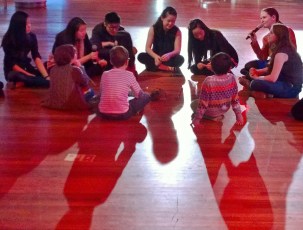
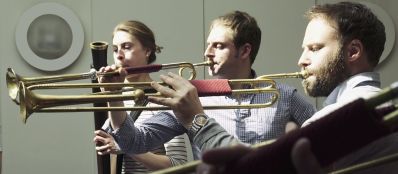 performance was that the trumpets were not only valveless, but also had no finger holes to assist in the tuning of notes. These finger holes (or ‘venting’ or ‘nodal’ holes) are in any case a relatively recent innovation, and may not have been used in early natural trumpets, at least not for the purpose to which they are now used; to make the tuning of the higher harmonic notes easier. Indeed, it seems that the original holes found in some instruments were actually place at the anti-node, rather than the node, and were therefore intended to silence the tricky notes altogether, rather than to try to bring them into tune.
