Royal Holloway: Into the Night

Into the Night
Choir of Royal Holloway
St John’s, Smith Square, 26 March 2018

As part of St John’s, Smith Square’s Holy Week Festival, the Choir of Royal Holloway College (part of the University of London) gave an early evening recital of a programme that was probably better suited to a later time slot. Their programme, ‘Into the night’ featured sacred and secular music by contemporary composers from Latvia, Lithuania, and the USA, reflecting issues of night and death. They opened and closed with music by Ēriks Ešenvalds. Evening evokes the ‘shimmering sound’ of birds at sundown, with little snatched rhythmic phrases floating above evocatively scrunchy harmonies, ending with a delightfully sung soprano solo and the line ‘Oh let me like the birds / Sing before the night’. The closing Ešenvalds piece was Long Road, with two recorders and the tinkle of little bells added to the choral clusters and a final descent into sleep. Continue reading

LHF: Handel – Amadigi di Gaula

Handel: Amadigi di Gaula
London Handel Festival
Opera Settecento, Leo Duarte
St George’s, Hanover Square. 24 March 2018

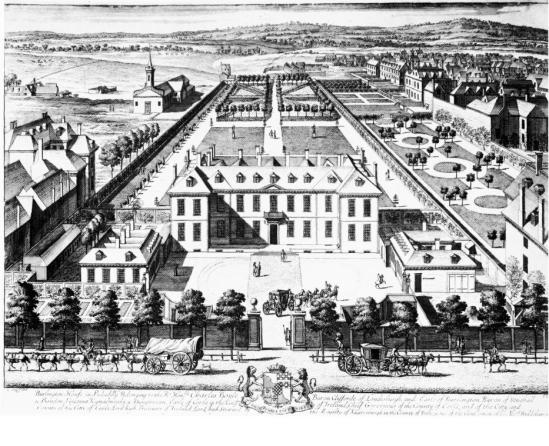
Amadigi di Gaula (HWV 11) is a rarely performed early opera by Handel, composed in 1715 while he was staying at Burlington House (pictured), the London home of the young Earl of Burlington, Richard Boyle. It is now, in altered form, the home of the Royal Academy. Boyle had inherited the house and adjoining estate aged 10. He was around 9 years younger than Handel and was to become an influential amateur architect in Georgian London, notably for Chiswick House. By 1715, he had already completed the first of his ‘Grand Tours’ and was fast becoming a major patron of the arts and music.

Burlington_House_1698-99.jpgAmadigi di Gaula is a curious and complex tale, based on a late 14th-century Castillian chivalric fantasy romance that also inspired Don Quixote. The tale involves Princess Oriana (not to be confused with the hero of Felix the Cat), a fictional heiress to the throne of England (the ‘Fortunate Isles’) and her protector knight, the Scottish born Amadigi of Gaul, who is love with her, as is his companion Dardano, Prince of Thrace. The evil sorceress Melissa is infatuated with Amadigi. To this end, she imprisons Oriana in a tower and Amadigi and Dardano in a nearby garden. She tries various spells to attract Amadigi, who, initially together with Dardano, is trying to rescue Oriana. After a complex series of deceptions, betrayals, jealousy and sorcery, Amadigi and Oriana are finally united, but not before Amadigi has killed Dardano and Melisa has stabbed herself as her supernatural powers fail against the power of love.
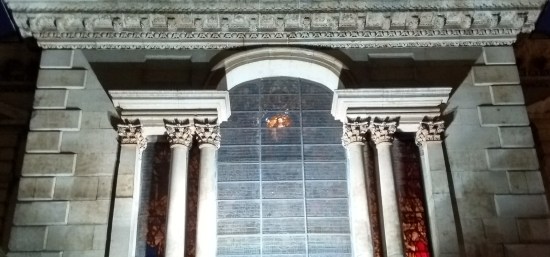
Amadigi.jpg
Continue reading

LHF: Mr Handel’s Scholars

‘Mr Handel’s Scholars’
London Handel Festival
London Handel Orchestra, Laurence Cummings
Anna Devin, Maria Ostroukhova, Nathan Vale, Derek Welton
St George’s, Hanover Square, 23 March 2018

The Handel Singing Competition was inaugurated as part of the London Handel Festival in 2002, and counts several well-known singers amongst the past finalists, if not always amongst the past winners. Several former finalists have become regular performers at subsequent festival events, and this concert was one such. It featured four past finalists, three from 2006/7 and one far more recently, from 2016: two first prize winners, one 2nd prize winner and two winners of the audience prize. Handel was known to have encouraged younger singers, and the title of ‘Mr Handel’s Scholars’ refers to the name by which his young proteges were known. Each half opened with an overture, following by a range of extracts from Handel operas and oratorios, several of which are standard fare at singing competitions.

IMG_20180323_190319103_HDR.jpg

Continue reading

LHF: Handel – Acis & Galatea

Handel: Acis & Galatea
London Handel Orchestra, Laurence Cummings
St John’s, Smith Square. 21 March 2018

The first of the London Handel Festival’s anniversary events was a performance of Acis and Galatea, first performed in 1718 at Cannons, the palatial mansion north-west of London where James Bridges, by then the Earl of Carnarvon and later to become Duke of Chandos, demonstrated the enormous wealth he had gathered through his position as Paymaster General to the army. Cannons became the only example in England of a Germanic-style princely court orchestra (24-strong) outside the royal family. Handel was house composer from 1717-19 working under Pepusch. It had originally been a small-scale masque, probably performed outdoors, with a small orchestra and five singers, who together formed the chorus. Considering it was the anniversary of the 1718 premiere, it was rather curious that the work was here presented in its 1739 incarnation – one that Handel himself never heard.

IMG_20180321_193228041_HDR (2).jpg

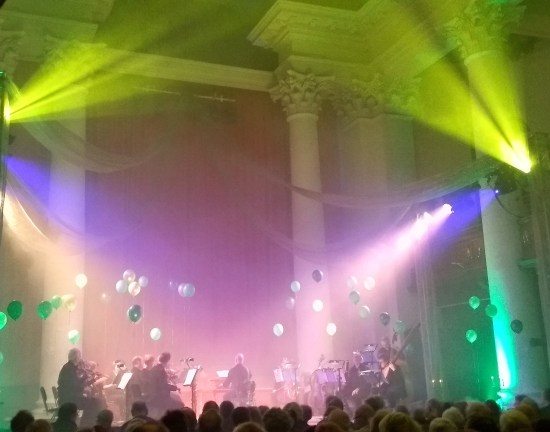
The interior of St John’s, Smith Square (built at the same time of the premiere of Acis) was transformed by director Martin Parr into a cross between some sort of down-market 1980’s rave and a children’s party, with a pall of dry ice engulfing the audience as they entered, party balloons hanging over the mist enveloped orchestra, and rather innocuous drapes suspended from scaffolding, for no apparent reason. It was the first of many production issues that I felt really didn’t work. That said, and more anon, musically it was well worth the trip.

Continue reading

London Handel Festival (LHF): Guildhall Cantata Ensemble

Guildhall Cantata Ensemble
London Handel Festival
St George’s, Hanover Square. 21 March 2018

This is the first of a series of forthcoming reviews of the 2018 London Handel Festival (LHF).  The theme for this year is ‘Handel in London’ and is exploring Handel’s musical output as well as his wider entrepreneurial and philanthropic life in Georgian society. The wide-ranging month-long programme of concerts and events includes anniversary performances of two works that Handel composed during his 1718 residency at the future Duke of Chandos’s mansion at Cannons: Acis and Galatea and Esther. It has been traditional for many years to include lunchtime events by student and younger groups of musicians. The first of this year’s such recitals took place in the usual base for LHF events, Handel’s own church of St George’s, Hanover Square. It featured students from the Guildhall School of Music and Drama, with their programme of music by Buxtehude and Handel. Continue reading

Haydn: Applausus

Haydn: Applausus: Jubilaeum Virtutis Palatium
The Mozartists, Ian Page
Cadogan Hall, 15 March 2018

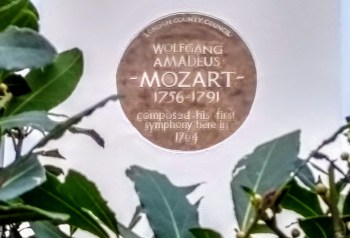
In what was almost certainly the first live UK performance of Haydn’s Applausus Cantata (Jubilaeum Virtutis Palatium, Hob XXIVa:6), the Mozartists (the concert-performing wing of Classical Opera) opened the 2018 season of their ambitious Mozart 250 project. This started in 2015, the 250th anniversary of Mozart’s visit to London where, incidentally, he stayed not far from the Cadogan Hall in Ebury Street, and wrote his first symphony, aged 8. The aim is to annually explore the music written by Mozart and his contemporaries exactly 250 years previously.

IMG_20180315_174251159_HDR.jpg

In 1768, this year’s focus, Mozart was 12 years old and Haydn 36 and well settled into the princely Esterházy court where he directed most of the musical life of the court. He received an invitation from the wealthy Abbey of Zwettl, about 120km west-north-west of Vienna to write an ‘applausus‘ cantata to celebrate the 50th anniversary of their abbot Rainer Kollmann, first taking his monastic vows. Although composed in quasi-operatic style, with a series of accompanied recitative leading up to da capo arias, a duet, quartet and a final chorus, there is no plot in any operatic or literal sense. The four Cardinal Virtues of Temperance, Prudence, Justice and Fortitude sing the praises of the Abbot in a convoluted Latin libretto, probably written by one of the monks. A personification of Theology/Wisdom moderates some of their utterances. I am sure the text meant something to the 17th-century monks of Zwettl, but I found its vaguely moralistic meanderings completely incomprehensible. The repeated references to a ‘Palace’ perhaps reflected the wealth of the monks of Zwettl, whose medieval Abbey buildings had been thoroughly reconstructed in the Baroque style a few decades earlier, complete with one of the largest and most expensive organs in Austria (1731, Egedacher) – all still existing. “How blessed I am to be an inhabitant of this building!’ is one of Prudence’s utterings, to which Justice notes that “our Palace is celebrated in the eyes of the highest”. So that’s all right then! Continue reading

Handel: Rinaldo

Handel: Rinaldo
The English Concert, Harry Bicket

Barbican. 13 March 2018

Rinaldo is a curious opera. Cobbled together in early 1711 from some of Handel’s greatest hits from his time in Italy, it was intended a calling-card both for Handel and for the style of Italian opera that was just beginning to make its way on the London musical scene. It was the first such opera composed for the Queen’s Theatre, Haymarket, where the theatre’s director (Aaron Hill) was keen to promote Italian opera. As Richard Wigmore wrote in the programme note (accessible here), Hill’s priorities were “variety of incident and spectacle, with dramatic coherence a distant third”. Dramatic coherence is certainly missing from the splot, a loose version of one of Tasso’s tales of Crusader derring-do in Gerusalemme liberata. The “incident and spectacle” was certainly to the fore in the original productions, with its dramatic staging with mermaids, various flying machines, fire-breathing dragons, and a flock of live sparrows, the latter producing the inevitable results and some sharp criticism for contemporary reviewers. Continue reading

Renaissance Singers: Portuguese penitential music

I heard a voice from heaven
Portuguese penitential music
The Renaissance Singers
St George’s, Bloomsbury, 10 March 2018

The Renaissance Singers are one of the most impressive of London’s amateur choirs, always coming up with well-planned and well-presented and exceedingly well-sung concerts of Renaissance music. The latest of these was a programme of early 17th-century Lenten music from Portugal. Featuring composers born between 1550 and 1610, the concert was based around extracts from Duarte   (Requiem) with motets by Pedro de Cristo, Filipe de Magalhāes, Aired Fernandez, and Manuel Cardoso and concluding with João Lourenço Rebelo’s extraordinary setting of the Lamentations of Jeremiah. Intelligently written programme notes by choir member Tony Damer explored the background of the intense and expressive music composed during a period when Portugal was breaking away from the Hapsburg Spanish Empire to become an independent state under King João IV, an important patron of the arts and music.  Continue reading

Louise Farrenc & Beethoven

Beethoven: Triple Concerto; Louise Farrenc: Symphony No 3
Insula Orchestra, Laurence Equilbey
The Barbican. 8 March 2018

A phrase that I occasionally use when reviewing a revival of music by a little-known composer is that the composer was “plucked from well-deserved obscurity”. That is a phrase that definitely cannot be used to describe the music of Louise Farrenc (1804-1875), the focus of the Barbican concert given, appropriately, on International Women’s Day by the Insula Orchestra, all wearing suffragette ribbons, apparently made by the same company that made the original purple, white, and green colours.  Born six months after Berlioz, she was a pioneering French composer, pianist, and teacher. Although she was highly esteemed during her lifetime, her impact was almost certainly reduced by not managing to write an opera, a requisite for Parisian composers in her time. Her work was almost entirely forgotten after her death until very recent years, when the long-awaited recognition of female composers and musicians led to some recordings and concerts of her composition.

Studying, working, composing and teaching at a time when the female contribution to arts, and life in general, was given little prominence, Farrenc resolutely ploughed her own course as a teacher and composer. At the time, females were not allowed to join the composition class at the Paris Conservatoire, so she took private lessons with the teacher. But she eventually became Professor of Piano at the same institution, remaining as such for 30 years, although only achieving parity of pay with her male colleagues for the last 20, and that after campaigning.  Continue reading

CF Abel & JC Bach Quartets

“Georgian quartets among Palladian columns”
The London Abel Quartet
Marble Hill House, Twickenham, 4 March 2018

The London Abel Quartet was formed, as the name implies, to explore the music of Carl Friedrich Abel and his contemporaries. Abel was a German composer and viola da gamba player. He was born in  Köthen, where his father worked in JS Bach’s court orchestra. He later became a student at Bach’s Leipzig Thomasschule. After a spell in Dresden, he settled in London around 1759. He was joined in 1762 by Johann Christian Bach, Bach’s youngest surviving son. The pair soon started the famed Bach-Abel concerts in Soho, the first subscription concerts in England. Abel and JC Bach are both buried in buried in the churchyard of St Pancras Old Church, just behind St Pancras station. Continue reading

Bach and Handel: Great Balls of Fire

Bach and Handel: Great Balls of Fire
Orchestra of the Age of Enlightenment, Steven Devine
Kings Place. 1 March 2018

Handel: Organ Concerto Op. 4 no. 1
Handel: 
Organ Concerto Op. 7 no. 5
Bach:
 Brandenburg Concerto no. 5

Under the banner of the Kings Place ‘Turning Points’ series (which aims to explore the hidden secrets of the great composers) and a very silly concert title (‘Great Balls of Fire’), the OAE presented three examples of the 18th-century keyboard concerto, contrasting two of Handel’s Organ Concertos with Bach’s 5th Brandenburg Concerto. Composed for entirely different audiences and occasions, the Bach and Handel pieces reflect key moments in the development of music. A pre-concert talk by the chief executive of the OAE, given in the rather booming style of a schoolmaster (I use the gender-specific term deliberately) lecturing a lower-sixth general studies course, gave some background to the concert and the three pieces were to hear. The concert itself lasted just one hour, without interval. It was followed by a Q&A session with the performers and an encore, voted for by the audience from a list of three.  Continue reading

Brewery Band: Rolling in the Barrel

Rolling in the Barrel
Brewery Band

Antenna Studios, Crystal Palace, SE19. 25 February 2018

The latest in the monthly events run under the banner of Classical Transmission (at Crystal Palace’s pleasingly ramshackle Antenna Studios) featured the Brewery Band, a collective of early and folk musicians – Morag Johnston, fiddle, Emily White, fiddle/sackbut, James Risdon, recorders, Matthew Wadsworth, theorbo, and Kate Bennett-Wadsworth, viola da gamba. They describe themselves as “a new and flexible collective who enjoy being difficult to define. Their shared musical backgrounds and professional work mean you might hear a Shetlandic set segue into music from the 17th-century theatre, a medieval dance followed by a contemporary improvisation“. Continue reading

SJSS: Muffat Festival

Muffat Festival
The Brook Street Band
St John’s, Smith Square, 25 February 2018

With four concerts, a dance workshop and a talk spread over a weekend, the St John’s, Smith Square Muffat Festival focussed on Georg Muffat (1653-1704), that most innovative of composers, and the music that both influenced him and was, in turn, influenced by him. Curiously, of the 26 works played during the weekend, only six were actually by Muffat, a sadly missed opportunity to highlight more of his music, much of which is underperformed. The first concert (23 February) concentrated on the German Violin School, with pieces by Schmelzer, Biber and Krieger following the opening Muffat Sonata 2 from his 1682 Armonico Tributo. Dance was the focus of the second concert (24 February), with Muffat sharing the honours with Lully, Handel and Bach. The Italian Influence was explored in the first of two Sunday concerts (25 February), with pieces by Corelli and Handel and a Muffat Violin Sonata. The weekend finished with a focus on the Concerto, with more Bach and Handel along with Geminiani, all at least one generation younger that Muffat. It concluded with Muffat’s Sonata No. 5 in G from Armonico Tributo with its extraordinary extended concluding Passacaglia – one of the highlights of Muffat’s orchestral output.  Continue reading

Music in New France & Québec

Music in New France & Québec
Studio de Musique Ancienne de Montréal
St John’s, Smith Square, 15 February 2018

The Canadian choir, Studio de Musique Ancienne de Montréal (SMAM) was founded in 1974 by Christoper Jackson. For their UK debut, they presented a programme of music from Québec and the area of the North Americas generally known between 1534 and 1763, as ‘New France’, the northern part of which is now in Canada. In similar, if less flamboyant fashion to the Spanish and Portuguese Christian conquerors in Central and South America, the imported French musicians adopted some aspects of the aboriginal music styles, represented in this concert by a series of anonymous pieces sung in Abenaki, an almost extinct indigenous language.  The programme also included some of the earliest motets and plainchants composed in French North America alongside polyphony introduced by the first French settlers, whose only surviving sources are now in Québec libraries. As well as the early pieces, we also heard the European premiere of Ja de longtemps by Québec composer Maurice-G. Du Berge, setting an eyewitness account of the early explorations of the St. Lawrence River. Continue reading

Philip Glass’s Satyagraha

Philip Glass: Satyagraha
English National Opera, Improbable
Coliseum. 1 February 2018

One of the surprises of the contemporary opera world is that the 2007 ENO premiere of Philip Glass’s Satyagraha broke all box office records, becoming the most popular contemporary work to be performed by ENO. Its uncompromising approach to text and music seems to have appealed to the public, to the extent that it has just opened for its third revival. It follows ENO’s 2016 revival of Akhnaten, the third of a trilogy of operas, of which Satyagraha is the second. It is a difficult work to categorise. It is not a conventional opera, sung throughout in Sanskrit without an understandable libretto, in a sequence of seemingly unrelated tableaux, in random time frames, each with its own musical timbre. Through-composed, it switches from lengthy solos and ensemble pieces to enormous chorus scenes, in this production backed by spectacular visuals. The orchestra only uses strings and woodwind.

ENO Satyagraha Toby Spence ENO Chorus (c) Donald Cooper

Continue reading

Ensemble Rost

Ensemble Rost
‘The mysterious Rost Manuscript’
Chapel Royal of St Peter ad Vincula, Tower of London. 30 January 2018

Ensemble Rost is a trio of musicians (Danish, German, and French) who met in 2013 at the Royal Danish Music Academy in Copenhagen. They formed to explore (and named themselves after) the important Codex Rost (or Rost Manuscript), a collection of 157 pieces, mostly sonatas or sonata-like works. The period of composition dates from about 1640 to 1687 and is written down in three part books, all accessible online. As well as several named composers, the collection also contains 81 anonymous pieces, some of which might be by Franz Rost himself. Ensemble Rost is particularly interested in the Sonatas for their own rather unusual lineup of violin, viola and keyboard. The viola is referred to in different ways: Viola, Bracia, and Alto, leading to questions as to whether these all refer to the same instrument.

Image result for codex rost photo Continue reading

Mozart 250: 1768 – a retrospective

Mozart 250: 1768 – a retrospective
The Mozartists, Ian Page, Chiara Skerath
Wigmore Hall. 23 January 2018

Classical Opera’s ambitious ‘Mozart 250’ project is now in its fourth year. The project started in 2014, taking its title from the number of years since Mozart’s childhood visit to London (1764) when he composed his first significant works. The project aims to “follow the chronological trajectory of Mozart’s life, works and influences”, by performing annual concerts and operas based on the music composed 250 years earlier, culminating in 2041, the 250th anniversary of Mozart’s death. The Mozartists (the concert-performing wing of Classical Opera) opened the 2018 incarnation of the project with an insight into the music that was composed in 1768, the year that Mozart turned 12. It wasn’t a good year for him. It started with his recovery from smallpox and continued with rejection from the Viennese musical coterie, who prevented the production of Mozart’s first opera, La finta semplice. Classical Opera performed this later this year, as well as his Bastien und BastienneContinue reading

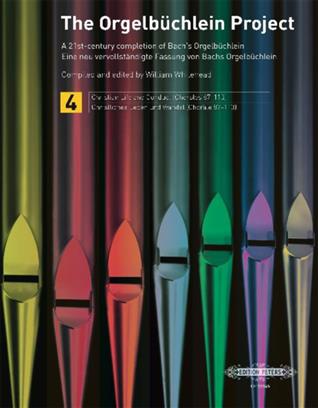
The Orgelbüchlein Project

The Orgelbüchlein Project
A 21st-century completion of Bach’s Orgelbüchlein
Compiled and edited by William Whitehead
Volume 4: Christian Life and Conduct (Chorales 87–113)

152 pages  • ISMN 979-0-57701-498-2  • Softbound
Edition Peters EP73145

OB.jpg

The Orgelbüchlein Project is one of the most exciting and ambitious musical projects of recent years. Bach’s Orgelbüchlein was intended to be a set of 164 chorale preludes covering the whole liturgical year. It was started during Bach’s time in Weimar (1708-17) with a few additions after he arrived in Leipzig. In a tiny manuscript book, Bach wrote the titles of all 164 Lutheran chorales at the top of the pages, but only managed to complete settings of 46 of them. Most titles were allocated a single page, with some given more space. When he came to write out the chorale preludes, he occasionally ran out of space and packed in a few more bars at the bottom of the pages in the more compact (but old-fashioned) German tablature letter notation. The title page of the autograph copy (pictured below) notes Bach’s intention for the collection that “a beginning organist receives given instruction on performing a chorale in a multitude of ways while achieving mastery in the study of the pedal, since the chorales contained herein the pedal is treated entirely obbligato . . . that my fellow man may hone his skill.” The Orgelbüchlein Project is an international project, founded and curated by organist William Whitehead, to complete the Orgelbüchlein by commissioning composers to write settings for the 118 missing chorale preludes.

Continue reading

François Couperin: Lumière et Ombre

François Couperin: Lumière et Ombre
Les Talens Lyriques, Christophe Rousset
Barbican/Milton Court. 14 January 2018

IMG_20180114_151717705.jpg

We are used to hearing French Baroque music in the grand style of the likes of Lully and Rameau, but the more delicate and sensitive music of François Couperin (referred to as le Grand to differentiate him from the rest of his extended musical family) is often overlooked. 2018 is the 350th anniversary of his birth, so is a good time to reassess his music. These two concerts in Milton Court, together with a panel discussion, explored some of his chamber and harpsichord music, concluding with his three Leçons de ténèbres. The two concerts were titled Lumière and Ombre, each containing solo harpsichord, vocal and instrumental music. Continue reading

Bach, the Universe & Everything

Bach, the Universe & Everything
Orchestra of the Age of Enlightenment
Kings Place. 14 January 2018

The Orchestra of the Age of Enlightenment’s regular Kings Place Sunday morning ‘Bach, the Universe & Everything‘ series is billed as a “Sunday service for inquiring and curious minds; a place to bond with music lovers and revel in the wonders of science.”. In conjunction with The Institute of Physics, each event includes a Bach cantata and a talk from a distinguished scientist. This first event of 2018 reflected the Kings Place theme for 2018, ‘Timed unwrapped‘, with a talk by Professor Helen F Gleeson on Time and Perception. These are very popular events, but it was my first visit. Although not in the style of the many totally secular Sunday ‘services’ that have sprung up around the country in these post-religious days, there were elements of a church service in the organ pieces played before the start (of non-conformist, rather than C of E length), a reading, a choir ‘anthem’, notices, a hymn (in this case, of course, a Lutheran chorale) and a ‘collection’ at the bar in return for coffee and cake.

Continue reading

Return of Ulysses

he KingMonteverdi ‘The Return of Ulysses’
Royal Opera House, Early Opera Company, Christian Curnyn
The Roundhouse. 10 January 2018

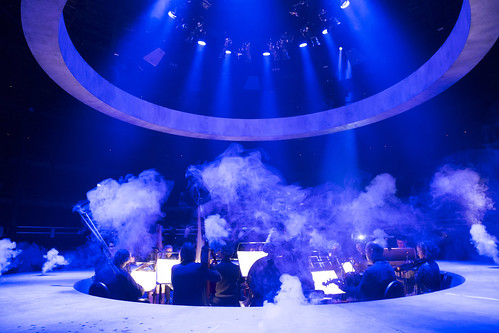
After the success of their 2015 production of Monteverdi’s Orfeo at the Roundhouse (reviewed here), the Royal Opera House returned with an English language version of Il ritorno d’Ulisse in patria, under the title of ‘The Return of Ulysses’. As its name suggests, the Roundhouse is a large circular building in Camden, North London, built in 1854 by a railway company as the Great Circular Engine House and used, albeit only for a few years, as a maintenance depot. It had a central turntable to switch engines into the surrounding maintenance bays. John Fulljames’s production for the Royal Opera House maintains the link with this central turntable with a doughnut-shaped staging with an outer raised ring for the singers with the orchestra in the central circle. Both rotated, the instrumentalists going very slowly clockwise (a bit slower than the hour hand of a watch) and the singers intermittently rotating anti-clockwise. on their circular stage.

Continue reading

Salome

Richard Strauss: Salome
Royal Opera House. 8 January 2018

This third revival of David McVicar’s 2008 production of Salome is directed by Bárbara Lluch and conducted by Henrik Nánási. Although I saw the ROH’s predecessor to this production in the late 1990s, this was my first viewing of McVicar’s production. He adds several additional layers to Strauss’s (and Oscar Wilde’s) already complex take on the sparse biblical/Josephus story. Although Strauss’s music is firmly rooted in the post-Wagnerian idiom of the fin de siècle pre-Expressionist era, the nature of the plot continues to disturb and shock; perhaps more so today, when it is all too easy to relate aspects of opera plots like this to present day news items, people, and social concerns.

The setting was a large rather decrepit basement with bare walls, exposed pipework and a smattering of naked young women. Anybody expecting to have to wait an hour or so for the famous dance before a flash of female flesh had ample opportunities early on – but none in the actual dance. A sweeping staircase to one side led up to an almost hidden upper dining room where Herod and friends are feasting. All the action takes place in the basement space as the upstairs party slowly descend to the depths, in more ways than one. Most of the cast remained onstage throughout, along with several non-singing actors, mostly standing around watching events unfold. Towards the end, it was male nudity that was more apparent, with the executioner, for no apparent reason, stripping to the buff before descending into the cistern to behead Jokanaan. Although silent, as depicted in the libretto and music, this turned out to be a messy affair, the executioner returning completely covered in blood, front and back, top to toe. Continue reading

Christopher Purves sings Handel

Christopher Purves sings Handel
Arcangelo, Jonathan Cohen
Milton Court, 7 January 2018

Distinguished bass/baritone singer Christopher Purves has long been a mainstay of the opera and concert stage. His broad repertoire perhaps evidenced by the fact that my last three reviews of him were in operas by Mozart, George Benjamin, and Georga Enescu. On this occasion, he was the focus of the evening. But this wasn’t one of the usual, and rather predictable, ‘star singer and backing orchestra’ events. Purves and Arcangelo shared the honours in a well-planned partnership of vocal and orchestral music. Purves remained on stage throughout, sitting at the side during Arcangelo’s moments. His jovial introductions to the pieces were relaxed and approachable, not least his opening comment that we were about to hear music for some “complete and utter bastards as well as a couple of real sweeties”. Although many of the protagonists in the programme were clearly in the former category, there were enough of the latter to bring some relief to the bluff and bluster of many of Handel’s music for bass.

Continue reading

Baroque at the Edge

Baroque at the Edge Festival
LSO St Lukes & St James Clerkenwell. 6 January 2018

IMG_20180106_150750319_BURST000_COVER_TOP.jpg
With a headline of “Imagine if Bach was a jazzman, Vivaldi a folk-fiddler, or Handel a minimalist…”, the new Baroque at the Edge festival launched itself onto the London musical scene. Headed up by Lindsay Kemp and Lucy Bending (the pair who for many years ran the London Festival of Baroque Music and its predecessor the Lufthansa Festival), the festival invited musicians from the classical, jazz, and folk world to “take the music of the Baroque and see where it leads”. They promised “No rules, no programme notes, no lectures: all you need to know is how to listen”. The Baroque at the Edge title was also given to the May 2017 LFBM festival, the last to be directed by Lindsay Kemp and managed by Lucy Bending – a nice link to their then unannounced new festival. The Baroque at the Edge festival included six concerts and a family event, spread over a three day weekend. After an opening Friday night piano recital, the Saturday (6 January) featured four events, starting with a lunchtime concert in the impressive late Georgian church of St James, Clerkenwell.

Continue reading

Bach in Advent: Clavier-Übung III

Bach in Advent
David Titterington, Siglo de Oro, Patrick Allies
Bach Clavier-Übung III ‘German Organ Mass’
St John’s, Smith Square. 21 December 2017

During the three-week run-up to Christmas, St John’s, Smith Sq has been running a series of free early evening organ recital, given by the curator of the SJSS Klais organ, David Titterington, and focussed on the music of JS Bach. The two I had intended to hear before evening concerts were both cancelled, but I did catch the evening concert that concluded the series. This was a performance of the major pieces from Bach’s Clavier-Übung III, occasionally referred to this Bach’s monumental work, the largest single collection of his organ music. It was published in 1739 and includes a wide range of musical style, in the form of chorale preludes (in pairs, with larger pedaliter and smaller manualiter arrangement) based on the German Lutheran Mass, together with four duets, the whole enclosed with a large-scale Praeludium and Fugue – the latter known in the UK as the ‘St Anne Fugue’ after the hymn tune which the theme resembles.  Continue reading

Opera: Passion, Power and Politics & Monteverdi Trilogy

 Opera: Passion, Power and Politics
Highlights from the Monteverdi Trilogy
Monteverdi Choir, English Baroque Soloists
Victoria & Albert Museum. 15 December 2017

As part of the V&A’s Opera: Passion, Power and Politics exhibition, the Monteverdi Choir returned to the site of their very first concert, 50 years ago in the museum’s Raphael Cartoon gallery to conclude their 2017 tour of Monteverdi’s three operas with a concert of extracts from all three. In the tradition of the V&A’s ‘Friday Lates’, they started at 6.30 with a series of Promenade Performances given in different galleries of the museum, starting with the L’Orfeo Overture performed from the gallery of the Grand Entrance before moving to the adjoining Medieval & Renaissance galleries for Duo seraphim, performed from the three projecting balconies. The audience was then shepherded through the massive Hertogenbosch choir screen for from two extracts from Il ritorno d’Ulisse in patria, a flash-mob style Coro di Feaci and Ulysses’s Dormo ancora sung by Furio Zanasi in the Renaissance chapel originally in Florence’s Santa Chiara church. Continue reading

Heigh Ho Holiday

Heigh Ho Holiday
Christmas Revels in 17th-century London

The City Musick, William Lyons
St John’s, Smith Square. 13 December 2017

King James I issued his ‘Declaration of Sports’ in 1617, noting that he had heard that people had been ‘barred from all lawfull Recreation, & excercie vpon the Sundayes afternoone, after the ending of all Diuine Seruice‘. So wrote Wiliam Lyons, director of The City Musick in his programme note for this concert, as an example of the encouragement of festivals and holy days during the early 17th century, despite opposition from Puritans and Catholic gentry. These occasions included Christmastide festivals, a time when the virtuosi musicians of the local city waits came into their own, perhaps with the opportunity to relax a little from their normal role of providing music for civic ceremonies, processions, dances, masques etc. Their musical repertoire was wide, as was the range of instruments that they played, both aspects revealed in this concert by a 21st-century incarnation of the waits – the seven musicians of The City Musick. Continue reading

Lully: Alceste

Jean-Baptiste Lully: Alceste
Les Talens Lyriques, Namur Chamber Choir, Christophe Rousset
Launch concert: Opéra Royal, Versailles, 10 December 2017
CD: Aparté AP164, 2CDs. 80’+70.59′

Lully: Alceste

Alceste ou Le Triomphe d’Alcide is an early example of Lully’s tragédie en musique in its fledgeling form of a Prologue followed by five Acts. It uses a libretto by Philippe Quinault, based on Euripides’ Alcestis. The first performance was given in January 1674 by the recently formed Académie Royale de Musique (later known as the Opéra de Paris) at the Théâtre du Palais-Royal, adjoining the then residence of the King, the Louvre Palace. The occasion was the Louis XIV’s victory against the Spanish held Franche-Comté during the complexities of the Franco-Dutch War. Lully had only recently taken control of the opera scene in Paris and Versailles, and this was the second of the many operas created during this monopoly. Even though Versailles was not, at the time, the seat of Louis XIV (and indeed, most of it was not yet built), the sumptuous Opéra Royal (built around 100 years later, in 1770) was an appropriate venue for Les Talens Lyriques to launch this CD, with a concert performance.

IMG_20171210_141343569.jpg

Continue reading

Monteverdi: Selva morale e spirituale

Monteverdi: Selva morale e spirituale
Les Arts Florissants, William Christie
Barbican, 9 December 2017

Monteverdi’s 8th book of madrigals, the Selva morale e spirituale (Moral and Spiritual Forest”), was published in 1641 when Monteverdi was in his 70s. It seems to have been intended as a culmination of his musical career at St Marks Venice, and contains a vast array of compositional styles, as reflected in this Barbican concert by the eight singers and eight instrumentalists of Les Arts Florissants. They opened with one of the most dramatic pieces from the collection, the extended seven-voice Gloria, the clear articulation of the singers allowing the flourishes of the musical lines to shine. Here, as in many of the other pieces, the two violinists made significant contributions. Continue reading

Praetorius: Mass for Christmas Morning

Praetorius: Mass for Christmas Morning
Gabrieli Consort & Players, Paul McCreesh
St John’s, Smith Square
7 December 2017

The 500th anniversary of the Reformation gave the Gabrieli Consort & Players the chance to revisit the music of their most successful recording, Praetorius’s Mass for Christmas Morning. The recording dates from 1994 and was recorded in the splendour of Denmark’s Roskilde Cathedral. That venue was chosen because of the historic Roskilde organ, dating back to 1544 with additional work in 1611, 1654 and the 1690s, the whole restored back to its pre-1700 state. For this short tour, the Gabrieli Consort & Players visited Hull, Bradford and London’s St John’s, Smith Square, on each occasion joining with local choirs to expand the resources.  Continue reading