Lachrimae
Anna Prohaska & Arcangelo
Sam Wanamaker Playhouse. 2 August 2015
The latest in the series of candle-lit concerts in the Jacobean Sam Wanamaker Playhouse on London’s South Bank featured soprano Anna Prohaska with Arcangelo and a programme based around the theme of melancholy, under the title of ‘Lachrimae’. Devised by Anna Prohaska, the pieces chosen reflected the wide range of compositional possibilities used by early Baroque composers from England and Italy. The music ranged from intimate Purcell settings to dramatic Italian opera scenes.
 I first reviewed Anna Prohaska in 2012 Wigmore Hall concert (broadcast live on Radio 3) and noted that “… If I had read Anna Prohaska’s CV (full of names like the Berliner Philharmoniker, Weiner Philharmoniker, Deutsche Staatoper Berlin) before I heard her sing, I would have wondered why on earth the Academy of Ancient Music had booked her”. But, for the ‘early music’ vocal scene, she was a real find. I don’t know what, or how, she sings with these orchestral big boys, but her beautifully eloquent and pure voice is just the thing for this repertoire, as was her presentation. She is of impeccable musical stock – her father and mother were an opera director and singer, her grandfather and great-grandfather a conductor and composer respectively. She has a very attractively un-diva like and engaging stage manner, giving the impression of singing with us, rather that at us, and involving us in the emotional turmoil of the various pieces. She has an exquisitely warm timbre with a slightly mezzo-ish tinge and demonstrated a thorough understanding of her chosen repertoire (and its wide range of emotions), with fine da capo elaborations and the rare ability to trill properly. Her use of rhetoric to accent emotive moments was spot on, as was her heart-wrenching cries of “Gabriel” in Purcell’s ‘Tell me, some pitying angel’ – one of those moments when silence can be more intense than music. Continue reading
 For the second time this year, London sees Monteverdi’s Orfeo performed in a large circular space. After the Royal Opera House / Early Opera Company production in the Roundhouse early this year (
 and Shepherds (men in casual black, women in bright block colours) bounced around to the merciless thump of the drum and rattle of a tambourine. The two very professional-looking dancers who took over the front stage turned out to be the key soloists Mariana Flores and Francesca Aspromonte (Eurydice and Musica who, in a nice twist, also sang the role of the Messenger).
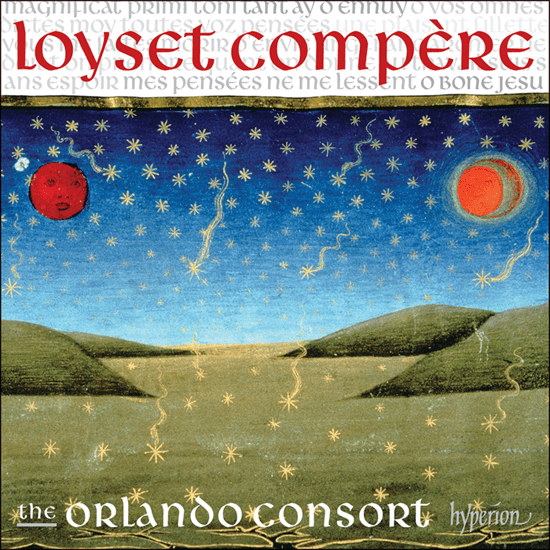 Loyset Compère is not as well-known as he deserves to be, and this recording could be the means by which his (recently re-assessed) place in musical history is acknowledged. The key to the re-assessment is the slightly embarrassing realisation that the Josquin that musicologists assumed to have been born in 1440 was not, in fact, Josquin des Prez, but another Josquin altogether. That makes Josquin des Prez around 10 years younger than thought. Similar birth date realignment concerning Obrecht and Agricola also make them younger than first thought. As David Fallows explains in his comprehensive programme notes, this leaves Loyset Compère as one of the earliest composers in the imitative style, now known to be later developed, rather than instigated, by Josquin and others.
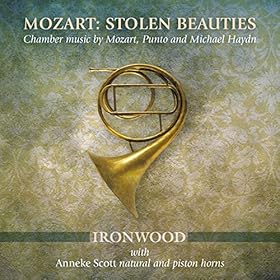 A CD launch concert in Handel’s own parish church of St George, Hanover Square featured the programme from the CD ‘Mozart: Stolen Beauties’. Ironwood is an Australian period instrument ensemble formed in 2006. They were joined by the distinguished horn player Anneke Scott, here playing both natural (or ‘hand’) and piston horn.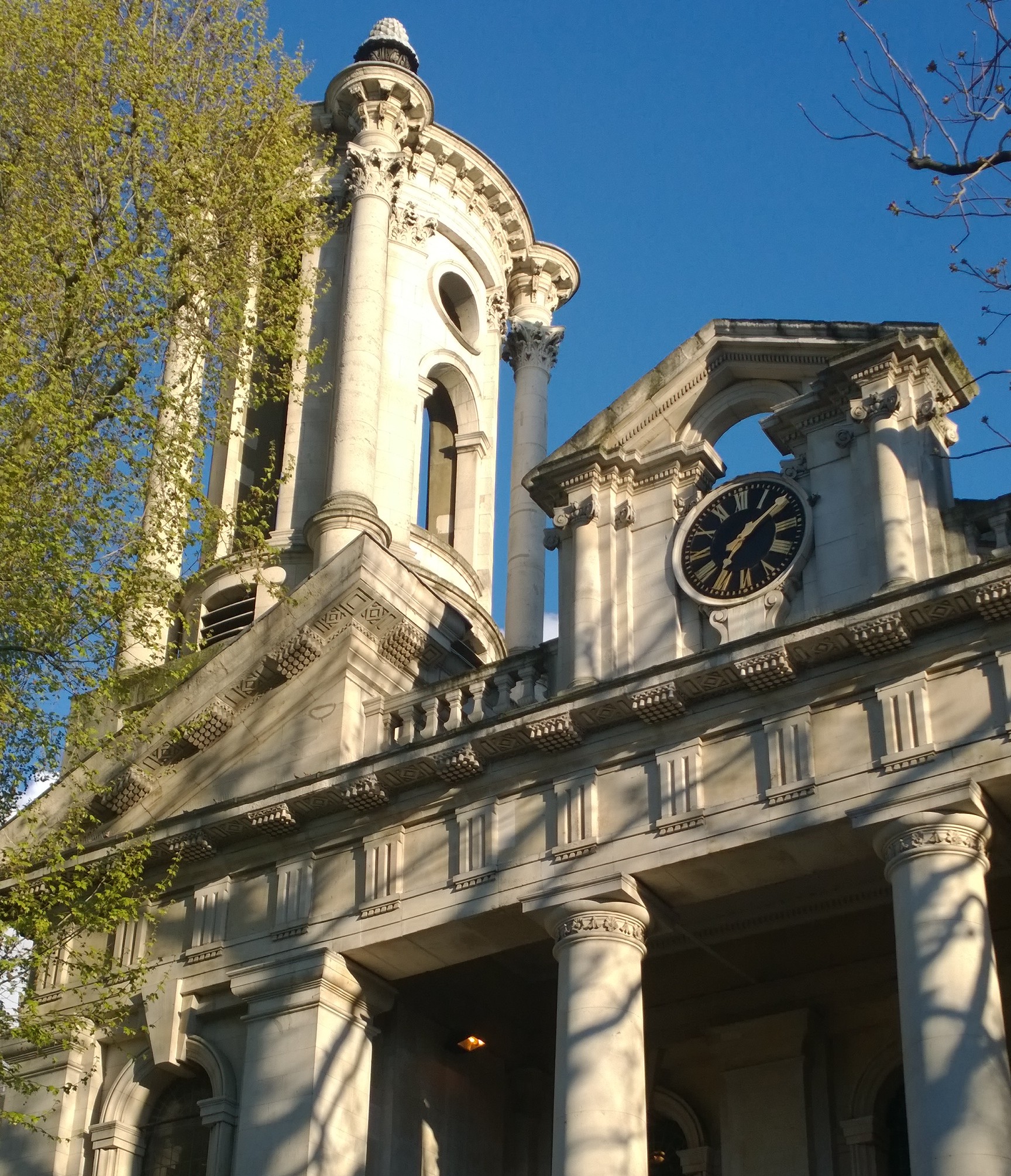
 The first cello concerto to be played was the more advanced in style of the two. CPE Bach’s Concerto in a opening in typical Empfindsamer Stil with an orchestral unison, immediately challenged by contrary-motion scales and a yearning melody for the solo cello followed by a motif built on rapidly repeated notes – a typical CPE Bach mix of colours and textures. The first movement ended with the first of Poppy Walshaw’s excellent cadenzas, all kept well within the bounds and style of the piece. In the slow movement, the sound of the solo cello was allowed to grow delicately out of the orchestral texture. The skittish final movement saw the cello finally break free from its former collaborative role with a virtuoso series of flourishes.
 The evening ended with the Violin Concerto in G (B1:520) by Allessandro Rolla, an Italian composer better known today as the teacher or Paganini than for his own compositions. Clearly in a later genre that the other works on the programme, this was very obviously a work written by a violin virtuoso to demonstrate his own skills. In contrast to the earlier composers, the solo moments were accompanied by the full orchestra, rather than a Baroque-style continuo group. As with Poppy Walshaw earlier, George Clifford produced a superb extended cadenza towards the end of the first movement, building on the advanced techniques already demonstrated. Switching between arco and pizzicato (and on one occasion, both at the same time) and taking the melodic line well towards the top of the violin fingerboard, Rolla would have approved.
 The Sam Wanamaker Playhouse, part of the Shakespeare Globe on London’s South Bank, has come up with an enterprising series of candlelit musical events and, increasingly, theatrical events using music as an integral part of the production. The latest of the latter genre is ‘All the Angels: Handel and the first Messiah, a play by Nick Drake that explores Handel’s visit to Dublin where the first performance of Messiah took place on 13 April 1742.


 (the 5th in their spectacular new home on the Wormsley estate) saw them spreading their wings with more educational projects and partnerships with the Royal Shakespeare Company and, in future years, Rambert and the Philharmonia Orchestra. As usual, they presented a mixed programme of popular operas, including the regularly returning Mozart, in this case with Così fan tutte.
 least given the nature of Armonico Consort’s rather staid production. It was also singularly unwise of director Christopher Monks to tell us all in his introductory talk that we would have “never seen a performance like this before”. I am still not quite sure what he meant by that remark, but it kept me waiting for something special or unusual to happen – which it didn’t. His comment did turn out to be true, in a way, but not in the way that I think he intended.
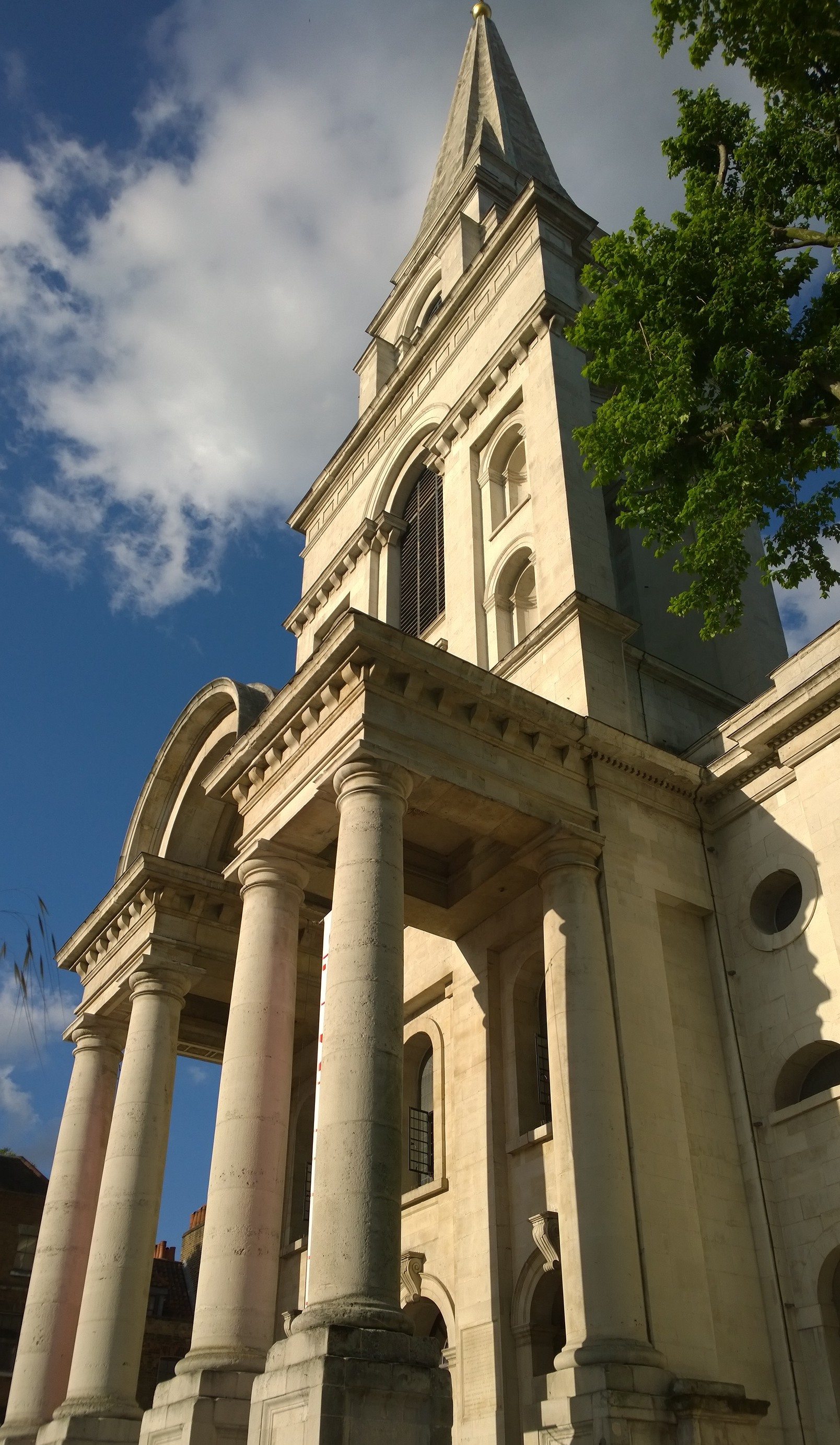
 new heights of curiosity. With wholesale ‘borrowing’ from his own, and around seven other composers’ music, this doesn’t seem to be Handel at his most sincere. Amongst other oddities, he turned a wedding cantata by Stradella into a chorus about plagues. It was performed in the almost ideal acoustic of Christ Church Spitalfields (as part of the Spitalfields Festival) by La Nuova Musica, directed by their flamboyant conductor David Bates.


 Catalina’s Hatchlands recital explored the influence of Italian Renaissance keyboard music on late 16th and early 17th century English music, focussing on some of the first music publications. England was just one of the countries that fell under the spell of Italian music and musicians as they ventured north over the Alps. Usefully played in chronological order, Catalina’s programme also provided a fascinating insight into the early development of keyboard music itself.
 It’s not often that I find myself standing in a long queue outside a venue controlled by bouncers. But this was, after all, an I Fagiolini event (commissioned by the Barbican), and the little beans had come up with yet another of their spectaculars. The venue was Village Underground, a performance and arts venue created out of a derelict railway viaduct and adjoining warehouse. The bouncers eventually let us in, after we had shown the ‘Crime Scene Inspection Permit’ we had been told to bring with us. We were immediately shrouded in thick smoke, the little blue-light torches were had been given not being a great deal of help. In the murk, we managed to find a series of display boards showing an enigmatic sequence of photos and poetic texts, all linked by lines. Several chalked body outlines could be seen on the floor, close to various seemingly random objects that had been grouped near the display boards. The investigation permit began to make sense. As the gloomy room filled up with people it became harder to move about, an issue that became more serious when the singers and dancers joined the scene.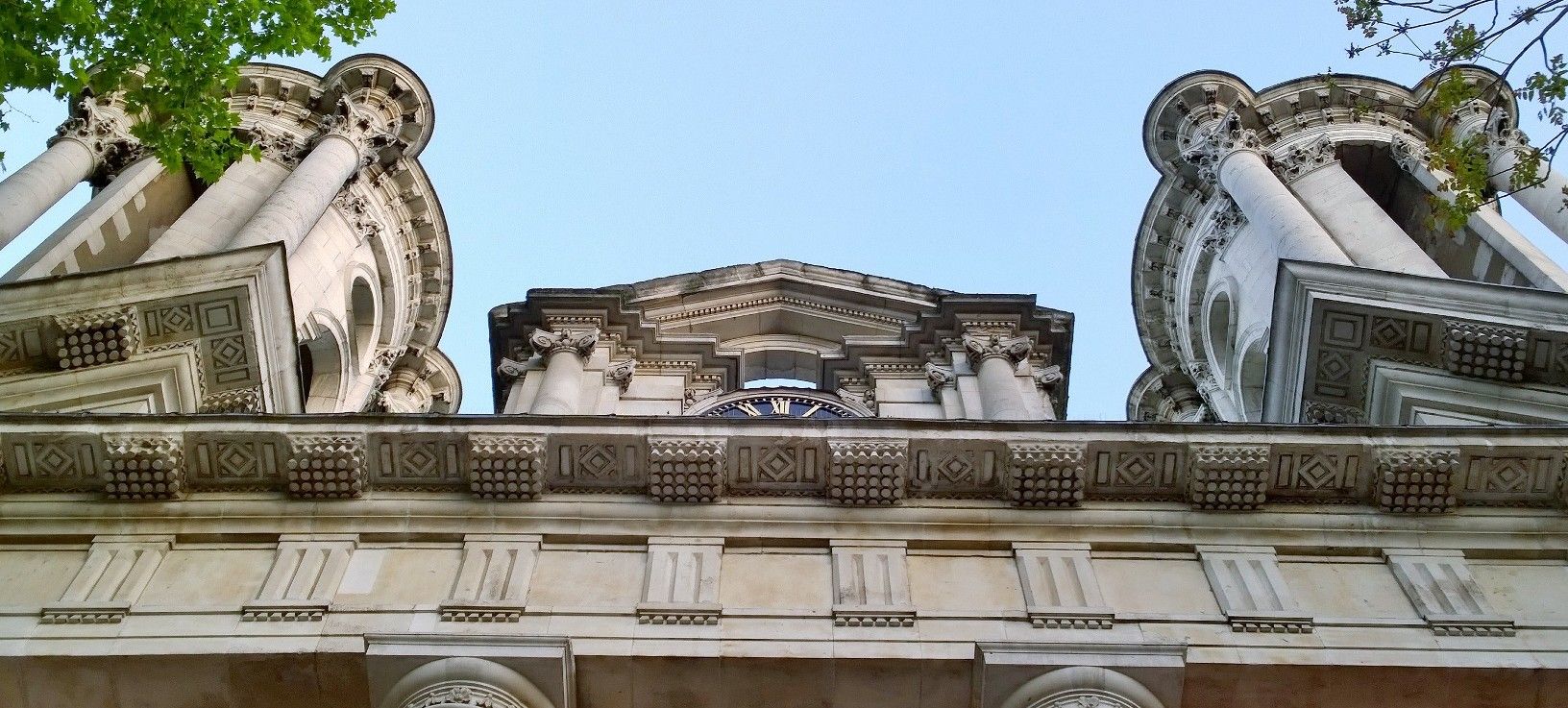

 five female composers, the music ranged from the very beginning of the Baroque up to the end of the 17th century. The earliest composer was Francesca Caccini (1587-1641), daughter of Giulio Caccini (represented here by Peter Philips’ harpsichord transcription of his Amarillo, mia Bella). Francesca Caccini made her debut aged 13 at the Medici Court, singing at the wedding of Henri IV of France to a Medici bride. After time in France she returned to become the leading female singer in Florence. Apart from one opera (the earliest known one by a woman) her only surviving music was published in 1618. The three pieces demonstrated the early recitativo style of

 Baroque. But Stevie Wishart is a composer with roots in early and contemporary music. So rather than highlighting the melodic aspects of the instruments that are usually key to Baroque music, Wishart focused on the “resonance, overtones and sympathetic vibration” of the string orchestra, commenting that “the entire orchestra play only open strings and harmonics so that melodies only surface through a barrage of ‘sound clouds’ and gentle noise.”
