Thomas Tallis: Songs of Reformation
Alamire, David Skinner
St John’s, Smith Square: Holy Week Festival. 12 April 2017
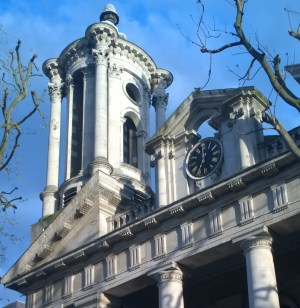 After the Holy Week Festival showcase Good Friday afternoon St John Passion came a concert focussed on one of England’s finest composers, Thomas Tallis. Living though the reigns of five monarchs (from Henry VII to Elizabeth), and composing in the latter four of them, Tallis managed to negotiate the complex religious twists and turns of Tudor life. The highlights of the evening came at the end, with the first modern performance of David Skinner’s reconstruction of a piece composed by Tallis (an early version of the famous Gaude gloriosa Dei mater), but with new words (See, Lord, and behold) added by Katherine Parr, Henry VIII’s eighth and final Queen. Continue reading
 . It still includes the annual favourite Good Friday afternoon Bach Passion from Polyphony and the Orchestra of the Age of Enlightenment, but has also introduced some other new faces to the Eastertide Smith Square festivities. I was away for several of the events, but did manage to catch three contrasting events, starting with a curious concert by Tenebrae themselves, together with the Aurora Orchestra, both of whom seem to have caught the public imagination in recent years, not least by some impressive publicity.
 Museum, best known for its Vienna contemporary art gallery. The centre hosts an enormous range of activities throughout the year and, for the past three years, has been running a short early music festival, this year consisting of six events. I was invited to review five of them, between 27 February to 4 March, featuring performers based in Italy, Austria, Germany, Switzerland and Budapest.
 ook place in the
  The St John’s, Smith Square Young Artists scheme gives emerging soloists and ensembles a platform to showcase their talents through three SJSS concerts, a chance to commission new music, and opportunities to develop skills in marketing, education and outreach. The latest batch of six (for the year 2016/17) includes the recorder quartet Palisander. They already seem pretty adept at marketing, and took the opportunity of the first of their three concerts (given under the title Antidotum Arachne) to launch their debut CD, Beware the Spider!.
  The Musicall Compass have undertaken some fascinating projects in the past, combining vocal music with, for example, dance in a memorable performance of Buxtehude’s Memba Jesu Nostri in Christ Church Spitalfields. On this occasion they interspersed the nine five-voice Lamentations of Orlando di Lasso with folk laments from Eastern Europe, sung by Moira Smiley. Written to be performed during the three days leading up to Easter, the Lamentations set verses from Jeremiah’s rather morbid reflections on the decline of Jerusalem: ‘How doth the city sit solitary .. she has become a widow’. Three settings are sung on each day, each finishing with the lament Ierusalem, Ierusalem, convertere ad Dominum Deum tuum (Jerusalem, Jerusalem, return unto the Lord thy God).
  Part of the 2015 expansion of the European Union Baroque Orchestra’s activities has been the EUBO Mobile Baroque Academy (EMBA), a cooperative project aimed at finding new and creative ways of addressing the unequal provision of baroque music education and performance across the European Union. The touring orchestra (EUBO) still forms the core activity of the EMBA, reforming each year with a new intake of talented young period instrumentalists chosen from educational auditions held each spring. For more than 30 years EUBO has provided specialist training and experience, and has encouraged and supported many of the top period instrument specialists around today. One such is the distinguished oboist and director Alfredo Bernardini, a member of the very first EUBO in 1985 and the director of this EUBO tour.
 Alessandro Scarlatti (pictured) was one of the founders of the Naples opera scene. He first moved there in 1684, aged around 24, as Maestro di Cappella to the Spanish Viceroy, and spent much of his following life there. All the other composers in La Serenissima’s concert were influenced by him. He left little instrumental music alongside his operas, but one such was the Sinfonia di Concerto Grosso II in D (for recorder, trumpet, strings & continuo) that opened this concert. It can be a surprise to those not used to period instruments to realise that the trumpet and recorder can be combined as fellow solo instruments, as Bach demonstrated so well. Scarlatti was less adventurous in his combining of these instruments in this concerto, with the two instruments generally kept apart, and the two melodic Adagio movements only using the recorder.
  unleashed”. This 90 minute work was composed over two years of concentration and virtual isolation, while Benjamin eschewed all other composition, teaching, and conducting work. It was commissioned by the Festival d’Aix-en-Provence, along with the Royal Opera House and opera houses in Amsterdam, Toulouse, and Florence. A request to base the opera on something related to the Occitan area of Provence led to a mediaeval tale about a troubadour employed by a local lord who has a love affair with the lord’s wife. When he finds out, the lord kills the troubadour, cooks his heart and feeds it to his wife. When she finds out what she has eaten, she swears to never eat or drink again to keep her lover’s taste in her mouth. She avoids the lord’s anger and his sword by leaping from a window to her death.
  e concerts under the title of Bach Through Time, the first of which featured Christophe Coin playing solo cello – or, in this case, two solo cellos with three different bows. He opened with one of the very first compositions for solo cello, the third of Domenico Gabrielli’s Ricercars, a lively piece in the trumpet key of D major which included many triad fanfare motifs. This Gabrielli (no relation) was part of the rich musical foundation of the Basilica of San Petronio in Bologna and also worked for the d’Este family in Moderna.
 Over the years, William Christie has done much to introduce French baroque music to British ears, and has opened our ears to Purcell. But I had not heard his take on Messiah live before. It was bound to be rather different from the usual variety of British interpretations, and it was. We are increasingly used to lightly scored performances with moderately sized choirs, in contrast to the cast of thousands of yesteryear, but this very Gallic interpretation added a layer of delicacy and dance-like joie de vivre to Handel’s music, all done in the best possible Bon Goût. Les Arts Florissants fielded a choir of 24 (quite large, by some standards today, and in Handel’s time) and an orchestra with 6, 6, 4, 4, 2 strings, together with five soloists. Both instrumentalists and the chorus were encouraged to keep the volume down, usually by a finger on the Christie lips. This seems to be in line with Handel’s intentions, as indicated by his scoring and, for example, his very limited use of the trumpets. When things did let rip, there was still a sense of restraint amongst the power.
 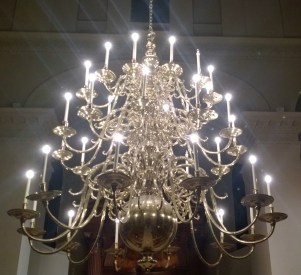 The Renaissance Singers have a history that goes back to 1944. They played an important part in the revival of interest in Renaissance sacred polyphony as the early music movement grew and developed. Their 2017 Christmas concert, in the architecturally important Hawksmoor church of St George’s Bloomsbury, sensibly avoided carols and concentrated on what they do best: singing Renaissance music. Under the inspired direction of their musical director, David Allinson, they presented a programme of seasonal music centered on the composer Clemens non Papa and his Missa Pastores quidnam vidistis, together with music by Josquin, Verdelot, Gombert and Willaert.
 The 31st St John’s, Smith Square Christmas Festival features most of the usual suspects, including regulars, The Cardinall’s Musick. As is typical of their concerts, the focus was on Catholic liturgical music from the Renaissance, on this occasion in honour of the Virgin Mary. In a ‘greatest hits’ line-up of Renaissance composers, the first half was built around Lassus’s Missa Osculeter me osculo oris sui alternating with motets by Victoria; the second centered on Byrd’s Propers for the Nativity of the Virgin Mary and concluded with Palestrina’s Magnificat primi toni a 8.
  The
The 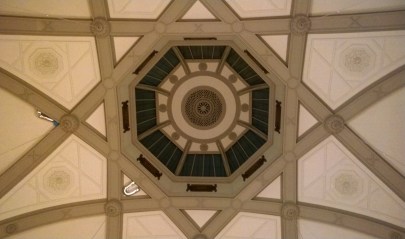 For many years now, Spitalfields Music has been spreading its wings way beyond its original home in Spitalfields, both for its major programme of community work and for venues for its musical and other performances. It is now a major arts and community organisation covering the whole of the East End of London. Among the venues for this year’s winter festival (which included a hidden Masonic Temple) was The Octagon, built in 1887 as part of the grand premises of the People’s Palace, described in The Times on its opening as a “happy experiment in practical Socialism”. It is now the home of Queen Mary University of London. The architect, ER Robson (best known for his influential school designs), used the British Museum Reading Room for inspiration in designing the octagonal library.
 More ‘happy experiments’ were in evidence in the programme ‘Sound House’ given by The Society of Strange and Ancient Instruments (SSAI). It was based on the 17th century scientific writings and acoustic experiments of Francis Bacon, as described in his posthumously published Sylva Sylcarum and New Atlantis. In the latter vision of a new society, Bacon promoted the idea of Sound Houses where his acoustic experiments could be continued and better appreciated by the populace. Bacon’s musical ideas might seem commonplace today, not least through the medium of electronics and manipulated sound, and his experimental approach to sound is a key feature of many musicians today.
 The Spitalfields Music Winter Festival is one of the highlights of the London musical calendar, sensibly positioned in early December just before the Christmas musical silliness takes hold. Founded in 1976, initially to raise interest and money for the restoration of the fabulous Nicholas Hawksmoor Christ Church Spitalfields, Spitalfields Music has grown to became a major arts and community organisation working throughout the year in the East End of London. It’s 40th year included 15 new commissions, programming more than 65 performances across East London, enabling some 5000 local people to take part in free musical activities, and working with communities ranging from 1500 local school children to care home residents. The week-long festival ranged from contemporary jazz, a Bollywood show with ‘a tuba the size of Belgium’, a show for toddlers, musical dinners in a hidden Masonic Temple together with the usual array of top-notch classical music events, with the usual focus on early and contemporary music.
