
Itinéraire Baroque en Périgord Vert
‘A Telemann Year’
27-30 July 2017
 The annual Itinéraire Baroque en Périgord Vert festival is based in the communes of Ribérac and Verteillac in the northern part of the Dordogne region of south-western France. It was founded by Robert Nicolas Huet and Ton Koopman, the former a local resident and now President and Director of the organising committee, the latter the Artistic Director and an occasional import from The Netherlands, together with his musical friends and family. The festival was initially the one-day event that still gives the now festival its name – the Itineraire Baroque, a musical tour of some of the extraordinary Romanesque churches of the region. But it has now expanded to fill four days over the last weekend in July with a wide range of concerts of Baroque music.
The focus for this year’s festival (the 16th) was Georg Philip Telemann (on the 250th anniversary of his death), a composer now usually overlooked by Bach and Handel (both of whom he knew personally), but who in his time was held in equally high esteem. A self-taught musician, he started to study law in Leipzig, but quickly moved into the city’s musical world. After short spells in princely courts, he moved to Frankfurt and eventually Hamburg where he directed the music in all the city churches. He was the first choice for the Leipzig post that Bach, the third choice, eventually accepted in 1723. He left an enormous amount of music, demonstrating his musical talent and ability to absorb national styles into his own music, notably from France and Poland. Continue reading
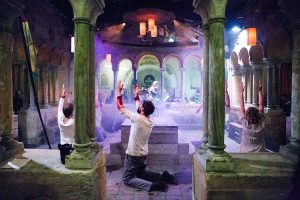 Contraband. It was set in recent times in a fundamentalist (and militaristic) Christian community of cult-like weirdness, led by the controlling Zebel (Frederick Long), with behaviours frequently bordering on what might have been found in a lunatic asylum of Handel’s day. As it happened, on my drive down to Iford, I listened to a Radio 4 broadcast of an account of the 1993 siege of a fundamentalist sect at Waco in Texas. The comparisons were chilling.
  l tower were added. Internally, the Romanesque triple-aisled basilica was altered, rather inelegantly, by inserting two enormous domed cupolas into the original external walls, resulting in a bit of an architectural mess. After two major fires in the 17th century (which destroyed the cupolas), the church was restored, and impressive new convent buildings were added, with cells for 45 nuns. During the Revolution, the Abbey first became a prison (1792), and then a barracks (1808). In the 1920s, the Abbey complex was purchased by the town of Saintes. In the 1970s, restoration of the monastic
  buildings (abandoned since the war) was started and, in 1972, an annual Festival of Ancient Music was created, later becoming the Festival de Saintes. In 1988 the Abbey was launched as a cultural centre by President François Mitterrand, and in 2013 it became la cité musicale, housing a Conservatoire of Music and a range of year-round musical activities, including many for young people. The former nun’s cells now sleep visitors and guests of the Festival.
 LunchBreak Opera is a new venture, launched earlier this year. Its first production was Puccini’s one-act opera Suor Angelica, given in nine fully staged and costumed lunchtime and early evening performances (10-14 July) in St Botolph’s Church, Bishopsgate, London – a prime position, next to Liverpool Street Station. Lasting just 50 minutes it is ideal for lunchtime and post-work entertainment.
  The five-strong group Ceruleo (two sopranos, cello, theorbo, and harpsichord) got together at the Guildhall School of Music and Drama in 2014. They have just completed a one year Artist Fellowship there, the first time a this has been awarded to a group. During their year, they gave several performances of their programme ‘Deplorable Fire’ commemorating the 350th anniversary of the Great Fire of London, including a live performance on BBC Radio 3. They presented their Paradise Lost programme, based on John Milton’s poem (published 350 years ago in 1667) as their final recital of their Fellowship year. The music was interspersed by extracts from Paradise Lost.
  The entire centre of the historic Danube city of Regensburg has been declared a World Heritage site, and all the venues for the festival are in important historic buildings. These range from extreme Baroque and Rococo to austere Gothic churches, and the historic Reichssaal, part of the Altes Rathaus, and for centuries the permanent seat of the Parliament of the Holy Roman Empire. This was the 33rd festival and featured groups from 12 countries, and musicians from a great many more. The Tage Alter Musik website can be see
  converted into a small concert room, and there is also a larger lakeside amphitheatre and stage. As well as small-scale professional productions, it has also recently started week-long academies for young opera singers, culminating in public performances. When they invited me to review Rameau’s Hippolyte et Aricie , I was warned that ‘it isn’t Glyndebourne’, but even Glyndebourne singers have to start somewhere and this seemed a pretty attractive venue for a week of music making and learning. Ten singers were accepted onto the academy, led by music direct Marco de Silva and harpsichordist Stephanie Gurga. Three of the roles had dual casting on the Saturday and Sunday performances.
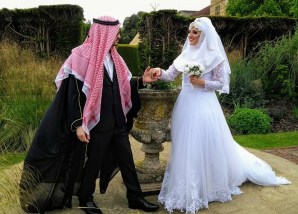
 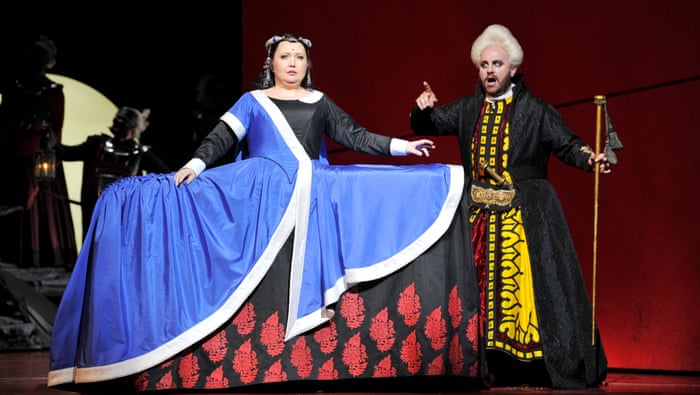 for Aspasia to walk through without turning sideways. She later appeared as though sitting behind a large bedecked dinner table, as pictured. Indeed the striking costume design was one of the main features of this production, which included a number of impressively choreograph set-piece dances, at one stage complete with a lot of foot-stomping, stick-banging and skirt-twirling, the whole more in Japanese than Anatolian (or 18th century European) style.
 account of its appearance and landscape importance, and placed into the guardianship of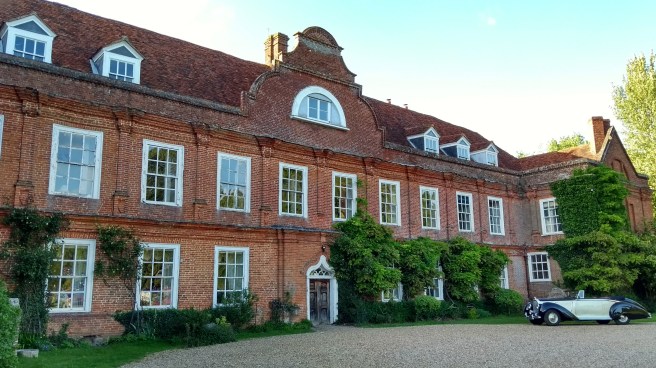
 In a rather stark contrast to the glitz and glamour of the opening night of Glyndebourne Festival Opera (reviewed
  the sons of his brother Egitto, King of Egypt. As it happened, Danao had 50 daughters, so married them all off to his nephews with the instruction that they must all murder their husbands on their wedding night. With one exception, Danao’s plan worked, the exception being his daughter Hipermestra and her new husband Linceo, who had fallen for each other. The subsequent plot of Cavalli’s 1658 opera is based on the complex series of events that occurred after the 50 potential murderous nephews were now reduced to a more manageable one.
  After reforming, renaming, and regrowing itself from the long-running Lufthansa Festival, the London Festival of Baroque Music has become, phoenix-like, one of the most important early music festivals in London. Under the banner of ‘Baroque at the Edge: pushing the boundaries‘, this year’s LFBM used the music of Monteverdi and Telemann, from either end of the Baroque (and both with anniversaries this year) to explore ‘some of the chronological, geographical and stylistic peripheries of Baroque Music’. With one exception, all the concerts were held in the Baroque splendour of St John’s, Smith Square.
  One of the key events of the London Festival of Baroque Music was final concert of the current incarnation of the European Union Baroque Orchestra, and orchestra I have been reviewing enthusiastically for many years. After extensive annual training auditions attracting around 100 applicants, aided by leading period performers, around 30 instrumentalists are selected each year to tour a series of concerts around Europe. But this concert was also, very sadly, the very last EUBO concert in its present state as a UK-managed organisation. Founded 32 years ago as a UK initiative (during the 1985 European Music Year), and managed ever since from its base near Oxford, the vote by a small percentage of the UK population to drag the UK out of the European Union means that it is no longer viable to run an EU venture from the UK. In its 32 years, EUBO has encouraged and nurtured around 1000 young musicians, giving some of the finest period instrumentalists around an early grounding in performance practice at the start of their careers. For the future, after a hiatus of a year to allow for the transfer, when there will be no auditions or orchestra , EUBO will restart from a new base, and with new management, based in the music centre AMUZ in Antwerp.
 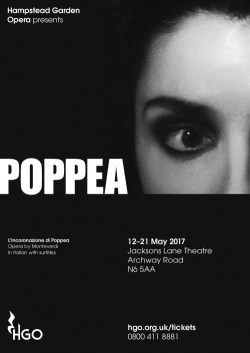 The 450th anniversary of Monteverdi’s birth will include many performances of L’incoronazione di Poppea. It was his last known opera, first performed just months before his death. But I think this one, by the young singers and instrumentalists of Hampstead Garden Opera and Musica Poetica, will prove to be one of the most memorable for me. An impressively simple staging, excellent singing and acting, and an exceptionally well judged realisation of the instrumental accompaniments, combined with the friendly acoustic of the Jacksons Lane Theatre to produce an absorbing and thought-provoking interpretation of Monteverdi’s exploration of love, lust, and power.
 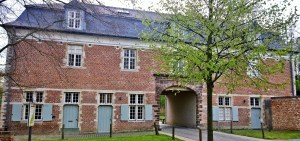 ly appropriate that since 1991 it has been the home of the
  The St John’s, Smith Square Holy Week Festival (also reviewed
