Music for a Grand Exhibition Organ
Andrew Benson-Wilson
St Anne’s, Limehouse. Friday 2 October, 7:30

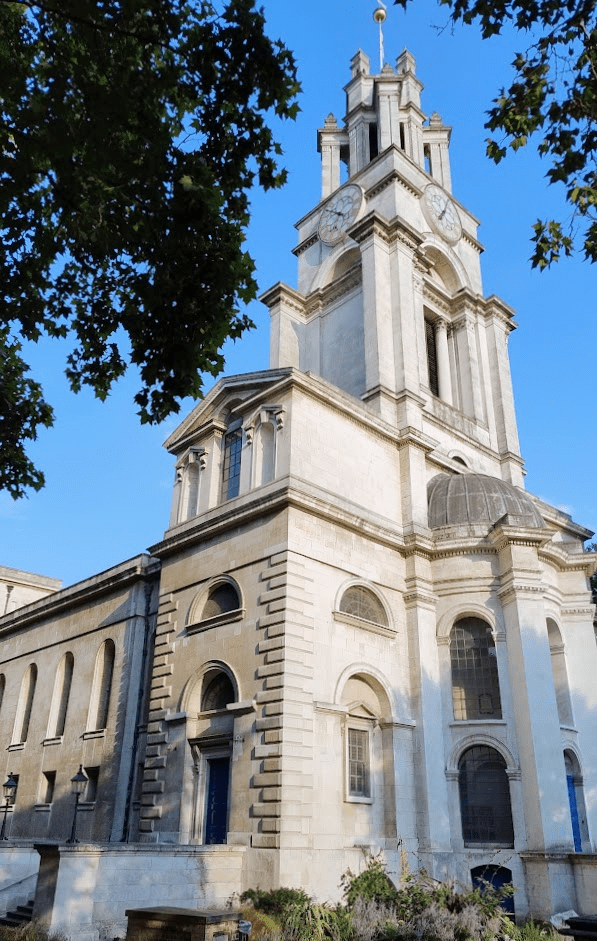
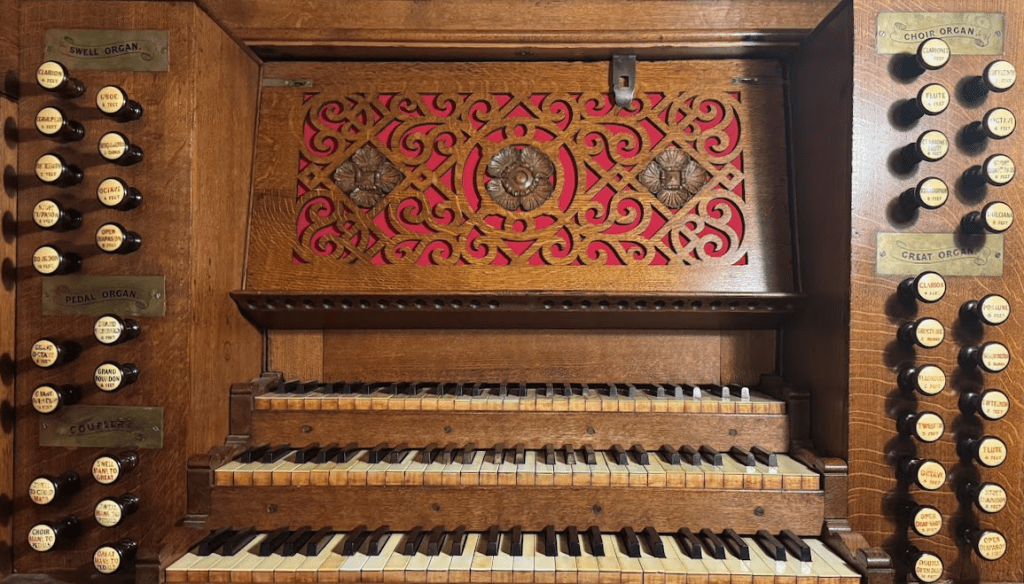
This is a rare opportunity to hear the magnificent 1850 Gray & Davison organ in the “Cathedral of the East End”, Nicholas Hawksmoor’s stunning 1730 church of St Anne’s, Limehouse. Before arriving in St Anne’s, it was displayed and won first prize at the 1851 Great Exhibition in Hyde Park. I gave a series of annual recitals many years ago at about the same time as a book was published that described the organ as “decrepit but still magnificent”. The idea of those recitals was to let people hear the important organ, whatever state it was in, before it became unplayable and forgotten. It then fell off my radar until recently, despite the much-needed William Drake restoration in 2006. I am delighted to be invited back for this recital.
The programme will contrast Bach organ music published in England around the time of the organ with dramatic and descriptive music composed in France at the same time. It was a time of increasing interest in Bach in England, largely through Mendelssohn, who prepared an edition of Bach’s Orgelbüchlein that was published in 1844 in Leipzig and London. 1850 was the centenary of Bach’s death, and a group of German composers, led by Schumann, founded the Bach Gesellschaft to publish the complete works of Bach.
Several of Bach’s major Preludes and Fugues were published in England in 1852 under the title of “Grand Studies”. I will play two that have a particular relevance to St Anne’s, the so called “Cathedral” Prelude and Fugue and the famous “St Anne” Fugue, one of Mendelssohn’s favourite organ pieces. I will start with choral preludes from the Orgelbüchlein to demonstrate the wealth of quieter stops on the organ before the astonishingly powerful reeds stops are unleashed.
The French contributions come with music by the early Romantic organist composers, Alexandre Pierre-François Boëly and Louis-James Alfred Lefébure-Wély. Boëly’s Offertoire pour le Jour de Paques reflects the fact that the Limehouse organ would not be here were it not for a fire on Easter Day 1850 that destroyed the original 1741 Richard Bridge organ and the interior of the church. His Fantasia pour le verset Judex Crederis au Te Deum is a dramatic depiction of the day of judgement and the end of the world, featuring the first known tone cluster in organ music as all the notes of the bottom octave are held down at the same time. Lefébure-Wély’s Scène pastorale avec orage pour une inauguration d’orgue depicts a bucolic scene complete with the folk dances, a thunderstorm, a prayer for a respite from the storm and a return of the dances with added birdsong.
Details of the organ, with specification, can be found here.
Programme notes can be foundd here.
Admission is free, with a retiring collection to support the maintenance of this important historic musical instrument.