J S Bach: Soprano Arias & Swedish Folk Chorales

J S Bach: Soprano Arias & Swedish Folk Chorales
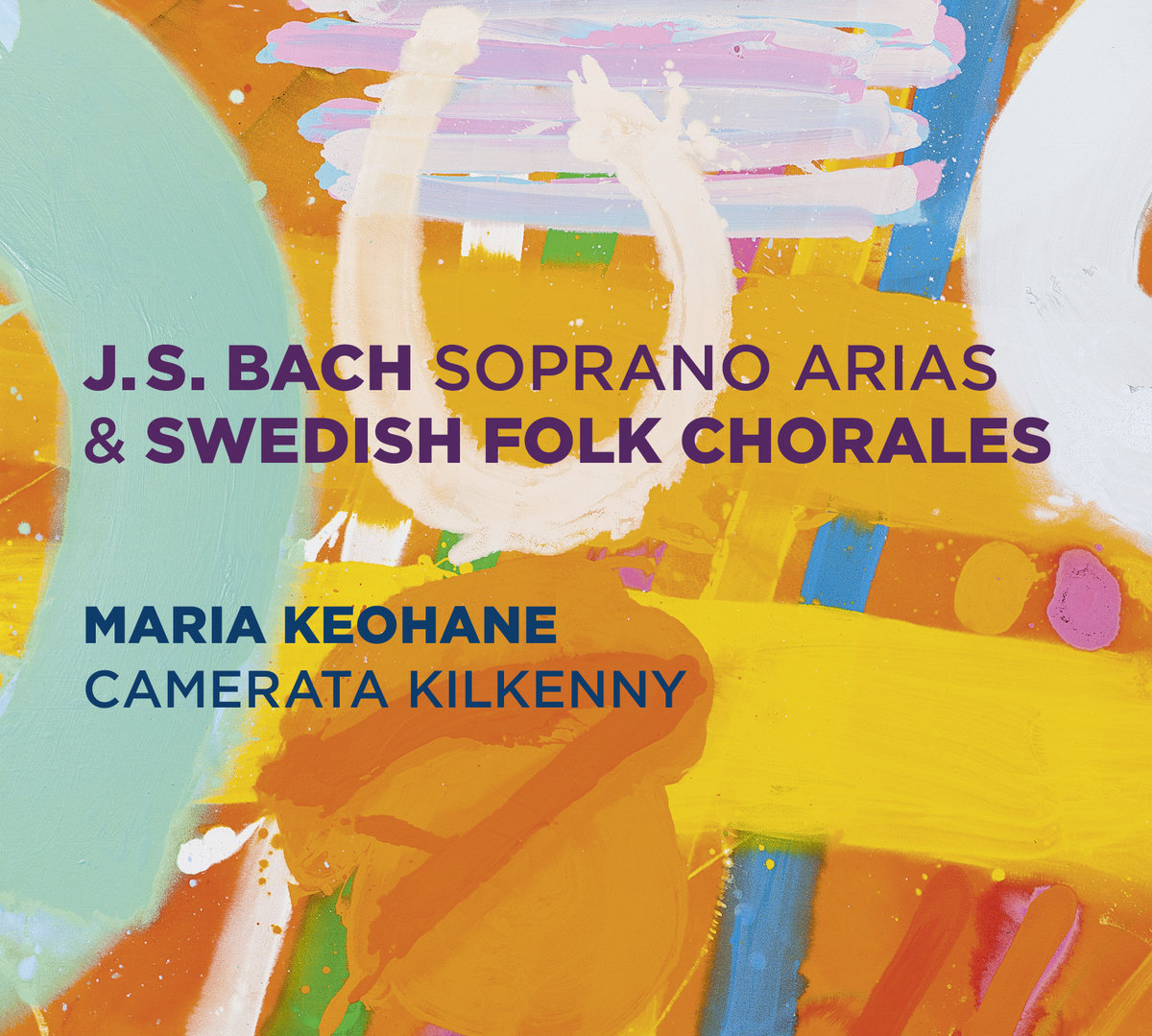
Maria Keohane, Camerata Kilkenny
Maya Recordings MCD1901. 58’10

This recording contrasts the little-known genre of Swedish Dalakorals with seven Bach soprano arias, all with obligato violin. The Dala chorales come from the region of Darlana in the centre of Sweden and the 16th-century Protestant Reformation. The first Lutheran Psalm book was published in 1695 and included many of these melodies. They are influenced by folk song and pre-Reformation melodies combined with an improvisatory practice common in village churches. Continue reading

Bach: Sei Suonate

J S Bach: Sei suonate à cembalo certato è violino solo
Chiara Zanisi, Giulia Nuti
Outhere/Arcana A426. 2CDs, 41’16+54’03

Bach’s Six sonatas for violin and obbligato harpsichord (BWV 1014–1018) were first composed during Bach last few years in Köthen (c1720-23) although he continued to revise them after his move to Leipzig in 1723, from where all the surviving sources are found.  This recording, released in 2017, features  violinist Chiara Zanisi and Giulia Nuti, harpsichord. Continue reading

Bach: Cantatas and Arias for Bass

Bach: Cantatas and Arias for Bass
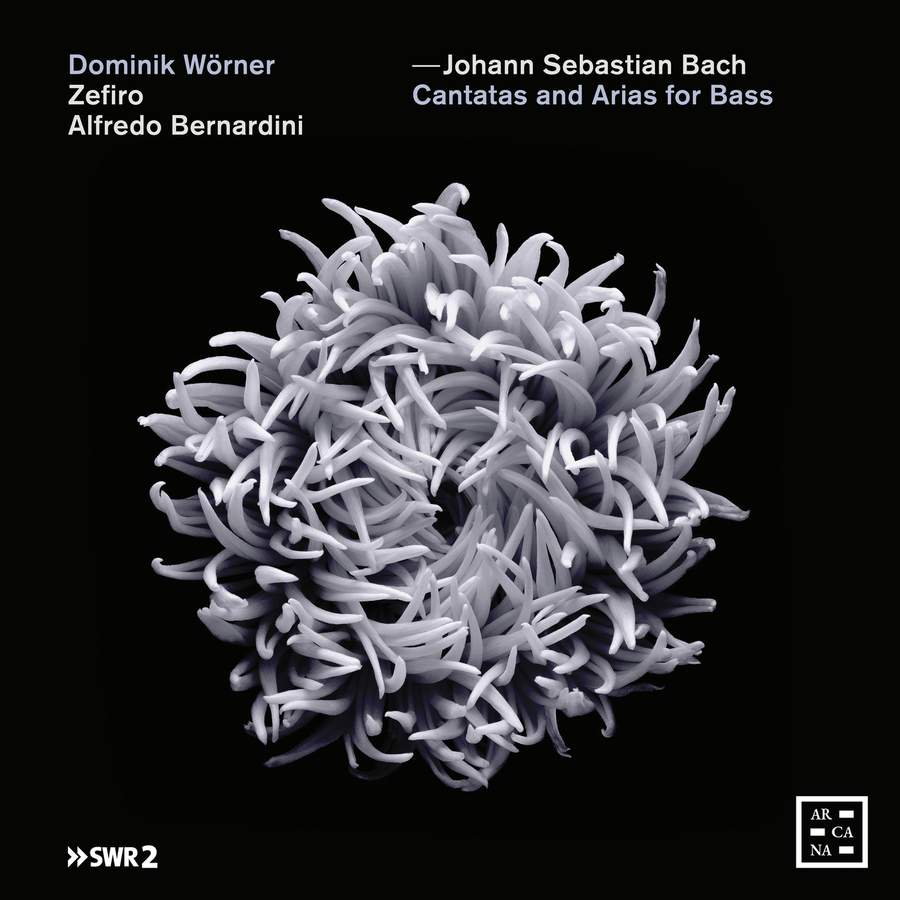
Dominik Wörner, Zefiro, Alfredo Bernardini
Arcana A466. 62’17


Cantata: Ich habe genung BWV 82
Aria: Gott ist gerecht from Cantata: Ewigkeit, du Donnerwort BWV 20
Cantata: Der Friede sei mit dir BWV 158
Aria: An irdische Schatze das Herze zu hangen from Cantata: Ach wie fluchtig, ach wie nichtig BWV 26
Cantata: Ich will den Kreuzstab gerne tragen BWV 56
Aria: Warum willst du so zornig sein from Cantata: Nimm von uns, Herr, du treuer Gott  BWV 101

One of the problems that Bach encountered on his arrival in Leipzig was the quality of the available musicians, in comparison to those employed by the Köthen court Kapelle. Bass singers seem to have been a particular problem, perhaps ineveitable in a boys choir, although, as Peter Wollny explains in is excellent notes, most of the musicians that Bach could draw on were only around for relatively short time. Six bass singers are specifically named, one becoming his own son-in-law. Continue reading

Solarium

Maxime Denuc: Solarium
Cindy Castillo, organ
VLEKD31   94’36

Solarium is a piece for organ, first performed by Cindy Castello in l’église du Gesu, Toulouse during the 2019 Électro Alternativ festival. It is an hour-and-a-half organ piece intended for “… that period of slack that follows the frenzy of a techno-fuelled night” and took place at 10am on a Sunday morning as an “after-party”. I am not sure that many organists get up to frenzied techno-fuelled nights, but there is much here for organists to appreciate, not least the extraordinary sounds that a traditional pipe organ can produce, as well as anybody interested in the techno world of ambient minimalist music. Continue reading

Von Westhoff: Suites for Solo Violin

Johann Paul von Westhoff: Suites for Solo Violin
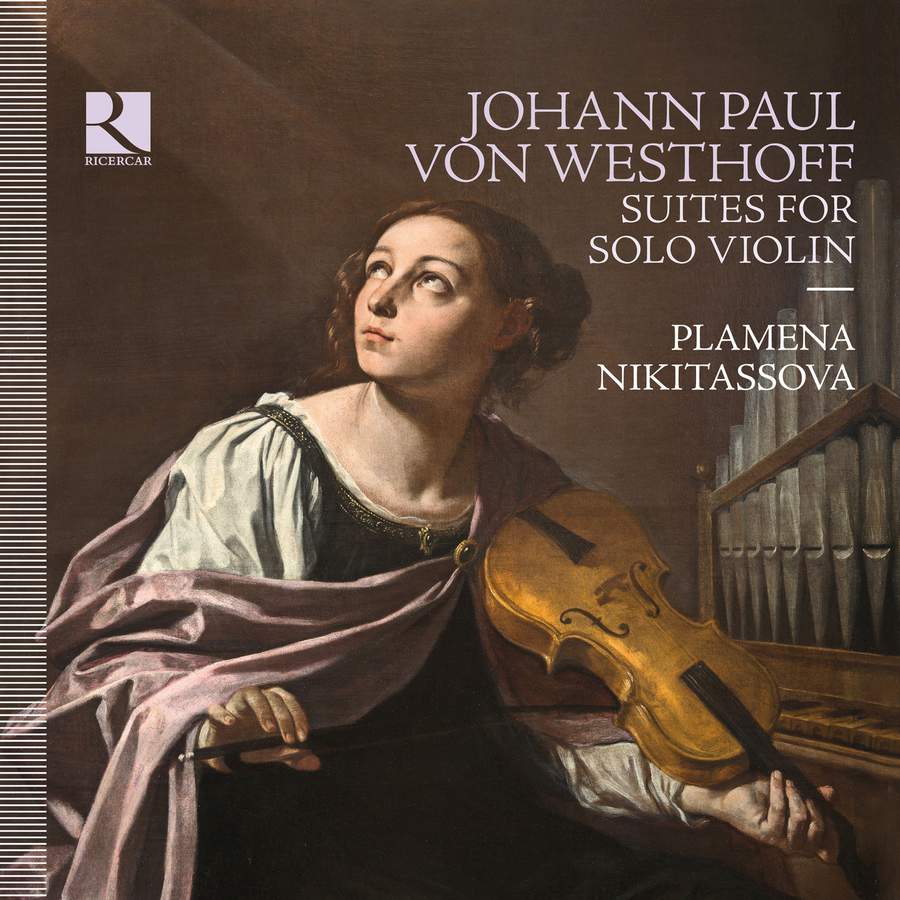
Plamena Nikitassova
Outhere: Ricercar RIC 412. 56’59

Johann Paul von Westhoff (1656-1705) was one of the leading members of the flourishing school of Dresden-based violinists during the latter decades of the 17th-century. He was born in Dresden. His father was a lutenist and trombone player from Lübeck, who had briefly been a captain of horse in the Swedish army. Apart from influence from his father, the young Westhoff also learnt while serving in the Dresden Hofkapelle. He was one of the first to compose music for unaccompanied violin, a genre that culminated with Bach. This excellent recording by Plamena Nikitassova reveals the enormous talents of this adventurous composer. Continue reading

JS Bach: Six Suites for Viola Solo

J S Bach: Six Suites for Viola Solo
Kim Kashkashian
ECM New Series ECM 2553/54. 2CDs 65’05+77’26

Six Suites for Viola Solo

Yes, you read the title correctly – these are Bach’s six ‘Cello’ Suites, but are here played on a viola by the distinguished American violist Kim Kashkashian. With no original manuscript in Bach’s own hand, there have been many questions about these Suites, one being what type of instrument they were actually written for. Continue reading

Bach: Orgelbüchlein

Bach: Orgelbüchlein
Stephen Farr
1724-30 Trost organ, of Waltershausen, Germany.
Resonus RES10259. 79’02

Bach’s Orgelbüchlein (Little Organ Book) is one of the most extraordinary of all Bach’s organ collections and compositions. At first sight, it a simple collection of chorale preludes intended to introduce the sung chorales in the Lutheran services. Bach also intended it as a way “in which a beginning organist receives instruction on performing a chorale in a multitude of ways while achieving mastery in the study of the pedal”. But the sequence of 45 chorales, and the tantalising sight of 119 potential chorales for which only the title and an empty page exists, are a sum of a great deal more than a sum of the parts, leading to Albert Schweitzer’s description of it as “one of the greatest events in all music.”.    Continue reading

Bach Organ Works Vol IV

JS Bach: Organ Works Vol IV
Robert Quinney
Coro COR16132. 77’31

J.S. Bach: Organ Works Volume 4 album cover showing detail of a stained glass window in reds, oranges and yellows

For the third time in this series, currently of four CDs, Robert Quinney returns to the influential 1976 Metzler organ in Trinity College Chapel, Cambridge. It was built into the 1694 ‘Father’ Bernard Smith case, and retains several of Smith’s pipes in the principal chorus. The new organ was an early example of the North German Baroque-influenced organ style that had hitherto largely avoided the UK. Although it lacks the historical interest of restored organs of Bach’s time in Germany, it remains a suitable UK organ for Bach performance.  Continue reading

Early Music Day (at home): 7:30pm

Early Music Day
Stay at Home Edition

Happy Birthday, J S Bach!

Click the links below to take you to publically available videos of the pieces that we would have performed during the informal 45′ afternoon Bach organ and solo instrument recitals that would have taken place in London’s St Giles-in-the-Fields on Early Music Day at 4, 5 & 6pm. This is the programme for the final 7:30pm concert, given by

Art of Moog & Andrew Benson-Wilson (organ) 

The poster for the series of events can be found here, as amended after the earlier pull out of Art of Moog because of the Coronavirus. Their 7:30pm evening concert with the historic St Giles-in-the-Fields organ is recreated with video links although sadly, none will have the combined Art of Moog and pipe organ. All the organ pieces below would have been combined with the Art of Moog instrumentalists.

An introduction to the Art of Moog
https://www.youtube.com/watch?v=AUJ8XSBHYnE

Art of Moog: Live at Kings Place – Selections
https://www.youtube.com/watch?v=U_B3Y1tXAhw

Art of Fugue Contrapunctus 1
https://www.youtube.com/watch?v=U5KjVEYzYAw
Benjamin Alard
l’église d’Arques-la-Bataille

Art of Fugue Contrapunctus 2
https://www.youtube.com/watch?v=M0HeE4MF01g&list=PL6cXnOI-FfSgtlLkIE5D1nXf660II0Pdd&index=8&t=0s
Glenn Gould

Adagio from The Easter Oratorio BWV 249
https://www.youtube.com/watch?v=CklCJk6kNFg
Art of Moog

Prelude in E minor
https://youtu.be/4_5efQbjybk
Art of Moog

Erbarm dich mein, o Herre Gott, BWV 721
https://www.youtube.com/watch?v=k3CNS2iK790
Ton Koopman
1643 Hans Heinrich Bader organ, St. Walburgiskerk, Zutphen

Wenn wir in höchsten Nöten sein
https://www.youtube.com/watch?v=GPMeBNU9fes
Wolfgang Zerer

Christ lag in Todesbanden
https://www.youtube.com/watch?v=rqwgeKOgezg
Wolfgang Zerer

Adagio from the viola da gamba sonata BWV 1029
https://youtu.be/3eAzorClu78
Art of Moog

Toccata D Moll BWV 565
https://www.youtube.com/watch?v=-xeqQo7bCvE
Jacques van Oortmerssen
1992 Glauco Ghilardi organ: S. Maria Assunta, Smarano

These concerts were to have been given in aid of the
Royal Society of Musicians
.

If you are willing to support this important musical charity, you can donate directly via this link https://www.rsmgb.org/fundraising/.  UK taxpayers can claim GiftAid. Please mention “Early Music Day” in the comments section of your donation.

#earlymusicday

Early Music Day (at home): 6pm

Early Music Day
Stay at Home Edition

Happy Birthday, J S Bach!

Click the links below to take you to publically available videos of the pieces that we would have performed during the informal 45′ afternoon Bach organ and solo instrument recitals that would have taken place in London’s St Giles-in-the-Fields on Early Music Day at 4, 5 & 6pm. This is the programme for the third, 6pm concert, given by

Andrew Benson-Wilson (organ)
playing organ chorales from Bach’s Leipzig manuscript
Poppy Walshaw (cello)

The poster for the series of events can be found here, as amended after the earlier pull out of Art of Moog because of the Coronavirus. Their 7:30pm evening concert with the historic St Giles-in-the-Fields organ will be similarly recreated with similar video links although sadly, none will have the combined Art of Moog and pipe organ.

Allein Gott in Der Hõh sei Ehr BWV 662
https://www.youtube.com/watch?v=QW2J10wRT2k
Jacques van Oortmerssen

Cello Suite No.3 in C. BWV 1009
Prélude, Allemande, Courante, Sarabande, Bourrées, Gigue
https://www.youtube.com/watch?v=tFtZ9tQiFxM
Colin Carr

Jesus Christus, unser Heiland BWV 666
https://www.youtube.com/watch?v=cQP-necHTK4
Bine Katrine Bryndorf

Komm, Gott, Schöpfer, Heiliger Geist BWV 667
https://www.youtube.com/watch?v=CdBLy6VePyk
Simon Thomas Jacobs
Richards, Fowkes & Co organ, St George’s Hanover Square

These concerts were to have been given in aid of the
Royal Society of Musicians
.

If you are willing to support this important musical charity, you can donate directly via this link https://www.rsmgb.org/fundraising/.  UK taxpayers can claim GiftAid. Please mention “Early Music Day” in the comments section of your donation.

#earlymusicday

Early Music Day (at home): 5pm

Early Music Day
Stay at Home Edition

Happy Birthday, J S Bach!

Click the links below to take you to publically available videos of the pieces that we would have performed during the informal 45′ afternoon Bach organ and solo instrument recitals that would have taken place in London’s St Giles-in-the-Fields on Early Music Day at 4, 5 & 6pm. This is the programme for the second, 5pm concert, given by

Andrew Benson-Wilson (organ)
playing organ chorales from Bach’s Leipzig manuscript
Annabel Knight (flute)

The poster for the series of events can be found here, as amended after the earlier pull out of Art of Moog because of the Coronavirus. Their 7:30pm evening concert with the historic St Giles-in-the-Fields organ will be similarly recreated with similar video links although sadly, none will have combined Art of Moog and pipe organ.

Von Gott will ich nicht lassen BWV 658
https://www.youtube.com/watch?v=WnsMlPv3MZk
Sietze de Vries

Nun komm’ der Heiden Heiland BWV659
https://www.youtube.com/watch?v=_gQ-7caubYk
John Scott
Taylor & Boody organ in the Gallery of Saint Thomas Church, New York

Partita for solo flute BWV 1013
Allemande, Corrente, Sarabande, Bourrée angloise
https://www.youtube.com/watch?v=onB39cumbF4
Marten Root

Jesus Christus, unser Heiland BWV 665
https://www.youtube.com/watch?v=HFd8VBV5eCg
Bine Katrine Bryndorf

These concerts were to have been given in aid of the
Royal Society of Musicians
.

If you are willing to support this important musical charity, you can donate directly via this link https://www.rsmgb.org/fundraising/.  UK taxpayers can claim GiftAid. Please mention “Early Music Day” in the comments section of your donation.

#earlymusicday

Early Music Day (at home): 4pm

Early Music Day
Stay at Home Edition

Happy Birthday, J S Bach!

Click the links below to take you to publically available videos of the pieces that we would have performed during the informal 45′ afternoon Bach organ and solo instrument recitals that would have taken place in London’s St Giles-in-the-Fields on Early Music Day at 4, 5 & 6pm. This is the programme for the first, 4pm concert, given by

Andrew Benson-Wilson (organ)
playing organ chorales from Bach’s Leipzig manuscript
Poppy Walshaw (cello)

The poster for the series of events can be found here, as amended after the earlier pull out of Art of Moog because of the Coronavirus. Their 7:30pm evening concert with the historic St Giles-in-the-Fields organ will be similarly recreated with similar video links although sadly, none will have the combined Art of Moog and pipe organ.

Fantasia supra Komm, Heiliger Heist BWV 651
https://www.youtube.com/watch?v=vohG88Mj2f4
William Porter
North German style organ in Smarano, Italy

Cello Suite No. 2 in D minor BWV 1008
Prélude, Allemande, Courante, Sarabande, Menuetts, Gigue
https://www.youtube.com/watch?v=Mg3nVSe–f4
Eva Lymenstull

O Lamm Gottes, unschuldig BWV 656
https://www.youtube.com/watch?v=YawozgUoYEI
Wolfgang Zerer
St Catherine’s Church, Hamburg

These concerts were to have been given in aid of the
Royal Society of Musicians
.

If you are willing to support this important musical charity, you can donate directly via this link https://www.rsmgb.org/fundraising/.  UK taxpayers can claim GiftAid. Please mention “Early Music Day” in the comments section of your donation.

#earlymusicday


Early Music Day (at home)

Early Music Day
Stay at Home Edition

Happy Birthday, J S Bach!


Early Music Day events around Europe are cancelled because of Coronavirus, including my own concerts in St Giles-in-the-Fields.

A live broadcast from behind closed doors is not possible, so at the start time of the four concerts I will post a programme of publically available videos of the pieces that we would have performed.

The first three will reflect the informal afternoon Bach organ and solo instrument recitals which would have taken place at 4pm, 5pm & 6pm, followed by a selection of the pieces that Art of Moog and I might have played in the 7:30pm evening concert although sadly, none will have the combined Art of Moog and St Giles-in-the-Fields pipe organ.

These concerts were to have been given in aid of the
Royal Society of Musicians
.

If you are willing to support this important musical charity, you can donate directly via this link https://www.rsmgb.org/fundraising/.  UK taxpayers can claim GiftAid. Please mention “Early Music Day” in the comments section of your donation.

#earlymusicday
@earlymusicday


Bach: Harpsichord Concertos Vol 1

JS Bach: Harpsichord Concertos Vol 1
Fabio Bonizzoni, La Risonanza
Challenge Classics CC72773. 63’07

Concerto No. 1 in D Minor, BWV 1052
Concerto No. 2 in E Major, BWV 1053
Concerto No. 4 in A Major, BWV 1055
Concerto No. 5 in F Minor, BWV 1056

This is the first volume in a series of recordings of Bach’s harpsichord concertos from La Risonanza and Fabio Bonizzoni. La Risonanza play one-to-a-part with just two violins, viola, cello and violone. The pieces date from the 1730s and Bach’s time in Leipzig. He directed the Collegium musicum which gave weekly performances at the Café Zimmermann. We know that in 1733 a new harpsichord arrived and it seems this was the impetus for these concertos. Several of them draw from earlier material, the opening D Minor Concerto having a history going back about 20 years before the autograph copy used for this recording.

Continue reading

Bach: Wo soll ich fliehen hin

JS Bach: Wo soll ich fliehen hin
Cellini Consort
Ramée RAM1911. 65’44

This is a rather surprisingly successful recording of Bach keyboard works transcribed by the Cellini Consort for a trio of violas da gamba. Bach himself transcribed many instrumental pieces for keyboard, both his own and those of others: for example, his many harpsichord concertos arranged from Vivaldi. Indeed, several of Bach’s own pieces for viola da gamba are in fact rearrangements of his earlier pieces. But it is unusual to hear Bach keyboard pieces arranged for other instruments.

Continue reading

New William Drake organ at Chelsea Old Church

Celebrity Opening Concert – William Drake organ
Nathan Laube

Chelsea Old Church, 19 January 2020

Opening recitals on new organs raise several issues. The performance must, of course, be excellent in itself, regardless of the occasion. But the organ also needs to be demonstrated in a manner that future organ recitals do not need to. I have given several recitals (including, for example, at St John’s, Smith Square) where I have used little more than half of the available stops, to produce a sound that the composer might just recognise. But for an opening recital, a thorough exploration of the sounds of the new instrument is expected. If the organ is built in a specific historic style, the expectation may be that the music of that period dominates. But many organs are built in an eclectic style, capable, in theory, of coping with music from several different historical periods. Continue reading

CANCELLED. Happy Birthday, J S Bach!

Early Music Day
Saturday 21 March 2020

In light of the latest announcement by the UK Government, I am sadly having to cancel all of these concerts. Thank you to all have shown an interest, and particularly to the musicians who were lined up to perform. It is far to soon to think of when, or if, to re-schedule any of it, but Early Music Day next year is on Sunday 21 March.

All the concerts were to have been given in aid of the
Royal Society of Musicians
.

If you are willing to support this important musical charity, you can donate directly via this link https://www.rsmgb.org/fundraising/.  UK taxpayers can claim GiftAid. Please mention “Early Music Day” in the comments section of your donation.

Happy Birthday, J S Bach!

St Giles-in-the-Fields
St Giles High Street, London WC2H 8LG
(Close to Tottenham Court Road underground)

St Giles organ

Three informal 45′ afternoon Bach organ and solo instrument recitals
including organ chorales from Bach’s Leipzig manuscript.

4pm
Fantasia supra Komm, Heiliger Heist  BWV 651
Cello Suite No. 2 in D minor   BWV 1008
Prélude, Allemande, Courante, Sarabande, Menuetts, Gigue
O Lamm Gottes, unschuldig   BWV 656

5pm
Von Gott will ich nicht lassen   BWV 658
Nun komm’ der Heiden Heiland   BWV 659
Partita for solo flute   BWV 1013
Allemande, Corrente, Sarabande, Bourrée angloise
Jesus Christus, unser Heiland   BWV 665

6pm
Allein Gott in Der Hõh sei Ehr    BWV 662
Cello Suite No. 3 in C   BWV 1009
Prélude, Allemande, Courante, Sarabande, Bourrées, Gigue
Jesus Christus, unser Heiland   BWV 666
Komm, Gott, Schöpfer, Heiliger Geist   BWV 667

Special evening concert @ 7.30

AN EVENING WITH BACH

Featuring the historic St Giles-in-the-Fields organ,
with pipework dating back to Bach’s time, and solo Bach music for cello and violin.
(Free entry – donations welcomed for the Royal Society of Musicians).

The originally planned Art of Moog event had been cancelled earlier
because of the potentially high costs of a late cancellation. The Evening with Bach was a free replacement event. As it turns out, the whole church is now closed for the foreseeable future along, it seems with all CofE churches.

The organ in St Giles-in-the-Fields was originally built by George Dallam in 1678 with further work in 1699 by Christian Smith, nephew of ‘Father’ Smith. It was moved into a new organ case in the rebuilt St Giles church in 1734 by Gerard Smith the Younger. It was rebuilt in 1856 by Gray and Davison, then at the height of their fame. It was restored in 2006 by William Drake of Buckfastleigh, retaining material from 1678, 1699 and 1856. It is one of the most important historic organs in the UK. More details here.
Bach: Christmas Oratorio

Bach: Christmas Oratorio (Parts 1, 2, 3, 6)
The Choir of Trinity College, Cambridge, Stephen Layton

Orchestra of the Age of Enlightenment
St John’s, Smith Square, 22 December 2019

For many years now, the highlights of the London Christmas and Easter concert season has been the final two concerts of the St John’s, Smith Square Christmas/Easter festivals. One is usually Bach, the other Messiah, both directed by Stephen Layton, the first with his student Trinity College choir, the second with his professional vocal group Polyphony. In recent years both have been accompanied by the period instruments of the Orchestra of the Age of Enlightenment. Both pairs of concerts sell out way in advance, the student choirs helping with audience numbers by rallying parents and friends. Continue reading

Vox Luminis: Dixit Dominus

Dixit Dominus
Vox Luminis, Lionel Meunier
St John’s, Smith Square, 18 December 2019

Attrib. Buxtehude? Magnificat BuxWV Anhang 1
Bach Nun komm der heiden Heiland BWV 61
Handel Dixit Dominus HWV 232

With the exception of Bach’s Advent cantata Nun komm der heiden Heiland, this was a St John’s, Smith Square Christmas Festival event refreshingly devoid of any specific reference to Christmas. The renown Belgian group Vox Luminis and their director, Lionel Meunier, made a very welcome return for a performance of music from German composers of the 17th and early 18th century, each writing in different styles and for different audiences. Continue reading

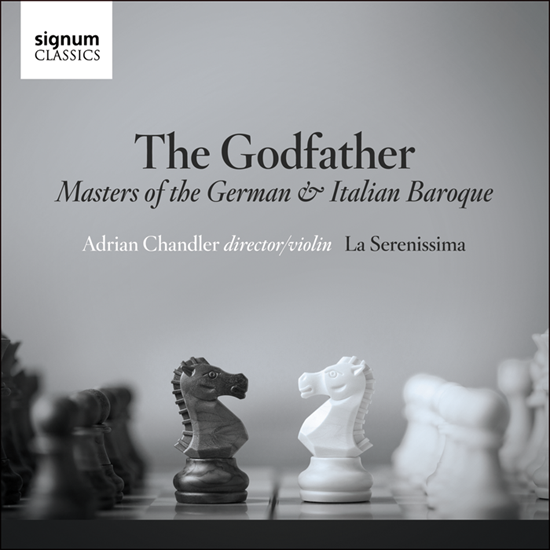
La Serenissima: The Godfather

The Godfather
Masters of the German & Italian Baroque
La Serenissima, Adrian Chandler
Signum Classics SIGCD602. 66’09

For long the undoubted champions of the music of Vivaldi, as their name suggests, La Serenissima are spreading their musical wings to explore the musical triumvirate of Telemann, Pisendel and JS Bach, all three closely connected, together with the composers Fasch, Vivaldi and Brescianello, who also had links with the principal trio. As La Serenissima note on their website, the links are that Pisendel was godfather to one of Telemann’s children; Telemann was godfather to CPE Bach;. JS Bach admired both Pisendel and Telemann and composed for the violinist Pisendel; Vivaldi helped Pisendel with his A minor concerto movement; Fasch was a friend of Pisendel and Telemann, and Pisendel played concertos by Brescianello, an Italian who helped to spread disseminate Italian instrumental music throughout the German-speaking lands. Continue reading

Bach: Violin Concertos

Bach: Violin Concertos
Kati Debretzeni (violin)

English Baroque Soloists, Sir John Eliot Gardiner
SDG732. 70’15

This recording has the makings of becoming an all-time favourite version of the Bach Violin Concertos. Quite apart from the exceptional playing by Kati Debretzeni, we get the bonus of two additional concertos. In addition to the well-known A minor and E major, (BWV 1041/1042) concertos, Kati gives us two others, the disputed D minor (BWV 1052) and the world premiere recording of her own arrangement of the E major harpsichord concerto (BMV 1053), transposed down to D. The detailed programme notes give full details of the rationale and implications of the two additional concertos, and their arrangements for violin. Continue reading

J S Bach: Harmonic Seasons

J S Bach: Harmonic Season
Manuel Tomadin
1737 Treutmann organ, Stiftskirche Grauhof bei Goslar, Germany
Brilliant Classics 95786. 79’471

The title of this recording reflects the way the 12 pieces are arranged, reflecting Bach’s own predilection for grouping pieces together in organised sets. In this case, the “Seasons” are indeed “Harmonic”. The four groups of pieces each start with a Prelude and Fugue or Fantasia, and the groups descend in key order through the “perfect, divine triad” from G to E to C, the first major, the subsequent two both in the minor key. The final tonal and harmonic resolution comes with the concluding C major Prelude and Fugue. Continue reading

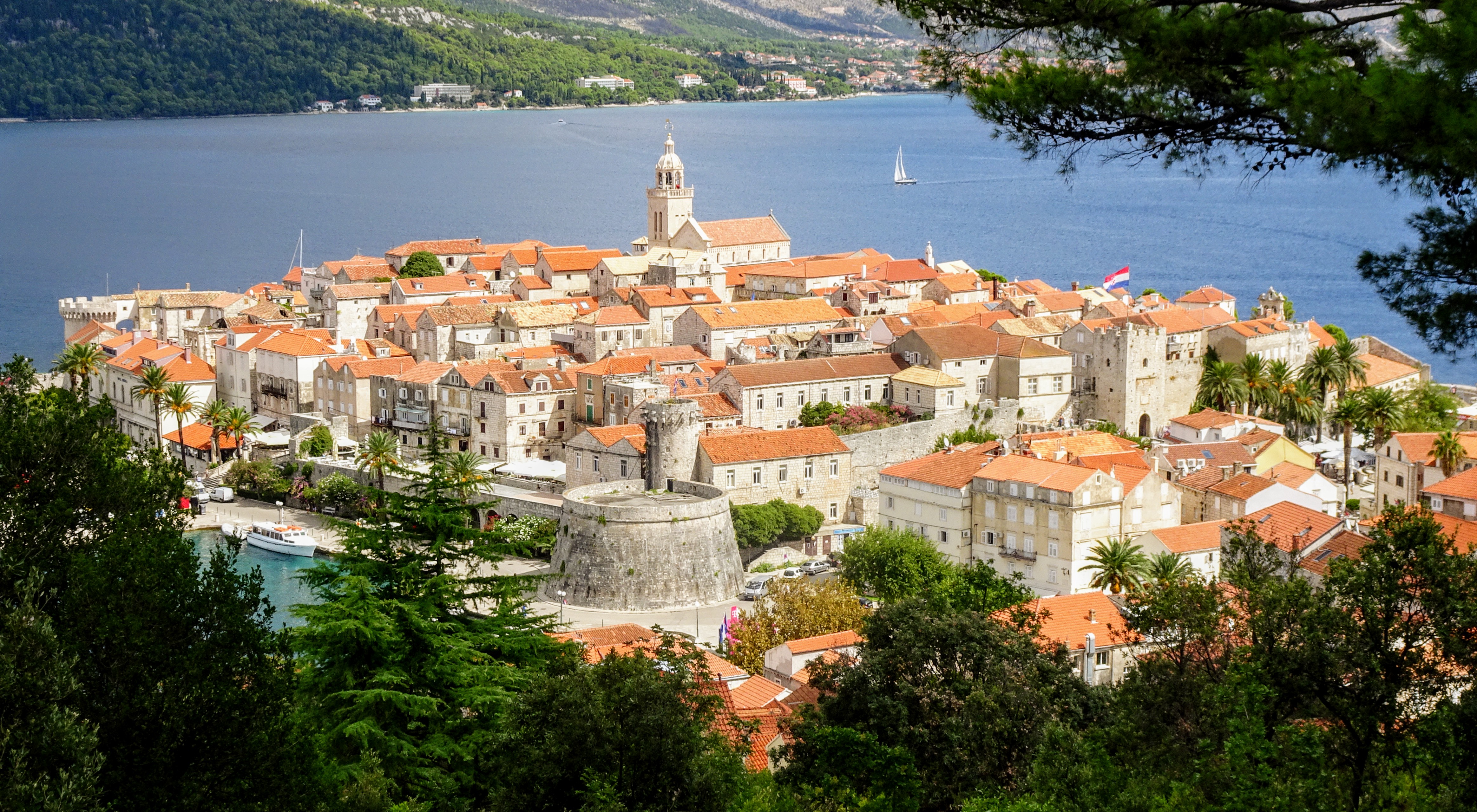
Korkyra Baroque Festival

Korkyra Baroque Festival
Korčula, Croatia
31 August – 14 September 2019

DSC06923

The Korkyra Baroque Festival (Korculanski Barokni Festival) was founded in 2012 on the delightful Adriatic island of Korčula (aka Korkyra, Korcula) on the Dalmatian archipelago between Split and Dubrovnik in the southern part of Croatia. Drawing attention both to music and the cultural and artistic heritage of Korčula, the festival runs annually for about two weeks at the beginning of September. Concerts (of just over an hour in length) are generally first performed in the historic fortified town of Korčula and are then repeated in other towns on the island, on nearby islands,, and on the Peljesac peninsula.

DSC06887 Continue reading

Prom 47: Bach & Bruckner

Prom 47: Bach & Bruckner
Gewandhausorchester Leipzig, Andris Nelsons
Michael Schönheit, organ
Royal Albert Hall, 23 August 2019

J S Bach
Fantasia in G minor, BWV 542, Jesus bleibet meine Freude (arr: Schmidt-Mannheim),
Prelude in E flat major, BWV 552i, Wachet auf, ruft uns die Stimme, BWV 645,
Fugue in E flat major, BWV 552ii
Anton Bruckner
Symphony No 8 in C Minor (1890 Novak version)

The idea of pairing Bruckner with organ music at the Proms is not new and makes sense, not least because Bruckner gave several organ recitals in the Royal Albert Hall. Bearing in mind that most people would have come to this Prom to hear Bruckner 8 rather than a short sequence of well-known organ works, there seems to have been a misjudgement in both the choice of organ pieces and the performance. The Royal Albert Hall organ is capable of the most enormous sounds, with power that will easily out-blast the largest symphony orchestra, as evidenced during the Glagolitic Mass in Prom 1 (reviewed here). It is also capable of producing a vague impression of the sort of sound that Bach might have known, albeit at considerable loss of power and aural presence. Michael Schönheit, the organist of the Leipzig Gewandhaus, fell into the uncomfortable gap between these two possibilities, choosing registrations that muddied the music but made no real aural presence in the hall. Continue reading

Prom 21: Olivier Latry

Prom 21: The Art of Transcription
Olivier Latry, organ
Royal Albert Hall, 4 August 2019

In what must be the most inept bit of programming in musical history, the BBC Proms has seen fit, for yet another year, to programme the only organ recital of the Proms at 11am on a Sunday, when most organists will be earning a pittance playing for church services. I cannot think of another instrument where the choice of a specific day and time could exclude a key part of the potential audience. That said, there was a pretty impressive audience for this concert, far more than at the previous Sunday’s evening Prom of Messiaen’s Des canyons aux étoiles. And what a treat they had. Olivier Latry is one of the organists at Notre Dame who when not on his week’s turn of duty there has built an enviable reputation at a touring recitalist and teacher. His programme focused on the art of transcription, an aspect of organ performance that dates back to early Renaissance times but reached its peak in England in the 19th century when W T Best became Liverpool Corporation Organists (in 1855) and, over a period spanning around 40 years, gave three organ recitals a week in St George’s Hall. He was the first organist to give a recital in the Royal Albert Hall, in 1871.

Continue reading

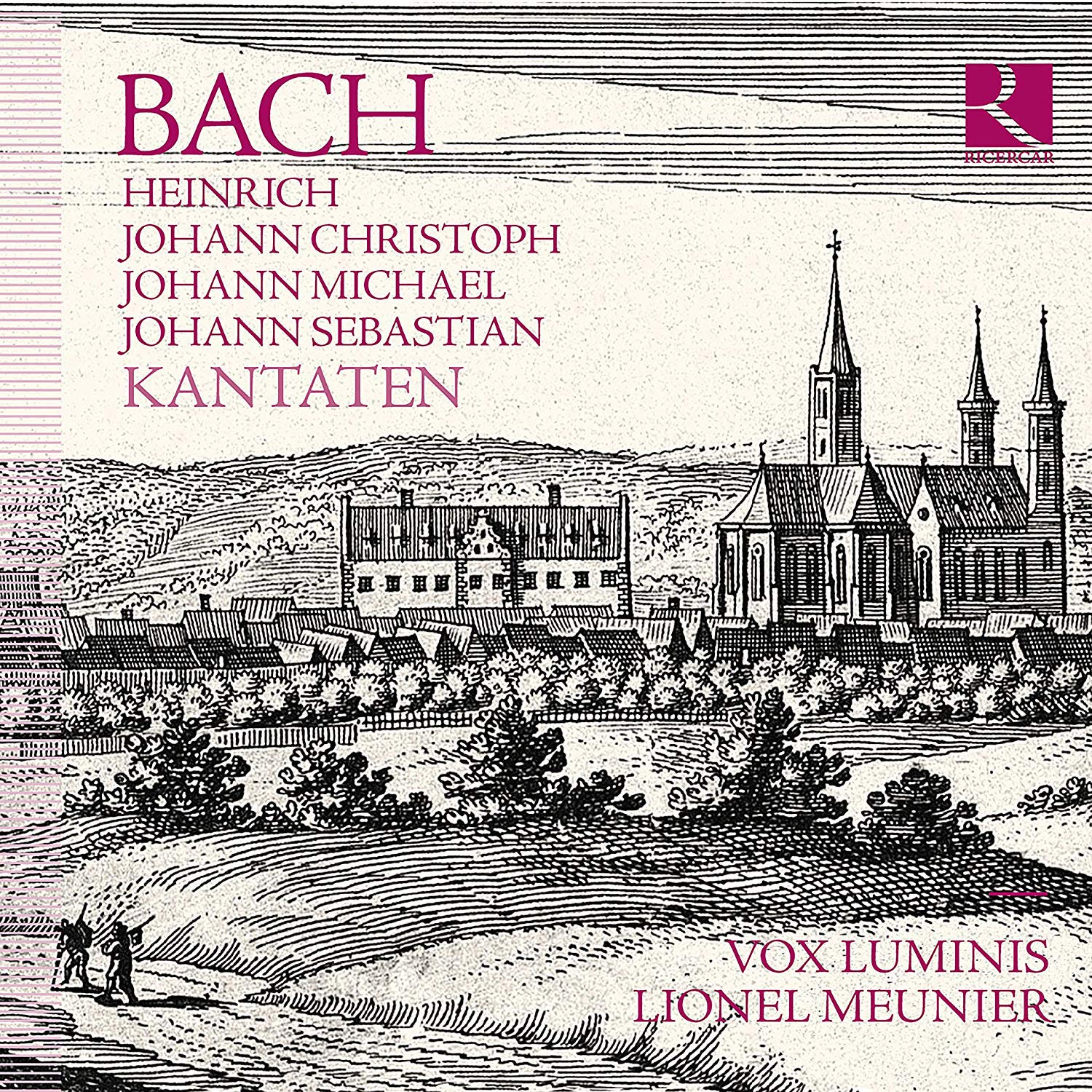
Vox Luminis: Kantaten der Bach Familie

Kantaten der Bach Familie 
HeinrichJohann ChristophJohann Michael & Johann Sebastian Bach
Vox Luminis, Lionel Meunier
Ricercar  RIC 401. 66’30

Since Vox Luminis was formed around 15 years ago, they have established themselves as one of the leading performers of early music, usually just with choir and continuo, but also appearing with up to a full orchestra. Under their director, Lionel Meunier, their many award-winning CDs have highlighted fascinating areas of the repertoire, as does this one with its exploration of the sacred cantatas of Bach’s earlier family. Although we have long given up the notion that Bach sprung in the musical world from nowhere, our knowledge of the pre-Bach Bach’s and the musical world in Thuringia and Saxony that nurtured the Bach brood over many generations is still rather limited. This recording reveals just some of the extraordinary riches that await exploration from the 17th century Bachs. The focus is on three pre-JS Bach’s, Heinrich (1615-92), first cousin of JA BAch’s father, and his two sons Johann Christoph (1642-1703), and Johann Michael (1648-94), whose daughter, Maria Barbara married her cousin JS Bach. 

Continue reading

St. Anne’s International Bach Festival

Music-at-Hill Golden Jubilee
24th St. Anne’s International Bach Festival

St. Mary-at-Hill, Lovat Lane, City of London
19 & 26 July 2019

The Music-at-Hill Concert Society was founded 50 years ago as the St Anne’s Music Society based in the church of St Anne & Agnes Church in Gresham Street, then the home of London’s Lutheran congregation. The church and the music society moved to St Mary-at-Hill in 2013. Music-at-Hill arranges weekly Friday lunchtime concerts, often of early music. During the four weeks in July leading up to the date of Bach’s death, they present the annual St. Anne’s International Bach Festival now in its 24th year, run in conjunction with its partner organisation, the City Bach Collective, who run regular Bach Cantatas for the St Anne’s Lutheran congregation in St Mary-at-Hill. The final two Fridays of the four-week festival featured two lunchtime recitals and a Gala Bach Concerto Finale from the City Bach Collective.

Continue reading

Andrew Benson-Wilson plays Bach: influenced by Reincken

Mayfair Organ Concerts
The Grosvenor Chapel
South Audley Street, Mayfair, London W1K 2PA
Tuesday 13 August 2019, 1:10

Andrew Benson-Wilson
plays music by
J S Bach
influenced by Johann Adam Reincken

WP_20150721_15_17_12_Pro.jpg

Johann Adam Reincken (1643-1722) was organist of Hamburg’s famous Katharinenkirche and a close friend of Buxtehude.  This recital is linked to a recital of his music given earlier this year at St George’s, Hanover Square. That recital included his monumental chorale fantasia on An Wasserflüssen Babylon composed around 1650. At around 20 minutes long, it the longest known piece of its type in the whole 17th century North German repertoire. It was known by Bach who, while at school in Luneburg, aged around 15 copied the entire piece out from a copy owned by Georg Böhm. It is believed that he also travelled to Hamburg to hear Reincken play. In 1720, shortly before Reincken’s death, Bach visited Hamburg and improvised a lengthy fantasia on the same chorale in homage to Reincken, who commented: “I thought that this art was dead, but I see that it lives in you”. Bach also transcribed several of Reincken’s instrumental pieces for keyboard.

This recital includes one of Bach’s Reincken transcriptions, a Toccata that is clearly influenced by Reincken’s dramatic style, and Bach’s chorale prelude on An Wasserflüssen Babylon, which includes a very obvious reference to Reincken’s chorale fantasia. It ends with Bach’s giant Fantasia in G minor, which may have been played during Bach’s 1720 visit to Hamburg. The accompanying Fugue is based on a popular Dutch tune and might have been Bach’s homage to Reincken, who was born in The Netherlands. 

Toccata in D minor  BWV 913
An Wasserflüssen Babylon BWV 653
Sonata in A minor (after Reincken
Hortus musicus) BWV 965
Fantasia in G minor BWV 542i

The organ is by William Drake
Admission is free, with a retiring collection

York Early Music Festival

York Early Music Festival
Innovation: the Shock of the New!
10-12 July

My principal reason for going to York was to review the biennial York Early Music International Young Artists Competition which took place over the last three days of the annual York Early Music Festival. The Festival lasted from 5 to 13 July and was given under the banner of Innovation: the Shock of the New! taking inspiration from the 500th anniversary of Leonardo da Vinci. Alongside talks and community events were a range of concerts, mostly from York-connected and UK ensembles, but with welcome continental visitors including Concerto de Margherita, one of the EEEmerging groups, fortepianist Andreas Staier, the Italian/Jewish Ensemble Lucidarium, and the distinguished Belgian consort Vox Luminis. I was able to attend the last four of the Festival concerts, together with the three days of the Competition.

Continue reading