CPE Bach: Clavierstucke Tangere

CPE Bach: Clavierstucke
Tangere
Alexei Lubimov

ECM New Series 2112. 67’30

Carl Philipp Emanuel Bach: Fantasien, Sonaten, Rondi und SolfeggiRussian pianist Alexei Lubimov concentres his performances and recordings on new music and music from the Baroque era performed on period instruments. This CD presents CPE Bach’s fantasies, sonatas and rondos played on the little-known tangent piano, usually referred to in German-speaking countries as the Pantaleon, Spattisches Klavier or Tangentenflügel. It enjoyed a brief moment of glory in the 18th century as a gap between the harpsichord and clavichord and the forthcoming fortepiano. Rather like the clavichord, its strings are struck from underneath by wood or metal tangents. Unlike the clavichord, where the note continues to sound while the tangent is in contact with the string, the tangent piano has an escarpment action similar to that of a fortepiano which allows the string to freely vibrate. It has a similar extent and control of expressiveness to the clavichord but is capable of much greater volume and intensity. It makes a gloriously twangy sound. There are a few original instruments still in existence, but this recording uses a modern replica, by Chris Maene of Belgium, of a 1794 Späth and Schmahl tangent piano from Regensburg.  Continue reading
Haydn: Applausus

Haydn: Applausus: Jubilaeum Virtutis Palatium
The Mozartists, Ian Page
Cadogan Hall, 15 March 2018

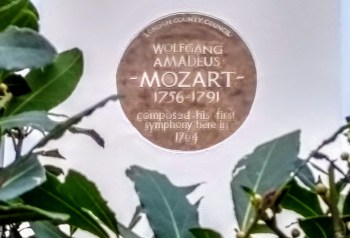
In what was almost certainly the first live UK performance of Haydn’s Applausus Cantata (Jubilaeum Virtutis Palatium, Hob XXIVa:6), the Mozartists (the concert-performing wing of Classical Opera) opened the 2018 season of their ambitious Mozart 250 project. This started in 2015, the 250th anniversary of Mozart’s visit to London where, incidentally, he stayed not far from the Cadogan Hall in Ebury Street, and wrote his first symphony, aged 8. The aim is to annually explore the music written by Mozart and his contemporaries exactly 250 years previously.

IMG_20180315_174251159_HDR.jpg

In 1768, this year’s focus, Mozart was 12 years old and Haydn 36 and well settled into the princely Esterházy court where he directed most of the musical life of the court. He received an invitation from the wealthy Abbey of Zwettl, about 120km west-north-west of Vienna to write an ‘applausus‘ cantata to celebrate the 50th anniversary of their abbot Rainer Kollmann, first taking his monastic vows. Although composed in quasi-operatic style, with a series of accompanied recitative leading up to da capo arias, a duet, quartet and a final chorus, there is no plot in any operatic or literal sense. The four Cardinal Virtues of Temperance, Prudence, Justice and Fortitude sing the praises of the Abbot in a convoluted Latin libretto, probably written by one of the monks. A personification of Theology/Wisdom moderates some of their utterances. I am sure the text meant something to the 17th-century monks of Zwettl, but I found its vaguely moralistic meanderings completely incomprehensible. The repeated references to a ‘Palace’ perhaps reflected the wealth of the monks of Zwettl, whose medieval Abbey buildings had been thoroughly reconstructed in the Baroque style a few decades earlier, complete with one of the largest and most expensive organs in Austria (1731, Egedacher) – all still existing. “How blessed I am to be an inhabitant of this building!’ is one of Prudence’s utterings, to which Justice notes that “our Palace is celebrated in the eyes of the highest”. So that’s all right then! Continue reading

Handel: Rinaldo

Handel: Rinaldo
The English Concert, Harry Bicket

Barbican. 13 March 2018

Rinaldo is a curious opera. Cobbled together in early 1711 from some of Handel’s greatest hits from his time in Italy, it was intended a calling-card both for Handel and for the style of Italian opera that was just beginning to make its way on the London musical scene. It was the first such opera composed for the Queen’s Theatre, Haymarket, where the theatre’s director (Aaron Hill) was keen to promote Italian opera. As Richard Wigmore wrote in the programme note (accessible here), Hill’s priorities were “variety of incident and spectacle, with dramatic coherence a distant third”. Dramatic coherence is certainly missing from the splot, a loose version of one of Tasso’s tales of Crusader derring-do in Gerusalemme liberata. The “incident and spectacle” was certainly to the fore in the original productions, with its dramatic staging with mermaids, various flying machines, fire-breathing dragons, and a flock of live sparrows, the latter producing the inevitable results and some sharp criticism for contemporary reviewers. Continue reading

Bach Inspiration

Bach Inspiration
Juliette Hurel, flute,
Maïlys de Villoutreys, soprano, Alice Julien-Laderriere, violin
Ensemble Les Surprises, Louis-Noël Bestion de Camboulas
Alpha Classics/Outhere, ALPHA 358. 67’31

Although usually outnumbered by the violin and oboe as a solo instrument, JS Bach made use of the solo flute and recorder in many of his pieces, using the recorder more often in cantatas, and the flute in chamber music. In an eclectic programme, this recording, clearly intended as a showpiece for flautist Juliette Hurel, explores some of Bach’s writing for flute. It includes four arias for soprano, sung effectively by Maïlys de Villoutreys. The opening B Minor Orchestral Suite (BWV 1067) is the key orchestral work including flute, although the 5th Brandenburg concerto (not included) comes a close second. The Trio Sonata in G (BWV 1038) reveals the flute in chamber mode (played with violinist Alice Julien-Laderriere) while the Partita in A minor (BWV 1013) reveals the flute in solo mode. Continue reading

Renaissance Singers: Portuguese penitential music

I heard a voice from heaven
Portuguese penitential music
The Renaissance Singers
St George’s, Bloomsbury, 10 March 2018

The Renaissance Singers are one of the most impressive of London’s amateur choirs, always coming up with well-planned and well-presented and exceedingly well-sung concerts of Renaissance music. The latest of these was a programme of early 17th-century Lenten music from Portugal. Featuring composers born between 1550 and 1610, the concert was based around extracts from Duarte   (Requiem) with motets by Pedro de Cristo, Filipe de Magalhāes, Aired Fernandez, and Manuel Cardoso and concluding with João Lourenço Rebelo’s extraordinary setting of the Lamentations of Jeremiah. Intelligently written programme notes by choir member Tony Damer explored the background of the intense and expressive music composed during a period when Portugal was breaking away from the Hapsburg Spanish Empire to become an independent state under King João IV, an important patron of the arts and music.  Continue reading

CPE Bach: Complete works for keyboard & violin

CPE Bach: Complete works for keyboard & violin
Duo Belder Kimura
Resonus RES10192. 2CDs 69’32+62.51

This CD includes all of CPE Bach’s pieces for violin and keyboard, with seven Sonatas, a Fantasia, Sinfonia and Ariosa with variations (Wq. 71-80). For the first few seconds of listening to this recording, I wondered if it was playing at the correct speed, so sparkily light and delicate was the brisk opening with its precisely articulated rapid-fire trills from both violin and harpsichord. But this was the musical language of the young CPE Bach heard in the opening of his Sonata in C Wq.73, one of a group of three Sonatas composed in 1731 when Bach was just 17 and a student at the Leipzig Thomasschule. He later revised them 15 years later in Berlin, and it is not clear to what extent we are hearing the young or more mature Bach. But the combination of his father’s influence and the move away from the style of ‘Old Bach’ that was to dominate CPE Bach’s compositional style is clear. The second group of Sonatas date from 1763 (Wq. 75-78), with the harpsichord taking on a stronger role. The final two pieces (the Arioso and Fantasia) date from the 1780s, and the keyboard (a fortepiano after Walter, 1795) dominates the texture. The other pieces use a harpsichord after Blanchet (1730); the violin an original from the Gagliano school (c1730).  Continue reading

Louise Farrenc & Beethoven

Beethoven: Triple Concerto; Louise Farrenc: Symphony No 3
Insula Orchestra, Laurence Equilbey
The Barbican. 8 March 2018

A phrase that I occasionally use when reviewing a revival of music by a little-known composer is that the composer was “plucked from well-deserved obscurity”. That is a phrase that definitely cannot be used to describe the music of Louise Farrenc (1804-1875), the focus of the Barbican concert given, appropriately, on International Women’s Day by the Insula Orchestra, all wearing suffragette ribbons, apparently made by the same company that made the original purple, white, and green colours.  Born six months after Berlioz, she was a pioneering French composer, pianist, and teacher. Although she was highly esteemed during her lifetime, her impact was almost certainly reduced by not managing to write an opera, a requisite for Parisian composers in her time. Her work was almost entirely forgotten after her death until very recent years, when the long-awaited recognition of female composers and musicians led to some recordings and concerts of her composition.

Studying, working, composing and teaching at a time when the female contribution to arts, and life in general, was given little prominence, Farrenc resolutely ploughed her own course as a teacher and composer. At the time, females were not allowed to join the composition class at the Paris Conservatoire, so she took private lessons with the teacher. But she eventually became Professor of Piano at the same institution, remaining as such for 30 years, although only achieving parity of pay with her male colleagues for the last 20, and that after campaigning.  Continue reading

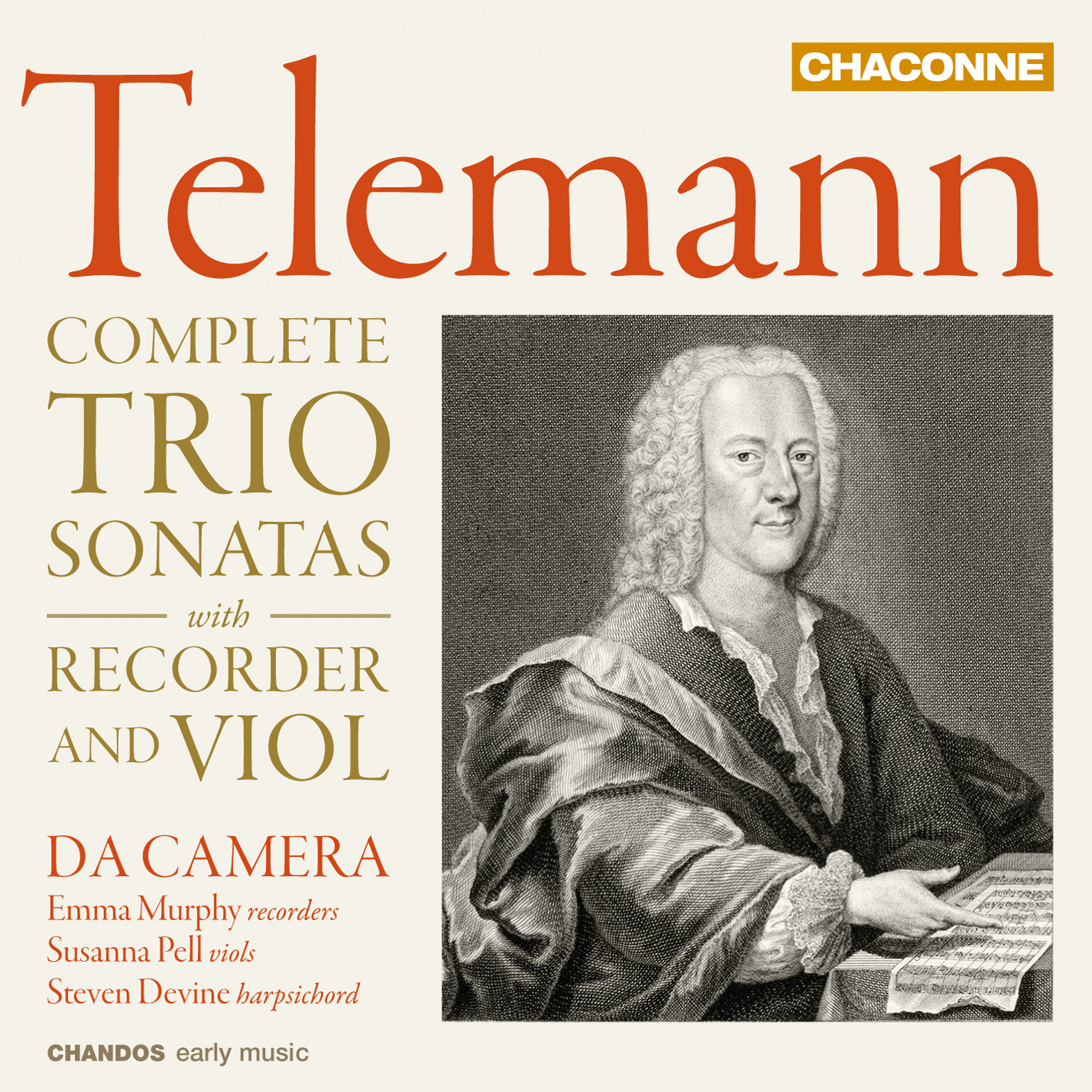
Telemann: Complete Trio Sonatas with Recorder and Viol

Telemann: Complete Trio Sonatas with Recorder and Viol
Da Camera
Chandos/Chaconne CHAN0817. 67’00

This excellent recording explores the compositions that Telemann considered to be his best – his Trio Sonatas. Da Camera (Emma Murphy, recorders, Susanna Pell, treble and bass viols, Steven Devine, harpsichord) performs eight such Sonatas, four from the 1739 Essercizii musici and four from the collection of Telemann manuscripts surviving in Darmstadt, mostly dating from the 1720s. The Darmstadt pieces are particularly interesting in that Da Camera use the combination of instruments specified by Telemann, with recorder and dessus de viole (treble viol), rather than the more usually heard combination of recorder and violin. Telemann’s indication makes perfect sense, the delicately expressive and sensitive sound of the treble viol both blending and contrasting perfectly with the recorder. Continue reading

CF Abel & JC Bach Quartets

“Georgian quartets among Palladian columns”
The London Abel Quartet
Marble Hill House, Twickenham, 4 March 2018

The London Abel Quartet was formed, as the name implies, to explore the music of Carl Friedrich Abel and his contemporaries. Abel was a German composer and viola da gamba player. He was born in  Köthen, where his father worked in JS Bach’s court orchestra. He later became a student at Bach’s Leipzig Thomasschule. After a spell in Dresden, he settled in London around 1759. He was joined in 1762 by Johann Christian Bach, Bach’s youngest surviving son. The pair soon started the famed Bach-Abel concerts in Soho, the first subscription concerts in England. Abel and JC Bach are both buried in buried in the churchyard of St Pancras Old Church, just behind St Pancras station. Continue reading

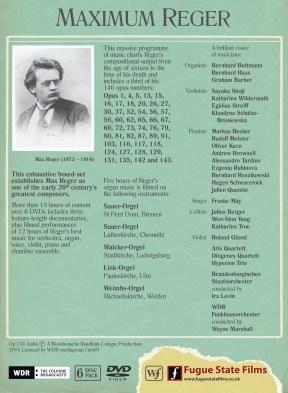
Maximum Reger

Maximum Reger – The Last Giant
Fugue State Films. FSFDVD011. 6 DVD. c15h

Maximum Reger

Reger_Back_Cover

Johann Baptist Joseph Maximilian (Max) Reger (1873 -1916) is generally best known, if, perhaps, not always best liked, by organists. He is a bit of a love-or-hate composer, his extended and frequently dense organ pieces can be as hard to play as they, arguably, can be to listen to. As a breed, organists tend to concentrate on a composer’s organ music (with the possible exception of Bach) rather than exploring their music for other forces. Reger is one such, along with, for example, the contemporary, but longer-lived French composer Tournemire. If Reger is known at all to non-organists, it is probably through his chamber music. This extraordinary Fugue State Films box set of 6 DVDs, including a three-part documentary ‘The Last Giant’, aims to redress the balance of bringing Reger’s non-organ music and complex life story to organists, and the music of Reger in toto to non-organists who are not familiar with his music. For filmmaker and organist Will Fraser, of Fugue State Films, it is clearly a labour of love. Continue reading

Bach and Handel: Great Balls of Fire

Bach and Handel: Great Balls of Fire
Orchestra of the Age of Enlightenment, Steven Devine
Kings Place. 1 March 2018

Handel: Organ Concerto Op. 4 no. 1
Handel: 
Organ Concerto Op. 7 no. 5
Bach:
 Brandenburg Concerto no. 5

Under the banner of the Kings Place ‘Turning Points’ series (which aims to explore the hidden secrets of the great composers) and a very silly concert title (‘Great Balls of Fire’), the OAE presented three examples of the 18th-century keyboard concerto, contrasting two of Handel’s Organ Concertos with Bach’s 5th Brandenburg Concerto. Composed for entirely different audiences and occasions, the Bach and Handel pieces reflect key moments in the development of music. A pre-concert talk by the chief executive of the OAE, given in the rather booming style of a schoolmaster (I use the gender-specific term deliberately) lecturing a lower-sixth general studies course, gave some background to the concert and the three pieces were to hear. The concert itself lasted just one hour, without interval. It was followed by a Q&A session with the performers and an encore, voted for by the audience from a list of three.  Continue reading

Brewery Band: Rolling in the Barrel

Rolling in the Barrel
Brewery Band

Antenna Studios, Crystal Palace, SE19. 25 February 2018

The latest in the monthly events run under the banner of Classical Transmission (at Crystal Palace’s pleasingly ramshackle Antenna Studios) featured the Brewery Band, a collective of early and folk musicians – Morag Johnston, fiddle, Emily White, fiddle/sackbut, James Risdon, recorders, Matthew Wadsworth, theorbo, and Kate Bennett-Wadsworth, viola da gamba. They describe themselves as “a new and flexible collective who enjoy being difficult to define. Their shared musical backgrounds and professional work mean you might hear a Shetlandic set segue into music from the 17th-century theatre, a medieval dance followed by a contemporary improvisation“. Continue reading

SJSS: Muffat Festival

Muffat Festival
The Brook Street Band
St John’s, Smith Square, 25 February 2018

With four concerts, a dance workshop and a talk spread over a weekend, the St John’s, Smith Square Muffat Festival focussed on Georg Muffat (1653-1704), that most innovative of composers, and the music that both influenced him and was, in turn, influenced by him. Curiously, of the 26 works played during the weekend, only six were actually by Muffat, a sadly missed opportunity to highlight more of his music, much of which is underperformed. The first concert (23 February) concentrated on the German Violin School, with pieces by Schmelzer, Biber and Krieger following the opening Muffat Sonata 2 from his 1682 Armonico Tributo. Dance was the focus of the second concert (24 February), with Muffat sharing the honours with Lully, Handel and Bach. The Italian Influence was explored in the first of two Sunday concerts (25 February), with pieces by Corelli and Handel and a Muffat Violin Sonata. The weekend finished with a focus on the Concerto, with more Bach and Handel along with Geminiani, all at least one generation younger that Muffat. It concluded with Muffat’s Sonata No. 5 in G from Armonico Tributo with its extraordinary extended concluding Passacaglia – one of the highlights of Muffat’s orchestral output.  Continue reading

Olwen Foulkes: Directed by Handel

Directed by Handel
Music from Handel’s London Theatre Orchestra
Olwen Foulkes, recorder
Barn Cottage Recordings, bcr019. 64’04

The decline of the recorder as a serious classical music instrument has long been predicted, for reasons that are quite beyond me. As an example, some years ago I was shocked to hear somebody involved with a well-known young artists competition in the north of the UK comment that a recorder player or consort would never win first prize. But evidence shows that recorder music and players are going from strength to strength, not least with through an impressive cohort of young performers making their way onto the professional circuit. One such is Olwen Foulkes a recent prize-winning graduate of London’s Royal Academy of Music where she obtained a Distinction and DipRAM award for her MMus degree. I first heard and reviewed her at the 2016 Royal Academy of Music’s early music prize competition, where she was part of the prizewinning group, of two recorder players plus cello and harpsichord continuo. This is her debut recording.  Continue reading

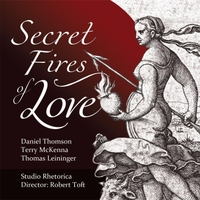
Secret Fires of Love

Secret Fires of Love
Studio Rhetorica, Robert Toft
Daniel Thomson, Thomas Leininger & Terry McKenna

Talbot Productions TP1701. 65’11

Studio Rhetorica, Daniel Thomson, Thomas Leininger & Terry McKenna | Secret Fires of Love

This recording is issued under the banner of Studio Rhetorica, a cover for the research work of Robert Toft, Canadian vocal coach and researcher, and this CD’s producer and musical director. The recording was planned to demonstrate examples of his research and approach to musical performance. To explain this, I quote from the extensive programme note on performance. This states that the performers (Australian tenor, Daniel Thomson, Canadian lutenist Terry McKenna, and German harpsichordist Thomas Leininger) “take a fresh approach to Renaissance and Baroque songs by treating the texts freely to transform inexpressive notation into passionate musical declamation. Daniel Thomson adopts the persona of a storyteller, and like singers of the past, he uses techniques of rhetorical delivery to re-create the natural style of performance listeners from the era would have heard (all the principles of performance Daniel employs are documented in period treatises on singing and speaking). This requires him to alter the written scores substantially, and his dramatic singing combines rhetoric and music in ways that have not been heard since the Renaissance and Baroque eras“. I suggest that several people would dispute the latter part of the final sentence.

Continue reading

(Ex)Tradition

(Ex)Tradition
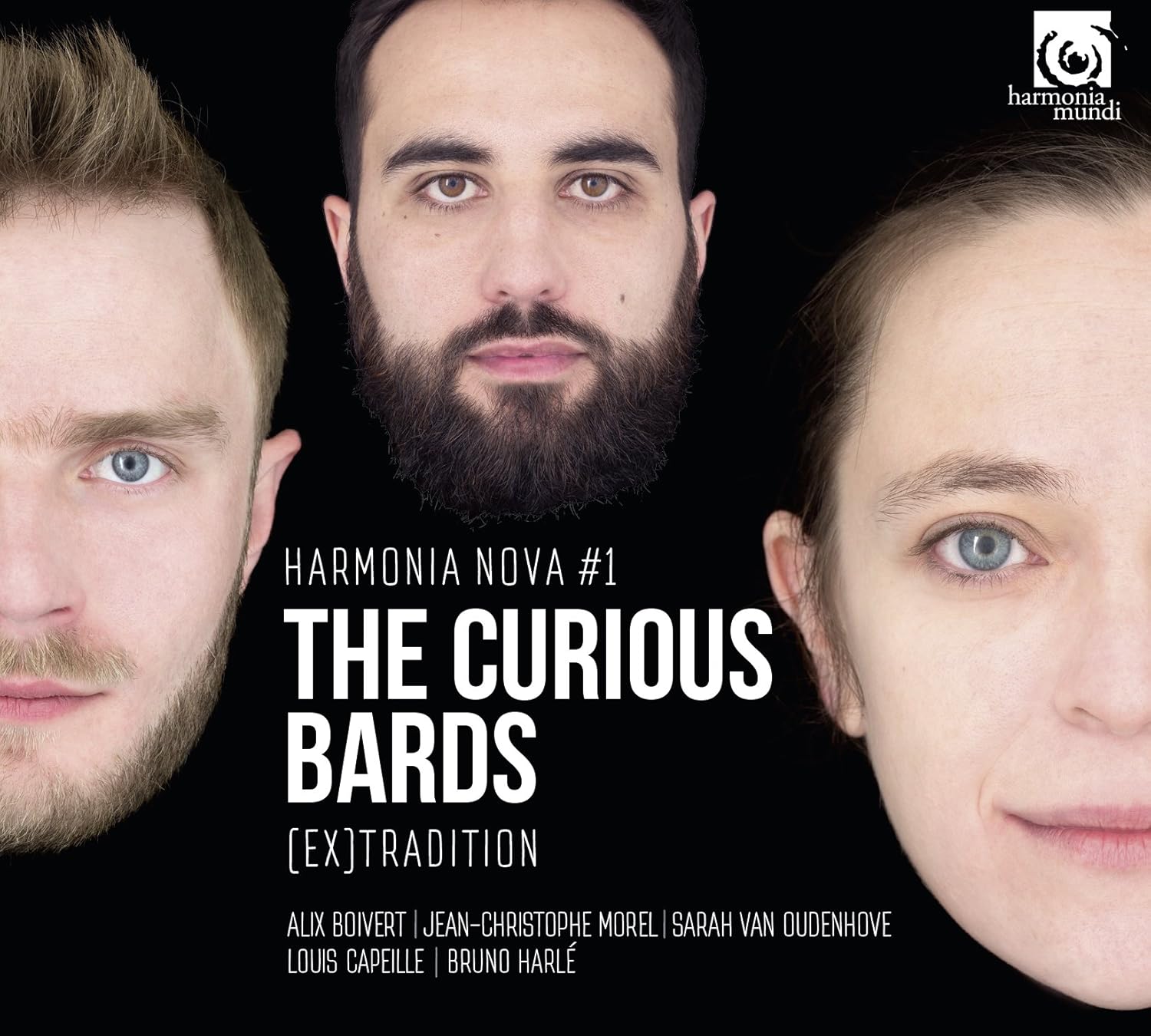
The Curious Bards
Traditional & Popular Music of 18th-Century Ireland & Scotland
Harmonia Mundi (harmonia#nova) HMN916105. 62’47


The Curious Bards was founded in 2013 by musicians from the music conservatories of Lyon, Paris and Basel, sharing an interest both in early music and traditional Irish, Celtic and Gaelic music. They aim to unite these musical worlds through research and historical musical discoveries. For this CD, they use a range of instruments including triple harp, violin, viola da gamba, a transverse flute, a tin whistle, and a cittern specially constructed by William Gibson for this recording, based on a 1778 Irish original in Dublin’s Collins Barracks Museum, part of the National Museum of Ireland. Continue reading

Music in New France & Québec

Music in New France & Québec
Studio de Musique Ancienne de Montréal
St John’s, Smith Square, 15 February 2018

The Canadian choir, Studio de Musique Ancienne de Montréal (SMAM) was founded in 1974 by Christoper Jackson. For their UK debut, they presented a programme of music from Québec and the area of the North Americas generally known between 1534 and 1763, as ‘New France’, the northern part of which is now in Canada. In similar, if less flamboyant fashion to the Spanish and Portuguese Christian conquerors in Central and South America, the imported French musicians adopted some aspects of the aboriginal music styles, represented in this concert by a series of anonymous pieces sung in Abenaki, an almost extinct indigenous language.  The programme also included some of the earliest motets and plainchants composed in French North America alongside polyphony introduced by the first French settlers, whose only surviving sources are now in Québec libraries. As well as the early pieces, we also heard the European premiere of Ja de longtemps by Québec composer Maurice-G. Du Berge, setting an eyewitness account of the early explorations of the St. Lawrence River. Continue reading

Philip Glass’s Satyagraha

Philip Glass: Satyagraha
English National Opera, Improbable
Coliseum. 1 February 2018

One of the surprises of the contemporary opera world is that the 2007 ENO premiere of Philip Glass’s Satyagraha broke all box office records, becoming the most popular contemporary work to be performed by ENO. Its uncompromising approach to text and music seems to have appealed to the public, to the extent that it has just opened for its third revival. It follows ENO’s 2016 revival of Akhnaten, the third of a trilogy of operas, of which Satyagraha is the second. It is a difficult work to categorise. It is not a conventional opera, sung throughout in Sanskrit without an understandable libretto, in a sequence of seemingly unrelated tableaux, in random time frames, each with its own musical timbre. Through-composed, it switches from lengthy solos and ensemble pieces to enormous chorus scenes, in this production backed by spectacular visuals. The orchestra only uses strings and woodwind.

ENO Satyagraha Toby Spence ENO Chorus (c) Donald Cooper

Continue reading

Bach: Organ Chorales

JS Bach
Organ Chorales of the Leipzig manuscript/Schübler Chorales
Vincent van Laar
Aliud ACDBN 103-2. 2CDs 60’32+52’34

There are many recordings of these pieces, so a new one needs to be judged by what it can offer that others cannot. One question is about the nature of performing in recital and for a recording. It is generally accepted that performers can be much freer in their interpretation when playing live than in recording. An interpretational flourish in a recital is a take-it-or-leave event, which may well not repay repeated listening. So recordings tend to be ‘safer’ interpretations. Some recordings are, in effect, ‘live’, in that they are either taken from a live recital, or are performed as if live, without editing or re-takes. On this recording, Vincent van Laar generally plays in the ‘safe’ zone, but there are a few occasions when he steps into a more personal mode. And it is these moments that make this recording worth considering.  Continue reading

Ensemble Rost

Ensemble Rost
‘The mysterious Rost Manuscript’
Chapel Royal of St Peter ad Vincula, Tower of London. 30 January 2018

Ensemble Rost is a trio of musicians (Danish, German, and French) who met in 2013 at the Royal Danish Music Academy in Copenhagen. They formed to explore (and named themselves after) the important Codex Rost (or Rost Manuscript), a collection of 157 pieces, mostly sonatas or sonata-like works. The period of composition dates from about 1640 to 1687 and is written down in three part books, all accessible online. As well as several named composers, the collection also contains 81 anonymous pieces, some of which might be by Franz Rost himself. Ensemble Rost is particularly interested in the Sonatas for their own rather unusual lineup of violin, viola and keyboard. The viola is referred to in different ways: Viola, Bracia, and Alto, leading to questions as to whether these all refer to the same instrument.

Image result for codex rost photo Continue reading

Music in a Cold Climate

Music in a Cold Climate: Sounds of Hansa Europe
In Echo, Gawain Glenton (director)
Delphian DCD34206. 67’32

In Echo is a new period instrument group, directed by the cornettist Gawain Glenton. Their core instrumental line-up of cornetto, violin, sackbut (doubling violin), bass viol and keyboards has been expanded for this their debut recording by an additional violin/viola, bass viol and, in one piece, a violone. Their programme retraces the route of musicians active in the Hanseatic League (Hansa) during its heyday in the 16th and 17th centuries. The league was a trading partnership encompassing several countries, from Tallinn to London via the Germanic free cities of Lübeck, Hamburg, and Bremen and similar ports in Holland, Denmark, Norway, and Sweden. The CD programme notes mention that the represented composers “each looked beyond their own shores and toward a sense of shared European culture and understanding” – a timely reminder today of the importance of freedom of travel for musicians. For this recording, In Echo also commissioned a new composition to complement the early pieces – Andrew Keeling’s Northern Soul. Continue reading

Bach: Du treuer Gott

J S Bach: Du treuer Gott
Leipzig Cantatas BWV 101 – 103 – 115

Collegium Vocale Gent, Philippe Herreweghe
Outhere music LPH027.62’26
Nimm von uns, Herr, du treuer Gott BWV 101
Mache dich, mein Geist, bereit BWV 115
Ihr werdet weinen und heulen BWV 103

Following two earlier CDs (LPH006 and LPH012) that focussed on cantatas written during Bach’s first year in Leipzig, this recording looks at the second cycle of cantatas, composed in 1724/5. Nimm von uns, Herr, du treuer is based on the chorale melody better known as Vater unser im Himmelreich, the Lutheran version of the Lord’s Prayer. Apart from the first aria (with its delightfully jovial flute solo), this well-known melody is heard in all movements. The two recitatives are interesting, with both alternating the chorale melody with recitative passages, the first in a particularly dramatic mood, the second with some evocative harmonic sequences. The central bass aria also switches between chorale and aria. Bach uses a strong orchestration, with three trombones, three oboes, an oboe da caccia, and a cornett – an unusual use of an instrument that would have been seen as distinctly old-fashioned at the time. The final aria, a reflective duet for soprano and alto, combines flute and oboe da caccia.  Continue reading

Mozart 250: 1768 – a retrospective

Mozart 250: 1768 – a retrospective
The Mozartists, Ian Page, Chiara Skerath
Wigmore Hall. 23 January 2018

Classical Opera’s ambitious ‘Mozart 250’ project is now in its fourth year. The project started in 2014, taking its title from the number of years since Mozart’s childhood visit to London (1764) when he composed his first significant works. The project aims to “follow the chronological trajectory of Mozart’s life, works and influences”, by performing annual concerts and operas based on the music composed 250 years earlier, culminating in 2041, the 250th anniversary of Mozart’s death. The Mozartists (the concert-performing wing of Classical Opera) opened the 2018 incarnation of the project with an insight into the music that was composed in 1768, the year that Mozart turned 12. It wasn’t a good year for him. It started with his recovery from smallpox and continued with rejection from the Viennese musical coterie, who prevented the production of Mozart’s first opera, La finta semplice. Classical Opera performed this later this year, as well as his Bastien und BastienneContinue reading

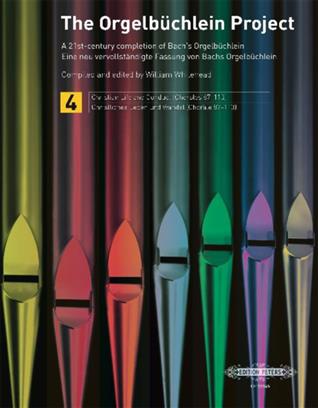
The Orgelbüchlein Project

The Orgelbüchlein Project
A 21st-century completion of Bach’s Orgelbüchlein
Compiled and edited by William Whitehead
Volume 4: Christian Life and Conduct (Chorales 87–113)

152 pages  • ISMN 979-0-57701-498-2  • Softbound
Edition Peters EP73145

OB.jpg

The Orgelbüchlein Project is one of the most exciting and ambitious musical projects of recent years. Bach’s Orgelbüchlein was intended to be a set of 164 chorale preludes covering the whole liturgical year. It was started during Bach’s time in Weimar (1708-17) with a few additions after he arrived in Leipzig. In a tiny manuscript book, Bach wrote the titles of all 164 Lutheran chorales at the top of the pages, but only managed to complete settings of 46 of them. Most titles were allocated a single page, with some given more space. When he came to write out the chorale preludes, he occasionally ran out of space and packed in a few more bars at the bottom of the pages in the more compact (but old-fashioned) German tablature letter notation. The title page of the autograph copy (pictured below) notes Bach’s intention for the collection that “a beginning organist receives given instruction on performing a chorale in a multitude of ways while achieving mastery in the study of the pedal, since the chorales contained herein the pedal is treated entirely obbligato . . . that my fellow man may hone his skill.” The Orgelbüchlein Project is an international project, founded and curated by organist William Whitehead, to complete the Orgelbüchlein by commissioning composers to write settings for the 118 missing chorale preludes.

Continue reading

Telemann: Fantasias for Viola da Gamba

Telemann: Fantasias for Viola da Gamba
Robert Smith
Resonus RES10195. 79’15

Telemann is the gift that keeps on giving. His latest offering was the discovery in 2015 of the previously lost set of Gamba Fantasies. In accordance with his very successful business approach, they were published two at a time over six fortnights in 1735. Aimed at the upper performing end of the amateur market, they also present many challenges for the professional musician. As Robert Smith writes in his own programme notes, a performer can approach these pieces with no preconceived ideas of how they might be performed. Unlike, for example, the Bach Cello Suites with many decades of recording and teaching, these Telemann Fantasias have a clean performing slate. Continue reading

François Couperin: Lumière et Ombre

François Couperin: Lumière et Ombre
Les Talens Lyriques, Christophe Rousset
Barbican/Milton Court. 14 January 2018

IMG_20180114_151717705.jpg

We are used to hearing French Baroque music in the grand style of the likes of Lully and Rameau, but the more delicate and sensitive music of François Couperin (referred to as le Grand to differentiate him from the rest of his extended musical family) is often overlooked. 2018 is the 350th anniversary of his birth, so is a good time to reassess his music. These two concerts in Milton Court, together with a panel discussion, explored some of his chamber and harpsichord music, concluding with his three Leçons de ténèbres. The two concerts were titled Lumière and Ombre, each containing solo harpsichord, vocal and instrumental music. Continue reading

Bach and Friends

Bach and Friends
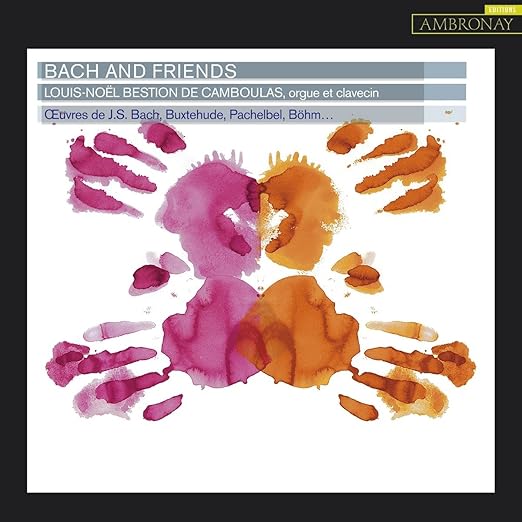
Louis-Noël Bestion de Camboulas
Ambronay AMY048. 79’54

Music by Böhm, Buxtehude, J. C. F. Fischer, Georg Muffat, Pachelbel, and Scheidemann

Ambronay Editions continue their support for younger musicians with a first recording by the organist, harpsichordist and musical director Louis-Noël Bestion de Camboulas. I have previously reviewed him (here) as the director of the group Ensemble Les Surprises. This programme contrasts music for harpsichord and organ, genres quite often interchangeable in the Renaissance and Baroque periods. Many manuscripts of the period include pieces suitable for one or other instruments, or both. The absence of an independent pedal does not always imply performance on a stringed keyboard instrument. That said, the pieces on this recording are generally well suited to the chosen instrument, although the title of Bach and Friends is a little off-kilter. Few could be seriously considered as personal friends of Bach. But all influenced him in one way or another, even if, like Scheidemann, they died well before Bach was born. Continue reading

Renaissance: Groningen Lutherse Kerk

Renaissance: Groningen Lutherse Kerk
Tymen Jan Bronda, organ
Colophon LBE 2017. 76’59

Music by Frescobaldi, Scheidemann Buxtehude, Bõhm, Weckmann, and Bach.

The 2017 Groningen Schnitger Festival (reviewed here) focussed on the opening of the new organ in the Lutherse Kerk, a reconstruction of the Schnitger organ that was built for the church in 1699, with extensions to Schnitger’s plans in 1717. Schnitger gifted the organ to the Lutheran community in recognition of the time he and his German workforce spent in the church while working in Groningen on the now internationally famous organs in the Martinikerk and Aa-Kerk. Since 2001 the Lutherse Kerk reintroduced the tradition of Bach cantatas into the services, leading to the foundation of the period instrument Luthers Bach Ensemble and plans for an organ suitable for use with Bach cantatas. The Groningen born but Swiss-based organ builder Bernhardt Edskes was commissioned to build the new organ, based on the 1717 incarnation of the original Schnitger organ. This CD by church organist Tymen Jan Bronda is the first to be made of the new Schnitger organ.  Continue reading

Bach, the Universe & Everything

Bach, the Universe & Everything
Orchestra of the Age of Enlightenment
Kings Place. 14 January 2018

The Orchestra of the Age of Enlightenment’s regular Kings Place Sunday morning ‘Bach, the Universe & Everything‘ series is billed as a “Sunday service for inquiring and curious minds; a place to bond with music lovers and revel in the wonders of science.”. In conjunction with The Institute of Physics, each event includes a Bach cantata and a talk from a distinguished scientist. This first event of 2018 reflected the Kings Place theme for 2018, ‘Timed unwrapped‘, with a talk by Professor Helen F Gleeson on Time and Perception. These are very popular events, but it was my first visit. Although not in the style of the many totally secular Sunday ‘services’ that have sprung up around the country in these post-religious days, there were elements of a church service in the organ pieces played before the start (of non-conformist, rather than C of E length), a reading, a choir ‘anthem’, notices, a hymn (in this case, of course, a Lutheran chorale) and a ‘collection’ at the bar in return for coffee and cake.

Continue reading

Return of Ulysses

he KingMonteverdi ‘The Return of Ulysses’
Royal Opera House, Early Opera Company, Christian Curnyn
The Roundhouse. 10 January 2018

After the success of their 2015 production of Monteverdi’s Orfeo at the Roundhouse (reviewed here), the Royal Opera House returned with an English language version of Il ritorno d’Ulisse in patria, under the title of ‘The Return of Ulysses’. As its name suggests, the Roundhouse is a large circular building in Camden, North London, built in 1854 by a railway company as the Great Circular Engine House and used, albeit only for a few years, as a maintenance depot. It had a central turntable to switch engines into the surrounding maintenance bays. John Fulljames’s production for the Royal Opera House maintains the link with this central turntable with a doughnut-shaped staging with an outer raised ring for the singers with the orchestra in the central circle. Both rotated, the instrumentalists going very slowly clockwise (a bit slower than the hour hand of a watch) and the singers intermittently rotating anti-clockwise. on their circular stage.

Continue reading