Gervais: Hypermnestre

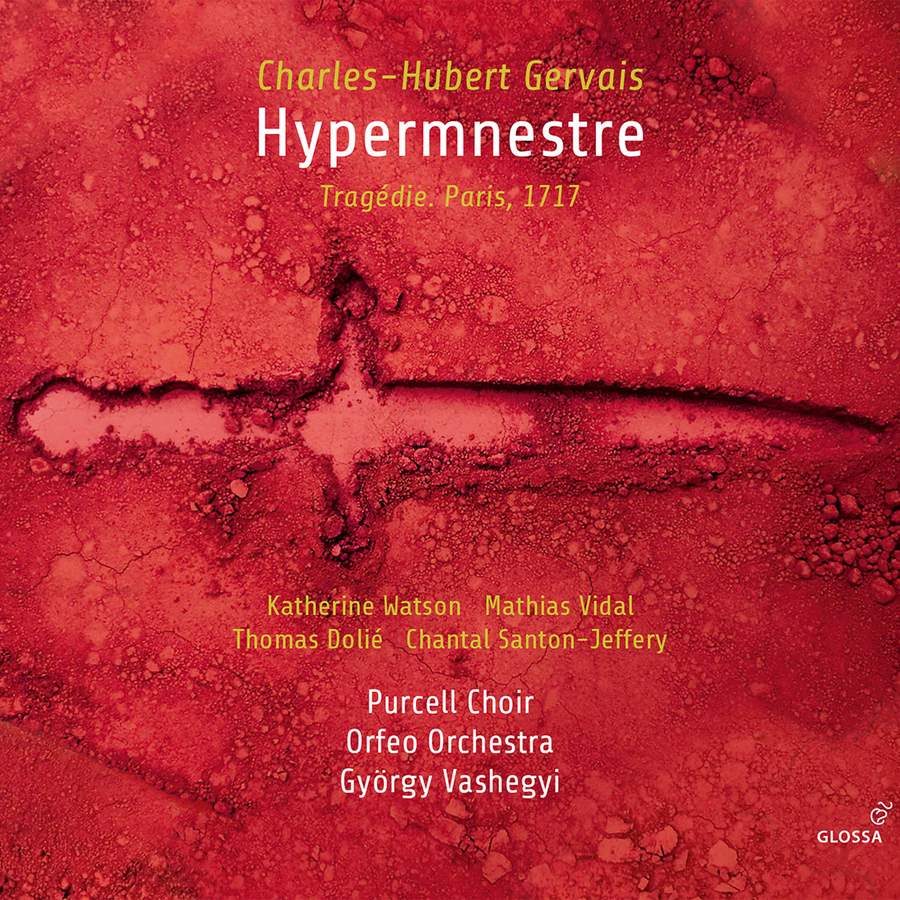
Charles-Hubert Gervais: Hypermnestre
Purcell Choir, Orfeo Orchestra, Gyorgy Vashegyi
Glossa GCD924007. 2CDs 74’32+71’27

Hypermnestre is a tragédie en musique by the almost totally forgotten French composer Charles-Hubert Gervais (1671-1744). It was first performed in 1716 at the Paris Opera (the Académie Royale de Musique) and was followed by several revivals. It sets a libretto by Joseph de Lafont based on the myth of Hypermnestra, one of the 50 daughters of Danaüs (Danaus), King of Argos. Danao had been told by an oracle that he will be murdered by one of his nephews. But he had 50 of them, courtesy of his brother, King of Egypt, so decided to marry all 50 of his daughters off to their cousins, with instructions to kill their new husbands on their wedding night. That they do, with the exception of Hypermnestre who refuses to kill Lyncée because he had respected her request to remain a virgin. The plot is similar to Francesco Cavalli’s much earlier Hipermestra, was performed at Glyndebourne in 2017 (review here).  Continue reading

The Excellency of Hand

The Excellency of Hand
English Viola Da Gamba Duos
Robert Smith, Paolo Pandolfo
Resonus Classics: RES10186. 73’52


This CD, released in 2017, features a range of 17th-century music for viola da gamba duos by Christopher Simpson and John Jenkins together with two pieces by their contemporary,  Simon Ives, and a tiny Prelude by one of the performers. Most of the pieces are in the form of ‘divisions’, an international improvisatory method dating back to the early 16th century which involves elaborating on a theme by joining up the notes with shorter ones in a variety of forms. Such elaboration and ornamentation of a melodic line forms the basis of subsequent keyboard and instrumental music. Continue reading

Resonances of Waterloo

Resonances of Waterloo
St Salvator’s Chapel Choir (University of St Andrews),
Tim Wilkinson, Sean Heath (organ)
The Wallace Collection, Anthony George
Sanctiandree SAND0007. 71’23

Ernst Sachse: Concertino in B-flat major
Alexandre Guilmant: Morceau Symphonique
Jean Bellon: Adagio ma sostenuto (Quintette no. 12: III)
Sigismund von Neukomm: Requiem à la mémoire de Louis XVI

What an extraordinary recording! It combining musical curiosity with a fascinating peek at a history that many will recall from school. It features the joint forces of the Saint Salvator’s Chapel Choir of the University of Aberdeen and the brass instruments of The Wallace Collection, together with a historic organ dating from 1829 in a church that couldn’t be more appropriate for the programme. The principal work is the Requiem à la mémoire de Louis XVI by the Austrian composer, Sigismund von Neukomm (1778-1858). Composed in memory of the French King Louis (who was guillotined in 1793 at the height of the Revolution), it was first performed in 1815 in St Stephen’s Cathedral, Vienna on the anniversary of the King’s death as a landmark event during the Congress of Vienna, the two-year gathering that brought to an end the Napoleonic Wars. Continue reading

Bach: Well-Tempered Consort 1

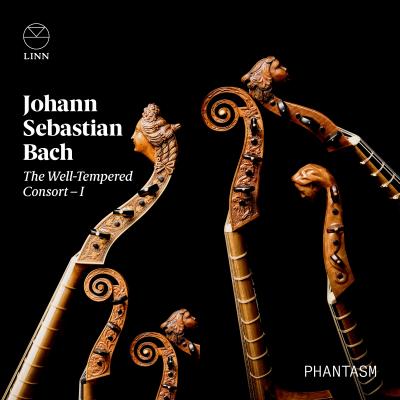
J S Bach: Well-Tempered Consort – 1
Phantasm
Linn CKD 618. 66’55

Cover CKD 618

This CD could well become essential listening for all organists and harpsichord players, alongside the various examples of Bach organ works played on recorder consorts. Transferring Bach’s keyboard works, such as The Well-Tempered Clavier, Musical Offering and Clavier-Übung III, to a viol consort reveals the sensitivity of timbre possible with bowed string instruments rather than a plucked or wind-blown one. Of course, keyboard players have their own, often complex, way of imparting musical expression to their playing within the limitations of their particular instrument, principally by using aspects of touch and articulation. But it is only the clavichord, which was arguably the instrument of choice in the Baroque era, that has the ability to change the nature of the sound of a note once it has started sounding, using the technique known as bebung which imparts a controllable vibrato to sounding notes.

Continue reading

Cornhill Visions – A Century of Musical Innovation

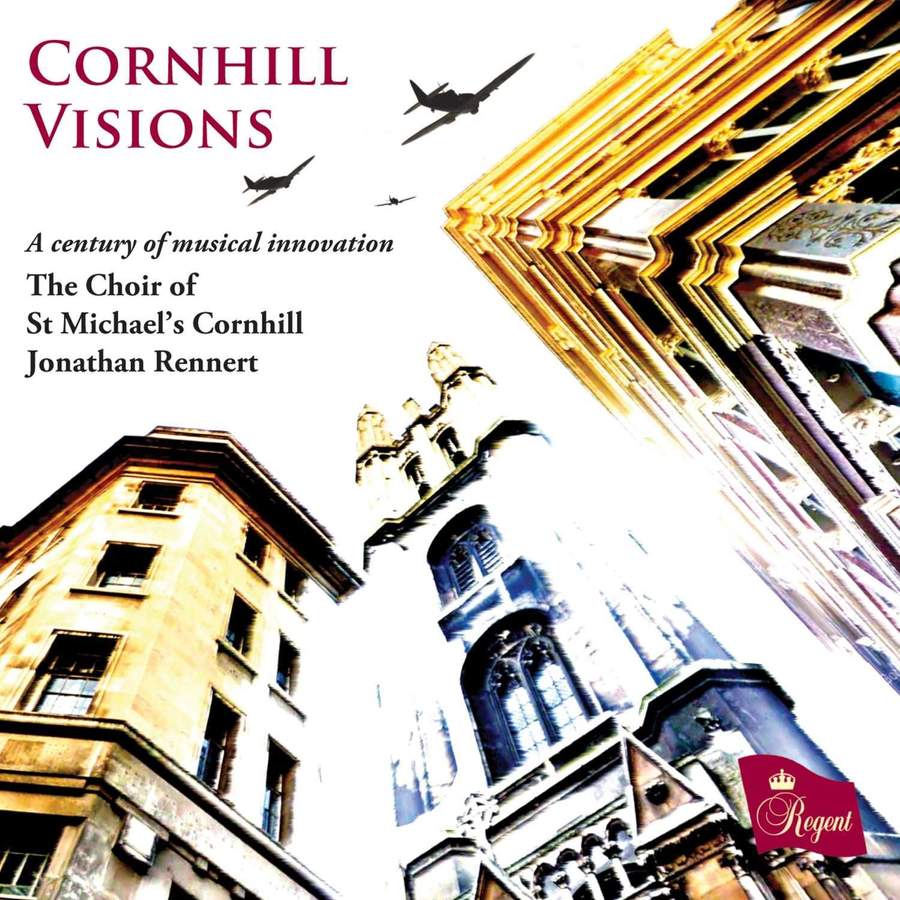
Cornhill Visions
A Century of Musical Innovation
The Choir of St Michael’s Cornhill, Jonathan Rennert
Regent Records, REGCD550. 66’03

The City of London’s churches are something of an institution. Architecturally fascinating, they have idiosyncrative opening and service times, with most closed at the weekends. Many retain medieval links to city guilds and livery companies. With an area of just over one square mile, the City of London has 46 churches for a resident population of less than 10,000 but a working week population of around one million. It is to the latter that most of the churches cater, not least in thriving programmes of lunchtime musical events. Continue reading

Bach: The Well-tempered Clavier, Book One

JS Bach: The Well-tempered Clavier, Book One
Colin Booth, harpsichord
Soundboard SBCD218. 2CDs, 59’31+62’12

This is the first of two double-CD volumes of Bach’s Das Wohltemperierte Klavier (The Well-Tempered Clavier) from Colin Booth. It covers the 24 Preludes and Fugues (BWV846-869) written in all 24 major and minor keys forming what is now known as Book 1 of ‘The 48’. It only survives in manuscript copies from 1722, with no printed edition unto around 1800. The manuscript title page announces that it was composed “for the profit and use of musical youth desirous of learning, and especially for the pastime of those already skilled in this study”. Continue reading

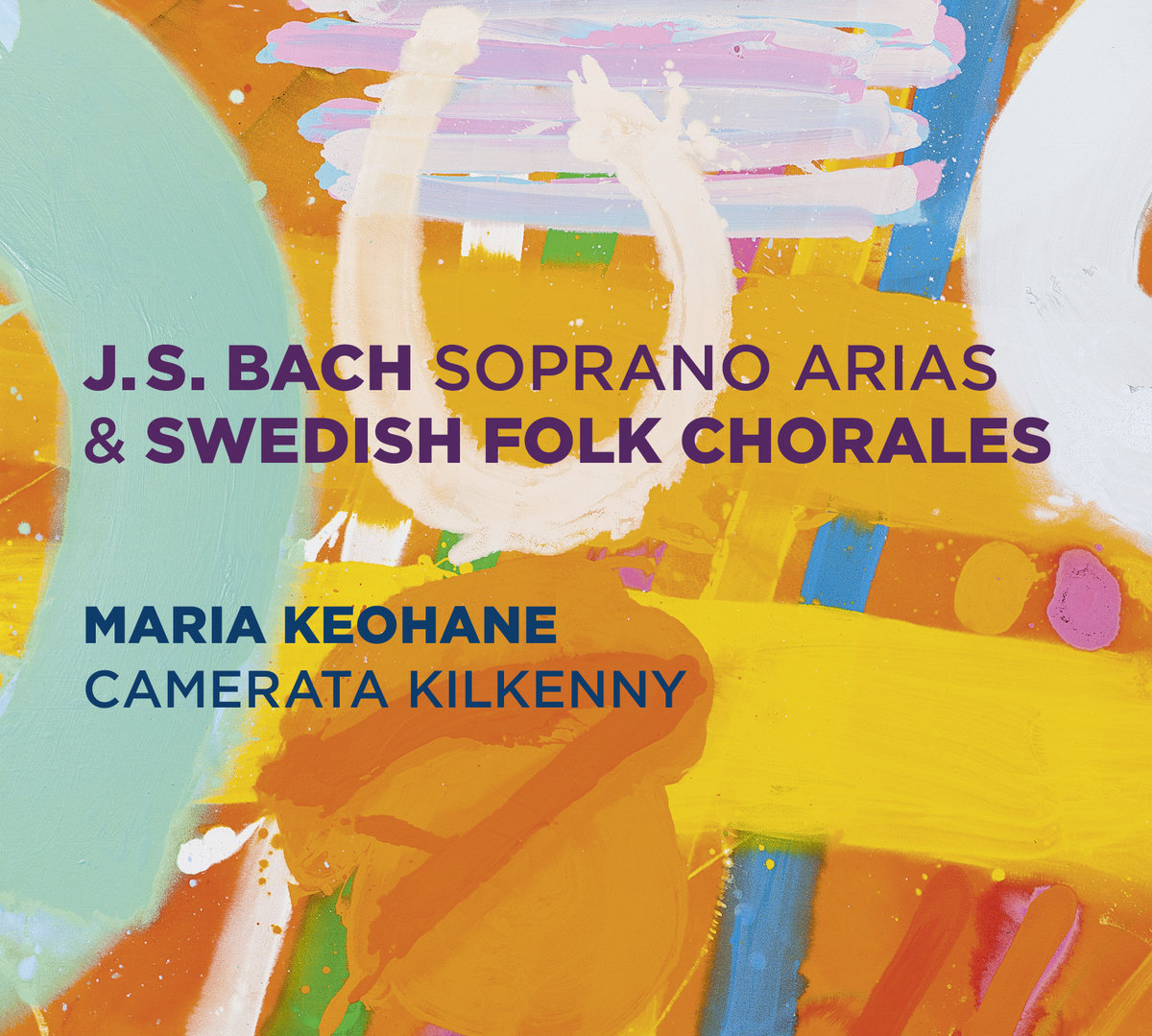
J S Bach: Soprano Arias & Swedish Folk Chorales

J S Bach: Soprano Arias & Swedish Folk Chorales
Maria Keohane, Camerata Kilkenny
Maya Recordings MCD1901. 58’10

This recording contrasts the little-known genre of Swedish Dalakorals with seven Bach soprano arias, all with obligato violin. The Dala chorales come from the region of Darlana in the centre of Sweden and the 16th-century Protestant Reformation. The first Lutheran Psalm book was published in 1695 and included many of these melodies. They are influenced by folk song and pre-Reformation melodies combined with an improvisatory practice common in village churches. Continue reading

Quantz: Flute Concertos

Quantz: Flute Concertos
Greg Dikmans, Elysium Ensemble
Resonus Classics RES10252, 70’37

Concerto in a minor (QV 5,236)
Concerto in F (QV 5,162)
Concerto in G (QV 5,178)
cantabile e frezzante
from Concerto in e minor (QV 5,116)

Johann Joachim Quantz (1697-1773) is one of those composers who is known to many musicians, but whose music is rarely heard. He is best known for his 1752 treatise Versuch einer Anweisung die Flöte traversiere zu spielen (On Playing the Flute), to this day an important reference work for all musicians, not just flautists. He is also known for his 45-years association as flute teacher to Frederick the Great of Prussia, including during his days as Crown Prince under a brutal father who disapproved of his flute playing. Continue reading

Bach: Sei Suonate

J S Bach: Sei suonate à cembalo certato è violino solo
Chiara Zanisi, Giulia Nuti
Outhere/Arcana A426. 2CDs, 41’16+54’03

Bach’s Six sonatas for violin and obbligato harpsichord (BWV 1014–1018) were first composed during Bach last few years in Köthen (c1720-23) although he continued to revise them after his move to Leipzig in 1723, from where all the surviving sources are found.  This recording, released in 2017, features  violinist Chiara Zanisi and Giulia Nuti, harpsichord. Continue reading

Johan Löfving: Fandango!

Fandango!
Music for solo guitar and String Quartet
Johan Löfving, Consone Quartet
Resonus Classics RES10260. 72’43

The guitar is more usually associated with rock/pop music from the 1950s onwards or, in more classical thinking, as a Baroque continuo instrument of Spanish origin and influence. But in this recording, Swedish-born guitarist Johan Löfving puts paid to both those assumptions with a lovely exploration of the guitar in the early Romantic era in places such as Paris and Vienna where the newly developed six-string guitar enjoyed a relatively brief moment of glory. Continue reading

Il Barbarino: Musica per Liuto e viola

Il Barbarino
Musica per liuto e viola da mano nel cinquecento Napoletano
Paul Kieffer
Outhere/Arcana AD 105. 59’54

As the title suggests, this recording focusses on the flourishing of music for lute and the viola da mano in early 16th-century Naples. The viola da mano is the Italian version of the Spanish vihuela, with the same tuning as a lute but in a guitar-shaped body, It has a slightly more delicate and resonant timbre than the lute, and is used for six of the 24 pieces on the CD. 15 of the tracks are premiere recordings with 11 taken from from the Barbarina lute book of the title, dating from around 1600 and now in the Kraków Biblioteka Jagiellońska (PL-Kj Mus. ms. 40032), having been removed from the Berlin Deutsche Staatsbibliothek during the war and lost to researchers until the 1980s. Continue reading

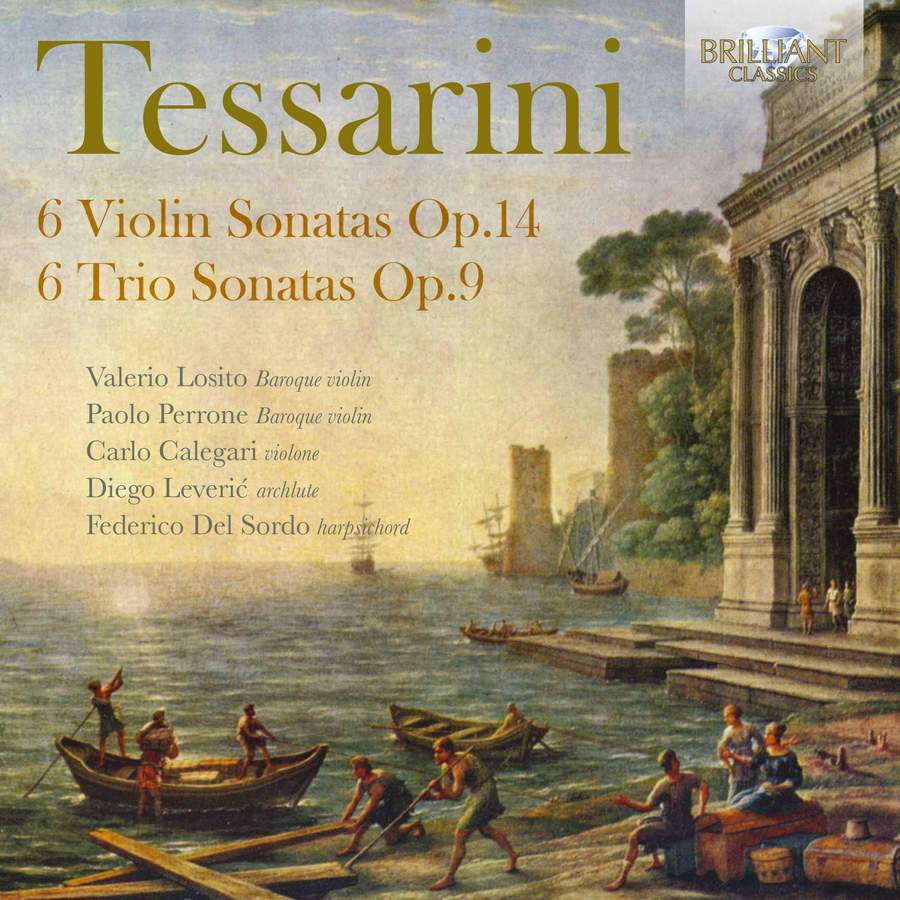
Tessarini: Violin & Trio Sonatas

Carlo Tessarini
6 Violin Sonatas Op.14 & 6 Trio Sonatas Op.9
Valerio Losito & Paolo Perrone, violins
Federico Del Sordo, harpsichord
Brilliant Classics, 95861. 2CDs 48’52+57’45

Sei sonate a violino ò flauto traversière e cembalo (Op.14 Venice, 1748)
6 Sonate da camera e chiesa a due violini e basso (Op.9 Paris, 1747)

Carlo Tessarini (1690-1767) is now a little-known Italian composer, but was famed in his day. He was born in Rimini and worked in Venice in the early part of his career, including such positions as violin master at the Ospedale dei Derelitti and a violinist in St. Mark’s. Some of his music was published without permission in London and Amsterdam, so he started publishing his own editions in 1729. Although later notionally attached to in the chapel of the Holy Sacrament in Urbino for some 30 years, he travelled around many regions of Italy as well as Paris and London before finally moving to Amsterdam for the last nine years of his life. Continue reading

Haydn: London Symphony & Harmoniemesse

Haydn: ‘London’ Symphony 99 & Harmoniemesse
Handel and Haydn Society, Harry Christophers
Coro 6176. 68’24

Haydn’s Symphony No. 99 in E major is one of his twelve ‘London’ symphonies. Although it was composed in Vienna in 1793, its first performance was in London in 1794 at the Hanover Square Rooms during Haydn’s second London visit. It is his first use of clarinets in a symphony. The woodwind plays a key role, as they do in the Harmoniemesse, the Mass in B-flat major. That name, given after Haydn’s death, refers not to any idea of harmony, but to the use of the Harmonie, the German name for a wind band. With similar instrumentation, these two pieces make for an obvious pairing on the recording from the Boston based Handel and Haydn Society. Continue reading

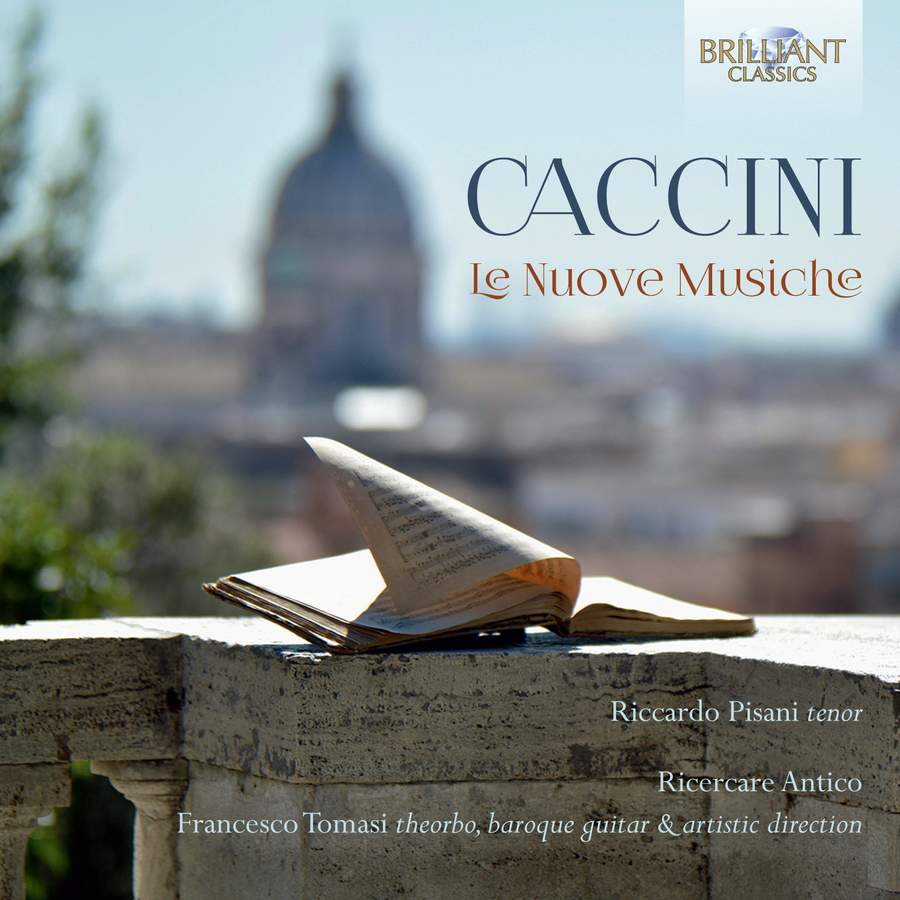
Caccini: Le Nuove Musicale

Caccini: Le Nuove Musicale
Ricercare Antico, Riccardo Pisani
Brilliant Classics, 95794. 66’41

Giulio Caccini (1551-1618) was a Florentine singer, instrumentalist and writer. He was one of the first to establish the stile recitativo that formed the basis of Baroque-era opera. His Le Nuove Musicale (or Musiche) of 1602 explored the use of solo voice and continuo bass in what was to be referred to the following year (in Artusi’s 1603 Seconda Parte dell’Artusi), as the Seconda pratica. Caccini’s introduction to Le Nuove Musicale outlines the move from the Renaissance ideas of polyphony and counterpoint to the monodic style of the Baroque, with examples of the manner of adding ornaments to reflect the emotional expression of the text, in the affetto cantando style. Continue reading

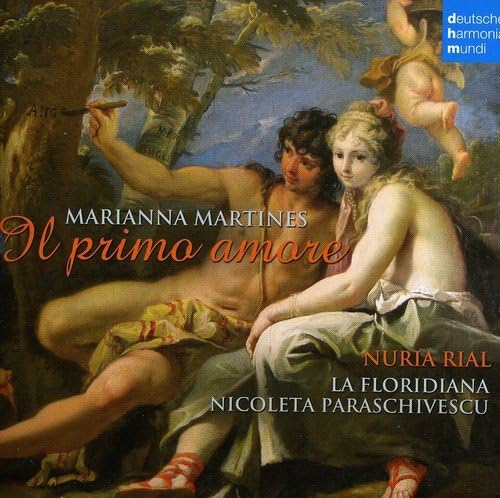
Marianna Martines: Il primo amore

Marianna Martines: Il primo amore
La Floridiana
Nuria Rial, Nicoleta Paraschivescu
Deutsche Harmonia Mundi 88697885792. 64’55

Regular followers will have realised that I am using the lack of live concerts during coronavirus lockdown to catch up on CD reviewing. This one dates back to 2012, the 200th anniversary of Marianna Martines’ death. Quite why it took so long to reach the top of the pile is beyond me, but it is certainly worth reviewing. Marianna Martines (1744-1812) is one of the rare examples of a female musician that held her own amongst her distinguished male musical colleagues in Vienna. This recording, with four of the five pieces being world premiers, is a long-overdue acknowledgement of her position in the musical hierarchy of late 18th century Vienna. Continue reading

Le Clavecin Mythologique

Le Clavecin Mythologique
Anne Marie Dragosits
L’Encelade
ECL1801. 73’00

J-H. d’Anglebert: Les Songes Agréables d’Atys, Passacaille d’Armide, Les Sourdines d’Armide
F. Couperin: Les Satires, Ls Sylvains, Les Ombres Errantes
J.-P. Rameau: L’Entretien des Muses, Les Cyclopes
J.-B. Forqueray: Jupiter
P. Royer: L’Imagination, Allemande, La Sensible, La Marche des Scythes
J. Duphly: Médée, Les Grâces

One of the essential tasks for any musician or music promoter is putting together a programme that will make sense to the listener as well as providing a satisfactory ‘hook’ for the performer to share their musical wares. This recording (released in 2018) by the Vienna-based harpsichordist Anne Marie Dragosits presents us with a Suite mythologique consisting of music by composers covering the whole range of the French Baroque harpsichord school from d’Anglebert to Duphly, all based on the mythological world of antiquity. Continue reading

Pieter Hellendaal: Violin Sonatas

Pieter Hellendaal: Violin Sonatas
Antoinette Lohmann, Furor Musicus
Globe
, GLO 5271. 72’21

In what is billed as a “hand-numbered limited edition” on the paper slip on the off-white card CD case (which, as you can see above, doesn’t show up too well against a white background), violinist Antoinette Lohmann and Furor Musicus offer world premiere recordings of Violin Sonatas by Pieter Hellendaal (1721-1799). He was an Anglo-Dutch composer, organist and violinist, sometimes referred to as  “The Elder”, to differentiate him from his musician son. He was born in Rotterdam and, aged 30, moved to England where he lived for the rest of his 78-year life. Continue reading

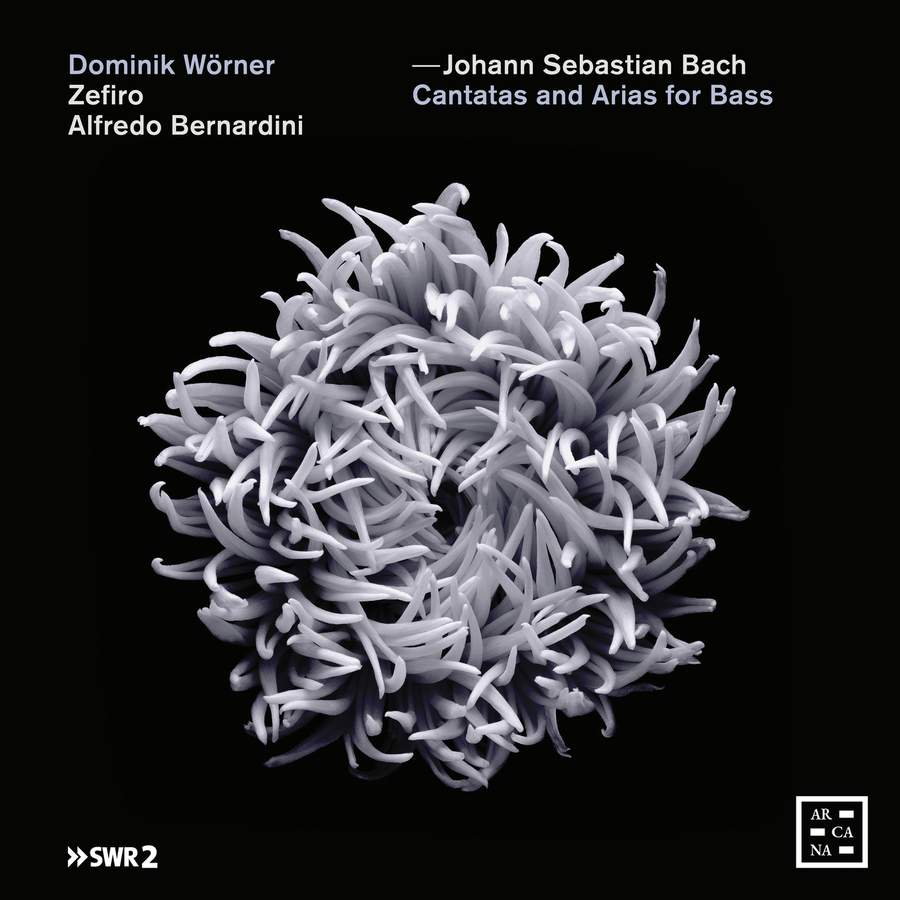
Bach: Cantatas and Arias for Bass

Bach: Cantatas and Arias for Bass
Dominik Wörner, Zefiro, Alfredo Bernardini
Arcana A466. 62’17


Cantata: Ich habe genung BWV 82
Aria: Gott ist gerecht from Cantata: Ewigkeit, du Donnerwort BWV 20
Cantata: Der Friede sei mit dir BWV 158
Aria: An irdische Schatze das Herze zu hangen from Cantata: Ach wie fluchtig, ach wie nichtig BWV 26
Cantata: Ich will den Kreuzstab gerne tragen BWV 56
Aria: Warum willst du so zornig sein from Cantata: Nimm von uns, Herr, du treuer Gott  BWV 101

One of the problems that Bach encountered on his arrival in Leipzig was the quality of the available musicians, in comparison to those employed by the Köthen court Kapelle. Bass singers seem to have been a particular problem, perhaps ineveitable in a boys choir, although, as Peter Wollny explains in is excellent notes, most of the musicians that Bach could draw on were only around for relatively short time. Six bass singers are specifically named, one becoming his own son-in-law. Continue reading

Royer: Premiere Livre de Pièces de Clavecin

Joseph-Nicolas-Pancrace Royer
Premiere Livre de Pièces de Clavecin
 Mie Hayashi, harpsichord
Resonus Classics RES10236. 65’11

Joseph-Nicolas-Pancrace Royer (1703-1755) was an Italian born keyboard player who moved to Paris in his early 20s where he soon rose up the musical ladder. His first steps were as the maître de musique des enfants de France, directing the musical education of Louis XV’s children. He directed the Concert Spirituel along with Mondonville and worked at the Paris Opéra, where his best known opera was the ballet héroïquZaïde, reine de Grenade. In 1753 he became director of the chambre du roi and the orchestra of the Royal Opera. Continue reading

Antegnati: 12 Ricercari

Antegnati: 12 Ricercari
Federico del Sordo, organ, harpsichord and clavichord
Brilliant Classics, 95628. 58’08

Cover Antegnati: 12 Ricercari

Costanzo Antegnati (1549-1624) is the best-known of a family of distinguished organ builders in Northern Italy that lasted from the early 15th to the late 17th-century. He worked with his father on the 1582 organ in San Giuseppe, Brescia, at one time, one of the most famous in the world. Costanzo was organist at the Brescia cathedral from 1584 to 1619. The most famous of his few surviving organs (from 1588) is in the church of St. Nicholas in Almenno San Salvatore, Bergamo. His 1595 treatise L’arte organica was republished in 1608 with these 12 Ricercars added to the technical details of 144 organs built by his family, information on organ tuning and advice on registration. Continue reading

Handel: Concerti grossi

Handel: Concerti grossi Vol 2. Opus 6: 7-12
Akademie für Alte Musik Berlin, Bernhard Forck
Pentatone PTC 5186 738. 80’29

Although the concept and the inspiration for Handel’s Op.6 Concerti grossi date back to his early years in Italy and Corelli’s concerto da chiesa and concerto da camera, they were put together and published much later in his career. Ten of the 12 concertos were composed for performance during oratorios and odes during the 1739–1740 season. These included the two that were performed on St Cecilia’s Day, during Alexander’s Feast and the Ode for St Cecilia’s Day. Others followed in December and February 14 including two during L’Allegro, il Penseroso ed il Moderato with two more in March and April in revivals of Saul, Israel in Egypt and L’Allegro. Concertos 9 and 11 borrowed from some of Handel’s earlier organ concertos (No.9 borrowing from the Cuckoo and the Nightingale organ concerto) that had fulfilled the same function as interval entertainment or musical add ons to oratorio performances. Continue reading

Guillemain: Flute Quartets Op.12

Louis-Gabriel Guillemain: Flute Quartets Op.12 (1743)
Fantasticus, Wilbert Hazelezet
Resonus Classics,  RES10222. 2CDs, 44’13+44’44

Louis-Gabriel Guillemain (1705-1770) was a French composer and violinist. He started his violin studies in Paris and later studied in Italy. By 1729, Guillemain was working in Lyons and was soon appointed the first violinist of the Acadèmie de Musique. His Premier livre de sonates was published in 1734. Guillemain moved back to Paris becoming a musicien ordinaire to Louis XV and before long became one of the court’s highest-paid musicians. The Six sonates en quatuors ou conversations galantes for flute, violin, bass viol and continuo recorded here was published in 1743, when he was at the height of his career. Continue reading

Michelangelo’s Madrigal

Michelangelo’s Madrigal
Kate Macoboy, soprano, Robert Meunier, lute
Et’cetera KTC 1623. XXX

The ‘Michelangelo’s Madrigal’ of the title is Bartolomeo Tromboncino’s Come harò donque ardire, which sets a poem by the artist.  Between 1502 and 1521 Tromboncino was Lucrezia Borgia’s singer and lutenist. He wrote music for her 1502 wedding to Alfonso d’Este, the Duke of Ferrara, and for the famous Intermedi at the arts-loving Ferrara court. This delightful CD, released in October 2018, explores the musical world of early 16th-century Italy by Italian composers, rather than the more famous Northern European composers working in Italy at the time. Continue reading

To Dowland or not to Dowland

To Dowland or not to Dowland
Mike Fentross, lute
Zefir  ZEF9658. 62’52

The rather curious title, which seems to turn ‘Dowland’ into a verb, could perhaps have been ‘Dowland or not Dowland’, as the programme is made up of anonymous lute pieces from various manuscripts that, it is argued, are actually by Dowland. This assumption is based on research by archivist Andre Nieuwlaat who, working with lutenist Mike Fentross, made a selection of 15 pieces from the many possible examples by using “… musical intuition, by the essence of the pieces, and by constantly asking the question: do I recognise Dowland’s hand in this? The overall quality of the pieces to choose from was very impressive, and the answer to this question was: ‘ Yes, I recognise Dowland in these works, without a shadow of a doubt’. Dowland’s musical signature is unmistakable”. Continue reading

Messe du Roi Soleil

Messe du Roi Soleil
Lully – Couperin – Delalande
Chœur et Ensemble Marguerite Louise, Gaetan Jarry, organ
Château de Versailles Spectacles, CVS008. 53’13

The Château de Versailles Spectacles label continues with its series of recordings based on the music that might have been heard in the Royal Chapel. These recordings are presumably aimed principally at the tourists that, in more normal circumstances, flock to the Palace and its gift shops. On this occasion, there has to be a health warning to more serious CD buyers, not least because the premise for this recording is not really what it says on the tin. One thing this isn’t is a Mass for the Sun King, or indeed, any sort of Mass. Continue reading

Basso Ostinato

Basso Ostinato
Passacaglias & Chaconnes
Pieter-Jan Belder, harpsichord
Brilliant Classics,  95656. 77’58

Basso Ostinato - Pieter-Jan Belder

This is a collection of pieces recorded on the margins of other recording sessions from 2012 to 2017. Three harpsichord are used, all modern, after Giusti, Blanchet and Ruckers. All the pieces use an ostinato, or ground, bass. The Passacaglia comes from the Spanish phrase for walking down the street: passer la called. The Chaconne (or Ciaccona) originated in the New World, and was described by Alex Ross as having been a “sexily swirling dance”. Other forms are the English term Ground, used by Tomkins and Purcell, the Passamezzo, used in Picchi’s Pass’e Mezzo, an Italian folk dance based on two different chordal progressions. Continue reading

Scarlatti: Mandolin Sonatas

Domenico Scarlatti: Mandolin Sonatas
Pizzicar Galante
Arcana A115. 60’12

6XztQwTsoTsf5FLI6FxiWU
Although Domenico Scarlatti didn’t actually write any mandolin sonatas, that hasn’t stopped Pizzicar Galante followed an earlier practice of transcribing his harpsichord sonatas for mandolin. Their inspiration was the discovery, in the 1980s, of a late 18th-century manuscript in the Arsenal Library in Paris of the first movement of Scarlatti’s Sonata in D, K89, with the indication Sonatina per mandolino e cimbalo. Continue reading

Opus 1: Dandrieu Corelli

Opus 1: Dandrieu Corelli
Le Consort
Alpha Classics, Alpha 542. 61’45

Jean-François Dandrieu (c1682 – 1739) was a Parisian organist and composer. Aged just five, he played the harpsichord in front of Louis XIV. In 1700, aged 18, he started playing the organ at the Saint-Merri church in Paris, became its titular organist five years later. He is probably best known today for his volume of lively organ Noëls, published posthumously. In 1718 he published his Principes de l’accompagnement, an academic treatise which remains an important source of information on accompaniment practice. Continue reading

Music for the Mayflower

They that in ships unto the sea down go
Music for the Mayflower
Passamezzo
Resonus  RES10263. 61’23

It is 400 years since the Mayflower set sail for the New World. It had been commissioned by English Puritans, along with another ship, the Speedwell, bringing Puritans that had earlier moved to Leiden to escape religious persecution in England. The complicated initial stages of the journey started in July 1620 from the River Thames just east of the City of London. The Mayflower waited to join the Speedwell in Southampton Water and both ships set sail for America in early August, calling into Dartmouth for repairs. They reached well beyond the Scilly Isles but again had to return to Plymouth for further repairs. The Speedwell gave up, and some of their passengers joined Mayflower which finally set off alone. Continue reading

Kate Lindsey: Ariana

Kate Lindsey: Arianna
Arcangelo, Jonathan Cohen
Outthere/Alpha Classics Alpha 576. 72/13

Cover Alpha 576

A Scarlatti: L’Arianna (Ebra d’amor fuggia)
Handel: Ah! Crudel, nel pianto mio
Haydn: Arianna a Naxos

Arianna is a programme from the American mezzo-soprano Kate Lindsey, focussed on contrasting cantatas by three composers on the myth of Ariadne (aka Arianna). She was the daughter of King Minos of Crete and granddaughter of the Sungod Helios. She stars in the myth of Theseus and the Minotaur, saving Theseus from the maze, falling in love with him, and then being cast off onto the Island of Naxos. Continue reading