Cavalli: La Calisto

Francesco Cavalli: La Calisto
Ensemble OrQuesta, Marcio da Silva

Cockpit Theatre, 31 January 2020

I arranged to see Cavalli’s La Calisto on the evening of the UK’s Brexit, sandwiching it between two pro-EU vigils in central London. I thought it would take my mind off the goings-on in Parliament Square, but soon had second thoughts. It opens with a Prologue where Nature, Eternity and Destiny meet to decide whether any humans are worthy of elevation to everlasting fame and divinity – a glory for which some humans actively promote themselves. The opera proper starts after the earth has been mistakenly destroyed by poor decision making by the powers that be. Giove arrives with his side-kick Mercurio to take back control and “restore calm to earth”. He finds the nymph Calisto in a deep depression at the sad state of things, and promptly tries to seduce her. It is soon apparent that Giove is a serial philanderer, adulterer and a serial liar of monumental proportions. So much for taking my mind off current political things.

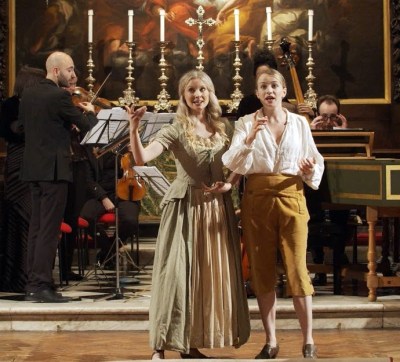
Image may contain: 2 peopleGiove & Calisto (John Holland-Avery & Helen May)
Continue reading

Tomkins: Choral Works

O Give Thanks Unto the Lord
Tomkins: Choral Works
The Choir of HM Chapel Royal, Hampton Court Palace
Carl Jackson, conductor, Rufus Frowde, organ
Resonus RES10253. 74’25

Following last year’s recording of Byrd’s Great Service by the Odyssean Ensemble (reviewed here), led by the Musical Directors of the Chapels Royal in HM Tower of London, comes this recording of Thomas Tomkins (another organist to the Chapels Royal) from the Choir of another Chapel Royal on the other side of London, in Hampton Court. This follows their early recording of an early Thomas Tomkins (1572-1656) was a pupil of Byrd’s, as referenced by a song dedication To my ancient, and much reverenced Master, William Byrd. Although composing some time after Byrd, Tomkins’ compositions are very much in the Tudor idiom despite the changes of the Stuart era. Continue reading

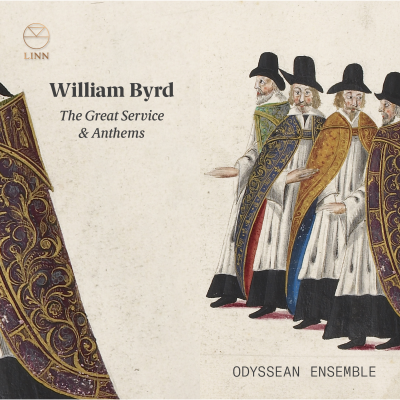
William Byrd: The Great Service & Anthems

William Byrd: The Great Service & Anthems
Odyssean Ensemble, Colm Carey, Christian Wilson
Linn Records CKD 608. 59’25

CKD 608 Sleeve

This is the debut recording from The Odyssean Ensemble. It was released several months ago but returned to my mind while reviewing a more recent recording of Thomas Tomkins from the Choir of the Chapels Royal of Hampton Court Palace. The Odyssean Ensemble is a professional choir, directed by Colm Carey, the current director of music of another Chapels Royal at HM Tower of London, with the deputy director Christian Wilson playing the organ. A little bird tells me that the third of London’s Chapels Royal, the senior of the three, at St James’ Palace is also preparing a recording.  Continue reading

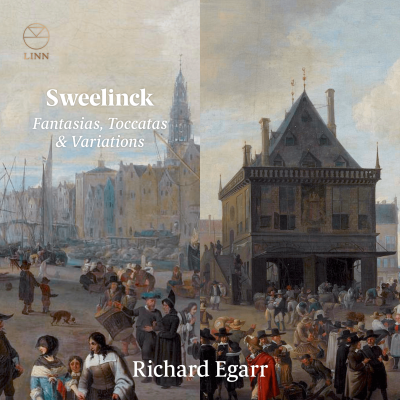
Sweelinck: Fantasias, Toccatas & Variations

Sweelinck: Fantasias, Toccatas & Variations
Richard Eggar
Linn Records CKD 589. 76’13

Cover CKD 589

As Richard Egarr mentions at the start of his liner note, Sweelinck’s music is “mostly delivered in a severe, dry and austere manner”. His rather scholarly and intense keyboard music certainly leads towards a performance broadly within that description. Indeed, after one of my all-Sweelinck organ recitals, I was complimented with the comment “you can tell from your playing that Sweelinck was Calvinist”. Continue reading

New William Drake organ at Chelsea Old Church

Celebrity Opening Concert – William Drake organ
Nathan Laube

Chelsea Old Church, 19 January 2020

Opening recitals on new organs raise several issues. The performance must, of course, be excellent in itself, regardless of the occasion. But the organ also needs to be demonstrated in a manner that future organ recitals do not need to. I have given several recitals (including, for example, at St John’s, Smith Square) where I have used little more than half of the available stops, to produce a sound that the composer might just recognise. But for an opening recital, a thorough exploration of the sounds of the new instrument is expected. If the organ is built in a specific historic style, the expectation may be that the music of that period dominates. But many organs are built in an eclectic style, capable, in theory, of coping with music from several different historical periods. Continue reading

CANCELLED. Happy Birthday, J S Bach!

Early Music Day
Saturday 21 March 2020

In light of the latest announcement by the UK Government, I am sadly having to cancel all of these concerts. Thank you to all have shown an interest, and particularly to the musicians who were lined up to perform. It is far to soon to think of when, or if, to re-schedule any of it, but Early Music Day next year is on Sunday 21 March.

All the concerts were to have been given in aid of the
Royal Society of Musicians
.

If you are willing to support this important musical charity, you can donate directly via this link https://www.rsmgb.org/fundraising/.  UK taxpayers can claim GiftAid. Please mention “Early Music Day” in the comments section of your donation.

Happy Birthday, J S Bach!

St Giles-in-the-Fields
St Giles High Street, London WC2H 8LG
(Close to Tottenham Court Road underground)

St Giles organ

Three informal 45′ afternoon Bach organ and solo instrument recitals
including organ chorales from Bach’s Leipzig manuscript.

4pm
Fantasia supra Komm, Heiliger Heist  BWV 651
Cello Suite No. 2 in D minor   BWV 1008
Prélude, Allemande, Courante, Sarabande, Menuetts, Gigue
O Lamm Gottes, unschuldig   BWV 656

5pm
Von Gott will ich nicht lassen   BWV 658
Nun komm’ der Heiden Heiland   BWV 659
Partita for solo flute   BWV 1013
Allemande, Corrente, Sarabande, Bourrée angloise
Jesus Christus, unser Heiland   BWV 665

6pm
Allein Gott in Der Hõh sei Ehr    BWV 662
Cello Suite No. 3 in C   BWV 1009
Prélude, Allemande, Courante, Sarabande, Bourrées, Gigue
Jesus Christus, unser Heiland   BWV 666
Komm, Gott, Schöpfer, Heiliger Geist   BWV 667

Special evening concert @ 7.30

AN EVENING WITH BACH

Featuring the historic St Giles-in-the-Fields organ,
with pipework dating back to Bach’s time, and solo Bach music for cello and violin.
(Free entry – donations welcomed for the Royal Society of Musicians).

The originally planned Art of Moog event had been cancelled earlier
because of the potentially high costs of a late cancellation. The Evening with Bach was a free replacement event. As it turns out, the whole church is now closed for the foreseeable future along, it seems with all CofE churches.

The organ in St Giles-in-the-Fields was originally built by George Dallam in 1678 with further work in 1699 by Christian Smith, nephew of ‘Father’ Smith. It was moved into a new organ case in the rebuilt St Giles church in 1734 by Gerard Smith the Younger. It was rebuilt in 1856 by Gray and Davison, then at the height of their fame. It was restored in 2006 by William Drake of Buckfastleigh, retaining material from 1678, 1699 and 1856. It is one of the most important historic organs in the UK. More details here.
Music for Milan Cathedral

Music for Milan Cathedral
Siglo de Oro, Patrick Allies
Delphian DCD34224. 66’26

Rather sensibly, Siglo de Oro has called this recording Music for Milan Cathedral, rather than The Motets of Hermann Matthias Werrecore which, in effect, is what it is. Werrecore (c1500->1574) is an almost totally unknown composer who became maestro di cappella of Milan Cathedral in 1522 and stayed until 1550. Confusion with another composer with a similar name didn’t help him become better known, nor did the prominence of other composers connected with Milan, including one of Werrecore’s predecessors, Josquin des Prez (c1450-1521). This excellent recording by Siglo de Oro is a well-deserved attempt to revive interest in this fascinating composer whose music, by the standards on this recording, is well worth exploring.

Continue reading

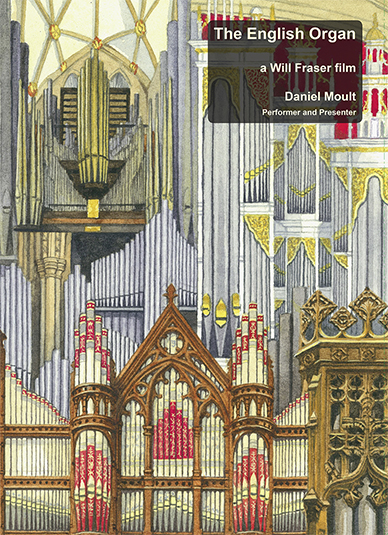
Fugue State Films: The English Organ

The English Organ
Daniel Moult, organ, Will Fraser, director 
Fugue State Films. 4 DVDs, 3 CDs, booklet

This extraordinary project is the result of a year-long tour of forty locations in England, the USA, New Zealand and Australia. The package includes four DVDs and three CDs, amounting to around ten hours of music from the early 16th century to the present day, together with an illustrated booklet with track listings and the specifications of all the organs. They are described and played by Daniel Moult, who also provides the commentary on the first DVD, which is a documentary in three 70′ parts on the development of the English organ. The following three DVDs and the three CDs provide further musical examples and, on the DVDs, further demonstrations of all the featured organs. Continue reading

Olwen Foulkes: Indoor Fireworks

Indoor Fireworks
Olwen Foulkes, recorder
Ensemble Augelletti
Barn Cottage Records, bcr021. 73’00

The recording is based on music that was performed in London theatres during the late 17th and early 18th-centuries. As well as the advertised play, an evening at the theatre would also have included musical and other entertainments before, during and after the play. Olwen Foulkes has researched this repertoire, using contemporary adverts in the Daily Courant for the Theatre Royal between 1702 and 1720 which listed many of these other entertainments. This impressive recording, her second with Barn Cottage Records, features examples of such entertainments, with examples from the composers Vivaldi, Locke, Corelli, Baston, Paisible, Grano, Tollet, Finger and Sammartini, either written for, or arranged by Olwen, for recorder and the small instrumental ensemble Ensemble Augelletti. Continue reading

Noëls baroques à Versailles

Noëls baroques à Versailles
Gaétan Jarry, organ
Les Pages du Centre de Musique Baroque de Versailles
Grandes Orgues 1710, Chapelle Royale – Versailles
Chateau de Versailles CVS025. 70’40


The third in the L’âge d’or de l’orgue français series is a seasonal offering of French Noëls from Versailles. The tradition of Parisian organists playing variations on Noëls at Christmas lasted for well over 100 years from the late 17th to the end of the 18th century. Although musically their peak was in the early years of the 18th-century, with the examples of Louis-Claude Daquin and Dandrieu, their height of popularity seems to have come at the end of the century with Claude Balbastre, when French music had become somewhat debased as the Revolution approached. Such were the crowds that turned up to hear Balbastre play at the Midnight Mass, that riot police were called. The Archbishop of Paris eventually banned such services at Balbastre’s church of Saint Roch. Continue reading

Solomon’s Knot: Magnificat

Magnificat
Christmas in Leipzig
Solomon’s Knot
Sony Music  19075992622. 75’09

Solomon'S Knot - Magnificat-Christmas in Leipzig

Schelle Machet die Tore weit
Kuhnau Magnificat in C
Bach Magnificat in E flat, BWV243a

The three composers represented on this recording from Solomon’s Knot were successive Kantor’s of Leipzig’s Thomaskirche between 1677 to Bach’s death in 1750. Johann Schelle (1648-1701) was a former choirboy under Heinrich Schütz in Dresden and Thomaskirche Kantor from 1677 to his death in 1701. Johann Kuhnau (1660-1722) may have been a cousin of Johann Schelle, and certainly worked with him, becoming organist at St Thomas aged just 24 and still a law student. He succeeded Schelle as Kantor in 1701 and was Bach’s immediate predecessor. Bach took over in 1723, and stayed until his death in 1750. Continue reading

Bach: Christmas Oratorio

Bach: Christmas Oratorio (Parts 1, 2, 3, 6)
The Choir of Trinity College, Cambridge, Stephen Layton

Orchestra of the Age of Enlightenment
St John’s, Smith Square, 22 December 2019

For many years now, the highlights of the London Christmas and Easter concert season has been the final two concerts of the St John’s, Smith Square Christmas/Easter festivals. One is usually Bach, the other Messiah, both directed by Stephen Layton, the first with his student Trinity College choir, the second with his professional vocal group Polyphony. In recent years both have been accompanied by the period instruments of the Orchestra of the Age of Enlightenment. Both pairs of concerts sell out way in advance, the student choirs helping with audience numbers by rallying parents and friends. Continue reading

Vox Luminis: Dixit Dominus

Dixit Dominus
Vox Luminis, Lionel Meunier
St John’s, Smith Square, 18 December 2019

Attrib. Buxtehude? Magnificat BuxWV Anhang 1
Bach Nun komm der heiden Heiland BWV 61
Handel Dixit Dominus HWV 232

With the exception of Bach’s Advent cantata Nun komm der heiden Heiland, this was a St John’s, Smith Square Christmas Festival event refreshingly devoid of any specific reference to Christmas. The renown Belgian group Vox Luminis and their director, Lionel Meunier, made a very welcome return for a performance of music from German composers of the 17th and early 18th century, each writing in different styles and for different audiences. Continue reading

Praetorius: Mass for Christmas Morning

Michael Praetorius: Mass for Christmas Morning
Gabrieli Consort & Players, Paul McCreesh
DRET Youth Choir & Primary All Stars
St John’s, Smith Square, 17 December 2019

The Gabrieli Consort & Players revived their popular 1994 recording reconstructing a typical Central German Lutheran Christmas Mass from around 1620. With an extraordinary range of instruments and singers spread around the stage and galleries of St John’s, Smith, this was a spectacular performance. The sheer logistics of it all were remarkable, with frequent movement of singers and instruments around the concert hall. Continue reading

Make we Merry

Make we Merry: Christmas Music for Upper Voices
Benenden School Chapel Choir
London Metropolitan Brass, Edward Whiting, David Bednall
Regent REGCD547. 65’18

I would normally avoid the more obvious Christmas CD offerings, but this delightful recording deserves to be an exception. The choir of Benenden Girls’ School are joined by the young London Metropolitan Brass (who unfortunately have the same name as an amateur brass band), percussionist Kizzy Brooks and organist/composer David Bednall for the premiere recording of Bednall’s Make We Merry, a half-hour sequence of eight carols setting for upper voices, brass, percussion and organ. It was commissioned for Benenden Chapel Choir in 2018, and followed earlier collaborations with David Bednall. Continue reading

A Baroque Odyssey: Les Arts Florissants @ 40

A Baroque Odyssey
40 Years of Les Arts Florissants
William Christie, Paul Agnew
The Barbican, 8 December 2019

Eavesdropping on a birthday party can be fun, even if you sometimes wish it wouldn’t go on for quite so long. This one did, apparently finishing around 10.30, although I had to leave before 10 to catch my last train home. In celebration of their proud 40-year history, Les Arts Florissants are touring a mixed programme of Handel, Purcell and the French composers Charpentier, d’Ambruis, Lully and Rameau. Under their founding Director William Christie and  Associate Musical Director Paul Agnew, five soloists, a large orchestra and 23-strong choir demonstrated just why they have been so important over the past 40 years. Like any good party, it is perhaps best to leave what happened in the room, in the room, so I will not attempt a critical review – which is probably just as well because I am not sure that I could think of anything critical to say. Continue reading

Charpentier: A Christmas Oratorio

Solomon’s Knot
Charpentier: A Christmas Oratorio
St John’s, Smith Square, 9 December 2019


In nativitatem Domini Canticum
H416
Pastorale sur la naissance de Notre Seigneur Jésus-Christ H483/483b

In a refreshing change from the usual Christmas music offering, the Solomon’s Knot Collective took us to 17th-century Paris for two of the pieces that Marc-Antoine Charpentier composed for the Christmas season. The 1685 Pastorale sur la naissance de Notre Seigneur Jésus-Christ was composed for Marie de Lorraine, Duchesse de Guise, also known as Mademoiselle de Guise. She was Charpentier’s principal patron. It was performed in the chapel of the Guise family’s Paris home, the Hôtel de Guise, and included several household staff as singers or instrumentalists, with Charpentier himself sang haute-contra. A mini-opera in scope and structure, the piece includes a reference to the death a few years earlier of the Duchesse’s nephew, the 5-year old heir to her line of the Guise family, as well as a shepherdess’s touching elegy on the death of her favourite sheep.

Continue reading

Joglaresa: Sing We Yule!

Sing We Yule!
Joglaresa, Belinda Sykes
St Bartholomew the Less, 8 December 2019

Formed by Belinda Sykes in 1992, Joglaresa is one of the most inventive and imaginative medieval music groups around. Their lively approach to music-making might not be the most ‘authentic’ around, but they bring enticing energy and brilliant communicative skills to performance. In their early years, they were strongly influenced by the music of the Islamic Middle East, based on the specific training and musical inspiration of Belinda Sykes. But that seemed less evident in their latest incarnation in this Sunday afternoon performance in London’s St Bartholomew-the-Less. It was a short-notice event added after earlier sell-out concerts, and itself also sold out.

Continue reading

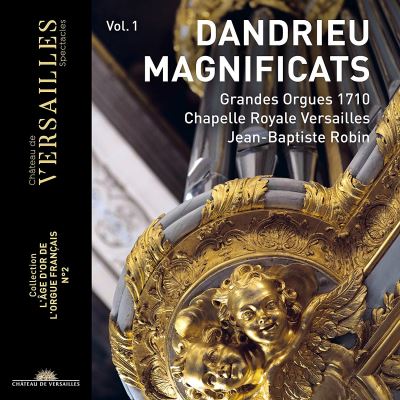
Dandrieu: Magnificats

Dandrieu: Magnificats Vol 1
Jean-Baptiste Robin
Grandes Orgues 1710, Chapelle Royale – Versailles
Chateau de Versailles CVS023. 70’51

The second in the L’âge d’or de l’orgue français series featuring the 1710 organ in the  Versaille Chapelle Royale focuses on Jean-François Dandrieu (1681-1738). From 1721, he was one of the four organists of the Chapelle Royale. He had an early introduction to Court musical life when, aged five, he played the harpsichord to the Palatine Princess Elisabeth-Charlotte of Bavaria, wife of Philippe d’Orléan, Louis XIV’s brother. He succeeded the famed Nicholas Lèbegue as organist of Saint-Merry, Paris in 1704/5. From 1733 he added to these posts the position of organist to the now-demolished St Barthélémy, a role previously held by his uncle and which after his death, was passed on to his daughter. Continue reading

The Sixteen at Christmas

The Sixteen at Christmas
Harry Christophers, Frances Kelly (
harp)
The Anvil, Basingstoke, 4 December 2019

As their 40th anniversary year draws to a close, The Sixteen’s seasonal tour of their ‘Sixteen at Christmas‘ programme stopped by at Basingstoke’s Anvil concert hall for a varied selection of music for Advent and Christmas. Their focus was on traditional medieval and 20th and 21st-century composers, most of the latter influenced by former. Until the Ding dong encore, it avoided all the usual carols of childhood memory. The key piece was the concluding Ceremony of Carols by Benjamin Britten, a sequence of pieces based on medieval texts that he started writing during a 1942 Atlantic crossing. Continue reading

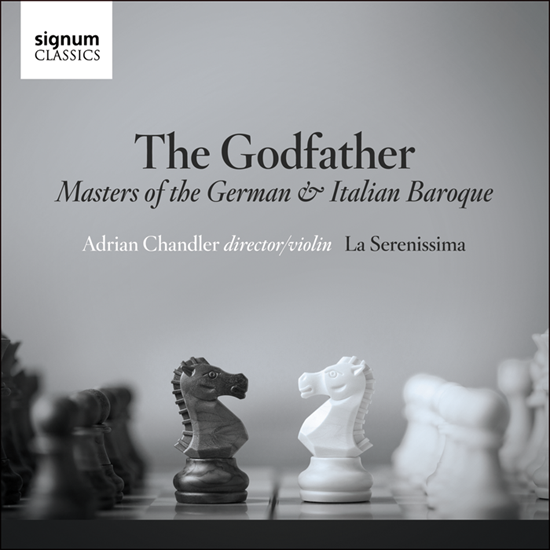
La Serenissima: The Godfather

The Godfather
Masters of the German & Italian Baroque
La Serenissima, Adrian Chandler
Signum Classics SIGCD602. 66’09

For long the undoubted champions of the music of Vivaldi, as their name suggests, La Serenissima are spreading their musical wings to explore the musical triumvirate of Telemann, Pisendel and JS Bach, all three closely connected, together with the composers Fasch, Vivaldi and Brescianello, who also had links with the principal trio. As La Serenissima note on their website, the links are that Pisendel was godfather to one of Telemann’s children; Telemann was godfather to CPE Bach;. JS Bach admired both Pisendel and Telemann and composed for the violinist Pisendel; Vivaldi helped Pisendel with his A minor concerto movement; Fasch was a friend of Pisendel and Telemann, and Pisendel played concertos by Brescianello, an Italian who helped to spread disseminate Italian instrumental music throughout the German-speaking lands. Continue reading

Bach: Violin Concertos

Bach: Violin Concertos
Kati Debretzeni (violin)

English Baroque Soloists, Sir John Eliot Gardiner
SDG732. 70’15

This recording has the makings of becoming an all-time favourite version of the Bach Violin Concertos. Quite apart from the exceptional playing by Kati Debretzeni, we get the bonus of two additional concertos. In addition to the well-known A minor and E major, (BWV 1041/1042) concertos, Kati gives us two others, the disputed D minor (BWV 1052) and the world premiere recording of her own arrangement of the E major harpsichord concerto (BMV 1053), transposed down to D. The detailed programme notes give full details of the rationale and implications of the two additional concertos, and their arrangements for violin. Continue reading

Handel: Aminta e Fillide

Handel: Aminta e Fillide
Fair Oriana
Opera Settecento, Leo Duarte
The Handel Friends
St George’s, Hanover Square, 28 November 2019

It was entirely appropriate that this concert, given under the auspices of The Handel Friends, should take place in Handel’s own church of St George’s, Hanover Square, just round the corner from his surviving home. After 30-minutes of instrumental music and sumptuous interval refreshments (all part of the deal) came an inspirational performance of Handel’s pastoral cantata Aminta e Fillide, performed with the soprano duo Fair Oriana (Angela Hicks & Penelope Appleyard).

Aminta 4.jpegPenelope Appleyard & Angela Hicks (Fair Oriana) Continue reading
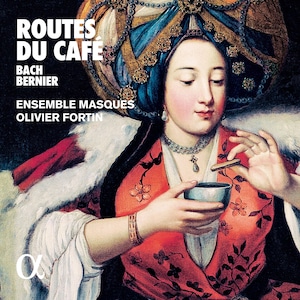
Ensemble Masques: Routes du Cafe

Routes du Cafe
Ensemble Masques, Oliver Fortin

Alpha Classics, Alpha 543. 71’39

Coffee is an essential contribution to the lives of many travelling musicians. This fascinating CD from Ensemble Masques pays musical homage to coffee with two cantatas devoted to coffee, and instrumental music of Turkish origin or influence reflecting it’s origins in Constantinople. The programme is arranged in the form of an Ottoman fasil (suite), the two cantatas contrasted by Ottoman-style improvisations (taksim). We are taken on a tour through the cities of Europe where coffee-culture took hold – Paris, London, Constantinople and Leipzig – the latter, predictably, with Bach’s ‘Coffee’ Cantata Schweigt stille, plaudert nicht, BWV 211.

Continue reading

St Catharine’s College: O Gemma Clarissima

O Gemma Clarissima
Music in Praise of St Catharine
The Choirs of St Catharine’s College, Cambridge, Edward Wickham
Resonus Classics RES10246. 72’02

Quite by chance, I realize that I am reviewing this recording on the Feast of St Catherine, 25 November. The patron saint of wheelwrights, millers, students, and young unmarried girls, the Cambridge college that now bears her name (which they spell ‘Catharine’) was founded in 1473 as ‘Katherine Hall’. The famous torture wheel that she is usually depicted with was, apparently, destroyed by an angel before it touched her, killing many. After her beheading, more angels whisked her remains off to the Mount Sinai monastery, which became and remains a centre of devotion. A monastery in Rouen also became a pilgrimage site after a monk brought back a finger that “broke off” when he prayed for a relic.

Continue reading

Hilliard/Garbarek: Remember me, my dear

Remember me my dear
Jan Garbarek and The Hilliard Ensemble
ECM New Series ECM 2625. 

Remember me, my dearThe 25-year collaboration between four a capella male voices of The Hilliard Ensemble and the Norwegian jazz saxophonist Jan Garbarek is one of the most extraordinary stories in the world of music. Although far from being the first example of cross-over partnerships, it was one of the most innovative. Engineered (in more ways than one) by ECM’s Manfred Eicher, the result was Officium, one of the most influential recordings of recent decades. Two others followed, plus extensive concert touring. After 40 years of performing and recording, The Hilliard Ensemble retired in 2014. Part of their final year of performances were appearances with Jan Garbarek, one of which is the focus of this live recording. Continue reading
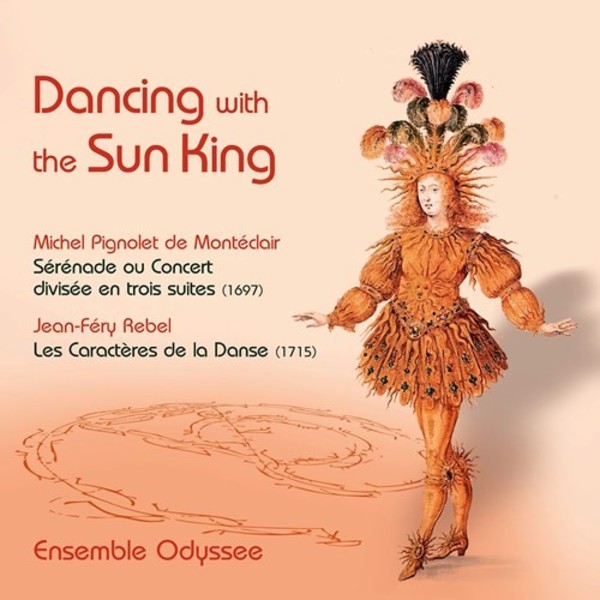
Dancing with the Sun King

Dancing with the Sun King
Michel Pignolet de Monteclair & Jean-Fery Rebel
Ensemble Odyssee
Pan Classics PC10410. 62’20

Dancing with the Sun King | Pan Classics PC10410

Michel Pignolet de Monteclair: Serenade ou Concert divisee en 3 suites
Jean-Fery Rebel: Boutade, Caprice, Les Caracteres de la Danse

For a demonstration of just how colourful French Baroque orchestral music can be, this recording by Ensemble Odyssee of music from the time of Louis XIV can’t be beaten. The bulk of the recording is devoted to the 1697 Serenade ou Concert divisee en 3 suites by Michel Pignolet de Monteclair, one of the lesser-known composers of the period. Separating the three Suites are individual pieces by Monteclair’s contemporary, Jean-Fery Rebel (Boutade Caprice) and the concluding 1715 Les Caracteres De La Danse. Continue reading

J S Bach: Harmonic Seasons

J S Bach: Harmonic Season
Manuel Tomadin
1737 Treutmann organ, Stiftskirche Grauhof bei Goslar, Germany
Brilliant Classics 95786. 79’471

The title of this recording reflects the way the 12 pieces are arranged, reflecting Bach’s own predilection for grouping pieces together in organised sets. In this case, the “Seasons” are indeed “Harmonic”. The four groups of pieces each start with a Prelude and Fugue or Fantasia, and the groups descend in key order through the “perfect, divine triad” from G to E to C, the first major, the subsequent two both in the minor key. The final tonal and harmonic resolution comes with the concluding C major Prelude and Fugue. Continue reading

Lulier: Cantate e Sonate

Lulier: Cantate e Sonate
Accademia Ottoboni, Francesca Boncompagni, Marco Ceccato
ALPHA 406. 54’16


The composer Giovanni Lorenzo Lulier (c1660-1700) has been overshaded by most of his contemporary’s from 17th-century Italy and, on the showing of the music on this recording, the reason seems to be sadly clear. There is a phrase I sometimes use on occasions like this – that a composer has been “plucked from well-deserved obscurity”. I am afraid that it applies here.  Continue reading

Philip Glass Orphée

Philip Glass: Orphée
English National Opera, Geoffrey Paterson
The Coliseum, 15 November 2019

The last of English National Opera’s quartet of operas based on the Orpheus myth was Philip Glass’s 1991 Orphée. As was apparent with the three earlier operas, the story of Orpheus, like all such myths, are open to many different interpretations. Glass used Jean Cocteau’s 1950 film Orphée as the basis for his opera, setting the text of the film to music. Both Cocteau and Glass approached their pieces after the death of close friends/partners, and their telling of the myth hovers between the world of the living and the dead, revealing the perils of artistic self-obsession and immortality. Continue reading