Music-at-Hill – Midtown concerts
Friday 13 September 2019, 1:10pm
St Giles-in-the-Fields
60 St Giles High Street. London, WC2H 8LG
Andrew Benson-Wilson
plays organ music by
Three Westminster Abbey Organists
1668 John Blow; 1679 Henry Purcell;
1695 Blow re-appointed; 1708-1727 William Croft

During the period from 1668 and 1708, Westminster Abbey appointed three distinguished organists, the first of which, John Blow, was the teacher of his two successors, Henry Purcell and William Croft. In 1679 John Blow stepped down from his Abbey post in favour of his talented student, Purcell, only returning on Purcell’s death in 1695. William Croft replaced John Blow after his death in 1708, having previously been organist at St Anne’s Soho and Master of the Children of the Chapel Royal. He is most famed today for his Funeral Sentences, performed at Handel’s funeral in 1759 and at every British state funeral since then.
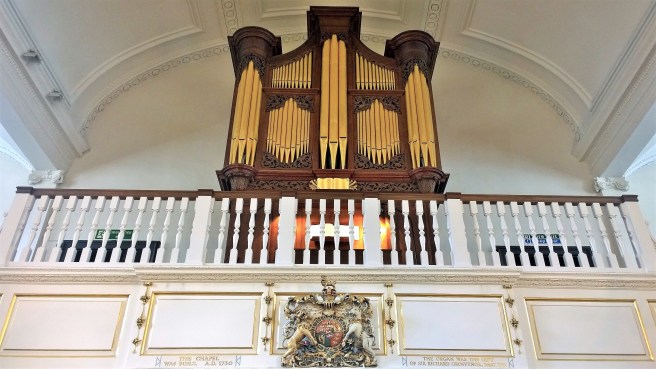
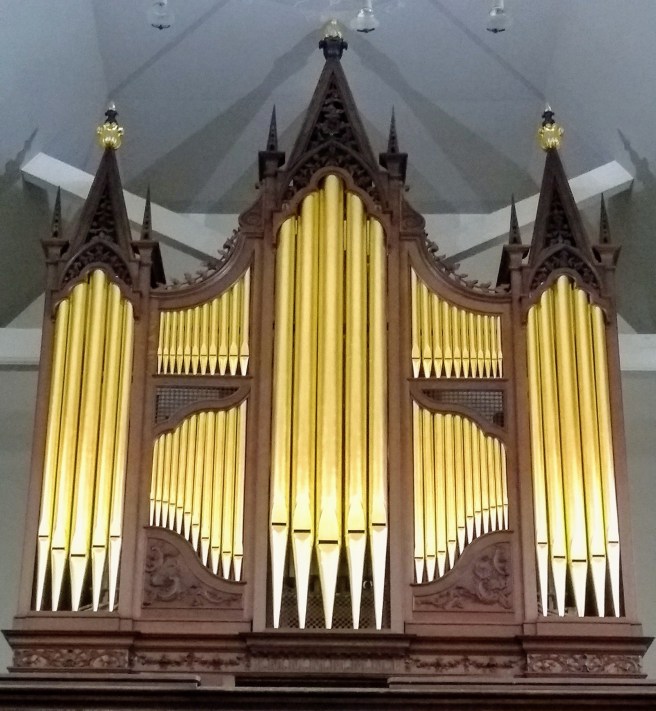
William Drake’s reconstruction of the Dallam/Smith/England/Lincoln/Gray & Davison organ in St Giles-in-the-Fields is one of London’s most important historic musical instruments. It contains some of the oldest pipework in London, going back to the time of Blow and Purcell in the mid to late 17th century.
Organ information can be found here.
Free admission, retiring collection.
The church is just behind Centre Point/Tottenham Court Road tube station.













 Andrew Benson-Wilson : Early Music Reviews +