The Italian Job
Baroque Instrumental Music from the Italian States
La Serenissima, Adrian Chandler
Rachel Chaplin and Gail Hennessy, oboes, Peter Whelan, bassoon
Avie AV2371. 76’23
Music by Albinoni, Caldara, Corelli, Tartini, Torelli, and Vivaldi
 For the past year La Serenissima have been performing a series of concerts based on music from different cities in Italy. This CD, recorded in St John’s, Smith Square after one such concert, forms a summary of the extraordinary music from that concert series. the cities, and composers, represented are Venice (Albinoni, Caldara, Vivaldi), Bologna (Torelli), Padua (Tartini) and Rome (Corelli). Apart from some glorious music, one of the features of this recording is the instrumental colour, with prominent roles for oboes, bassoons, trumpets, trombone, timpani and strings. Continue reading
 can vividly remember the first time I heard Matthew Wadsworth playing, in 1999, in the bowels of the Royal Academy of Music, during the debut of what was then a student group, all four of whom (Kati Debretzeni, Alison McGillivray, Matthew Wadsworth, and Robert Howarth) have gone on to achieve prominence in the world of music. This CD stems from an overheard comment at a late night gathering of friends, when somebody searching through CDs commented “I need lute, late night lute”. In the intervening years, the frequency of invitations to present late night lute concerts reinforced the feeling that there was indeed something of the night about lute music.
  For a British musician, now is a very good time to be reminded of the extraordinary contribution that immigrant musicians have made to our musical history, from at least the early 1500s. This CD reflects that in at least two ways. Giovanni Stefano Carbonelli was born in Liverno in 1694. Although supposition that he studied with Corelli seems ill-founded, he certainly absorbed and developed Corelli’s style. He moved to England in, or just before 1719, possibly at the invitation of John Manners (then Marquess of Granby, and soon to become the 3rd Duke of Rutland), who was to be his only known patron in England. Almost immediately on his arrival Carbonelli became leader of the Drury Lane Theatre orchestra, a post which also involved performing concertos and sonatas. In 1735, like many of his fellow Italian immigrant musicians, he anglicised his name, in his case to John Stephen Carbonell.
  This recording features the music I heard in the second half of the concert reviewed
  Harpsichordist Catalina Vicens’ new CD ticks a lot of boxes. Firstly, it is recorded on the world’s oldest playable harpsichord, built in Naples c1525, and now housed in the National Music Museum of Vermillion, South Dakota, USA, where it has been recently restored. Secondly, her programme of 24 pieces represents the wide range of musical styles of the period of the instrument, played with a compelling sense of musical and period style. And, thirdly, it comes with the bonus of an imaginative story (downloadable as an audiobook) by Catalina Vicens, based on the instrument and “inspired by music, history and legends”.
  During this 450th Monteverdi anniversary year there will be many performances and recordings of the 1610 Vespers. But for this ‘not the 1610’ recording, I Fagiolini have reconstructed a Vespers service inspired by a Dutch tourist’s 1620 record of hearing Monteverdi direct a Vespers on the Feast of the Nativity of John the Baptist. The psalms and the plainchant on this recording are from that feast, using music by Monteverdi and his contemporaries. The Monteverdi contribution comes from his Selva morale e spirituale, published in 1641, but containing music written much earlier. Whereas the 1610 Vespers are intended for feasts of the Virgin or other female saints, the 1641 collection contains psalms for feasts of male saints.
  This recording is based on the fact that Sir Francis Drake is known to have taken four viol players with him on his 1577-80 circumnavigation of the world, using the musicians for prayers and entertainment on board, and for diplomatic uses with the people they met. He also had trumpeters and drummers, but they are excluded from this recording, which takes as its premise the sort of music that the musicians might have played to the people they met, and also to their friends on their return to England, using their memory of the native music that they heard during their travels. Alongside music of the period by the likes of Parsons, Taverner, White, and Picforth, the principal musical contribution comes from Orlando Gough (b 1953) who was commissioned by Fretwork to compose a sequence of 13 pieces for viol consort based on the local music that Drake and friends might have heard.
 The Masque was a form of aristocratic entertainment with medieval roots that reached its English peak in the early 17th century during the reigns of James I and Charles I. Closely related to similar continental forms such as the Italian Intermedio, it included music, dance, acting, mime and singing, often to elaborate sets. They were usually based on Classical mythology combined with more than a hint of current political or royal intrigues. As well as professional performers, the promoters or subjects of the masque were often also involved in the production. For many years, Elizabeth Kenny and her group Theatre of the Ayre have studied the genre, and this is their latest manifestation of that research.
  For many years the only way to hear French Baroque music performed with any degree of authenticity was by listening to French performers. Although that is still the case to an extent, the level of understanding of French performing techniques has become far better known throughout the world. One example is the series of recordings from Budapest from the Orfeo Orchestra and Purcell Choir under their founder and director György Vashegyi. I reviewed their CD of Mondonville’s Grands Motets
  Having been not entirely enthusiastic about
 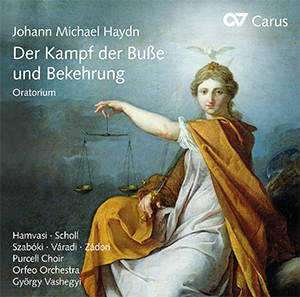 Despite being a lesser-known work by a lesser-known composer, the oratorio Der Kampf der Buße und Bekehrung (The Struggle for Penance and Conversion) is well worth getting to know. It is the second, and only surviving part, of a three-part oratorio, each part written by a different composer – not unusual in the fast-paced musical world of Salzburg at the time. The reason was the arrival of three sopranos bought back from Italy by the Archbishop of Salzburg in 1768. A piece was quickly required to show off their musical talents and, because of the lack of time, three composers agreed to compose a part of the libretto. Johann Michael Haydn (the younger brother of Joseph) took the central part, and this oratorio is the result.
 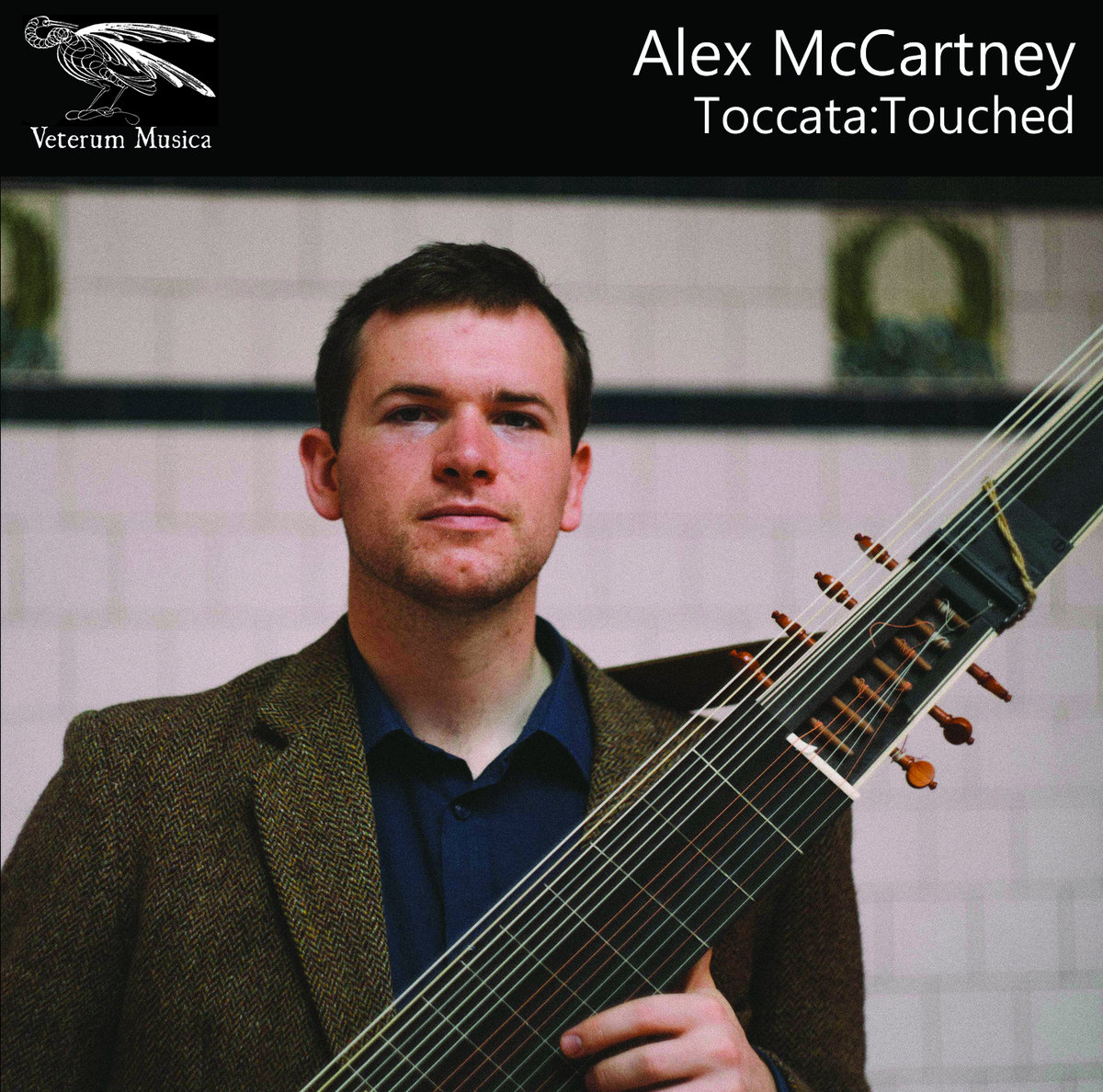 This recording is clearly something of a labour of love, albeit a rather short one, at just 45’27. Giovanni Girolamo Kapsberger (c1580-1651) was the son of an Austrian colonel, and was possibly born in Venice. He spent much of his musical life in the household of Cardinal Barberini in Rome (alongside Frescobaldi, amongst others) where he quickly built a reputation for virtuoso theorbo playing. To what extent his published theorbo pieces reflect his live performances is unclear, but they are sometimes frankly rather odd, not least with his unconventional use of rhythm and harmony. Contemporary commentators hinted strongly that his compositions were not as good as his performances.
  The link between music and archaeology is a comparatively new field of study, helped in recent years by the enterprising
  The Baldwin Partbooks were copied in the 1570s and 80s by a member of the choirs of St George’s Windsor and the Chapel Royal, John Baldwin. They included printed pieces as well as Baldwin’s manuscript copies of music, from an earlier age, resulting in one of the most important surviving collections of polyphony from the reigns of Henry VIII and Mary Tudor. This, combined with a focus on music dedicated to the Virgin Mary, is the focus of the music on this volume, the second in the Contrapunctus series on music of the Baldwin Partbooks (the first was In the Midst of Life, SIGCD408).
  his recording stems from a series of semi-staged performances in Cleveland and New York in March 2016. Videos of extracts of a live event can be viewed
  The catchy title of this recording (which quotes a 1688 pamphlet) is based a brief, but curious, incident during the turbulent Tudor times when, in April 1555, it was announced that Queen Mary had given birth to a son. The following day this was revealed to be the 16th century version of fake news. The complex history and importance of this event is beyond the scope of this review, but is easily obtainable and is covered in the detailed CD notes. Curiously, no author is credited for these notes, although I think it was Magnus Williamson, whose ‘insight and guidance’ is a credited elsewhere.
  Preceding the two recordings of Handel in Italy (reviewed
  Some 28 years after their famed 1988 Archiv recording (made under studio conditions in Snape Maltings), the Monteverdi Choir and English Baroque Soloists return to the St. Matthew Passion. This extraordinary piece can evoke enormous emotional responses, regardless of the religious views of the listener. I vividly remember taking my young daughter to a performance of their 1988 Matthew, sitting in the front row, and watching the bass player just a few yards away gently shedding tears as she played. For this version, on their own label, they opt for a live recording, made in Pisa Cathedral during the Anima Mundi Festival as the culmination of a six-month tour.
 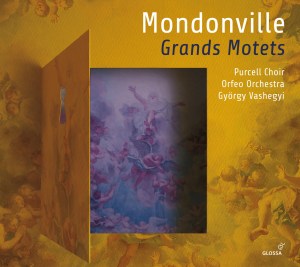 Jean-Joseph Cassanéa de Mondonville (1711-1772) was born in Narbonne in the south-west of France. He moved to Paris in 1733 and almost immediately came under the patronage of Madame de Pompadour, joining the Concert Spirituel and the Chapelle Royale as a violinist. Although continuing is career as a violinist, he soon rose through the musical ranks (becoming director of the Concert Spirituel and Maître de musique de la Chapelle) and also became famed as a composer of opera and sacred music. Although never quite reaching the musical heights of his predecessors Lully and Rameau, his compositions reflect the changing mood in the middle third of 18th century France.
  Jean-Joseph Cassanéa de Mondonville (1711-1772) was born in the south-west of France to an aristocratic family whose fortune was in decline. He moved to Paris in 1733 and almost immediately published a volume of violin Sonatas. He initially came under the patronage of Madame de Pompadour and also joined the Concert Spirituel and, later, the Chapelle royale. The first of his 17 grands motets was performed at around the same time. In 1734, this Opus 2 set of six Trio Sonatas was published. The quality and technical virtuosity of the writing for the two violins says a lot about his own abilities as a violinist. Extensive use of double stops for both players are just the start of it.
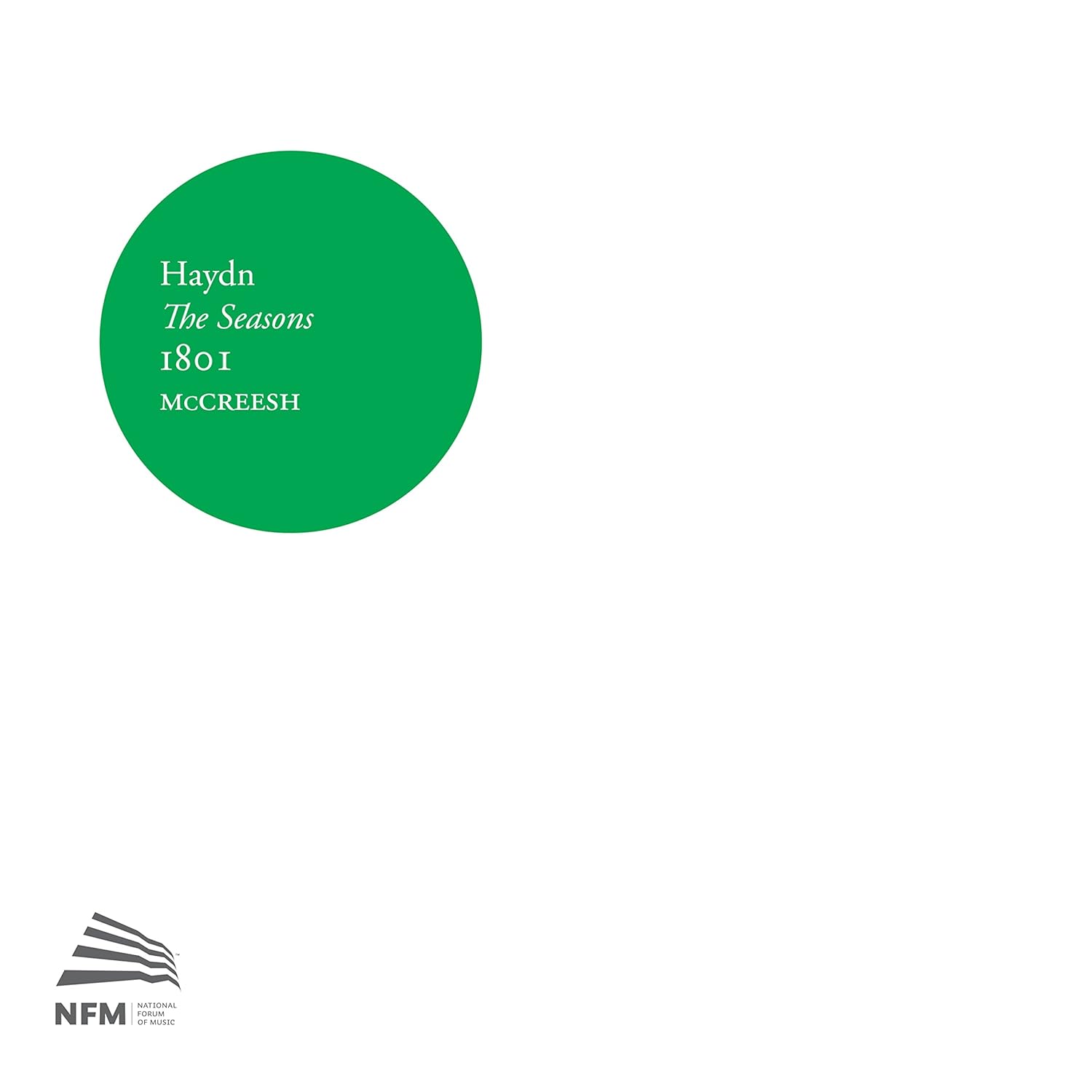 their 1994 reconstruction of a Lutheran Christmas recorded with massed forces in Roskilde Cathedral, the latter chosen because of its important historic organ. In recent years they have built close connections with the National Forum of Music in Wroclaw, Poland. This much heralded recording of the 1801 version of Haydn’s The Seasons is the latest of those collaborations. The opening thunderous wallop on the timpani will warn you that this is a recording of some drama and punch. Using a new performing edition (and English translation) by Paul McCreesh this is the first recording to feature the large orchestral forces that Haydn called for in some of the early performances, with a string section of 60, 10 horns and a choir of 70, using the combined forces of the Gabrieli Consort & Players, Wroclaw Baroque Orchestra and National Forum of Music Choir.
 As the subtitle suggests, In Nomine explores how the concepts of heaven and hell were portrayed in Europe during the transition between the Renaissance and Baroque period. Its publicity suggests that it “plunges into a demonic world of evanescent dreams and telluric rumblings and then, as a counterpoint, whisks us up to the celestial heights of hope, salvation and the sublime…“. The result is something of a musical pot pourri, jumping from track to track and style to style with little sense of linking cohesion and with some alarming pitch and key changes between tracks. It jumps from music clearly intended for performance in church, and pieces that equally clearly were not.
 If you can listen to the first two tracks of this recording without being smitten by the extraordinary musical and emotional power, you are probably on a different musical planet to me. The richly sonorous and harmonically intense opening chorus (a Responsory for Holy Week) segues straight into the opening section of the Passio Secundum Johannem. The orchestral introduction is a glorious harmonic construction, leading to the evocative voice of mezzo-soprano Giuseppina Bridelli, singing the role of Testo (the Evanglelist).
  Girolamo Frescobaldi is one of the most important composers of the transitional period between the late Renaissance and the early Baroque. His keyboard music and his written performing instructions form the bedrock of the 17th century Baroque style, in particular the Stylus phantasticus that dominated the musical style in Italy and Germany. Through pupils like Froberger and other disciples, his music spread throughout Europe and influenced composer, including Bach and his North German organ composer predecessors like Weckmann, Tunder and Buxtehude and English composers like John Blow.
  This recording does exactly what it says on the cover, recreating an imaginary books of vihuela duets in the style and manner of the sole surviving example of such a collection. There are many examples of music for two lutes from the 16th century, but only one for two vihuelas. To make up for that omission, Ariel Abramovich and Jacob Heringman have joined forces to arrange a variety of pieces for two vihuelas in the style of the mid-16th century.
 During the 18th century, Iberian churches often adopted the earlier Italian plan of having two organs, each in (usually) identical architectural cases positioned on balconies and speaking towards each other across the choir. The practice has its roots in St Mark’s Venice in the 16th century. Clérigos Church in Oporto is one such example, its two organs dating from 1779 with major restorations in 1864. Rather like French organs, organ building in the Iberian peninsula reached a technical peak in the 18th century at a time when the music written for the organ was experiencing something of a decline. This CD reflects both those aspects; of organ building and composition.
  osé Luis González Uriol is one of the most influential Iberian organists and teachers, and this recording is a homage to him, and also to the organ in the Monastery of São Vicente de Fora, Lisbon, built by João Fontanes de Maqueira in 1765, and restored in 1994 as part of Lisbon’s European City of Culture celebrations. Unusually for organs, it had survived virtually unaltered since it was built, and retains 98% of its original pipework. The recording was made on 17 October 1994, just after the opening of the restored organ in a recital by González Uriol. A combination of factors, including the death of the recording producer Joaquim Simões de Hora (who was also heavily involved in the restoration project), meant that the recording has never been released until now.
  The St John’s, Smith Square Young Artists scheme gives emerging soloists and ensembles a platform to showcase their talents through three SJSS concerts, a chance to commission new music, and opportunities to develop skills in marketing, education and outreach. The latest batch of six (for the year 2016/17) includes the recorder quartet Palisander. They already seem pretty adept at marketing, and took the opportunity of the first of their three concerts (given under the title Antidotum Arachne) to launch their debut CD, Beware the Spider!.
  Andrew Benson-Wilson : Early Music Reviews +