Byrd 1588

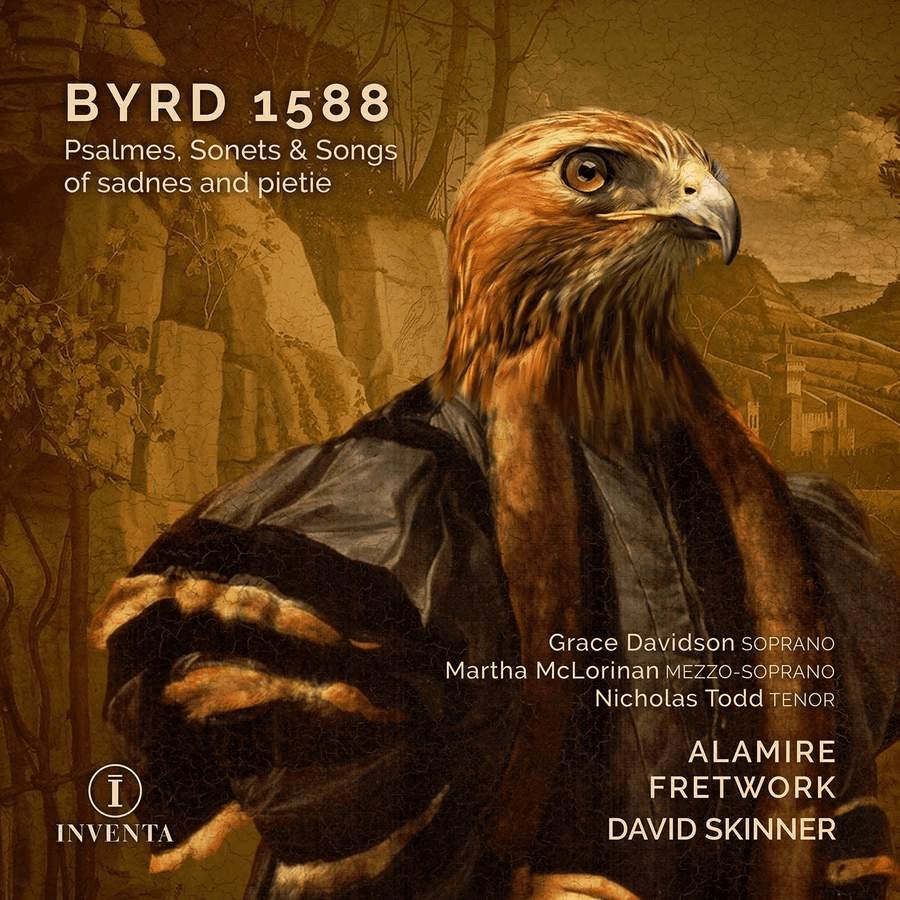
Byrd 1588
Psalmes, Sonets & Songs of sadnes and pietie
Alamire, Fretwork, David Skinner
Inventa Records INV1006. 2CDs, 78’54 + 78’20


The 1588 Psalmes, Sonets, & songs of sadnes and pietie was William Byrd’s first solo publication after the Cantiones Sacrae of 1575, a joint venture with Thomas Tallis. This recording is also a joint venture between the chamber choir Alamire and the viol consort Fretwork. It was recorded, appropriately, in the isolated church of All Saints’ Church, Holdenby, in Northamptonshire, the only surviving relic of a village that was moved by Sir Christopher Hatton, Elizabeth I’s Lord Chancellor and the patron of the 1588 collection, when he built (in 1583) the nearby Holdenby House, itself now reduced to a few remnants from its initial grandeur as one of the largest houses in the country.

Continue reading

Fantasie: Joana Amorim

Fantasie
G. Ph. Telemann (1681-1767): 12 Fantasias for Flute Solo
Joana Amorim, flute
Veterum Musica, VM028. 55’26

Telemann published his 12 fantaisies à traversière sans basse (TWV 40:2–13) in Hamburg in 1732/3. It was one of a series of four sets of fantasias for unaccompanied instruments that he published between 1732/5: 36 for harpsichord and two sets of 12 each for violin and viola da gamba. This new recording from Veterum Musica features the Portuguese flautist Joana Amorim in an impressive interpretation of these delightful miniatures that feature practically every musical idiom of the period.

Continue reading

Regnart: Missa Christ ist erstanden

Jacob Regnart: Missa Christ ist erstanden
with Missa Freu dich, du werthe Christenheit and motets
Cinquecento
Hyperion CDA68369. 64’45

Jacob Regnart (c1540-1599) is one of the lesser-known Flemish born composers who dominated European music during the 16th-century. Born in Douai, he soon moved to Prague, singing in the Habsburg Holy Roman Emperor Maximilian II’s Hofkapelle. His career remained within the Hapsburg realms, rising through the ranks under three successive Hapsburg rulers. He spent several years in Innsbruck in the court of Maximilian’s brother Archduke Ferdinand II, where much of his sacred music seems to have been composed, although it was not published until after his death. Those works include the two Mass settings included on this excellent recording from Cinquecento (Terry Wey, countertenor, Achim Schulz & Tore Tom Denys, tenors, Tim Scott Whiteley, baritone, and Ulfried Staber, bass).

Continue reading

See, See, the Word is incarnate

See, See, the Word is incarnate
Choral & Instrumental music by Gibbons, Tomkins & Weelkes
The Chapel Choir of Trinity Hall, Cambridge,
Newe Vialles, Orpheus Britannicus Vocal Consort, Andrew Arthur

Resonus Classics RES10295. 70’51

The Chapel Choir of Trinity Hall, Cambridge, under the College’s Director of Music, Andrew Arthur, follow their previous recording of Buxtehude (reviewed here) with this exploration of some of the best-known music from the early decades of the 17th-century. This was the period when James I was on the throne of the two kingdoms of Scotland and England. Gibbons and Weelkes were both dead by the end of his reign (in 1625), but Tomkins (the first-born of the three) lived on until 1656 to witness, at considerable personal loss, the collapse of the Stuart dynasty and the Commonwealth.

Continue reading

Buxtehude: Trio Sonatas Op.2

Buxtehude: Trio Sonatas Op.2
Arcangelo
Alpha Classics ALPHA738. 71’25

cover

This is the second recording of Buxtehude Trio Sonatas from Arcangelo (Sophie Gent, Jonathan Manson, Thomas Dunford and Jonathan Cohen). Their early Opus 1 disc is on ALPHA 367. The second set of Trio Sonatas was published in 1696. As with the first, it demonstrates the wide range of international influences in Lübeck at the time.

Continue reading

The Myth of Venice

The Myth of Venice
16th-century music for cornetto & keyboards
Gawain Glenton & Silas Wollston
Delphian DCD34261. 61’50

In a very successful bit of promotional branding, medieval Venice built a perception of itself as La Serenissima (“the most serene”) and the successor of ancient Rome, with a similarly impressive range of foundation myths and ceremonials, that led historians to reference as the Myth of Venice. The myth was largely supported by its architecture, then as now a draw for visitors from around the world. This recording, The Myth of Venice explores the musical development of the Myth of Venice, exploring the 16th-century Venetian composers and performers who helped to put Venice on the musical map. Their starting point is Adrian Willaert’s arrival in 1527 on to the end of the century, with composers including Parabosco, Padovano, Merulo, Andrea Gabrieli, Bellavere, Ganassi and Bassano.

Continue reading

Continuo Foundation: 2021 projects

Continuo Foundation
A video resume of eight of the 2021 grant-aided projects

Ensemble Hesperi perform with Soprano Angela Hicks

The Continuo Foundation (reviewed here) has published a whistle-stop video tour of eight of the 37 projects that were supported by their 2021 grants, with short extracts from the full concerts all of which were live-streamed on the OnJam platform. Tickets to watch the full films can be purchased until the end of January 2022 (links below). The ensembles featured are Joglaresa, The Mozartists, Ensemble Hesperi (pictured above), Boxwood & Brass, Consone Quartet, Palisander, Spiritato Baroque & The Marian Consort, and La Nuova Musica.

Continue reading

Monteverdi Vespers

Monteverdi Vespers
L’Arpeggiata, Christina Pluhar
Tue 14 Dec 2021, Barbican Hall

Monteverdi’s monumental 1610 Vespro della Beata Vergine is now considered mainstream repertoire, but it was unusual to hear it performed alongside the inevitable sequence of Messiah’s in the run-up to Christmas. It was equally good that, amongst the current complicated Anglo-French relations, London could welcome the French group L’Arpeggiata and their founder/director Christina Pluhar. Current Covid and travel issues meant that they were rather more Anglo than usual, with several UK musicians drafted in at short notice to replace those unable to travel. The concert took place live on 14 December in the Barbican Hall, but was also available to stream live, which is how I saw the performance.

Continue reading

Eva Saladin: The Di Martinelli Collection

The Di Martinelli Collection
Violin sonatas of the late 17th century
Eva Saladin, violin
Glossa Music GCD 922521
. 69’07

This excellent debut recording from the Swiss-Dutch violinist Eva Saladin features a selection of pieces from a manuscript of 32 late 17th-century violin sonatas, dating from the years around 1690, found amongst the 65 manuscripts and 32 prints of the Di Martinelli Collection in the archives of the University of Leuven. The pieces are of various origins, with a focus on three regions, the Flemish-Netherlands, South German & the Habsburg regions, and Italy. The collection was put together by members of the Italian di Martinelli family, who had settled in present-day Belgium. These violin sonatas seem to be connected with the second generation di Martinelli, Guillelmus Carolus, a violinist and singing master based in Diest, in Brabant.

Continue reading

The Ghost in the Machine

The Ghost in the Machine
Emily Baines, recorders, Amyas

First Hand Records FHR 113. 62’41


The launch concert on Wednesday 15 December has been cancelled.
It will return in the New Year

It has long been the case that many ‘early music’ recordings and performances are preceded and supported by a considerable amount of research by the performers. This recording from Amyas is one particularly interesting example. It is based on 10 years of research by Emily Baines (culminating in her doctorate) into the evidence of 18th-century performance style found in mechanical musical instruments of the period, such as barrel organs and musical clocks with tiny organs inside them.

Continue reading

Krebs: Keyboard Works Vol 1

Johann Ludwig Krebs: Keyboard Works Vol 1
Steven Devine, harpsichord
Resonus Classics RES10287. 72’0
)

Partita in A minor, Krebs-WV 825
Fugues in C major, E major, F major, F minor, G major, and A minor, Krebs-WV 843/848
Concerto in G major “in Italiänischen Gusto”, Krebs-WV 821

Johann Ludwig Krebs (1713-1780) is another of those overlooked composers, despite there being a large amount of surviving music. He is probably best known as Bach’s favourite organ pupil, and the focus (reflected in the CD cover photo) of Bach’s comment Er ist der einzige Krebs in meinem Bache – “He is the only crayfish (Krebs) in my brook (Bach)”, a reference to Krebs’ ability as an organist, rather than being the only Krebs pupil as Bach also taught Krebs’ father. His music falls into a slightly awkward gap between the High Baroque style of late Bach and the new Galant and Classical styles that rendered much of ‘Old Bach’s’ music out of date.

Continue reading

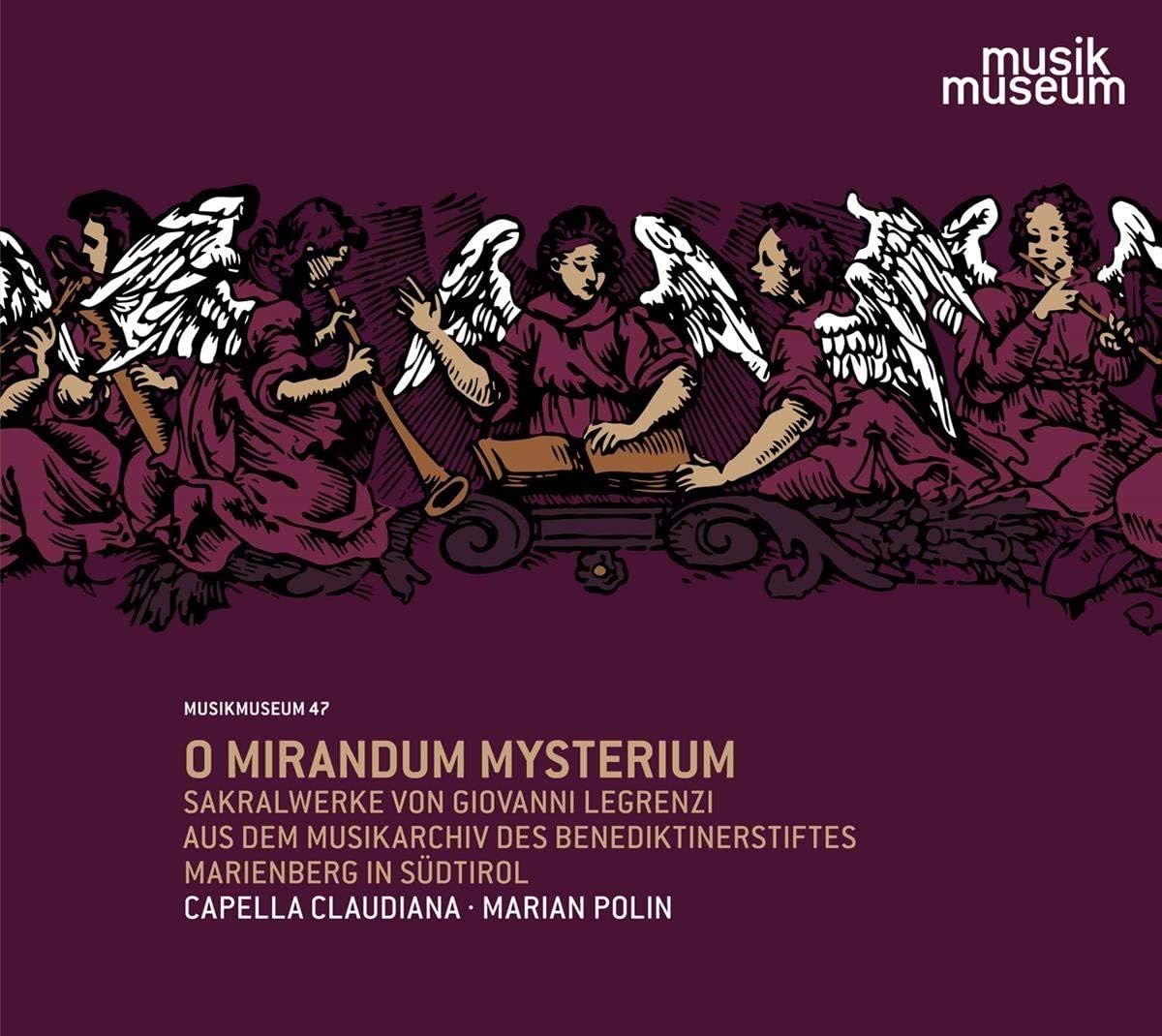
Capella Claudiana: O Mirandum Mysterium

O Mirandum Mysterium
Sacred works by Giovanni Legrenzi from the music archive of the
Benedictine monastery in Marienberg in South Tyrol

Capella Claudiana, Marian Polin
Tiroler Landesmuseen. Musikmuseum 47, CD13046. 52’00

Although Giovanni Legrenzi (1626-1690) was well known in his own lifetime, he is one of those frequent composers whose name and music is almost unknown today. In Legrenzi’s case, he is probably only known through Bach’s youthfully flamboyant organ Fugue “on a theme of Legrenzi”, although this is either based on a lost Legrenzi work or one that is not a by Legrenzi at all. This compelling recording should help to bring him to the attention of a much wider audience. It is based on music by Legrenzi found in the remarkably wide-ranging musical archive of the remote Marienberg monastery in Vinschgau in the South Tyrol.

Continue reading

Pachelbel: Organ Works, Vol 1

Pachelbel: Organ Works, Vol 1
Matthew Owens
1965 Frobenius Organ, The Queen’s College Chapel, Oxford
Resonus RES10285. 71’03

In what promises to be a comprehensive survey of Johann Pachelbel’s organ music, Matthew Owens explores what is probably this enigmatic composer’s least appreciated genre. Pachelbel (1653-1706) was based in South Germany at a time when the famous North German organ school was at its height – he died a year before Buxtehude. His music has been overshadowed by his contemporaries in the northern cities, and this series of recordings should do much to rekindle knowledge of his specific musical style. It will hopefully put to rest his unfortunate post-1970s reputation as the composer of the famous Canon – a piece that is hardly ever performing in a style that Pachelbel would remotely recognise.

Continue reading

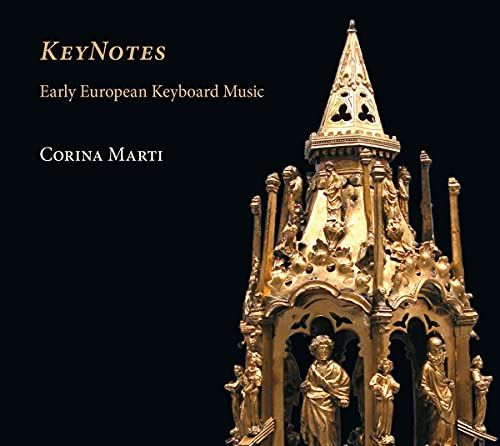
Key Notes: Early European Keyboard Music

Key Notes
Early European Keyboard Music

Corina Marti
Outhere/Ramee RAM 1916. 65’54

Keynotes. Early European Keyboard Music

It is many decades since keyboard music was assumed by many to have started with Bach. This recording offers a chance to explore a little-known repertoire of music for organ and other instruments dating from the medieval period. The recording draws on manuscripts such as the Buxheimer Orgelbuch, Lochamer Liederbuch, Ileborgh Tablature, and the Montpellier, Robertsbridge, Las Huelgas, and Faenza codices. Many of the pieces are arrangements (or intabulations) of pre-existing music by, for example, Pierre des Molins, Giovanni da Firenze, Philippe de Vitry, Francesco Landini and Jacopo da Bologna. The instruments used are a metal-stringed clavisimbalum, a gut-stringed claviciterium, two portative organs and the 1730 organ in Nicolaikirche in Altenbruch in northern Germany which contains pipework from the original 1501 organ.

Continue reading

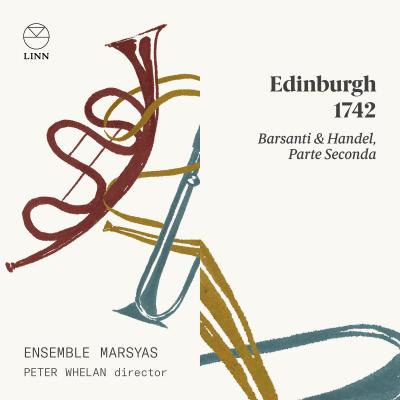
Edinburgh 1772: Barsanti & Handel Parte Seconda

Edinburgh 1742: Barsanti & Handel Parte Seconda
Ensemble Marsyas, Peter Whelan

Colin Scobien, Elizabeth Kenny
Linn CKD 626. 51’51

CKD626 Cover

The Italian Francesco Barsanti (c1690-1775) arrived in London in 1723 and moved to Edinburgh in 1735 to join the Edinburgh Musical Society. This is a follow up to the 2017 recording by Ensemble Marsyas, CDK 587 (reviewed here), and completes Barsanti’s set of Op.3 Concerto grossi, together with four pieces from his Collection of Old Scots Tunes, both published in 1742. Barsanti’s connection with Handel is represented by the latter’s Overture to Atalanta, HWV 35, a piece in the possession of the Edinburgh Musical Society.

Continue reading

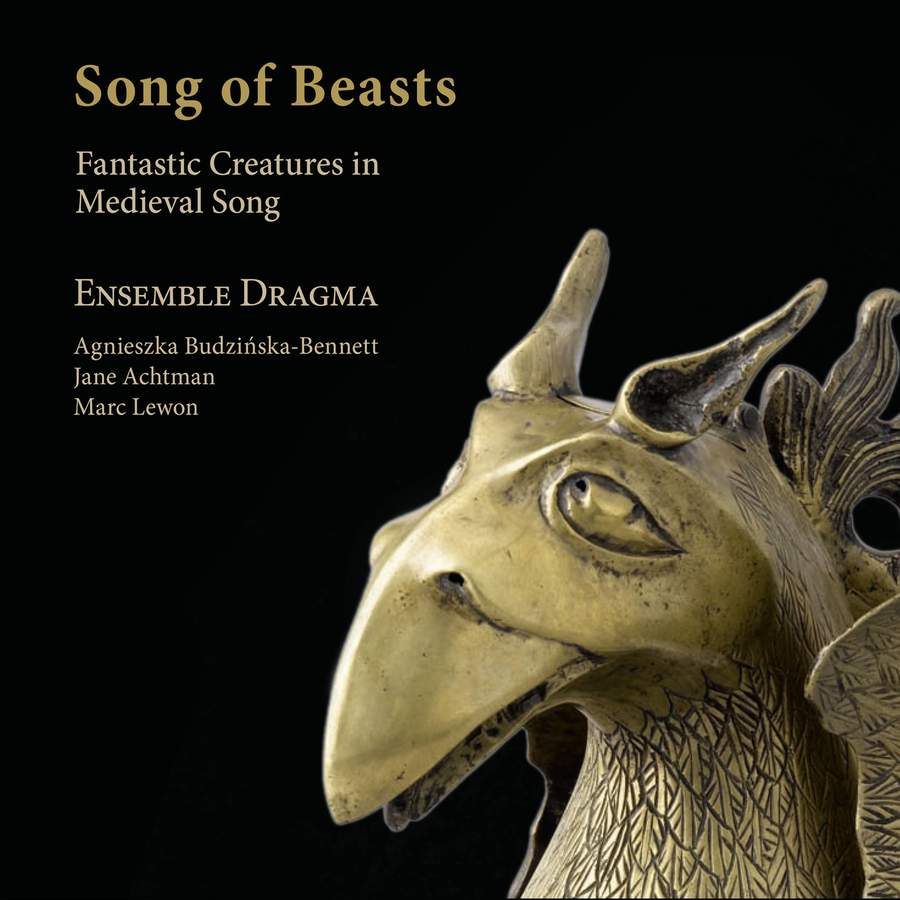
Song of Beasts

Song of Beasts
Fantastic Creatures in Medieval Song
Ensemble Dragma
Ramée RAM 1901. 52’15

This is the musical equivalent of medieval bestiary, depicting in sound the animals and mythical beings that populate medieval manuscripts in a fascinating sequence of Italian and French ballate and madrigali from 14th and 15th century composers. Ensemble Dragma‘s CD is accompanied by a full-length film of illustrations from medieval manuscripts.

Continue reading

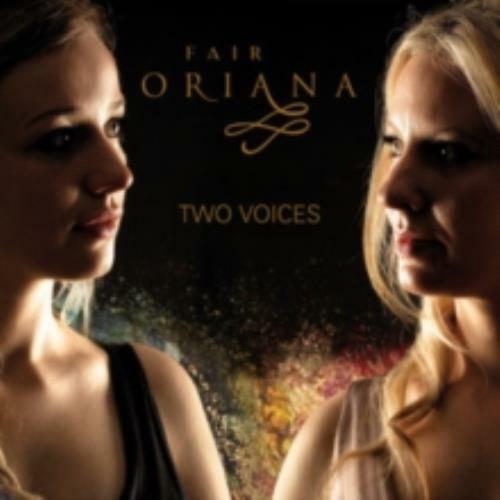
Fair Oriana: Two Voices

Fair Oriana: Two Voices
Angela Hicks & Penelope Appleyard
VOCES8 records: VCM 134. 68’14

Image 1 - *PRE-ORDER* FAIR ORIANA: TWO VOICES (CD.)

Two Voices is the debut recording from the soprano duo Fair Oriana (Angela Hicks & Penelope Appleyard). It is described as “a unique, diverse collection of beguiling chamber music from renaissance to baroque, with splashes of folk, medieval and contemporary influence along the way”. The pieces are divided into four volumes, exploring the sentiments of happiness in love, intrigue and teasing in love, passion, and the loss of love. As well as all twelve of Thomas Morley’s 1595 a capella ‘Canzonets to Two Voices’, there are other pieces drawn from Fair Oriana’s’ concert programmes together with specially commissioned pieces from contemporary composers Fraser Wilson and Owain Park.

Continue reading

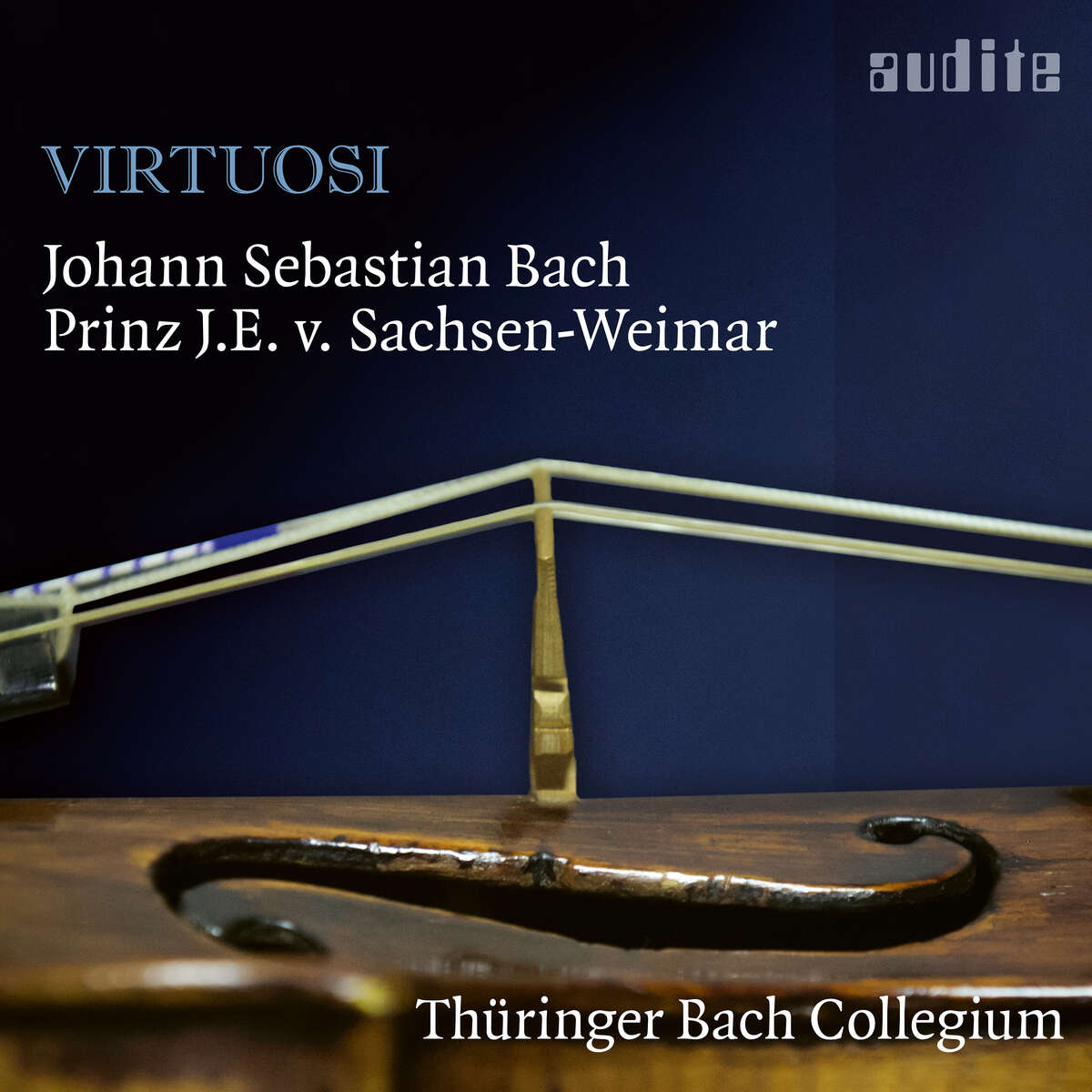
Virtuosi

Virtuosi
Johann Sebastian Bach & Prinz J E v. Sachsen-Weimar
Thüringer Bach Collegium, Gernot Süßmuth
audite 97.790. 66’54

The Thüringer Bach Collegium are based in Arnstadt, home to various Bachs since 1620 and one of five Thuringian towns associated with the young Bach. In 1703, at just 18 years old, Bach (then a court musician in the chapel of Duke Johann Ernst III in Weimar) was asked to check the new organ of the Arnstadt Neue Kirche and was soon after was appointed as organist. He stayed for four years, apparently “confusing” the congregation with his harmonisation of the chorales and running into probems with singers and the church authorities, culminating in his famous 1705/6 walk to hear Dieterich Buxtehude in Lübeck, overstaying his approved absence by several weeks. 

He then moved briefly to Mühlhausen (and was succeded by his cousin Johann Ernst Bach) before returning to Weimar as organist and director of music where he met the young music-loving, and tragically short-lived, Prince Johann Ernst IV of Sachsen-Weimar, nephew of the reigning Duke and a pupil of bach’s cousin, Johann Gottfried Walther. Bach knew the young prince’s compositions and arranged some of his Italian-influenced concertos for keyboard. The Thüringer Bach Collegium’s debut recording was of some of the concertos of the Prince.

This recording feature two examples of Bach’s organ versions of Johann Ernst’s composition, the three-movement Concerto for Organ in G, BWV592 and the short Concerto, BWV595. Although most of the recording was made in the Oberkirche rather than the Bachkirche (formally the Bonifaziuskirche or Neue Kirche), I am told that the organ pieces were recorded in the Bach church, although there is no indication in the CD notes to confirm that. The Bachkirche organ has changed a lot since Bach’s days, but has its roots in the 1703 organ with the case and some of the pipework that Bach knew. It is far closer to the sound world of Bach than the 1902 Sauer in the Oberkirche. Jörg Reddin plays with clarity and precision.

The other organ piece is an Allegro from Walther’s Concerto in D minor, an arrangment of a piece by Torelli. The young Prince is represented by a reconstruction of violin concerto. The remaining Bach pieces put the soloists of the Thüringer Bach Collegium through their paces – Gernot Süßmuth, David Castro-Balbi & Raphael Hevicke, violins, and, in particular, oboist Clara Blessing.

One of the problems with this recording is the availability of all the pieces on other recordings, performed, dare I say, by rather more sophisticated ensembles. The playing here has a rather rustic quality, with punchy rhythms and forceful playing. The recorded sound adds to the boldness of the performance with a very close acoustic image, as though you are sitting in the front pew of the church. A promotional video can be viewed here.
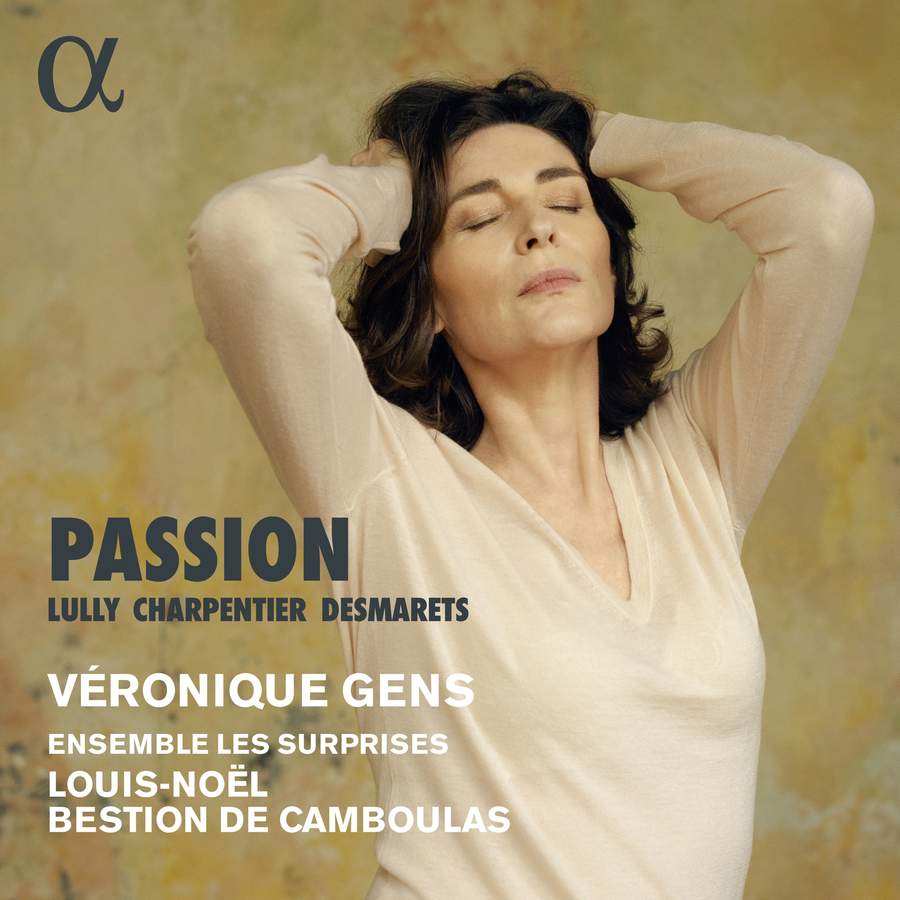
Véronique Gens: Passion

Passion: Lully, Charpentier, Desmarets
Véronique Gens
, Ensemble Les Surprises, Louis-Noël Bestion de Camboulas
Les Chantres du Centre de Musique Baroque de Versailles
ALPHA 747. 57’12

This recording showcases soprano Véronique Gens in the form of a five Act “opera imaginaire”, based on the repertoire of two of the greatest divas of the 17th-century Paris Opera: Mlle Saint-Christoph (her first name is not known) and her successor Marie Le Rochois. They both dominated the Paris opera scene between 1675 and 1698. Concentrating principally on the music of Jean-Baptiste Lully, we also hear music from operas by Marc-Antoine Charpentier, Henry Desmarets, and Pascal Collasse, with extracts from Lully’s Amadis, Proserpine, Atys, Armide, Persée, Alceste, and Le Triomphe de l’Amour, together with Charpentier’s Médée, depicting heroines such as Alceste, Armide and Médée, and the deities Juno, Ceres and Aeolia.  

Continue reading

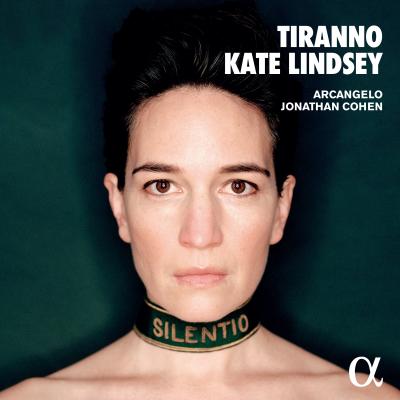
Tiranno

Tiranno
Kate Lindsey, Arcangelo, Jonathan Cohen
Alpha Classics. Alpha 736. 75’34

ALPHA736

Extracts from five operatic scenes from the early to mid Baroque form a showcase for American mezzo Kate Lindsey. With compositions by Alessandro Scarlatti, Handel, Monteverdi, and Bartolomeo Monari, the pieces are based on the everyday story of Roman folk: Nero, Agrippina, and Poppea. Tirany is just the start of it!

Continue reading

Bach: Harpsichord Concertos II

Bach: Harpsichord Concertos II
Francesco Corti, il Pomno d’Oro
Pentatone PTC 5186 889. 61’36

Cover J.S. Bach: Harpsichord Concertos, Vol. 2

This is the second of a two-disc series of the Bach harpsichord concertos. It includes Concertos No. 3 in D Major, BWV 1054, No. 5 in F Minor, BWV 1056, and No. 6 in F Major, BWV 1057, and, to complete the timing, the Concerto for harpsichord, flute and violin in A Minor, BWV 1044. The choice of concertos for the two discs was based on the orchestration forces, with these concertos using solo, rather than multiple strings. The balance works well in all four concertos.

Continue reading

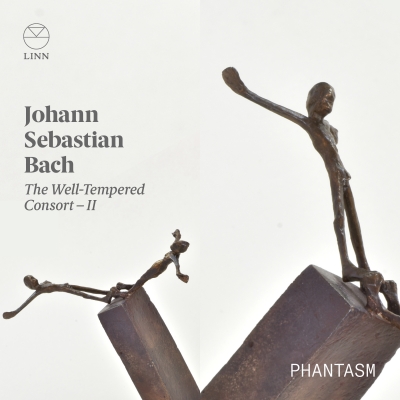
Bach: Well-tempered Consort- II

J S Bach: Well-tempered Consort – II
Phantasm
Linn CKD657. 70’05

cover-CKD657

Phantasm’s first ‘Well-tempered Consort’ recording, reviewed here, was a rather anarchic collection of Bach keyboard pieces arranged for viol consort. This, their second recording on the same theme, is far more coherent, combining Preludes and Fugues from the Well-Tempered Clavier. Of the 24 tracks, seven are from Book I, the rest from Book II. It is not surprising that there are far more fugues than preludes on the recording, with just six prelude and fugue pairs. The tracks are not in key order, but make perfect sense in terms of key relationships and mood. Four tracks are transposed down a semitone: the C# pair, and the F# and D# minor fugues.

Any reservations I might have had over their first recording are resolved here. The balance between the instruments is perfect, as it should be, particularly for the fugues. They avoid the temptation to accent fugal entries and, although there are far more subtle nuances of tone on an individual note available on a viol than on a keyboard instrument, such expressive devices are only used with sensitivity.

The programme notes are rather too romantic and flowery for my taste, as can often be the case when written by an academic. “Even the slightest musical turn of phrase might trigger intense disquisitions on the human condiction” is one such example.

It was recorded in Magdalen College Chapel, Oxford over a four day period. The recording rate of some six tracks a day is reflected in the quality of the performance. Despite the size of the space, the acoustic remains suitably domestic in scale.

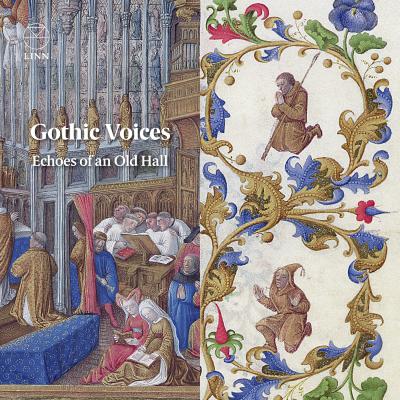
Gothic Voices: Echoes of an Old Hall

Echoes of an Old Hall
Music from the Old Hall Manuscript
Gothic Voices
Linn CKD644. 76’03

cover-CKD644

This magnificent recording from Gothic Voices takes a refreshing look at the much-recorded repertoire from the famous Old Hall Manuscript, the most substantial collection of English sacred music of the medieval period. It was compiled over several years leading up to c1420. The manuscript contains a number of examples of the influence of French composers on English music of the time. One example is the first piece on this recording, the wonderfully bouncy Arae post libamina / Nunc surgunt by Mayshuet de Joan, a French musician who spent some time in England in the mid 14th century.

Continue reading

Music and Instruments of the Elizabethan Age: The Eglantine Table

Music and Instruments of the Elizabethan Age: The Eglantine Table
Ed. Michael Fleming and Christopher Page
The Boydel Press, Woodbridge, 2021
Hardback, 310 pages, 245x176x31mm, ISBN 978 1 78327 4212


Visitors to the National Trust’s Hardwick Hall in Derbyshire (architect Robert Smythson’s Renaissance masterpiece of “more glass than wall” fame) may have noticed a large highly decorated table in the bay window of the spectacular upper floor High Great Chamber. This is the Eglantine Table (or Aeglentyne), probably commissioned for the 1568 marriage of Bess of Hardwick to her fourth husband, the Earl of Shrewsbury, followed the year after by the marriage of her two children to his two. The 3.0mx1.3m oak table includes detailed inlaid depictions of a lute, bowed instruments, recorders and other wind instruments, a gittern and cittern, together with sheet music, playing cards, backgammon and other gaming boards, and various armorial devices, including the aeglentyne/eglantine, a white briar rose.

Continue reading

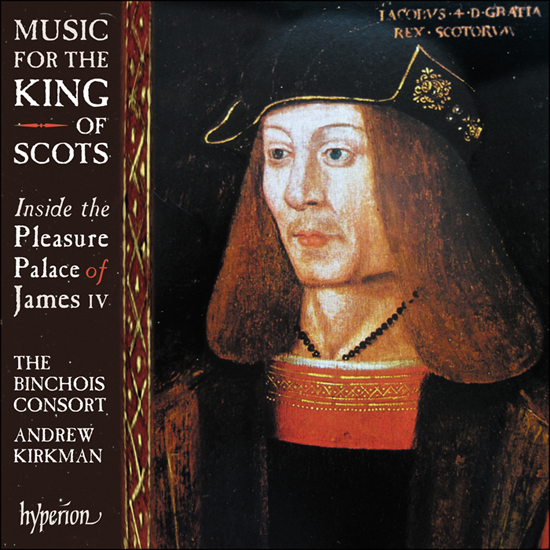
Music for the King of Scots

Music for the King of Scots
Inside the Pleasure Palace of James IV
The Binchois Consort, Andrew Kirkman

Hyperion CDA68333. 55’17

Anonymous (Carver Choirbook):
Missa Horrendo subdenda rotarum machinamento; Magnificat
William Cornysh: Ave Maria, mater Dei

There is more to this recording than meets the eye – or, indeed, the ear. At one level it is an impressively performed sequence of music from the Carver Choirbook, one of just two surviving large-scale collections of music from pre-Reformation Scotland. But it is also part of two interesting research projects: ‘Space, place, sound, and memory: Immersive experiences of the past’ and ‘Hearing historic Scotland’. These have combined to bring back to life the lost performance space of the now ruined Chapel Royal of Linlithgow Palace as it existed at the turn of the sixteenth century.

Continue reading

Rameau: Pigmalion

Jean-Philippe Rameau: Pigmalion
Dunedin Consort, John Butt
Spitalfields Music Festival, Christchurch Spitalfields
Online premiere, Tuesday 6 July

Jean-Philippe Rameau’s Pigmalion is an acte de ballet first performed in August 1748 at the Opéra in Paris to a libretto by Ballot de Sauvot. It was apparently composed within a week at the request of the management as a means of raising much needed revenue. It has since become one of Rameau’s finest one-act works, although performances are rare. It is based on the story in Ovid’s Metamorphoses where Pigmalion falls in love with the beautiful female statue he has just sculpted, to the chagrin of his fiancée Céphise. Pigmalion pleads with L’Amour (the goddess Venus) to bring the statue to life. As the statue comes to life and learns to sing and dance, Cupid arrives and praises Pigmalion for his artistry, followed by dancing and singing in praise of the power of love. Cupid helps Céphise to find a more appropriate lover.

Continue reading

Bach Rework’d

Bach Rework’d
A film by Matt Belcher
Spitalfields Music Festival

Premiere 5 July 2021

Spitalfields Music continues to promote early and contemporary music, currently through the Spitalfields Music Festival 2021 and a series of events, some online and all ‘live’ in Covid-secure conditions. One of the early online events was the premiere of a new film by Matt Belcher, commissioned by Spitalfields Music, exploring “the enduring power of Bach’s music” through the experience of four composers. The documentary explored the importance of music for them over the past year, the works by Bach that have inspired them, and their own musical responses to those works as they returned to post-pandemic performance.

Continue reading

Vivaldi’s Four Seasons

Vivaldi’s Four Seasons
Academy of Ancient Music
Richard Egarr, Rachel Podger

Live from The Barbican
First broadcast 27 June 2021. Available on-line until 29 June
.

Corelli: Concerto Grosso No 1 in D major, Op 6
Maria Grimani: Sinfonia to Pallade e Marte
Corelli: Concerto Grosso No 2 in F major, Op 6
VivaldiThe Four Seasons

Vivaldi’s Four Season’s is an inevitable war-horse guaranteed to attract audiences – in this case, a reduced socially-distanced audience for the live performance together with on-line viewers who have the option to view, for a modest fee, until 8pm on Tuesday 29 June. There are limits as to what performers can do with the Four Seasons, one being musical taste. But there is no limit as to the context in which a performance is set. And that is what makes this airing interesting, with its rare performance of the Sinfonia to Pallade e Marte by Maria Grimani, alongside two of Corelli’s well-known Concerto Grossi.

Continue reading

OAE: Sea Voyages and Salvation

Sea Voyages and Salvation
Orchestra of the Age of Enlightenment
Roderick Williams, Kati Debretzeni
Recorded at New St Lawrence Church, Ayot St Lawrence
First broadcast on OAE Player 8 June 2021

Graupner Fahre auf in die Höhe 
Telemann Concerto for 3 oboes & 3 violins in Bb
Bruhns Mein Herz ist bereit  
JS Bach Cantata BWV 56 Ich will den Kreuzstab gerne tragen 


The Orchestra of the Age of Enlightenment continue with their Covid series of on-line OAE Player concerts with Sea Voyages and Salvation, with music by Grauper, Telemann and Bruhns, culminating in Bach’s cantata Ich will den Kreuzstab gerne tragen. Whether by design or default, two of the composers were the first and second choices for the post of Thomaskantor in Leipzig which Bach was eventually offered after Graupner and Telemann turned it down.

Continue reading

John Worgan: Harpsichord music

John Worgan: Complete harpsichord music
Julian Perkins, Timothy Roberts
Toccata TOCC0375. 76’34

John Worgan: Complete Harpsichord Music

John Worgan (1724–90) is one of several London-based 18th-century organist composers that have escaped the present-day acknowledgment of their more famous contemporaries. However, Worgan was well respected in his day, not least by Handel and Burney, who described him as ‘a very masterly and learned fugueist on the organ’. Nowadays he is merely an overlooked byline, with an occasional organ piece popping in anthologies. His surviving harpsichord music is even less well-known. All that survives is a set of six sonatas, thirteen teaching pieces, a ‘New Concerto’, and an independent Allegro non tanto, all included on this recording. Although very far from being fine music, they feature a fascinating variety of styles, some showing the influence of Domenico Scarlatti.

Continue reading