J S Bach
Chorale Partitas, BWV 766-768 & 770
Stephen Farr, organ
Resonus Classics RES10120. 55’46

Ach, was soll ich Sünder machen BWV 770
Christ, der du bist der helle Tag BWV 766
O Gott, du frommer Gott BWV 767
Sei gegrüßet, Jesu gütig BWV 768
Stephen Farr continues his series of Bach organ recordings with the four Chorale Partitas – variations sets of Lutheran chorales. None of them exists in autograph, so dating is problematical. They are almost certainly early works, possibly composed around the time Bach was at Arnstadt, or perhaps even earlier while Bach was under the influence of Georg Böhm, who Bach knew, and probably studied with while he was at school in Lüneburg. Böhm wrote many variation sets (as did Pachbel), a compositional style that goes back the Sweelinck, the Amsterdam instigator of the North German/Hamburg school of the early to mid-17th-century. It is not clear whether Bach’s examples were intended for performance during church services or, indeed, on the organ. Most are equally suitable for clavichord or harpsichord in a domestic setting. Continue reading
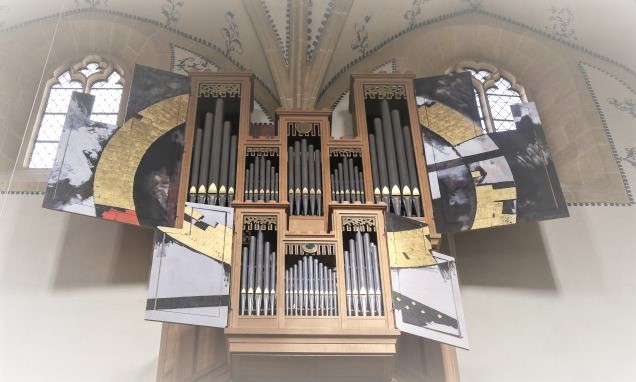


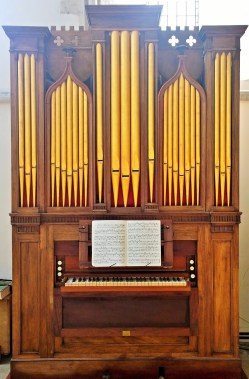
 The ‘Wetheringsett’ organ is a reconstruction of a Tudor organ based on the soundboard of an organ that was found during alterations to a farmhouse in the village of that name in Suffolk. Until it was hidden away within the walls of the farmhouse, is seems to have been used as a dairy door. The many holes in the wood were initially thought to indicate some sort of protection from the evil eye, until a local organ builder recognised it as the soundboard of an organ – the bit hidden away inside the instruments where the feet of the pipes sit, and through which the air is channelled from the windchest to the pipes. Analysis of the number and size of the holes can give a pretty accurate account of the size, range and number of stops of the organ. Tree-ring dating suggests that the wood dates from around 1525, leading to suggestions that this could be the organ known to have been purchased by a large parish church in Debenham in that year.
 Preceding the two recordings of Handel in Italy (reviewed
  Girolamo Frescobaldi is one of the most important composers of the transitional period between the late Renaissance and the early Baroque. His keyboard music and his written performing instructions form the bedrock of the 17th century Baroque style, in particular the Stylus phantasticus that dominated the musical style in Italy and Germany. Through pupils like Froberger and other disciples, his music spread throughout Europe and influenced composer, including Bach and his North German organ composer predecessors like Weckmann, Tunder and Buxtehude and English composers like John Blow.
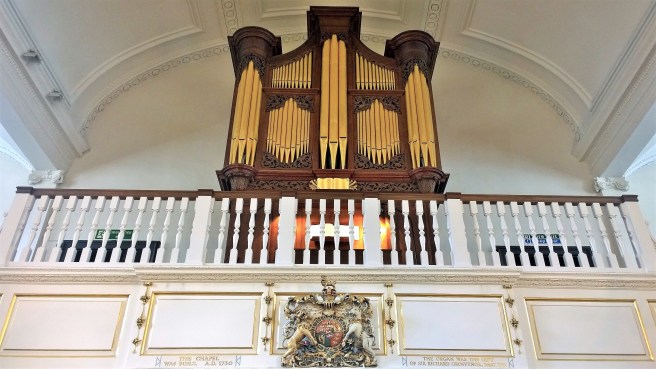
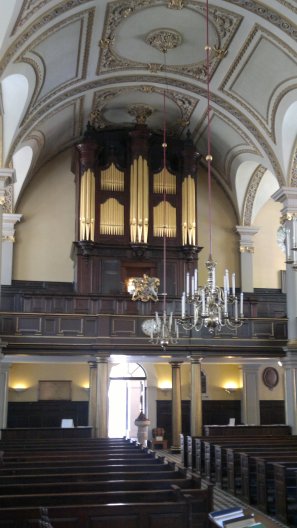
 The completion of the restoration of the famous 1735 Richard Bridge organ in Hawksmoor’s Christ Church, Spitalfields was one of the most important musical events in London during 2015. My review of John Scott’s opening recital, and details of the organ, can be seen
 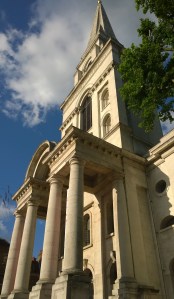 designed by the famed Baroque architect Nicholas Hawksmoor. The organ was built in 1735 by Richard Bridge, who became one of the leading organ builders of the day. Spitalfields seems to have been only his second commission, perhaps explaining the comparatively low price of £600 for such a substantial instrument. For the following 100 years or so, it was the largest organ in the country. It suffered the inevitable changes over the years, but retained enough of its original pipework to form the basis for a historically based reconstruction, returning it broadly to its original specification and construction. It was dismantled in 1998 while the church was being restored and was then restored to its 1735 specification, with very few concessions. Its completion in 2015 makes this by far the most important pre-1800 organ in the UK.

 Dietrich Buxtehude holds a special place in the hearts of most organists, although this is occasionally because he is the only pre-Bach German composer that they are aware of. But, despite many years of musicological research and publications, he still remains a somewhat enigmatic composer. There is still no agreement as to his birth date or place, and what his name really was. He seems to have been born in Helsingborg (in present day Sweden, but then part of Denmark) as Diderich, but later changed the spelling from the Danish to a more Germanic Dietrich (or Dieterich). His surname also appears in several versions, including Box de Hude.
 One of the most important musical events in London in 2015 was the long-awaited opening of the 1735 Richard Bridge organ (restored by William Drake) in the Hawksmoor designed Christ Church, Spitalfields. For many decades it was the largest organ in the UK, and its musical importance is immeasurable. My review of the gala opening recital, given by (the now sadly, late) John Scott, and information about the restoration and an organ specification can be found
 child prodigy, writing his first oratorio, Ruth, aged 6. When he was 8, the composer Dr William Boyce referred to him as the ‘English Mozart’. His family moved to London when he was about 12, living in Marylebone. He led a colourful life, some of his apparent eccentricities possibly being caused by a serious head injury when he was about 21. An organ virtuoso, Samuel Wesley was the leading pioneer of the Bach revival in England. Bach seems to have been a strong influence on his Opus 6 Organ Voluntaries, published between about 1807 and 1820, and the focus of this recital.
 Andrew Benson-Wilson plays the famous 1723 Hildebrandt organ in Störmthal, Leipzig (where Bach gave the opening recital), on Wednesday 15 June 2016 at 7pm, during the Leipzig Bachfest.
 Matthias Weckmann
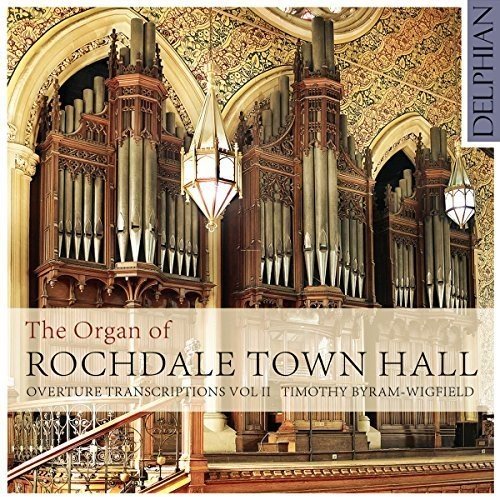 Overtures by: Nicolai, Spohr, Bach, Handel, Verdi, Weber, Tchaikovsky;
 The start of the Renaissance is difficult to define. In organ music, around 1450 seems a reasonable date, with music from the likes of the Buxheimer Orgelbüch and the Faenza Codex combining elements of Medieval and Renaissance styles. By this stage, the organ had a fully chromatic keyboard, sometimes more than one manual, and independent stops were beginning to be separated out from the Medieval ‘Blockwerk’ – the equivalent of single mixture where one note plays a chorus of ten or more notes.
 Andrew Benson-Wilson : Early Music Reviews +