The Mozartists:Mozart Birthday Concert

Mozart Birthday Concert
The Mozartists, Ian Page
Zheng Jiang, Alexander Semple
Cadogan Hall. 27 Januarys 2026

Mozart: Entr’acte from Incidental Music to Thamos, König in Ägypten, K.345
Mozart Concert Aria, “Ombra felice… Io ti lascio”, K.255
Haydn: Symphony No. 69 in C major, ‘Laudon’
Mozart: Two Entr’actes from Incidental Music to Thamos, König in Ägypten, K.345
Haydn: Three arias from Die Feuersbrunst
Mozart: Symphony from Serenade in D major, K.250, ‘Haffner’

The Mozartists‘ continued their ambitious MOZART 250 project, now entering its 12th year, with a 270th birthday concert featuring music composed during 1776. On his 20th birthday, Mozart was in Salzburg, as he would be for the whole of 1776, for the first time since he was five. By his standards, it was to prove a relatively quiet year, although it is worth remembering that he had by then already composed more than thirty symphonies, around half of his operas and all of his violin concertos! It does seem as though 1776 represented a valuable stage in his artistic development, with one writer commenting (in reference to the Haffner serenade that concluded this concert), “1776 sees the full blossoming of his rarest gifts of music and poetry.”
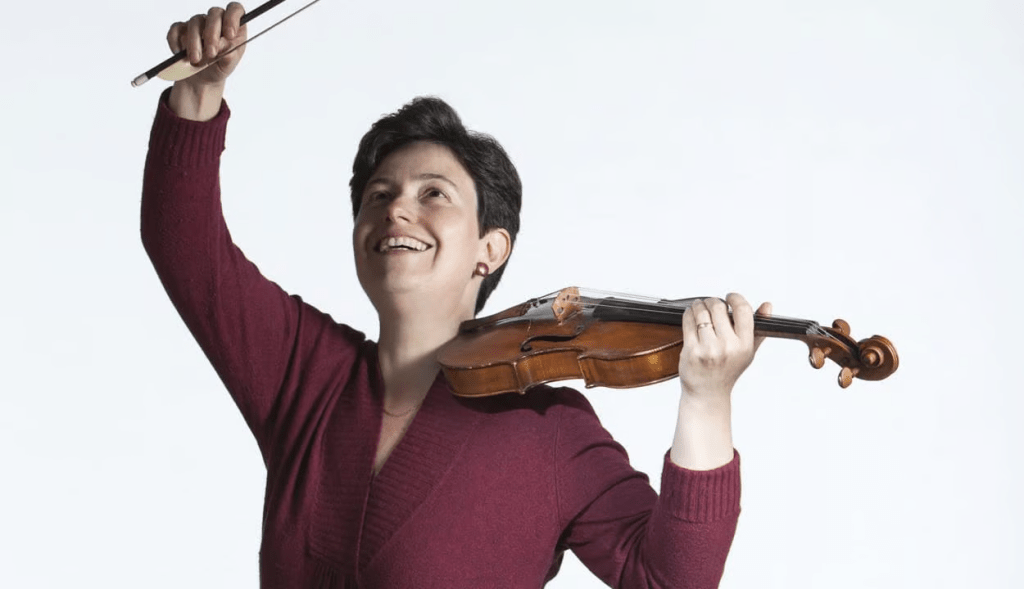
Continue reading

OAE. Mozart’s World: A Little Night Music

Mozart’s World: A Little Night Music
Orchestra of the Age of Enlightenment
Kati Debretzeni, director, Katherine Spencer, clarinet
The Anvil, Basingstoke. 20 January 2026

Kati Debretzeni

Juan Crisóstomo de Arriaga:  Overture in F minor Op. 1 (1817)
Mozart:  Clarinet concerto
Michael Haydn:  Divertimento in G (1780)
Mozart:  Eine kleine Nachtmusik

The Orchestra of the Age of Enlightenment is opening its 40th anniversary year with a short tour of a fascinating programme that, in inevitable OAE style, merges well-known pieces with little-known gems. They started their tour in the excellent acoustic of Basingstoke’s Anvil concert hall, a space that, although large, coped with the modest chamber-sized band with an appropriate intimacy. The three composers were linked by time, birthdays and friendship. Two of Mozart’s best-known pieces were balanced by music from his friend Michael Haydn and the extensively monikered Basque composer, Juan Crisóstomo Jacobo Antonio de Arriaga y Balzola, born in Bilbao 50 years to the day after Mozart. He was known as the ‘Spanish Mozart’ in honour of his prodigious talent, the birthdate link, and his tragically early death, just before his 20th birthday. Another link, which the concert organisers may not have noticed, is that both Arriaga and Mozart shared the same first two baptismal names (based on their birthdays being the feast of St. John Chrysostom, although Mozart’s first names of Joannes Chrysostomus didn’t last much beyond baptism.

Continue reading

Mozartists: Mullova plays Mozart

Mullova plays Mozart
Mozart 250: 1775
The Mozartists

Viktoria Mullova, Ian Page
Cadogan Hall. 4 November 2025


Haydn: Symphony No. 68 in B flat major
Mozart: Violin Concerto No.3 in G major, K.216
CPE Bach: Symphony in D major, Wq.183/1
Mozart: Violin Concerto No.4 in D major, K.218

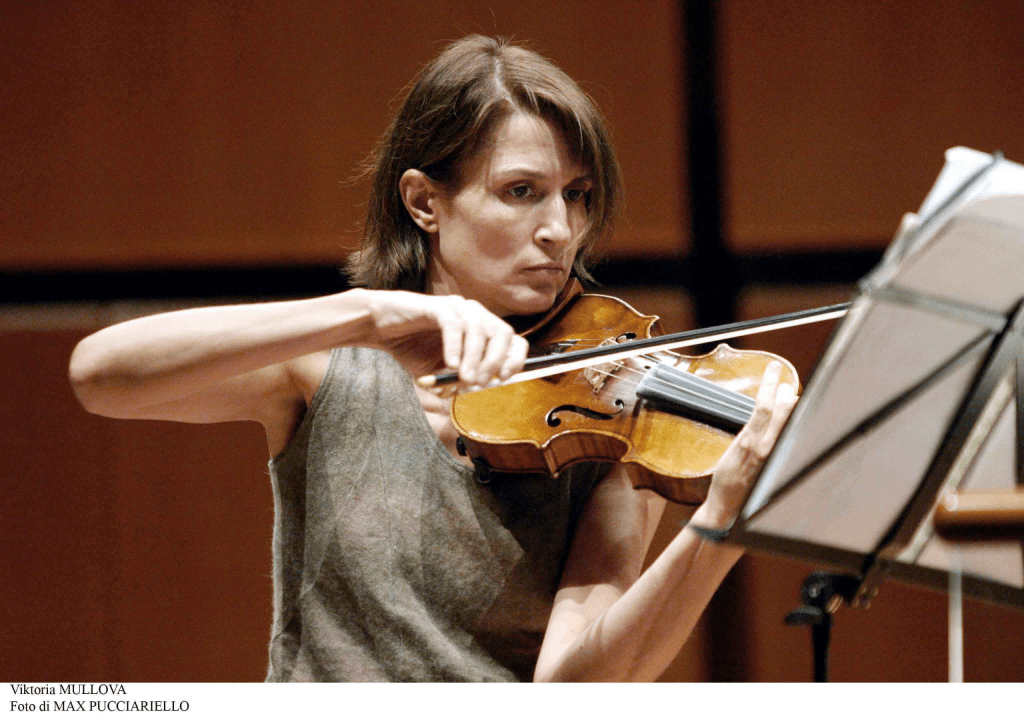
The Mozartists‘ enterprising MOZART 250 project has reached its 10th anniversary, with concerts this season focusing on the year 1775, when Mozart turned 19. The project started in 2015 on the 250th anniversary of Mozart’s childhood visit to London and follows Mozart’s musical life and that of his contemporaries year by year until the 250th anniversary of his death in 2041. It has been described as a “journey of a lifetime”, and will probably outlive many members of current classical music concert audiences. Following their Wigmore Hall concert in June (reviewed here), when Rachel Podger played two (2 & 5) of Mozart’s five violin concertos, this concert in the larger Cadogan Hall featured the other two concertos composed during 1775 (3 & 4) performed by Viktoria Mullova, making her debut with The Mozartists.

Continue reading

AAM: Viennese Virtuosity

Viennese Virtuosity: Symphonies by Mozart, Haydn and friends
Academy of Ancient Music,
Laurence Cummings
Milton Court, 14 November 2024

Wanhal: Symphony in D major, Bryan D17
Mozart: Symphony No 36, Linz
Dittersdorf: Symphony No 4 from Symphonies after Ovid’s Metamorphosis
Haydn: Symphony No 80

The Academy of Ancient Music (AAM) and Laurence Cummings continue their Transformation series of 2024/5 concerts with a concert of symphonies by Johann Baptist Wanhal, Wolfgang Amadeus Mozart, Carl Ditters von Dittersdorf and Joseph Hadyn. It was based on an occasion around 1784 when they played as a string quartet during a social gathering in Vienna. The story comes from an 1826 publication by a singer friend of Mozart, who noted that “… the players were tolerable, not one of them excelled on the instrument he played; but there was a little science among them, which I dare say will be acknowledged when I name them: The First Violin: HAYDN, Second Violin: BARON DITTERSDORF, Violoncello: VANHALL, Viola: MOZART“.

Continue reading

The Mozartists: Jommelli – a celebration

Niccolò Jommelli – a celebration
The Mozartists, Ian Page
Fflur Wyn, Ambroisine Bré, Hugo Brady

Wigmore Hall, 18 September 2024

“Vidi il mar tutto in procella” from Ricimero, re de’ Goti (1740)
“Se il povero ruscello” from Ezio (1741)
“Io già sento nel mio petto” from Merope (1741)
“Crescon le fiamme” from Didone abbandonata (1763)
“De’ miei desiri ormai… Che farò?” from Il Vologeso (1766)
Duetto, “La destra ti chiedo” from Demofoonte (1764)
“ Ombre che tacite qui sede” from Fetonte (1768)
“Hereuse paix tranquille” from La critica (1766)
“Fra l’orror di notte oscura” from Armida abbandonata (1770)
“Prendi l’estremo addio” from Ifigenia in Tauride (1771)
“Sol del Tebro in su la sponda” from Il trionfo di Clelia (1774)
“Misera Armida … Odio, furor, dispetto” from Armida abbandonata (1770)

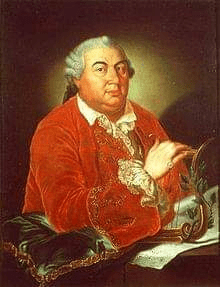
You would be forgiven for not having heard of Niccolò Jommelli (1714-1774), although he does have a Facebook profile, with the above profile picture – and now wants me to be his ‘Friend’. A prolific Neopolitan composer well-known in his day, he composed around 80 operas. He was described at the time as “the creator of a quite new taste, and certainly one of the foremost musical geniuses who have ever lived“. Selections from 11 of these were featured in this concert celebrating the 250th anniversary of his death, the first in The Mozartists’ 2024/25 season. Their exploration of Mozart and the composers around him in their MOZART 250 project has revealed many little-known delights, and Jommelli is certainly one of them. Of the five times I have reviewed music by Jommelli on this website, most have been courtesy of The Mozartists, including their 2016 concert performance of Jommelli’s opera Il Vologeso.

Continue reading

OAE: Mozart in Basingstoke

Mozart in Basingstoke
Orchestra of the Age of Enlightenment
Kati Debretzeni, Luise Buchberger
The Anvil, Basingstoke. 20 May 2023


CPE Bach Symphony in F
Mozart Symphony no 34
JC Bach Sinfonia concertante for violin and cello
CPE Bach Symphony in B minor
Mozart Music from Don Giovanni
Gluck Dance of the Furies

A short tour of related programmes saw the Orchestra of the Age of Enlightenment visit Birmingham Town Hall, London’s Queen Elizabeth Hall, and Basingstoke’s Anvil. Alongside the Mozart Symphony No 34, the CPE Bach Symphony in F, and the JC Bach Sinfonia concertante for violin and cello, common to all three, the Basingstoke concert added CPE Bach’s Symphony in B minor, extracts from Mozart’s Don Giovanni and Gluck’s Dance of the Furies. Travel was the key to the choice of composers – they all left their hometowns to develop their own musical language. They also contributed in various ways to the musical developments during the extended transition into the classical era.

Continue reading

The Chevalier

The Chevalier
The life and music of Joseph Bologne, Chevalier de Saint-Georges
London Philharmonic Orchestra, Concert Threatre Works

St Martin-in-the-Fields. 21 March 2023


The composer Joseph Bologne, Chevalier de Saint-Georges (1745-1799) has been having a well-deserved resurgence in recent years with several performances of his music, generally from period instrument orchestras. This “unique piece of concert theatre” from Bill Barclay’s Concert Theatre Works at St Martin-in-the-Fields contrasted episodes from Bologne’s eventful life with extracts from his music from the London Philharmonic Orchestra, directed by Matthew Kofi Waldren, with Braimah Kanneh-Mason as the violin soloist. The very sparse programme note was nothing more than an advertising flyer (view here) and gave precious little information. It did bill it as a “concert version”, although it looked pretty well staged to me. I gather it was a reduced version of a show that was commissioned by the Boston Symphony Orchestra, premiered and toured in the USA and was first performed in the UK at the Snape Maltings on 19 March.

Continue reading

Mozart à Portuguesa

Mozart à Portuguesa
Mozart’s Requiem
(Eborense version)
Americantiga Ensemble, Ricardo Bernardes
São Roque, Lisbon. 6 November 2020 & online

Davide Perez (1711-78) Subvenite sancti dei; Trio in G minor
José Joaquim dos Santos (1747-1801)  Lamentação de Quinta-Feira Santa
Frei Joan de Santa Cruz (1542-1591) Noche oscura
Mozart Requiem (Eborense version)

An interesting live-streamed concert from Portugal caught my eye and ear, with the help of a friend who managed to get there and back to perform just before the UK lockdown. It included a performance of Mozart’s Requiem in an early 19th-century arrangement by composers of Évora Cathedral, alongside pieces by composers of the Lisbon Court such as David Perez and José Joaquim dos Santos. The manuscript of the arrangement is in the archives in Évora, hence the name of the “Eborense version”. The concert was performed live by the Americantiga Ensemble during the 22nd Music Season in São Roque in the São Roque Church, Lisbon, and is available to view via the link below.

Continue reading

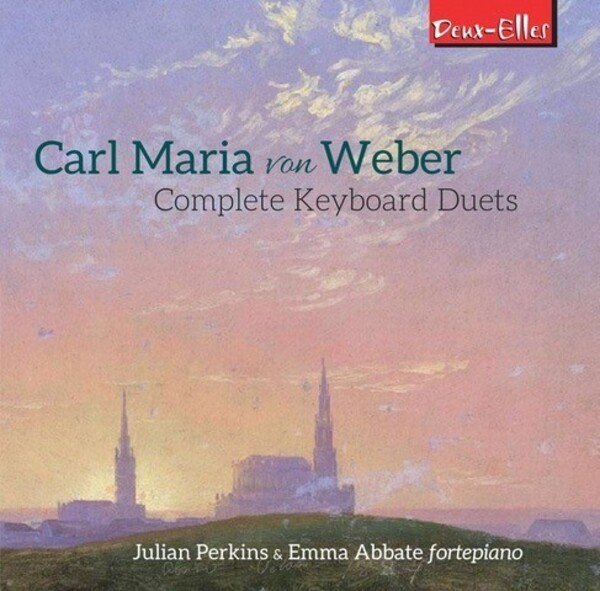
Weber: Complete Keyboard Duets

Carl Maria von Weber: Complete Keyboard Duets
Julian Perkins & Emma Abbate (fortepiano)
Deux Elles DXL 1184. 72’23

Weber - Complete Keyboard Duets | Deux Elles DXL1184

Weber: Six Petites pièces faciles Op.3;
Six Pièces, Op.10a; Huit Pièces,Op.60
Mozart: Andante with variations, K501

Weber is one of those composers who are chiefly remembered for a single work, in his case, the opera Der Freischütz. This recording of his three sets of piano duets (two players on one piano) sheds a wider light into the life of this important composer. It follows two earlier recordings of Mozart Piano Duets (reviewed here and here) from Julian Perkins and Emma Abbate. They use two historic pianos dating from c1795 (Mozart) and 1826 (Weber). Continue reading

Piano Sonatas by Haydn, Mozart & Beethoven

Piano Sonatas by Haydn, Mozart & Beethoven
Walewein Witten (fortepiano)
Resonus RES10242. 71’29

Beethoven: Sonata in D minor, Op. 31/2 ‘The Tempest’
Sonata in E-flat major, Hob. XVI:52
Mozart: Sonata in F major, KV 533/494

The question of what Beethoven, or Bach, would have done if they were composing for modern instruments, rather than those of their time, is often asked. The question is, of course, impossible to answer but I would hazard a guess that their music would be totally different to what it actually is. So, in a way, they would no longer be Beethoven or Bach, but a different composer, writing in a different age and for different listeners. So the first, and possibly the most important, thing about this recording is that it is performed on a fortepiano. Continue reading

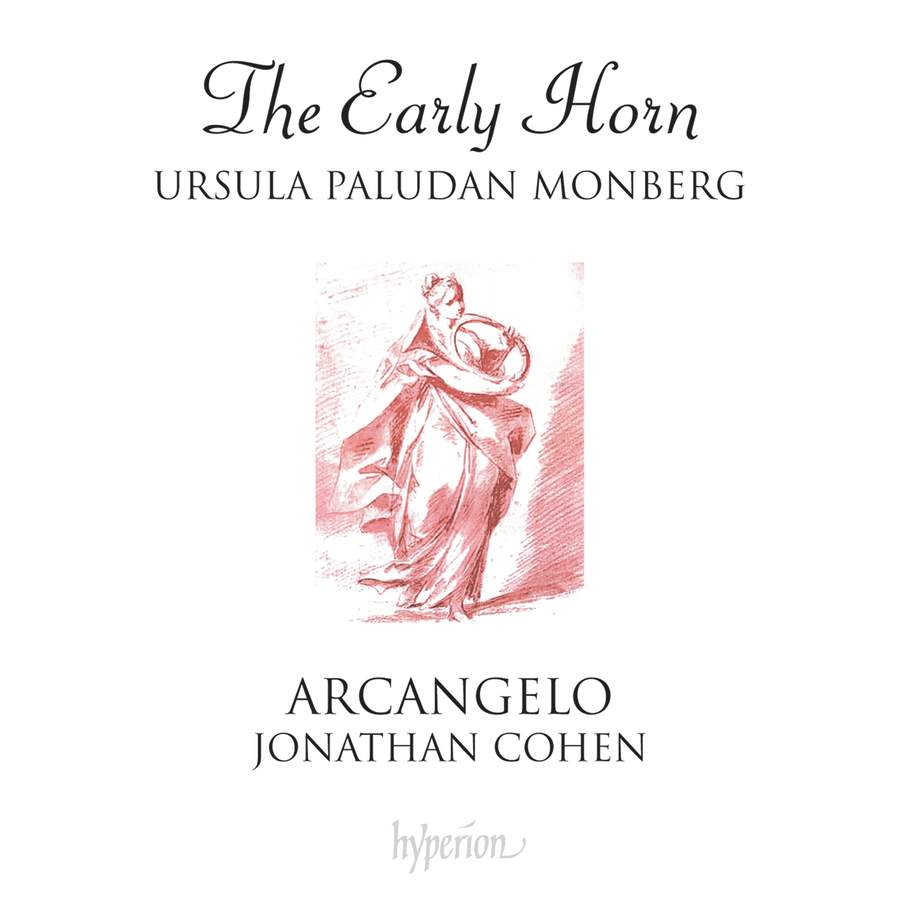
The Early Horn

The Early Horn
Ursula Paludan Monberg
Arcangelo, Jonathan Cohen
Hyperion CDA68289. 78’32

One of the most astonishing developments in musical instrument technology came with the elevation of the horn from its role a rather elemental rallying call to 17th-century aristocratic huntsmen to a sophisticated member of 18th-century court orchestras and chamber groups. One of the key aspects of this development was the technique of hand-stopping to alter the pitch. This was combined with the division of the 15 or so feet of tubing of the wound hunting horn into two parts, the smaller changeable crock allowing for changes of key. This recording explores the wide range of music composed for the natural horn during the 18th-century. Continue reading

Mozart: Concerto for Basset Clarinet & Concert Arias

Mozart: Concerto for Basset Clarinet & Concert Arias
Pieter Van Maldere: Sinfonia in D

Terra Nova Collective, Vlad Weverbergh, Coline Dutilleul
Etcetera KTC1627. 

This recording contrasts two composers, one well known, one little known, who were influenced by the Mannheim School and Classical Viennese Symphonies of Haydn, Vanhal, and Albrechtsberger. Pieter Van Maldere (1729-1768) was one of the principal composers of the Austrian Netherlands during the mid 18th century. He was a virtuoso violinist and Kapellmeister to Prince Karl of Lothringia (Regent of the Austrian Netherlands, brother of Emperor Franz Stephan and uncle of Emperor Joseph II). He composed 49 Symphonies, generally in the Galant style. Continue reading

Glyndebourne: Die Zauberflöte

Mozart: Die Zauberflöte
Orchestra of the Age of Enlightenment, Ryan Wigglesworth
Glyndebourne Festival, 6 August 2019

This is the 7th production of Die Zauberflöte at Glyndebourne, and the popularity of Mozart’s singspiel seems undiminished, judging by the sell-out of the entire run. This time it was directed by the Canadian partnership of André Barbe and Renaud Doucet, the former providing the designs, the latter the direction. If you are the sort of opera-goer who struggles with even the simplest plots and prefers to just let the music and the visual spectacle wash over you, this may be the Magic Flute for you. Musically, it was outstanding, with fine singing from a strong cast and excellent playing from the Orchestra of the Age of Enlightenment, directed by Ryan Wigglesworth. André Barbe’s scenery was inventive, based on enlarged versions of his pen and ink sketches and clever use of perspective. That said, there are many questions about Renaud Doucet’s overall direction, not least in the liberties taken with the plot to fit with his own ideas about what he sees as the ‘problems’ with the original concept and libretto. 

Image result for zauberflote glyndebourne

Continue reading

Le nozze di Figaro

Mozart: Le nozze di Figaro
The Grange Festival

Academy of Ancient Music, Richard Egarr
The Grange, Northington, Hampshire. 19 June 2019

What seemed to be the entire stage was visible to the arriving audience, a blank black space devoid of any scenery or clue as to the setting for the awaited Le nozze di Figaro. It was only when the Overture started that a rear curtain parted to reveal a shallow space at the back of the stage with tables set out for the servants of a great house. Said servants wandered in, some via the audience, with the usual paraphernalia of traditional country house of centuries gone, with guns and game slung over the shoulders of gamekeepers and bonny housemaids doing things with flowers. Were it not for the fact the much of adjoining The Grange mansion had long since been demolished, we could have been in the basement of the next door building.

For those who do not know The Grange, what does survive is the important early Georgian Neo-Classical cement-rendered exterior, surrounding a mid-17th-century brick house, one wall of which is now exposed following the removal of the extensive Private and Bachelor wings. The interior is in a wonderfully evocative almost completely unrestored state. At the end of the surviving screen wall of the private wing is the remains of the early 19th-century conservatory, later converted into a ballroom. In 2002, this was further converted into a magnificent multi-award-winning opera house by Grange Park Opera who were the instigators and focus of opera productions at The Grange between 1998 and 2016. They have now relocated to the new Theatre in the Woods at West Horsley Place, Surrey to be replaced at The Grange by the three-year-old Grange Festival. Continue reading

ENO: Magic Flute

Mozart: Magic Flute
English National Opera
The Coliseum, 2 April 2019

Sometimes an opera production just needs to grow on you. This is the case for the most recent ENO production of Magic Flute, directed by Simon McBurney, which has returned for its third run since opening in 2013.  Is was then the first new ENO production of The Magic Flute for around 25 years, and replaced Nicholas Hytner’s much-loved if rather traditional take. My review of the opening of McBurney’s version commented that: “In contrast to the previous production, this Magic Flute is dark, mysterious and more than a little weird. A flood of ideas drenched the stage, aided by a commentator sitting in a box in the corner, chalking up comments onto a large video screen. But there seems, at least to me, on first sight, little coherence to link it all together. Masonic references are played down, but the element of a cult is still stressed through colour-coded camps in conflict . . . It may well be that, in 25 years time, I will miss this production.  But, in the meantime, it will certainly take me some time to get used to it”. Continue reading

Mozart: Grabmusik & Bastien und Bastienne

Mozart: Grabmusik & Bastien und Bastienne
Classical Opera, Ian Page
Signum Classics, SIGCD547. 66’24

Mozart:<em>Grabmusik</em> and <em>Bastien und Bastienne</em> K.50; Classical Opera

This recording is almost certainly the first performance of Mozart’s original setting of Bastien und Bastienne since its original (and only) performance at the home of the person who commissioned it 250 years ago in 1768 – Dr Franz Mesmer, of mesmerism fame. The opening Grabmusik is also given in its original 1767 form, lacking a final recitative and chorus added in the 1770s. Both works are examples of Classical Opera and The Mozartists pioneering Mozart 250 project which, between 2015 and 2041, will explore the music that was written by Mozart and his contemporaries exactly 250 years earlier. Grabmusik & Bastien und Bastienne represent the years 1767/8, when Mozart was 11/12 years old. Continue reading

Mozart: Chamber Music Vol. 2

Mozart: Chamber Music Vol. 2
Ensemble DeNOTE
Devine Music DMCD008. 67’27

Duo no.1 for Violin and Viola in G, K.423
C. F. G. Schwencke: Grand Quintetto (1805)
an arrangement of Mozart’s Gran’ Partita for 13 Winds, K.361

I reviewed the 2017 first volume of this series here. It grew out of Ensemble DeNOTE’s 2016 staged performances of Mozart, part of their Mozart Project Live! It is followed by this similarly imaginative programme of music, with two very different and little-known pieces. The Duo for Violin and Viola in G has an interesting backstory. It is one of two Duos composed in 1783 at the request of Michael Haydn as he didn’t have time to complete a commission for six such Duos. Originally passed off as Haydn’s work, Mozart eventually reclaimed and issued manuscript copies of them in 1788. The G major Duo is a delightful conversation piece between the two equally important instruments. Continue reading

Mozart: La finta semplice

Mozart: La finta semplice
Classical Opera & The Mozartists, Ian Page
Queen Elizabeth Hall, 2 June 2018

The Classical Opera & The Mozartists’ ambitious Mozart 250 project started in 2015, the anniversary of Mozart’s childhood London visit, aged 8, and the composition of his first symphony. Each year they are programming concerts reflecting Mozart’s, and his contemporaries, compositions dating from 250 years ago. So 2018 is centred on music from 1768. Their two concerts earlier this year explored the music surrounding the 12 year-old  Mozart in Vienna in 1768 (reviewed here), with pieces by Haydn, Jommelli, JC Bach, Hasse, Vanhal, and an extract from Mozart’s La finta semplice; followed by a rare performance of Haydn’s Applausus Cantata: Jubilaeum Virtutis Palatium (reviewed here)But tonight it was Mozart’s turn, with a semi-staged performance of his first opera buffa, La finta semplice. It is all too easy to denigrate Mozart’s early works, to the extent that the chronological sequence of the Mozart 250 project could have been a risk, at least for the first few years. But it has turned out to be very much not the case. Part of the responsibility for that is the excellent performances of Classical Opera & The Mozartists, lifting what can be rather less than outstanding music into memorable performances. Continue reading

Mozart: Piano Duets: Vol 2

Mozart: Piano Duets: Vol 2
Emma Abbate & Julian Perkins
Resonus RES10210. 70’43

Mozart: Sonatas in F major K497 and C major K19d
Mozart, completed Levin: ‘Sonata’ in G major K357
Clementi: Sonata in E-flat

I reviewed Volume 1 of this two-disc series here. That review gives the background to Mozart’s piano duets and the Richard Burnett Heritage Collection of early keyboard instruments. For this recording, Emma Abbate and Julian Perkins choose two different fortepianos from the collection, a Viennese grand piano by Michael Rosenberger c1800 and a 1820s square piano by London’s Clementi & Co. The recital opens with the most substantial and important work, the Sonata in F, K497, running the risk of overpowering the other pieces. Unfortunately, for some reason, the programme notes do not follow the recorded order of the pieces.  Continue reading

Boxwood & Brass

Discovering Harmoniemusik
Boxwood & Brass
The Arts Club, Waterloo. 18 October 2017

IMG_20171018_181931904.jpg

In a dual exercise of launching their 2017/18 programmes combined with trying out a possible venue for small-scale musical events, the innovative wind-music group Boxwood & Brass held a ‘Harmoniemusik Discover Evening’ in the 1901 Arts Club (in the fascinating hinterland of Waterloo station), a former schoolmasters house now converted to an events venue in the style of a late 19th century saloon. The six members of Boxwood & Brass played music by Mozart and Beethoven, starting with their own arrangement of the opening Allegro of Mozart’s 1782 Serenade in C minor (K.388, aka Nacht Musique), the two original oboe parts redistributed amongst the pairs of clarinets, horns and bassoons of their evening’s line-up. Mozart had made his own arrangement, for string quintet. This curious work is some way from the usual style of a Serenade, being far more musically intense and written in a minor key. In the intimate space, the complexity of the writing was prominent, as was the distinctive colour of the Harmoniemusik instruments.  Continue reading

BBC Proms: La Clemenza

Mozart: La Clemenza di Tito
Glyndebourne Festival Opera, Orchestra of the Age of Enlightenment
BBC Prom 59. Royal Albert Hall. 28 August 2017
 

The tradition of bringing one of the season’s Glyndebourne Festival Opera productions to the Proms continued this year with their version of Mozart’s often overlooked opera La Clemenza di Tito. Although I didn’t see the fully staged version at Glyndebourne, I did see the live webcast of the performance, and my feelings about the much-reduced staging in the Albert Hall is influenced by that.

Director Claus Guth and designer Christian Schmidt’s Glyndebourne staging divided the world of Tito into two, a clean modernist upper floor executive office positioned above a reed-clogged swamp where much of the action took place. A video played during the overture (or didn’t, depending on which performance you saw) which explained, apparently, the director’s interpretation of why Tito relationship with his boyhood chum Sextus went sour. The transfer to the Proms retained the dual levels, but with Tito’s domain behind the orchestra on the upper steps of the stage, the swamp rather pathetically alluded to by about half a dozen clumps of reeds and a rock on the stage in front of the orchestra. But, as is so often the case with semi-staged or concert performances of opera, this rather helpfully pulled the opera away from being the inspiration of the director towards being that of Mozart. Continue reading

Mitridate, Re di Ponto

Mozart: Mitridate, Re di Ponto
The Royal Opera, Christophe Rousset
Royal Opera House, Covent Garden, 26 June 2017

By the time he composed Mitridate, Re di Ponto, Mozart has already written 13 symphonies, three operas, four masses, two oratorios, and around 20 sonatas for strings or keyboard. He was just 14. This revival of Graham Vick’s 26 year-old production exposes the extraordinary artifice that was the realm of opera seria, overblowing and exaggerating every aspect of Mozart’s youthful exploration of love and family feuding.

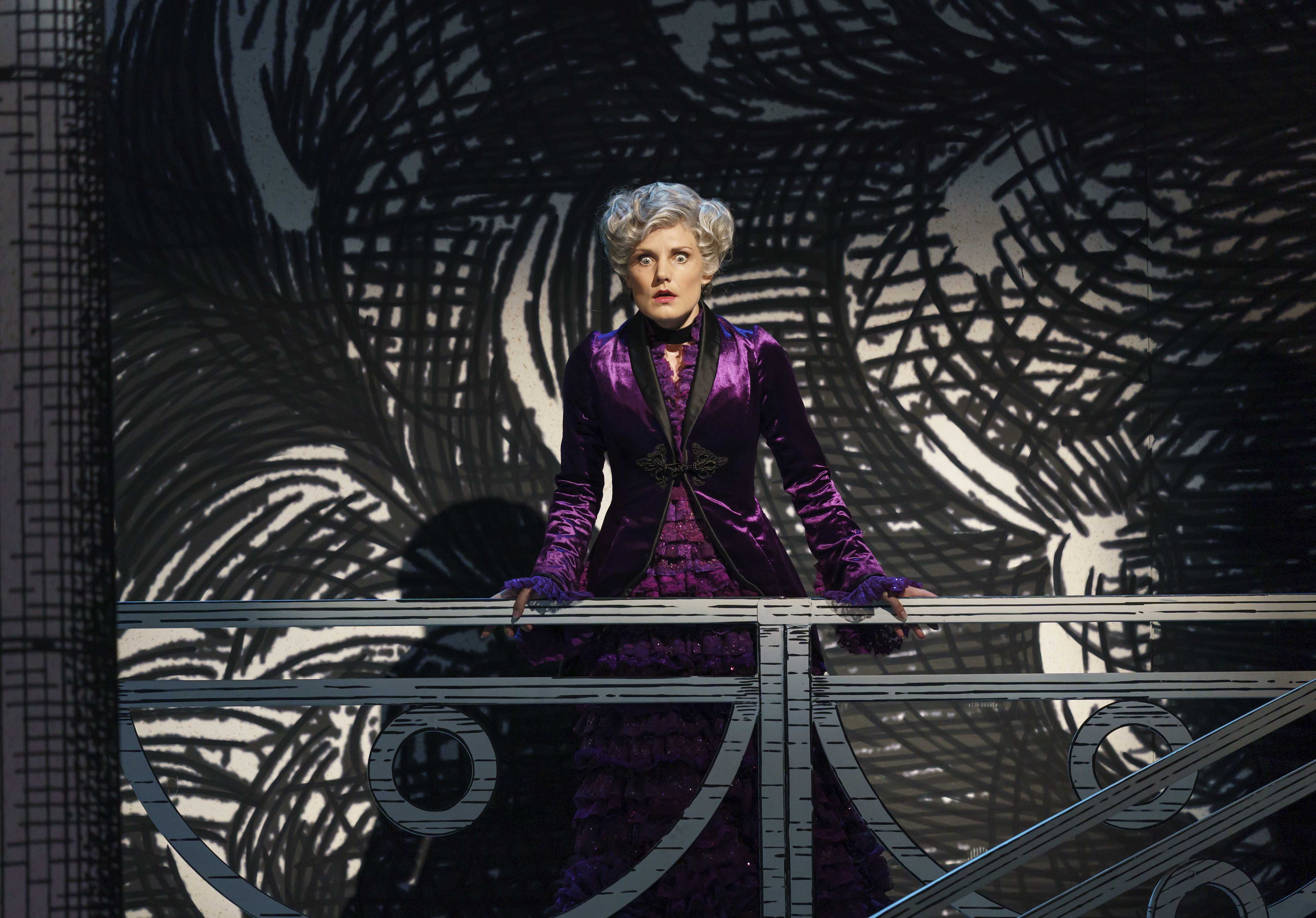
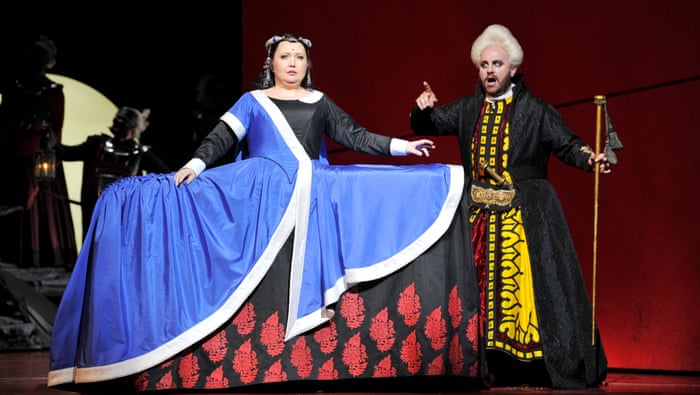
The opera opened with what looked like the aftermath of a nasty accident. It seemed as though Aspasis had crash landed through the top of a vast cloth-covered sideboard, leaving only the upper part of her body visible. It took a while to realise that it was not a sideboard, but her costume – one of a number of vast rectangular tent-like creations of huge width that some of the singers had to contend with for much of the evening. One of several, presumably unintended, audience laughs came when a closing set panels left just enough space for Aspasia to walk through without turning sideways. She later appeared as though sitting behind a large bedecked dinner table, as pictured. Indeed the striking costume design was one of the main features of this production, which included a number of impressively choreograph set-piece dances, at one stage complete with a lot of foot-stomping, stick-banging and skirt-twirling, the whole more in Japanese than Anatolian (or 18th century European) style.
Continue reading

Classical Opera: Apollo et Hyacinthus

Mozart: Apollo et Hyacinthus
Classical Opera, Ian Page, Thomas Guthrie
St John’s, Smith Sq. 13 June 2017

‘Lambach’ Symphony in G; Grabmusik, Apollo et Hyacinthus

As part of their ambitious Mozart 250 project (presenting Mozart’s music on the anniversary of their composition, culminating in 2041), Classical Opera presented the last of four concerts focussed on 1767, Mozart’s 11th year, with a staged performance of Apollo et Hyacinthus, preceded by his ‘Lambach’ Symphony in G and the Grabmusik, also staged.  This was a very clever and extremely well performed concert, exploring music that is not as well-known as it should be, with very sensitive stagings conceived and directed by Thomas Guthrie. The ‘Lambach’ Symphony in G (K45a) is believed to have been written in 1766 by the 10-year old Mozart. It was found in two manuscripts in Lambach Abbey, Austria. Like many other early Mozart works, it is beguiling in its elegant simplicity and harmonic inventiveness, here added to by having the first movement main theme first appearing in the bass, although on this occasion it wasn’t all that prominent. While it was playing, people walked across the St John’s stage, their relevance becoming clear when the bustling final movement of the Symphony segued directly, and very effectively, into the opening of the Grabmusik. Continue reading

Glyndebourne: Don Giovanni

Glyndebourne: Don Giovanni
Glyndebourne Touring Opera, Pablo González
Glyndebourne, Lewis. 30 October 2016

Following their ‘posh frocks and picnics’ summer opera Festival, Glyndebourne hit the road during the autumn taking a reduced Touring Opera programme to places like Milton Keynes, Canterbury, Norwich, Woking, and Plymouth in November and December. They start the tour with around six performances at Glyndebourne itself, with a more relaxed dress code than the Festival and without the 90 minute dinner interval. With a slightly less elevated cast accompanied by the ‘Glyndebourne Tour Orchestra’ (rather than the Festival’s usual team of the Orchestra of the Age of Enlightenment and London Philharmonic Orchestra), the sets and production are otherwise essentially the same as in the Festival. This year they are touring a revival of Jonathan Kent’s 2010 Festival production of Don Giovanni (with Revival Director Lloyd Wood) and a new production of Madame Butterfly.

I didn’t see the 2010 production of Don Giovanni, or this summer’s Festival revival, so for me this was a new show. Set in a post-Mussolini Italy, the broody set, designed by Paul Brown, is focused on a massive central cube that presents all four of its sides, plus different incarnations of the central space, to the audience. It is a powerful image, but not without potential issues. Its overpowering presence centre stage pushes most of the action to the front or the side of the stage: no bad thing in itself, but giving a rather cramped feeling Continue reading

Mozart: Piano Duets

Mozart: Piano Duets – Vol 1
Julian Perkins & Emma Abbate
Resonus  RES10172. 68’04

Mozart: Sonata in D, K381; Sonata in C, K521; Sonata in B-flat, K358, JC Bach: Sonata in A.
This is the first of two volumes of Mozart’s complete piano duets, played on original fortepianos by Julian Perkins & Emma Abbate. It was recorded in Finchcocks House, Kent, and was the last recording made their before the house was closed and much of Richard and Katrina Burnett’s important collection of early keyboard instruments was sold. These two pianos, together with another 12 instruments from the collection, remain within the Finchcocks Charity for Musical Education which will continue to sponsor research and training a new generation of early keyboard restorers, tuners and technicians.

Although Mozart’s piano duets are a little-known part of his compositional output, they are a genre that he returned to throughout his life. They Continue reading

BBC Prom 9: Mozart & Mendelssohn

BBC Prom 9: Mozart & Mendelssohn
Le Cercle de l’Harmonie, Rosa Feola, Jérémie Rhorer
Royal Albert Hall, 22 July 2016 

Mozart: Symphony No 39, ‘Ah, lo previdi’; Mendelssohn: ‘Italian’ Symphony; ‘Infelice’.

Making their Proms début, the French period instrument orchestra, Le Cercle de l’Harmonie, their conductor and founder, Jérémie Rhorer, and the Italian soprano, Rosa Feola, presented a fascinating programme comparing music by Mozart and Mendelssohn. Perhaps because of what might have been seen as a fairly safe programme, this relatively unknown orchestra managed to achieve a full house of some 5000 people – quite an achievement. Regular Proms goers should have got used to period instrument orchestras in the vast expanse of the Royal Albert Hall, but newcomers expecting a wall of sound would probably have been surprised by the delicacy of the sound.

There is always a risk of trying to force the sound into the space but, sensibly, Continue reading

Mozart/Oliver: The Goose of Cairo

Mozart/Oliver: The Goose of Cairo
London Mozart Players
St John’s Smith Square. 14 April 2016

Billed as a ‘completion’ of Mozart’s unfinished opera, L’oca del Caïro, Stephen Oliver’s approach to the task of making Mozart’s remnants performable is more of a complete re-working of the original. The resulting two-act, 90 minute opera is half Mozart, half Oliver. It blends and merges the two distinct musical style in a compelling manner. Composed for, and first performed (fully staged) at the Musica bel Chiostro festival in Batignano in 1991 (a year before Stephen Oliver’s untimely death), this concert performance was its British premiere, and its first performance in a new English translation.

The story of how this comic opera came to be discarded by Mozart reveals something of the tension between composers and librettist. Varesco was librettist for I re pastore and Idomeneo, the latter already causing ructions when Mozart changed the text to suit his music. This conflict was carried on with some gusto into Continue reading

OAE: Compulsive Lyres and Fowl Play

Compulsive Lyres and Fowl Play
Orchestra of the Age of Enlightenment, Sir Roger Norrington
Royal Festival Hall.  14 February 2016

Haydn: Symphony No.83 (La Poule); Mozart: Concerto in C for flute & harp, K.299; Joseph de Bologne, Chevalier de Saint-George: Overture, L’amant anonyme; Beethoven: Symphony No.2.

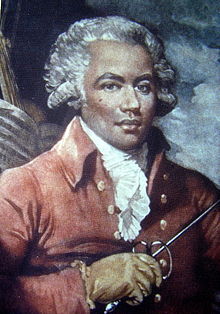
The Orchestra of the Age of Enlightenment’s Department for Thinking up Silly Concert Titles had a field day with this one, coming up with ‘Compulsive Lyres and Fowl Play’. Under the benevolent direction of Sir Roger Norrington, the OAE’s programme was Chevalier de Saint-Georges.JPGcentred on the fascinating character Joseph de Bologne, Chevalier de Saint-George (b1745), the son of a wealthy French plantation owner in Guadeloupe, and his African slave. Educated back in France from the age of 7, he first became known as a fencer, graduating from the Academy of fencing and horsemanship aged 21 and somehow collecting the title of chevalier (knight) on the way. Quite how he achieved his skills in music is not known, but the composers Lolli and Gossec had already dedicated works to him before he was 21. He quickly became one of the leading Parisian violinists and orchestra leaders. He briefly lived in the same house as Mozart (the mansion of his mentor, the Duke of Orléans in Paris), and was leader of the enormous Masonic Loge Olympique orchestra, for which Haydn wrote his Paris Symphonies.
It was one of those Paris Symphonies that opened the programme, No 83 in G minor, the so-called La Poule, nicknamed after the hen-like clucking Continue reading

“Bach is the father, we are the children”

“Bach is the father, we are the children”
Aurora Orchestra, John Butt
Kings Place, 17 January 2016

JC Bach: Symphony No. 6; CPE Bach: Sinfonia in D; JS Bach Brandenburg Concertos 1 & 3; Mozart: Piano Concerto No. 1, Adagio and Fugue.

It is still a bit of a shock to be reminded that when Mozart commented that ‘Bach is the father, we are the children’ he was not referring to JS Bach, but to his second son CPE Bach. But is was through JS Bach’s youngest son, Johann Christian, that Mozart first became aware of the Bach family when just eight years old. Earning the nickname of the ‘London Bach’ (not the ‘English Bach’ as the programme note suggests), JC Bach had made his name as an opera composer in London. The 1764 meeting in London with the child Mozart led to a life-long friendship. The Aurora Orchestra (playing modern instruments) featured all three Bachs in a programme that launched their five-year long series of concerts featuring all 27 of Mozart’s piano concertos.

The opening JC Bach Symphony in G minor (Op 6/6) was written in his early London years. It opens with a short and bustling Allegro before the horror-movie style opening of the extended and rather mysterious central Andante. The Continue reading

Mozart: Stolen Beauties

Mozart: Stolen Beauties
Ironwood with Anneke Scott, natural & piston horns
St George Hanover Square, 21 June 2015
and ABC Classics. ABC 481 1244

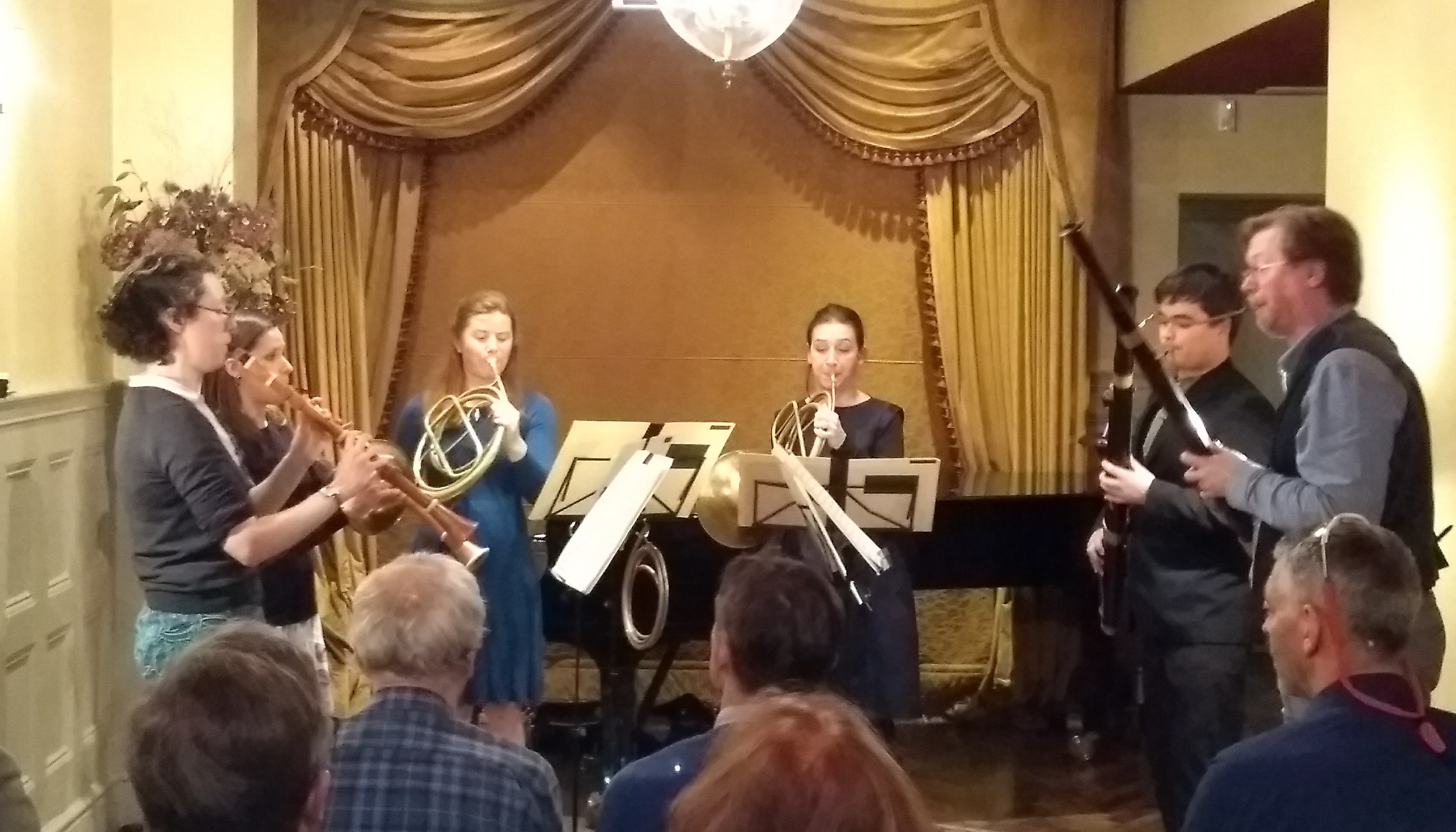
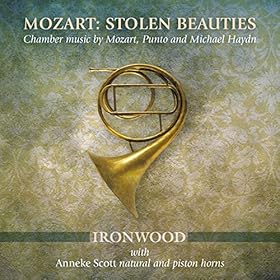
Mozart: Stolen BeautiesA CD launch concert in Handel’s own parish church of St George, Hanover Square featured the programme from the CD ‘Mozart: Stolen Beauties’. Ironwood is an Australian period instrument ensemble formed in 2006. They were joined by the distinguished horn player Anneke Scott, here playing both natural (or ‘hand’) and piston horn.

The ‘beauty’ that wasn’t stolen was the concluding Mozart Quintet for horn and strings in E-flat (K407). The autograph of this work was last known of in London 1847 when it appeared at a sale. It had earlier also proved elusive when Constanze explained to a potential publisher that the horn player Joseph Leitgeb had the score, but that he ‘lived in the suburbs’ of Vienna and would therefore be ‘difficult to track down’. The horn is accompanied by the unusual formation of violin, two violas and cello, rather than with two violins. This gives a richly sonorous timbre to the work, which Mozart (himself a viola player) used to highlight the key violin contributions. The horn writing is virtuosic, using the full range of the instrument of the day. Continue reading