In light of the latest announcement by the UK Government, I am sadly having to cancel all of these concerts. Thank you to all have shown an interest, and particularly to the musicians who were lined up to perform. It is far to soon to think of when, or if, to re-schedule any of it, but Early Music Day next year is on Sunday 21 March.
All the concerts were to have been given in aid of the
Royal Society of Musicians.
If you are willing to support this important musical charity, you can donate directly via this link https://www.rsmgb.org/fundraising/. UK taxpayers can claim GiftAid. Please mention “Early Music Day” in the comments section of your donation.

Happy Birthday, J S Bach!
St Giles-in-the-Fields
St Giles High Street, London WC2H 8LG
(Close to Tottenham Court Road underground)

Three informal 45′ afternoon Bach organ and solo instrument recitals
including organ chorales from Bach’s Leipzig manuscript.
4pm
Fantasia supra Komm, Heiliger Heist BWV 651
Cello Suite No. 2 in D minor BWV 1008
Prélude, Allemande, Courante, Sarabande, Menuetts, Gigue
O Lamm Gottes, unschuldig BWV 656
5pm
Von Gott will ich nicht lassen BWV 658
Nun komm’ der Heiden Heiland BWV 659
Partita for solo flute BWV 1013
Allemande, Corrente, Sarabande, Bourrée angloise
Jesus Christus, unser Heiland BWV 665
6pm
Allein Gott in Der Hõh sei Ehr BWV 662
Cello Suite No. 3 in C BWV 1009
Prélude, Allemande, Courante, Sarabande, Bourrées, Gigue
Jesus Christus, unser Heiland BWV 666
Komm, Gott, Schöpfer, Heiliger Geist BWV 667
Special evening concert @ 7.30
AN EVENING WITH BACH
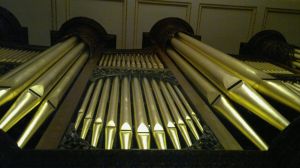
Featuring the historic St Giles-in-the-Fields organ,
with pipework dating back to Bach’s time, and solo Bach music for cello and violin.
(Free entry – donations welcomed for the Royal Society of Musicians).
The originally planned Art of Moog event had been cancelled earlier
because of the potentially high costs of a late cancellation. The Evening with Bach was a free replacement event. As it turns out, the whole church is now closed for the foreseeable future along, it seems with all CofE churches.
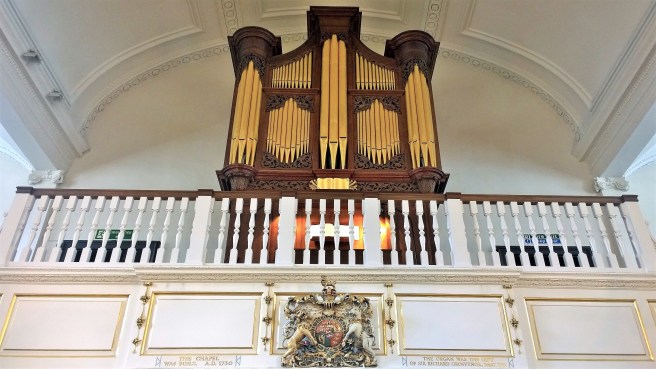
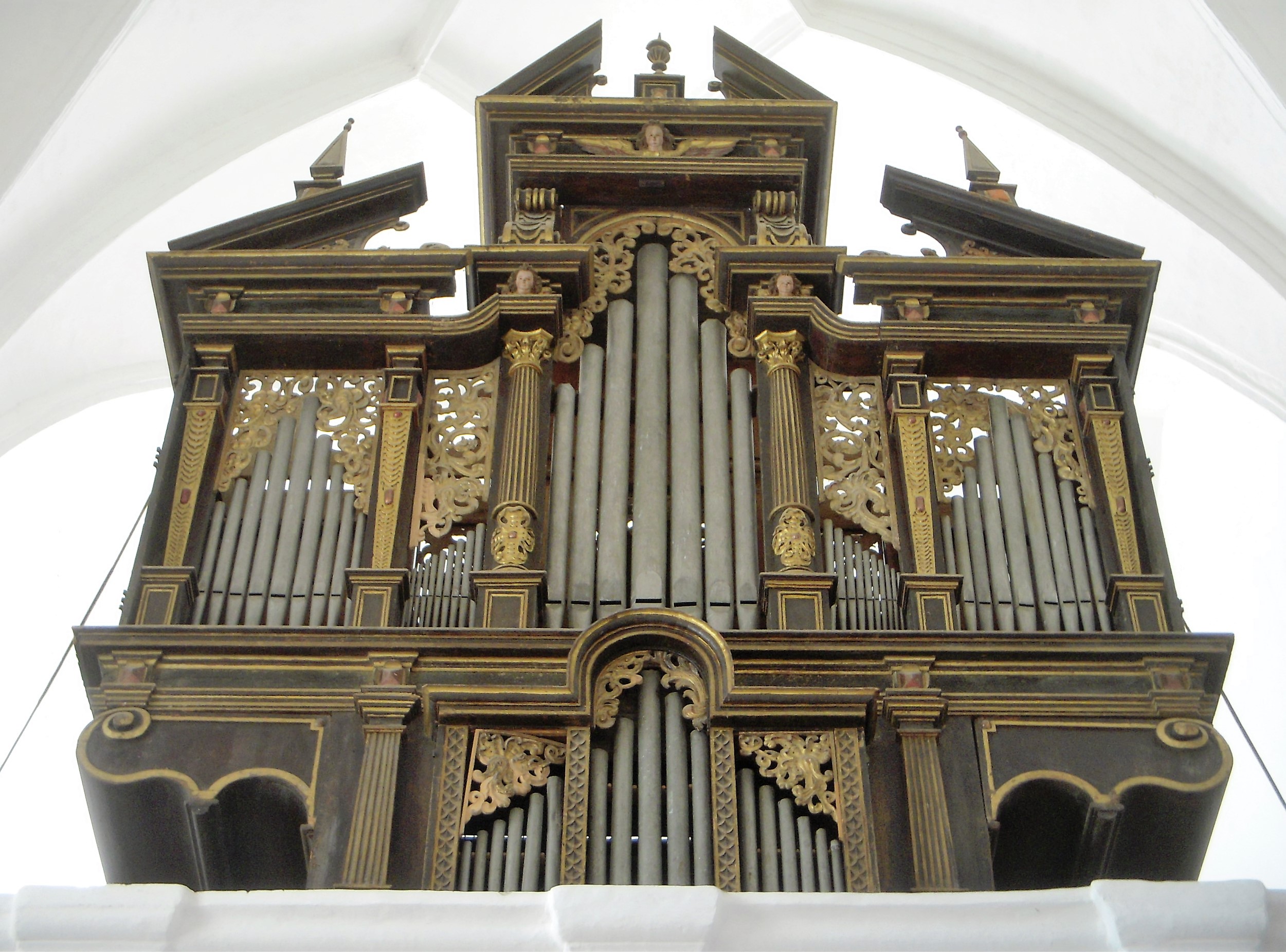
The organ in St Giles-in-the-Fields was originally built by George Dallam in 1678 with further work in 1699 by Christian Smith, nephew of ‘Father’ Smith. It was moved into a new organ case in the rebuilt St Giles church in 1734 by Gerard Smith the Younger. It was rebuilt in 1856 by Gray and Davison, then at the height of their fame. It was restored in 2006 by William Drake of Buckfastleigh, retaining material from 1678, 1699 and 1856. It is one of the most important historic organs in the UK. More details here.



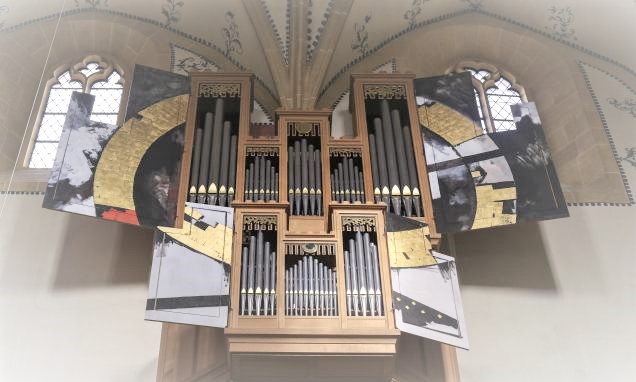




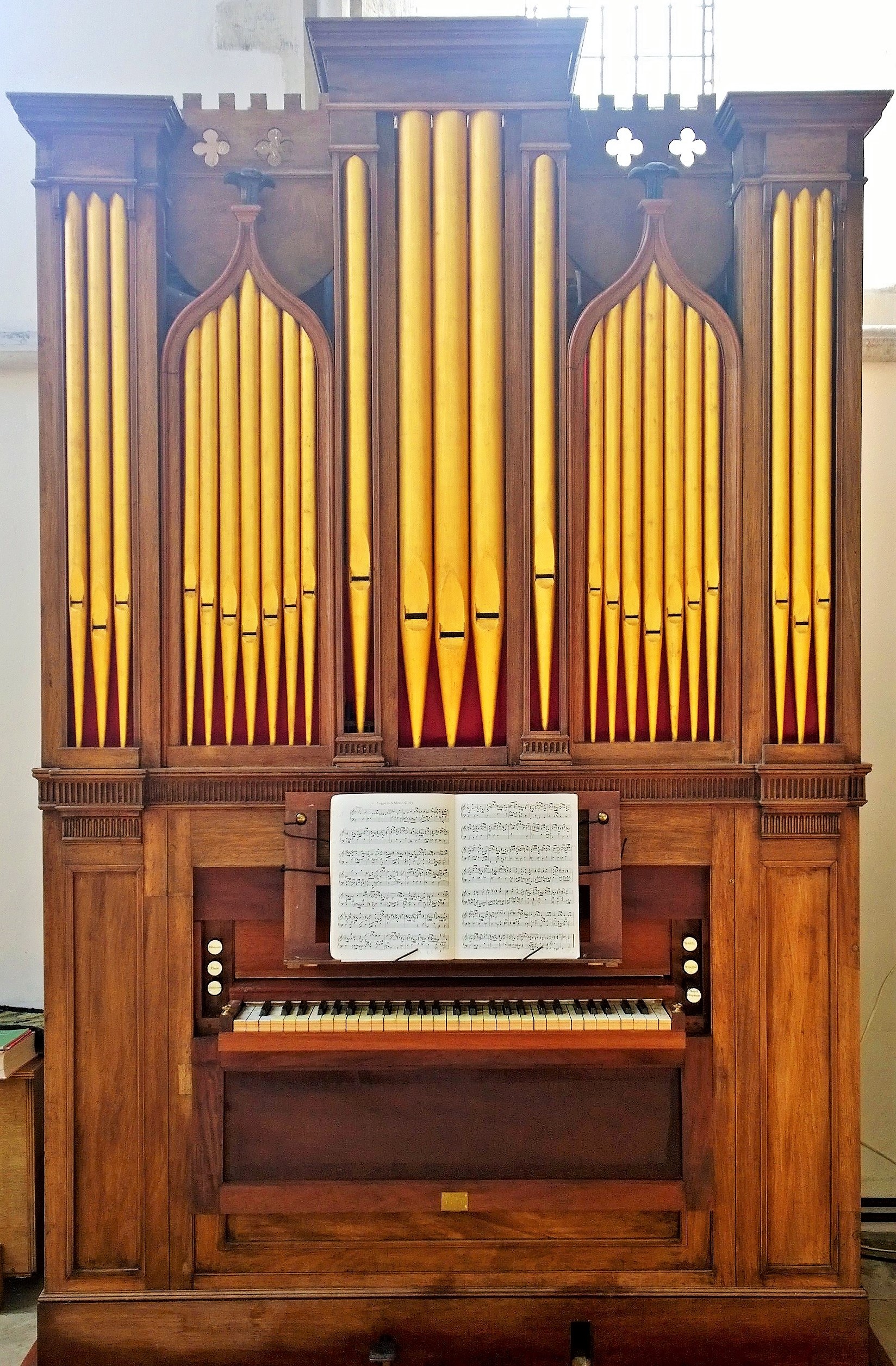
 The ‘Wetheringsett’ organ is a reconstruction of a Tudor organ based on the soundboard of an organ that was found during alterations to a farmhouse in the village of that name in Suffolk. Until it was hidden away within the walls of the farmhouse, is seems to have been used as a dairy door. The many holes in the wood were initially thought to indicate some sort of protection from the evil eye, until a local organ builder recognised it as the soundboard of an organ – the bit hidden away inside the instruments where the feet of the pipes sit, and through which the air is channelled from the windchest to the pipes. Analysis of the number and size of the holes can give a pretty accurate account of the size, range and number of stops of the organ. Tree-ring dating suggests that the wood dates from around 1525, leading to suggestions that this could be the organ known to have been purchased by a large parish church in Debenham in that year.