Buxtehude: Complete organ works

Dieterich Buxtehude: Complete organ works
Urtext: Critical Source Edition
Ed. Harald Vogel
Breitkopf & Härtel. 2025


The release of the third and final volume of the Edition Breitkopf complete organ works (the choral works, in two sub-volumes) of Dieterich Buxtehude marks a considerable achievement in the complicated history of the transmission of the Lubeck master’s organ works. Edited by Harald Vogel, one of the pioneers of the modern interpretation of Buxtehude and his North German organ composer predecessors, the new edition answers many of the questions that Buxtehude interpretation has raised over the years. One of the many problems is that there are no autograph copies of any of Buxtehude’s organ pieces. We only have copies, which may or may not be based on authentic autographs. This new edition is a “pure source” edition, with no attempts to combine different transmissions or to apply editorial “corrections” to the texts.

Continue reading

Organ Recital. Schlick: Tabulaturen etlicher lobgesang (1512)

Andrew Benson-Wilson
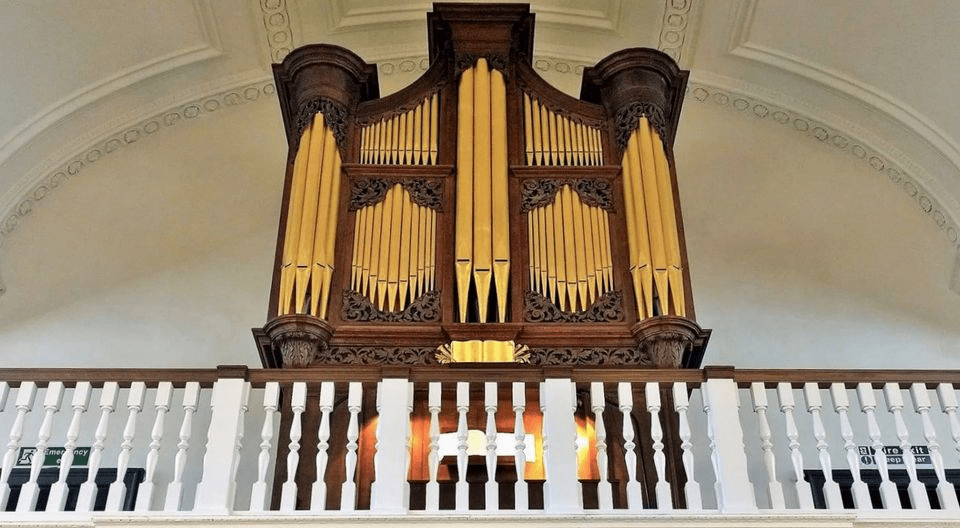
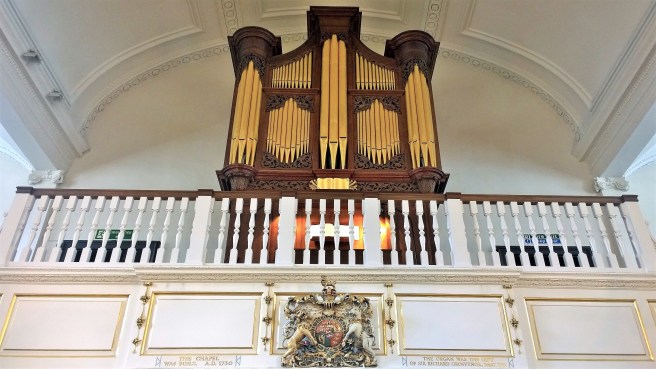
The Grosvenor Chapel
South Audley Street, Mayfair, London W1K 2PA
Tuesday 5 August 2025, 1:10


Arnolt Schlick
Tabulaturen etlicher lobgesang (1512)

Salve Regina (5 verses)
Pete quid vis, Hoe losteleckBenedictusPrimi toniMaria zartChriste
Da pacem (3 settings)

Described as “one of the greatest masters who have left their imprint on the history of organ music”, Arnolt Schlick (c1455-c1525) was one of the most important members of the influential group of late Renaissance German organ composers known as the Colourists, together with Conrad Paumann and Paul Hofhaimer. He lived and worked in the important university city of Heidelberg. In his late 20s, he was appointed court organist to the Palatinate Elector. In 1486 played the organ for the coronation of the future Holy Roman Emperor, Maximilian I, as King of the Romans.

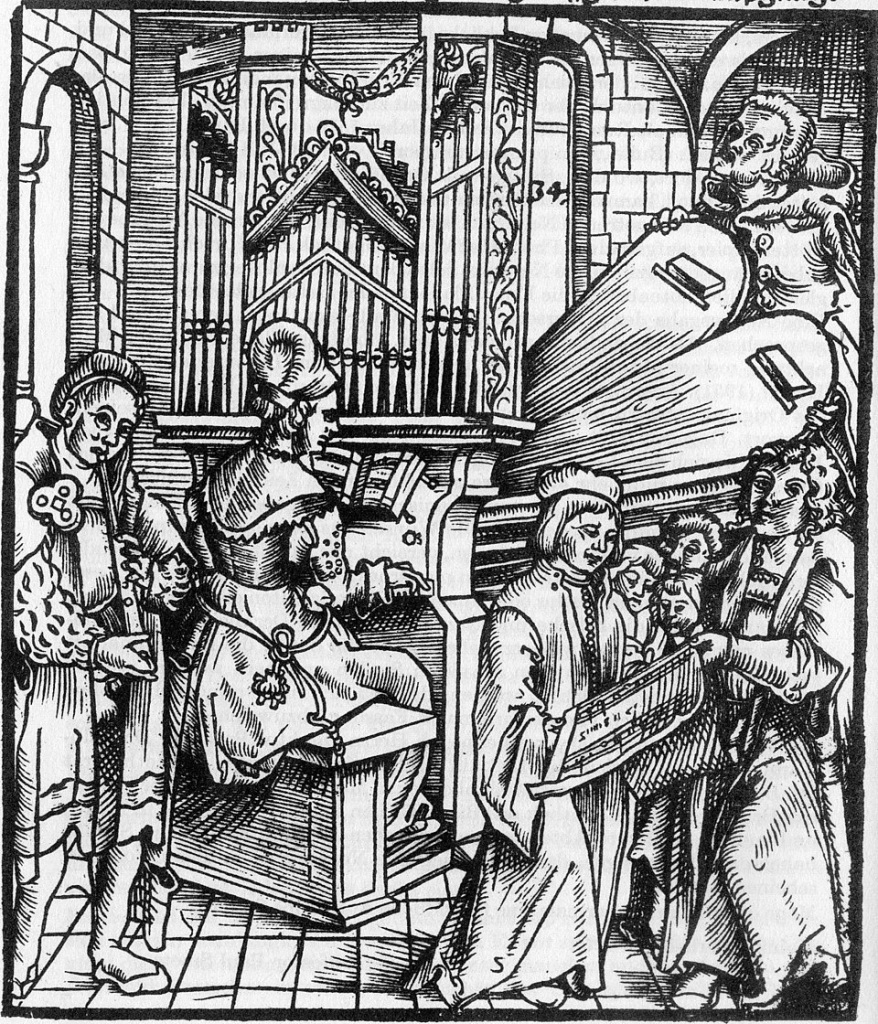
Title page of Spiegel der Orgelmacher und Organisten, 1511

Continue reading

My London organ recitals: August to October 2025

My London organ recitals
August to October 2025

Tuesday 5 August, Grosvenor Chapel, 1:10.
For the anniversary of Arnolt Schlick (c1455-c1525), I will play all the pieces from his 1512 Tabulaturen etlicher lobgesang, including the large-scale Da pacem and Salve Regina, the latter described as “one of the truly great masterpieces of organ art”. 


Monday 8 September, Christ Church, Spitalfields 7.30.
Under the title of “Mr. Stanley, I Presume!” this will be an exploration of English 18th-century life through the organ music of John Stanley (1712-1786) – “the best organist in Europe, maybe in the world”. It will include music reflecting country house saloon soirees; the hunting horns, shepherd songs and birdsong of the English countryside; the trumpets of military marches; and jovial London pleasure gardens. Played on the internationally renowned 1735 Richard Bridge organ.

Sunday 19 October, St Lawrence (Little Stanmore) Whitchurch HA8 6QS, 3pm.
Thirty years ago, I gave the opening recital on this Goetze & Gwynne organ, based on the surviving parts of the 1716 Gerard Smith organ that Handel played when he worked for the Duke of Chandos at Cannons. This anniversary recital of English 17th-century music will honour the lives of Martin Goetze and Dominic Gwynne. The church is a short walk from Canons Park underground station. 

More details to follow in due course, including booking details for the Spitalfields and Whitchurch concerts.

Matthias Weckmann: Complete Organ Works

Matthias Weckmann: Complete Organ Works
Léon Berben
1637 Stellwagen organ, St. Jakobi, Lübeck
1624 Hans Scherer organ, St. Stephanus, Tangermünde

Aeolus. AE-11431. 2CDs 72’27+78’29


Matthias Weckmann (c1616-1674) is one of the most interesting and influential of the North German pre-Buxtehude organist composers. Unlike most of the other organists in Hamburg, he was not a pupil of Sweelinck but was clearly influenced by those who were, not least his teacher for three years, Jacob Praetorius, organist of the Hamburg Petrikirche and Heinrich Scheidemann organist of the Catharinenkirche. His own organ playing was said to have combined elements of the style of both Praetorius and Scheidemann. His earlier musical training had been in Dresden when he was a chorister at the Saxon Court under the court composer Heinrich Schütz, a pupil of Giovanni Gabrieli. After his Hamburg years and a short period with Schütz in Denmark, he became the Electoral Court Organist in Dresden where he met and befriended the much-travelled Froberger, a pupil of Frescobaldi. The pair engaged in a famous keyboard competition arranged by the Saxon Elector. In 1655 he returned to Hamburg as organist of the Jakobkirche after a well-documented audition, records of which gave valuable information about the expectations of a Hamburg organist and practical information about, for example, registration practice at the time. He founded the Hamburg Collegium Musicum.

Continue reading

Programme Notes: Two German Anniversaries: 1624 & 1674

Mayfair Organ Concerts
St George’s, Hanover Square, 2 July
2024

Two German Anniversaries: 1624 & 1674
Samuel Scheidt and Matthais Weckmann

Andrew Benson-Wilson

Samuel Scheidt (1587-1654)
Tabulatura nova, 1624
Echo ad manuale duplex forte et lene
Fantasia super Io son ferito lasso
Modus pleno Organo pedaliter: Benedicamus à 6 Voc

Matthias Weckmann (c1616-1674)
Canzon in G
Nun freut euch, lieben Christen gmein
Praeludium A.5 Vocem

This recital celebrates the 400th and 350th anniversaries of two of the most important German composers of the early to mid-17th century: Samuel Scheidt’s seminal three-volume 1624 Tabulatura nova and Matthias Weckmann, who died in 1674.

Continue reading

Two German Anniversaries: 1624 & 1674

Mayfair Organ Concerts
St George’s, Hanover Square
Tuesday 2 July 2024, 1.10pm

Two German Anniversaries: 1624 & 1674
Samuel Scheidt and Matthais Weckmann
Andrew Benson-Wilson


This concert celebrates the 400th and 350th anniversaries of two of the most important German composers of the early 17th century: the publication in 1624 of Samuel Scheidt’s seminal three-volume Tabulatura nova and the death in 1674 of Matthias Weckmann.

Samuel Scheidt (1587-1654)
Tabulatura nova, 1624
Echo ad manuale duplex forte et lene
Fantasia super Io son ferito lasso
Modus pleno Organo pedaliter: Benedicamus à 6 Voc

Matthias Weckmann (c1616-1674)
Canzon in G
Nun freut euch, lieben Christen gmein
Praeludium A.5 Vocem

Continue reading

Royal Festival Hall organ @ 70

The Royal Festival Hall organ @ 70
Saturday 23 March 2024


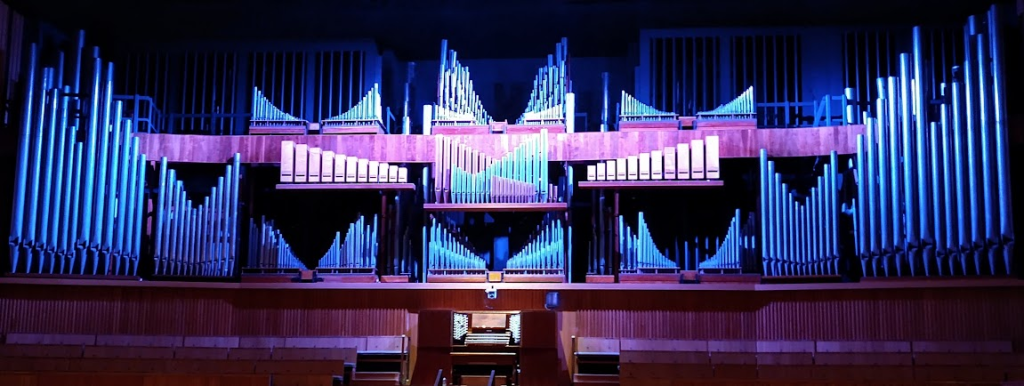
I have played organs dating back to the fifteenth and sixteenth centuries, so the 70th birthday of an organ might not appear to be that big a deal. But the organ in London’s Royal Festival Hall made an important, if controversial, contribution to the post-war British organ world. Designed by Ralph Downes, it was based on the Organ Reform Movement (Orgelbewegung) which started in Germany in the 1920s (with the enthusiastic support of Albert Schweitzer) and sought to reflect the style and construction techniques of pre-19th century organs, notably, in the early days, with a focus on the more historically informed performance of Bach. A detailed history of the RFH organ can be found here. Below is a photo of Ralph Downes inside the RFH organ with one of the tuners from the organ builders Harrison & Harrison of Durham, from his book Baroque Tricks.

Continue reading

Early Music Day recital, Grosvenor Chapel, 19 March 2024

Andrew Benson-Wilson, organ
Mayfair Organ Concerts
The Grosvenor Chapel
South Audley Street, Mayfair, London W1K 2PA
Tuesday 19 March 2024, 1:10


BEFORE BACH

Andrew’s annual Early Music Day recitals are usually focussed on the music of JS Bach, reflecting the fact that Early Music Day is on 21 March, the date of Bach’s birth under the current calendar. This year, Andrew is giving two Early Music recitals, with the titles of BEFORE BACH and AFTER BACH. This first recital traces the history of German organ music from the Buxheimer Orgelbuch c1460 to Johann Pachelbel, the teacher of Bach’s older brother, Johann Christoph Bach. It seems likely that the 9-year-old Bach met Pachelbel at his older brother’s 1694 wedding.

Other composers represent the south, centre and north of Germany, including Hans Buchner (1483-1538), Hieronymus Praetorius (1560-1629), Mathias Weckmann (1617-74) in his anniversary year, and Samuel Scheidt (1587-1654)) in the 400th anniversary of his Tabulatura nova (1624).

The recital focussed on music written for the Catholic and Lutheran service of Vespers, notably the Magnificat, one of the key musical moments of the service in both churches. We hear versions from five composers, concluding with Scheidt’s Modus Pleno Organo Pedaliter Benedicamus à 6 Voc, composed for the conclusion of a Vespers Service as well as being the final piece in the Tabulatura nova.

Conrad Paumann (c1410-1473) Incipit Fundamentum m.C.p.C;
Magnificat Octavi Toni.
(From the Buxheimer Orgelbuch, c1460)

Hans Buchner (1483-1538) Magnificat anima sexti Toni.

Hieronymus Praetorius (1560-1629) Magnificat Tertii Toni.

Mathias Weckmann (1617-74) Magnificat II. Toni.

Johann Pachelbel (1653-1706) Fantasia in G; Three Fugues from the Magnificat tertii Toni

Samuel Scheidt (1587-1654) Benedicamus à 6 Voc. 1624

Continue reading

Programme notes: Bõhm & Bach

Mayfair Organ Concerts
The Grosvenor Chapel, Mayfair

Tuesday 21 March 2023


Andrew Benson-Wilson
plays music by
Bõhm & Bach

Bõhm. Partita: Freu dich sehr, o meine Seele
Trio: Freu dich sehr, o meine Seele
Bach. Fantasia pro Organo a 5 Vocum BWV 562i
Bõhm. Vater unser Im Himmelreich
Bach. Praeludium con Fuga in c BWV 546

This special Early Music Day concert contrasts two of Bach’s most powerful organ works with the music of one of his earliest influences. When he was 15, Bach became a student at the Michaelisschule in Lüneburg. Georg Böhm (1661-1733) had recently been appointed organist of the nearby Johanniskirche, the principal town church with its 1553 Hendrik Niehoff organ. The young Bach certainly knew Bõhm, and may have been a pupil of his – one of the earliest Bach manuscripts is a copy of a piece by Reinken that Bõhm owned.

Continue reading

Early Music Day concert – Bach & Böhm

Andrew Benson-Wilson, organ
Mayfair Organ Concerts
The Grosvenor Chapel
South Audley Street, Mayfair, London W1K 2PA
Tuesday 21 March 2023, 1:10


Bõhm: Partita Freu dich sehr, o meine Seele
Trio Freu dich sehr, o meine Seele
Bach: Fantasia in c BWV 562i
Bõhm: Vater unser Im Himmelreich
Bach: Praeludium con Fuga in c BWV 546

This recital is a contribution to Early Music Day, the international celebration of early music that takes place annually on 21 March, the anniversary of Bach’s birth. The programme contrasts the music of one of Bach’s earliest influences with two of his mature organ works. When he was 15, Bach became a student at the Michaelisschule in Lüneburg. Georg Böhm was organist of the nearby Johanniskirche, the principal town church. The organ there was built in 1553 by Hendrik Niehoff, and is pictured below.

There is clear evidence that the young Bach knew Bõhm, and may have been a pupil of his. One of the earliest Bach manuscripts is a copy of a piece by Reinken owned by Bõhm. The two Bach pieces are powerful examples of his mature style, the first demonstrating the clear influence of French music, that he may have first experienced in Lüneburg and nearby Hamburg. The monumental Praeludium et Fuga in c shows the influence of Italian music, notably in the concerto-like Praeludium. Both Bach pieces were played as final voluntaries during the late Queen’s funeral and committal.

Continue reading

Andrew Benson-Wilson @ Christ Church Spitalfields

1360 to 1699
Organ music from the Gothic period to the late 17th century
Andrew Benson-Wilson
Christ Church Spitalfields

Commercial St, London E1 6LY
Monday 24 October 2022, 7.30


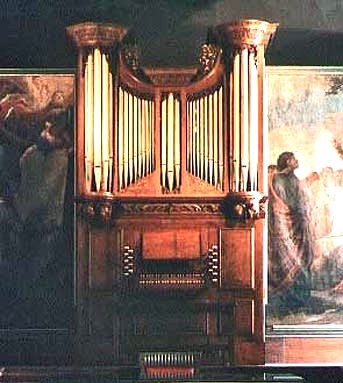
The magnificent 1735 Richard Bridge organ in the sumptuously restored Nichola Hawksmoor Christ Church Spitalfields is the most important historical restoration of any 18th-century English organ. For around a century, it was the largest organ in the UK. After many decades of silence, William Drake completed his restoration in 2015, taking the specification and technical details back to that of 1735, with the addition of three pedal stops.

Although obviously ideally suited to English music of the period, this recital will explore the wider potential of the English 18th-century organ to interpret music from other eras and countries. It starts with one of the earliest known pieces of organ music (dedicated, appropriately, to “those playing music”), dating from the mid-14th century, and the first known ‘prelude’ from 1448. The famous pioneers of early organ music follow (Francesco Landini, Conrad Paumann and Paul Hofhaimer), before a fascinating anonymous piece from a manuscript in the circle of Henry VIII, dating from around 1530.

Having explored the early development of organ music, the remaining pieces show the different regional styles that developed across Europe from the late Renaissance and early Baroque, ranging from Germany, England, Italy, Portugal, Spain and France. Composers represented are Hieronymus Praetorius, John Lugge, Girolamo Frescobaldi, Pedro de Araújo, Correa de Arauxo, Matthias Weckmann and Nicolas de Grigny. As well as representing different musical and organ-building styles (including one of the dramatic battle scenes from the Iberian peninsular), there are remarkable links between many of the composers and compositions.

Continue reading

Programme notes: Two Baroque Giants

Mayfair Organ Concerts. The Grosvenor Chapel. 9 August 2022

Andrew Benson-Wilson plays music by
Two Baroque Giants – Buxtehude & de Grigny

Dietrich Buxtehude (1637-1707)
Praeludium in d minor BuxWV 140
Ciacona in e minor BuxWV 160

Nicolas de Grigny (1672-1703).
Recit de Tierce pour le Benedictus
Dialogue de flûtes pour l,’Elevation
Dialogue (Agnus Dei II)
from Premier livre d’orgue (1699)

Buxtehude
Te deum laudamus BuxWV 218
Praeludium – Te deum laudamus – Pleni sunt coeli -Te martyrum – Tu devicto

Although Buxtehude and de Grigny were born 35 years apart, the music in this recital was composed at about the same time, around 1690/1700. They were composed for very different social, religious and musical settings, Buxtehude for Lutheran Lübeck in North Germany, and de Grigny for Catholic Reims in France. The organs they played were very different, but one of the joys of the English 18th-century-inspired Grosvenor Chapel organ is that it includes elements of both German and French instruments. Bach owned music by both composers and even added some of his own ideas to de Grigny’s Premier livre d’orgue. Bach’s youthful 200-mile walk to Lübeck to meet the ageing Buxtehude is well known.

Continue reading

Bach: Complete Organ Works Vol 8

Bach: Complete Organ Works: Vol 8
North German influences
Pieter van Dijk
DMP Records, DVH 140417. 2CDs 81’20+81’00

Recording, or playing, the complete Bach organ works is a milestone in any organist’s life, but the are many issues to consider. These include the choice of organ/s and the programming of individual recitals or CDs. One organist who has negotiated these issues very successfully is Pieter van Dijk, organist of the prestigious St. Laurenskerk in Alkmaar, Professor for organ at the Conservatory of Amsterdam and the Hochschule für Musik und Theater, Hamburg, and the artistic director of Organfestival Holland. His recorded Complete Organ Works has reached Volume 8, which is reviewed here. I understand that there will be two further double CD releases within the next year or so to complete the edition, and subscriptions are offered. I will give a brief outline of some of the earlier CDs, but I think this volume should be of particular interest to organ lovers as it deals with the early North German influences on the young Bach and includes several lesser-known works.

Continue reading

A Bach recital for Early Music Day

A Bach recital for Early Music Day

Andrew Benson-Wilson, organ & Poppy Walshaw, cello
St Giles-in-the-Fields, London WC2H 8LG
Friday 18 March, 1:15

This is a special concert for international Early Music Day, an annual celebration of early music that takes place around the time of the 21st March birthday of JS Bach. This concert is part of the weekly Music-at-Hill series of lunchtime Midtown Concerts in the beautiful church of St Giles-in-the-Fields, home of one of the most important historic organs in the country.

Continue reading

Organ Recital: “Upon thes nots”

For those who came to this recital, despite the travel problems, the encore that I played was Thomas Tomkins: “Sad Paven for these distracted times”
It seemed appropriate

“Upon thes nots
Two 450th anniversariesThomas Tomkins & Michael Praetorius
Andrew Benson-Wilson, organ
St George’s, Hanover Square, London W1S 1FX
1 March 2022, 1:10

This recital contrasts the contrasting music of two composers born 600 miles apart, 450 years ago. It also reflects the way in which the two composers treat melodic lines, whether in the form of a powerful Lutheran hymn or the seven-note plainchant-based phrase upon which Tomkins based his monumental Offertory, noting in the opening bar that the piece was based “upon thes nots“.

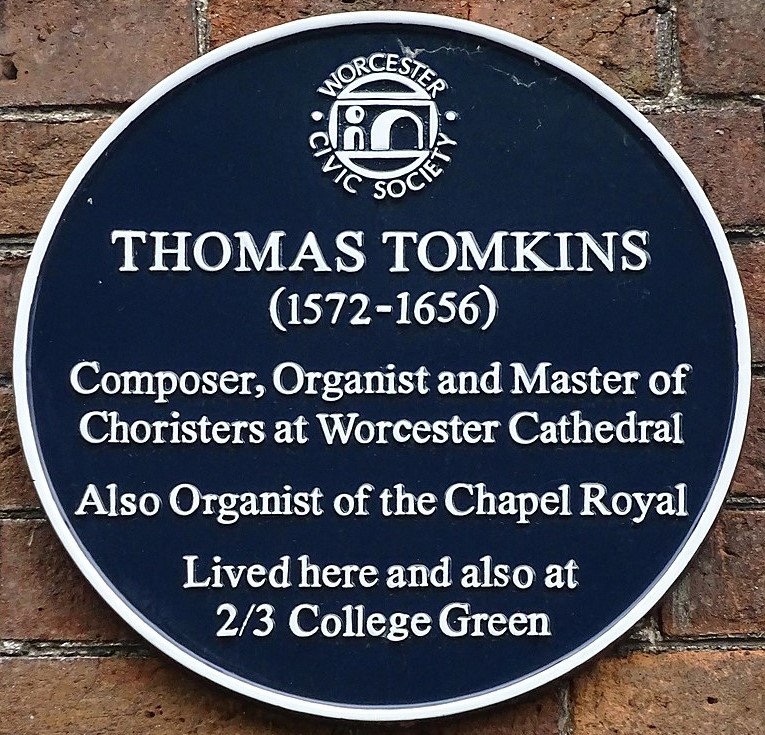
Thomas Tomkins 1572–1656
“For Mr Arc[hdeacon] ThornBurgh”
“Mr Thomas Tomkins offertorye” [upon thes nots] (1637)
Michael Praetorius 1571-1621
O lux beata Trinitas (Hymnodia Sionia, 1611)
Chorale Fantasia: Ein’ feste Burg ist unser Gott (Musæ Sioniæ VII, 1609)

Thomas Tomkins was organist of Worcester Cathedral until its closure during the Civil War as well as the Chapel Royal in London. Michael Praetorius was organist and Kapellmeister in the courts of the Duke of Wolfenbüttel and the Elector of Saxony in Dresden.  

The concert is given on the Richards, Fowkes & Co organ in Handel’s church of St George’s Hanover Square as part of the Mayfair Organ Concerts series. Admission is free, with a retiring collection.

The programme notes can be found here.

BBC Proms: Organ recital 2

BBC Proms: Organ recital 2
Peter Holder, organ
Royal Albert Hall, 4 September 2021

Meyerbeer: Le prophète Coronation March, transcr. W. T. Best
Bach: Fantasia & Fugue in C minor, BWV 537
Widor: Symphony No. 5 – Allegro vivace (1st movt)
Saint-Saens: Fantaisie No. 1 in E flat major
Liszt: Fantasy & Fugue on ‘Ad nos, ad salutarem undam

The second of this year’s BBC Proms organ recitals was given by Peter Holder, sub-organist of Westminster Abbey, replacing Thomas Trotter. As part of the joint anniversaries of the Royal Albert Hall and centenary composer Saint-Saëns, the programme recreated elements of Saint-Saëns’ legendary performances on the Royal Albert Hall organ in the opening season of 1871 and in 1880.

Continue reading

Andrew Benson-Wilson plays Sweelinck

Mayfair Organ Concerts
The Grosvenor Chapel
South Audley Street, Mayfair, London W1K 2PA
Tuesday 24 August 2020, 1:10

WP_20150721_15_17_12_Pro.jpg

Andrew Benson-Wilson
plays music by
Jan Pieterszoon Sweelinck

Commemorating the 400th anniversary of the death of the famed ‘Orpheus of Amsterdam’, Jan Pieterszoon Sweelinck (1562-16 October 1621), Andrew Benson-Wilson gives an organ recital of pieces reflecting the different styles and genres of Sweelinck’s music. He was the most influential teacher of his day, attracting many students from German-speaking areas. Several of them went on to create the Hamburg school of organ composition which culminated in the music of Buxtehude and Bach.

Continue reading

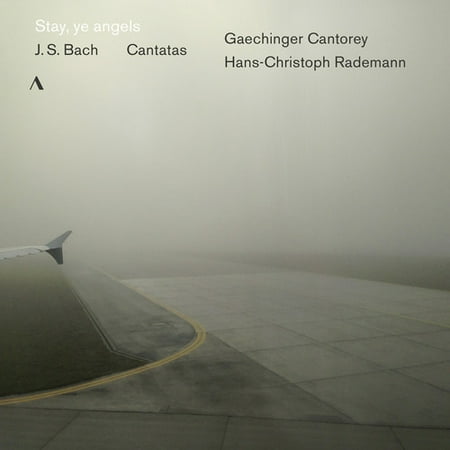
Stay, ye angels. JS Bach Cantatas

Stay, ye angels. J S Bach Cantatas
Gaechinger Cantorey, Hans-Christoph Rademann
David Franke (1746 Hildebrandt organ, Naumburg)
Accentus Music ACC30466. 73’47

Bach,J.S. / Rademann  - Stay Ye Angels (CD) - image 1 of 1

The crowning glory of this recording is the use of one of the finest Baroque (and Bach) organs in the world – the 1746 Zacharias Hildebrandt organ in the Stadtkirche Sankt Wenzel in Naumburg, Saxony- Anhalt, Germany. It was Hildebrandt’s finest and most substantial organ and involved advice from Bach himself. They had met in 1723 when Bach opened Hildebrandt’s first organ in the delightful little village church of Störmthal, just south of Leipzig. Bach and the organ builder Gottfried Silbermann (who had earlier fallen out with Hildebrandt) carried out the final examination of the instrument. It was restored back to its 1746 state in the year 2000. Continue reading

Antegnati: 12 Ricercari

Antegnati: 12 Ricercari
Federico del Sordo, organ, harpsichord and clavichord
Brilliant Classics, 95628. 58’08

Cover Antegnati: 12 Ricercari

Costanzo Antegnati (1549-1624) is the best-known of a family of distinguished organ builders in Northern Italy that lasted from the early 15th to the late 17th-century. He worked with his father on the 1582 organ in San Giuseppe, Brescia, at one time, one of the most famous in the world. Costanzo was organist at the Brescia cathedral from 1584 to 1619. The most famous of his few surviving organs (from 1588) is in the church of St. Nicholas in Almenno San Salvatore, Bergamo. His 1595 treatise L’arte organica was republished in 1608 with these 12 Ricercars added to the technical details of 144 organs built by his family, information on organ tuning and advice on registration. Continue reading

Solarium

Maxime Denuc: Solarium
Cindy Castillo, organ
VLEKD31   94’36

Solarium is a piece for organ, first performed by Cindy Castello in l’église du Gesu, Toulouse during the 2019 Électro Alternativ festival. It is an hour-and-a-half organ piece intended for “… that period of slack that follows the frenzy of a techno-fuelled night” and took place at 10am on a Sunday morning as an “after-party”. I am not sure that many organists get up to frenzied techno-fuelled nights, but there is much here for organists to appreciate, not least the extraordinary sounds that a traditional pipe organ can produce, as well as anybody interested in the techno world of ambient minimalist music. Continue reading

Bach Organ Works Vol IV

JS Bach: Organ Works Vol IV
Robert Quinney
Coro COR16132. 77’31

J.S. Bach: Organ Works Volume 4 album cover showing detail of a stained glass window in reds, oranges and yellows

For the third time in this series, currently of four CDs, Robert Quinney returns to the influential 1976 Metzler organ in Trinity College Chapel, Cambridge. It was built into the 1694 ‘Father’ Bernard Smith case, and retains several of Smith’s pipes in the principal chorus. The new organ was an early example of the North German Baroque-influenced organ style that had hitherto largely avoided the UK. Although it lacks the historical interest of restored organs of Bach’s time in Germany, it remains a suitable UK organ for Bach performance.  Continue reading

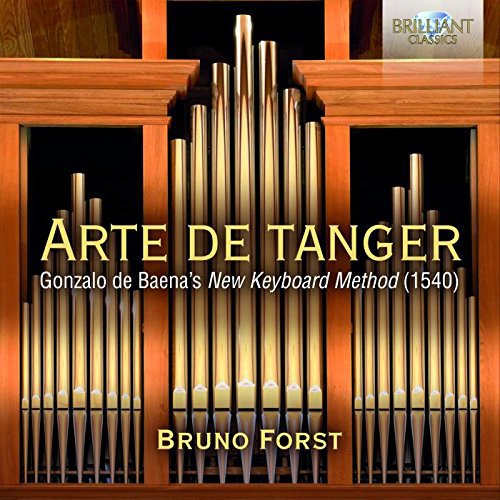
Gonzalo de Baena: Art de Tanger

Art de Tanger
Gonzalo de Baena’s New keyboard method (1540)
Bruno Forst, organ
Brilliant Classics 95618. 2CDs 61’21+73’55

Gonzalo de Baena (c1480-1540+) was a Castillian musician in the service of the King of Portugal. His Arte novamente inventada pera aprender a tãger (New method for learning to play) was printed under royal charter, but was never published. It was the first book of keyboard music printed on the Iberian Peninsula. Its discovery (by Alejandro Iglesias) was announced in 1992, having been previously incorrectly catalogued and titled in Madrid’s Biblioteca del Palacio Real. Continue reading

CANCELLED. Happy Birthday, J S Bach!

Early Music Day
Saturday 21 March 2020

In light of the latest announcement by the UK Government, I am sadly having to cancel all of these concerts. Thank you to all have shown an interest, and particularly to the musicians who were lined up to perform. It is far to soon to think of when, or if, to re-schedule any of it, but Early Music Day next year is on Sunday 21 March.

All the concerts were to have been given in aid of the
Royal Society of Musicians
.

If you are willing to support this important musical charity, you can donate directly via this link https://www.rsmgb.org/fundraising/.  UK taxpayers can claim GiftAid. Please mention “Early Music Day” in the comments section of your donation.

Happy Birthday, J S Bach!

St Giles-in-the-Fields
St Giles High Street, London WC2H 8LG
(Close to Tottenham Court Road underground)

St Giles organ

Three informal 45′ afternoon Bach organ and solo instrument recitals
including organ chorales from Bach’s Leipzig manuscript.

4pm
Fantasia supra Komm, Heiliger Heist  BWV 651
Cello Suite No. 2 in D minor   BWV 1008
Prélude, Allemande, Courante, Sarabande, Menuetts, Gigue
O Lamm Gottes, unschuldig   BWV 656

5pm
Von Gott will ich nicht lassen   BWV 658
Nun komm’ der Heiden Heiland   BWV 659
Partita for solo flute   BWV 1013
Allemande, Corrente, Sarabande, Bourrée angloise
Jesus Christus, unser Heiland   BWV 665

6pm
Allein Gott in Der Hõh sei Ehr    BWV 662
Cello Suite No. 3 in C   BWV 1009
Prélude, Allemande, Courante, Sarabande, Bourrées, Gigue
Jesus Christus, unser Heiland   BWV 666
Komm, Gott, Schöpfer, Heiliger Geist   BWV 667

Special evening concert @ 7.30

AN EVENING WITH BACH

Featuring the historic St Giles-in-the-Fields organ,
with pipework dating back to Bach’s time, and solo Bach music for cello and violin.
(Free entry – donations welcomed for the Royal Society of Musicians).

The originally planned Art of Moog event had been cancelled earlier
because of the potentially high costs of a late cancellation. The Evening with Bach was a free replacement event. As it turns out, the whole church is now closed for the foreseeable future along, it seems with all CofE churches.

The organ in St Giles-in-the-Fields was originally built by George Dallam in 1678 with further work in 1699 by Christian Smith, nephew of ‘Father’ Smith. It was moved into a new organ case in the rebuilt St Giles church in 1734 by Gerard Smith the Younger. It was rebuilt in 1856 by Gray and Davison, then at the height of their fame. It was restored in 2006 by William Drake of Buckfastleigh, retaining material from 1678, 1699 and 1856. It is one of the most important historic organs in the UK. More details here.

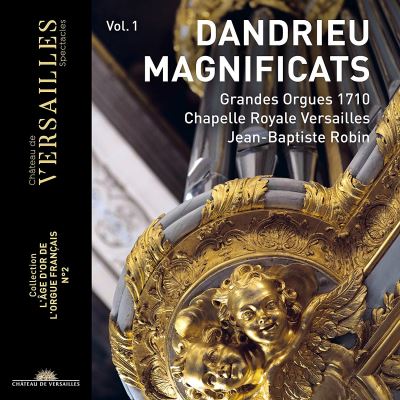
Dandrieu: Magnificats

Dandrieu: Magnificats Vol 1
Jean-Baptiste Robin
Grandes Orgues 1710, Chapelle Royale – Versailles
Chateau de Versailles CVS023. 70’51

The second in the L’âge d’or de l’orgue français series featuring the 1710 organ in the  Versaille Chapelle Royale focuses on Jean-François Dandrieu (1681-1738). From 1721, he was one of the four organists of the Chapelle Royale. He had an early introduction to Court musical life when, aged five, he played the harpsichord to the Palatine Princess Elisabeth-Charlotte of Bavaria, wife of Philippe d’Orléan, Louis XIV’s brother. He succeeded the famed Nicholas Lèbegue as organist of Saint-Merry, Paris in 1704/5. From 1733 he added to these posts the position of organist to the now-demolished St Barthélémy, a role previously held by his uncle and which after his death, was passed on to his daughter. Continue reading

Andrew Benson-Wilson: Three Westminster Abbey organists

Music-at-Hill – Midtown concerts

Friday 13 September 2019, 1:10pm

St Giles-in-the-Fields
60 St Giles High Street. London, WC2H 8LG

Andrew Benson-Wilson
plays organ music by
Three Westminster Abbey Organists
1668 John Blow; 1679 Henry Purcell;
1695 Blow re-appointed; 1708-1727 William Croft

DSCF6488.jpg

During the period from 1668 and 1708, Westminster Abbey appointed three distinguished organists, the first of which, John Blow, was the teacher of his two successors, Henry Purcell and William Croft. In 1679 John Blow stepped down from his Abbey post in favour of his talented student, Purcell, only returning on Purcell’s death in 1695. William Croft replaced John Blow after his death in 1708, having previously been organist at St Anne’s Soho and Master of the Children of the Chapel Royal. He is most famed today for his Funeral Sentences, performed at Handel’s funeral in 1759 and at every British state funeral since then.

William Drake’s reconstruction of the Dallam/Smith/England/Lincoln/Gray & Davison organ in St Giles-in-the-Fields is one of London’s most important historic musical instruments. It contains some of the oldest pipework in London, going back to the time of Blow and Purcell in the mid to late 17th century.

Organ information can be found here.
Free admission, retiring collection.
The church is just behind Centre Point/Tottenham Court Road tube station.

J Praetorius & Schildt organ works

Jacob Praetorius & Melchior Schildt
Selected organ works
Bernard Foccroulle
Ricercar RIC400. 68’05

Praetorius: Fantasia sopra Durch Adams Fall ist ganz verderbt; Praeambulum in F;
Vater unser im Himmelreich; Von allen Menschen abgewandt
Schildt: Herr Christ, der einig Gottessohn; Magnificat 1. toni; Praeambulum in G

1467/1637 Stellwagen organ, Jacobikirche, Lûbeck

Jacob Praetorius (1586-1651) and Melchior Schildt (1592-1667) were two of the leading pupils of the Amsterdam organist Jan Pieterszoon Sweelinck. Praetorius was the son of the Hamburg organist Hieronymus Praetorius whose own father, Jacob Praetorius the Elder (d. 1586) was also an organist/composer. The family are not related to Michael Praetorius. Like his forebears, Jacob Praetorious was organist of the Hamburg Petrikirche and was the teacher of Matthias Weckmann. Melchior Schildt also came from a family of musician, in his case from Hannover. After three years as court organist to the King of Denmark, he replaced his father as organist of the Marktkirche in 1629 and remained there until his death. Only six of his organ works have survived.

Continue reading

Andrew Benson-Wilson plays Reincken

Mayfair Organ Concerts
Andrew Benson-Wilson plays 
Johann Adam Reincken (1643-1722)
St George’s, Hanover Square, London W1S 1FX
30 April 2019 @ 1:10pm 

Toccata in G (Andreas Bach Book)
Toccata in A (Anon?)
Chorale Fantasia: An Wasserflüssen Babylon

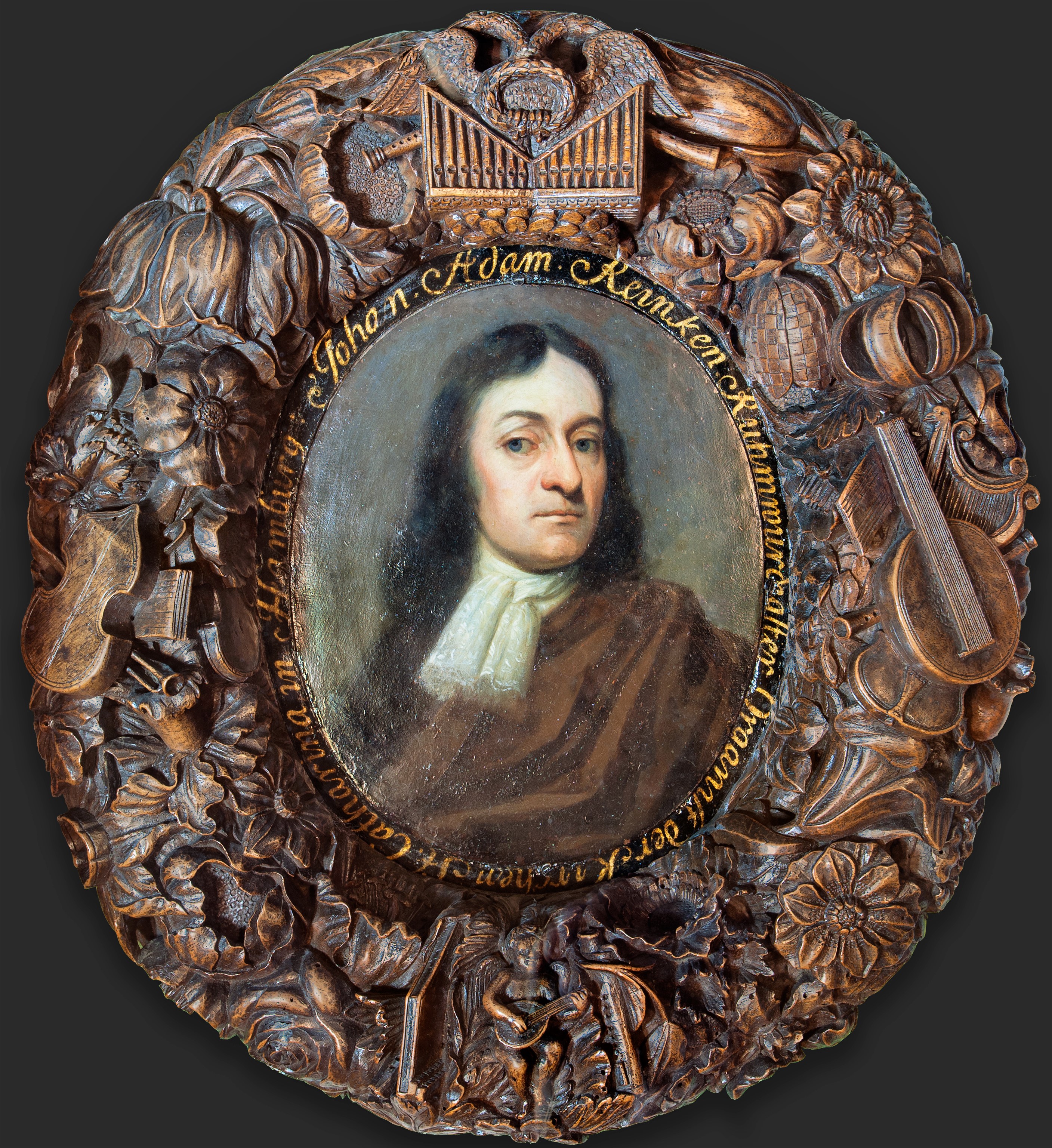
Johann Adam Reincken was one of the most important and influential 17th-century North German organist-composers. He forms a unique link between the Sweelinck influenced organists of the earlier part of the century and JS Bach. Little is known about his life, and very few of his organ compositions survive. He was born to North German parents in Deventer in The Netherlands around 1643. An earlier supposed birthdate of 1623 is now accepted as incorrect. He moved to Hamburg in 1654, aged just 11, to study with the famed organist of the Katharinenkirche, Heinrich Scheidemann, a pupil of Sweelinck. After a brief return to Deventer, he came back to Hamburg in 1659 as Scheidemann’s assistant, replacing him as organist in 1663 on Scheidemann’s death. As was the custom of the time, he married one of Scheidemann’s daughters in 1665. He remained there for 60 years until his death in 1722. As well as his church duties, he co-founded the Hamburg Opera and was involved in the city’s musical life. He is known from two pictures dating from around 1674; the portrait painting and the now well-known ‘Musical Company’ painting by Johannes Voorhout.

Reincken. Kniller, c1674.jpg

Continue reading

Bach: Chorale Partitas

J S Bach
Chorale Partitas, BWV 766-768 & 770

Stephen Farr, organ
Resonus Classics RES10120. 55’46

Ach, was soll ich Sünder machen BWV 770
Christ, der du bist der helle Tag BWV 766
O Gott, du frommer Gott BWV 767
Sei gegrüßet, Jesu gütig BWV 768

Stephen Farr continues his series of Bach organ recordings with the four Chorale Partitas – variations sets of Lutheran chorales. None of them exists in autograph, so dating is problematical. They are almost certainly early works, possibly composed around the time Bach was at Arnstadt, or perhaps even earlier while Bach was under the influence of Georg Böhm, who Bach knew, and probably studied with while he was at school in Lüneburg. Böhm wrote many variation sets (as did Pachbel), a compositional style that goes back the Sweelinck, the Amsterdam instigator of the North German/Hamburg school of the early to mid-17th-century. It is not clear whether Bach’s examples were intended for performance during church services or, indeed, on the organ. Most are equally suitable for clavichord or harpsichord in a domestic setting. Continue reading