
Jacob Regnart: Missa Christ ist erstanden
with Missa Freu dich, du werthe Christenheit and motets
Cinquecento
Hyperion CDA68369. 64’45
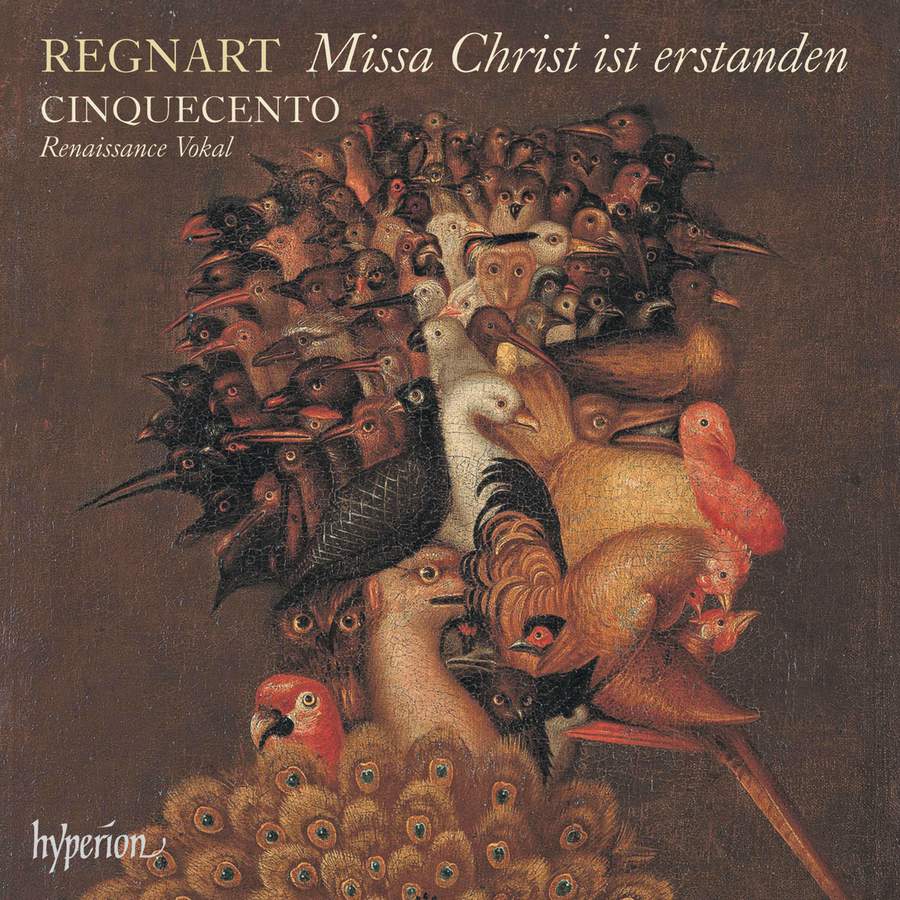
Jacob Regnart (c1540-1599) is one of the lesser-known Flemish born composers who dominated European music during the 16th-century. Born in Douai, he soon moved to Prague, singing in the Habsburg Holy Roman Emperor Maximilian II’s Hofkapelle. His career remained within the Hapsburg realms, rising through the ranks under three successive Hapsburg rulers. He spent several years in Innsbruck in the court of Maximilian’s brother Archduke Ferdinand II, where much of his sacred music seems to have been composed, although it was not published until after his death. Those works include the two Mass settings included on this excellent recording from Cinquecento (Terry Wey, countertenor, Achim Schulz & Tore Tom Denys, tenors, Tim Scott Whiteley, baritone, and Ulfried Staber, bass).
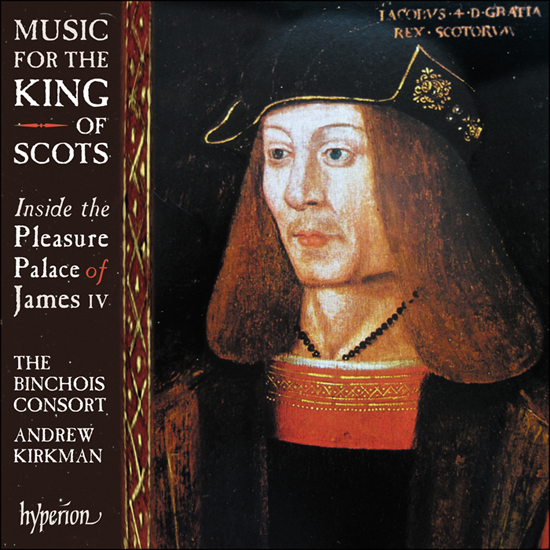
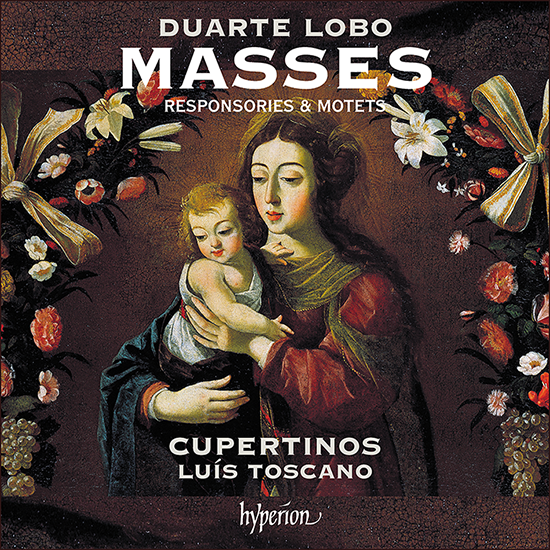
 Jeremy Summerly’s comprehensive programme note opens with the suggestions that “Early Tudor England was insular and the attitude of its people xenophobic”, quoting an Italian visitor in 1497 that “they have a antipathy to foreigners”, an unfortunate habit that sadly still seems to be the case, at least for around 52% of the population. John Taverner was very clearly an exception to this view, at least musically, for he relished the music coming from the continent. This CD indicates two particular influences, with the complex polyphony and imitative writing of the likes of Josquin featuring in the Missa Mater Christi sanctissima and, in the Western Wynde Mass, as Summerly puts it “a Lutheran dexterity in his use of a secular model for a piece of sacred music”.
  This is the third of The Orlando Consort’s recordings of Machaut’s secular songs, following on from their ‘Songs of Le Voir Dit’ and ‘The Dart of Love’ CDs. Music like this can be appreciated at many different levels, and perhaps one of the most satisfactory (unless your mediaeval French is up to scratch) is to ignore the programme notes or translations of the text, turn the lighting down and just let the music wash over and through you. Although it might appear disrespectful to the enormous amount of research that has to go into producing a recording like, it really does work as a musical experience.
 This is the penultimate recording in The Cardinal’s Musick’s Tallis Edition, and it opens with a masterpiece, the two settings of the Lamentations of Jeremiah. As Andrew Carwood explains in his programme notes, it seems that they were written during the reign of Queen Elizabeth, rather than the earlier Catholic Queen Mary. It is not clear why these, and other similar Lamentations, were composed or when they would have been performed, if not in the Holy Week Tenebrae service in the Catholic rite – hence the usual assumption of composition during Queen Mary’s reign. They are remarkable pieces, using the simple textural style of one note per syllable encouraged by Archbishop Cranmer. The Hebrew incipits are particularly well set, as are the concluding, and rather sombre
  The Birmingham based choir, Ex Cathedra has long been at the forefront of British choral music, notably through their educational work and concerts and recordings of early music and Baroque music from Central and South America, a particular research interest for their inspirational director, Jeffry Skidmore. But they also venture into more recent repertoire, as evidenced by their latest CD of music by Alex Roth.
 The link between early music performance and academic musicological study has always been close, but seems to be becoming even more so with a number of recent projects stemming directly from research backed by the Arts & Humanities Research Council (AHRC). One such is the project ‘Cantum pulcriorem invenire: Thirteenth-Century Music and Poetry’, based at Southampton University, headed by Mark Everist (details
  José Maurício Nunes Garcia: Missa pastoril para a noite de natal;
 The latest release in The Cardinall’s Musick Tallis Edition focuses on some lesser-known, but nonetheless fascinating pieces. The piece that gives the CD its title is one of Tallis’s earliest works, but probably not the first. It is nearly 16 minutes of rather convoluted praise to the Virgin Mary in which Tallis shows a considerable amount of early promise, not least in some of what was to become his trademark harmonic twists and turns. Detective work by David Allison has not only reconstructed the work from its surviving incomplete state, but has also explored the similarities between it and Robert Fayrfax’s setting of the same text. I would have preferred it to have started the disc (not least to match the order of the liner notes), but it appears after three opening Latin Responsories, the only other pieces in Latin.
 This recording comes with several health warnings, not least the fact that none of the five featured Sonatas are quite what they seem. The three Bach sonatas were, as the CD title implies, intended for the viola da gamba. The Scarlatti Sonata was probably intended for solo harpsichord although there is an argument that it, and some of its fellow sonatas, could have been performed as a violin sonata. The Handel Sonata was originally for oboe but was transcribed for the violin with a scribbled note that it could be played on the viola da gamba. None were intended for the cello.
 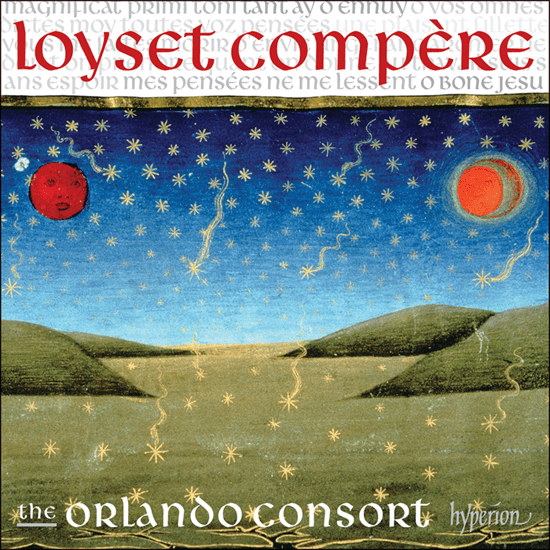 Loyset Compère is not as well-known as he deserves to be, and this recording could be the means by which his (recently re-assessed) place in musical history is acknowledged. The key to the re-assessment is the slightly embarrassing realisation that the Josquin that musicologists assumed to have been born in 1440 was not, in fact, Josquin des Prez, but another Josquin altogether. That makes Josquin des Prez around 10 years younger than thought. Similar birth date realignment concerning Obrecht and Agricola also make them younger than first thought. As David Fallows explains in his comprehensive programme notes, this leaves Loyset Compère as one of the earliest composers in the imitative style, now known to be later developed, rather than instigated, by Josquin and others.
  Andrew Benson-Wilson : Early Music Reviews +