Recital on the ‘Wetheringsett’ organ, c1525
St Swithun’s, Church Street, Worcester WR1 2RH
Friday 23 June, 2017. 1.10
Andrew Benson-Wilson
 The ‘Wetheringsett’ organ is a reconstruction of a Tudor organ based on the soundboard of an organ that was found during alterations to a farmhouse in the village of that name in Suffolk. Until it was hidden away within the walls of the farmhouse, is seems to have been used as a dairy door. The many holes in the wood were initially thought to indicate some sort of protection from the evil eye, until a local organ builder recognised it as the soundboard of an organ – the bit hidden away inside the instruments where the feet of the pipes sit, and through which the air is channelled from the windchest to the pipes. Analysis of the number and size of the holes can give a pretty accurate account of the size, range and number of stops of the organ. Tree-ring dating suggests that the wood dates from around 1525, leading to suggestions that this could be the organ known to have been purchased by a large parish church in Debenham in that year.
Under the aegis of the Early English Organ Project this organ, along with a smaller instrument based on another soundboard found in Wingfield Church, Suffolk, was reconstructed by organ builders Goetze & Gwynne in 2002. Under the management of the Royal College of Organists, the Wetheringsett organ is now resident in the church of St Swithun’s in the centre of Worcester, a delightful Georgian church with box pews and a later 18th century organ.
For this recital, I will be playing English music from before, during, and just after the 1520s, with pieces from c1360 to one of Thomas Tallis’s two extraordinarily monumental Felix Namques, dating from around 1560. In contrast I will play a Voluntary by Samuel Wesley on the 1795 Grey organ, published just a few years after the date of the organ.
Robertsbridge Codex, c1360
Adesto / Firmissime / Alleluya Benedictus
John Dunstaple (Buxheimer Orgelbuch, c1460)
Sub Tuam Protectionem
Anon, c1530 (Roy 56)
Felix Namque (in 5/4)
Anon / Thomas Preston (d1563)
Uppon la mi re
Hugh Aston (c1485-1556)
A hornepype
Samuel Wesley (1766-1837)
Voluntary in B flat. Op 6/9 8’
Thomas Tallis (c1505-1585)
Felix Namque I (1562)
Admission is free, with a retiring collection.
 During the 18th century, Iberian churches often adopted the earlier Italian plan of having two organs, each in (usually) identical architectural cases positioned on balconies and speaking towards each other across the choir. The practice has its roots in St Mark’s Venice in the 16th century. Clérigos Church in Oporto is one such example, its two organs dating from 1779 with major restorations in 1864. Rather like French organs, organ building in the Iberian peninsula reached a technical peak in the 18th century at a time when the music written for the organ was experiencing something of a decline. This CD reflects both those aspects; of organ building and composition.
  osé Luis González Uriol is one of the most influential Iberian organists and teachers, and this recording is a homage to him, and also to the organ in the Monastery of São Vicente de Fora, Lisbon, built by João Fontanes de Maqueira in 1765, and restored in 1994 as part of Lisbon’s European City of Culture celebrations. Unusually for organs, it had survived virtually unaltered since it was built, and retains 98% of its original pipework. The recording was made on 17 October 1994, just after the opening of the restored organ in a recital by González Uriol. A combination of factors, including the death of the recording producer Joaquim Simões de Hora (who was also heavily involved in the restoration project), meant that the recording has never been released until now.
 Joan (more usually spelt as Juan) Cabanilles (1644–1712) is a curious composer. His compositions fully absorb the late Renaissance counterpoint of the earlier, and better known, Spanish organ composer Francisco Correa de Araujo (1584–1654) but apply to that foundation layers of often virtuosic Baroque figuration that can range in style from the simplistic to the frankly perverse. He was born in Valencia, and seems to have remained there throughout his life, engaged in little more than the usual activities of a priestly musician in a cathedral city. He was organist of the cathedral, but doesn’t seem to have ever become the cathedral’s musical director. Although he composed a vast amount of organ music, it was not published in his lifetime and none of his original manuscripts survive. His music only exists in copies, of varying degress of accuracy, most now housed in the Biblioteca de Catalunya in Barcelona. The Biblioteca began a problematical complete edition in 1927, which remains incomplete to this day.
  The completion of the restoration of the famous 1735 Richard Bridge organ in Hawksmoor’s Christ Church, Spitalfields was one of the most important musical events in London during 2015. My review of John Scott’s opening recital, and details of the organ, can be seen
 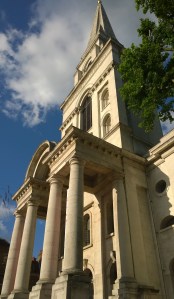 designed by the famed Baroque architect Nicholas Hawksmoor. The organ was built in 1735 by Richard Bridge, who became one of the leading organ builders of the day. Spitalfields seems to have been only his second commission, perhaps explaining the comparatively low price of £600 for such a substantial instrument. For the following 100 years or so, it was the largest organ in the country. It suffered the inevitable changes over the years, but retained enough of its original pipework to form the basis for a historically based reconstruction, returning it broadly to its original specification and construction. It was dismantled in 1998 while the church was being restored and was then restored to its 1735 specification, with very few concessions. Its completion in 2015 makes this by far the most important pre-1800 organ in the UK.
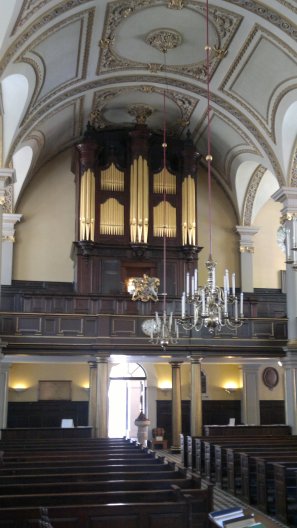 child prodigy, writing his first oratorio, Ruth, aged 6. When he was 8, the composer Dr William Boyce referred to him as the ‘English Mozart’. His family moved to London when he was about 12, living in Marylebone. He led a colourful life, some of his apparent eccentricities possibly being caused by a serious head injury when he was about 21. An organ virtuoso, Samuel Wesley was the leading pioneer of the Bach revival in England. Bach seems to have been a strong influence on his Opus 6 Organ Voluntaries, published between about 1807 and 1820, and the focus of this recital.
 Frescobaldi’s Fiori Musicali was published in 1635. He was at the height of his musical powers, having just returned to Rome (after six years with the Medici’s in Florence) to work for the Barberini Pope and Cardinals, and continued his post as organist of St Peter’s in Rome, a post he had held throughout his many travels. Although many pieces in Frescobaldi’s earlier books of Toccatas (1615/16 and 1627) were clearly intended for organ and would have presumably have been playing in a liturgical setting, Fiori Musicali is his only organ book specifically geared towards use in the Mass. It was his last publication of new music, although he did re-issue some earlier volumes. It quickly became one of his most popular publications, and was used as an exemplar of polyphonic writing well into the 19th century. Bach also studied it and copied it out.
 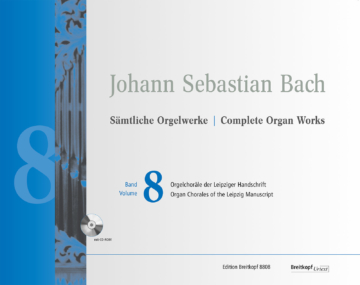 Editions of Bach’s organ works are something of a minefield, even when there are clear autograph scores available. In many cases that is not the case, so the role of the editor and the availability and accuracy of available sources becomes an important consideration. Of all the publishers to be involved in Bach, Breitkopf & Härtel are perhaps the most appropriate. Founded in Leipzig in 1719 four years before Bach took up his post there, they were the first to publish the complete works of Bach, between 1851 and 1900 for the Bach-Gesellschaft. Unfortunately, at the moment, I only have access to one volume of their latest complete Bach Organ Works, so cannot comment on the 10 volume set as a whole.
 The untimely death in August 2015 of the eminent organist and choral director John Scott was a shock to many. Organist and Director of Music of St Paul’s Cathedral from 1990 to 2004, and then at St Thomas Church on Fifth Avenue, New York, John’s reputation as solo organist and choir director seemed to be on a perpetual rise. His memory remains strong in St Paul’s Cathedral, as was evident from the packed Service of Commemoration and Thanksgiving to mark his life, held in place of the usual Evensong on Friday 6 May.
 Matthias Weckmann
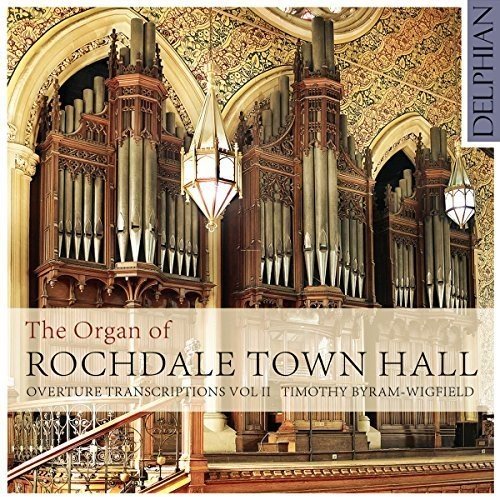 Overtures by: Nicolai, Spohr, Bach, Handel, Verdi, Weber, Tchaikovsky;
 Christ’s Chapel of Alleyn’s College of God’s Gift in Dulwich was consecrated 400 years ago, in 1616. The chapel and adjoining almshouses were the first of the charity foundations set up by the wealthy actor, Edward Alleyn, owner of the manor of Dulwich. Shortly afterwards, the foundation’s status as a educational college was confirmed, leading to the present day Dulwich College.
 time the Chapel’s first organ was installed. In 1760 it was replaced by a new organ by George England which, despite the usual additions and alterations over the years, still survives with a considerable amount of mid- 18th century pipework and a fine Gothick case. In 2009 it was restored back to its 1760 state (with modest additions) by the UK’s leading specialist on historic organs, William Drake. The original pitch (A430) and modified fifth-comma meantone temperament was restored. It is now one of the most important historic instruments in the UK.
 As well as the CD demonstrating the 2003 Westenfelder organ in the Abbey of Sankt Lambrecht, Austria (reviewed
  Music by Scheidemann, Bach, Frescobaldi, Boëlly, Arauxo, Ximénez, Brahms, Froberger, Buxtehude.
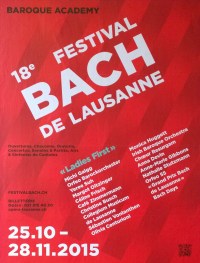 The “Grand Prix Bach de Lausanne” organ competition has taken place every four or five years since 1997, although the actual ‘Grand Prix’ has only been awarded on two of the four previous occasions. The stated intention of the competition is to attract talented organists from all over the world who are passionate about the music of Bach, his predecessors, precursors and his contemporaries. Competitors are told that they need to be able to express the specific language of each style of organ music, and will be judged as to their musicality, choice of registration, technique, quality and order of the programme, style, and originality. Unusually for such competitions, there are no age limits. This is a big investment for the competitors. They are expected to be in Lausanne for up to eight days (arriving three days before the first round), and have to pay their own travel and accommodation costs, as well as a registration fee of 200 Swiss Francs. Unless they live locally, only those winning one of the three main prizes can hope to recover their costs.
 CD 2, the ‘Sorrowful Mysteries’ (Sonatas VI-X), are recorded in Kaltenlengsfeld, next door to Friedelshausen, where CD 1 was recorded, south of the Bach town of Eisenach in Thuringia. The organ dates from 1755 and has, for Thuringian organs, a rather unusual configuration with a Ruckpositive. It is positioned above the altar in what appears to be almost a separate space from the main church volume, beyond a low arch and in a small space – presumably this explains the configuration, which takes up less vertical space. The recording is made fairly close to the organ, but still includes the acoustic bloom from the rest of the space. The violin
  The start of the Renaissance is difficult to define. In organ music, around 1450 seems a reasonable date, with music from the likes of the Buxheimer Orgelbüch and the Faenza Codex combining elements of Medieval and Renaissance styles. By this stage, the organ had a fully chromatic keyboard, sometimes more than one manual, and independent stops were beginning to be separated out from the Medieval ‘Blockwerk’ – the equivalent of single mixture where one note plays a chorus of ten or more notes.
 Jacques van Oortmerssen was one of the most influential organists and organ teachers of his generation. His untimely death on Saturday 21 November is a great loss to music. In his memory, I am posting extracts from some of my reviews of his Bach organ CDs.
 It is pretty certain that the organ in the church of Notre-Dame de l’Assomption in Longueville (southwest of Brussels) was built around 1690, but it is not clear who the organ builder was, although Blasius Bremser is a possibility. It was originally built for the Saint-Martinsdale Priory in Leuven but was moved south to Longueville when the priory was dissolved in 1785, placing it in the Walloon rather than the Flemish province. It has one manual with 12 stops, two of which are divided (in the Spanish fashion) to allow for bass and treble solos. The construction and style are Flemish.
  This CD produces an interesting meeting of minds between the composer Johann Ludwig Krebs and the organ builder Johann Georg Stein, both born a few miles from each other (near Weimar) and at about the same time (1712/13). Both absorbed local influences in their craft, before stylistically moving into a new style. Krebs, of course, was the favourite pupil of JS Bach, leading to Bach’s comment about him being the “best crayfish (Krebs) in the brook (Bach)”. It is to Krebs that we owe the preservation of much of Bach’s organ music. His own organ compositions are often based on recognisable Bach pieces, often extended to quite extraordinary lengths and developed into the early Classical style. So it something of a relief to hear him composing in miniature form.
  plainchant choir and organ sing and play alternate verses, a tradition dating from the late Medieval period through to the late Baroque). Then late 16th century intabulations of choral settings and variations and, thirdly, examples of the organ pastorella, a popular Christmas musical theme in southern Europe, representing the shepherds away the birth of Jesus, and often including well-known Christmas melodies such as the Resonet in laudibus.
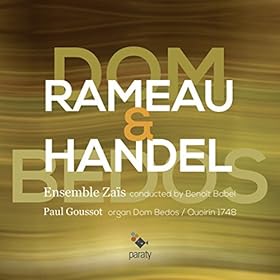 Handel and Rameau are both frustrating composers for organists. Both were very keen organists throughout their life, but Rameau left no organ music, and Handel very little. I have given many organ recitals solely devoted to Handel’s music, but only by drawing on music almost certainly intended for harpsichord. It works well, but I would love to have heard Handel (and Rameau) improvising on the organ. This CD is something of a nod towards that very happening. The unspoken premise of this recording seems to be that Handel and Rameau (born two years apart) meet near the west coast of France (which Handel certainly never ventured even close to) in a church housing one of the largest and most comprehensive French baroque organs ever built – the 1750 Dom Bedos organ of Saint-Croix in Bordeaux. There happens to be an orchestra present. They set about a run-through of some of their pieces, Handel expanding on his Organ Concertos and Rameau transcribing some of his orchestral and harpsichord ensemble works for organ and orchestra. Both improvise at will.
 As a supplement to Margaret Phillips’ 16 CDs of Bach organ works (published as eight double CDs plus this volume), this CD includes alternative versions, pieces usually allocated to but probably not by Bach, pieces not intended for organ, and one piece had not been rediscovered when the other Bach pieces were recorded, between 2005 and 2009. You could fill a further 16 CD with such peripheral and alternative pieces, so the selection of these 16 must have been quite a task. The choice is an excellent one, balancing well-known pieces such with little-known works like the Fantasia duobus subjectis.
  Although generally grouped under the title of the ‘virginalists’, most of the keyboard repertoire of Byrd’s era can be performed authentically on different keyboard instruments, although there are a few pointers towards either the organ (church or domestic) or one of the stringed keyboard instruments (harpsichord, virginal, clavichord). So the combination of harpsichord and organ on this CD is entirely appropriate, although there are one or two occasions when I might question Jean-Luc Ho’s particular choice of instrument. Both instruments were recorded in the Abbey of Saint-Amant-de-Boixe, Charente, France.
  Andrew Benson-Wilson : Early Music Reviews +