Mozartists: Mullova plays Mozart

Mullova plays Mozart
Mozart 250: 1775
The Mozartists

Viktoria Mullova, Ian Page
Cadogan Hall. 4 November 2025


Haydn: Symphony No. 68 in B flat major
Mozart: Violin Concerto No.3 in G major, K.216
CPE Bach: Symphony in D major, Wq.183/1
Mozart: Violin Concerto No.4 in D major, K.218

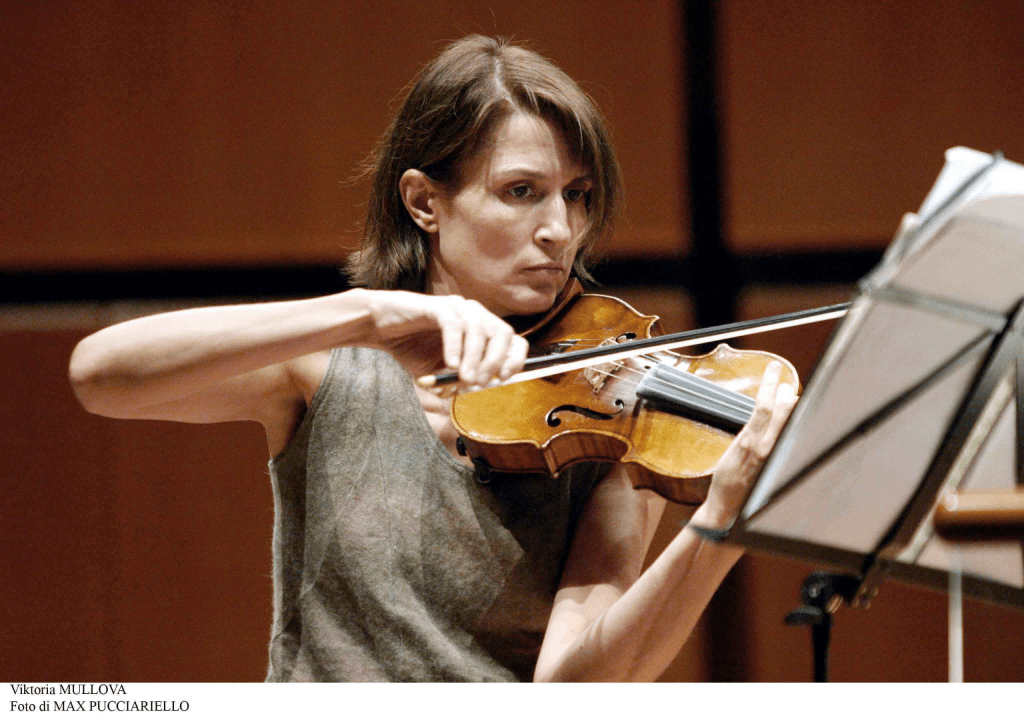
The Mozartists‘ enterprising MOZART 250 project has reached its 10th anniversary, with concerts this season focusing on the year 1775, when Mozart turned 19. The project started in 2015 on the 250th anniversary of Mozart’s childhood visit to London and follows Mozart’s musical life and that of his contemporaries year by year until the 250th anniversary of his death in 2041. It has been described as a “journey of a lifetime”, and will probably outlive many members of current classical music concert audiences. Following their Wigmore Hall concert in June (reviewed here), when Rachel Podger played two (2 & 5) of Mozart’s five violin concertos, this concert in the larger Cadogan Hall featured the other two concertos composed during 1775 (3 & 4) performed by Viktoria Mullova, making her debut with The Mozartists.

Continue reading

Mozart 250: 1775

Mozart 250: 1775
The Mozartists, Ian Page, Rachel Podger
Wigmore Hall. 18 June 2025

Photo: The Mozartists

Haydn: Symphony No. 66 in B flat
Mozart: Violin Concerto No.2 in D major, K.211
Symphony in D major, K.196+K. 121/207a
Violin Concerto No.5 in A major, K.219


The Mozartists‘ enterprising MOZART 250 project has reached its 10th anniversary, with concerts this season focusing on the year 1775, when Mozart was about 19. The project started in 2015 on the 250th anniversary of Mozart’s childhood visit to London and will follow Mozart’s musical life and that of his contemporaries year by year until the 250th anniversary of his death in 2041. It has been described as a “journey of a lifetime”, but it will probably outlive many members of the current concert audience. Given the noise the audience made during tuning up, I am not sure if they deserve to see the project through to the end. Perhaps surprisingly, given their status in the repertoire, Mozart completed all of his violin concertos by the time he was 19. This concert included two of them, with two more coming in November. The soloist, making her debut with The Mozartists, was the distinguished violinist Rachel Podger.

Continue reading

The Mozartists: Jommelli – a celebration

Niccolò Jommelli – a celebration
The Mozartists, Ian Page
Fflur Wyn, Ambroisine Bré, Hugo Brady

Wigmore Hall, 18 September 2024

“Vidi il mar tutto in procella” from Ricimero, re de’ Goti (1740)
“Se il povero ruscello” from Ezio (1741)
“Io già sento nel mio petto” from Merope (1741)
“Crescon le fiamme” from Didone abbandonata (1763)
“De’ miei desiri ormai… Che farò?” from Il Vologeso (1766)
Duetto, “La destra ti chiedo” from Demofoonte (1764)
“ Ombre che tacite qui sede” from Fetonte (1768)
“Hereuse paix tranquille” from La critica (1766)
“Fra l’orror di notte oscura” from Armida abbandonata (1770)
“Prendi l’estremo addio” from Ifigenia in Tauride (1771)
“Sol del Tebro in su la sponda” from Il trionfo di Clelia (1774)
“Misera Armida … Odio, furor, dispetto” from Armida abbandonata (1770)

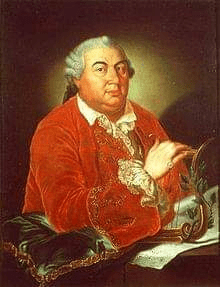
You would be forgiven for not having heard of Niccolò Jommelli (1714-1774), although he does have a Facebook profile, with the above profile picture – and now wants me to be his ‘Friend’. A prolific Neopolitan composer well-known in his day, he composed around 80 operas. He was described at the time as “the creator of a quite new taste, and certainly one of the foremost musical geniuses who have ever lived“. Selections from 11 of these were featured in this concert celebrating the 250th anniversary of his death, the first in The Mozartists’ 2024/25 season. Their exploration of Mozart and the composers around him in their MOZART 250 project has revealed many little-known delights, and Jommelli is certainly one of them. Of the five times I have reviewed music by Jommelli on this website, most have been courtesy of The Mozartists, including their 2016 concert performance of Jommelli’s opera Il Vologeso.

Continue reading

The Mozartists

Mozart in 1774
The Mozartists
Ian Page, Samantha Clarke, Jane Gower
Wigmore Hall. 2 May 2024


Mozart: Symphony No. 28 in C, K.200
Paisiello: Povera prence… Deh, non varcar (from Andromeda)
Mozart: Bassoon Concerto, K.191
Epistle Sonata in D major, K.144
Crudeli, fermate… Ah, dal pianto (from La finta giardiniera)
Symphony No. 30 in D, K.202

Following the opening concert on the 10th anniversary of their monumental MOZART 250 project, which gave a retrospective view of the wider context of music in 1774 (reviewed here), Ian Page’s The Mozartists focussed on Mozart himself in a concert that could be said to reflect the first true masterpieces of the still very young composer. The relatively little-known Mozart pieces were composed in Salzburg at a time when a new archbishop restricted the pan-European travels that his predecessor had allowed Mozart and his father. Only for the last three weeks of the year was he able to travel to Munich for the premiere of his opera La finta giardiniera, commissioned by the Elector Maximillian III for the Munich carnival.

Continue reading

The Mozartists. 1774 – A Retrospective

MOZART 250
1774 – A Retrospective
The Mozartists, Ian Page
18 January 2014

Zimmermann: Symphony in E minor
Gluck: “Par un père cruel” and “Jupiter, lance la foudre” from Iphigénie en Aulide
Anfossi: “Care pupile belle” from La finta giardiniera (UK première)
Salieri: “Sperar il caro porto” from La calamita de’ cuori (UK première)
Mozart: “Ergo interest… Quaere superna” K. 143
Mysliveček: “Pace e calma in questo segno” from Artaserse (UK première)
Mozart: Symphony No. 29 in A, K. 201
Gluck: Scene from Act 3 of Orphée et Euridice

The Mozartists‘ monumental MOZART 250 project has now reached its 10th year with an exploration of the year 1774 and the opening programme of their 2014 season. Continuing the pioneering work of Ian Page’s Classical Opera (which I first reviewed in 1998), the renamed Mozartists started MOZART 250 in 2015, the 250th anniversary of Mozart’s childhood visit to London. The project will follow his musical journey up to the year 2041, the 250th anniversary of his death.

As usual, the opening programme of the annual series places Mozart’s music in its wider musical context. Their programme “1774 – A Retrospective” gives an overview of the musical world 250 years ago when Mozart turned 18. Alongside two pieces by the young Mozart (“Ergo interest… Quaere superna” K143 and Symphony No. 29 in A, K201) were an extended scene from the Paris version of Gluck’s setting of the Orpheus legend and three UK premieres. The inclusion of premier performances is a subplot of the MOZART 250 series. Ian Page plans to include at least 100 such compositions during the project and after the first ten years, is already approaching 50.

Continue reading

Mozart in Italy Festival

Mozart in Italy Festival
The Mozartists, Ian Page
Cadogan Hall, 6-8 March 2020

The Mozartists (and their companions, Classical Opera) continue with their ambitious MOZART 250 project with a weekend exploration of music written by Mozart and others in the year 1770 when he was 14 years old. The project started in 2015 on the anniversary of Mozart’s childhood visit to London and continues with annual explorations of the music that Mozart wrote exactly 250 years earlier, alongside music that Mozart might have heard during the same year. Following their 2015 ‘Mozart in London’ weekend, this weekend focussed on the time Mozart spent in Italy. The Cadogan Hall weekend included three formal concerts together with related talks and performances. There was a focus on different versions of Mitridate, re di Ponto, by Mozart and others, together with extracts from little-known operas by Guglielmi, Piccinni, Mysliveček and Jommelli that Mozart heard in Verona, Milan, Bologna and Naples. Continue reading

Gluck: Bauci e Filemone & Orfeo

Christoph Willibald Gluck
Bauci e Filemone & Orfeo (from Le feste d’Apollo)
Classical Opera/The Mozartists. Ian Page
Queen Elizabeth Hall. 29 May 2019

As a continuation of their Mozart 250 project, Classical Opera travelled back 250 years to explore the year 1769 with extracts from Gluck’s Le feste d’Apollo, composed for the wedding celebrations of 15-year-old Ferdinand, Duke of Parma and the 23-year-old Austrian Archduchess Maria Amalia, youngest daughter of Empress Maria Theresa and Emperor Francis I. She was against the idea of this dynastic match from the start, not least because she was in love with a Bavarian Prince, who was deemed socially beneath her. Given that background, it must have been a bit of a strain for her to sit through the three short operas that make up Gluck’s Le feste d’Apollo, two of which were performed in this concert. The opening extract Bauci e Filemone is a rather soppy story of the power of love, whilst the well-known story of Orfeo tells a similar, but rather darker tale of love and relationships. Continue reading

Mozart in London

Mozart in London
A musical exploration of Mozart’s childhood visit to London, 1764-65
The Mozartists, Ian Page
Signum Classics SIGCD534. 2 CDs. 77’36&67’14

The Classical Opera/Mozartists Mozart 250 project has been underway for four years, with a number of successful recordings and events already under their belt. This (rather delayed) review of a double CD set released in May 2018 takes us back to the beginning of the project: the ‘Mozart in London’ Festival weekend of events at Milton Court in February 2015. The weekend included talks, discussions and concerts over a three-day period. My review of two of those events can be found here. Several other Mozart 250 reviews are here. The ‘250’ of the title refers to the years since Mozart’s childhood visit to London (23 April 1764), during which he composed his first significant works. The plan is to “follow the chronological trajectory of Mozart’s life, works and influences”, culminating in 2041, the 250th anniversary of Mozart’s death. These two CDs were recorded live during the various concerts of the 2015 weekend. They are an impressive record (quite literally) of the start of one of the most impressive and ambitious musical projects of our time. Continue reading

Mozart: Grabmusik & Bastien und Bastienne

Mozart: Grabmusik & Bastien und Bastienne
Classical Opera, Ian Page
Signum Classics, SIGCD547. 66’24

Mozart:<em>Grabmusik</em> and <em>Bastien und Bastienne</em> K.50; Classical Opera

This recording is almost certainly the first performance of Mozart’s original setting of Bastien und Bastienne since its original (and only) performance at the home of the person who commissioned it 250 years ago in 1768 – Dr Franz Mesmer, of mesmerism fame. The opening Grabmusik is also given in its original 1767 form, lacking a final recitative and chorus added in the 1770s. Both works are examples of Classical Opera and The Mozartists pioneering Mozart 250 project which, between 2015 and 2041, will explore the music that was written by Mozart and his contemporaries exactly 250 years earlier. Grabmusik & Bastien und Bastienne represent the years 1767/8, when Mozart was 11/12 years old. Continue reading

Mozart: La finta semplice

Mozart: La finta semplice
Classical Opera & The Mozartists, Ian Page
Queen Elizabeth Hall, 2 June 2018

The Classical Opera & The Mozartists’ ambitious Mozart 250 project started in 2015, the anniversary of Mozart’s childhood London visit, aged 8, and the composition of his first symphony. Each year they are programming concerts reflecting Mozart’s, and his contemporaries, compositions dating from 250 years ago. So 2018 is centred on music from 1768. Their two concerts earlier this year explored the music surrounding the 12 year-old  Mozart in Vienna in 1768 (reviewed here), with pieces by Haydn, Jommelli, JC Bach, Hasse, Vanhal, and an extract from Mozart’s La finta semplice; followed by a rare performance of Haydn’s Applausus Cantata: Jubilaeum Virtutis Palatium (reviewed here)But tonight it was Mozart’s turn, with a semi-staged performance of his first opera buffa, La finta semplice. It is all too easy to denigrate Mozart’s early works, to the extent that the chronological sequence of the Mozart 250 project could have been a risk, at least for the first few years. But it has turned out to be very much not the case. Part of the responsibility for that is the excellent performances of Classical Opera & The Mozartists, lifting what can be rather less than outstanding music into memorable performances. Continue reading

Haydn: Applausus

Haydn: Applausus: Jubilaeum Virtutis Palatium
The Mozartists, Ian Page
Cadogan Hall, 15 March 2018

In what was almost certainly the first live UK performance of Haydn’s Applausus Cantata (Jubilaeum Virtutis Palatium, Hob XXIVa:6), the Mozartists (the concert-performing wing of Classical Opera) opened the 2018 season of their ambitious Mozart 250 project. This started in 2015, the 250th anniversary of Mozart’s visit to London where, incidentally, he stayed not far from the Cadogan Hall in Ebury Street, and wrote his first symphony, aged 8. The aim is to annually explore the music written by Mozart and his contemporaries exactly 250 years previously.

IMG_20180315_174251159_HDR.jpg

In 1768, this year’s focus, Mozart was 12 years old and Haydn 36 and well settled into the princely Esterházy court where he directed most of the musical life of the court. He received an invitation from the wealthy Abbey of Zwettl, about 120km west-north-west of Vienna to write an ‘applausus‘ cantata to celebrate the 50th anniversary of their abbot Rainer Kollmann, first taking his monastic vows. Although composed in quasi-operatic style, with a series of accompanied recitative leading up to da capo arias, a duet, quartet and a final chorus, there is no plot in any operatic or literal sense. The four Cardinal Virtues of Temperance, Prudence, Justice and Fortitude sing the praises of the Abbot in a convoluted Latin libretto, probably written by one of the monks. A personification of Theology/Wisdom moderates some of their utterances. I am sure the text meant something to the 17th-century monks of Zwettl, but I found its vaguely moralistic meanderings completely incomprehensible. The repeated references to a ‘Palace’ perhaps reflected the wealth of the monks of Zwettl, whose medieval Abbey buildings had been thoroughly reconstructed in the Baroque style a few decades earlier, complete with one of the largest and most expensive organs in Austria (1731, Egedacher) – all still existing. “How blessed I am to be an inhabitant of this building!’ is one of Prudence’s utterings, to which Justice notes that “our Palace is celebrated in the eyes of the highest”. So that’s all right then! Continue reading

Mozart 250: 1768 – a retrospective

Mozart 250: 1768 – a retrospective
The Mozartists, Ian Page, Chiara Skerath
Wigmore Hall. 23 January 2018

Classical Opera’s ambitious ‘Mozart 250’ project is now in its fourth year. The project started in 2014, taking its title from the number of years since Mozart’s childhood visit to London (1764) when he composed his first significant works. The project aims to “follow the chronological trajectory of Mozart’s life, works and influences”, by performing annual concerts and operas based on the music composed 250 years earlier, culminating in 2041, the 250th anniversary of Mozart’s death. The Mozartists (the concert-performing wing of Classical Opera) opened the 2018 incarnation of the project with an insight into the music that was composed in 1768, the year that Mozart turned 12. It wasn’t a good year for him. It started with his recovery from smallpox and continued with rejection from the Viennese musical coterie, who prevented the production of Mozart’s first opera, La finta semplice. Classical Opera performed this later this year, as well as his Bastien und BastienneContinue reading

Classical Opera @ 20

Classical Opera 20th Birthday Concert
Orchestra and Choir of The Mozartists, Ian Page
The Barbican. 9 October 2017

Classical Opera was founded in 1997 and has carved out an important place in the musical world for its exploration of music of the classical era, in particular, Mozart. He is the inspiration for their ambitious Mozart 250 project, a chronological exploration of Mozart’s life, works and influences that each year will explore the music of Mozart and his contemporaries exactly 250 years previously. Now joined by a companion branding as The Mozartists, their name for increasing concert, rather than opera work, they celebrated their 20th birthday with a spectacular concert in London’s Barbican. The opening sequence of pieces, interspersed with reading, focussed on themes of “birth and rebirth, compassion and forgiveness, human inspiration and . . . what Beethoven and Schiller called brotherhood”.  Continue reading

Classical Opera: Apollo et Hyacinthus

Mozart: Apollo et Hyacinthus
Classical Opera, Ian Page, Thomas Guthrie
St John’s, Smith Sq. 13 June 2017

‘Lambach’ Symphony in G; Grabmusik, Apollo et Hyacinthus

As part of their ambitious Mozart 250 project (presenting Mozart’s music on the anniversary of their composition, culminating in 2041), Classical Opera presented the last of four concerts focussed on 1767, Mozart’s 11th year, with a staged performance of Apollo et Hyacinthus, preceded by his ‘Lambach’ Symphony in G and the Grabmusik, also staged.  This was a very clever and extremely well performed concert, exploring music that is not as well-known as it should be, with very sensitive stagings conceived and directed by Thomas Guthrie. The ‘Lambach’ Symphony in G (K45a) is believed to have been written in 1766 by the 10-year old Mozart. It was found in two manuscripts in Lambach Abbey, Austria. Like many other early Mozart works, it is beguiling in its elegant simplicity and harmonic inventiveness, here added to by having the first movement main theme first appearing in the bass, although on this occasion it wasn’t all that prominent. While it was playing, people walked across the St John’s stage, their relevance becoming clear when the bustling final movement of the Symphony segued directly, and very effectively, into the opening of the Grabmusik. Continue reading

Jommelli: Il Vologeso

Niccolò Jommelli: Il Vologeso
Classical Opera Company, Ian Page
Cadogan Hall, 28 April 2016

It is when you hear music from composers like Niccolò Jommelli (1714-74) that you realise just how deep the musical well is, if you peep behind the wall of well-known composers. Writing in that fascinating limbo period between the Baroque and Classical era, Jommelli perhaps completed too many operas for posterity to master. Il Vologeso is one of his best-known works and, on the strength of this performance by Classical Opera Company (giving the UK premiere), deserves to be heard more, and in a full staging rather than this concert performance. This was another part of their MOZART 250 project, aimed at exploring the works of Mozart and his contemporaries on the anniversary of their composition – which, in the case of Il Vologeso, was on 11 February 1766, in the enormous theatre at the Duke of Württemberg’s Ludwigsburg Palace near Stuttgart.

The opening extended Overture showed many of the features of Jommelli’s writing that would be reinforced as the evening progressed, including Continue reading

J C Bach: Adriano in Siria

J C Bach: Adriano in Siria
Classical Opera.
Britten Theatre. 14 April 2015

Johann Christian Bach, JSB’s youngest son, arrived in London in 17 62, aged 26. He stayed for the rest of his life, earning the epitaph of the ‘London Bach’. Two years later, the 8-year old Mozart arrived in London with his family. During his 15-month stay, Mozart wrote his first symphonies and opera arias and absorbed the influence of the many musicians that had flocked to post-Handelian London. JC Bach was a particular influence on the young Mozart. He later wrote of Bach: “I love him with all my heart, and have the highest regard for him.”. This influence is reflected in Classical Opera’s choice of Continue reading

Mozart 250 – ‘Capricious Lovers’ & ‘An Exotic and Irrational Entertainment’

Mozart in London Festival
Classical Opera, Ian Page

Classical Opera launched their ambitious ‘Mozart 250’ project with a ‘Mozart in London’ Festival weekend of events at Milton Court.  The 250 of the project’s title refers to the years since Mozart’s childhood visit to London (23 April 1764), during which he composed his first significant works. The plan is to “follow the chronological trajectory of Mozart’s life, works and influences”, culminating in 2041, the 250th anniversary of Mozart’s death. The weekend included talks, discussions and concerts over a three-day period.  I attended the events on Saturday 21 February, starting with the discussion on Mozart in London between Cliff Eisen, Ian Page, David Vickers and Andrew McGregor.

The first of the two Saturday concerts was ‘Capricious Lovers’, a look at English opera at the time of Mozart’s visit. Extracts from six operas (performed between 2 November 1764 and 15 February 1765) gave a fascinating insight into London musical life over this very brief period.  The first half concentrated on works given in Drury Lane, with George Rush’s The Capricious Lovers, Michael Arne & Jonathan Battishill’s Almena and William Bates’. PharnacesThe second half focussed on Covent Garden, with Thomas Arne’s The Guardian Outwitted, Thomas Arne’s Artaxerxes and the pasticcio Maid of the Mill.  Under the baton of Ian Page, sopranos Rebecca Bottone & Sarah-Jane Brandon, mezzo Samantha Price and tenor Robert Murray were joined by The Orchestra of Classical Opera in a well-chosen range of arias, duets, trios, together with overtures from Capricious Lovers and The Guardian Outwitted.  The highlight was the delightful duet ‘O dolly, I part / with a hole in my heart’ from The Guardian Outwitted sung by a coquettish Rebecca Bottone & Robert Murray.

Drury Lane and Covent Garden were the two London theatres licensed to stage plays and operas in English – the reserve for Italian opera was the King’s Theatre, Haymarket.  Under the title of ‘An Exotic and Irrational Entertainment’, the evening concert looked at the music performed there between 24 November 1764 and May 1765.  Alongside J.C.Bach’s Adriano in Siria and Mattia Vento’s Demofoonte, we heard extracts from the pasticcio operas Ezio, Berenice and Solimano, including pieces by Pescetti and Perez as well as Bach and Vento. As in the earlier Handel days, the King’s Theatre attracted some of the finest singers of the time.  Sopranos Martene Grimson & Anna Devin and mezzo Samantha Price were the very impressive representatives of the original singers, soprano Teresa Scotti and the castrati Ferdinando Tenducci and Giovanni Manzuoli.  It was immediately apparent that the Italian style came with harmonically and instrumentally richer accompaniments than their English cousins in the other place.  This concert was preceded by a talk from Daniel Snowman on ‘A Night at the London Opera in Mozart’s London’, reflecting a rather different interpretation of the period and the life of the Mozart family than that expressed in the earlier discussion.

This is an extraordinary project, not least for the length of programme through to 2041. On the basis of this one day, Ian Page and Classical Opera have set themselves an enterprising and important sequence of events, running through to 2041.

[https://andrewbensonwilson.org/2015/03/30/mozart-250-capricious-lovers-an-exotic-and-irrational-entertainment/]