
“In the Belly of the Beast“
Élisabeth Claude Jacquet de La Guerre: Cantates Bibliques
Carolyn Sampson, Mariana Rodrigues
Liam Burne, Lynda Sayce, Alice Earll
Metronome London, 27 June 2026

London’s latest record-breaking heatwave, combined with the lack of air conditioning at the previous evening’s venue, turned this into the opening event of this year’s Spitalfields Festival. The air conditioning at this event in Metronome London (a small black-box venue forming part of a new building that seems to house elements of various out-of-London universities) certainly made itself felt, to the bizarre extent that the organisers emailed attendees to warn them to bring additional clothing, something that was apparently easier than anybody actually turning the air conditioning down! The concert featured a staging of three of Élisabeth Claude Jacquet de La Guerre’s Cantates françoises sur des sujets tirez de l’Écriture à voix seule, et basse-continue, published in two volumes in 1708 and 1711, sometimes referred to as Cantates Bibliques.

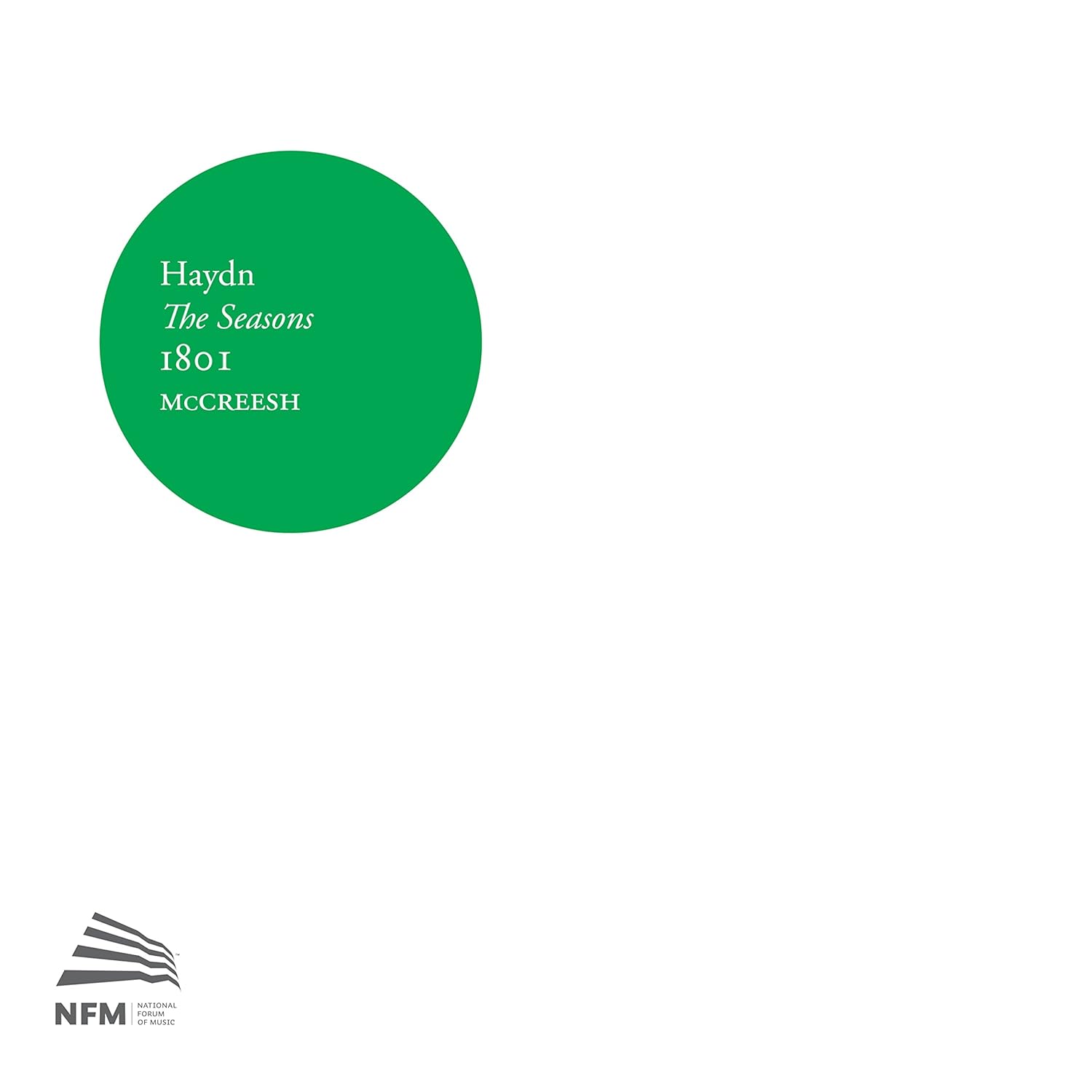 their 1994 reconstruction of a Lutheran Christmas recorded with massed forces in Roskilde Cathedral, the latter chosen because of its important historic organ. In recent years they have built close connections with the National Forum of Music in Wroclaw, Poland. This much heralded recording of the 1801 version of Haydn’s The Seasons is the latest of those collaborations. The opening thunderous wallop on the timpani will warn you that this is a recording of some drama and punch. Using a new performing edition (and English translation) by Paul McCreesh this is the first recording to feature the large orchestral forces that Haydn called for in some of the early performances, with a string section of 60, 10 horns and a choir of 70, using the combined forces of the Gabrieli Consort & Players, Wroclaw Baroque Orchestra and National Forum of Music Choir.
 five female composers, the music ranged from the very beginning of the Baroque up to the end of the 17th century. The earliest composer was Francesca Caccini (1587-1641), daughter of Giulio Caccini (represented here by Peter Philips’ harpsichord transcription of his Amarillo, mia Bella). Francesca Caccini made her debut aged 13 at the Medici Court, singing at the wedding of Henri IV of France to a Medici bride. After time in France she returned to become the leading female singer in Florence. Apart from one opera (the earliest known one by a woman) her only surviving music was published in 1618. The three pieces demonstrated the early recitativo style of
