‘Great King of Gods’
Magdalena Consort, His Majestys Sagbutts & Cornetts, Silas Wollston
Royal Greenwich Early Music Festival
St Margaret’s, Lee Terrace, Blackheath. 22 November 2016
Music by Gibbons, Byrd, and Tomkins
The predecessor building of the 17th century former Greenwich Royal Navel College (now part of the University of Greenwich, and usually the home of the Royal Greenwich Early Music Festival ) was the curiously named Palace of Placentia (or Pleasaunce). It survived from 1443 to 1660 and was the birthplace and, later, the principal home of Henry VIII and his daughters, Queen Mary, and Elizabeth I. James I and Charles I continued to use it as their main residence up to the Civil War, when it fell into disrepair. Records of musical activities are scant but, according to the rather curiously worded programme notes, there is a reference from the time of James I of the Chapel Royal singing anthems for him with ‘organs, cornets, sagbot, and other excellent instruments of music‘.
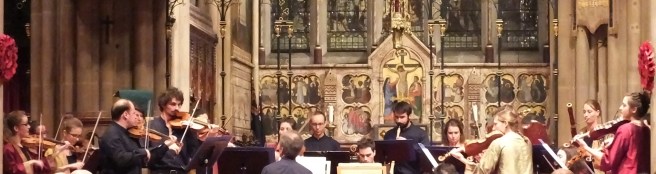
The concert given by the Magdalena Consort and His Majestys Sagbutts & Cornetts aimed to recreate some of the drama of those early 17th century royal Continue reading

 largest church in Christendom. Well before the completion of the Basilica, a musical foundation had been established (in 1436), and in 1476 a magnificent organ was built on one side of the choir. This was enlarged, and a corresponding organ added to the gallery on the other side of the choir, in 1596. Both organs survive to this day, in more-or-less original condition, and are amongst the most important surviving historic organs in the world.
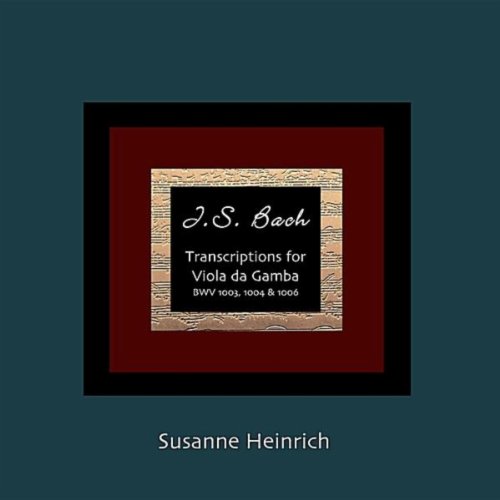 Although this CD was released in 2012, it has only just emerged from an embarrassing pile of CDs, still in their wrappers, that I found in one of my rare tidy-ups. I have missed four years of listening to some outstanding playing from Susanne Heinrich. As her own very personal programme note explains, this is something of a labour of love. A youthful player of the violin, Susanne Heinrich attempted the Bach solo violin works, but never with much success. Her viola da gamba playing was already beginning to take over from the violin, and she lamented the fact that Bach left so little music for the viol. But the draw towards his solo violin works never left her, leading to a much later attempt to play them on the gamba – very far from an easy thing to do.
 The London Bach Society was founded 70 years ago by Dr Paul Steinitz under the rather unambitious title of the ‘South London Bach Society’, but soon lost the ‘South’ part of the name. 1946 might not seem to be the ideal time to concentrate on things musical (and, indeed, devoted to a German composer), but they were not alone: The Arts Council and BBC Third Programme were launched around then, as were a number of orchestras. From the start, the focus of the LBS was to ‘get back to Bach in its original form’ at a time when Bach performance was very far from what we could no consider as being in any way ‘authentic’ with enormous choirs and orchestras, and a funereal approach to tempo and romantic notions of instrumentation, phrasing and articulation. To this end, the Steinitz Bach Players was founded, in 1968, bringing together a small group of professional musicians interested in period performance techniques on period instruments.
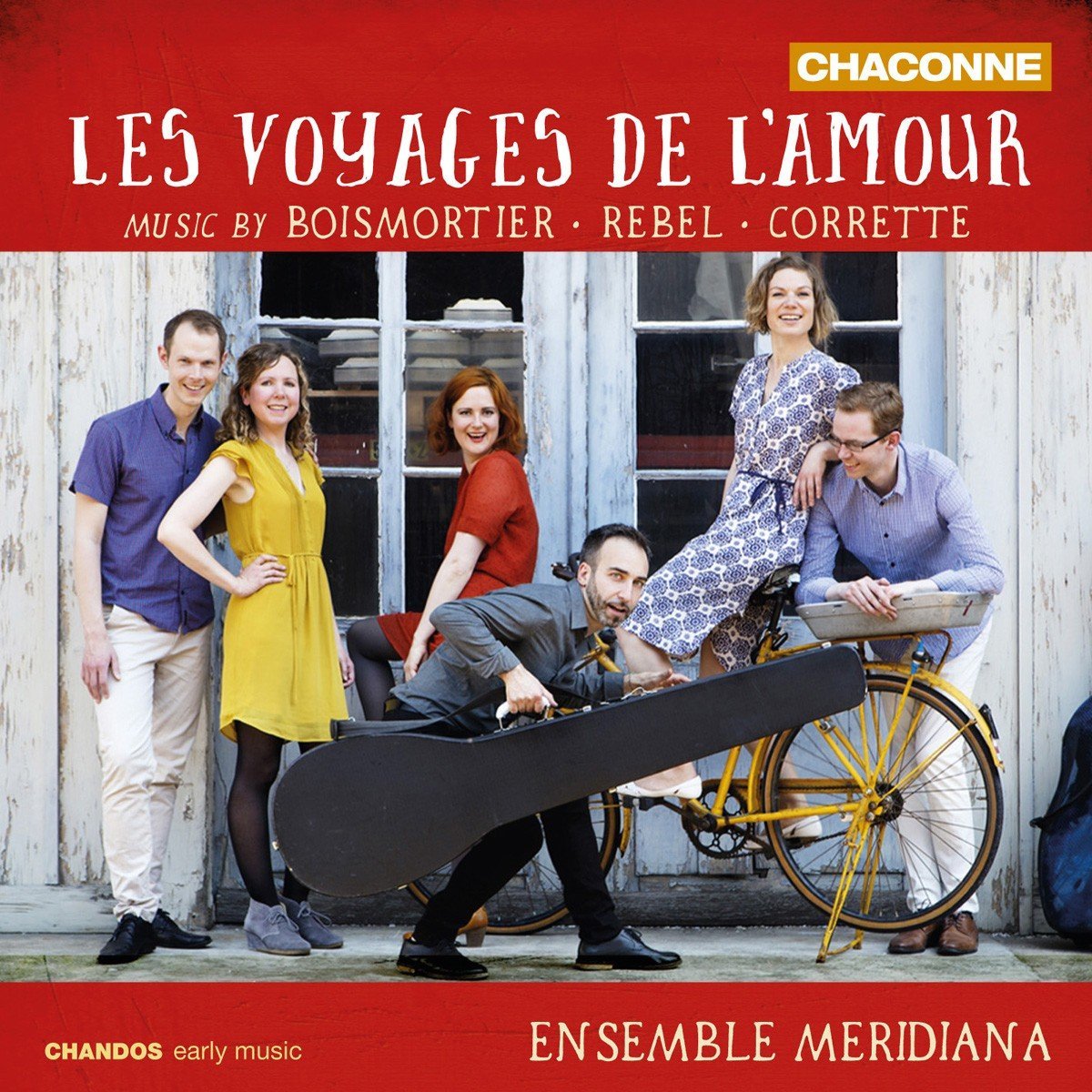 Boismortier’s 1736 opéra-ballet, Les Voyages de l’Amour tells of the journey of Love in his quest to find a pure heart that will love him sincerely and without ulterior motive, having tired of making others happy without finding that happiness himself. Having searched through towns, villages and the royal court, he eventually finds his true love in the person of the shepherdess Daphné. In this glittering programme, Ensemble Meridiana take a similar journey through Baroque France in a musical search for that elusive true love, travelling through similar setting to those of Boismortier’s Amour, concluding with Michel Corrette’s ‘Amusing and Highly Entertaining’ wedding feast.
 The Dunedin Consort under their director (and noted Bach scholar) John Butt are amongst the most prominent exponents of Bach’s music around. So this timely release of their take on the Christmas Oratorio is particularly welcome. With a distinguished group of period instrumentalists, and some outstanding vocal soloists, this is one of the most impressive interpretations I have heard. Whatever your religious beliefs, or lack of them, this music digs deep. John Butt’s scholarly interpretations are an integral part of the Dunedin story and, for this recording, his study of the performing conditions of the first performances in Leipzig in 1734 led to decisions about the vocal forces for the recording.
 You can imagine the headlines in today’s gutter press. “Woman seduces man, gets him drunk, then beheads him. Claims God told her to do it”. She would probably spend the rest of her life in a institution for the criminally insane. But in the Bible (or, at least, in the Bible of the Catholics and Orthodox Christians, but not the Protestants, who count the Book of Judith as apocryphal, or the Jews), she was hailed as a national heroine who lived to the age of 105. Musically her story inspired Tallis’s Spem in alium, and works by Scarlatti, Mozart and Parry. In art, she inspired the likes of Cranach, Donatello, Caravaggio, Botticelli, Michelangelo, Goya and Klimpt (pictured). She is also the subject matter for Vivaldi’s only surviving oratorio Juditha triumphans devicta Holofernis barbarie, written exactly 300 years ago, in 1716. The story of Judith’s ‘triumph over the barbarians of Holofernes’ would have had a strong contemporary reference to Venetians, whose army had just defeated the Ottoman invaders in Corfu. Judith clearly represents Venice, and the Assyrian general Holofernes, the Ottomans.
 Handel’s early works, particularly those written during his period in Italy have a very special vitality, musical elegance and sense of melodic delight. The secular cantata Apollo e Daphne is one such, started in Venice in 1709. but not completed until he briefly moved to Hanover, in 1710, as Court Kapellmeister to the Elector of Hanover. It is the music performed during his time in Hanover that is the focus for this recording from the Irish/Scottish Ensemble Marsyas. Apollo e Daphne lacks an overture, so the curiously lengthy example from Il pastor fido has been included here, although at more than half the length of the cantata it makes for an unnecessary imbalance to the following cantata. That imbalance is further exaggerated by adding two curious Arias in F for wind band between the overture and cantata (here with added percussion), with a segue between the second Aria and the opening recitative of Apollo e Daphne. It’s a rather odd musical construction, but that should not detract from the many delights of this recording.
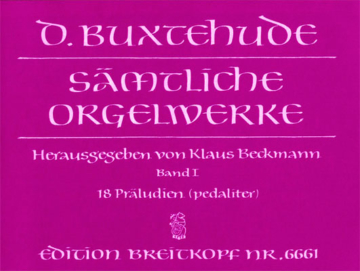 Dietrich Buxtehude holds a special place in the hearts of most organists, although this is occasionally because he is the only pre-Bach German composer that they are aware of. But, despite many years of musicological research and publications, he still remains a somewhat enigmatic composer. There is still no agreement as to his birth date or place, and what his name really was. He seems to have been born in Helsingborg (in present day Sweden, but then part of Denmark) as Diderich, but later changed the spelling from the Danish to a more Germanic Dietrich (or Dieterich). His surname also appears in several versions, including Box de Hude.
 I didn’t see the 2010 production of Don Giovanni, or this summer’s Festival revival, so for me this was a new show. Set in a post-Mussolini Italy, the broody set, designed by Paul Brown, is focused on a massive central cube that presents all four of its sides, plus different incarnations of the central space, to the audience. It is a powerful image, but not without potential issues. Its overpowering presence centre stage pushes most of the action to the front or the side of the stage: no bad thing in itself, but giving a rather cramped feeling
  The Tallis Scholars add to their list of ten CDs of Josquin Masses with this recording of two fascinating, if slightly curious examples. Neither of them are definitively acknowledged to be by Josquin. But if they are, as Peter Phillips argues in his programme note, they are likely to be early works, the Missa Di dadi perhaps being a precursor of the later Missa Pange lingua. And they are both fascinating pieces, not just for the music but for the background to their composition. As their titles suggest they involve gambling, the throw of the dice, and the seduction of a young lady from Biscay.
 Better known as a teacher (of the likes of Pergolasi, Jommelli, and Piccini), the compositions of Francesco Durante (1684-1755) have been rather overlooked since his death. Born near Naples, he studied with A. Scarlatti and (possibly) Pasquini and spent a brief time in Rome before returning to Naples where he became musical director of a number of conservatories; by that time extending their original 16th century remit from the care of orphans to include specialist teaching for paying music students. Although some commentators complimented Durante on his compositions, they tended to focus on his “correct writing” and his facility with harmony and counterpoint, factors which go to make this Requiem so fascinating.
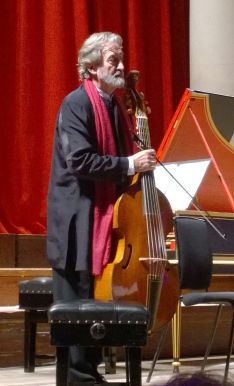 As part of the Southbank Centre’s International Chamber Music Series (currently taking place in St John’s, Smith Square while the Queen Elizabeth Hall is being refurbished), Jordi Savall and Le Concert des Nations presented a sell-out concert of music from the 1991 film Tous les matins du monde. Savall’s pre-concert chat with Radio 3’s Sara Mohr-Pietsch revealed some of the differences between the film’s portrayal and the actual life of Sainte-Colombe and Marais, but confirmed that Marais did crawl beneath Sainte-Colombe’s garden shed to listen to him practicing, that Sainte-Colombe developed a new style of fingering, and added a 7th string to the viol. He also explained how they achieved the voices of the two young girls singing in the film, by speeding up two adult female singers.
 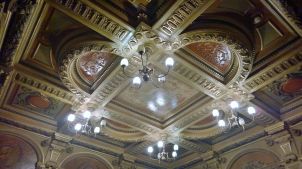 English Touring Opera (ETO) has built a solid reputation for their two annual opera tours around England. In their most recent season, they visited 91 venues, with two groups of fully-staged operas (sung in English) plus various wider educational and community projects. It is a remarkable organisational undertaking and a tough call for the singers in each tour, with many singing in two operas and covering a role in the third. Usually touring two or three operas in the spring and autumn, they open with one-off autumnal London showings before hitting the road. Their choice of operas usually has a theme, or is otherwise related in style and period. This year’s autumn focus is on early operas written in, or inspired by, Venice, with Handel’s 1738 Xerxes, Cavailli’s 1651 La Calisto, and Monteverdi’s 1639 “Ulysses’ Homecoming” (Il ritorno d’Ulisse in patria), performed in reverse order to the dates of composition, and premièring in the magnificent surroundings of the Edwardian Hackney Empire.
  The Handel and Haydn Society Chorus of Boston was formed in 1815 and is the oldest still performing arts organisation in the US. It was formed to ‘improve the style of performing sacred music’ and to introduce the music of its titular composers. Interestingly their quest to perform the ‘old and the new’ actually referred to Handel as the former and Haydn as the latter. It was not all education and graft though – in his introductory note, Harry Christophers mentions that ‘inspiring libations to be had and membrers were often seen heading downstairs for a break’ – a practice referred to as ‘tuning’!
 This recording brings together three instrumental concertos (for harpsichord, violin and the ‘Triple Concerto’, which adds flute to the previous two), and a cantata that makes extensive use of a solo flute. Although not exactly treading new ground in terms of repertoire, this fine recording of some of Bach’s most bubbly music is well worth a listen, not least for an excellent performance of the cantata Non sa che sia dolore, with its prominent solo flute passages.
 The city of Biel (official known as Biel/Bienne) in the Swiss canton of Berne lies on the boundary of the German and French speaking areas of Switzerland, hence its bilingual name. Rather appropriately, its town church contains two organs which also speak in two (or more) languages, from ancient to (very) modern, as represented on this fascinating double CD.
 Giulio Caccini and Jacopo Peri were musical assistants to Emilio de’ Cavalieri for the famed celebrations for the Florentine marriage of Ferdinand de’ Medici and Christine de Lorraine. In the resulting La Pellegrino, they helped to develop a new style of singing, based on earlier concepts of singing in what was thought to be the style of Orpheus. This emphasised the declamatory solo voice in what became known as the stile rappresentativo, accompanied by a simple basso continuo, based on Orfeo’s lyre, here realised by Angélique Mauillon on a triple harp by Somerset luthier Simon Capp, after early 17th century Italian models. This recording explores the later work of the two composers, with an emphasis on the music of Caccini, with 12 examples compared to the five from Peri, together with three instrumental harp interludes by Luzzaschi and Piccinini.
 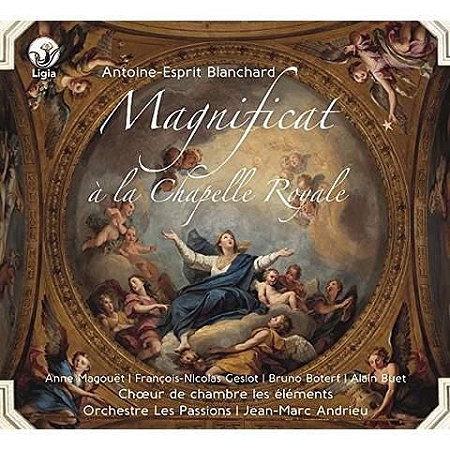 Antoine Blanchard (1696-1770) is a rather shadowy figure in French musical history. There is far more information in Bernadette Lespinard’s detailed CD notes than can be found in other source that I could find on the internet in English. He is sometimes given the additional first names of Esprit-Joseph, although he never used them himself. He was a choirboy in the Saint-Sauveur Cathedral in Aix-en-Provence, and became a cleric from about 18. Transgression of the rules led to his departure from this role after only one year. He then moved to Marseilles as director of music at Saint-Victor, although he spent two years away in Toulon, detained there by the plague. Whilst building up his contacts in Paris, he worked in the choir school at Amiens Cathedral, eventually getting a Royal appointment in the Versailles Musique de la Chapelle in 1738.
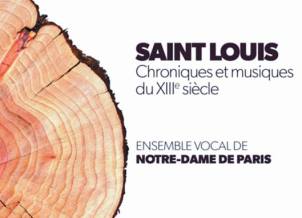 Louis IX of France was crowned aged 12, and remained on the throne until his death some 44 years later. Despite many border disputes and land exchanges, and conflicts with both his own nobles and foreign powers, including his brother in law, Henry III of England, France managed to become one of the most powerful European states. He was an arts enthusiast and a legal reformer. A devote Catholic, he went on two unsuccessful crusades to Egypt (where he allied himself with the Mongolian Khans) and Tunis, where he died. His enduring memorials are Paris’s Sorbonne and Saint-Chapelle, one of the finest Gothic architectural creations of all time. He is the only French King to be canonised as Saint Louis.
 Andrew Benson-Wilson : Early Music Reviews +