Schnitger Festival Groningen
31 October – 5 November 2017

Arp Schnitger is one of the most famous organ builders of all time. Working from around 1660 to 1719, most of his organs were built in North Germany and The Netherlands. For several decades, his instruments have been linked with the performance of Bach, although they were built within the North European organ tradition (centred on Hamburg and culminating in Buxtehude in Lübeck) rather than the Saxon and Thuringian organs of Central Germany that Bach was more familiar with. That said, Bach was certainly influenced by such instruments and the music composed for them, in his early life. Unlike many in the organ building world, then and now, Schnitger showed great respect for the work of his predecessors, and many of his organs retain pipework and cases going back to late mediaeval times. Around one-third of the surviving Schnitger organs are in the Netherlands, mostly in the Groningen province, and three in the city of Groningen, including the famous organs in the Aa-Kerk and the Martinikerk. A map of surviving Schnitger organs can be found here.
The Groningen Schnitger Festival is now in its fifth year. It is organised by the Groningen Orgelstad foundation, set up to strengthen and expand the range of organ activities in the city of Groningen. Usually taking place over a single weekend, this year’s six-day festival was special for a number of reasons, not least, the opening of a new organ in the Lutherse Kerk (pictured below) based on the Schnitger organ that was built for the church in 1699. Schnitger gifted it to the church and community where he and his workforce attended when working in Groningen, as did his successors, including the organ builder Hinsz who is buried in the church. The original two-manual organ had a pedal division added in 1717, to Schnitger’s plans, and was further extended over time until it was replaced by a new organ around 1896. Since 2001 the tradition of cantata services was reintroduced into the Lutherse Kerk services, leading to the foundation (by church organist Tymen Jan Bronda) in 2006 of the period instrument Luthers Bach Ensemble and the wish for an organ suitable for use with Bach cantatas. The Swiss-based, but Groningen born organ builder Bernhardt Edskes was commissioned to build the new organ, based on the 1717 incarnation of the original Schnitger organ.
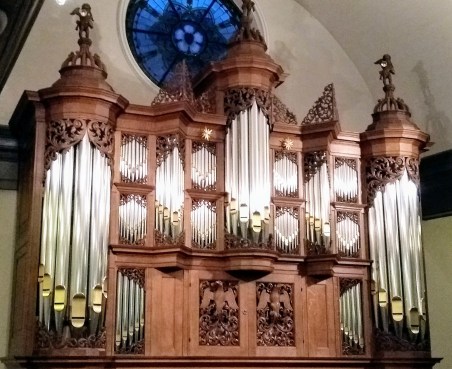
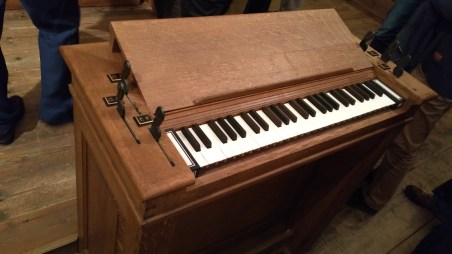
Original documents of Schnitger’s 1699/1717 organ survive, and the new organ was based on that original organ, the only difference in the specification of the new organ is that it includes an 8′ rather than 4′ Praestant as the foundation stop of the principal manual. The original pitch of the organ was Kammerton, equating to present day a’ = 415Hz, the usually accepted pitch for Baroque German music. A novel addition to the instrument is a separate one manual continuo keyboard at the front of the organ gallery, controlling six of the stops from both divisions of the main organ through what is generally known as a ‘long action’.
Tuesday 31 October
Opening concert of the new Lutherse Kerk organ
Luthers Bach Ensemble, Ton Koopman, Tymen Jan Bronda
This was an auspicious day for the opening of the new Lutherse Kerk organ. It was not only Reformation Day, but the day of the 500th anniversary of Luther nailing his 95 theses to the Wittenberg church door, as well as the 400th anniversary of the completion of church’s original Arp Schnitger organ, which the new organ replicates. After opening speeches (including one by ‘Bach’), and the handing over of a ceremonial tuning knife and key, Ton Koopman appeared, initially dressed in the same ‘Bach’ outfit, to conduct the Luthers Bach Ensemble in Bach’s cantata on the battle hymn of the Reformation Ein feste Burg ist unser Gott (BWV 80). It was performed in JS Bach’s rarely heard original form, without the trumpets and timpani added by his son. I couldn’t see the soloists from my seat, but I think it was Stefanie True who sang the aria Komm in mein Herzen Haus.
Lutherse Kerk organist Tymen Jan Bronda then played Bach’s organ version of Vivaldi’s Concerto in D (RV 208). It was a curious piece to choose for the first solo organ piece on the new organ. Its tricky extended cadenza-like passages were a real test of the player and the organ’s action. More effective, and certainly more suited to the organ, was Weckmann’s 3-verse Ach wir armen Sünder and Buxtehude’s multi-sectional Toccata in d (BuxWV 153), both very well played by Bronda. The Buxtehude came after Ton Koopman’s performance of Haydn’s Organ Concerto in C (H.XVIII:1), played from the smaller ‘continuo’ keyboard in the conducting position on the organ gallery. Although of no obvious relevance to the Schnitger organ, Haydn’s jovial three-movement piece suited Ton Koopman’s flamboyant style of organ playing, with his frequent additions to the text. The concert finished with Bach’s double choir motet Singet dem Herrn ein neues Lied (BWV 225), here performed with the instruments doubled the vocal parts. An impressive, if a rather eclectic introduction to the flexibility of the new organ. Later in the evening, a Memorial Cantata Service celebrated the Reformation anniversary, repeating the earlier Ein feste Burg ist unser Gott cantata.
Wednesday 1 November
Lunchtime recital: organ and trumpet
Tymen Jan Bronda & Dave Hendry
Lutherse Kerk
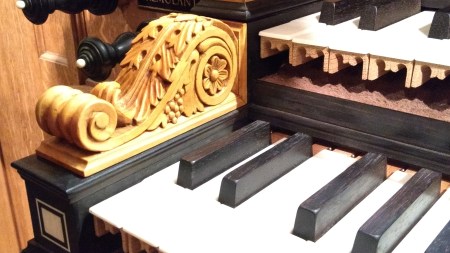
The organ as a solo instrument was more to the fore in the Wednesday lunchtime concert of music for organ and trumpet. Particularly effective organ solos were Scheidemann’s intabulation on Bassano’s motet Dic nobis Maria (a rare survival of one of the essential skills of a German organist in the 16th and 17th centuries) and Buxtehude’s multisection Magnificat 1. Toni, where the reeds on the new organ were heard to good effect. After the well-known opening Te Deum by Charpentier, David Henry played Bach’s Wohl mir das ich Jesum habe (Jesu joy etc) on an unusual (at least to me) type of slide trumpet, where the slide was at the back (the player’s end) of the trumpet. I think these are sometimes known as Zug trumpets, and are partially related to the Purcellian Flatt trumpet.
Berry van Berkum
improvised accompaniment to Fritz Lang’s Der Müde Tod
Der Aa-kerk
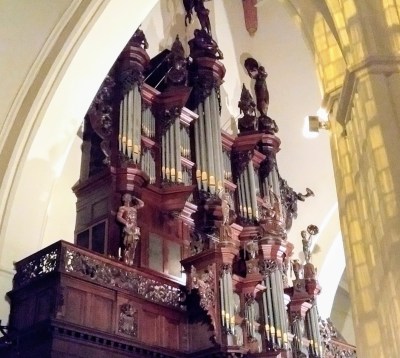
The Aa-kerk in Groningen houses one of the two famous Schnitger organs. The name of the church comes from its original title of Onze Lieve Vrouwe ter Aa (‘Our Lady at the Aa’, the name of the nearby river). Arp Schnitger built an organ for the church in 1695, but it was destroyed in 1710 when the church tower collapsed. An earlier Van Hagerbeer organ was built in 1667 but only lasted 4 years before being destroyed by fire. The current organ was built in 1702 for the Academiekerk (Broerekerk) in Groningen using some pipework from the previous 1679 instrument. After some work by A A Hinsz in the later 18th century, the organ was moved to the Aa-Kerk in 1815, the church remaining organless in the intervening century. After a complicated history of reconstructions and additions, it was restored back to an earlier historic period in 2011, but not that of the 1702 organ. There is a small organ dating from 1550 (also transferred in from elsewhere) on a side gallery. The building is no longer used as a church but is a venue for concerts and other events.
Berry van Berkum improvised an organ accompaniment to Fritz Lang’s 1921 film Der Müde Tod (Destiny). The film tells the story of a woman’s quest to be reunited with her dead lover by means of a series of tests initiated by Death. These take place in a Caliph’s palace during Ramadan, during the carnival in Venice (a sequence that, for the film’s date, included a rather surprising glimpse of a naked female breast), and in the court of a Chinese emperor. Berkum’s accompaniment used a wide range of musical textures and relied on creating a background aural atmosphere, rather than reflecting any of the actions on the screen, even such obvious ones as the sound of the watchman’s horn, the striking of a clock or a drunkard stumbling downstairs. Until the last few minutes, the volume was sensibly kept down, making the final moments all the more dramatic.
Thursday 2 November
‘Van Buxtehude tot Bach’
Nederlandse Bachvereniging
Jos van Veldhoven, Leo van Doeselaar
Lutherse Kerk
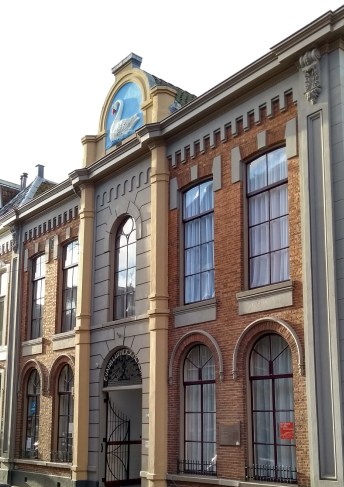
The Nederlandse Bachvereniging was founded in 1921 to introduce less romantic renderings of Bach’s St Matthew Passion. They have since become well-known for their All of Bach website, uploading a recording of a Bach work every week. For their Lutherse Kerk concert, they highlighted the importance of the church organ to Bach as well as his influences. They opened with one of Bach’s most dramatic cantata Sinfonias, to Gott soll allein mein Herze haben, with its prominent organ solo part – and organ concerto in all but name. As with the later Sinfonia to Wir müssen durch viel, Leo van Doeselaar, the titular organist of the Martinikerk Schnitger organ, displayed an excellent sense of the rhythmic energy of Bach’s writing as well as a sure grasp of the ornamentation and articulation needed to project the often complex musical lines.
Bach predecessor as Leipzig Cantor was Johann Kuhnau. He is usually overshadowed by Bach, so it was good to hear his Gott sei mir gnädig, the slurred string notes of the opening creating an emotive mood. the five-part string texture adds to the intensity of the piece. It was followed by the Bach’s extraordinary chorale prelude Vater unser in Mimmelreich from the Clavier-Übung III. This is one of the hardest of all Bach’s organ pieces to play – and, perhaps, to listen to. Its dense five-part texture starts in trio sonata form, with rhythmically complex melodic lines, before the chorale theme is introduced as a two-part canon, each hand having to play the theme as well as the flowing trio lines. Leo van Doeselaar’s performance was exemplary, as was his choice of registration, contrasting the Dulciaan and Sexquialter stops.
Bach’s sensuous Vergnügte Ruh followed, again with distinctive organ contributions, hear revealing the tension of the organ’s tempered tuning. Countertenor Alex Potter grasped the emotive depth of the piece beautifully. Two other Bach Sinfonias opened the second half, before the concluding Nimm von uns Herr by Buxtehude, the Lübeck organist that the young Bach famously walked 200 miles to hear. Based on the Vater unser melody heard earlier, its richly textured orchestration well-controlled by conductor Jos van Veldhoven.
Friday 3 November
Schnitger Field Trip – Noordbroek & Godlinze
Sietze de Vries

This tour of two of the many Schnitger organs in the vicinity of Groningan was arranged by the festival in conjunction with the Stichting Oude Groninger Kerken. It was led by the distinguished organ improviser Sietze de Vries (organist of the Groningen Martinikerk and Artistic Director of the Groningen Organ Education Centre, standing in for the indisposed Peter van der Zwaag), who introduced both of the instruments before demonstrating with extraordinarily skilful improvisations broadly in the style of Bach and the earlier North German organ composers, whose music he has clearly taken to his heart. The Noordbroek organ was built by Schnitger in 1696 and worked on by his son Johann Jürgen Schnitger, Hinsz, and Freytag (in 1809) before van Oeckelen moved it away from its Baroque roots in 1855. Over the past 50 years, it has been restored back to its 1809 specification and is now one of the finest examples of the Schnitger school organ style, albeit with about half of the stops being by Hinsz or Freytag.

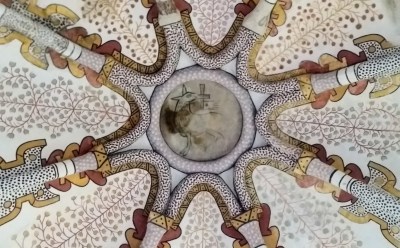
After talking about the history of the organ, Sietze de Vries (pictured above) improvised for around 25 minutes, in a range of quasi-Baroque musical styles, exploring the rich colours of the organ (Six of the 24 stops are reeds) and the shimmering Schnitger choruses, ending with a spectacular multi-sectional chorale fantasia on Ein feste Burg. The Romano-Gothic brick-built church includes some fine ceiling murals dating, I would think, from the late 15th century.
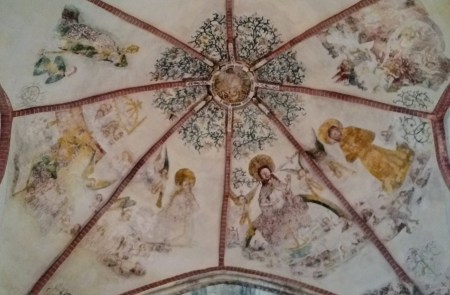
The Pancratius church in Godlinze is a much smaller, but similarly highly decorated church, with a one-manual 1704 Schnitger organ. It originally had two manuals, with an Unterwerk (reflected in the double-decker case front) but was changed to one manual in 1785 by Hinsz. 1919 alterations were removed in a 1985 restoration back to its 1785 specification. The current specification, together with links to its earlier specifications and other details, can be found here.
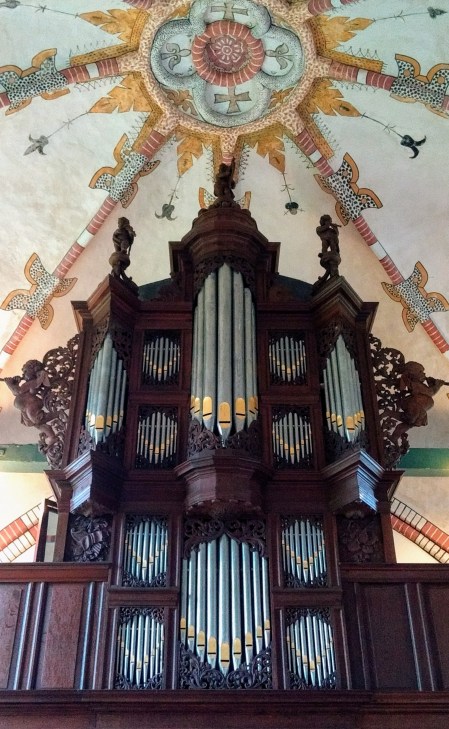
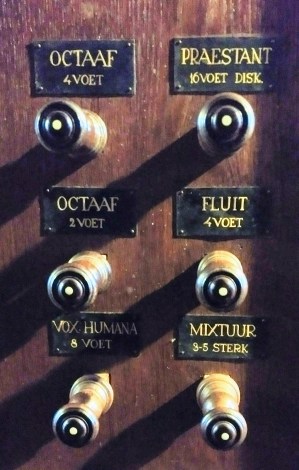
After a detailed demonstration of the various stops of the organ, Sietze de Vries improvised a brilliant set of variations on Vater unser in the style generally closer to the Sweelinck-inspired Hamburg organists of the early to mid 17th century. Some of the stops of the organ and an example of the ceiling paintings are pictured below. The tour ended back in the Lutherse Kerk where Bernhardt Edskes, the builder of the new organ, gave a talk on the construction of the new Schnitger organ.
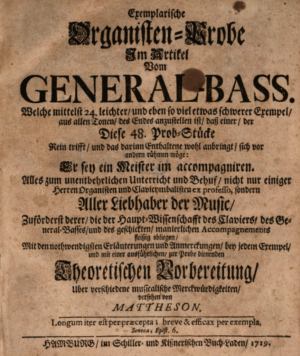
Orgelprobe: Commissioned by the Dom in Hamburg
Sietze de Vries
Lutherse Kerk
Despite having stood-in to spend all day talking about and playing the organs on the day tour, Sietze de Vries then gave an early evening concert on the new Lutherse Kerk organ. In his 1719 Exemplarische Organisten Probe published in 1731 in his Grosse General-Baß-Schule, Johann Mattheson (the Hamburg diplomat, music theorist, composer and, very nearly, the murderer, but later, friend, of Handel) described the terms and conditions that the Hamburg Cathedral Council set for the audition of prospective applicants for the post of Cathedral organist, where Mattheson was Kantor and a Canon. Candidates had to improvise a sequence of the pieces that they would need for the cathedral services. Mattheson’s account stands alongside the famous 1655 report of Matthias Weckmann’s audition at Hamburg’s St Jacobi church.
Sietze de Vries recreated that Orgelprobe on the new Schnitger organ, starting with a Prelude and a grand Fugue followed by a 20 minute set of variations on the Advent chorale Nun freut euch, in a style that suggested influences from Bach, Böhm, Walther and Krebs. He followed this with an improvisation on Purcell’s Evening Hymn with its distinctively English ‘false relations’, reflecting the task of accompaniment a singer. He concluded with a powerful Toccata, opening with a distinctive 17th-century style North German pedal solo, followed by channelling of Buxtehude and Bruhns, before concluding with a chaconne based on the bass of Purcell’s Evening Hymn – a wonderful, and skilful, combination of disparate musical styles. As an encore, he moved to the small continuo console for a delicate prelude on Nun danket, with some added Purcellian false relations. An excellent demonstration of organ improvisation and playing.
Organ Night with five organists & two organs
Der Aa-kerk & Martinikerk
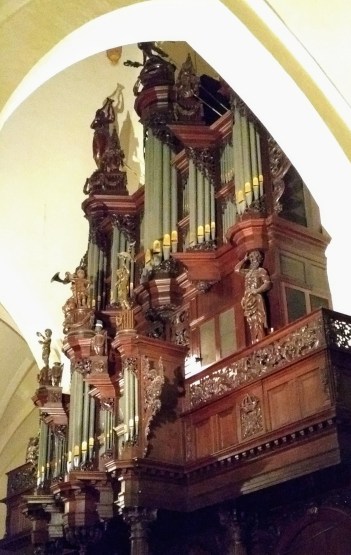
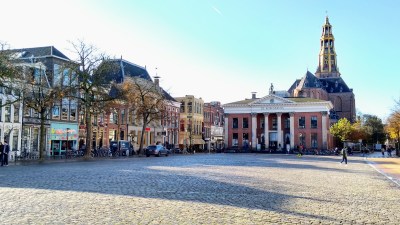
The evening event took place in the Aa-Kerk and Martinikerk and featured, as the title suggests, five organists, playing very different short programmes. It started on the 1702 Schnitger organ in Der Aa-kerk, an organ containing much pipework from well after Schnitger’s time. Stephan van de Wijgert played Mendelssohn (Prelude and Fugue in E minor) and Schubert – a clever arrangement of the four-hand piano Fantasie in F minor, D940, with its delightfully melodic opening motif. Geerten Liefting improvised a Prelude and Fugue and a minimalist interpretation of Vater unser. A street barrel-organ greeted us as we left the Aa-kerk for a walk that Schnitger must have been very familiar with, through the expanse of the Vischmarkt (pictured) and across the Grote Markt to the Martinikerk and the first sight during the festival of the world-famous 1691 Schnitger organ.
The Martinikerk organ was first built in 1482 by Johan ten Damme (replacing an earlier organ), with advice from the famous humanist scholar Rudolf Agricola, then Groningen’s town clerk. The current instrument still contains pipework from this 1482 organ. The organ was enlarged in Renaissance style in 1542 and further rebuilt by Anthoni Verbeeck in 1627/8, Jan Helman in 1685-90, Arp Schnitger in 1691/2, Frans Caspar Schnitger and Albertus Anthoni Hinsz in 1729/30 and by Hinsz in 1740. Nineteenth and early 20th-century additions have generally been removed in the current organ, restored by Ahrens between 1974/84 back to the 1740 position. It now has three manuals and 53 stops. Schnitger’s work including building the massive pedal towers on either side of the original Gothic, containing a rare example of a 32′ Prestant, while Hinsz later added the Rückpositive.

Peter van der Zwaag played music from Spain, Italy, France, and England from the later Renaissance and early Baroque period, concluding with a performance of William Byrd’s massive Seconde Grownde that build to an enormous climax on a 16′ plenum with pedal reeds – a sound that Byrd would never have experienced, the English organs of his time being around two-thirds of the size of the smallest of the Martinikerk’s 3 manuals. Wouter Koelewijn played music by Huge Distler, a representative of the rather spiky neo-baroque school of 20th-century organ composition. He concluded with the four-movement Partita on Nun komm, der Heiden Heiland. As the clock moved toward 11pm, the final player was Gonny van der Maten, playing Bach, including Schmucke dich and the majestic Praeludium et Fuga in C minor (BWV 546), given a particularly powerful performance on full pleno throughout.
Saturday 4 November
Masterclass with Stef Tuinstra
Martinikerk
Stef Tuinstra founded the Noord-Nederlandse Orgel Academie (NNOA), and arranges many organ activities in the Groningen province. He is organist of the Nieuwe Kerk and Martinikerk in Groningen. This masterclass was given in conjunction with the Prins Claus Conservatorium. The first few student performers played Bruhns and Bach but, as the comments were, not surprisingly, in Dutch I had trouble following Tuinstra’s advice. Helpfully, a Spanish student followed, resulting in an English commentary. Her impressive performance of Bruhn’s large-scale multi-sectional E minor Praeludium was followed by equally impressive comments from Stef Tuinstra on the piece and the performance, starting with the question “Why play without shoes?”. Describing it as a ‘theatre piece’ Tuinstra stressed the varying moods of the piece, ranging from pathos to anger, and encouraged a performance that engaged all the player’s emotions. His impressively detailed accompanying handout mentioned the ‘orchestral’ style of organ performance mentioned amongst others, by Michael Praetorius in 1619. He also noted the importance of thinking like a singer when looking at musical structure and phrases.

His comments on registration were particularly apposite, for example, suggesting that the expansive first fugue is played on the 8′ Principal stop alone, rather than a fuller, reedy sound, in order to reflect the sadness and suffering inherent in the mood of that section. He advised against using pedal mixtures when the higher overtones would confuse the polyphony of the upper voices, and stressed the need to give the massive 32′ pedal flue pipes time to speak. He also advised again spreading chords, harpsichord style, on the organ.
Lunchtime Concert for organ and baroque violin
Reitze Smits, organ & Mariëtte Holtrop, violin
Lutherse Kerk
Back at the Lutherse Kerk, a lunchtime concert explored the combination of organ and violin in works by Bach, Bonporti, and Vivaldi. It opened with Bach’s flamboyant early Preludium in G (BWV 568), to which Reitze Smits added spread chords, harpsichord style. There followed four arrangements from cantata arias, including Kommst du nun von Himmel herunter also arranged by Bach as one of the Schubler Chorales. The organ as continuo accompanying instrument was evident in Bonporti’s Invenzio Quarta, a piece I didn’t know. The final piece was an organ solo, Bach’s arrangement of Vivaldi’s Concerto in D (BWV 596), the absence of the specified 32′ pedal stop notwithstanding. The dying sounds of the Finale were accompanied by the sound of a mobile phone.

Organ and baroque orchestra
Ensemble Cordevento
Erik Bosgraaf, recorder, Matthias Havinga, organ
Lutherse Kerk
A mid-afternoon concert combined the organ with the Baroque orchestra Ensemble Cordevento and the recorder player Erik Bosgraaf, with Matthias Havinga playing the organ. The five members of Ensemble Cordevento played with light and delicate textures, although this meant that there were times when the recorder dominated. This was most notable when heard against the organ in an arrangement of Bach’s organ Trio Sonata V, when the notion of the three equal parts was occasionally turned into a flute solo with accompaniment. It had been preceded by Bach’s curious, incomplete, and rarely heard, Pedal Excercitium (BWV 598), hear extended by about 50% by a cadenza.
The highlight of the concert was the first performance of Mixtures, a 16′ long work commissioned by the festival from the South Korean composer Seung-Won Oh, now living in Chicago, but present for this premiere. Dense chord clusters and orchestral sound-worlds, of varying volumes and intensities, were interspersed with recorder recitatives and interventions and cadenza-like passages from the organ in a kaleidoscope of aural colour and texture. Gentler moments of repose balanced the sometimes frenetic activity, the whole creating a very evocative and ethereal sense of otherworldliness and mystery. As with many first performances of new works, it would have been good to have heard the work twice, towards the start and at the end.
Zangavond met Lutherliederen
Tymen Jan Bronda
Lutherse Kerk
During the first part of the evening, members of the Lutherse Kerk joined the organist Tymen Jan Bronda and the church choir to sing a range of Lutheran chorales with the new organ. Historically, this was the principal use for the organ in the Lutheran service, despite the importance of solo organ music in the service, and the enormous repertoire of solo organ pieces that were created.
Pop concert by Orgel Vreten
Der Aa-kerk

Keen to avoid leaving anybody out of the Festival fun, the Aa-kerk was taken over by the pop group Orgel Vreten. Their performance was built around two Hammond organs and a third keyboard together with percussion, bass guitar and the group’s ‘character’ who played a variety of instruments including an enormous euphonium. They even managed a brief moment on the Aa-kerk’s Schnitger organ, treating it with a great deal more respect than they had shown to their own Hammond organs, who were frequently stood on and climbed over. The enthusiastic audience ranged from aged about 8 upwards and included many people who had been at the more conventional organ events of the week. It is a little out of my usual reviewing remit, so I have no idea how to categorise their music, although I have seen it referred to as ‘space rock’. It all seemed to be their own compositions and was certainly great fun. Rather against my original assumptions, I stayed until the end.
Sunday 5 November
Cantatedienst – Municipal Musical Morning Service
Ensemble Ars Cantandi, Bremer Barockorkest, Markus Nitt
Organist: Stef Tuinstra
Martinikerk
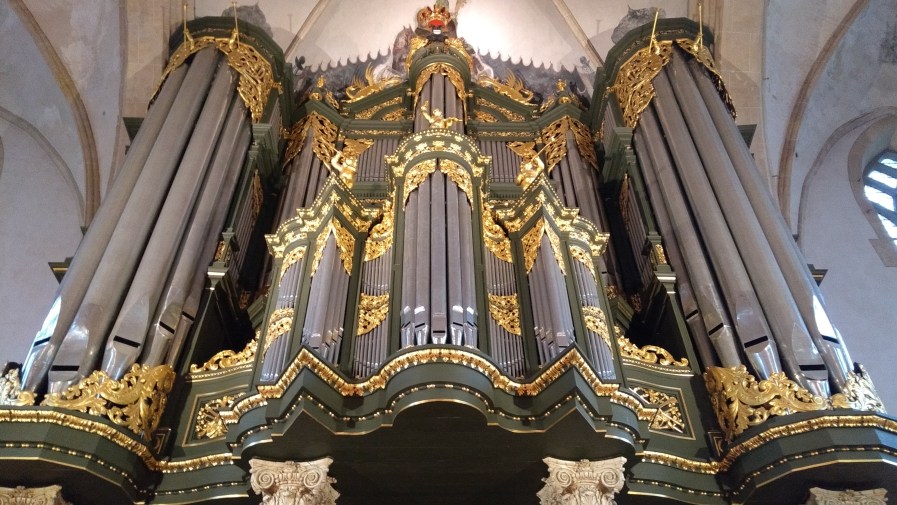
The Martinikerk was packed for a special Sunday ecumenical service initiated by the Lutheran Congregation, the United Protestant Church, the Arminian church and the Student Platform for Philosophy and Belief. The cantata during the service was Bach’s Erhalt uns, Herr, bei deinem Wort (BWV 126), appropriate for the Luther anniversary as he wrote some of the text himself. The German Ensemble Ars Cantandi combined with the Bremer Barockorkest to perform from the back of the church, beneath the Schnitger organ, but using one of the ubiquitous little box chamber organs as continuo rather than the main organ. There was fine singing from tenor Max Ciolek and bass Carsten Krüger (supported by his three young children), both of whom had tricky arias to sing. As well as the main collection, for missionary work, there was a retiring collection for the music, with a suggested donation of €10 per person.
The Schnitger organ was heard to great effect accompanying the singing of the chorales, and in Stef Tuinstra’s impressive improvised chorale preludes. Unlike the English tradition of playing pre-composed four-part harmony for accompanying hymns, the German and Dutch Lutheran tradition is for the organist to be only given the melody, improvising the harmonies below, often varying them for each verse. All but one of the chorale preludes were in the quasi-baroque style, but it was good to hear one that ventured into a more contemporary musical idiom.
Closing Concert
“A present for all townsfolk and festival goers”
Bernard Foccroulle, organ, & Ensemble Inalto
Martinikerk

The final concert of the Schnitger Festival 2017 was a free event in the Martinikerk given by the Belgian organist Bernard Foccroulle and the Ensemble Inalto of cornetts and sackbutts, playing from the organ gallery. The programme spanned the 100 years gap between Samuel Scheidt (b1587) & Schein (b1586) and Bach (b1685) with the 50-year interval filled by Buxtehude (b1637). The latter two composers were represented by large-scale organ works – Bach with the Praeludium en Fuge in E flat that opens and closes the Clavier-Übung III (BWV 552), and the Passacaglia, both using the immense power of the full organ throughout. The Martinikerk organ has one of those choruses that you can listen to for hours without tiring of the sound of the mixtures – they coalesce with the principal chorus to produce a magnificently unified sound. Buxtehude’s joyous Toccata in F was given a particularly impressive interpretation, using the different divisions of the organ, and with the reeds dominating in the first fugal section. The cornetts and sackbutts joined the organ for the 5th verse of Scheidt’s Veni Redemptor Gentium, after the 1st verse had been played as an organ solo. In several of the other pieces, the organ acted as continuo to the five instruments. I was particularly impressed with the playing of Ensemble Inalto. Their performance of the gentle Sonata a 4 by Störl by exquisite.
And so finished the fifth Groningen Schnitger Festival – a special one that leaves the city with its fourth ‘Schnitger’ organ, one specifically suited to the performance and accompaniment of the music of Bach with the resident Luthers Bach Ensemble.










 Edward Armitage: The Remorse of Judas, 1866. Tate Britain
 Andrew Benson-Wilson : Early Music Reviews +