Mullova plays Mozart
Mozart 250: 1775
The Mozartists
Viktoria Mullova, Ian Page
Cadogan Hall. 4 November 2025
Haydn: Symphony No. 68 in B flat major
Mozart: Violin Concerto No.3 in G major, K.216
CPE Bach: Symphony in D major, Wq.183/1
Mozart: Violin Concerto No.4 in D major, K.218
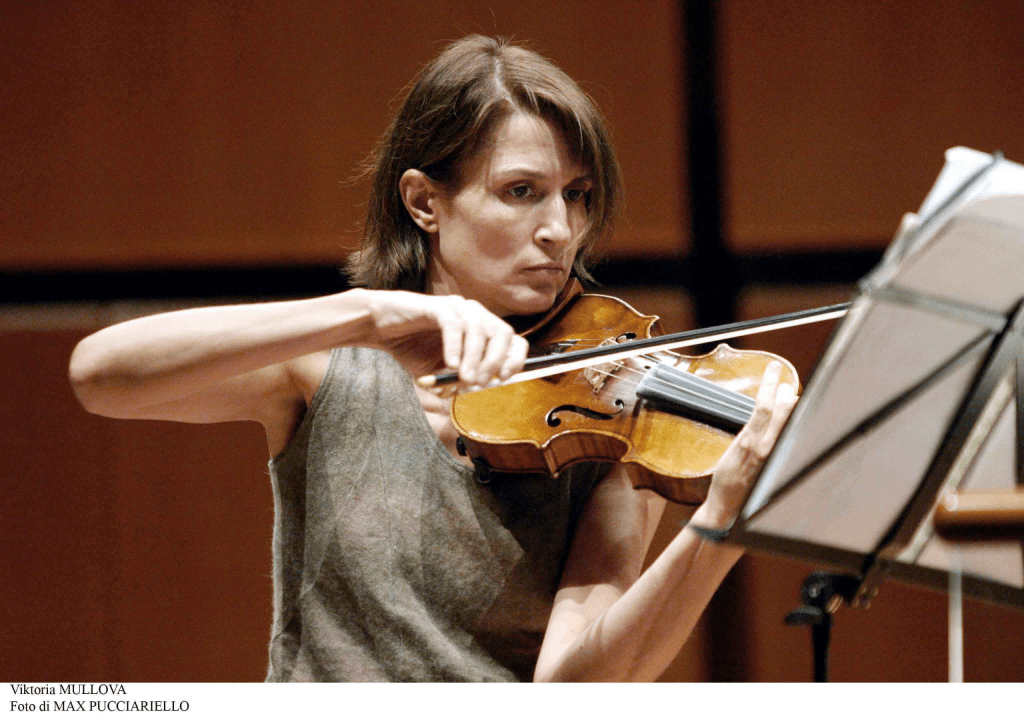
The Mozartists‘ enterprising MOZART 250 project has reached its 10th anniversary, with concerts this season focusing on the year 1775, when Mozart turned 19. The project started in 2015 on the 250th anniversary of Mozart’s childhood visit to London and follows Mozart’s musical life and that of his contemporaries year by year until the 250th anniversary of his death in 2041. It has been described as a “journey of a lifetime”, and will probably outlive many members of current classical music concert audiences. Following their Wigmore Hall concert in June (reviewed here), when Rachel Podger played two (2 & 5) of Mozart’s five violin concertos, this concert in the larger Cadogan Hall featured the other two concertos composed during 1775 (3 & 4) performed by Viktoria Mullova, making her debut with The Mozartists.






 their 1994 reconstruction of a Lutheran Christmas recorded with massed forces in Roskilde Cathedral, the latter chosen because of its important historic organ. In recent years they have built close connections with the National Forum of Music in Wroclaw, Poland. This much heralded recording of the 1801 version of Haydn’s The Seasons is the latest of those collaborations. The opening thunderous wallop on the timpani will warn you that this is a recording of some drama and punch. Using a new performing edition (and English translation) by Paul McCreesh this is the first recording to feature the large orchestral forces that Haydn called for in some of the early performances, with a string section of 60, 10 horns and a choir of 70, using the combined forces of the Gabrieli Consort & Players, Wroclaw Baroque Orchestra and National Forum of Music Choir.
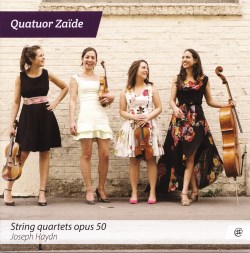 Haydn’s Op.50 (Prussian) String Quartets are amongst his finest musical creations, and yet are relatively unknown, apart from the two given the later nicknames of The Dream and The Frog. Composed in 1787, the set was dedicated to Frederick William II of Prussia (apparently in return for a gold ring sent to Haydn by the King), hence the nickname. The fact that he played the cello might explain the opening of the first quartet, with its solo cello repetition of notes. The six quartets are perhaps less immediately appealing and populist than his earlier Op.33 set, and seem to feature Haydn in a more intense and, perhaps, more intellectual mood. The movements usually only explore one theme, perhaps suggesting that Haydn wanted to concentrate on the developmental possibilities of a single theme. Although each has the same four movement format, they are all very different in style, notably the 4th, in the dark key of F# minor, and with its curiously intensely wrought final fugue.
 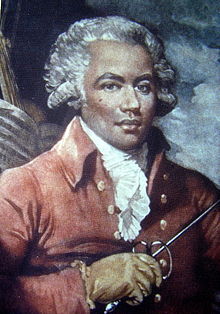 centred on the fascinating character Joseph de Bologne, Chevalier de Saint-George (b1745), the son of a wealthy French plantation owner in Guadeloupe, and his African slave. Educated back in France from the age of 7, he first became known as a fencer, graduating from the Academy of fencing and horsemanship aged 21 and somehow collecting the title of chevalier (knight) on the way. Quite how he achieved his skills in music is not known, but the composers Lolli and Gossec had already dedicated works to him before he was 21. He quickly became one of the leading Parisian violinists and orchestra leaders. He briefly lived in the same house as Mozart (the mansion of his mentor, the Duke of Orléans in Paris), and was leader of the enormous Masonic Loge Olympique orchestra, for which Haydn wrote his Paris Symphonies.
 Although Bach is something of a God-like figure for me, I think he would be rather scary to actually meet. I have often felt that I would love to have sat at a nearby table where I could overhear Bach, but would rather actually meet and converse with Haydn. The pieces on this CD demonstrate something of those aspects of Haydn’s character that make him appear so approachable. Amongst the first works that Haydn wrote after his 1761 arrival at the Esterházy court were the three symphonies based on the times of the day – Le main, Le midi and Le soir. Many players in the orchestra were already friends of his from Vienna, and these three symphonies were an inspired calling card for their new musical director, with most of the players given key solo moments.
  Sarah Tynan, soprano; Jeremy Ovenden, tenor; Matthew Brook, bass-baritone
 Andrew Benson-Wilson : Early Music Reviews +