Goldberg: Trio Sonatas

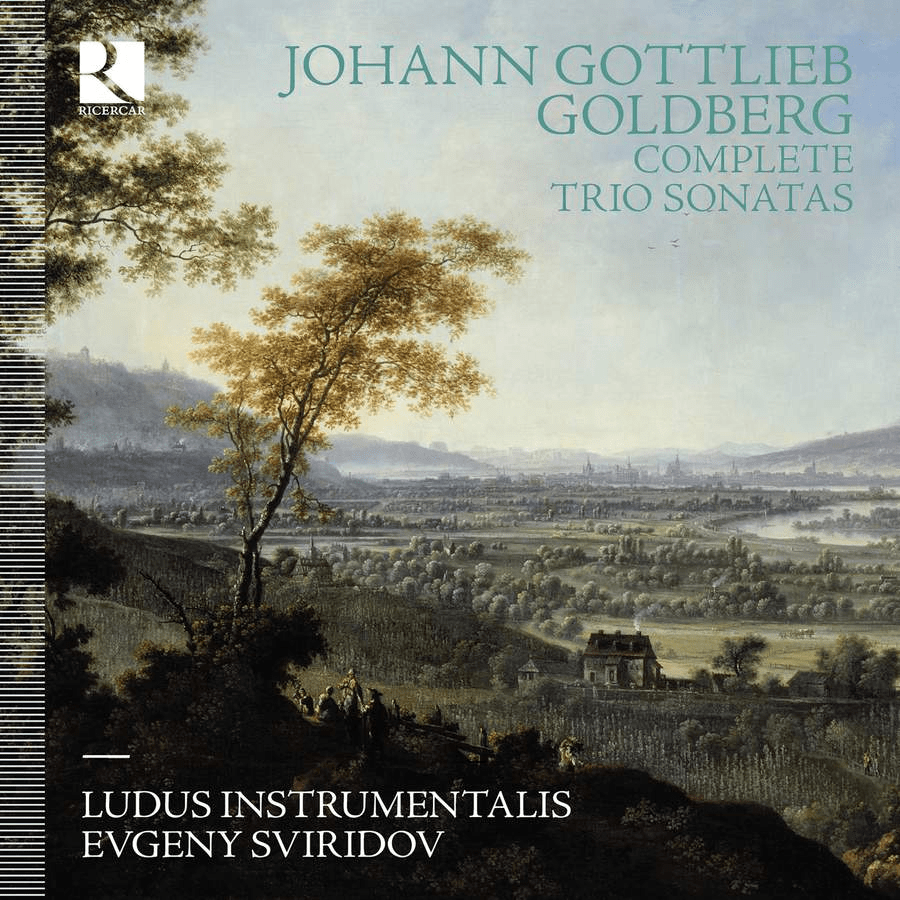
Johann Gottlieb Goldberg: Complete Trio Sonatas
Ludus Instrumentalis, Evgeny Sviridov
Ricercar RIC 426. 69’57

Trio Sonata in C, DürG 13 (was BWV 1037)
Trio Sonata in A minor, DürG 11
Trio Sonata in G minor, DürG 12
Trio Sonata in B flat, DürG 10
Prelude and Fugue in g, arranged from Dür G 5
Sonata for 2 violins, viola & continuo in C minor, DürG 14

Johann Gottlieb Goldberg (1727-56) has been overlooked as little more than the name attached to the famous JS Bach variations, rather than a respected composer in his own right. This excellent recording from Ludus Instrumentalis should help to set the record straight. Goldberg was born near Danzig. In 1737 he met Wilhelm Friedemann Bach in Dresden, a trip instigated by the art-loving Count von Keyserlingk who was impressed with the 10-year old’s musical skills. After initial studies with WFB in Dresden, he moved to Leipzig in 1746, perhaps to study with JS Bach. The Bach variations were later composed for Goldberg to play for the insomniac Keyserlingk. Goldberg died aged 29 of consumption but, despite his young age, was described by a writer at the end of the 18th century as being on the same level as Bach and Handel.

Continue reading

Bach: Complete Organ Works Vol 8

Bach: Complete Organ Works: Vol 8
North German influences
Pieter van Dijk
DMP Records, DVH 140417. 2CDs 81’20+81’00

Recording, or playing, the complete Bach organ works is a milestone in any organist’s life, but the are many issues to consider. These include the choice of organ/s and the programming of individual recitals or CDs. One organist who has negotiated these issues very successfully is Pieter van Dijk, organist of the prestigious St. Laurenskerk in Alkmaar, Professor for organ at the Conservatory of Amsterdam and the Hochschule für Musik und Theater, Hamburg, and the artistic director of Organfestival Holland. His recorded Complete Organ Works has reached Volume 8, which is reviewed here. I understand that there will be two further double CD releases within the next year or so to complete the edition, and subscriptions are offered. I will give a brief outline of some of the earlier CDs, but I think this volume should be of particular interest to organ lovers as it deals with the early North German influences on the young Bach and includes several lesser-known works.

Continue reading

Vox Luminis: Schütz & Bach

Schütz & Bach
Vox Luminis, Lionel Meunier
St John’s, Smith Square. Easter Sunday, 17 April 2022

Chorale: Mit Fried und Freud ich fahr dahin
SchützMusikalische Exequien, Op.7
BachActus Tragicus, BWV 106. Christ lag in Todesbanden, BWV 4

Regular visitors to St John’s, Smith Square in pre-Covid days, the Belgium group Vox Luminis made a very welcome return to celebrate the 350th anniversary of Heinrich Schütz (1585-1672) with a performance of his Musikalische Exequien, a piece they recorded around 10 years ago to great acclaim, and frequently perform. They contrasted this with Bach’s Actus Tragicus and Christ lag in Todesbanden to bring to a close the St John’s, Smith Square Easter Festival.

Continue reading

Academy Choir: St John Passion

Bach: St John Passion
Academy Choir & Baroque Players, Matthew Best
St John’s, Wimbledon, 12 March 2022

Choral societies have a long and noble tradition in the UK. They provide much-needed employment opportunities for the young professional musicians brought in as soloists as well as giving the opportunity to perform for the vast body of amateur singers whose membership fees keep the shows on the road. The Academy Choir is one such. It was founded in Wimbledon in 1980 and since 2000 has been based at the church of St John the Baptist, Spencer Hill, Wimbledon. It is an auditioned choir, rather than taking all-comers, and the musical standards are obviously high. Since 2017 their musical director has been Matthew Best. My invitation to review their performance of the St John Passion promised that “our concerts tend to be ‘a cut above’ what might typically be expected to be found in a suburban church, given by a local choir”, a claim that proved itself correct.

Continue reading

Programme notes: Bach recital for Early Music Day

MUSIC-AT-HILL: MIDTOWN CONCERTS
St Giles-in-the-Fields
Friday 18 March 2022

Andrew Benson-Wilson organ
Poppy Walshaw cello

Johann Sebastian Bach (1675-1750)
Pastorella per Organo (BWV 590)
[Alla Siciliana – Allemande – Aria – Alla Gigue]
Cello Suite No.3 in C. (BWV 1009)
Prelude – Allemande – Courante – Sarabande – Bourrée I/II – Gigue
Partite diverse sopra Il Chorale O Gott, du frommer Gott (BWV 767)

Continue reading

A Bach recital for Early Music Day

A Bach recital for Early Music Day

Andrew Benson-Wilson, organ & Poppy Walshaw, cello
St Giles-in-the-Fields, London WC2H 8LG
Friday 18 March, 1:15

This is a special concert for international Early Music Day, an annual celebration of early music that takes place around the time of the 21st March birthday of JS Bach. This concert is part of the weekly Music-at-Hill series of lunchtime Midtown Concerts in the beautiful church of St Giles-in-the-Fields, home of one of the most important historic organs in the country.

Continue reading

Virtuosi

Virtuosi
Johann Sebastian Bach & Prinz J E v. Sachsen-Weimar
Thüringer Bach Collegium, Gernot Süßmuth
audite 97.790. 66’54

The Thüringer Bach Collegium are based in Arnstadt, home to various Bachs since 1620 and one of five Thuringian towns associated with the young Bach. In 1703, at just 18 years old, Bach (then a court musician in the chapel of Duke Johann Ernst III in Weimar) was asked to check the new organ of the Arnstadt Neue Kirche and was soon after was appointed as organist. He stayed for four years, apparently “confusing” the congregation with his harmonisation of the chorales and running into probems with singers and the church authorities, culminating in his famous 1705/6 walk to hear Dieterich Buxtehude in Lübeck, overstaying his approved absence by several weeks. 

He then moved briefly to Mühlhausen (and was succeded by his cousin Johann Ernst Bach) before returning to Weimar as organist and director of music where he met the young music-loving, and tragically short-lived, Prince Johann Ernst IV of Sachsen-Weimar, nephew of the reigning Duke and a pupil of bach’s cousin, Johann Gottfried Walther. Bach knew the young prince’s compositions and arranged some of his Italian-influenced concertos for keyboard. The Thüringer Bach Collegium’s debut recording was of some of the concertos of the Prince.

This recording feature two examples of Bach’s organ versions of Johann Ernst’s composition, the three-movement Concerto for Organ in G, BWV592 and the short Concerto, BWV595. Although most of the recording was made in the Oberkirche rather than the Bachkirche (formally the Bonifaziuskirche or Neue Kirche), I am told that the organ pieces were recorded in the Bach church, although there is no indication in the CD notes to confirm that. The Bachkirche organ has changed a lot since Bach’s days, but has its roots in the 1703 organ with the case and some of the pipework that Bach knew. It is far closer to the sound world of Bach than the 1902 Sauer in the Oberkirche. Jörg Reddin plays with clarity and precision.

The other organ piece is an Allegro from Walther’s Concerto in D minor, an arrangment of a piece by Torelli. The young Prince is represented by a reconstruction of violin concerto. The remaining Bach pieces put the soloists of the Thüringer Bach Collegium through their paces – Gernot Süßmuth, David Castro-Balbi & Raphael Hevicke, violins, and, in particular, oboist Clara Blessing.

One of the problems with this recording is the availability of all the pieces on other recordings, performed, dare I say, by rather more sophisticated ensembles. The playing here has a rather rustic quality, with punchy rhythms and forceful playing. The recorded sound adds to the boldness of the performance with a very close acoustic image, as though you are sitting in the front pew of the church. A promotional video can be viewed here.

BBC Proms: Bach & Handel

BBC Proms: Bach & Handel
Monteverdi Choir & English Baroque Soloists

Sir John Eliot Gardiner, Ann Hallenberg
Royal Albert Hall, 1 September 2021

Handel: Donna, che in ciel HWV 233
Bach: Christ lag in Todes Banden, BWV 4
Handel: Dixit Dominus

Eschewing all the social distancing provisions that the BBC Proms had arranged for orchestras, John Elliott Gardiner’s own Monteverdi Choir & English Baroque Soloists crammed tight onto the (specially enlarged) Royal Albert Hall stage for a performance of two pieces seemingly written for the same Sunday in 1707 by two 22-year-old composer, Bach and Handel, both at the start of their very different careers. This review is based on the BBC Four televised broadcast.

Continue reading

BBC Proms: Organ recital 2

BBC Proms: Organ recital 2
Peter Holder, organ
Royal Albert Hall, 4 September 2021

Meyerbeer: Le prophète Coronation March, transcr. W. T. Best
Bach: Fantasia & Fugue in C minor, BWV 537
Widor: Symphony No. 5 – Allegro vivace (1st movt)
Saint-Saens: Fantaisie No. 1 in E flat major
Liszt: Fantasy & Fugue on ‘Ad nos, ad salutarem undam

The second of this year’s BBC Proms organ recitals was given by Peter Holder, sub-organist of Westminster Abbey, replacing Thomas Trotter. As part of the joint anniversaries of the Royal Albert Hall and centenary composer Saint-Saëns, the programme recreated elements of Saint-Saëns’ legendary performances on the Royal Albert Hall organ in the opening season of 1871 and in 1880.

Continue reading

Bach: Harpsichord Concertos II

Bach: Harpsichord Concertos II
Francesco Corti, il Pomno d’Oro
Pentatone PTC 5186 889. 61’36

Cover J.S. Bach: Harpsichord Concertos, Vol. 2

This is the second of a two-disc series of the Bach harpsichord concertos. It includes Concertos No. 3 in D Major, BWV 1054, No. 5 in F Minor, BWV 1056, and No. 6 in F Major, BWV 1057, and, to complete the timing, the Concerto for harpsichord, flute and violin in A Minor, BWV 1044. The choice of concertos for the two discs was based on the orchestration forces, with these concertos using solo, rather than multiple strings. The balance works well in all four concertos.

Continue reading

Bach: Well-tempered Consort- II

J S Bach: Well-tempered Consort – II
Phantasm
Linn CKD657. 70’05

cover-CKD657

Phantasm’s first ‘Well-tempered Consort’ recording, reviewed here, was a rather anarchic collection of Bach keyboard pieces arranged for viol consort. This, their second recording on the same theme, is far more coherent, combining Preludes and Fugues from the Well-Tempered Clavier. Of the 24 tracks, seven are from Book I, the rest from Book II. It is not surprising that there are far more fugues than preludes on the recording, with just six prelude and fugue pairs. The tracks are not in key order, but make perfect sense in terms of key relationships and mood. Four tracks are transposed down a semitone: the C# pair, and the F# and D# minor fugues.

Any reservations I might have had over their first recording are resolved here. The balance between the instruments is perfect, as it should be, particularly for the fugues. They avoid the temptation to accent fugal entries and, although there are far more subtle nuances of tone on an individual note available on a viol than on a keyboard instrument, such expressive devices are only used with sensitivity.

The programme notes are rather too romantic and flowery for my taste, as can often be the case when written by an academic. “Even the slightest musical turn of phrase might trigger intense disquisitions on the human condiction” is one such example.

It was recorded in Magdalen College Chapel, Oxford over a four day period. The recording rate of some six tracks a day is reflected in the quality of the performance. Despite the size of the space, the acoustic remains suitably domestic in scale.

BBC Proms: Organ Recital 1

BBC Proms: Organ Recital 1
Bach and Improvisations
Martin Baker
Royal Albert Hall, 1 August 2021

Yet again, the BBC Proms has programmed an organ recital at a time (11:45 on a Sunday morning) when most organists are at work. A modest audience was the obvious result. It was originally intended to have been given by Oliver Latry, organist at Notre Dame but Covid-related travel problems resulted in Martin Baker stepping in at short notice to replicate the planned programme of Bach and improvisations. The Royal Albert Hall opened in 1871, along with the mighty Father Willis organ, then powered by two steam engines and now magnificently restored by Manders. Subsequent alterations and rebuilds have now resulted in 9,999 pipes that would stretch for nine miles if laid end to end. Bizarrely, it has its own Twitter account!

Continue reading

Bach Rework’d

Bach Rework’d
A film by Matt Belcher
Spitalfields Music Festival

Premiere 5 July 2021

Spitalfields Music continues to promote early and contemporary music, currently through the Spitalfields Music Festival 2021 and a series of events, some online and all ‘live’ in Covid-secure conditions. One of the early online events was the premiere of a new film by Matt Belcher, commissioned by Spitalfields Music, exploring “the enduring power of Bach’s music” through the experience of four composers. The documentary explored the importance of music for them over the past year, the works by Bach that have inspired them, and their own musical responses to those works as they returned to post-pandemic performance.

Continue reading

OAE: Sea Voyages and Salvation

Sea Voyages and Salvation
Orchestra of the Age of Enlightenment
Roderick Williams, Kati Debretzeni
Recorded at New St Lawrence Church, Ayot St Lawrence
First broadcast on OAE Player 8 June 2021

Graupner Fahre auf in die Höhe 
Telemann Concerto for 3 oboes & 3 violins in Bb
Bruhns Mein Herz ist bereit  
JS Bach Cantata BWV 56 Ich will den Kreuzstab gerne tragen 


The Orchestra of the Age of Enlightenment continue with their Covid series of on-line OAE Player concerts with Sea Voyages and Salvation, with music by Grauper, Telemann and Bruhns, culminating in Bach’s cantata Ich will den Kreuzstab gerne tragen. Whether by design or default, two of the composers were the first and second choices for the post of Thomaskantor in Leipzig which Bach was eventually offered after Graupner and Telemann turned it down.

Continue reading

Senza Basso — Auf dem Weg zu Bach

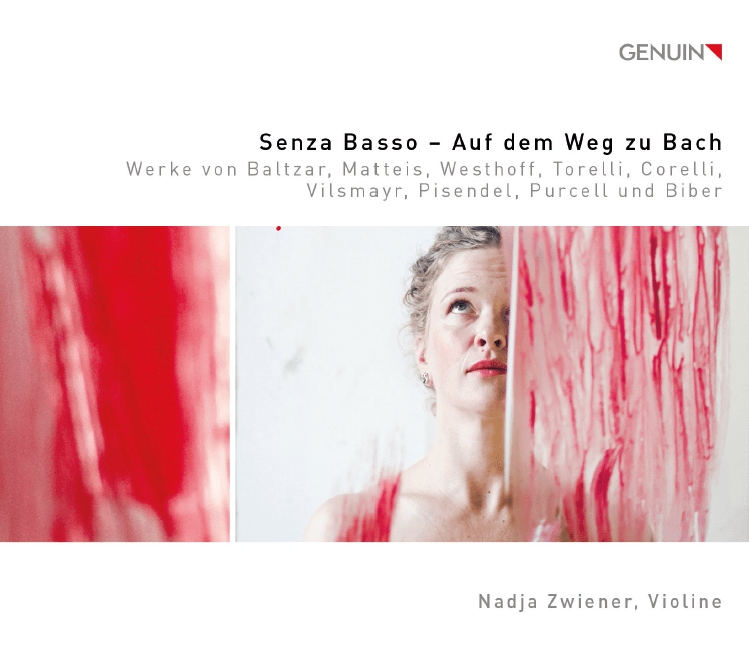
Senza Basso — Auf dem Weg zu Bach
Music by Baltzar, Matteis, Westhoff, Torelli, Corelli,

Vilsmayr, Pisendel, Purcell and Biber
Nadja Zwiener, Violin

Genuin GEN 21728. 65’57

Well known in the UK as the leader of The English Concert and in Germany as leader of the Bachakademie Stuttgart, Senza Basso — Auf dem Weg zu Bach (Without bass — on the way to Bach) is violinist Nadja Zwiener‘s first solo CD. It explores a fascinating genre of music for solo violin preceding Bach’s famous 1720 Six Sonatas and Partitas for solo violin. In his programme essay ‘Melodic polyphony, polyphonic melody – composing senza basso in the Baroque era’, Michael Maul points out the challenges of composing, playing and listening to music with a normal bass line, describing it as “an art of omission and of sensing the unplayed”.

Continue reading

Bach: Matthew Passion – Amici Voices

Bach: Matthew Passion
Amici Voices
Filmed in St John’s, Smith Square
First broadcast 3 April 2021

Before the 2020 Covid-19 sequence of lockdowns, the run-up to Easter in London was musically dominated by the St John’s, Smith Square series of concerts. These traditionally culminated in a Messiah and one of the Bach Passions for the final two sell-out concerts. The concert recorded there by Amici Voices and first broadcast on Easter Saturday was as far removed from previous years as you can get. Their Matthew Passion was performed in the round in the middle of the space with no audience. It was a very refreshing alternative to the usual Easter fare.

Continue reading

Suonare è danzare

Suonare è danzare
Academy of Ancient Music, Laurence Cummings, Bojan Čičić
Live from West Road Concert Hall, Cambridge. 12 February 2020

Muffat Armonico Tributo Sonata in G
Bach Sonata in E minor for violin and keyboard, BWV 1023
Telemann Concerto polonoise in B flat major
Handel  Sonata in G Op.5, No.4

It is often said by music commentators that practically all Baroque music is fundamentally based on dance. Dance was certainly a key part of 18th century life, a fundamental part of the education system, and underpinned many aspets pf social and political discourse. This is the first of a three-concert mini-festival from AAM Live 2021, live-streamed (via ticket purchase) from their Cambridge home in the West Road Concert Hall. The Acadamy of Ancient Music under Laurence Cummings (pictured), their Music Director designate, directing from the harpishcord, joined with the AAM leader, violinist Bojan Čičić for a programme of music in celebration of dance.

Continue reading

OAE Player: Seeing Double

Seeing Double’
Orchestra of the Age of Enlightenment, Jonathan Cohen
Kati Debretzeni, Nicola Benedetti, Rudolfo Richter
Katharina Spreckelsen, Sarah Humphrys
OAE Player. 19 November 2020

Avision Concerto Grosso no.5 in D minor
Vivaldi Concerto in D for two violins RV 513
Vivaldi Concerto in D for two violins RV 514
Vivaldi Concerto in A minor for two oboes RV 536
Bach Concerto in D minor for two violins BWV 1043
Purcell Rondeau from Abdelazer

The second of the Orchestra of the Age of Enlightenment’s premieres on their digital platform OAE Player was a concert of Vivaldi and Bach double concertos recorded at the Snape Maltings in front of a socially-distanced audience. Many people will have already heard or seen an expanded version of the programme as one of the live concerts of the much reduced 2020 BBC Proms season. The principal violin soloist for both concerts should have been Alina Ibragimova, but the death of her father (the distinguished double bass player Rinat Ibragimov) the day before the Prom resulted in Nicola Benedetti stepping in for the Proms and this concert, which seems to have been recorded the following day in the far more suitable acousics of the Snape Maltings.

Continue reading

OAE Player: Apollo e Dafne

Apollo e Dafne
Orchestra of the Age of Enlightenment, Roderick Williams
Rowan Pierce, Katharina Spreckelsen
OAE Player. 9 November 2020

Telemann Der am Ölberg zagende Jesus TWV 1: 364
JS Bach Cantata, Ich habe Genug BWV 82
Handel Concerto Grosso Op. 3 No. 2/1
Handel Apollo e Dafne HWV 122

The Orchestra of the Age of Enlightenment (OAE) has responded to the Covid crisis by opening a new digital platform, OAE Player. For this Premiere Night concert, they were billed as returning to their resident home at the Southbank Centre for the first time since the first lockdown although, as you will read, that turned out to be not quite the reality. Each of the filmed concerts (there are currently twenty available on the OAE Player) are available to watch individually for a great deal less than a concert ticket (and without the costs of travel) or there is an option of accessing all the concerts with an annual pass.

Continue reading

Bach: Das Wohltemperierte Klavier II

Bach: Das Wohltemperierte Klavier Volume 2
Steven Devine, harpsichord
Resonus Classics RES10261. 2 CDs. 73’03+75’42

Following his Volume 1 of Das Wohltemperierte Klavier (The Well-Tempered Clavier reviewed here), Steven Devine returns with a very welcome recording of Bach’s second book of Preludes & Fugues, published around 20 years after the first book. Unlike the Book 1 Preludes and Fugues (BWV 846-869) which survive in Bach’s autograph, Book 2 (BWV 870-893) has two principal sources with contribtions by Bach’s family, but only one withs any evidence of Bach’s hand.

Continue reading

Master Musicians: Bach

Bach
David Schulenberg
Oxford University Press
: Master Musicians series
Hardback, 448 pages, 235x156x23mm, ISBN13: 9780190936303

Bach must be one of the most written about of all composers, so the addition of another outline of his life and music needs to have something extra to offer. Bach scholarship continues to discover new works and new evidence and ideas about his life and music. Since Malcolm Boyd’s original 1983 Master Musicians Bach volume and its three revisions, understanding of Bach and his music’s historical and cultural context has shifted substantially, reflecting new biographical information and insights. So David Schulenberg’s contribution to the Master Musicians series is very welcome.

Continue reading

Duo1702+ – Coffee Edition

Duo1702+Coffee Edition
Louise Hjorth Hansen, recorder Katrine I. Kristiansen, organ
Gateway DUO170201. 58’56

Baroque music in the name of coffee – induced by Covid-19” is the sub-text of this recording from Duo1702 and friends. Made in response to the Covid crisis, the two Danish members of Duo1702, Louise Hjorth Hansen, recorder, and Katrine Kristiansen, organ, are joined by five of their musical friends to perform music by Bach, Finger, Telemann, Morten Ræhs, Purcell, and Vivaldi. Their intention is to recreate the atmosphere of the Zimmermann Kaffeehaus in Leipzig where Bach and his sons made music to the accompanyment of coffee drinking.

Continue reading

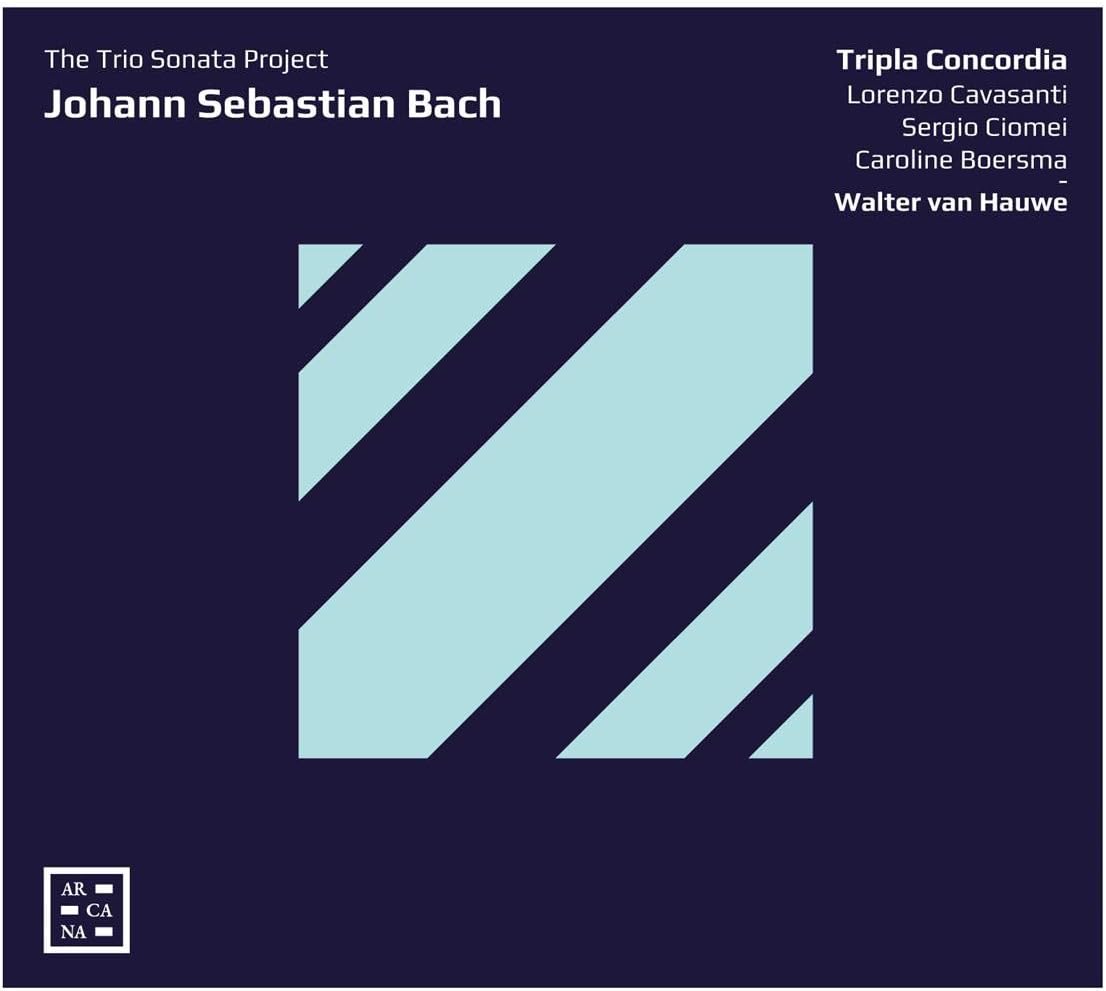
Bach: The Trio Sonata Project

JS Bach: The Trio Sonata Project
Tripla Concordia, Walter Van Hauwe
Outhere/Arcana A114. 63’08

The tradition of rearranging music for different forces is a long one, and one that Bach himself used frequently. The Bach ‘Trio Sonata Project’ is inspired by this practice, and includes one piece that Bach himself arranged from an earlier work of his (BWV 1027). The other transcribed pieces are BWV 527, 997, 1028 & 1029. Three of them were originally for viola da gamba and harpsichord, one for lute, and one from the famous set of organ Sonatas.  Continue reading

Bach: Sonatas & Partitas for solo violin

JS Bach: Sonatas & Partitas for solo violin
Thomas Zehetmair
ECM New Series 2551/52. 2CDs, 59’21+67’12

Sei Solo - The Sonatas and Partitas for Violin Solo

After first recording the Bach solo violin works in 1982 on a modern violin, albeit with more than a nod to the then-current notions of early performance practice, Thomas Zehetmair now returns with a Baroque instrument and two period bows, one for the Partitas, and the other for the Sonatas. It is recorded in a very generous acoustic, far removed from the possible chamber acoustic that Bach may have had in mind. But the violin speaks clearly though the background bloom, aided by Zehetmair’s careful articulation. Continue reading

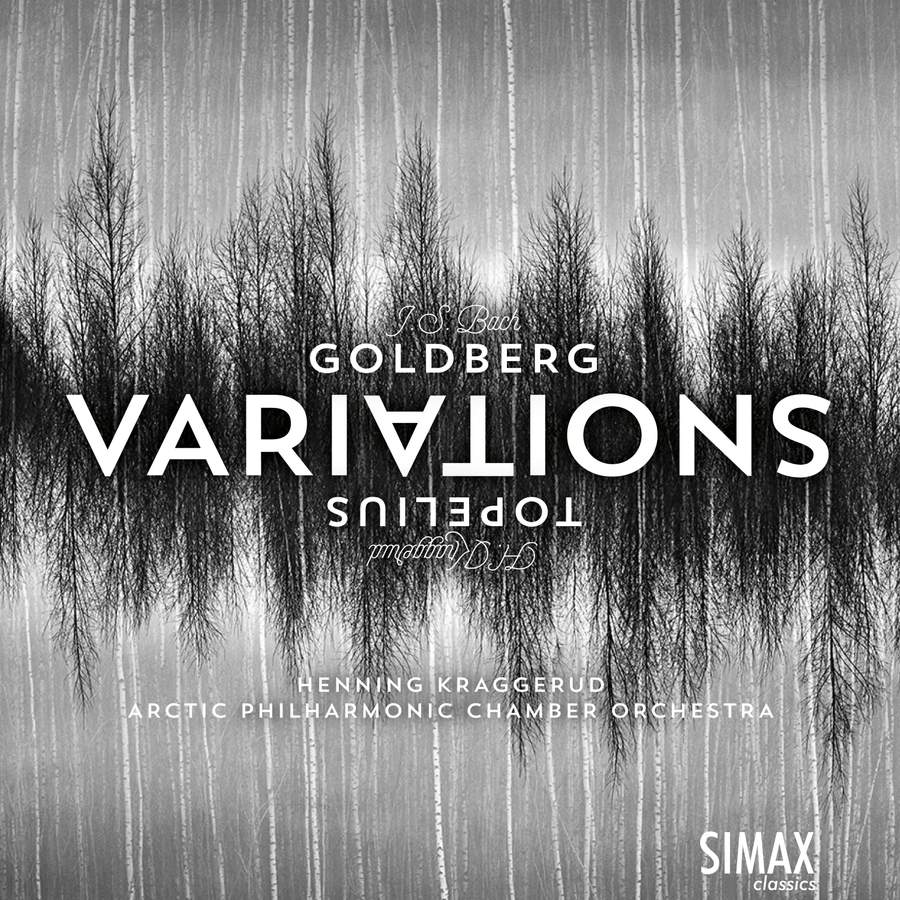
Variations: Goldberg & Topelius

Goldberg Variations & Topelius Variations
Arctic Philharmonic Chamber Orchestra, Henning Kraggerud
Simax PSC1353. 74’20

Bach: Goldberg Variations (arr. Kraggerud & Lund)
Henning Kraggerud: Topelius Variations

This is a combination of an arrangement for string orchestra of Bach’s Goldberg Variations with a set of variations composed in 2017 by Henning Kraggerud, the leader of the Arctic Philharmonic Chamber Orchestra. It was inspired by the life of the Swedish-speaking Finn, Zachris Topelius (1818-1898), a historian and a writer of essays, poems, fairytales and children’s stories, who helped to develop a Finnish identity as it moved towards eventual independence. Continue reading

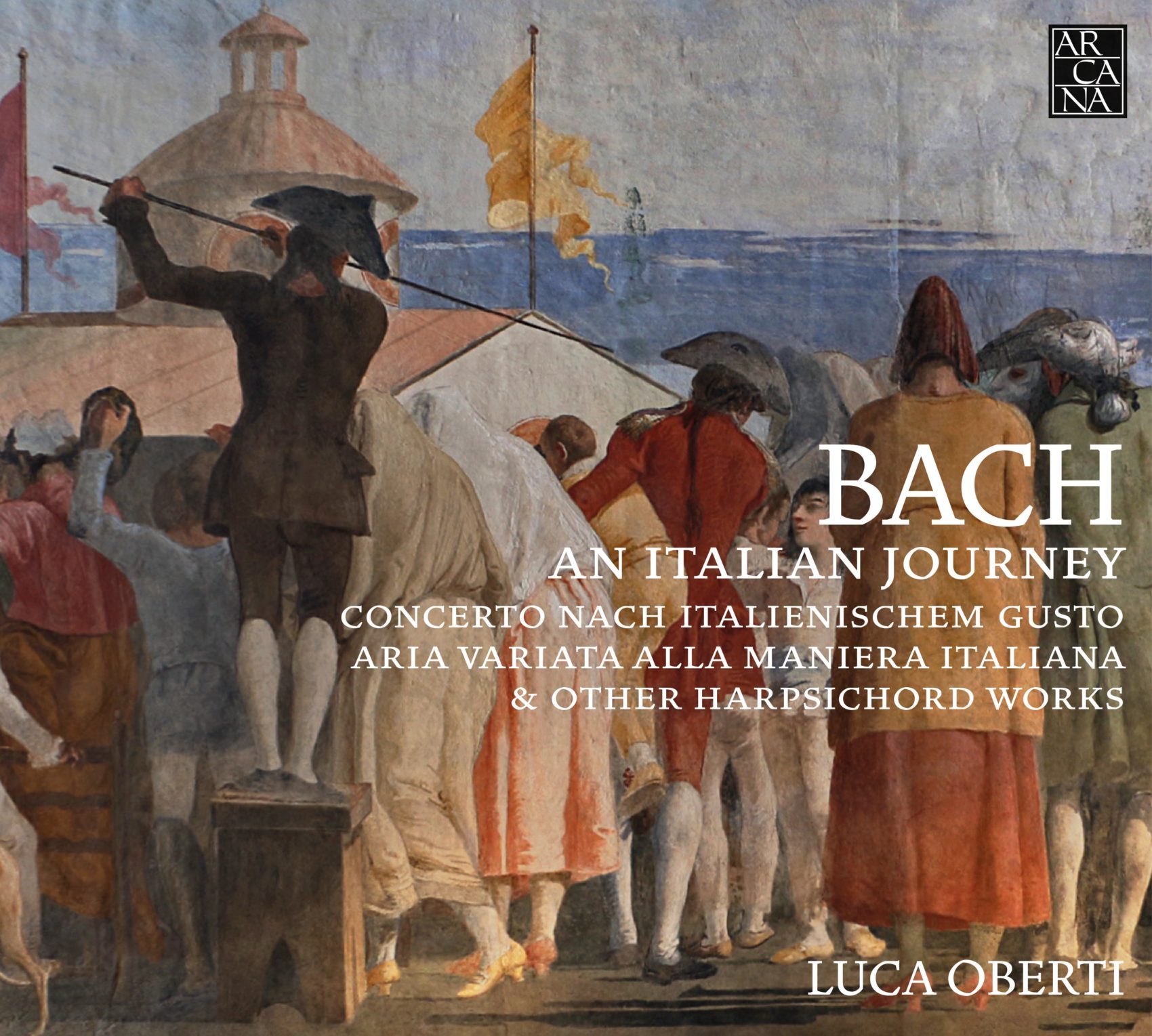
Bach: An Italian Journey

Bach: An Italian Journey
Luca Oberti, harpsichord
Outhere/Arcana A443. 71’18

This 2018 release is from a harpsichord player that I am not familiar with. His programme gathers together pieces with an Italian influence, including transcriptions of concertos by Vivaldi and Marcello, and pieces of Italian inspiration like the Aria Variata alla maniera Italians and the Capriccio sulla lontananza del fratello dilettissimo. It finishes, inevitably, with the Italian Concerto. Continue reading

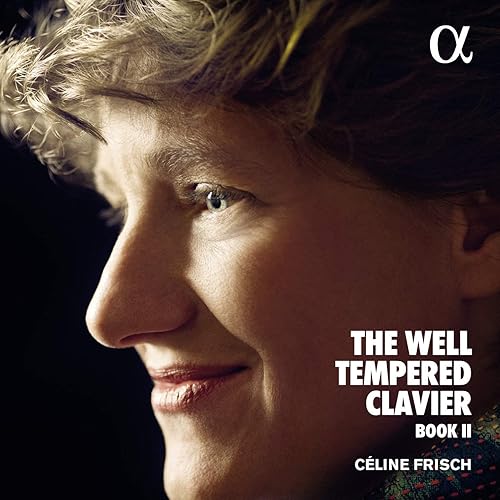
Bach: Well-Tempered Clavier Book II

J S Bach: Well-Tempered Clavier Book II
Céline Frisch, harpsichord
Outhere/Alpha Classics: Alpha 451. 2 CDs. 69’45+76’06

Bach: The Well-Tempered Clavier Book II
Following on from her CD of Book I of the Well-Tempered Clavier, Céline Frisch (o-founder of the Café Zimmermann ensemble) now offers us Book II. It was completed twenty-two years after Book I, in 1744. It was recorded on a 1998 two manal copy by Andrea Restelli of the single manual 1738 Christian Vater harpsichord now in the Germanisches National Museum, Nuremberg. Continue reading

Bach: Johannes-Passion

J S Bach: Johannes-Passion
Collegium Vocale Gent, Philippe Herreweghe
Outhere/PHI LPH031. 2CDs 107’08


Cover of CD of Herreweghe Bach Johannes Passion

I can often predict the way in which a performance of the Johannes-Passion is going to develop by the manner in which the opening instrumental bars are performed. The texture appears simple. Swirling low strings underpinned by the repetitive pulse of continuo bass, with two oboes slowly intertwining dissonance-laden melodic lines above them. It is one of those passages of music that can be interpreted in many ways, resulting in differing moods ranging from sinister, threatening, mysterious, to gently calming. Continue reading

Bach: Well-Tempered Consort 1

J S Bach: Well-Tempered Consort – 1
Phantasm
Linn CKD 618. 66’55

Cover CKD 618

This CD could well become essential listening for all organists and harpsichord players, alongside the various examples of Bach organ works played on recorder consorts. Transferring Bach’s keyboard works, such as The Well-Tempered Clavier, Musical Offering and Clavier-Übung III, to a viol consort reveals the sensitivity of timbre possible with bowed string instruments rather than a plucked or wind-blown one. Of course, keyboard players have their own, often complex, way of imparting musical expression to their playing within the limitations of their particular instrument, principally by using aspects of touch and articulation. But it is only the clavichord, which was arguably the instrument of choice in the Baroque era, that has the ability to change the nature of the sound of a note once it has started sounding, using the technique known as bebung which imparts a controllable vibrato to sounding notes.

Continue reading

Bach: The Well-tempered Clavier, Book One

JS Bach: The Well-tempered Clavier, Book One
Colin Booth, harpsichord
Soundboard SBCD218. 2CDs, 59’31+62’12

This is the first of two double-CD volumes of Bach’s Das Wohltemperierte Klavier (The Well-Tempered Clavier) from Colin Booth. It covers the 24 Preludes and Fugues (BWV846-869) written in all 24 major and minor keys forming what is now known as Book 1 of ‘The 48’. It only survives in manuscript copies from 1722, with no printed edition unto around 1800. The manuscript title page announces that it was composed “for the profit and use of musical youth desirous of learning, and especially for the pastime of those already skilled in this study”. Continue reading