Early Music Day
Stay at Home Edition

Happy Birthday, J S Bach!
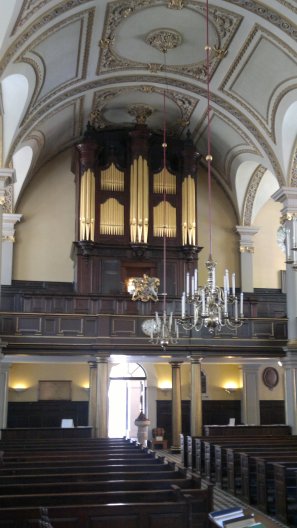
Click the links below to take you to publically available videos of the pieces that we would have performed during the informal 45′ afternoon Bach organ and solo instrument recitals that would have taken place in London’s St Giles-in-the-Fields on Early Music Day at 4, 5 & 6pm. This is the programme for the third, 6pm concert, given by
Andrew Benson-Wilson (organ)
playing organ chorales from Bach’s Leipzig manuscript
Poppy Walshaw (cello)
The poster for the series of events can be found here, as amended after the earlier pull out of Art of Moog because of the Coronavirus. Their 7:30pm evening concert with the historic St Giles-in-the-Fields organ will be similarly recreated with similar video links although sadly, none will have the combined Art of Moog and pipe organ.
Allein Gott in Der Hõh sei Ehr BWV 662
https://www.youtube.com/watch?v=QW2J10wRT2k
Jacques van Oortmerssen
Cello Suite No.3 in C. BWV 1009
Prélude, Allemande, Courante, Sarabande, Bourrées, Gigue
https://www.youtube.com/watch?v=tFtZ9tQiFxM
Colin Carr
Jesus Christus, unser Heiland BWV 666
https://www.youtube.com/watch?v=cQP-necHTK4
Bine Katrine Bryndorf
Komm, Gott, Schöpfer, Heiliger Geist BWV 667
https://www.youtube.com/watch?v=CdBLy6VePyk
Simon Thomas Jacobs
Richards, Fowkes & Co organ, St George’s Hanover Square
These concerts were to have been given in aid of the
Royal Society of Musicians.
If you are willing to support this important musical charity, you can donate directly via this link https://www.rsmgb.org/fundraising/. UK taxpayers can claim GiftAid. Please mention “Early Music Day” in the comments section of your donation.
#earlymusicday


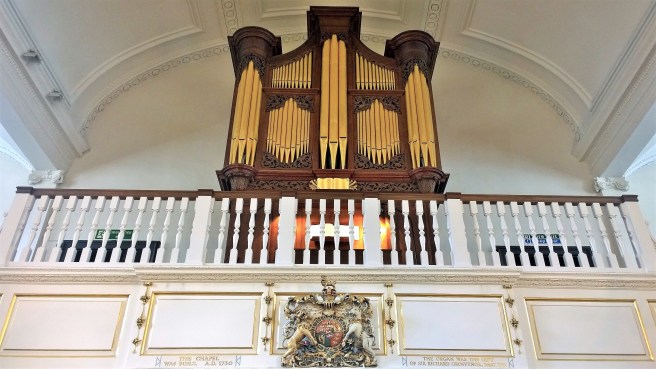


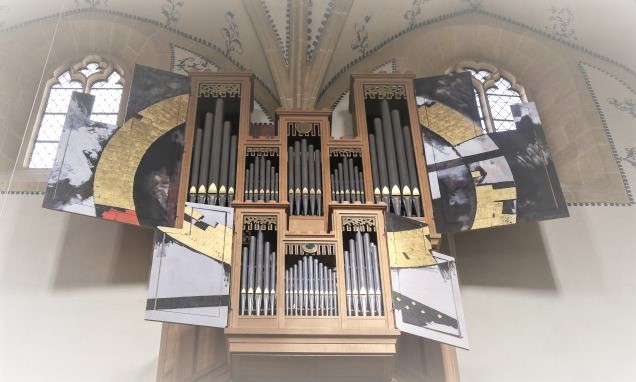

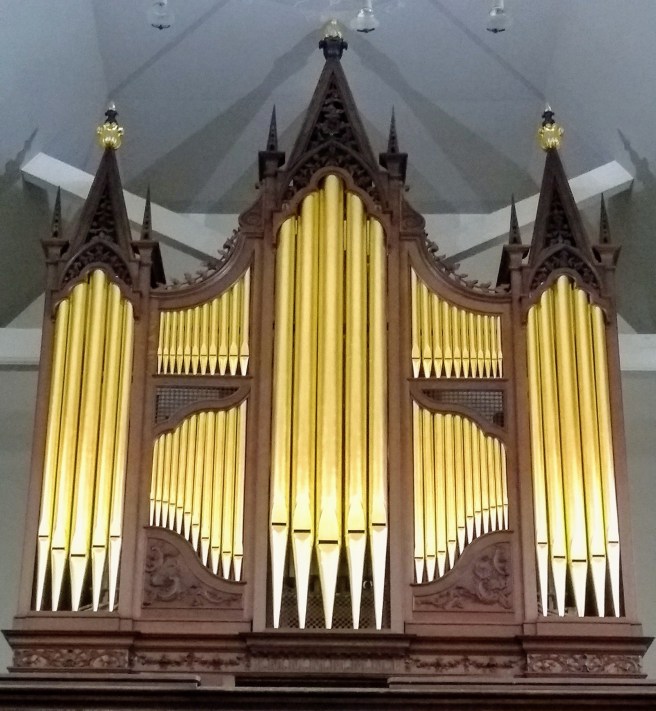


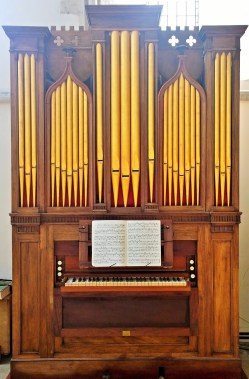
 The ‘Wetheringsett’ organ is a reconstruction of a Tudor organ based on the soundboard of an organ that was found during alterations to a farmhouse in the village of that name in Suffolk. Until it was hidden away within the walls of the farmhouse, is seems to have been used as a dairy door. The many holes in the wood were initially thought to indicate some sort of protection from the evil eye, until a local organ builder recognised it as the soundboard of an organ – the bit hidden away inside the instruments where the feet of the pipes sit, and through which the air is channelled from the windchest to the pipes. Analysis of the number and size of the holes can give a pretty accurate account of the size, range and number of stops of the organ. Tree-ring dating suggests that the wood dates from around 1525, leading to suggestions that this could be the organ known to have been purchased by a large parish church in Debenham in that year.
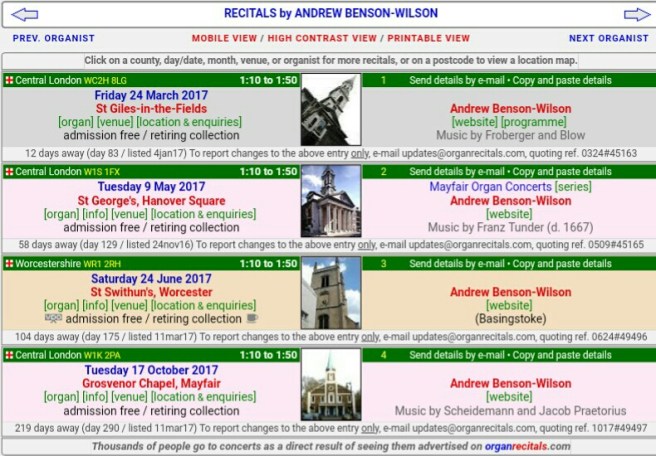


 child prodigy, writing his first oratorio, Ruth, aged 6. When he was 8, the composer Dr William Boyce referred to him as the ‘English Mozart’. His family moved to London when he was about 12, living in Marylebone. He led a colourful life, some of his apparent eccentricities possibly being caused by a serious head injury when he was about 21. An organ virtuoso, Samuel Wesley was the leading pioneer of the Bach revival in England. Bach seems to have been a strong influence on his Opus 6 Organ Voluntaries, published between about 1807 and 1820, and the focus of this recital.
 Andrew Benson-Wilson : Early Music Reviews +