Mayfair Organ Concerts
The Grosvenor Chapel, Mayfair
Tuesday 21 August 2021
My organ recitals
Early Music Day 2021
Early Music Day 2021
Andrew Benson-Wilson
21 March 2021

This time last year, I had planned to give four concerts for Early Music Day, with three Bach organ recitals (shared with baroque cellist Poppy Walshaw and flautist Annabel Knight) and a special evening concert combining Art Of Moog with the historic organ of St Giles-in-the-Fields. A year later, there is still no possibility of live events in the UK, so here is a far more modest contribution to Early Music Day 2021, with links to recordings of early organ music played on important European historic organs, either from my own recitals or more informal playing.
Early Music Day (at home): 7:30pm
Early Music Day
Stay at Home Edition

Happy Birthday, J S Bach!
Click the links below to take you to publically available videos of the pieces that we would have performed during the informal 45′ afternoon Bach organ and solo instrument recitals that would have taken place in London’s St Giles-in-the-Fields on Early Music Day at 4, 5 & 6pm. This is the programme for the final 7:30pm concert, given by
Art of Moog & Andrew Benson-Wilson (organ)
The poster for the series of events can be found here, as amended after the earlier pull out of Art of Moog because of the Coronavirus. Their 7:30pm evening concert with the historic St Giles-in-the-Fields organ is recreated with video links although sadly, none will have the combined Art of Moog and pipe organ. All the organ pieces below would have been combined with the Art of Moog instrumentalists.
An introduction to the Art of Moog
https://www.youtube.com/watch?v=AUJ8XSBHYnE
Art of Moog: Live at Kings Place – Selections
https://www.youtube.com/watch?v=U_B3Y1tXAhw
Art of Fugue Contrapunctus 1
https://www.youtube.com/watch?v=U5KjVEYzYAw
Benjamin Alard
l’église d’Arques-la-Bataille
Art of Fugue Contrapunctus 2
https://www.youtube.com/watch?v=M0HeE4MF01g&list=PL6cXnOI-FfSgtlLkIE5D1nXf660II0Pdd&index=8&t=0s
Glenn Gould
Adagio from The Easter Oratorio BWV 249
https://www.youtube.com/watch?v=CklCJk6kNFg
Art of Moog
Prelude in E minor
https://youtu.be/4_5efQbjybk
Art of Moog
Erbarm dich mein, o Herre Gott, BWV 721
https://www.youtube.com/watch?v=k3CNS2iK790
Ton Koopman
1643 Hans Heinrich Bader organ, St. Walburgiskerk, Zutphen
Wenn wir in höchsten Nöten sein
https://www.youtube.com/watch?v=GPMeBNU9fes
Wolfgang Zerer
Christ lag in Todesbanden
https://www.youtube.com/watch?v=rqwgeKOgezg
Wolfgang Zerer
Adagio from the viola da gamba sonata BWV 1029
https://youtu.be/3eAzorClu78
Art of Moog
Toccata D Moll BWV 565
https://www.youtube.com/watch?v=-xeqQo7bCvE
Jacques van Oortmerssen
1992 Glauco Ghilardi organ: S. Maria Assunta, Smarano
These concerts were to have been given in aid of the
Royal Society of Musicians.
If you are willing to support this important musical charity, you can donate directly via this link https://www.rsmgb.org/fundraising/. UK taxpayers can claim GiftAid. Please mention “Early Music Day” in the comments section of your donation.
#earlymusicday
Early Music Day (at home): 6pm
Early Music Day
Stay at Home Edition
Happy Birthday, J S Bach!
Click the links below to take you to publically available videos of the pieces that we would have performed during the informal 45′ afternoon Bach organ and solo instrument recitals that would have taken place in London’s St Giles-in-the-Fields on Early Music Day at 4, 5 & 6pm. This is the programme for the third, 6pm concert, given by
Andrew Benson-Wilson (organ)
playing organ chorales from Bach’s Leipzig manuscript
Poppy Walshaw (cello)
The poster for the series of events can be found here, as amended after the earlier pull out of Art of Moog because of the Coronavirus. Their 7:30pm evening concert with the historic St Giles-in-the-Fields organ will be similarly recreated with similar video links although sadly, none will have the combined Art of Moog and pipe organ.
Allein Gott in Der Hõh sei Ehr BWV 662
https://www.youtube.com/watch?v=QW2J10wRT2k
Jacques van Oortmerssen
Cello Suite No.3 in C. BWV 1009
Prélude, Allemande, Courante, Sarabande, Bourrées, Gigue
https://www.youtube.com/watch?v=tFtZ9tQiFxM
Colin Carr
Jesus Christus, unser Heiland BWV 666
https://www.youtube.com/watch?v=cQP-necHTK4
Bine Katrine Bryndorf
Komm, Gott, Schöpfer, Heiliger Geist BWV 667
https://www.youtube.com/watch?v=CdBLy6VePyk
Simon Thomas Jacobs
Richards, Fowkes & Co organ, St George’s Hanover Square
These concerts were to have been given in aid of the
Royal Society of Musicians.
If you are willing to support this important musical charity, you can donate directly via this link https://www.rsmgb.org/fundraising/. UK taxpayers can claim GiftAid. Please mention “Early Music Day” in the comments section of your donation.
#earlymusicday
Early Music Day (at home)
Early Music Day
Stay at Home Edition
Happy Birthday, J S Bach!
Early Music Day events around Europe are cancelled because of Coronavirus, including my own concerts in St Giles-in-the-Fields.
A live broadcast from behind closed doors is not possible, so at the start time of the four concerts I will post a programme of publically available videos of the pieces that we would have performed.
The first three will reflect the informal afternoon Bach organ and solo instrument recitals which would have taken place at 4pm, 5pm & 6pm, followed by a selection of the pieces that Art of Moog and I might have played in the 7:30pm evening concert although sadly, none will have the combined Art of Moog and St Giles-in-the-Fields pipe organ.
These concerts were to have been given in aid of the
Royal Society of Musicians.
If you are willing to support this important musical charity, you can donate directly via this link https://www.rsmgb.org/fundraising/. UK taxpayers can claim GiftAid. Please mention “Early Music Day” in the comments section of your donation.
#earlymusicday
@earlymusicday
CANCELLED. Happy Birthday, J S Bach!
Early Music Day
Saturday 21 March 2020
In light of the latest announcement by the UK Government, I am sadly having to cancel all of these concerts. Thank you to all have shown an interest, and particularly to the musicians who were lined up to perform. It is far to soon to think of when, or if, to re-schedule any of it, but Early Music Day next year is on Sunday 21 March.
All the concerts were to have been given in aid of the
Royal Society of Musicians.
If you are willing to support this important musical charity, you can donate directly via this link https://www.rsmgb.org/fundraising/. UK taxpayers can claim GiftAid. Please mention “Early Music Day” in the comments section of your donation.
Happy Birthday, J S Bach!
St Giles-in-the-Fields
St Giles High Street, London WC2H 8LG
(Close to Tottenham Court Road underground)

Three informal 45′ afternoon Bach organ and solo instrument recitals
including organ chorales from Bach’s Leipzig manuscript.
4pm
Fantasia supra Komm, Heiliger Heist BWV 651
Cello Suite No. 2 in D minor BWV 1008
Prélude, Allemande, Courante, Sarabande, Menuetts, Gigue
O Lamm Gottes, unschuldig BWV 656
5pm
Von Gott will ich nicht lassen BWV 658
Nun komm’ der Heiden Heiland BWV 659
Partita for solo flute BWV 1013
Allemande, Corrente, Sarabande, Bourrée angloise
Jesus Christus, unser Heiland BWV 665
6pm
Allein Gott in Der Hõh sei Ehr BWV 662
Cello Suite No. 3 in C BWV 1009
Prélude, Allemande, Courante, Sarabande, Bourrées, Gigue
Jesus Christus, unser Heiland BWV 666
Komm, Gott, Schöpfer, Heiliger Geist BWV 667
Special evening concert @ 7.30
AN EVENING WITH BACH
Featuring the historic St Giles-in-the-Fields organ,
with pipework dating back to Bach’s time, and solo Bach music for cello and violin.
(Free entry – donations welcomed for the Royal Society of Musicians).
The originally planned Art of Moog event had been cancelled earlier
because of the potentially high costs of a late cancellation. The Evening with Bach was a free replacement event. As it turns out, the whole church is now closed for the foreseeable future along, it seems with all CofE churches.
The organ in St Giles-in-the-Fields was originally built by George Dallam in 1678 with further work in 1699 by Christian Smith, nephew of ‘Father’ Smith. It was moved into a new organ case in the rebuilt St Giles church in 1734 by Gerard Smith the Younger. It was rebuilt in 1856 by Gray and Davison, then at the height of their fame. It was restored in 2006 by William Drake of Buckfastleigh, retaining material from 1678, 1699 and 1856. It is one of the most important historic organs in the UK. More details here.
Andrew Benson-Wilson: Three Westminster Abbey organists
Music-at-Hill – Midtown concerts
Friday 13 September 2019, 1:10pm
St Giles-in-the-Fields
60 St Giles High Street. London, WC2H 8LG
Andrew Benson-Wilson
plays organ music by
Three Westminster Abbey Organists
1668 John Blow; 1679 Henry Purcell;
1695 Blow re-appointed; 1708-1727 William Croft

During the period from 1668 and 1708, Westminster Abbey appointed three distinguished organists, the first of which, John Blow, was the teacher of his two successors, Henry Purcell and William Croft. In 1679 John Blow stepped down from his Abbey post in favour of his talented student, Purcell, only returning on Purcell’s death in 1695. William Croft replaced John Blow after his death in 1708, having previously been organist at St Anne’s Soho and Master of the Children of the Chapel Royal. He is most famed today for his Funeral Sentences, performed at Handel’s funeral in 1759 and at every British state funeral since then.
William Drake’s reconstruction of the Dallam/Smith/England/Lincoln/Gray & Davison organ in St Giles-in-the-Fields is one of London’s most important historic musical instruments. It contains some of the oldest pipework in London, going back to the time of Blow and Purcell in the mid to late 17th century.
Organ information can be found here.
Free admission, retiring collection.
The church is just behind Centre Point/Tottenham Court Road tube station.
Some forthcoming organ recitals

From organrecitals.com. Link to the live webpage here.
Andrew Benson-Wilson plays Bach: influenced by Reincken
Mayfair Organ Concerts
The Grosvenor Chapel
South Audley Street, Mayfair, London W1K 2PA
Tuesday 13 August 2019, 1:10
Andrew Benson-Wilson
plays music by
J S Bach
influenced by Johann Adam Reincken
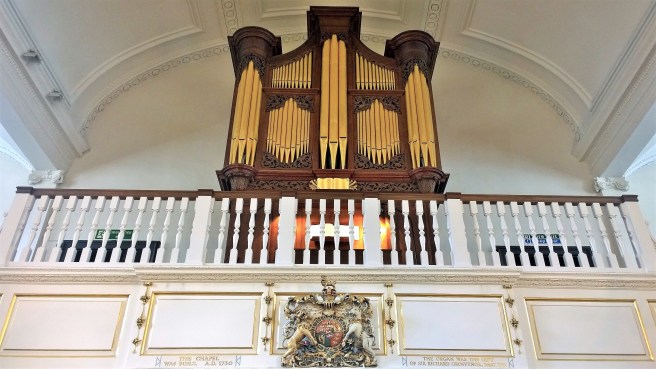
Johann Adam Reincken (1643-1722) was organist of Hamburg’s famous Katharinenkirche and a close friend of Buxtehude. This recital is linked to a recital of his music given earlier this year at St George’s, Hanover Square. That recital included his monumental chorale fantasia on An Wasserflüssen Babylon composed around 1650. At around 20 minutes long, it the longest known piece of its type in the whole 17th century North German repertoire. It was known by Bach who, while at school in Luneburg, aged around 15 copied the entire piece out from a copy owned by Georg Böhm. It is believed that he also travelled to Hamburg to hear Reincken play. In 1720, shortly before Reincken’s death, Bach visited Hamburg and improvised a lengthy fantasia on the same chorale in homage to Reincken, who commented: “I thought that this art was dead, but I see that it lives in you”. Bach also transcribed several of Reincken’s instrumental pieces for keyboard.
This recital includes one of Bach’s Reincken transcriptions, a Toccata that is clearly influenced by Reincken’s dramatic style, and Bach’s chorale prelude on An Wasserflüssen Babylon, which includes a very obvious reference to Reincken’s chorale fantasia. It ends with Bach’s giant Fantasia in G minor, which may have been played during Bach’s 1720 visit to Hamburg. The accompanying Fugue is based on a popular Dutch tune and might have been Bach’s homage to Reincken, who was born in The Netherlands.
Toccata in D minor BWV 913
An Wasserflüssen Babylon BWV 653
Sonata in A minor (after Reincken Hortus musicus) BWV 965
Fantasia in G minor BWV 542i
The organ is by William Drake
Admission is free, with a retiring collection
Andrew Benson-Wilson plays Reincken
Mayfair Organ Concerts
Andrew Benson-Wilson plays Johann Adam Reincken (1643-1722)
St George’s, Hanover Square, London W1S 1FX
30 April 2019 @ 1:10pm

Toccata in G (Andreas Bach Book)
Toccata in A (Anon?)
Chorale Fantasia: An Wasserflüssen Babylon
Johann Adam Reincken was one of the most important and influential 17th-century North German organist-composers. He forms a unique link between the Sweelinck influenced organists of the earlier part of the century and JS Bach. Little is known about his life, and very few of his organ compositions survive. He was born to North German parents in Deventer in The Netherlands around 1643. An earlier supposed birthdate of 1623 is now accepted as incorrect. He moved to Hamburg in 1654, aged just 11, to study with the famed organist of the Katharinenkirche, Heinrich Scheidemann, a pupil of Sweelinck. After a brief return to Deventer, he came back to Hamburg in 1659 as Scheidemann’s assistant, replacing him as organist in 1663 on Scheidemann’s death. As was the custom of the time, he married one of Scheidemann’s daughters in 1665. He remained there for 60 years until his death in 1722. As well as his church duties, he co-founded the Hamburg Opera and was involved in the city’s musical life. He is known from two pictures dating from around 1674; the portrait painting and the now well-known ‘Musical Company’ painting by Johannes Voorhout.
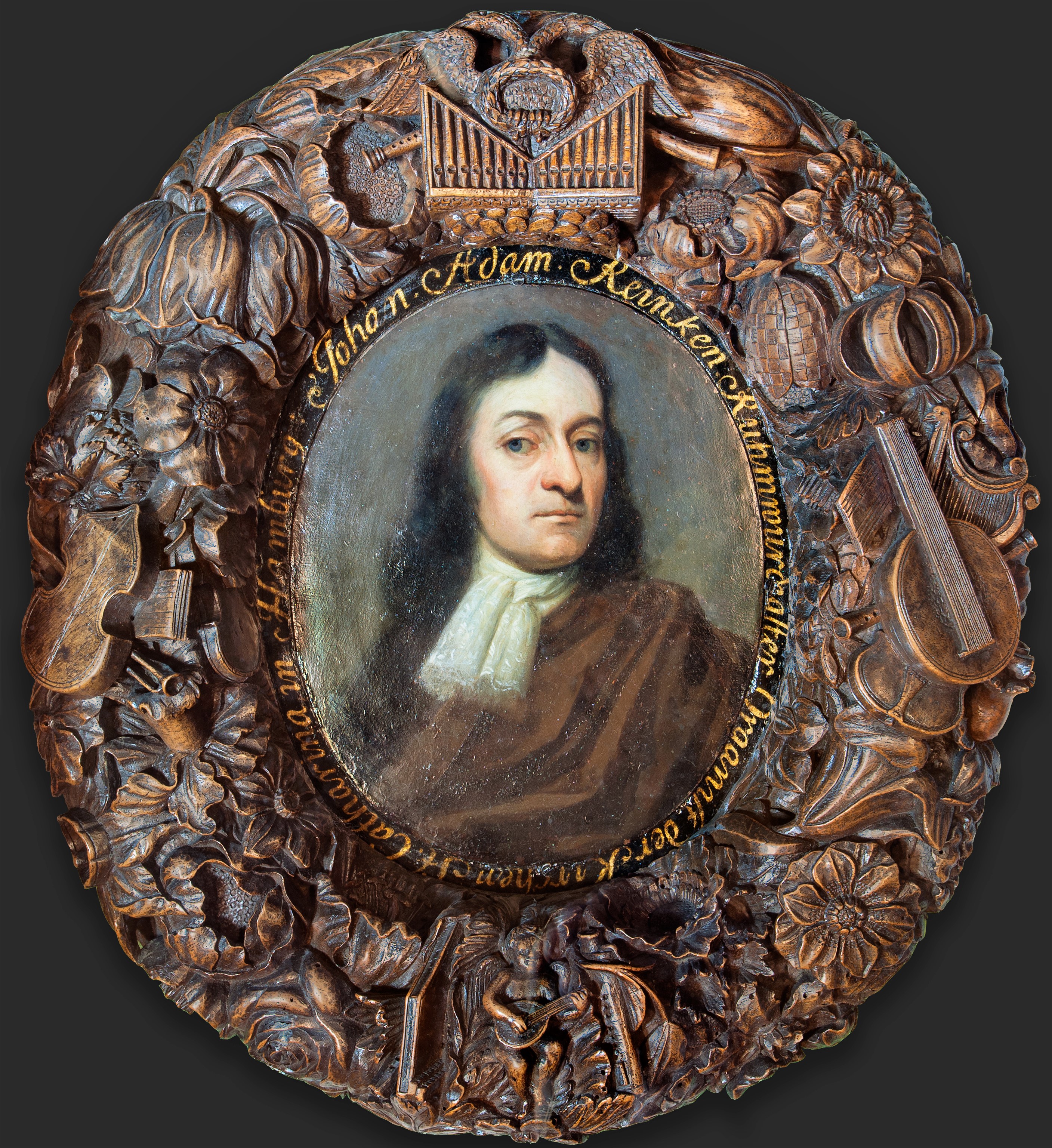
“Early organs and their repertoire”
North Hampshire Organists’ Association
Andrew Benson-Wilson
“Early organs and their repertoire”
An illustrated talk and demonstration
St Andrew’s, Farnham, Upper Church Lane, Farnham GU9 7PW
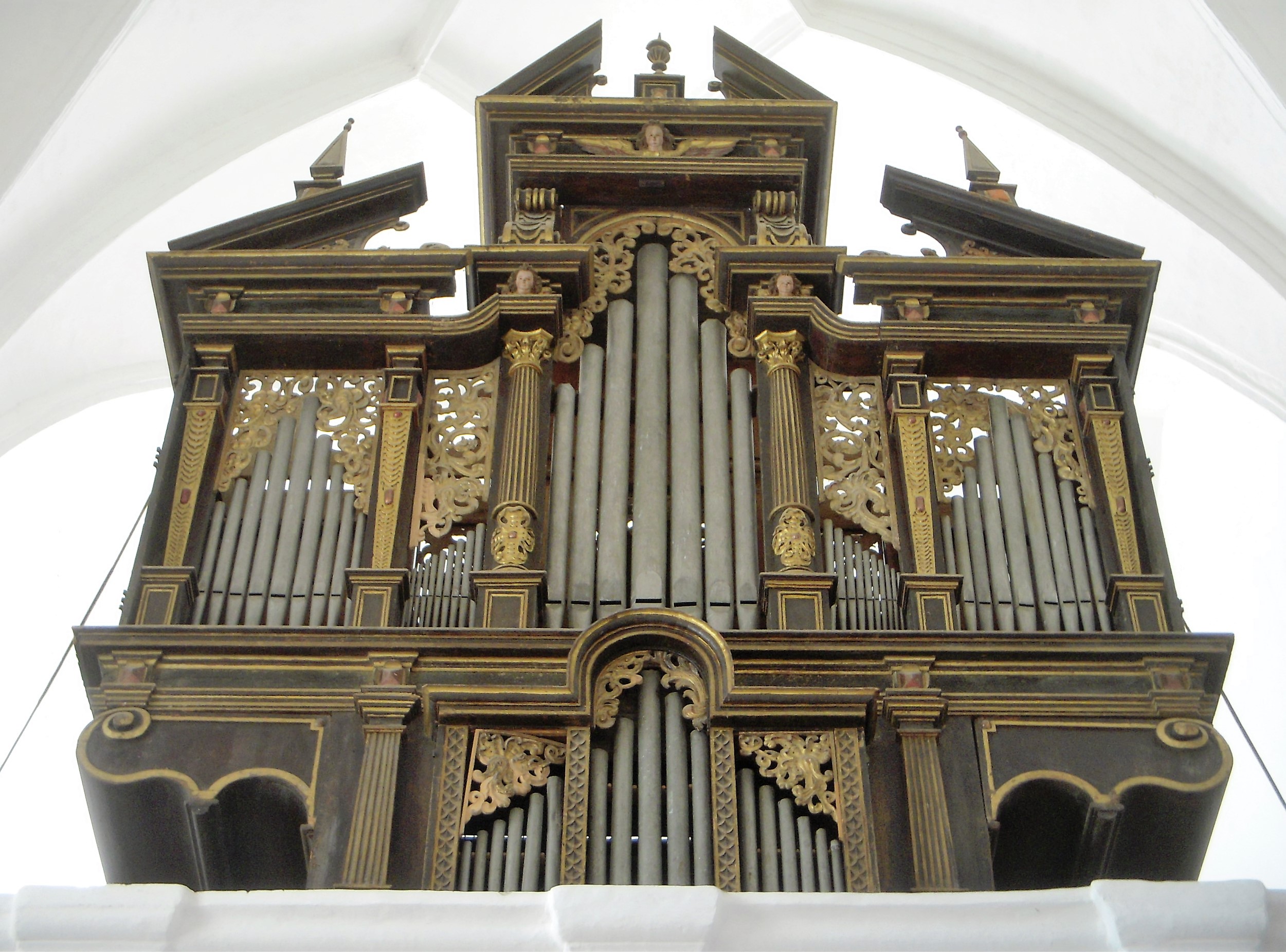
Andrew Benson-Wilson – Organ recital: ‘From England’
Andrew Benson-Wilson
plays organ music
‘From England’
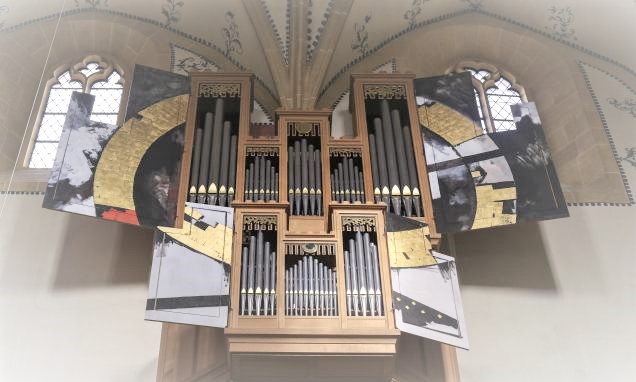
Stadtkirche (Temple Allemand)
Biel/Bienne, Switzerland
21 September 2018, 12:30
A recital on the reconstruction of the original 1517 ‘Swallow’s nest’ organ (Hochwandorgel) in the Stadtkirche (Temple Allemand) Biel/Bienne. Music by Anon, Dunstable, Preston, Tallis, Byrd, and Bull, the latter played on the Hauptorgel.
Anon: Robertsbridge Codex (c1360) Estampie
John Dunstable (c1390-1453) Sub Tuam Protectionem
Anon (c1530) Felix Namque
Thomas Preston (c1500-1563) Uppon la mi re
Thomas Tallis (c1505-1585) Alleluia Per te Dei genitrix
William Byrd (1538-1623) Callino Casturame
John Bull (1562-1628) Salve Regina (5 verses) Continue reading
Andrew Benson-Wilson plays Scheidt: Tabulatura Nova III – A Lutheran Vespers
Andrew Benson-Wilson
plays
Samuel Scheidt (1587-1654)
Tabulatura Nova III
A Lutheran organ Vespers

The Queen’s College Chapel, Oxford
Wednesday 24 October, 1:10
Andrew’s series of concerts featuring the North German pupils of Sweelinck (the ‘Orpheus of Amsterdam’) continues with this, the second of two recitals of music by one of Sweelinck’s most distinguished pupils, Samuel Scheidt. His influential three-volume Tabulatura Nova was published in 1624 and is one of the most important of all the many collections of organ music. Its 58 pieces are a comprehensive demonstration of compositional styles. Whereas the first two volumes included a variety of sacred and secular pieces in different styles, Volume III consists entirely of Lutheran liturgical music. It opens with settings for the Ordinary of the Mass, followed by the settings of the hymns and Magnificat for a Lutheran Vespers. It ends with one of the most extraordinary pieces of the whole 17th century North German organ repertoire: the powerful Modus pleno Organo pedaliter: Benedicamus à 6 Voc, its six voices divided between four on the manuals and two on the pedals.
Kyrie Dominicale 4. Toni
Gloria Canit Pastor: Et in terra pax
Credo in unum Deum
Hymnus: Veni Creator Spiritus
Magnificat 9 Toni
Psalmus sub Comminione: Jesus Christus, unser Heiland
Modus pleno Organo pedaliter: Benedicamus à 6 Voc
Played on the influential Frobenius organ. More information here.
Admission free – retiring collection.
Andrew Benson-Wilson plays Scheidt: Tabulatura Nova I
The Grosvenor Chapel
South Audley Street, Mayfair, London W1K 2PA
Tuesday 11 September, 1:10
Andrew Benson-Wilson
plays
Samuel Scheidt (1587-1654)
Tabulatura Nova I
Andrew’s series of concerts featuring the North German pupils of Sweelinck, the ‘Orpheus of Amsterdam’, continues with two recitals of music by one of his most distinguished pupils, Samuel Scheidt. His influential three-volume Tabulatura Nova was published in 1624. It is one of the most important of all collections of organ music. Its 58 pieces are a comprehensive demonstration of compositional styles. This recital, played on the William Drake organ in the Grosvenor Chapel, features three large-scale pieces from Volume 1 of the Tabulatura Nova.
Cantio Sacra: Wie gleuben all an einen Gott
Fantasia: Io son ferito lasso
Cantio Belgica: Ach du feiner Reuter
The next Scheidt recital will be on the famous Frobenius organ in the chapel of The Queen’s College Oxford, on Wednesday 24 October 2018, starting at 1:10. It will be of pieces from Volume 3 of the Tabulatura Nova, in the form of Lutheran Organ Vespers.
Both concerts are free admission, with retiring donations welcomed.
François Couperin 350th Anniversary Concert
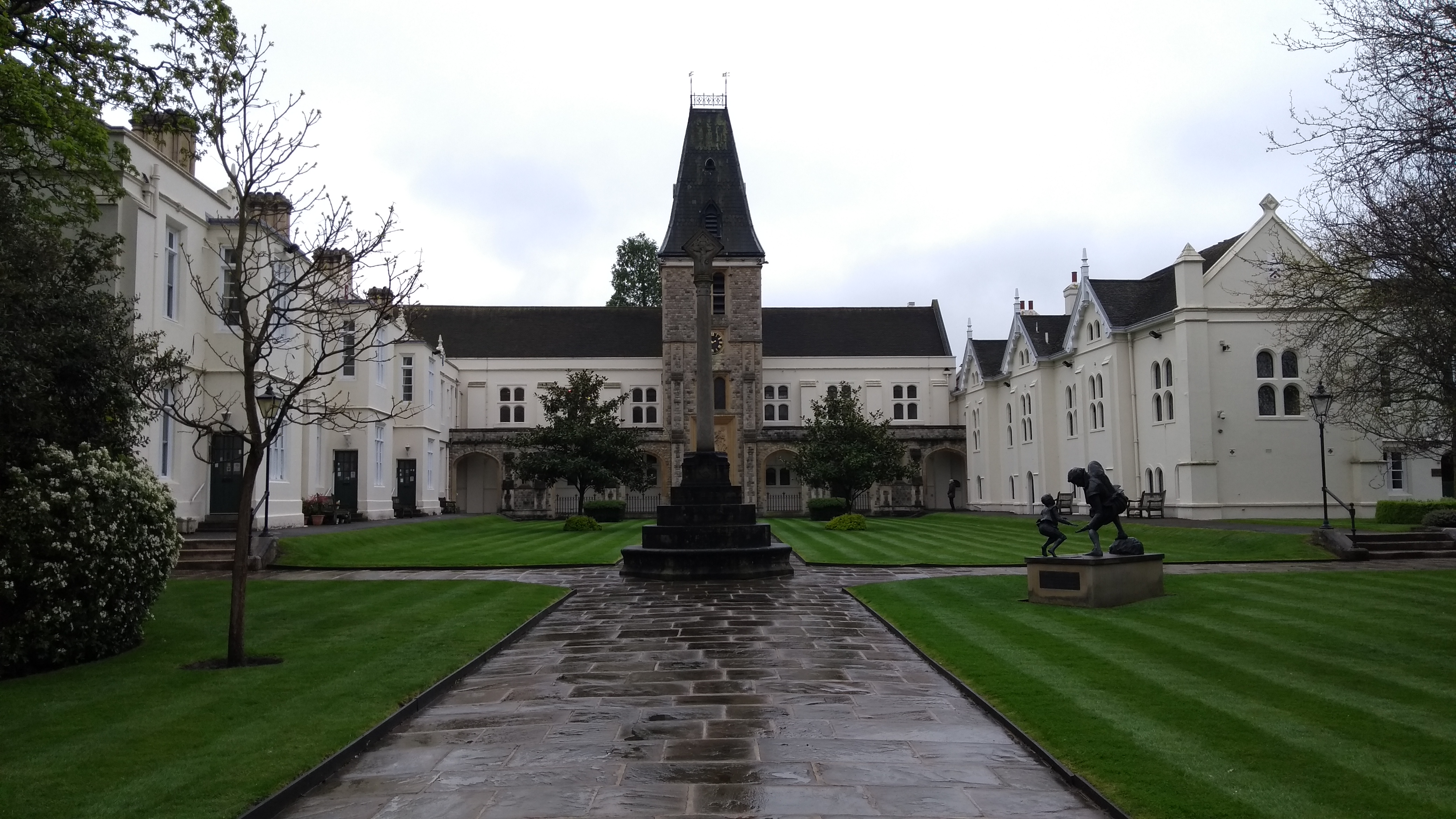
Christ’s Chapel of Alleyn’s College of God’s Gift in Dulwich
14 Gallery Rd, London SE21 7AD
Sunday 8 July 2018, 7.45 – 8.30
Guirlandes Alleluiatiques
François Couperin 350th Anniversary Concert
Andrew Benson-Wilson
Extracts from François Couperin’s Messe pour les Couvents, contrasted with the final cycle of Charles Tournemire’s L’Orgue Mystique, ending with the extraordinary
Fantaisie sur le Te Deum et Guirlandes Alleluiatiques.
Played on the 1760 England / 2009 William Drake organ.
Christ’s Chapel is part of Alleyn’s College of God’s Gift,
which is next to the Dulwich Art Gallery. Free street parking.
10 minutes walk from West Dulwich station.
Admission free – retiring collection.
Organ details here.

Melchior Schildt (d1667)
Andrew Benson-Wilson
plays the complete surviving organ works of
Melchior Schildt (1592-1667)
The Queen’s College Chapel, Oxford
Wednesday 29 November, 1:10

Melchior Schildt (1592-1667) was a pupil of Jan Pieterszoon Sweelinck. After a spell as court organist to the King of Denmark in Copenhagen, he succeeded his father as organist of the Hanover Marktkirche, where he remained. This recital includes his Magnificat Primi Modi, and a beautiful intabultation on the funeral motet Herzlich lieb hab’ ich dich.
Melchior Schildt came from a family of Hanover musicians. After spending time in Wolfenbüttel and Copenhagen, he returned to Hanover, succeeding his father as organist of the Marktkirche where he remained until his death. He seems to have been quite a character. While in Wolfenbüttel, he attacked the organ builder Gottfried Fritzsche in the organ loft, nearly strangling him before Fritzsche grabbed one of his heftier organ-building tools to fend him off. The relationship with his second wife was strained, to the extent that, on his death, he arranged for his son to be removed from his mother’s care and given to a guardian. Perhaps in reflection of his own experiences, he further stipulated that his son must not learn any musical instrument for fear that he would adopt a ‘wild and dissolute’ life. He was said to have performed in a dramatic style, playing in such a way as to ‘make listeners ‘laugh or weep’.
Information on the Frobenius organ here.
Admission free – retiring collection.
Jacob Praetorius and Heinrich Scheidemann
Grosvenor Chapel
South Audley Street, Mayfair, London
Tuesday 17 October, 1:10
Andrew Benson-Wilson
plays
Jacob Praetorius and Heinrich Scheidemann

Andrew Benson-Wilson’s exploration of the 17th century North German organ repertoire continues with a recital of music by two influential pupils of Jan Pieterszoon Sweelinck, the famous ‘Orpheus of Amsterdam’. Jacob Praetorius (1586-1651) and Heinrich Scheidemann (c1595-1663) both went on to prestigious posts in Hamburg churches. Praetorius taught Weckmann and Scheidemann taught Reinken and, possibly, Buxtehude.
Jacob Praetorius (1586-1651)
Praeambulum in F
Von Allen Menachem abgewandt
Heinrich Scheidemann (c1596-1663)
Praeludium in F
Magnificat Sexti Toni
Alleluja Laudem dicite Deo nostro
The ‘St Teilo’ Tudor organ at Romsey Abbey
Romsey Abbey
Tuesday 10 October, 1:10
Music for a Tudor Organ
played on the ‘St Teilo’ Tudor organ, by
Andrew Benson-Wilson

Organ information here
Programme Notes
Continue reading
More 2017 recitals

From organrecitals.com/abw.
Jane Austen’s music
Pamber Priory
Pamber End, nr Basingstoke, Hampshire, RG26 5QD
Sunday 24 September 2017, 3pm

Jane Austen’s music
Music from Jane Austen’s own music manuscripts,
played on the 1784 Richard Seede chamber organ by
Andrew Benson-Wilson
All proceeds go to the RadCan charity, in support of the Basingstoke Radiotherapy Unit (registered charity 1140906). Tickets £12 (children £6) to include post-concert refreshments, available from Jo Kelly on 01256 328702
Further information – Pamber Priory Poster 2017.
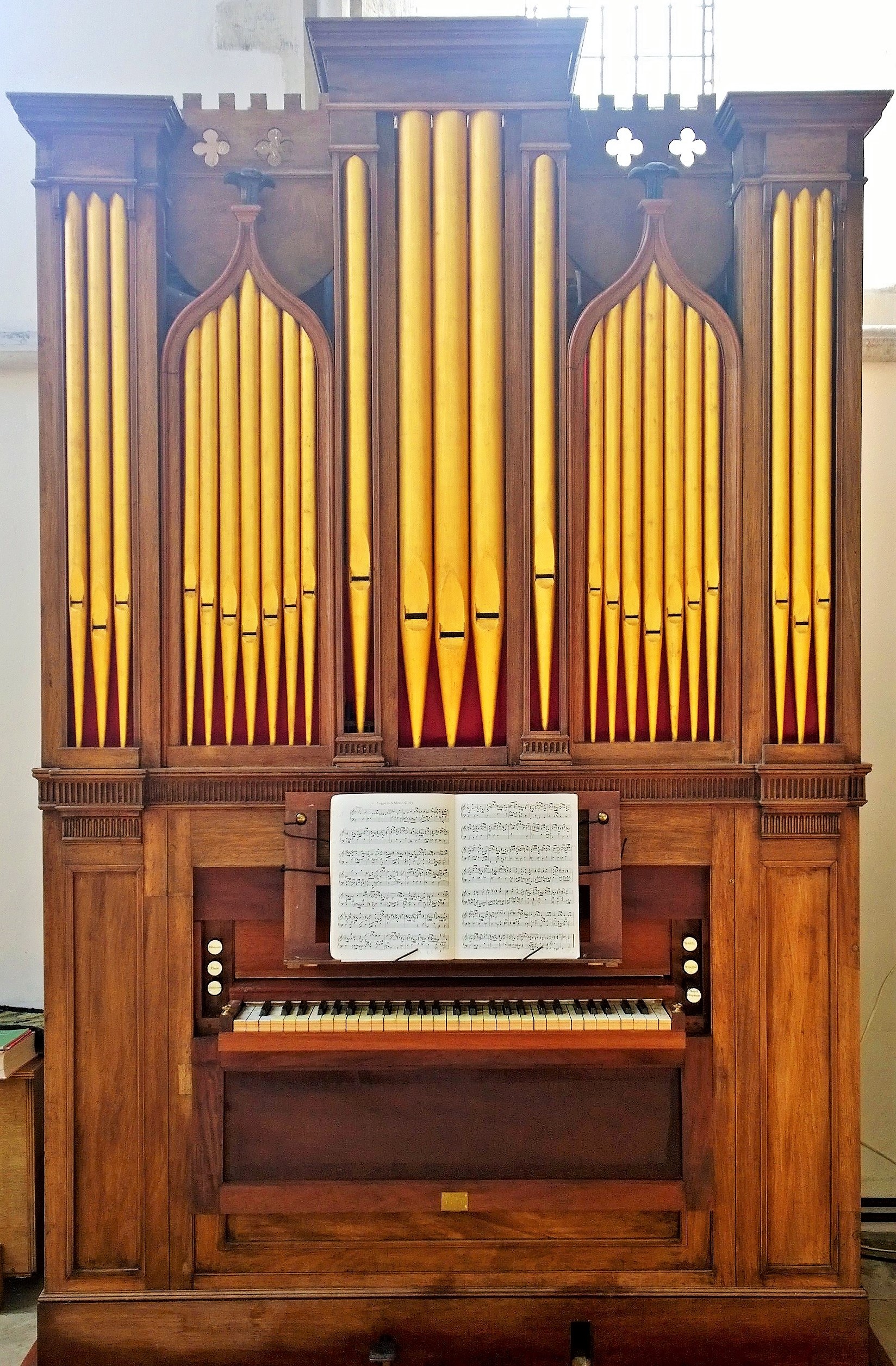
Recital on the Wetheringsett Tudor organ
Recital on the ‘Wetheringsett’ organ, c1525
St Swithun’s, Church Street, Worcester WR1 2RH
Friday 23 June, 2017. 1.10
Andrew Benson-Wilson
 The ‘Wetheringsett’ organ is a reconstruction of a Tudor organ based on the soundboard of an organ that was found during alterations to a farmhouse in the village of that name in Suffolk. Until it was hidden away within the walls of the farmhouse, is seems to have been used as a dairy door. The many holes in the wood were initially thought to indicate some sort of protection from the evil eye, until a local organ builder recognised it as the soundboard of an organ – the bit hidden away inside the instruments where the feet of the pipes sit, and through which the air is channelled from the windchest to the pipes. Analysis of the number and size of the holes can give a pretty accurate account of the size, range and number of stops of the organ. Tree-ring dating suggests that the wood dates from around 1525, leading to suggestions that this could be the organ known to have been purchased by a large parish church in Debenham in that year.
Under the aegis of the Early English Organ Project this organ, along with a smaller instrument based on another soundboard found in Wingfield Church, Suffolk, was reconstructed by organ builders Goetze & Gwynne in 2002. Under the management of the Royal College of Organists, the Wetheringsett organ is now resident in the church of St Swithun’s in the centre of Worcester, a delightful Georgian church with box pews and a later 18th century organ.
For this recital, I will be playing English music from before, during, and just after the 1520s, with pieces from c1360 to one of Thomas Tallis’s two extraordinarily monumental Felix Namques, dating from around 1560. In contrast I will play a Voluntary by Samuel Wesley on the 1795 Grey organ, published just a few years after the date of the organ.
Robertsbridge Codex, c1360
Adesto / Firmissime / Alleluya Benedictus
John Dunstaple (Buxheimer Orgelbuch, c1460)
Sub Tuam Protectionem
Anon, c1530 (Roy 56)
Felix Namque (in 5/4)
Anon / Thomas Preston (d1563)
Uppon la mi re
Hugh Aston (c1485-1556)
A hornepype
Samuel Wesley (1766-1837)
Voluntary in B flat. Op 6/9 8’
Thomas Tallis (c1505-1585)
Felix Namque I (1562)
Admission is free, with a retiring collection.
Organ music by Tunder (d1667)
Organ music by Franz Tunder (1614-1667)
St George Hanover Square (Mayfair Organ Concerts)
Tuesday 9 May 2017, 1:10
Andrew Benson-Wilson
Franz Tunder was one of the most influential organists and composers of the early to mid 17th century in North Germany. Along with a group of Hamburg organist composers, including Jacob Praetorius, Scheidemann, and Weckmann, he created the musical development that culminated in Dietrich Buxtehude, Tunder’s son-in-law, and successor at the Lübeck Marienkirche. He was key to the development of the extended Chorale Fantasia and the dramatic Stylus Phantasticus.
In 1646 Tunder founded the famous Abendmusiken series of concerts in the Marienkirche. These were funded by, and performed to, Lübeck businessmen, and were continued by Buxtehude and then well into the 18th century. In Tunder’s day, the Abendmusik concerts were usually organ recitals. In this programme, you will experience some of the organ music that could have been heard during these concerts, which were very much in the tradition of today’s London lunchtime concerts.
The 2012 Richards, Fowkes & Co organ in St George’s, Hanover Square (Handel’s church) is eminently suitable for music of this period.
Praeludium in g
In dich hab ich gehoffet, Herr
Jesus Christus wahr’ Gottes Sohn
Auf meinem Lieben Gott (manualiter)
Praeludium in g
Komm, Heiliger Geist, Herre Gott
Admission is free, with a retiring collection.
Some 2017 recitals

Froberger & Blow: St Giles-in-the-Fields
Friday 24 March 2017, 1pm
St Giles-in-the-Fields
60 St Giles High Street. London, WC2H 8LG
Andrew Benson-Wilson plays organ music by Froberger & Blow
This recital traces the influence of Johann Jakob Froberger (1616-67) on the English organist and composer, John Blow (1649-1708).

Froberger was an enormous influence on keyboard composers from the 17th to early 19th century, not least for his role in spreading the Italian style of his teacher Frescobaldi around Europe, and assimilating various European musical styles into his own compositions. Although only two of his works were published in his lifetime, Froberger’s compositions were widely circulated in manuscript copies. They were known to have been studied by the likes of Pachelbel, Buxtehude, Muffat, Kerll, Weckmann, Louis Couperin, Kirnberger, Böhm, Handel, Bach, and even Mozart and Beethoven. He was a close friend of Matthias Weckmann, who helped to spread the Italian style to the important North German organ composers in Hamburg.
John Blow (1649-1708) was the teacher of Purcell, and his predecessor (and successor) as organist of Westminster Abbey. He was just 18 when Froberger died and was about 4 when Froberger made his disastrous visit to London. The influence of Froberger came through manuscripts that Blow copied, adding his own distinctive English Baroque ornaments in the process.
Programme notes: Weckmann recital
The Grosvenor Chapel, Mayfair
Tuesday 1 November 2016
Andrew Benson-Wilson
Matthias Weckmann (1616-1674)
Praeludium A . 5 . Vocum
Canzon in G
Nun freut euch, lieben Christen gmain
Fantasia ex D
Toccata ex d
Komm, heiliger Geist, Herr Gott
Matthias Weckmann is one of the most influential 17th century organist composers of the North German school. He was born in Thuringia, studied in Dresden with Schütz, a pupil of G. Gabrieli, and in Hamburg with Jacob Praetorius, a Sweelinck pupil. He settled in Hamburg in 1655 as organist of the Jacobikirche where he remained until his death. He is buried beneath the Jacobikirche organ. It was said that Weckmann “moderated the seriousness of Praetorius with the sweetness of Scheidemann, and also introduced many new elegant discoveries“. After Andrew’s Benson-Wilson’s performance of his monumental set of chorale variations on Es ist das Heil kommen her at St George’s, Hanover Square (on 11 October), today’s programmes looks at a selection of Weckmann’s free works, together with two contrasting three-verse works based on chorales.
The Praeludium A . 5 . Vocum is anonymous in the original manuscript, but there are stylistic reasons why it is likely to be by Weckmann, Continue reading
Grosvenor Chapel: Weckmann (b1616)

Mayfair Organ Concerts
The Grosvenor Chapel, South Audley Street, Mayfair , London W1K 2PA
1 November 2016, 1:10-1:50
Matthias Weckmann (1616-1674)
In the last of his three recitals of the organ music of Matthias Weckmann (in his anniversary year), Andrew Benson-Wilson plays the William Drake organ in the Grosvenor Chapel, South Audley Street, Mayfair in a programme of a Praeludium, Toccata, Canzon, Fantasia and two contrasting chorale-based works.
Review: Weckmann ‘Es ist das Heil’ recital
Review from Classical Events
Andrew Benson-Wilson
Organ recital at St George’s Church Hanover Square, London
Tuesday 11 October 2016 13:10
This is one of series of the Mayfair Organ Concerts. The lunchtime concert was given by Andrew Benson-Wilson who specialises in the performance of early organ music, ranging from 14th century manuscripts to the late Classical Period. The original organ at St George’s was built in 1725 by Gerard Smith. The old case has been extended to contain a new organ which was completed in 2012.
The concert consisted of one work: Matthias Weckmann’s (1616-1674) monumental seven verses on the choral melody ‘Es ist das Heil kommen her’. At a playing time of about 35 minutes it is perhaps one of the longest and most extraordinary works of its time. The story follows that Luther, on hearing the melody sung by a beggar, was reduced to tears.
Salvation has come to us
from grace and sheer kindness
Works never help,
they cannot protect us.
Faith looks towards Jesus Christ
who has done enough for all of us.
He has become our mediator
Although the hymn has 14 verses there is little correlation with the seven organ verses. This evidences a performance as an individual work rather than part of a church service.
Andrew provided ample programme notes to describe the treatment of the chorale theme and gave a short introduction to the lunchtime audience. The performance had a confident and assured touch of someone who understood the musical style. His clarity of counterpoint allied to the programme notes helped the listener to identify the processes and individual lines of the music.
The original Classical Events review is here.

Weckmann – ‘Es ist das Heil’

Mayfair Organ Concerts
St George Hanover Square, St George Street, London W1S
11 October 2016, 1:10-1.50
Matthias Weckmann (1616-1674)
‘Es ist das Heil kommen her’
Andrew Benson-Wilson plays the monumental set of 7 verses on the Lutheran chorale ‘Es ist das Heil kommen her’ written by Matthias Weckmann (1616-1674). Lasting about 35 minutes, it is the longest such organ work from the whole of the 17th century. It includes, as the sixth verse, the most extensive and most complex Chorale Fantasia of that era.
It is played on the 2012 Richards, Fowkes & Co organ in St George’s Hanover Square, based on North German 17th/18th century organs.
Admission free – retiring collection.
Programme notes below
Programme notes below
St Giles-in-the-Fields: Samuel Wesley (b1766)
St Giles-in-the-Fields 60 St Giles High Street. London, WC2H 8LG
Friday 29 July 2016: 1pm.
Andrew Benson-Wilson plays organ music by
Samuel Wesley (1766- 1837)
Samuel Wesley was born in Bristol 250 years ago. He was the son of Charles Wesley the hymn-writer and nephew of John Wesley, founder of the Methodist Church. He was a 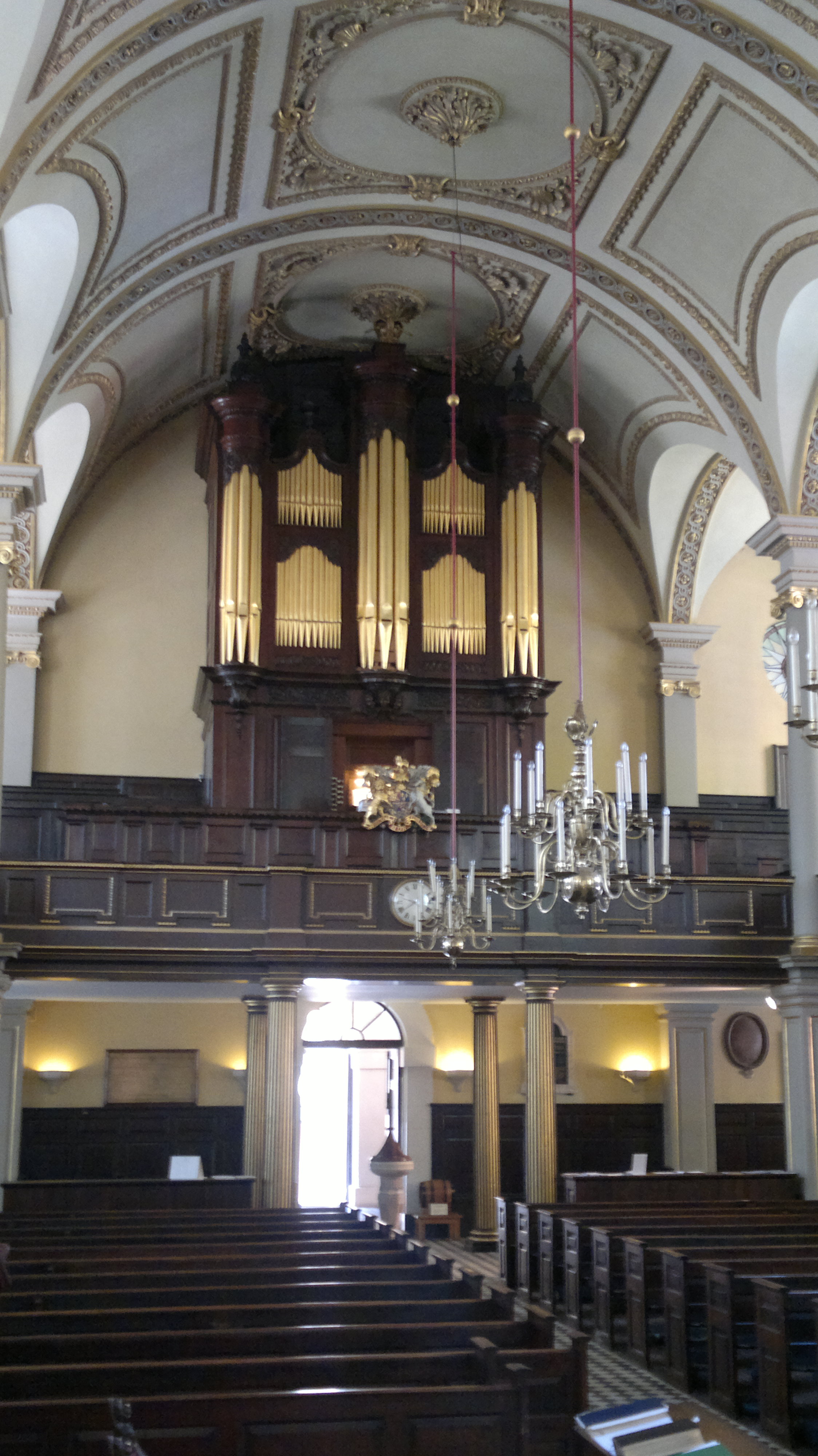 child prodigy, writing his first oratorio, Ruth, aged 6. When he was 8, the composer Dr William Boyce referred to him as the ‘English Mozart’. His family moved to London when he was about 12, living in Marylebone. He led a colourful life, some of his apparent eccentricities possibly being caused by a serious head injury when he was about 21. An organ virtuoso, Samuel Wesley was the leading pioneer of the Bach revival in England. Bach seems to have been a strong influence on his Opus 6 Organ Voluntaries, published between about 1807 and 1820, and the focus of this recital.
The wonderful William Drake reconstruction of the Dallam/Smith/England/Lincon/Gray & Davison organ, contains some of the oldest pipework in London. It is very well-suited to Wesley’s music as, in its current form, it represents the English organ in the early years of the 19th century, with strong reminders of the earlier 17th and 18th English organ style.
Organ information: http://npor.emma.cam.ac.uk/NPORView.html?RI=P00119
Free admission, retiring collection.
The church is just behind Centre Point/Tottenham Road Court station.
Dulwich: Circa 1616 recital -programme notes
Christ’s Chapel of Alleyn’s College of God’s Gift at Dulwich
400th Anniversary Concert
Sunday 10 July 2016
Circa 1616
A recital of music on the 1760 England/2009 Drake organ, given by
 Andrew Benson-Wilson : Early Music Reviews +