From the GROUND up
David Hill, Peterborough Cathedral organ
Regent REGCD539. 67’48
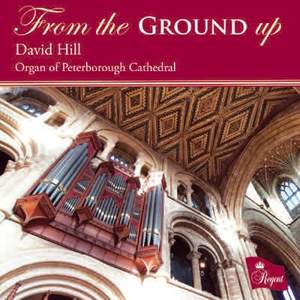
There is more to this recording than a ‘mere’ display of 20th-century British organ music, most based on a ground bass, usually in its particular incarnation as a Passacaglia, played on a grand English cathedral organ by one of England’s most distinguished organists. But that alone is enough to recommend the recording. It encompasses a wide range of music styles, generally influenced by German organ composers, dating from 1910 to the present day, together with a lovely little contrasting contribution from Orlando Gibbons, from the early 17th-century. Two major gems of the repertoire and a substantial new piece are balanced by a sequence of short pieces.


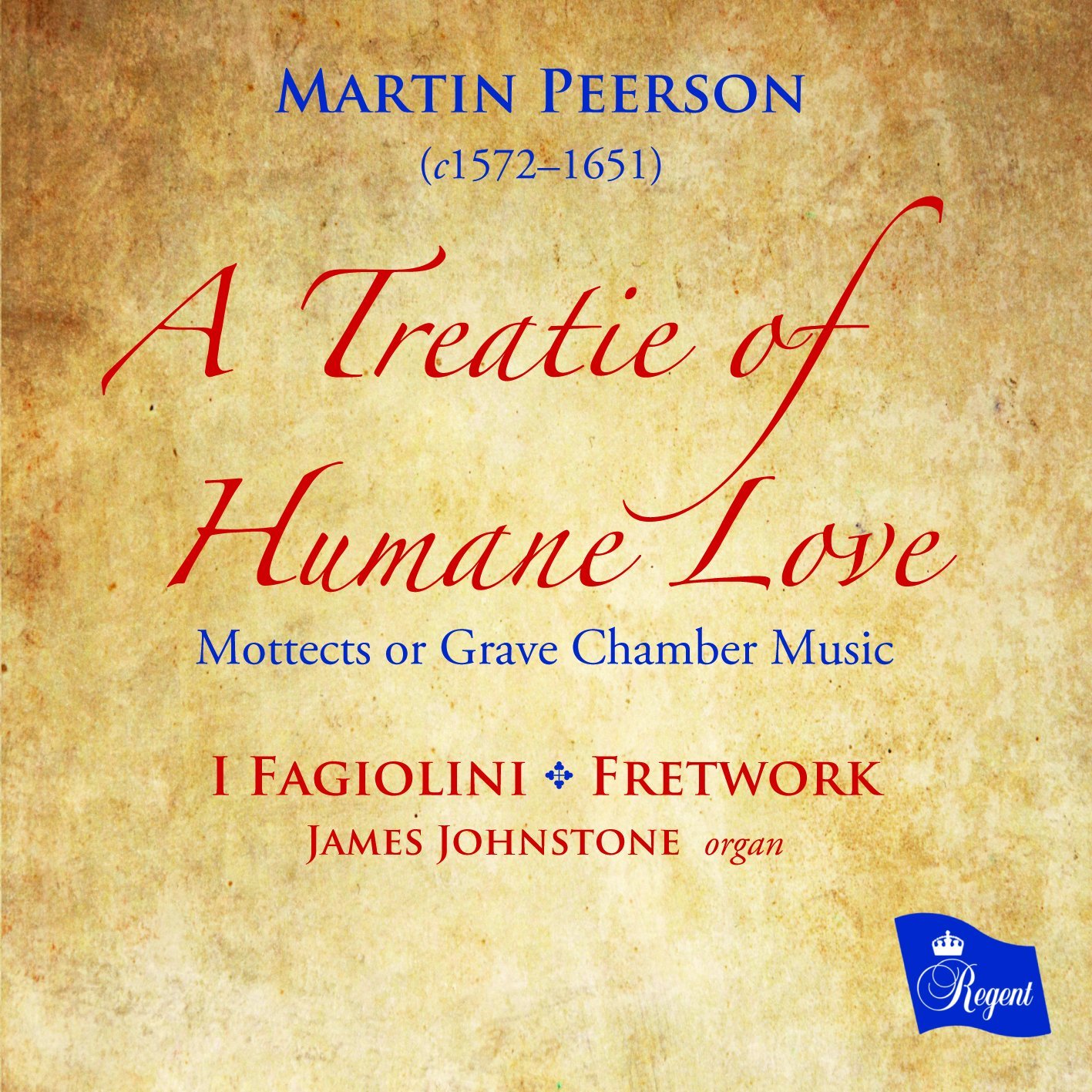 Martin Peerson is one of those composers that can so easily slip under the radar. Little is known of his early life, and records of his adult life are confused by the various ways of spelling his name. It is likely that he was born in March (not the month, but a small market town in Cambridgeshire) around 1572, and became a choirboy at St Paul’s Cathedral. In 1604 a madrigal of his was performed at an ‘entertainment’ in Highgate arranged by Ben Jonson for James I and his Queen Anne of Denmark. This appears to have been his only involvement with the musical life of royalty during his career. He had Catholic sympathies, although managed to pass as sufficiently Protestant to be award a Bachelor of Music from Oxford in 1613. He then held posts at Canterbury and St Paul’s Cathedral and, possibly, Westminster Abbey (a “Martin Pearson” is recorded there in the 1620s).
  As a supplement to Margaret Phillips’ 16 CDs of Bach organ works (published as eight double CDs plus this volume), this CD includes alternative versions, pieces usually allocated to but probably not by Bach, pieces not intended for organ, and one piece had not been rediscovered when the other Bach pieces were recorded, between 2005 and 2009. You could fill a further 16 CD with such peripheral and alternative pieces, so the selection of these 16 must have been quite a task. The choice is an excellent one, balancing well-known pieces such with little-known works like the Fantasia duobus subjectis.
  Andrew Benson-Wilson : Early Music Reviews +