Handel: Messiah
Academy of Ancient Music, Lawrence Cummings
Nardus Williams, Reginald Mobley, Thomas Walker, Ashley Riches
Barbican Hall, 15 December 2025
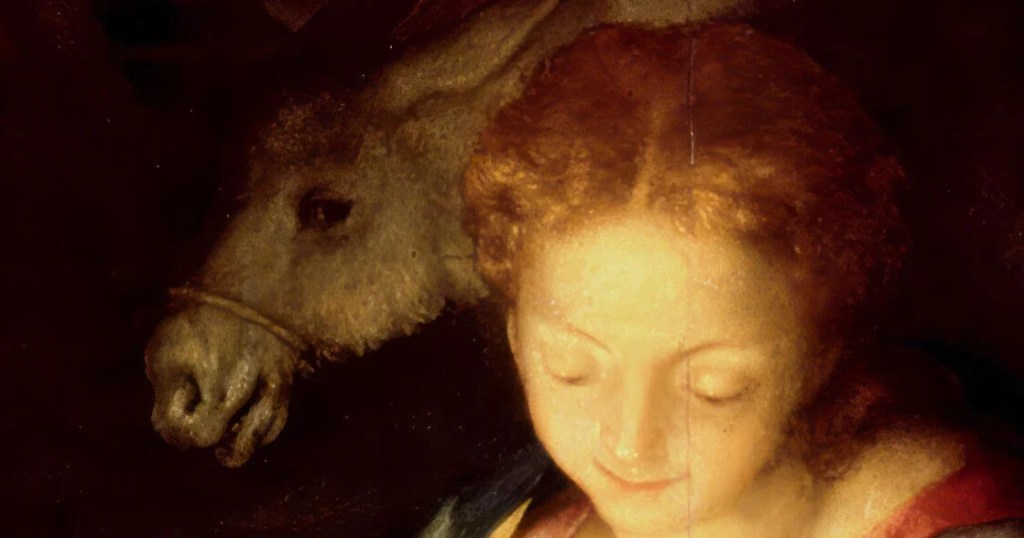
The Academy of Ancient Music (AAM) has a long and distinguished history with Handel’s Messiah, not least in being one of the first period instrument orchestras to record the piece in anything like the form, and with the soundworld of the original performance. After a stunning Messiah performance last year in the same Barbican venue, they returned for another sell-out performance with a new line of soloists Nardus Williams, Reginald Mobley, Thomas Walker, and Ashley Riches. I was impressed with all four of the coloists, although I did find the vibrato of the soprano a little disturbing, not least because the persistent pulse interfered with semiquaver runs. But, as with her colleagues, she expressed the words clearly and with meaning. The 18-strong choir similarly impressed, again with very clear diction and impressive consort. All four soloists excelled in adding historically appropriate ornaments and embellishments to the musical text. Of course, Messiah has no recognisable characters, as would be the case in an opera, so each recitative, accompagnato, and aria is a projection of the words, an essential component of Laurence Cummings’ interpretation, which he describes as a ‘Theatre of the Mind’.

 Over the years, William Christie has done much to introduce French baroque music to British ears, and has opened our ears to Purcell. But I had not heard his take on Messiah live before. It was bound to be rather different from the usual variety of British interpretations, and it was. We are increasingly used to lightly scored performances with moderately sized choirs, in contrast to the cast of thousands of yesteryear, but this very Gallic interpretation added a layer of delicacy and dance-like joie de vivre to Handel’s music, all done in the best possible Bon Goût. Les Arts Florissants fielded a choir of 24 (quite large, by some standards today, and in Handel’s time) and an orchestra with 6, 6, 4, 4, 2 strings, together with five soloists. Both instrumentalists and the chorus were encouraged to keep the volume down, usually by a finger on the Christie lips. This seems to be in line with Handel’s intentions, as indicated by his scoring and, for example, his very limited use of the trumpets. When things did let rip, there was still a sense of restraint amongst the power.
  When I last visited the Lausanne Bach Festival many years ago, it consisted of nine concerts over a long weekend. In its current incarnation (the eighteenth), it is spread over the period from 25 October to 28 November, with six concerts, three informal ‘Bach Days’, a short conference, and, on this occasion, the 5th International Organ Competition. Although having the events spread out in this way probably attracts more local residents, it makes it a less practical attraction for people from outside Switzerland. I was principally there to review the Organ Competition (reviewed
  The Sam Wanamaker Playhouse, part of the Shakespeare Globe on London’s South Bank, has come up with an enterprising series of candlelit musical events and, increasingly, theatrical events using music as an integral part of the production. The latest of the latter genre is ‘All the Angels: Handel and the first Messiah, a play by Nick Drake that explores Handel’s visit to Dublin where the first performance of Messiah took place on 13 April 1742.
 Andrew Benson-Wilson : Early Music Reviews +