
Passion: Lully, Charpentier, Desmarets
Véronique Gens, Ensemble Les Surprises, Louis-Noël Bestion de Camboulas
Les Chantres du Centre de Musique Baroque de Versailles
ALPHA 747. 57’12
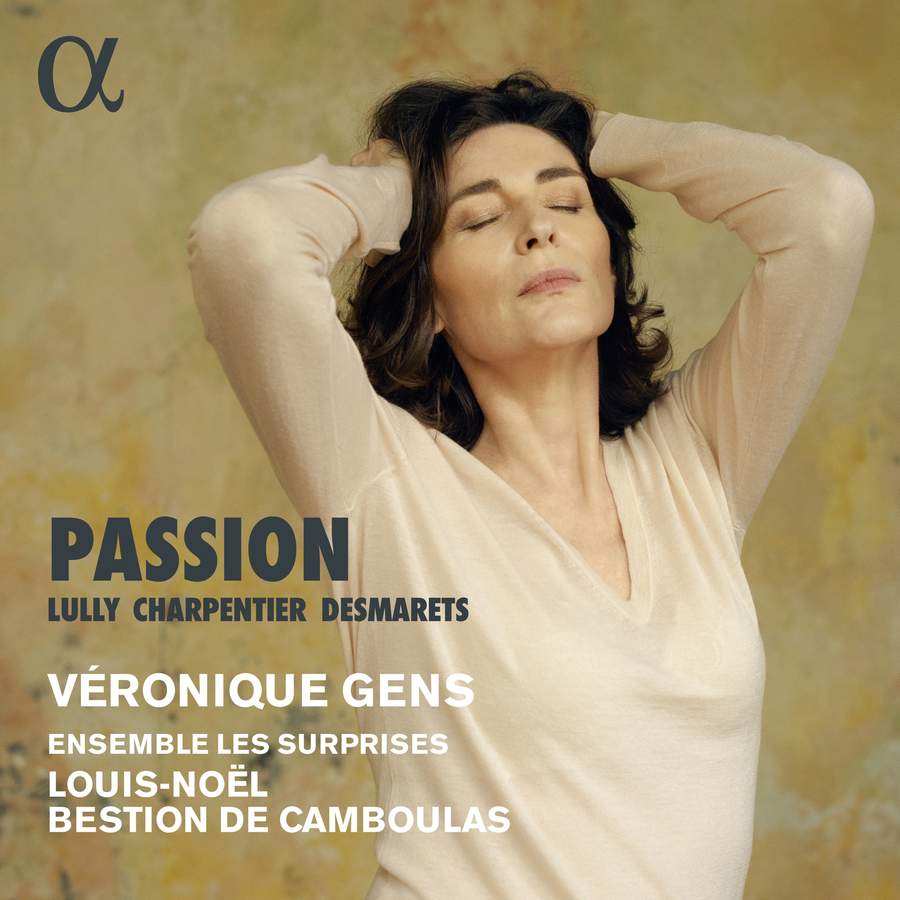
This recording showcases soprano Véronique Gens in the form of a five Act “opera imaginaire”, based on the repertoire of two of the greatest divas of the 17th-century Paris Opera: Mlle Saint-Christoph (her first name is not known) and her successor Marie Le Rochois. They both dominated the Paris opera scene between 1675 and 1698. Concentrating principally on the music of Jean-Baptiste Lully, we also hear music from operas by Marc-Antoine Charpentier, Henry Desmarets, and Pascal Collasse, with extracts from Lully’s Amadis, Proserpine, Atys, Armide, Persée, Alceste, and Le Triomphe de l’Amour, together with Charpentier’s Médée, depicting heroines such as Alceste, Armide and Médée, and the deities Juno, Ceres and Aeolia.

 The creation of the opera-ballet Les Éléments has links with the courtly and musical politics of Paris. Louis XIV died in 1715, leaving as his successor a five-year old fragile child. One of the focuses of the Regency was to ensure that the young Louis XV would survive at least as long as it took for him to father a successor to the throne. Dance was seen as a suitable approach to both encourage his own development, and to show to others that he was capable of succeeding his long-lived father and, eventually, to do his bit for the future of the royal line. To this end, several ballets were commissioned, usually giving the King a moment to strut his stuff in front of the assembled courtiers.
 Andrew Benson-Wilson : Early Music Reviews +