Fair Oriana: Divine Songs of Passion

Divine Songs of Passion
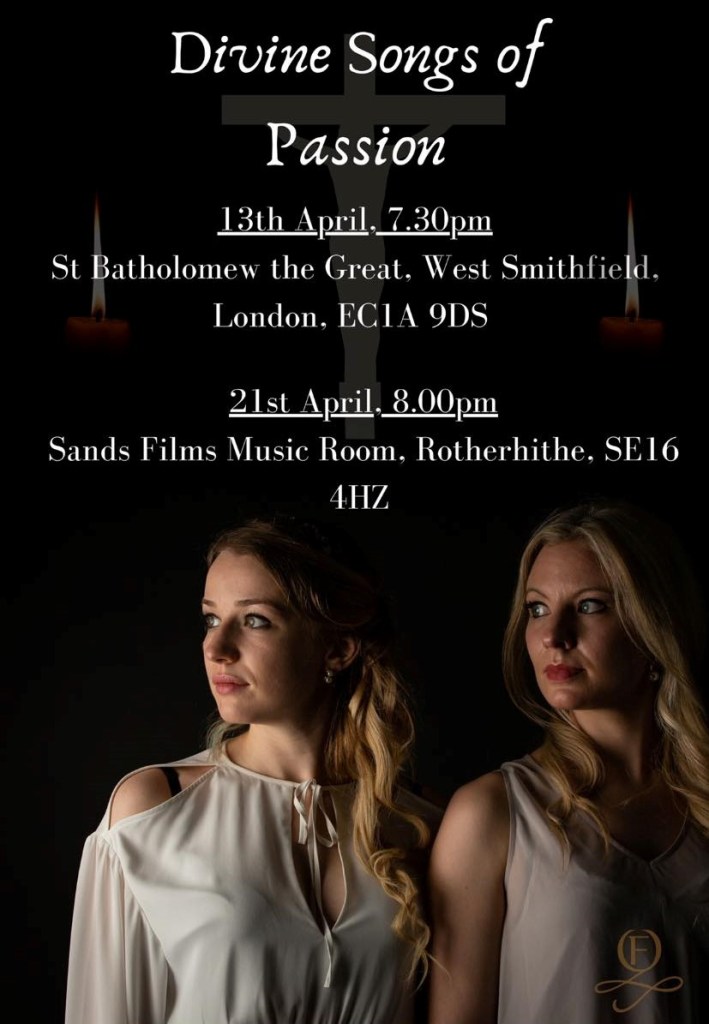
Fair Oriana, with David Wright & Harry Buckoke
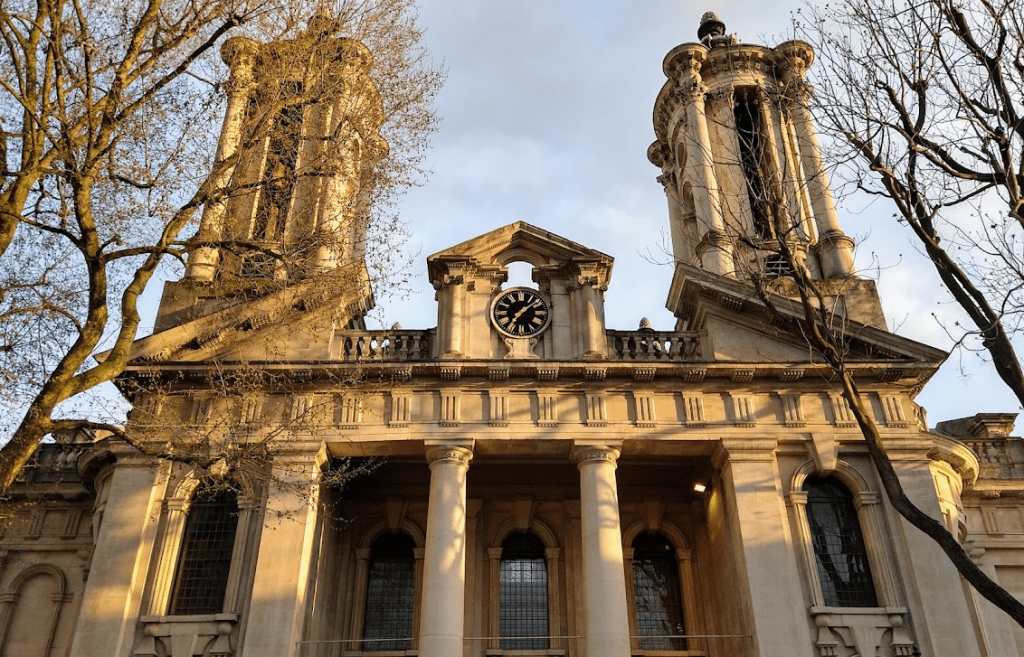
St Bartholomew the Great, West Smithfield, London EC1A
13 April 2022
(and at Sands Films Music Room on 21 April)

As part of their Holy Week Mass and Music series of events, the historic church of St Bartholomew the Great in London’s Smithfield invited the soprano duo, Fair Oriana, to perform their programme Divine Songs of Passion. This well-constructed concert was based around François Couperin’s c1714 Leçons de ténèbres pour le mercredi saint, contrasted with music by d’Anglebert, Purcell, Pergolesi and Blow. The date of the concert was appropriate, as the only surviving part of the Couperin Leçons de ténèbres is the one for the Wednesday of Holy Week. The other two sets of three Leçons composed for the following two days are lost. Although the Lamentations of Jeremiah depict the destruction of Jerusalem by the Babylonians, they have long been associated with Holy Week.

Continue reading

Couperin: Leçons de Ténèbres

Couperin: Leçons de Ténèbres
Sophie Junker,
Florie Valiquette, Orchestre de l’Opéra Royal, Stéphane Fuget
Château de Versailles Spectacles CVS034. 53’03

Couperin: Leçons de Ténèbres, Motet pour le jour de Pâques
Lalande: Cantique Quatrième

This recording from the prolific label Château de Versailles Spectacles contrasts Couperin’s well-known Leçons de Ténèbres with his near contemporary Michael Richard de Lalnande’s Cantique Quatrième: Sur le Bonheur des Justes et le Malheur des Réprouvés and his own Motet pour le jour de Pâques: Victoria Christo Resurgenti. One of my biggest issues with this recording is the excessive vibrato from both singers. This not only causes intonation problems but, particularly in French Baroque music, wreaks havoc with the ornaments. One of the accompanying essays is a lengthy analysis of French ornaments, so it is surprising that more effort wasn’t made to keep the surrounding vocal texture reasonably pure toned so that the ornaments could be heard clearly. As it is, the ornaments often come over as just another wobble.

Continue reading

Boyvin?: Le Manuscrit Caumont

Jacques Boyvin?
Le Manuscrit Caumont Orgue
Ed. Jon Baxendale
231 pages • ISMN: 979-0-706670-18-8 (English hardback) •  979-0-706670-39-3 (English wire softback)
Lyrebird Music. LBMP–019

Le Manuscrit Caumont Orgue

This Lyrebird Music edition brings to life an important manuscript of French Classical organ music dated 1707. Its earlier provenance is unknown until it appeared in an auction in Normandy from where it passed on to an antique dealer in Amiens. It was bought from there in 2008 by the current owner, whose name has been attached to what is now known as Le Manuscrit Caumont. Very sensibly, given the quality of his other Lyrebird Music editions, the owner asked Jon Baxendale to research and edit the manuscript and produce this splendid edition.

Continue reading

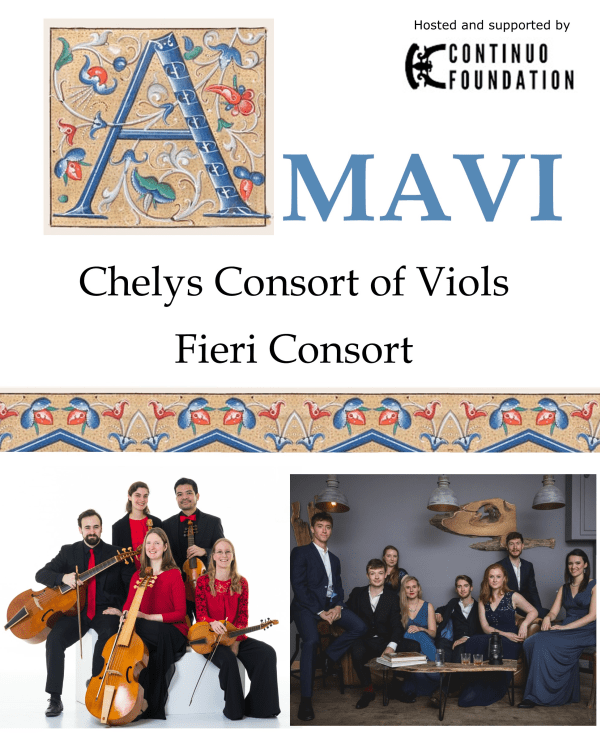
Amavi: works by Michael East

Amavi
Fantasias, verse anthems and vocal works by Michael East
Chelys Consort of Viols and Fieri Consort
St Gabriel’s Church, Pimlico. 17 March 2022

With the financial support of the Continuo Foundation, the Chelys Consort of Viols and Fieri Consort gave a concert of music by the little-known English composer, Michael East (c1580–1648, aka, Easte, Est, Este). This was part of a short UK tour of the programme, and was preceded by a reception for Continuo Foundation supporters during which members of the two groups explained the programme and described the instruments. After a Cambridge Univesity music degree and a few years in the choir of Ely Cathedral, East moved west to spend the rest of his career as choirmaster at Lichfield Cathedral. He published seven groups of compositions, including the Fantasias for five viols performed here. They are unusual in that each of them has a name, ranging from Desperavi (I despaired) to Amavi (I loved) via Vixi (I lived) and Triumphavi (I triumphed). For this concert, they were interspersed with vocal pieces by East that reflected the mood of each Fantasia.

Continue reading

Academy Choir: St John Passion

Bach: St John Passion
Academy Choir & Baroque Players, Matthew Best
St John’s, Wimbledon, 12 March 2022

Choral societies have a long and noble tradition in the UK. They provide much-needed employment opportunities for the young professional musicians brought in as soloists as well as giving the opportunity to perform for the vast body of amateur singers whose membership fees keep the shows on the road. The Academy Choir is one such. It was founded in Wimbledon in 1980 and since 2000 has been based at the church of St John the Baptist, Spencer Hill, Wimbledon. It is an auditioned choir, rather than taking all-comers, and the musical standards are obviously high. Since 2017 their musical director has been Matthew Best. My invitation to review their performance of the St John Passion promised that “our concerts tend to be ‘a cut above’ what might typically be expected to be found in a suburban church, given by a local choir”, a claim that proved itself correct.

Continue reading

Programme notes: Bach recital for Early Music Day

MUSIC-AT-HILL: MIDTOWN CONCERTS
St Giles-in-the-Fields
Friday 18 March 2022

Andrew Benson-Wilson organ
Poppy Walshaw cello

Johann Sebastian Bach (1675-1750)
Pastorella per Organo (BWV 590)
[Alla Siciliana – Allemande – Aria – Alla Gigue]
Cello Suite No.3 in C. (BWV 1009)
Prelude – Allemande – Courante – Sarabande – Bourrée I/II – Gigue
Partite diverse sopra Il Chorale O Gott, du frommer Gott (BWV 767)

Continue reading

Linarol Consort: La la hö hö

La la hö hö
Sixteenth-century viol music for the richest man in the world

The Linarol Consort
Inventa Records INV1005. 67’26

It is not known whether the ‘richest man in the world’, the merchant and banker to the Hapsburgs, Jakob Fugger of Augsburg (aka ‘Fugger the Rich’), actually commissioned the manuscript recorded here, as suggested by David Hatcher’s programme notes. But it was certainly in the Fugger library soon after its completion around 1535. That was ten years after Jacob’s death when his nephew Anton Fugger was head of the family and was probably also the ‘richest man in the world’. Following the reduction in the Fugger family’s power in the mid-17th century, their vast library was sold to Emperor Ferdinand where it became the foundation of the National Library of Austria. The manuscript (Vienna Ms. 18-810) contains 86 pieces of German, Flemish and French pieces, mostly by composers such as Heinrich Isaac, Ludwig Senfl and Paul Hofhaimer, linked to the court of Maximillian I, together with Pierre de la Rue and Josquin des Prez, favourites of his daughter Marguerite of Austria, then ruler of The Netherlands.

Continue reading

International Women’s Day: BBC Singers

I am the World
Choral and Organ Music for International Women’s Day

BBC Singers, Grace Rossiter, Anna Lapwood
Live from Temple Church and on BBC Radio 3 and iPlayer. 8 March 2022

As part of a series of events to mark International Women’s Day, the BBC Singers, directed by Grace Rossiter, presented a live broadcast of music by leading 21st Century women composers from the Temple Church in London. It included four world premieres, one of which was commissioned by the BBC for the occasion. Alongside the vocal works were pieces played by the organist Anna Lapwood from her own new anthology of commissioned organ pieces by female composers, aimed at younger organists.

Continue reading

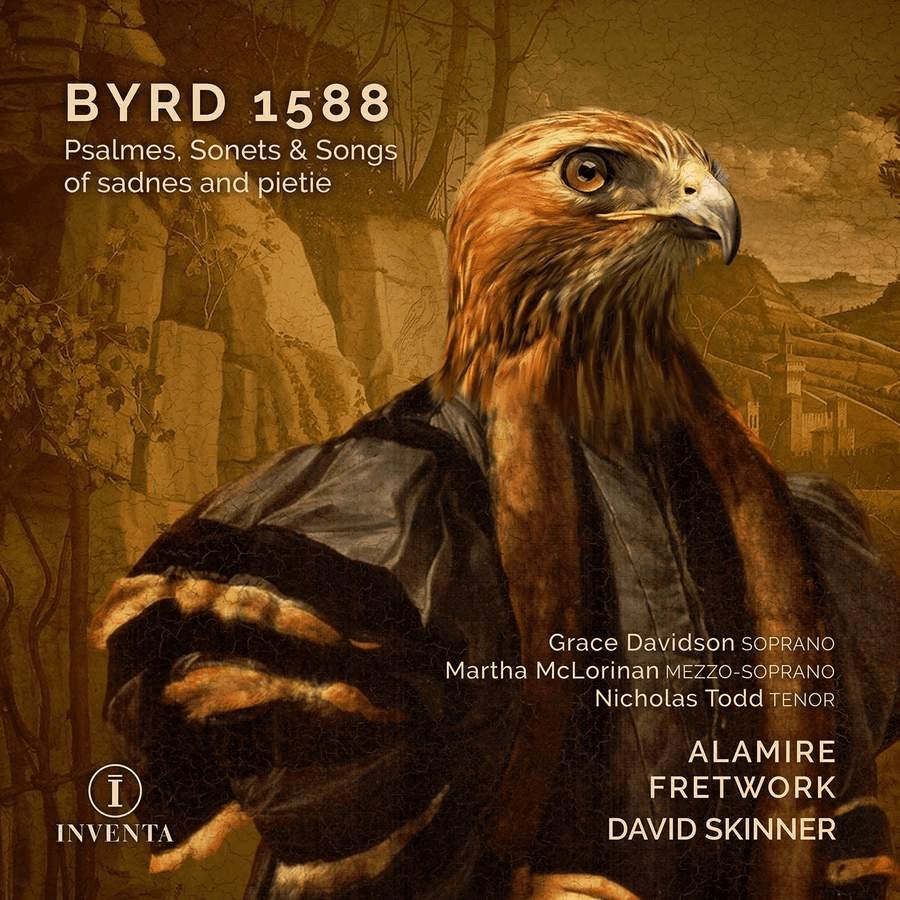
Byrd 1588

Byrd 1588
Psalmes, Sonets & Songs of sadnes and pietie
Alamire, Fretwork, David Skinner
Inventa Records INV1006. 2CDs, 78’54 + 78’20


The 1588 Psalmes, Sonets, & songs of sadnes and pietie was William Byrd’s first solo publication after the Cantiones Sacrae of 1575, a joint venture with Thomas Tallis. This recording is also a joint venture between the chamber choir Alamire and the viol consort Fretwork. It was recorded, appropriately, in the isolated church of All Saints’ Church, Holdenby, in Northamptonshire, the only surviving relic of a village that was moved by Sir Christopher Hatton, Elizabeth I’s Lord Chancellor and the patron of the 1588 collection, when he built (in 1583) the nearby Holdenby House, itself now reduced to a few remnants from its initial grandeur as one of the largest houses in the country.

Continue reading

Nicolas de Grigny: Premier Livre d’orgue

Nicolas de Grigny (1672-1703) 
Premier Livre d’orgue (1699)
Ed. Jon Baxendale
234 pages • ISMN 979-0-706670-02-7 (Hardback) • 979-0-706670-28-7 (Wire)
Lyrebird Music. LBMP–008

The 1690s saw the publication of two of the most important contributions to the literature of French organ music. François Couperin’s 1690 Pièces d’Orgue (new Lyrebird edition reviewed here) is the best known of the two, with its approachable musical style that owes much to the wider musical language of Paris at the time, notably operatic arias and dances. Nicolas de Grigny’s Premier Livre d’orgue (now available in this impressive new Lyrebird edition) was published in 1699, three years before his untimely death. In contrast to Couperin’s youthful offering, de Grigny’s music delves spiritual, emotional and musical depths that most other French organ composers of the period lacked. He is well-deserving of editor Jon Baxendale’s comment that he was the “most erudite of Grand siècle organ composers”.

Continue reading

AAM New Worlds Travelogue: Nicholas Lanier

New Worlds: TravelogueNicholas Lanier
Academy of Ancient Music
, Laurence Cummings
Anna Dennis, Thomas Walker
Milton Court & AAM LIVE stream. 18 February 2022

As part of their New Worlds series, the Academy of Ancient Music explored the life and times of the much-travelled lutenist, courtier and musical adventurer Nicholas Lanier in their Milton Hall and AAM LIVE streamed concert New Worlds | Travelogue. Lanier was from a French Huguenot family with an Italian mother. He was a court musician and composer to both King Charles I and Charles II, becoming the first Master of the King’s Music in 1625. He made several visits to Italy to acquire paintings for Charles I, during which he experienced the new style of Italian secondo pratica music from the likes of Claudio Monteverdi. He subsequently introduced the recitative style to England. He was painted by van Dyck in Antwerp and persuaded the King to bring Van Dyck to England.

Continue reading

Fantasie: Joana Amorim

Fantasie
G. Ph. Telemann (1681-1767): 12 Fantasias for Flute Solo
Joana Amorim, flute
Veterum Musica, VM028. 55’26

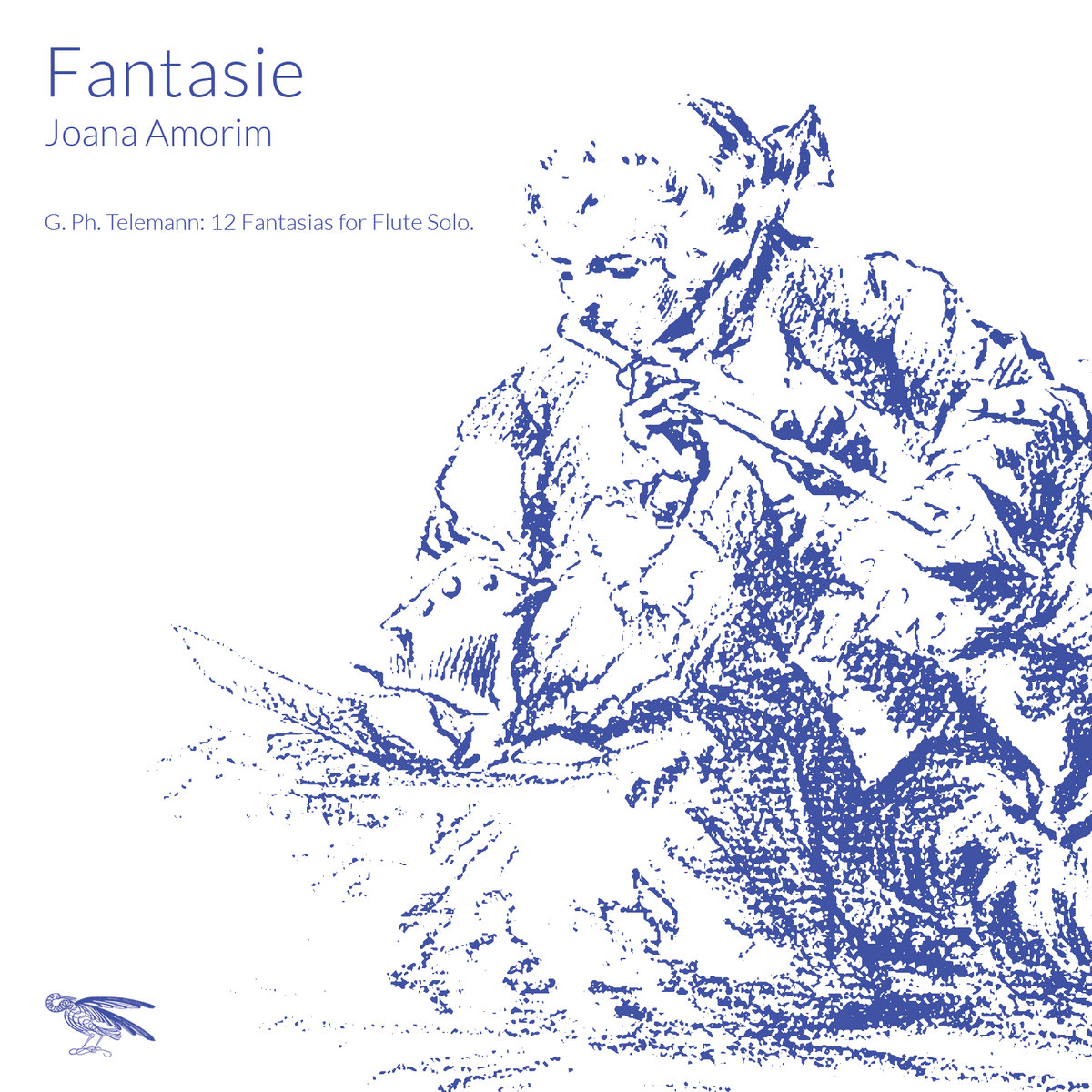
Telemann published his 12 fantaisies à traversière sans basse (TWV 40:2–13) in Hamburg in 1732/3. It was one of a series of four sets of fantasias for unaccompanied instruments that he published between 1732/5: 36 for harpsichord and two sets of 12 each for violin and viola da gamba. This new recording from Veterum Musica features the Portuguese flautist Joana Amorim in an impressive interpretation of these delightful miniatures that feature practically every musical idiom of the period.

Continue reading

Rameau: Les Indes Galantes

Jean-Philippe Rameau: Les Indes Galantes
Ensemble OrQuesta, Marcio da Silva
The Cockpit. 6 February 2022

This was French Baroque opera, but not as Rameau might have known it. Les Indes Galantes was first performed in 1735 in the form of a heroïque opéra-ballet, with elaborate dance movements dominating the vocal music. It would have involved a large orchestra, a substantial troupe of dancers, up to 21 solo singers, and spectacular staging and special effects that included, amongst other things, a storm at sea and a volcanic eruption. This delightful version, performed by Ensemble OrQuesta in the square black-box Cockpit Theatre had an ‘orchestra’ of just eight, including the director, Marcio da Silva and nine singers. The only real props were some long sticks, used in dance sequences and to delineate stage areas.

Continue reading

Regnart: Missa Christ ist erstanden

Jacob Regnart: Missa Christ ist erstanden
with Missa Freu dich, du werthe Christenheit and motets
Cinquecento
Hyperion CDA68369. 64’45

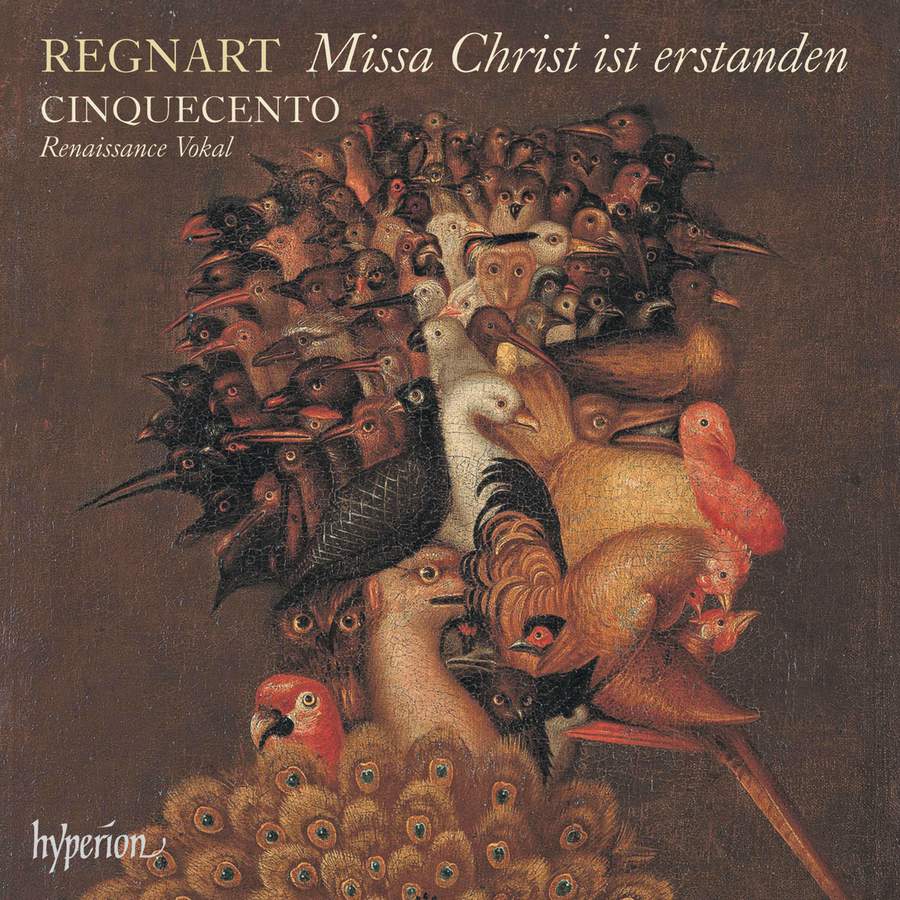
Jacob Regnart (c1540-1599) is one of the lesser-known Flemish born composers who dominated European music during the 16th-century. Born in Douai, he soon moved to Prague, singing in the Habsburg Holy Roman Emperor Maximilian II’s Hofkapelle. His career remained within the Hapsburg realms, rising through the ranks under three successive Hapsburg rulers. He spent several years in Innsbruck in the court of Maximilian’s brother Archduke Ferdinand II, where much of his sacred music seems to have been composed, although it was not published until after his death. Those works include the two Mass settings included on this excellent recording from Cinquecento (Terry Wey, countertenor, Achim Schulz & Tore Tom Denys, tenors, Tim Scott Whiteley, baritone, and Ulfried Staber, bass).

Continue reading

See, See, the Word is incarnate

See, See, the Word is incarnate
Choral & Instrumental music by Gibbons, Tomkins & Weelkes
The Chapel Choir of Trinity Hall, Cambridge,
Newe Vialles, Orpheus Britannicus Vocal Consort, Andrew Arthur

Resonus Classics RES10295. 70’51

The Chapel Choir of Trinity Hall, Cambridge, under the College’s Director of Music, Andrew Arthur, follow their previous recording of Buxtehude (reviewed here) with this exploration of some of the best-known music from the early decades of the 17th-century. This was the period when James I was on the throne of the two kingdoms of Scotland and England. Gibbons and Weelkes were both dead by the end of his reign (in 1625), but Tomkins (the first-born of the three) lived on until 1656 to witness, at considerable personal loss, the collapse of the Stuart dynasty and the Commonwealth.

Continue reading

Buxtehude: Trio Sonatas Op.2

Buxtehude: Trio Sonatas Op.2
Arcangelo
Alpha Classics ALPHA738. 71’25

cover

This is the second recording of Buxtehude Trio Sonatas from Arcangelo (Sophie Gent, Jonathan Manson, Thomas Dunford and Jonathan Cohen). Their early Opus 1 disc is on ALPHA 367. The second set of Trio Sonatas was published in 1696. As with the first, it demonstrates the wide range of international influences in Lübeck at the time.

Continue reading

Couperin: Pièces d’Orgue

François Couperin (1668-1733)
Pièces d’Orgue (1609)
Ed. Jon Baxendale
161 pages • ISMN 979-0-706670-00-3 (Hardback) • 979-0-706670-21-8 (Wire)
Lyrebird Music. LBMP–001

No description available.

This is a very welcome new edition of François Couperin’s 1690 Pièces d’Orgue. It is a revised version of the edition published by Cantando Musikkforlag in 2018, but is now issued under the Lyrebird Music label. There are several improvements on the layout of the earlier version,. which remains the only commercially available critical edition. One of the problems with Couperin’s Pièces d’Orgue is that it was not printed, but published in manuscript form. There is only one surviving copy of that original manuscript, but four other sources of it, with varying degrees of accuracy. Editor Jon Baxendale has revisited the five known sources to discover which is the most accurate.

Continue reading

The Myth of Venice

The Myth of Venice
16th-century music for cornetto & keyboards
Gawain Glenton & Silas Wollston
Delphian DCD34261. 61’50

In a very successful bit of promotional branding, medieval Venice built a perception of itself as La Serenissima (“the most serene”) and the successor of ancient Rome, with a similarly impressive range of foundation myths and ceremonials, that led historians to reference as the Myth of Venice. The myth was largely supported by its architecture, then as now a draw for visitors from around the world. This recording, The Myth of Venice explores the musical development of the Myth of Venice, exploring the 16th-century Venetian composers and performers who helped to put Venice on the musical map. Their starting point is Adrian Willaert’s arrival in 1527 on to the end of the century, with composers including Parabosco, Padovano, Merulo, Andrea Gabrieli, Bellavere, Ganassi and Bassano.

Continue reading

A Bach recital for Early Music Day

A Bach recital for Early Music Day

Andrew Benson-Wilson, organ & Poppy Walshaw, cello
St Giles-in-the-Fields, London WC2H 8LG
Friday 18 March, 1:15

This is a special concert for international Early Music Day, an annual celebration of early music that takes place around the time of the 21st March birthday of JS Bach. This concert is part of the weekly Music-at-Hill series of lunchtime Midtown Concerts in the beautiful church of St Giles-in-the-Fields, home of one of the most important historic organs in the country.

Continue reading

Organ Recital: “Upon thes nots”

For those who came to this recital, despite the travel problems, the encore that I played was Thomas Tomkins: “Sad Paven for these distracted times”
It seemed appropriate

“Upon thes nots
Two 450th anniversariesThomas Tomkins & Michael Praetorius
Andrew Benson-Wilson, organ
St George’s, Hanover Square, London W1S 1FX
1 March 2022, 1:10

This recital contrasts the contrasting music of two composers born 600 miles apart, 450 years ago. It also reflects the way in which the two composers treat melodic lines, whether in the form of a powerful Lutheran hymn or the seven-note plainchant-based phrase upon which Tomkins based his monumental Offertory, noting in the opening bar that the piece was based “upon thes nots“.

Thomas Tomkins 1572–1656
“For Mr Arc[hdeacon] ThornBurgh”
“Mr Thomas Tomkins offertorye” [upon thes nots] (1637)
Michael Praetorius 1571-1621
O lux beata Trinitas (Hymnodia Sionia, 1611)
Chorale Fantasia: Ein’ feste Burg ist unser Gott (Musæ Sioniæ VII, 1609)

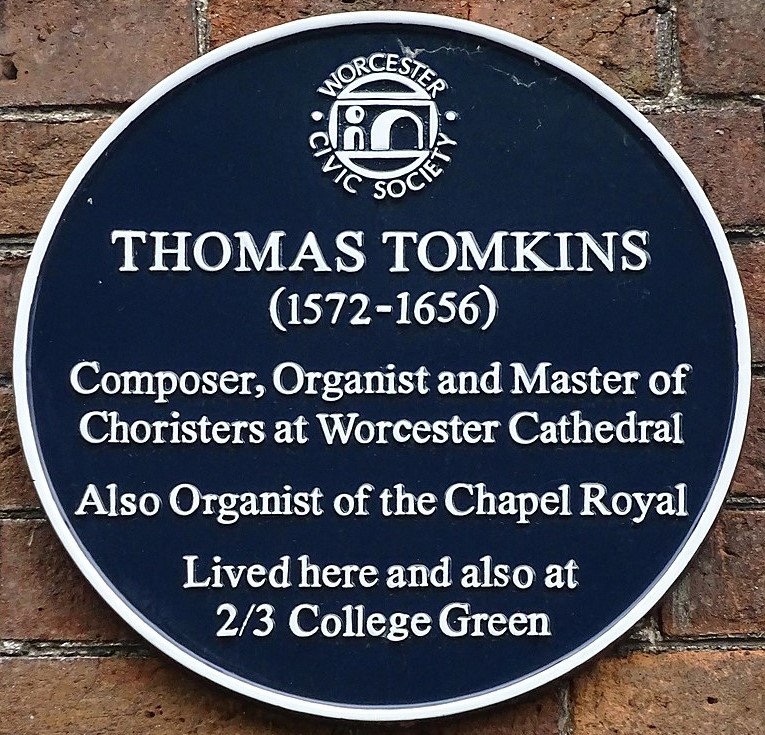
Thomas Tomkins was organist of Worcester Cathedral until its closure during the Civil War as well as the Chapel Royal in London. Michael Praetorius was organist and Kapellmeister in the courts of the Duke of Wolfenbüttel and the Elector of Saxony in Dresden.  

The concert is given on the Richards, Fowkes & Co organ in Handel’s church of St George’s Hanover Square as part of the Mayfair Organ Concerts series. Admission is free, with a retiring collection.

The programme notes can be found here.

Burghclere Baroque: Messiah

Handel: Messiah
Burghclere Baroque, Theresa Caudle
The Church of the Ascension, Burghclere. 22 December 2021
7 Revisions

However often professional musicians may appear on the national or international stage, for many of them, much of their musical activity is local, whether teaching or running their own musical events, concerts and festivals. One example is Burghclere Baroque, set up in 2020 by violinist/cornetist Theresa Caudle in her home village of Burghclere, on the Hampshire border just south of Newbury. Alongside Chamber Music and Orchestral Days, they also arrange concerts when current issues permit. Just about slipping in before the latest Covid stops such things, is this performance of Handel’s Messiah in the Church of the Ascension, Burghclere. Their invitation to the concert also invited people to attend their afternoon rehearsal, which is what I did. A formal review would not have been appropriate, so this is just a record of an event. And if you are local, and see this in time, you might manage to get to the 7pm start.

Continue reading

Ensemble Molière: Réunion des goûts

Réunion des goûts
Ensemble Molière
Heath Street Arts
Heath Street Baptist Church and Livestream. 21 December 2021

No photo description available.

Lully – Ouverture from Psyché
Couperin – Sonade from L’Impériale, Les Nations 
Telemann – Quatuor No. 6 in E minor from Nouveaux quatuors en six suites
Charpentier – Suites from Le Mariage Forcé
Couperin – Chaconne ou Passacaille from La Françoise, Les Nations

The last concert in the 2021 series of the Heath Street Arts’ Tuesday Lunchtime Concerts (TLC) at Heath Street Baptist Church, Hampstead was given by Ensemble Molière under the title of Réunion des goûts. Sharing the stage with an enormous Christmas tree, their programme reflected the merging of French and Italian musical styles that had been pioneered by François Couperin and developed by Georg Philipp Telemann. It was initiated by Couperin in his L’Apothéose de Lully and Les Nations. Telemann continued the trend with his 1738 Nouveaux quatuors en six suites – the ‘Paris Quartets’.

Continue reading

Continuo Foundation: 2021 projects

Continuo Foundation
A video resume of eight of the 2021 grant-aided projects

Ensemble Hesperi perform with Soprano Angela Hicks

The Continuo Foundation (reviewed here) has published a whistle-stop video tour of eight of the 37 projects that were supported by their 2021 grants, with short extracts from the full concerts all of which were live-streamed on the OnJam platform. Tickets to watch the full films can be purchased until the end of January 2022 (links below). The ensembles featured are Joglaresa, The Mozartists, Ensemble Hesperi (pictured above), Boxwood & Brass, Consone Quartet, Palisander, Spiritato Baroque & The Marian Consort, and La Nuova Musica.

Continue reading

Monteverdi Vespers

Monteverdi Vespers
L’Arpeggiata, Christina Pluhar
Tue 14 Dec 2021, Barbican Hall

Monteverdi’s monumental 1610 Vespro della Beata Vergine is now considered mainstream repertoire, but it was unusual to hear it performed alongside the inevitable sequence of Messiah’s in the run-up to Christmas. It was equally good that, amongst the current complicated Anglo-French relations, London could welcome the French group L’Arpeggiata and their founder/director Christina Pluhar. Current Covid and travel issues meant that they were rather more Anglo than usual, with several UK musicians drafted in at short notice to replace those unable to travel. The concert took place live on 14 December in the Barbican Hall, but was also available to stream live, which is how I saw the performance.

Continue reading

Eva Saladin: The Di Martinelli Collection

The Di Martinelli Collection
Violin sonatas of the late 17th century
Eva Saladin, violin
Glossa Music GCD 922521
. 69’07

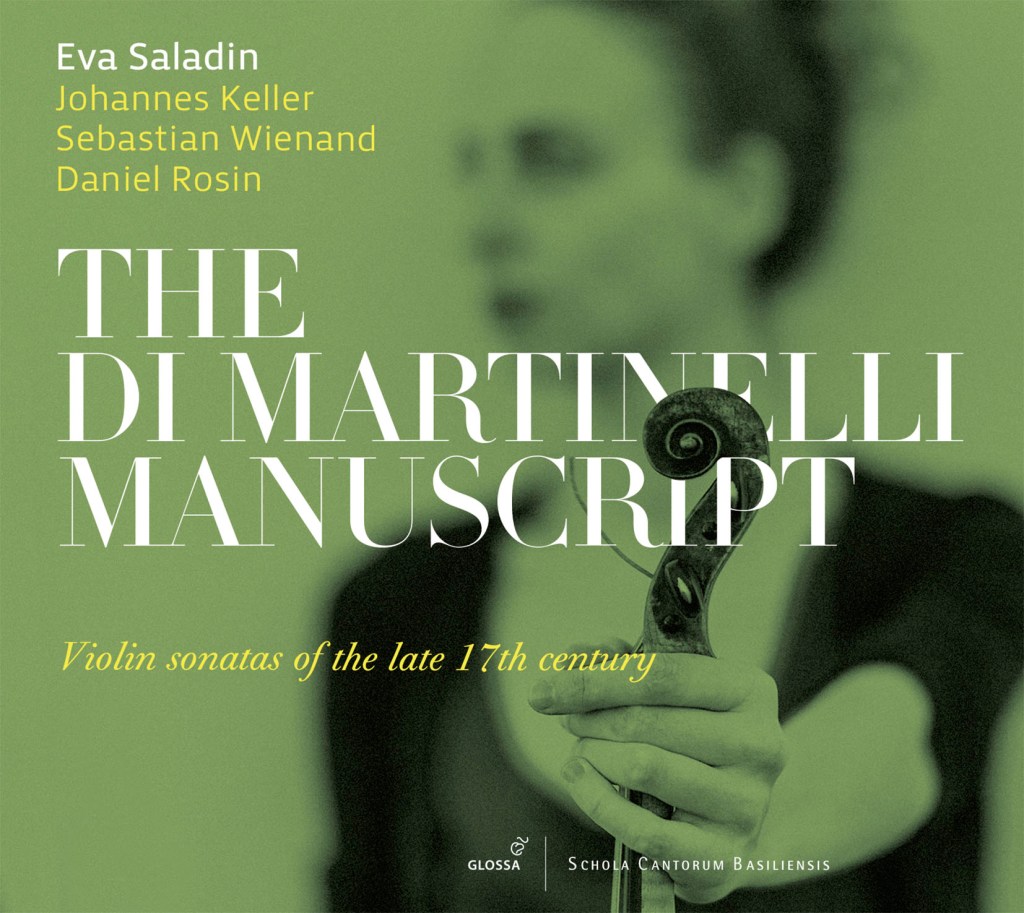
This excellent debut recording from the Swiss-Dutch violinist Eva Saladin features a selection of pieces from a manuscript of 32 late 17th-century violin sonatas, dating from the years around 1690, found amongst the 65 manuscripts and 32 prints of the Di Martinelli Collection in the archives of the University of Leuven. The pieces are of various origins, with a focus on three regions, the Flemish-Netherlands, South German & the Habsburg regions, and Italy. The collection was put together by members of the Italian di Martinelli family, who had settled in present-day Belgium. These violin sonatas seem to be connected with the second generation di Martinelli, Guillelmus Carolus, a violinist and singing master based in Diest, in Brabant.

Continue reading

The Ghost in the Machine

The Ghost in the Machine
Emily Baines, recorders, Amyas

First Hand Records FHR 113. 62’41


The launch concert on Wednesday 15 December has been cancelled.
It will return in the New Year

It has long been the case that many ‘early music’ recordings and performances are preceded and supported by a considerable amount of research by the performers. This recording from Amyas is one particularly interesting example. It is based on 10 years of research by Emily Baines (culminating in her doctorate) into the evidence of 18th-century performance style found in mechanical musical instruments of the period, such as barrel organs and musical clocks with tiny organs inside them.

Continue reading

Krebs: Keyboard Works Vol 1

Johann Ludwig Krebs: Keyboard Works Vol 1
Steven Devine, harpsichord
Resonus Classics RES10287. 72’0
)

Partita in A minor, Krebs-WV 825
Fugues in C major, E major, F major, F minor, G major, and A minor, Krebs-WV 843/848
Concerto in G major “in Italiänischen Gusto”, Krebs-WV 821

Johann Ludwig Krebs (1713-1780) is another of those overlooked composers, despite there being a large amount of surviving music. He is probably best known as Bach’s favourite organ pupil, and the focus (reflected in the CD cover photo) of Bach’s comment Er ist der einzige Krebs in meinem Bache – “He is the only crayfish (Krebs) in my brook (Bach)”, a reference to Krebs’ ability as an organist, rather than being the only Krebs pupil as Bach also taught Krebs’ father. His music falls into a slightly awkward gap between the High Baroque style of late Bach and the new Galant and Classical styles that rendered much of ‘Old Bach’s’ music out of date.

Continue reading

OAE: Look, no Bass 

Look, no Bass!
Orchestra of the Age of Enlightenment
 OAE Player from Thursday 25 November

The Orchestra of the Age of Enlightenment is a self-managed and democratic orchestra and gives its players considerable freedom to choose programmes and music. In their latest video offering on their OAE Player, Look, No Bass!, the OAE’s violinists present a programme of music for violins alone, highlighting the various textures and colours of their ubiquitous instrument. Their programme includes Telemann’s two Concerti for Four Violins, his programmatic Gulliver Suite Duo (from Der getreue Musikmeister), and arrangements by the OAE violinists of a Gabrieli Canzon and pieces by the English composers Matthew Locke and John Adson.

Continue reading

Capella Claudiana: O Mirandum Mysterium

O Mirandum Mysterium
Sacred works by Giovanni Legrenzi from the music archive of the
Benedictine monastery in Marienberg in South Tyrol

Capella Claudiana, Marian Polin
Tiroler Landesmuseen. Musikmuseum 47, CD13046. 52’00

Although Giovanni Legrenzi (1626-1690) was well known in his own lifetime, he is one of those frequent composers whose name and music is almost unknown today. In Legrenzi’s case, he is probably only known through Bach’s youthfully flamboyant organ Fugue “on a theme of Legrenzi”, although this is either based on a lost Legrenzi work or one that is not a by Legrenzi at all. This compelling recording should help to bring him to the attention of a much wider audience. It is based on music by Legrenzi found in the remarkably wide-ranging musical archive of the remote Marienberg monastery in Vinschgau in the South Tyrol.

Continue reading