Mandolin on Stage

Mandolin on Stage
The Greatest Mandolin Concertos
Raffaele La Ragione

Il Pomo d’Oro, Francesco Corti
Outhere/Arcana A524. 66’56


Antonio Vivaldi (1678-1741): Mandolin Concerto in C Major RV 425
Baldassarre Galuppi (1706-1785): Sinfonia: from Il mondo alla roversa,
Giovanni Paisiello (1740-1816): Mandolin Concerto in E-Flat Major; Sinfonia in B flat
Francesco Lecce (1750-1806): Mandolin Concerto in G Major
Franz Joseph Haydn (1732-1809): Sinfonia in D Major Hob.I:106
Johann Nepomuk Hummel (1778-1837): Mandolin Concerto in G Major

The Vivaldi Mandolin Concerto that opens this disk from Raffaele La Ragione and Il Pomo d’Oro will be well known to many people, but the other three lesser-known concertos are well worth getting to know. Using three different mandolins appropriate to each period, this recreation of the evocative sound world of this comparatively rare instrument covers the period from Vivaldi around 1700 to Hummel in 1799 via the Neapolitan composers Giovanni Paisiello and Francesco Lecce. The four concertos are interspersed with brief opera Sinfonias by Galuppi, Haydn, and Paisiello.

Continue reading

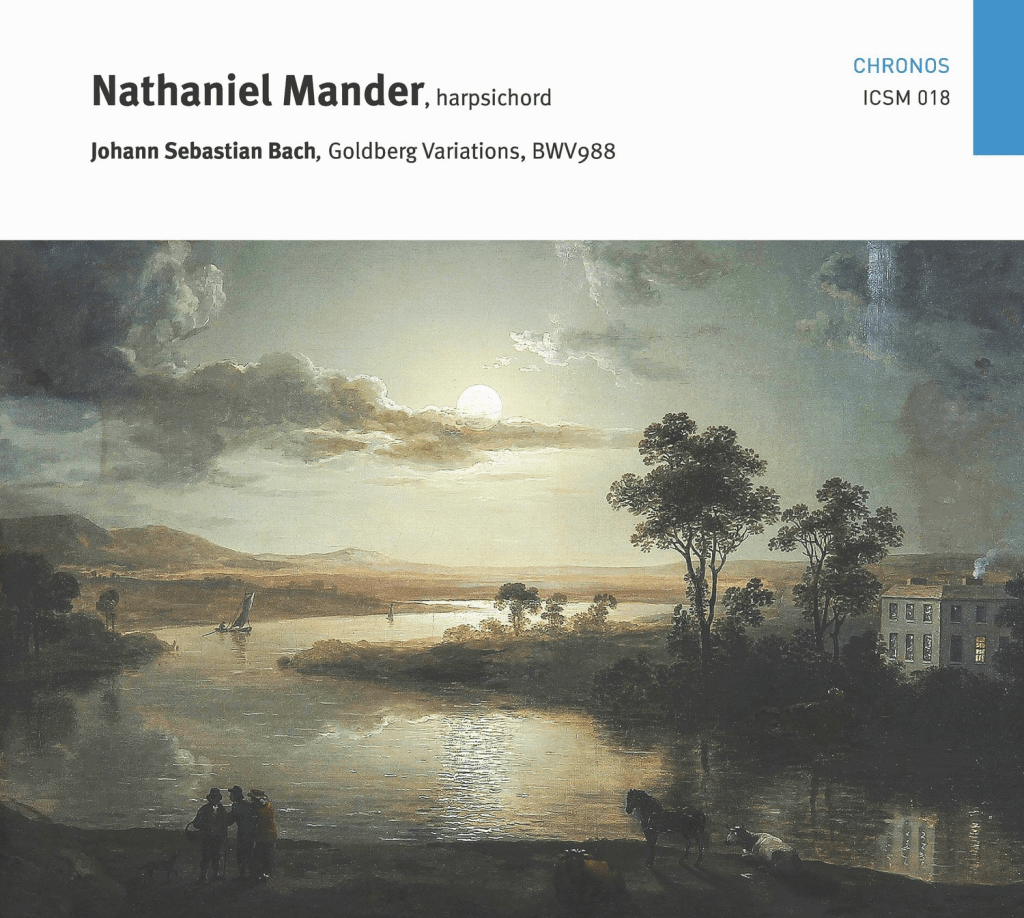
Goldberg Variations

Bach: Goldberg Variations
Nathaniel Mander, harpsichord
ICSM / Chronos ICSM018. 42’28

The Goldberg Variations is one of the most complex of all Bach’s keyboard works to understand and perform, so it is a brave move for anybody to make it their debut recording. However, Nathaniel Mander does have at least one distinguished predecessor in Glen Gould’s 1955 debut recording. It was published in 1741 under the (publisher’s) title of Clavierubung IV, following the earlier Clavierubung I, II, and III. The title implies that it is ‘Keyboard practice’, but it certainly is far more than that. Bach (who called it Aria with diverse variations for a harpsichord with two manuals) notes that it was “composed for connoisseurs, for the refreshment of their spirits”, which gives a far more appropriate impression of its status. The legend that Bach wrote the variations for Johann Gottlieb Goldberg is almost certainly not true, not least because Goldberg was just 13 at the time. But he was clearly a gifted player, and was a student of Bach’s son, Wilhelm Friedemann in Dresden, and also took lessons with J.S. Bach in Leipzig.

Continue reading

Early Music Day concert – Bach & Böhm

Andrew Benson-Wilson, organ
Mayfair Organ Concerts
The Grosvenor Chapel
South Audley Street, Mayfair, London W1K 2PA
Tuesday 21 March 2023, 1:10


Bõhm: Partita Freu dich sehr, o meine Seele
Trio Freu dich sehr, o meine Seele
Bach: Fantasia in c BWV 562i
Bõhm: Vater unser Im Himmelreich
Bach: Praeludium con Fuga in c BWV 546

This recital is a contribution to Early Music Day, the international celebration of early music that takes place annually on 21 March, the anniversary of Bach’s birth. The programme contrasts the music of one of Bach’s earliest influences with two of his mature organ works. When he was 15, Bach became a student at the Michaelisschule in Lüneburg. Georg Böhm was organist of the nearby Johanniskirche, the principal town church. The organ there was built in 1553 by Hendrik Niehoff, and is pictured below.

There is clear evidence that the young Bach knew Bõhm, and may have been a pupil of his. One of the earliest Bach manuscripts is a copy of a piece by Reinken owned by Bõhm. The two Bach pieces are powerful examples of his mature style, the first demonstrating the clear influence of French music, that he may have first experienced in Lüneburg and nearby Hamburg. The monumental Praeludium et Fuga in c shows the influence of Italian music, notably in the concerto-like Praeludium. Both Bach pieces were played as final voluntaries during the late Queen’s funeral and committal.

Continue reading

Les Arts Florissants: Charpentier at Christmas

Charpentier at Christmas
Les Arts Florissants, William Christie
The Barbican, 19 December 2022

Marc-Antoine Charpentier
Antiennes ‘O’ de l’Avent, H36–43 and Noëls pour les instruments, H531 and 534
Sur la Naissance de Notre Seigneur Jésus-Christ, H482
In nativitatem Domini Canticum, H416

photo: Mark Allan / Barbican

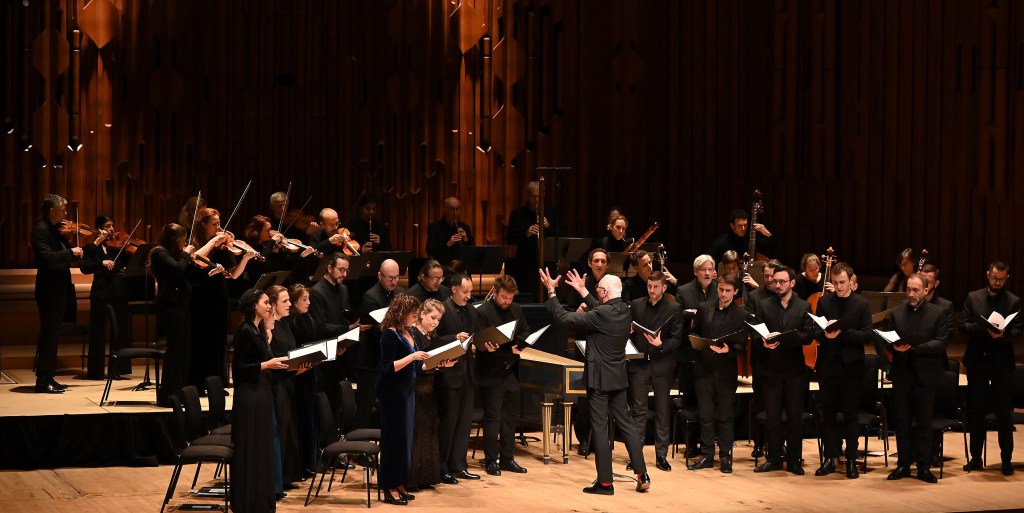
A delightful alternative to the endless Messiahs and carol events in the lead-up to Christmas came with the visit of Les Arts Florissant to The Barbican for their concert, Charpentier at Christmas. Despite the decades of work by William Christie and the regular visits of his Les Arts Florissant to The Barbican, the French baroque repertoire is still not as well known as it deserves to be. This was a wonderful chance to absorb the distinctive sound of French music, singers, and orchestral colours.

Continue reading

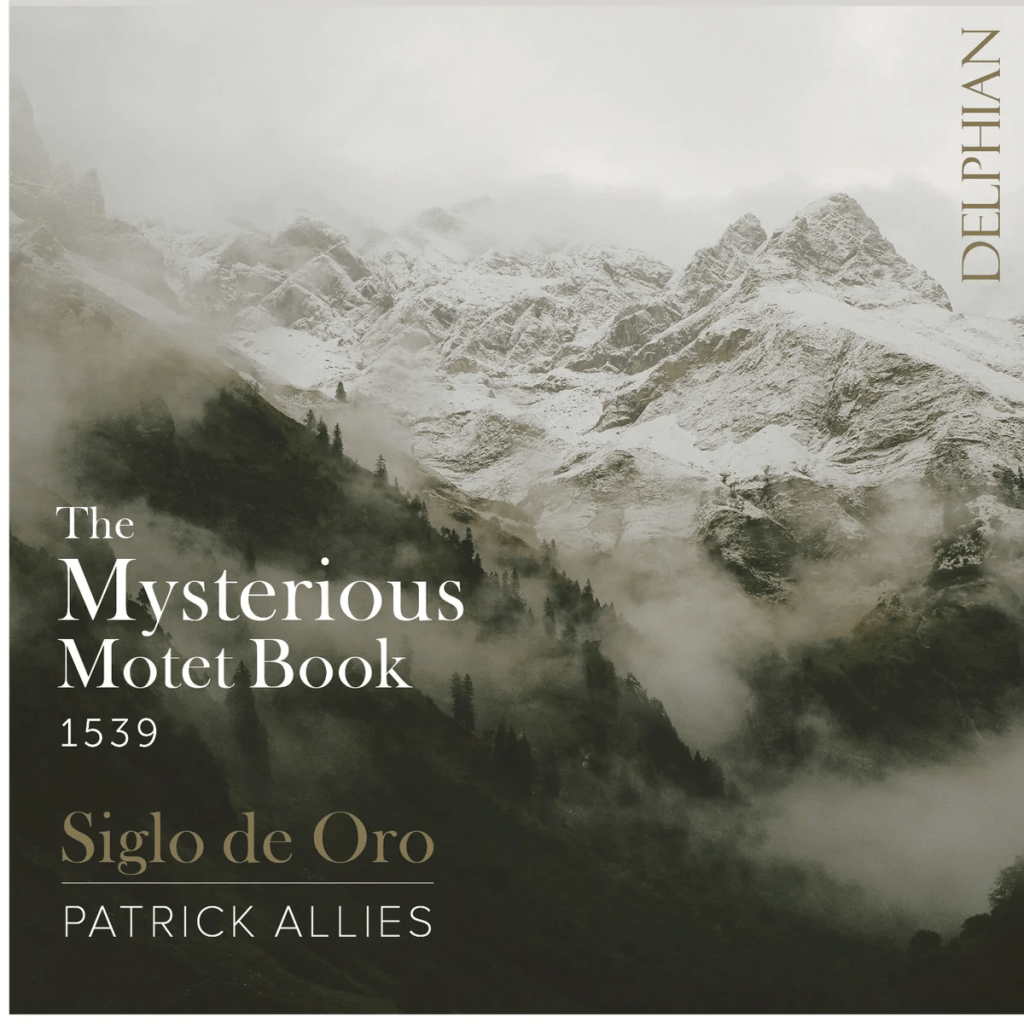
The Mysterious Motet Book of 1539

The Mysterious Motet Book of 1539
Siglo de Oro, Patrick Allies

Delphian DCD34284. 67’14

The Mysterious Motet Book of 1539 of the title refers to a collection of sacred music assembled by the choirmaster of Milan Cathedral and sent, for reasons that are unclear, to Peter Schöffer, a Protestant publisher in Strasbourg. They were published in 1539 as Cantiones quinque vocum selectissimae. One of the mysteries is why such strongly Catholic music should be published in the equally strongly Protestant Strasbourg? In a collaboration with Cambridge University researcher Dr Daniel Trocmé-Latter, Siglo de Oro has selected 12 of the 38 Latin motets from the collection. These include pieces by Arcadelt, Willaert, and Gombert together with some lesser-known (or, indeed, completely unknown) composers such as Johannes Sarton.

Continue reading

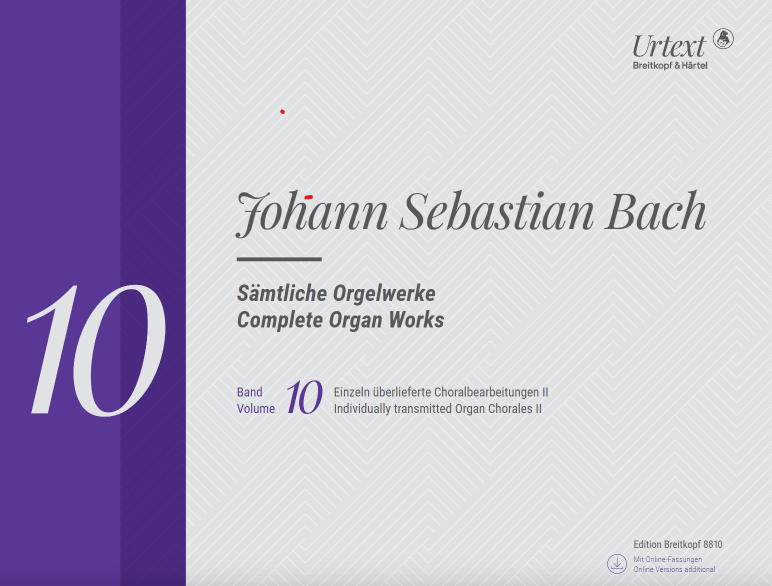
Breitkopf – Bach: Complete Organ Works, Vol 9 & 10

Johann Sebastian Bach: Complete Organ Works
Breitkopf & Härtel10 Volumes

Volume 9: Choral Partitas / Individually transmitted Choral Settings I
Ed. Reinmar Emans and Matthias Schneider
Edition Breitkopf EB8809.
184 pages | 32 x 25 cm | 783 g | ISMN: 979-0-004-18378-6 | Softbound

Volume 10: Individually transmitted Choral Settings II
Ed. Reinmar Emans and Matthias Schneider
Edition Breitkopf EB8810.
200 pages | 32 x 25 cm | 847 g | ISMN: 979-0-004-18379-3 | Softbound


Breitkopf & Härtel bring their ten-volume edition of the Complete Organ Works of Johann Sebastian Bach to an end with these two final and the offer of a complete package of all ten volumes. Volumes 9 and 10 bring together the Chorale Partitas and choral settings that have been individually transmitted rather than appearing in published collections (Clavierübung, Schübler, Orgelbüchlein, Leipzig/18). My reviews of previous Volumes can be read at these links: Volume 1, 2 & 4; Volume 3; Volume 5, 6 & 7; and Volume 8.

Continue reading

La Notte: Concertos & Pastorales for Christmas Night

La Notte
Concertos & Pastorales for Christmas Night
Bojan Čičić & The Illyria Consort
Delphian DCD34278. 65’52

Vivaldi Concerto RV 104 ‘La notte’;
Concerto for Strings RV 270a ‘Il riposo -per il santissimo Natalé
Biber Sonata ‘Pastrorella’
Pavel Joseph Vejvanoský Sonata Laetitiae 
Johann Rauch Sonata No X ‘Pastorella’
Anon Sonate ‘Wie schön leuchtet die Morgenstern’;
Anon Sonate ‘Musikalisch Uhrwerk’; 
Gottfried Finger Pastoralle 
Johann Schmelzer Sonata a 3 ‘Pastorale’

This delightful recording from Bojan Čičić and his The Illyria Consort explores the musical Christmas traditions in 17th-century Catholic Europe, notably Italy and the Hapsburg domains of Austria, Moravia, and Bohemia. This was a period when ‘rustic’ effects were introduced into Christmas instrumental music, usually reflecting the shepherds watching their flocks in the fields at night. And night is where the recording starts, with Vivaldi’s multisectional La notte Concerto (RV 104) – not obviously a Christmas piece, but a nice start to the festivities.

Continue reading

JJ Walther: Scherzi da violino

Johann Jakob Walther: Scherzi da violino
Bojan Čičić, Illyria Consort
Delphian DCD34294. 2 CDs. 51’00 + 49’48


Bojan Čičić and his Illyria Consort continue their exploration of the lesser-known corners of the often virtuosic violin repertoire of the 17th and 18th centuries, this time focussing on Johann Jakob Walther (1650-1717). His Scherzi da violino solo con il basso continuo per l’organo ò cimbalo, accompagnabile anche con una viola ò leuto, was published in 1676 and this double CD includes all 12 Scherzi, several in first recordings. This little-known composer is a generation before JS Bach’s cousin, Johann Gottfried Walther, and is not related. However, it is the latter’s 1732 Lexicon that gives us the limited information that survives on Johann Jakob. He spent three years in Florence before becoming leader of the Dresden court orchestra, finally ending up in Mainz. A writer in the 19th-century referred to him as the “Paganini of his age”, and this recording shows why.

Continue reading

London International Festival of Early Music

London International Festival of Early Music
November 2022
Now available to view on Marquee TV

For those who, like me, were not able to get to this November’s London International Festival of Early Music (LIFEM), the five concerts from St Michael & All Angels Church, Blackheath can now be viewed on Marquee TV under the heading LIFEM 2020. The link is here. You can use the code LIFEM50 to sign up for a free seven-day trial, as well as 50% off an annual Marquee TV subscription. Concerts from the 2021 festival are also available to view.

Continue reading

Full of the Highland Humours

Full of the Highland Humours
Ensemble Hesperi
EM Records, EMR CD074. 62’05

I have heard the impressive Ensemble Hesperi several times live (one review is here), and welcome this debut recording, the result of a successful crowdfunding campaign. Building on their exploration of the repertoire of 18th-century Scottish composers, and the influence of Scottish music on London’s musical life, this attractive recording reveals London’s cross-cultural influences from Scotland and Italy. The CD title comes from Henry Playford’s A Collection of Original Scotch Tunes: Full of the Highland Humours, the first collection of Scottish music known in London.

Continue reading

Scheidemann: Chorale Fantasias

Scheidemann: Chorale Fantasias for Organ
Ed. Pieter Dirksen
Breitkopf & Härtel 2022
92 pages | 30.5 x 23cm | 361gm | ISMN: 979-0-004-18607-7 | Softbound
Edition Breitkopf EB8938


Although the rather retro style of the cover might suggest a reprint, this is a new edition of nine Chorale Fantasias on Lutheran chorales by the pivotal North German organist composer Heinrich Scheidemann (c1595-1663). One of the key students of Sweelinck in Amsterdam (1611 to 1614), Scheidemann’s return to Hamburg was key to that city’s extraordinary 17th-century flowering of organ music: a fusion of organ design and musical development that culminated in the music of Buxtehude and, ultimately, Bach whose early experience was strongly influenced by this North German school of organ composition.

Continue reading

Basevi Codex

Basevi Codex
Music At the Court of Margaret of Austria
Dorothee Mields, Boreas Quartett Bremen

AUDITE 97.783. 61’30


What a beautiful recording. Outstanding singing from Dorothee Mields, exquisitely delicate recorder playing from the Boreas Quartett Bremen, fascinating early 16th-century music from a little-known source, and an insight into the musical world of the Burgundian court in Mechelen. Despite a lovely back story to the CD and the music, this is one of those recordings that you can just lie back and listen to for sheer musical pleasure. If relaxed wafting is not for you, read on for more background.

Continue reading

The Orgelbüchlein Project: Volume 3

The Orgelbüchlein Project: Volume 3
A 21st-century completion of Bach’s Orgelbüchlein
Volume 3: Catechism, Penitence and Communion (Chorales 61–86)
Compiled and edited by William Whitehead
119 pages  •  230x323mm  •  ISMN 979-0-2650-2810-9  •  Softbound
Musica Baltica


The recent celebration of the completion of The Orgelbüchlein Project (reviewed here, with background information on the project) included the launch of the second volume (actually Volume 3) of the published chorales. This followed the earlier publication of the first volume (labeled Volume 4, and reviewed here). Since the first volume, there has been a change of publisher, the latest volume (and the remaining ones) is published by Musica Baltica. Each volume is dedicated to a specific liturgical group of chorales, in this case relating to the Catechism, Penitence and Communion (chorales 61–86 of the original Bach Orgelbüchlein).

Continue reading

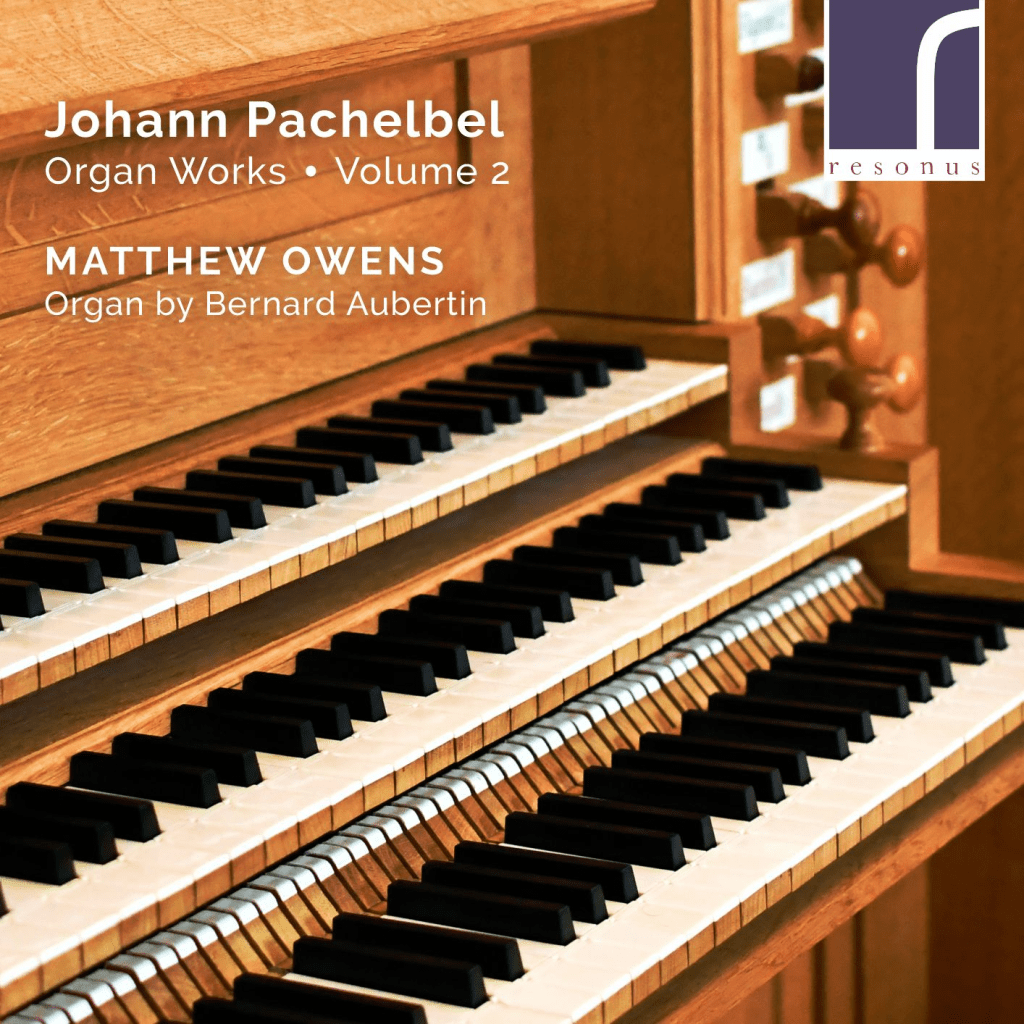
Pachelbel: Organ Works, Vol 2

Johann Pachelbel: Organ Works, Vol 2
Matthew Owens
Organ by Bernard Aubertin

Resonus Classic RES10303. 76’20

Matthew Owens follows his Pachelbel Organ Works Volume 1 (reviewed here, with background comments that I will not repeat here) with this volume, recorded on an impressive 2015 three-manual, 30-stop Bernard Aubertin organ in a private house in East Sussex. The programme follows a similar format to the first volume, with a Chorale Partita (on Christus, der ist mein Leben) a sequence of 23 Magnificat Fugues (Primi Toni), five chorale preludes and an opening (unrelated) Prelude and Fugue in D.

Continue reading

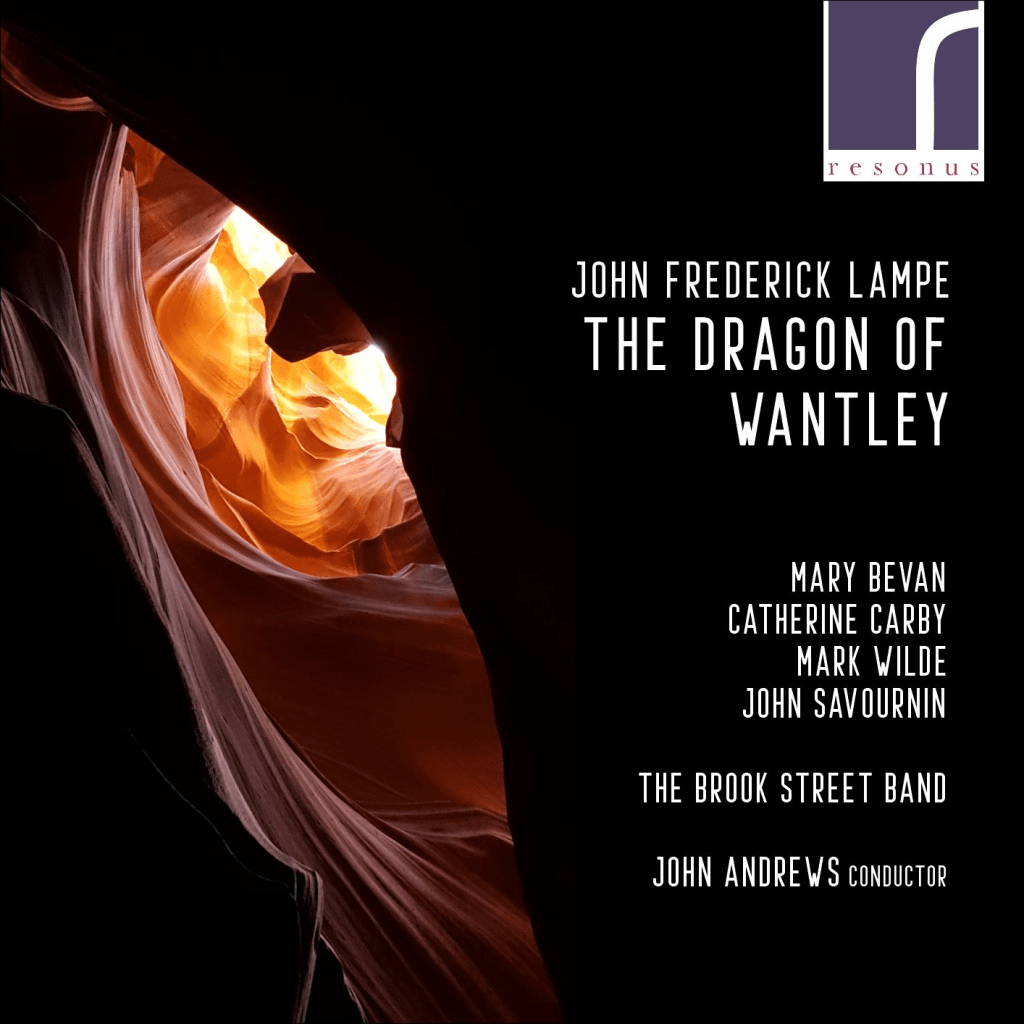
Lampe: The Dragon of Wantley

John Frederick Lampe: The Dragon of Wantley 
The Brook Street Band, John Andrews
Resonus Classics RES10304. 2CDs
59’44+44’12

Mary Bevan soprano, Margery
Catherine Carby mezzo soprano, Mauxalinda
Mark Wilde tenor, Moore of Moore Hall
John Savournin bass-baritone, Gaffer Gubbins and The Drago

The German-born bassoonist and composer John Frederick Lampe is little-known today, as is this opera, but both were well-known in their time. A recording of his opera The Dragon of Wantley is well worthwhile, although the subtleties of the irony of the text and the pastiche of the music, let alone the possible allusions to the politics of the day, may escape a present-day listener. But no matter, the music is delightful and the oh-so-rhyming text is funny, in a deliberately hamfisted way.

Continue reading

Bach and Friends: The Orgelbüchlein Project Completed

Bach and Friends
The Orgelbüchlein Project Completed
A weekend of concerts featuring the complete Orgelbüchlein
24/25th September 2022


One of the most important musical innovations in recent years has been the Orgelbüchlein Project. Bach’s tiny Orgelbüchlein has the titles of 164 Lutheran chorales noted on individual pages, covering the whole of the church year. But, for reasons that are not entirely understood, he only completed 46 of them, most composed when he was organist to the Court in Weimar. The Orgelbüchlein Project was set up to commission 118 new pieces to complete the remaining chorales, the whole curated by William Whitehead. The project reached its conclusion over the weekend of 24/25 September with a complete performance of all of Bach’s Orgelbüchlein chorale preludes together with all the new commissions. The complete performance (promoted by the Royal College of Organists) took place in nine concerts in seven churches over two days with the music played by nine organists.

Continue reading

Andrew Benson-Wilson @ Christ Church Spitalfields

1360 to 1699
Organ music from the Gothic period to the late 17th century
Andrew Benson-Wilson
Christ Church Spitalfields

Commercial St, London E1 6LY
Monday 24 October 2022, 7.30


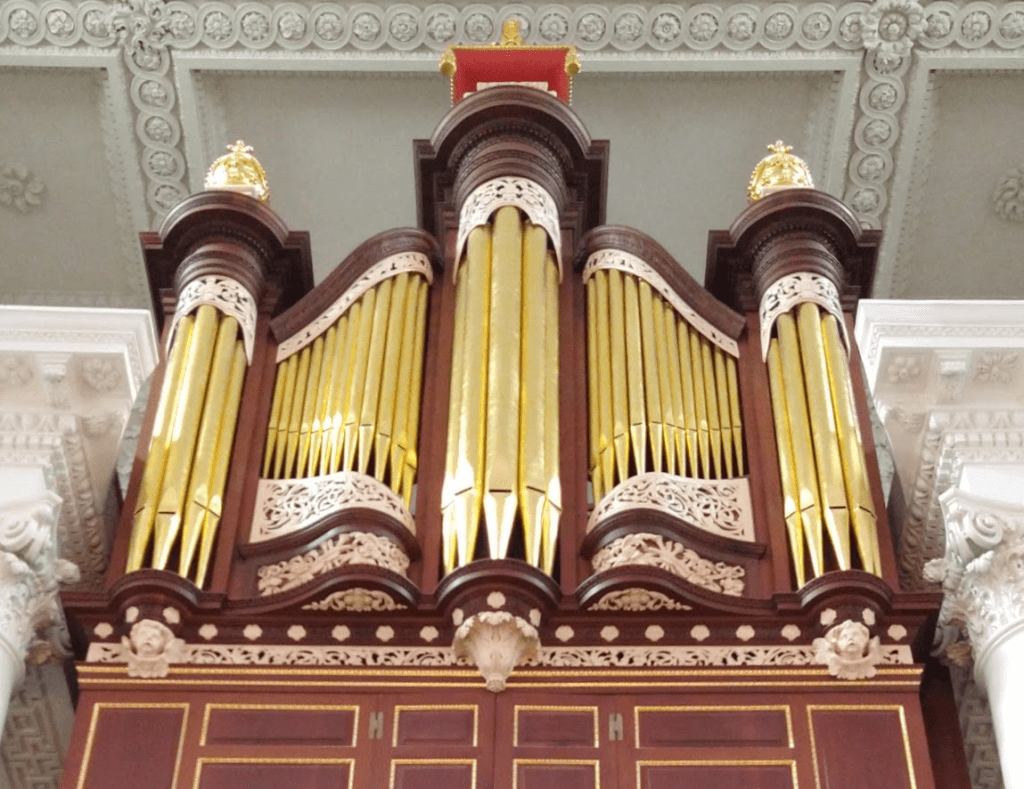
The magnificent 1735 Richard Bridge organ in the sumptuously restored Nichola Hawksmoor Christ Church Spitalfields is the most important historical restoration of any 18th-century English organ. For around a century, it was the largest organ in the UK. After many decades of silence, William Drake completed his restoration in 2015, taking the specification and technical details back to that of 1735, with the addition of three pedal stops.

Although obviously ideally suited to English music of the period, this recital will explore the wider potential of the English 18th-century organ to interpret music from other eras and countries. It starts with one of the earliest known pieces of organ music (dedicated, appropriately, to “those playing music”), dating from the mid-14th century, and the first known ‘prelude’ from 1448. The famous pioneers of early organ music follow (Francesco Landini, Conrad Paumann and Paul Hofhaimer), before a fascinating anonymous piece from a manuscript in the circle of Henry VIII, dating from around 1530.

Having explored the early development of organ music, the remaining pieces show the different regional styles that developed across Europe from the late Renaissance and early Baroque, ranging from Germany, England, Italy, Portugal, Spain and France. Composers represented are Hieronymus Praetorius, John Lugge, Girolamo Frescobaldi, Pedro de Araújo, Correa de Arauxo, Matthias Weckmann and Nicolas de Grigny. As well as representing different musical and organ-building styles (including one of the dramatic battle scenes from the Iberian peninsular), there are remarkable links between many of the composers and compositions.

Continue reading

BBC Proms: OAE – Bach Mass in B Minor

BBC Proms
Bach: Mass in B Minor
Orchestra & Choir of the Age of Enlightenment, John Butt
Royal Albert Hall, 29 March 2022

How should an atheist approach Bach? And, in particular, his Mass in B minor, arguably his finest work and one that, to him, seemed to sum up a lifetime of music dedicated to Soli Deo Gloria (Glory to God alone) – the meaning of the S.D.G that Bach appended to all his sacred works?

Continue reading

BBC Proms: Nathan Laube, organ

BBC Proms
Nathan Laube, organ
Royal Albert Hall, 28 August 2022

Wagner: Grand March
Franck: Grande pièce symphonique
Alkan: Scherzando from 11 Grands préludes
Liszt: Piano Sonata in B minor

Yet again, the BBC Proms powers-that-be have chosen the most inappropriate time for an organ recital – a Sunday morning – when most organists are attempting to earn their keep. Although working organists can listen on catch-up, the sparse audience (sparse for the Royal Albert Hall that is, but sadly not for the average organ recital) reflected this strange programme planning. But there was also something about the programming of the concert itself which raised questions about the BBC’s approach to The Proms, which this year seems to be seen as a populist extension of Radio 2, rather than Radio 3.

Continue reading

Laus Polyphoniae – Polyphony of life

Laus Polyphoniae – Polyphony of life
Antwerp
19-23 August 2022

After a three-year Covid-induced hiatus when Laus Polyphoniae ran a much-reduced series of live and online events, the 2022 Festival restored the postponed 2020 edition, under the title Polyphony of life. As usual, the festival was run by AMUZ (Flanders Festival Antwerp) in conjunction with the Alamire Foundation, the study centre for music in the Low Countries and part of KU (Katholieke Universiteit) Leuven. As the name implies, Laus Polyphoniae is devoted to the music of the Middle Ages and the Renaissance when polyphony was paramount.

Continue reading

International Young Artists Presentation (IYAP)

International Young Artists Presentation
Laus Polyphoniae 2022
AMUZ, Amtwerp. 20 August 2022

The International Young Artist’s Presentation (IYAP) is an annual coaching and presentation scheme promoted by Musica and AMUZ (Flanders Festival Antwerp). It is intended for young ensembles playing historical instruments. They are invited to present innovative and original programmes and to experiment with aspects of presentation and performance. The selected groups are given three days of coaching (on this occasion, led this year by Raquel Andueza and Robert Hollingworth, which is followed by a day of public concerts at the start of the Laus Polyphoniae festival, reviewed here.

Continue reading

Bach: Violin Sonatas

Bach: Sonatas
Plamena Nikitassova & Peter Waldner
Musik Museum 46, CD13045. 74’30

This recording is one of a series produced by the Tiroler Landesmuseum Ferdinandeum in Innsbruck. Although the title is just ‘Sonaten’, the programme is actually a selection of Violin Sonatas, three with obligato harpsichord (BWV 1016, 1017 & 1019), one for solo violin (BWV 1005) and an arrangement, possibly by Bach, of the first movement of that solo sonata for harpsichord (BWV 968).

Continue reading

Programme notes: Two Baroque Giants

Mayfair Organ Concerts. The Grosvenor Chapel. 9 August 2022

Andrew Benson-Wilson plays music by
Two Baroque Giants – Buxtehude & de Grigny

Dietrich Buxtehude (1637-1707)
Praeludium in d minor BuxWV 140
Ciacona in e minor BuxWV 160

Nicolas de Grigny (1672-1703).
Recit de Tierce pour le Benedictus
Dialogue de flûtes pour l,’Elevation
Dialogue (Agnus Dei II)
from Premier livre d’orgue (1699)

Buxtehude
Te deum laudamus BuxWV 218
Praeludium – Te deum laudamus – Pleni sunt coeli -Te martyrum – Tu devicto

Although Buxtehude and de Grigny were born 35 years apart, the music in this recital was composed at about the same time, around 1690/1700. They were composed for very different social, religious and musical settings, Buxtehude for Lutheran Lübeck in North Germany, and de Grigny for Catholic Reims in France. The organs they played were very different, but one of the joys of the English 18th-century-inspired Grosvenor Chapel organ is that it includes elements of both German and French instruments. Bach owned music by both composers and even added some of his own ideas to de Grigny’s Premier livre d’orgue. Bach’s youthful 200-mile walk to Lübeck to meet the ageing Buxtehude is well known.

Continue reading

Andrew Benson-Wilson – two Baroque giants

Two Baroque Giants – Buxtehude & de Grigny
Andrew Benson-Wilson, organ
The Grosvenor Chapel
South Audley Street, Mayfair, London W1K 2PA
Tuesday 9 August 2020, 1:10

Music by Dietrich Buxtehude (1637-1707) and Nicolas de Grigny (1672-1703).

Although Buxtehude and de Grigny were born 35 years apart, the music played in this recital was composed at about the same time, around 1690/1700. They were composed for very different social, religious and musical settings, Buxtehude for Lutheran Lübeck, North Germany, and de Grigny for Catholic Reims, France. The organs they played were also very different, but one of the joys of English 17th/18th organs is that they include elements of both the German and the French instruments.

The overriding figure in the music of these two is JS Bach. He knew their music and owned manuscripts of both composers, even adding some of his own ideas to de Grigny’s 1699 Premier livre d’orgue. Bach’s youthful walk to Lübeck to hear the ageing Buxtehude is well known.

Continue reading

Ensemble Molière: Good Soup

Good Soup
Molière 400th anniversary project
Ensemble Molière

Sands Music Room 29 July 2022
Available online until 4 August 2022

I live on good soup, not on fine words”
Les Femmes Savants

Ensemble Molière describes Good Soup (which celebrates the 400th anniversary of Molière’s birth) as “an exploration of Molière’s world, both through his words and the music of his time … It investigates Molière’s form of bourgeois comedy and asks what these narrative structures still have to offer”. The show brings together “baroque music, absurdist theatre, slapstick and puppetry” and “takes a critical look at our own relationship with catastrophe and the desire to escape into spectacle and happiness”. It was performed in the magical Sands Music Room in Rotherhithe, a tiny theatre original built as a film set for Sands Films. but retained for use as a delightfully quirky and intimate performance space.

Continue reading

Anna Lapwood: organ recital

Anna Lapwood, organ recital
Salisbury Cathedral. 23 July 2022

Anna Lapwood is not just a breath of fresh air in the rather stuffy male-dominated world of organ music, but a mighty rushing wind, challenging the orthodoxies of the organ world and fighting, in particular, to support girls and young women in music. Unusually, she only started playing the organ aged 16 (and then rather reluctantly), but by the time she was 21 had completed an Organ Scholarship in Magdelen College, Oxford (the first female to hold that post in the history of the College), and had been appointed as the youngest ever Director of Music at an Oxbridge College. She has a prolific and well-promoted social-media presence, and an enormous range of achievements to date, as evidenced by the lengthy introduction to her recital in Salisbury Cathedral. This was the first time I had heard her play live.

Continue reading

York Early Music International Young Artists Competition 2022

York Early Music International Young Artists Competition
National Centre for Early Music
St. Margaret’s Church, Walmgate, York
. 16 July 2022

After a Covid-induced hiatus in 2021, the biennial York Early Music International Young Artists Competition returned to the impressively restored medieval church of St. Margaret’s, Walmgate, York, now the National Centre for Early Music. The detailed rules and other information can be seen here, but briefly, competitors must perform in an ensemble with at least 3 members with an average age of up to 33 years and an individual age of 37 or less. These ages are one year higher than usual and only apply to the 2022 competition because of the cancelled 2021 competition. The repertory must be from the middle ages to the 19th century, and performers must use historically informed techniques, instruments and stylistic conventions.

Continue reading

Pyrotechnia

Pyrotechnia
: Fire & Fury from 18th-century Italy
Bojan Čičić and The Illyria Consort
Delphian DCD34249. 72’52

Vivaldi: Violin Concerto in D, RV205 “fatto per Maestro Pisendel
Vivaldi: Violin Concerto in D, RV213a “per Signora Anna Maria
Tartini: Violin Concerto in E, D 48 “Rondinella vaga e bella
Locatelli: Violin Concerto in D, Op3/12 “Il laberinto armonico

‘Fireworks’ is a term often used to describe virtuosic playing or advanced musical textures but in this case, the connection with the word is real. This CD from violinist Bojan Čičić and his Illyria Consort gets its title from the book Pyrotechnia, the earliest guide to recreational fireworks. It was published in 1635 by the gunner, John Babington. The four violin concertos chosen to display Bojan Čičić’s own virtuosity all have movements ending in a capriccio, a virtuosic display cadenza that became the norm in the later Classical and Romantic era concertos. Several of Vivaldi’s own improvised cadenzas have survived through copies made by his own pupils.

Continue reading

Biber: Mystery Sonatas

Spitalfields Music
Biber: Mystery Sonatas
Aisha Orazbayeva, violin
Hoxton Hall, 8 July 2022


This concert, part of the Spitalfield Music summer festival, featured Biber’s extraordinary Mystery (or Rosary) Sonatas (c1676). Unusually, it was spread over two separately bookable concerts, which were both repeated two days later. Biber’s extraordinary Mystery (or Rosary) Sonatas is a set of 15 Sonatas of varied forms for violin and continuo and a concluding Passacaglia for solo violin. Each Sonata has a title linked to the Mysteries of the Rosary, reflecting a medieval processional practice of 15 meditational focus points in a church. It is thought that Biber’s music was intended for such a meditation. The 15 Sonatas are divided into three groups of five, under the headings of the Joyful, Sorrowful and Glorious Mysteries.

Continue reading