“A daynty fin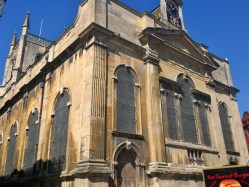 e verse”
St Swithun’s, Worcester, 31 July 2015
Music by Thomas Tomkins, William Hayes and from early 16th century manuscripts, played on the reconstructed c1530 ‘Wetheringsett’, and the 1795 Grey organs by
Prom 38: Foulds’ Mantras & Messiaen’s Turangalîla
Prom 38: Foulds’ Mantras & Messiaen’s Turangalîla
BBC Philharmonic, Juanko Mena
Royal Albert Hall, 13 August 2015
In an inspired bit of programming, Messiaen’s enormous hymn to eroticism and sexual desire was coupled (so to speak) with a very rare performance of John Foulds’ Three Mantras, composed between 1919 and 1930 and all that survives of his monumental ‘Sanskrit opera’ Avatara.
John Foulds (1880-1939) is something of a local lad for the Manchester-based BBC Philharmonic. He played cello for the Halle aged 20, and later became known as a composer of light music. But behind this populist façade lay some fascinating musical ideas, well ahead of his time. Marriage to a leading authority on Indian music led to an interest in Indian mysticism and esoteric thought, very much in vogue at the time. After time in London and Paris, he moved to India, founding a symphony orchestra in Delhi. His Three Mantras were composed in Paris as preludes to the three acts of the opera Avatara. He destroyed all except these three pieces. Continue reading
The Electrictionary
The Electrictionary
The Early Music Experiment
Kings Place. 7 August 2015
 The Tête à Tête Opera Festival at Kings Place included the premiere of a fascinating new one-hour long opera, The Electrictionary, with music by Alexis Bennett, words by Timothy Knapman, and direction by Dominic Gerrard It was performed by four solo singers and the instrumentalists of The Early Music Experiment & guests. The Electrictionary was conceived by the composer to explore the power of language and the issue of new words. It is intended “to confront progress, pedantry, class, slang and neologisms, in search of the ultimate dictionary with a riotously eclectic score mixing jazz-funk, classical and the avant-garde”. The use of various styles of music aims “to draw parallels between the deep history of words and the similarly complex origins of the multitude of musical styles that surround us every day”. The orchestra featured baroque specialists (albeit playing modern instruments) alongside jazz/funk musicians, and the wide-ranging structure of the piece included a combination of baroque recitative and aria, the spoken elements of Singspiel, and present-day music theatre and film music. Continue reading
Glyndebourne’s Saul
Glyndebourne’s Saul
Glyndebourne Festival Opera. 6 August 2015
I don’t normally read other reviews until I have seen for myself, but I was aware that Glyndebourne’s new production of Handel’s Saul had gone down well. And well it should. It is one of the most successful productions that I have seen. Directed by Barrie Kosky, with designs by Katrin Lea Tag and lighting by Joachim Klein, the sumptuous settings and costumes would inevitably tick most opera-goers’ boxes. Of course, Saul isn’t an opera, but one of his finest oratorios, written in 1739 and the first of his collaborations with Charles Jennens. There is now a long tradition of staging oratorios, not least at Glyndebourne, dating back to 1996 and Peter Sellars’ Theodora. And with its dramatic story of family intrigue, love and hate, a youthful hero and a king loosing his mind, it certainly has all the dramatic possibilities of opera seria.

Lachrimae: Anna Prohaska
Lachrimae
Anna Prohaska & Arcangelo
Sam Wanamaker Playhouse. 2 August 2015
The latest in the series of candle-lit concerts in the Jacobean Sam Wanamaker Playhouse on London’s South Bank featured soprano Anna Prohaska with Arcangelo and a programme based around the theme of melancholy, under the title of ‘Lachrimae’. Devised by Anna Prohaska, the pieces chosen reflected the wide range of compositional possibilities used by early Baroque composers from England and Italy. The music ranged from intimate Purcell settings to dramatic Italian opera scenes.
 I first reviewed Anna Prohaska in 2012 Wigmore Hall concert (broadcast live on Radio 3) and noted that “… If I had read Anna Prohaska’s CV (full of names like the Berliner Philharmoniker, Weiner Philharmoniker, Deutsche Staatoper Berlin) before I heard her sing, I would have wondered why on earth the Academy of Ancient Music had booked her”. But, for the ‘early music’ vocal scene, she was a real find. I don’t know what, or how, she sings with these orchestral big boys, but her beautifully eloquent and pure voice is just the thing for this repertoire, as was her presentation. She is of impeccable musical stock – her father and mother were an opera director and singer, her grandfather and great-grandfather a conductor and composer respectively. She has a very attractively un-diva like and engaging stage manner, giving the impression of singing with us, rather that at us, and involving us in the emotional turmoil of the various pieces. She has an exquisitely warm timbre with a slightly mezzo-ish tinge and demonstrated a thorough understanding of her chosen repertoire (and its wide range of emotions), with fine da capo elaborations and the rare ability to trill properly. Her use of rhetoric to accent emotive moments was spot on, as was her heart-wrenching cries of “Gabriel” in Purcell’s ‘Tell me, some pitying angel’ – one of those moments when silence can be more intense than music. Continue reading
Proms: Monteverdi Orfeo
Proms: Monteverdi Orfeo
Monteverdi Choir & English Baroque Soloists
Royal Albert Hall. 4 August 2015
 For the second time this year, London sees Monteverdi’s Orfeo performed in a large circular space. After the Royal Opera House / Early Opera Company production in the Roundhouse early this year (review here) we now had the Monteverdi Choir and English Baroque Soloists in the vast space of the Royal Albert Hall in front of a packed audience of well over 5000 people.
For a work that was probably first performed in a space that in its entirety (including performers and audience) would have fitted onto the front part of the RAH stage, there are obvious issues of presentation. For this rather more than semi-staged performance, John Eliot Gardiner placed his 32 instrumentalist right and left of a central triangular area, the continuo group divided between the two sides with harpsichords and organ at the front of the two sides and pairs of chittarones on either side. The strings were to the left, the woodwind to the right, with the cornetts/trumpets and sackbuts on the top of the stage steps, just below the bust of Sir Henry Wood. The soloists were drawn from the 4o-strong choir, which tumbled onto the stage during the Toccata led by a jovial chap who looked as though he had been given a frame drum for Christmas, but hadn’t got round to reading the instruction manual, consequently beating it mercilessly with his fist. The youthful chorus of Nymphs  and Shepherds (men in casual black, women in bright block colours) bounced around to the merciless thump of the drum and rattle of a tambourine. The two very professional-looking dancers who took over the front stage turned out to be the key soloists Mariana Flores and Francesca Aspromonte (Eurydice and Musica who, in a nice twist, also sang the role of the Messenger). Continue reading
Iford Arts: Agrippina
Although perhaps not quite reaching the social cachet of Glyndebourne or Garsington, the opera season at Iford Manor is always a delight, both for the setting and the standard of the music. A few miles south-east of Bath, the manor house is surrounded by the famous Peto garden, with an Italian cloister that is turned into a delightfully intimate opera house for the season. Unlike their companion’s ‘posh frocks and picnic’ focussed events, the dress code is ‘smart casual’ and picnicking opportunities come before, rather than during the opera, with a welcome coffee and biscuits filling the 20 minute interval. All this encourages a welcome focus on the music, rather than the surrounding social razzmatazz.
 This year’s early music opera was Handel’s wonderful Agrippina, one of his most approachable operas despite, or perhaps because of, having been written when Handel was around 24, at the end of his enormously productive three years in Italy. This period produced some of his finest music, as reflected in the fact that Agrippina borrows extensively from Handel’s previous works – and, in turn, many extracts were later borrowed for later works. Continue reading
Compère: Magnificat, Motets and Chansons
Compère: Magnificat, Motets and Chansons
Orlando Consort
Hyperion CDA68069. 68’22
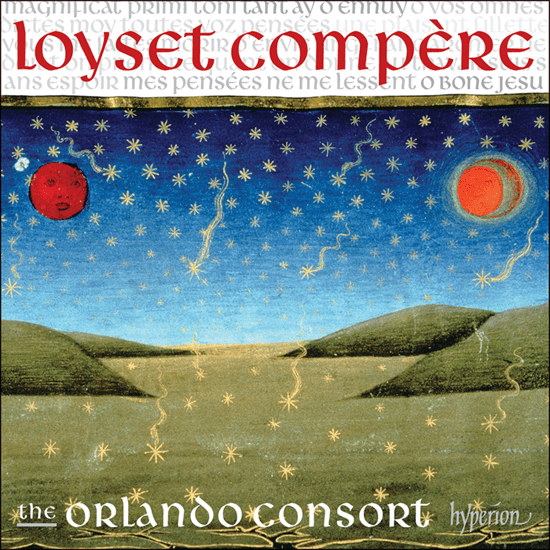 Loyset Compère is not as well-known as he deserves to be, and this recording could be the means by which his (recently re-assessed) place in musical history is acknowledged. The key to the re-assessment is the slightly embarrassing realisation that the Josquin that musicologists assumed to have been born in 1440 was not, in fact, Josquin des Prez, but another Josquin altogether. That makes Josquin des Prez around 10 years younger than thought. Similar birth date realignment concerning Obrecht and Agricola also make them younger than first thought. As David Fallows explains in his comprehensive programme notes, this leaves Loyset Compère as one of the earliest composers in the imitative style, now known to be later developed, rather than instigated, by Josquin and others. Continue reading
Bachfest Leipzig: 2015
Bachfest Leipzig
“So glorious you stand, dear city”
12-21 June 2015
 The festival motto reflects the fact that 2015 is the millennium of the first documentary record of Leipzig, when the Bishop of Merseburg mentioned the town of “urbe libzi” in his chronicle in 1015. The phrase So herrlich stehst du, liebe Stadt! is taken from Bach’s cantata Preise, Jerusalem, den Herrn (BWV 119), written in 1723 in honour of the Leipzig city council, the ‘dear city’ clearly referring both to Jerusalem and Leipzig. It was performed by the Thomanerchor and the Händelfestspielorchester Halle at the opening concert of the festival (held, unusually, in the Nikolaikirche rather than the Thomaskirche, on 12 June, 5pm) where it followed Max Reger’s arrangement for organ of Bach’s Chromatische Fantasie und Fuge d-Moll, played by Stefan Kießling with commendable restraint.
Written within a few months of his arrival in Leipzig, Bach’s large scale Preise, Jerusalem, den Herrn (one of many such ‘Ratswahl’ cantatas Continue reading
Mozart: Stolen Beauties
Mozart: Stolen Beauties
Ironwood with Anneke Scott, natural & piston horns
St George Hanover Square, 21 June 2015
and ABC Classics. ABC 481 1244
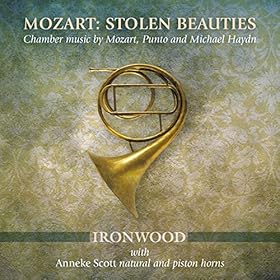 A CD launch concert in Handel’s own parish church of St George, Hanover Square featured the programme from the CD ‘Mozart: Stolen Beauties’. Ironwood is an Australian period instrument ensemble formed in 2006. They were joined by the distinguished horn player Anneke Scott, here playing both natural (or ‘hand’) and piston horn.
The ‘beauty’ that wasn’t stolen was the concluding Mozart Quintet for horn and strings in E-flat (K407). The autograph of this work was last known of in London 1847 when it appeared at a sale. It had earlier also proved elusive when Constanze explained to a potential publisher that the horn player Joseph Leitgeb had the score, but that he ‘lived in the suburbs’ of Vienna and would therefore be ‘difficult to track down’. The horn is accompanied by the unusual formation of violin, two violas and cello, rather than with two violins. This gives a richly sonorous timbre to the work, which Mozart (himself a viola player) used to highlight the key violin contributions. The horn writing is virtuosic, using the full range of the instrument of the day. Continue reading
Forgotten Vienna 2: Amadè Players
Forgotten Vienna 2: Amadè Players
St John’s, Smith Square. 1 July 2015
Carl Ordonez Sinfonia in C; CPE Bach Cello Concerto in g; Georg Mathias Monn Cello Concerto in G Minor; Alessandro Rolla Violin Concerto in G BI 520
Poppy Walshaw, cello, George Clifford, violin, Nicholas Newland, director.
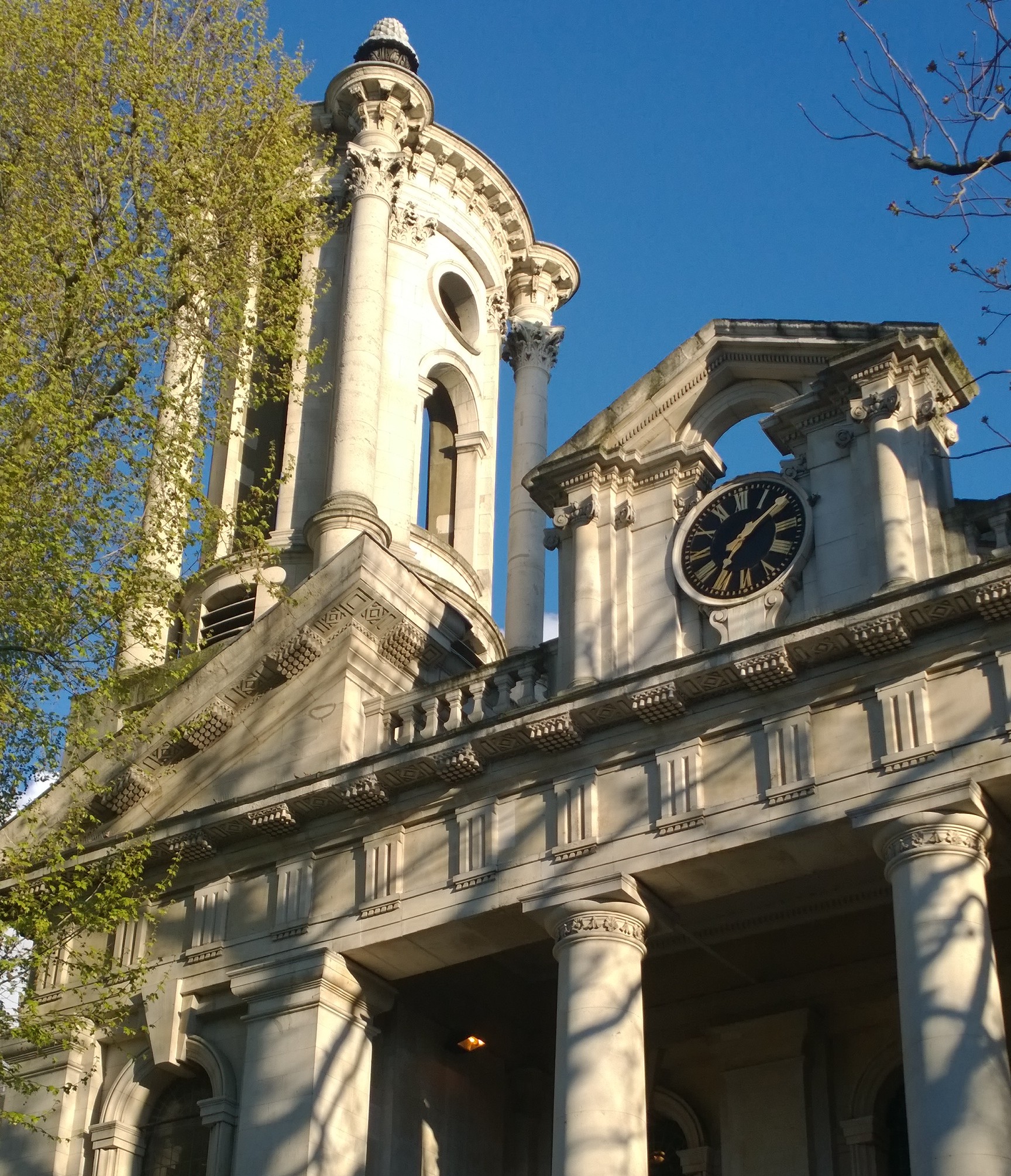 The Amadé Players returned to St John’s, Smith Square for the second in their Forgotten Vienna series. The title is a bit misleading – it is not Vienna that has been forgotten, but the wealth of composers from central and eastern European lands that flocked there in the 18th century. On this occasion the composers represent Moravia, Germany, Vienna itself, and Italy.
As with their last concert, names were an issue – the first composer (from Moravia), was listed as Carl Ordonez, but is also known as Karl von Ordoñez, Carlo or Carl d’Ordonetz, Ordonnetz, d’Ordóñez, d’Ordonez and Ordoniz. Such was social life in 18th century Vienna that his ranking in the lower nobility prevented him from working as a musician, instead having a career in the civil service. His rather conservative Sinfonia in C (Brown C1), with its delightfully delicate opening Adagio, demonstrated a tentative move from the Baroque to the Classical era. There followed the first of two cello concertos, played by Poppy Walshaw. The conductor, Nicholas Newland, explained that the addition of a second concerto was to replace the originally advertised Waňhal’s Concerto for 2 Bassoons, omitted because of the lack of the requisite number of bassoons.
 The first cello concerto to be played was the more advanced in style of the two. CPE Bach’s Concerto in a opening in typical Empfindsamer Stil with an orchestral unison, immediately challenged by contrary-motion scales and a yearning melody for the solo cello followed by a motif built on rapidly repeated notes – a typical CPE Bach mix of colours and textures. The first movement ended with the first of Poppy Walshaw’s excellent cadenzas, all kept well within the bounds and style of the piece. In the slow movement, the sound of the solo cello was allowed to grow delicately out of the orchestral texture. The skittish final movement saw the cello finally break free from its former collaborative role with a virtuoso series of flourishes.
The second cello concerto, after the interval, was the little known Concerto in g by Georg Matthias Monn (aka. Johann Georg Mann). In the pre-classical Galant style, his slightly formulaic compositional style was balanced by some very tricky passages for the solo cellist, with wide-spaced melodic lines and leaps using the whole gamut of the cello. Poppy Walshaw dealt with all these challenges with apparent ease, relishing the technical complexities and flourishes. Her playing in both these concertos (a big ask for any soloist) demonstrated a natural and sensitive understanding of the music, and the importance of working with the orchestra, rather than challenging it. The stifling heat of the hottest July day since records began no doubt added to the intonation woes of the violins, but a tuning pause after the first movement might have helped.
 The evening ended with the Violin Concerto in G (B1:520) by Allessandro Rolla, an Italian composer better known today as the teacher or Paganini than for his own compositions. Clearly in a later genre that the other works on the programme, this was very obviously a work written by a violin virtuoso to demonstrate his own skills. In contrast to the earlier composers, the solo moments were accompanied by the full orchestra, rather than a Baroque-style continuo group. As with Poppy Walshaw earlier, George Clifford produced a superb extended cadenza towards the end of the first movement, building on the advanced techniques already demonstrated. Switching between arco and pizzicato (and on one occasion, both at the same time) and taking the melodic line well towards the top of the violin fingerboard, Rolla would have approved.
Monteverdi Vespers of 1610 – OAE / Robert Howarth
Monteverdi Vespers of 1610
Orchestra & Choir of the Age of Enlightenment, Robert Howarth (Director)
City of London Festival. St Paul’s Cathedral. 2 July 2015
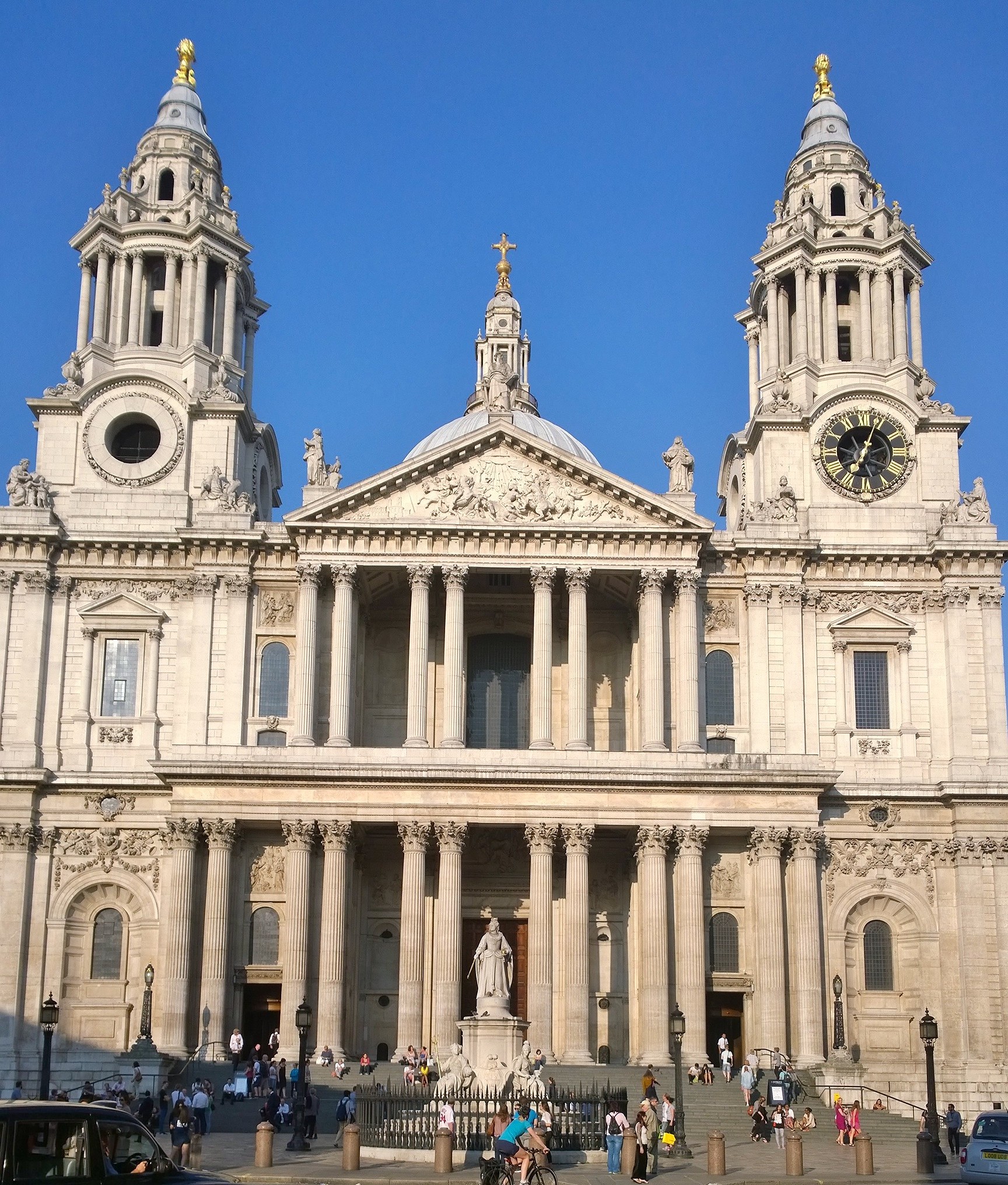 There are many ways of performing Monteverdi’s 1610 Vespers, and conductor Robert Howarth’s interpretation with the Choir and Orchestra of the Age of Enlightenment must count as one of the finest; not just in the technical decisions (which are complex) but in the sheer magnificence of the performance itself. St Paul’s Cathedral is not an easy space to sing into, but the 23 singers of the OAE showed exactly how to do it. It was interesting comparing them to the 106 singers of LSO chorus in last week’s performance of the Haydn Creation, the OAE soloists and chorus producing a far clearer and more focussed sound. Continue reading
Bach & Entourage: Sonatas for Violin and Basso continuo
Bach & Entourage
Johannes Pramsohler, violin, Philippe Grisvard, harpsichord
Audax ADX13703. 65’11
Sonatas for Violin and Basso continuo by Bach, Pisendel, Graun and Krebs
 I have been watching violinist Johannes Pramsohler make his mark in the world of period violin playing over the past few years, and this CD shows that his growing reputation is well deserved. This well-chosen programme of relatively unknown Sonatas from the Bach circle, is a telling reminder that although his later fame came from his organ playing, Bach’s early childhood was spent learning the violin from his violinist father. As Pramsohler’s notes point out, it was only when the 10 year-old Bach, now orphaned, moved into his organ-playing elder brother’s house, that he started to focus on the organ. But he kept his father’s violin, his only inheritance, all his life. Although only one work is definitely by Bach, with two possibly Bach’s, Bach is suffused throughout the other works, by Pisendel, Graun and Krebs, representing the extraordinary flowering of musical talent in 18th century Weimar, Leipzig and Dresden. The Graun and Krebs works are world premiere recordings, taking us into a slightly later musical period. The CD ends with Bach’s extraordinary Fugue in g (BWV 1026). Continue reading
John Scott: Gala opening recital
John Scott: Gala opening recital
on William Drake’s reconstruction of the 1735 Richard Bridge Organ
in Christ Church, Spitalfields. 30 June 2015
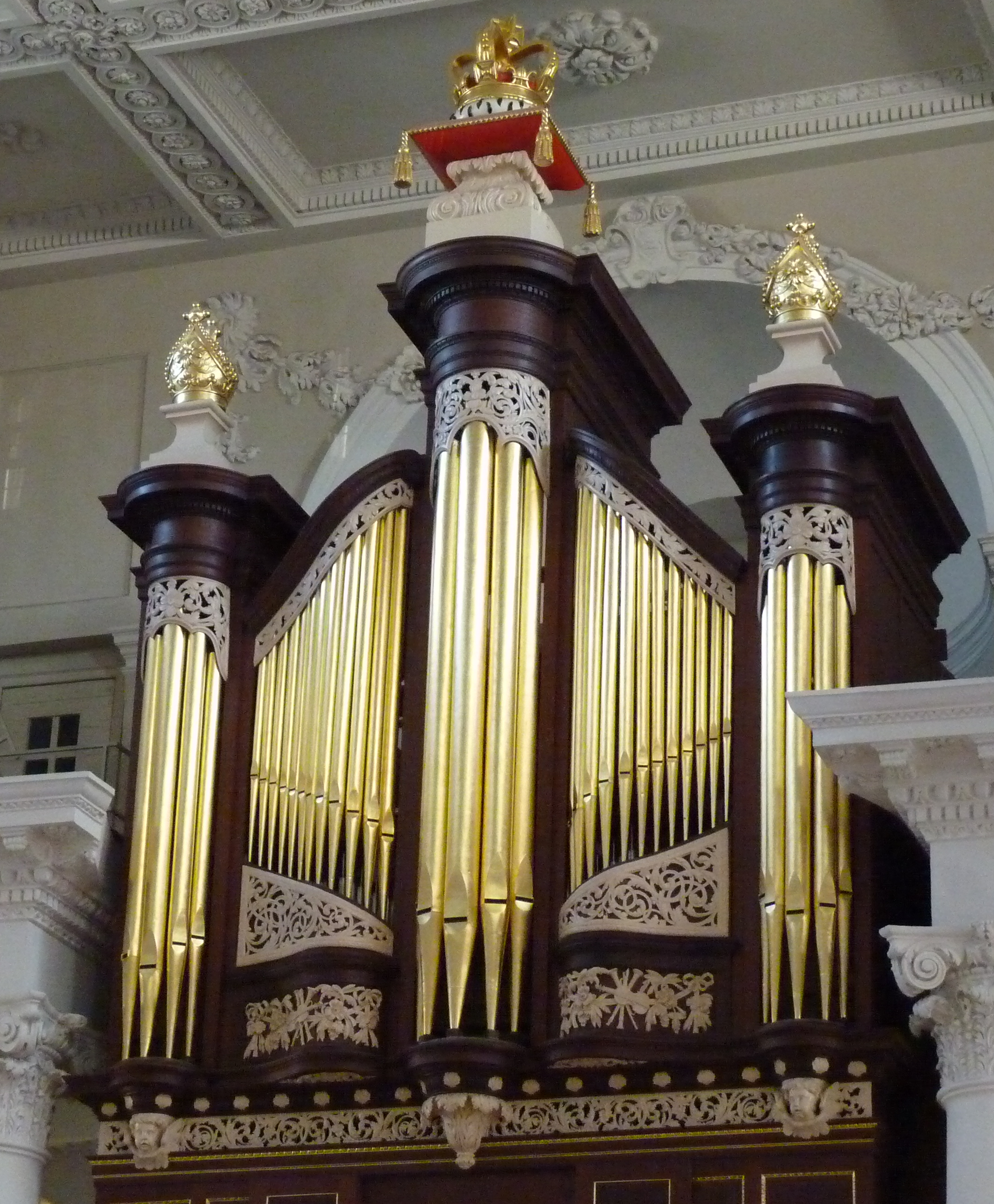 In one of the highlights in the English organ world for many a year, William Drake’s reconstruction of the extraordinary 1735 Richard Bridge organ in Christ Church, Spitalfields was opened last night with a Gala Concert given by John Scott. John is one of the Patrons of the Friends of Christ Church Spitalfields, who for nearly 40 years have been fundraising for the restoration of this spectacular church as well as the Bridge organ.
Christ Church, Spitalfields was built between 1714 and 1729 as part of the ’Fifty New Churches’ Act of Parliament of 1711. It is one of the six London East London churches designed by the distinctive Baroque architect Nicholas Hawksmoor. The organ was built by Richard Bridge, one of the leading Continue reading
Beethoven and the art of arrangement: Ensemble DeNOTE
Beethoven and the art of arrangement
Ensemble DeNOTE
Omnibus Classics CC5007. 69’07
Grand Trio, Op.38 (after the Septet, Op.20); Piano Quartet, Op.16 (after the Quintet for Piano and Winds)
 Whether it was a commercial or a musical project, Beethoven’s own arrangements of his works for a smaller number of different instruments form a fascinating insight into the complex musical world of the late 18th and early 19th century. The two works represented on this CD reduce the Op.20 Septet for clarinet, horn, bassoon, violin, viola, cello and double bass to a Grand Trio for piano, clarinet and cello; and the Op.16 Quintet for piano, oboe, clarinet, bassoon and horn to a Quartet for piano, violin, viola and cello. Continue reading
Ingenium: Divina Mysteria
Ingenium
Divina Mysteria, Pavel Amilcar, violin
Vanitas VA03. 69’28
Pachelbel, Pandlfi-Mealli, Frescobaldi, Fontana, Bohn, Döbel, Froberger, Biber, Tunder, Bruhns, Schmelzer, Kapsberger, Albertini.
 Based on the Stylus Phantasticus that influenced so much music during the 17th century, this CD explores its use over different musical forms, notably music for keyboard and the violin sonata, examples of the latter coming from Biber, Fontana. Pandlfi-Mealli, and Schmelzer. Each of the sonatas is paired with a piece from the keyboard repertoire, often reinterpreted by the addition of the other instruments. So we hear a Tunder organ Praeludium played on violin and archlute, and part of Bruhns’s substantial choral Continue reading
All the Angels: Handel and the first Messiah
All the Angels: Handel and the first Messiah
Sam Wanamaker Playhouse. 26 June 2015
 The Sam Wanamaker Playhouse, part of the Shakespeare Globe on London’s South Bank, has come up with an enterprising series of candlelit musical events and, increasingly, theatrical events using music as an integral part of the production. The latest of the latter genre is ‘All the Angels: Handel and the first Messiah, a play by Nick Drake that explores Handel’s visit to Dublin where the first performance of Messiah took place on 13 April 1742.
Based reasonably accurately on the facts of Handel’s life and the Dublin story, the play was set in period, albeit there were several present day contributions to the script, for example “Fair City: Not!” and a mention of zero-hours contracts. The Continue reading
Regensburg: Tage Alter Musik 2015
Regensburg: Tage Alter Musik
22-25 May 2015
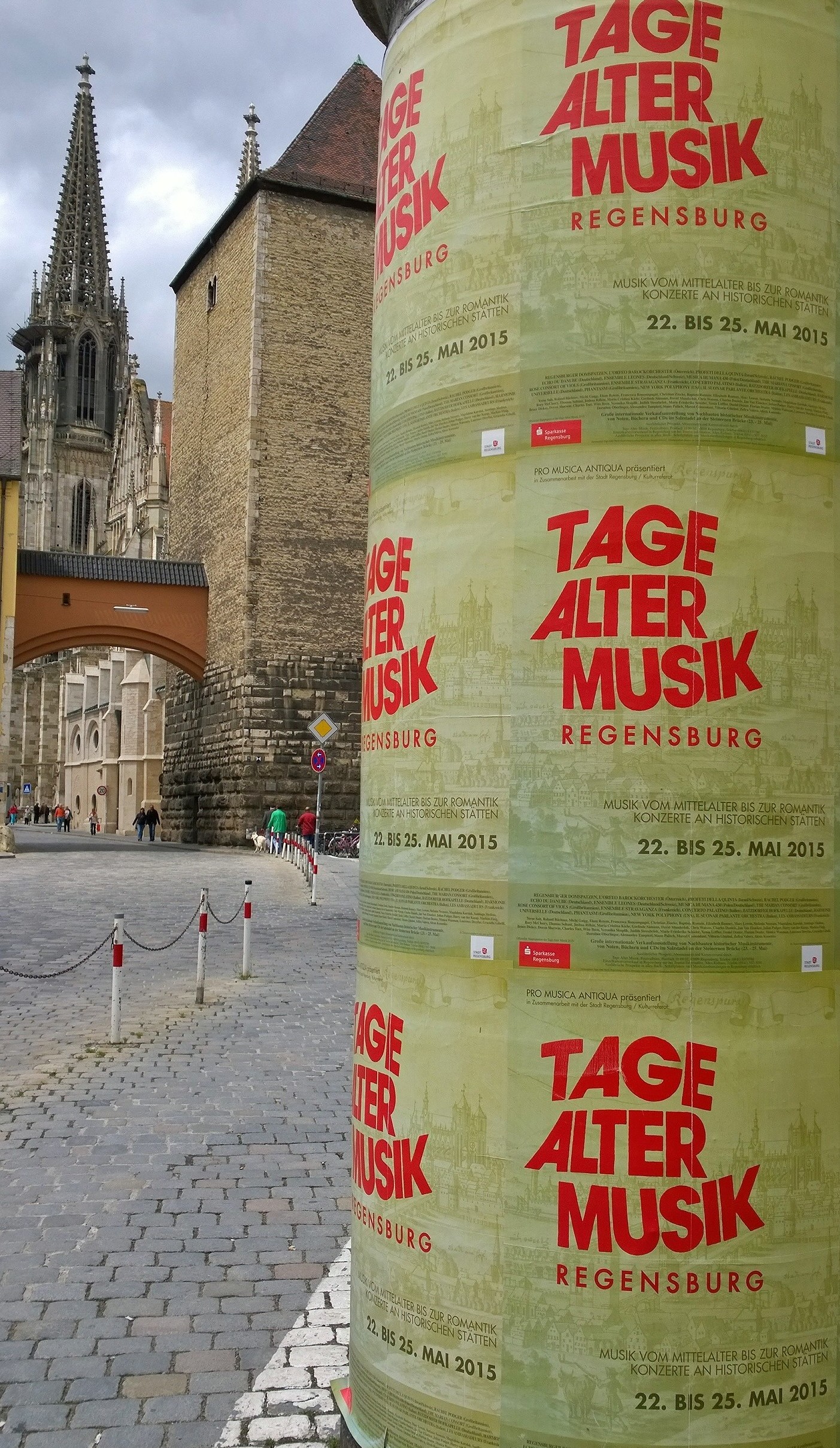 For those with limited time but an insatiable urge to attend early music concerts, I can recommend the Tage Alter Musik festival in the delightful Danube city of Regensburg (the entire city centre is a World Heritage site). With no fewer than 17 concerts in just 4 days, this is not for the faint-hearted. But the musical rewards and the historical venues (which include extreme Baroque, austere Gothic and the Reichssaal, for centuries the seat of the Parliament of the Holy Roman Empire) are worth the attempt. Continue reading
A Tale of Two Traditions: Sheppard and Pärt
A Tale of Two Traditions: Sheppard and Pärt
Erebus Ensemble
St John’s, Smith Square. 4 June 2015
The Erebus Ensemble was founded in 2012, with a Bristol base, including being Ensemble-in-Residence at the Bristol Old Vic Theatre. Last year they took second place in the first London International A Cappella Choir Competition in St John’s, Smith Square, being the only British group to reach the final. With the move of their founder and director, Tom Williams, to London, they are re-establishing themselves.
 Their lunchtime St John’s, Smith Concert contrasted the music of John Sheppard and Arvo Pärt, the former getting by far the largest slice of the musical cake. After the short and powerful opening Salvator mundi by Thomas Tallis, they launched into one of the most extensive and complex works of the English vocal Renaissance, Sheppard’s monumental Media vita, a 22’ contrapuntal and structural tour de force. Continue reading
Haydn: Creation
Haydn: Creation
City of London Festival. London Symphony Orchestra & Chorus
St Paul’s Cathedral. 24 June 2015
Haydn was a popular composer in London well before his first visit, in 1790. During that visit, according to the minimal note in the City of London Festival programme, he conducted a “hatful” of newly composed symphonies. Who writes this stuff? As well as his hatful of symphonies, he also got to know St Paul’s Cathedral, and heard one of the large-scale performances of Handel oratorios, then all the rage, in Westminster Abbey. But I don’t think  Haydn would have seen St Paul’s as an appropriate venue for his 1798 Creation. It was first performed in a theatre in Vienna, with its London première in the similar acoustic of the Covent Garden Theatre. In contrast with these theatre acoustics, he enormous volume of St Paul’s created musical havoc with the sound, even from my privileged seat well towards the front. What people at the back might have heard I can only imagine.
Based on the creation myth from Genesis, Milton’s Continue reading
Garsington’s Così
Così fan tutte
Garsington Opera, 7 June 2015
Garsington Opera’s 26th season (the 5th in their spectacular new home on the Wormsley estate) saw them spreading their wings with more educational projects and partnerships with the Royal Shakespeare Company and, in future years, Rambert and the Philharmonia Orchestra. As usual, they presented a mixed programme of popular operas, including the regularly returning Mozart, in this case with Così fan tutte.
The action was underway before the audience took their seats (in the award-winning architectural delight of the auditorium), with even more than usually well-heeled couples chatting engagingly and quaffed bubbly in the grounds. It then became apparent that they, and we, were all part of one of those weddings from hell. Outrageously dressed (and overly intoxicated) women, in high baroque wigs and dress, cavorted Continue reading
Tartini & Veracini: Italian Violin Sonatas
Tartini & Veracini: Italian Violin Sonatas
Rie Kimura & Fantasticus
Resonus RES10148. 57’58
 Although Tartini is better known nowadays, no doubt because of the myths surrounding his ‘Devil’s Trill’ sonata, it was the virtuoso violinist Veracini that was hitting the headlines in early 17th century Italy, Dresden and London. There is a certain degree of comeuppance in the fact that Tartini was described (by Charles Burney) as a humble and timid man, whereas the now relatively unknown Veracini was considered ‘foolishly vainglorious’. When Veracini descended upon London, Roger North was scathing in his criticism of the influx of Italian violinists, based on hearing Veracini play – in a style he described as ‘not better than insane’.
Veracini’s two Sonata on this CD, from his 1744 Sonate Accademiche perhaps Continue reading
Armonico Consort – Dido & Aeneas
Dido & Aeneas
Spitalfields Festival. Armonico Consort
Village Underground, 9 June 2015
I’m not sure if the ‘alternative’ venue of Village Underground (with old London underground trains, converted into artist’s studios, on the roof) was the ideal venue for this performance of Dido & Aeneas, not  least given the nature of Armonico Consort’s rather staid production. It was also singularly unwise of director Christopher Monks to tell us all in his introductory talk that we would have “never seen a performance like this before”. I am still not quite sure what he meant by that remark, but it kept me waiting for something special or unusual to happen – which it didn’t. His comment did turn out to be true, in a way, but not in the way that I think he intended. Continue reading
Amores Pasados
Amores Pasados
John Potter, Anna Maria Friman, Ariel Abramovich, Jacob Herringman
ECM New Series. 481 1555
 What is a song? The music on this CD responds to that question by crossing the bridge between art song and pop song. It combines pieces from the English 16th century lute song repertoire with compositions influenced by those works by three present day musicians, more usually associated with rock music. We hear the Genesis keyboard-player, Tony Banks, reflect on Campion’s The cypress curtain of the night and Follow thy fair sun – as well as the Campion originals. Sting’s Bury me deep in the greenwood (written for the film, Robin Hood) is firmly in the lute-song tradition.
The CD opens with former Led Zeppelin bass-player, John Paul Jones’s 15 minute, three movement Amores Pasados, written in 1989 for Red Byrd. His No dormia, is a magically evocative, and almost medieval Continue reading
‘Night at the Museum’
‘Night at the Museum’
Spitalfields Festival. Royal Academy of Music students
Geffrye Museum. 9 June 2015
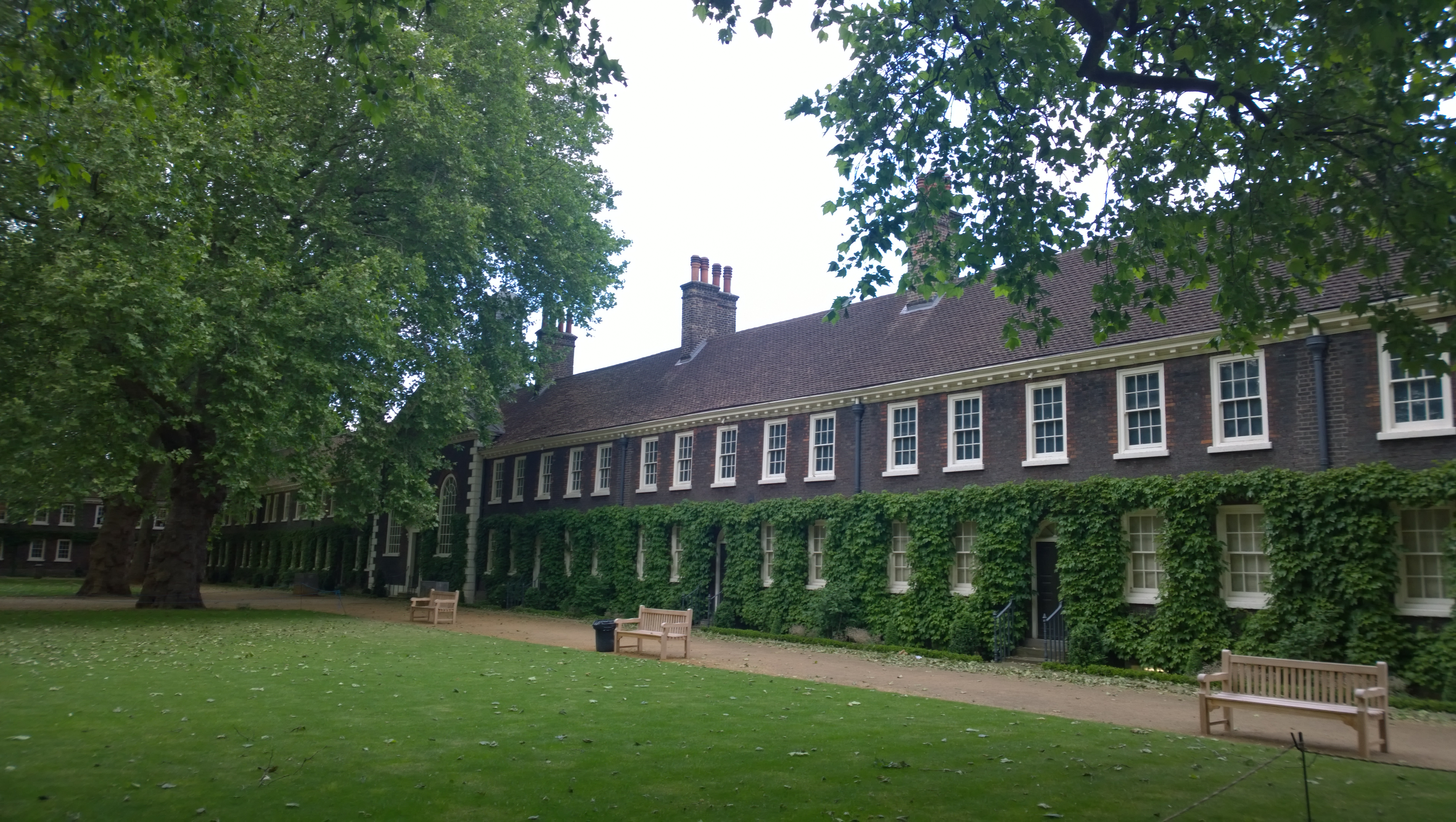 In a nice collaboration between the Royal Academy of Music, the Geffrye Museum and Spitalfields Festival, RAM students gave mini-concerts in three different spaces of the museum, reflecting the museum’s history, the various historic rooms and contemporary music making, with all three events including a newly composed work. The student performers were Tabea Debus, recorders, Iosif Purits, accordion, and the Achille Trio. The three concerts were based on the period 1714, 1914 and 2014.
Tabea Debus played her own arrangement of extracts from Bach’s 2nd and 5th French Suites, followed by Alula, a new work by Cydonie Banting, written to contrast the tiny sopranino and the RAM’s rather curious looking new bass recorder. Transferring the Bach from the harpsichord to a single line instrument meant additional work for Tabea Debus in articulating the melodic line and the implied underlying pulse. She managed both very well, as with the sometimes tricky balance between volume and intonation. The new piece was a complex technical exercise for her, with flutter-tonguing, harmonics and having to switch between two diametrically opposed recorders. But her playing, and the piece itself, were both exemplary. Continue reading
Stile Antico: Music for Compline
Music for Compline
Spitalfields Festival. Stile Antico
Christ Church, Spitalfields. 5 June 2015
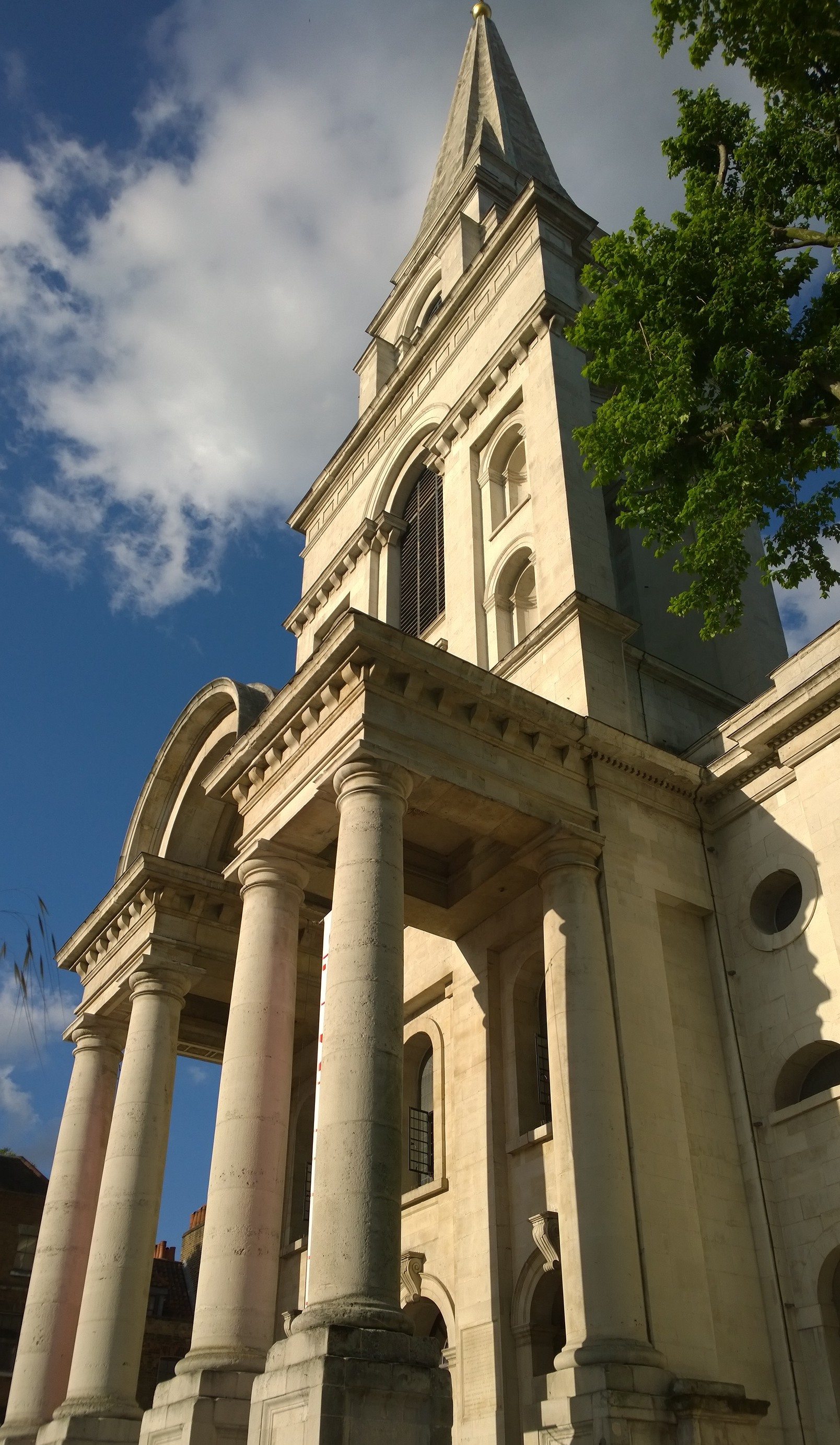 I have followed the fortunes of Stile Antico almost from the start of what is now their 10th year. They continue to impress me with their choice of programmes, their vocal skills and their ability to work together, without the distraction of a conductor. The 13 singers stand in a shallow arc, with the voice types mixed up. The eye contact between them is not only a necessity, but it also brings the audience into their world. It is a formula that obviously works well for them, and for their enthusiastic audiences around the world.
Their Spitalfields concert was based on the music from their first CD, and explored the range of English music composed during the 16th century for the office of Compline, a meditative service sung at dusk. The Catholic setting for most of the pieces was contrasted by a few examples of later Protestant versions based Continue reading
Handel: Israel in Egypt
Handel: Israel in Egypt
Spitalfields Festival. La Nuova Musica
Christ Church, Spitalfields. 4 June 2015
Handel’s Israel in Egypt is a curious work at the best of times, but this performance took it to  new heights of curiosity. With wholesale ‘borrowing’ from his own, and around seven other composers’ music, this doesn’t seem to be Handel at his most sincere. Amongst other oddities, he turned a wedding cantata by Stradella into a chorus about plagues. It was performed in the almost ideal acoustic of Christ Church Spitalfields (as part of the Spitalfields Festival) by La Nuova Musica, directed by their flamboyant conductor David Bates.
Not content with performing the music that Handel actually wrote, Bates saw fit to add his own theatricals to this already dramatic work. He replaced Handel’s admittedly rather odd first part (cobbled together from an earlier funeral anthem) with the Occasional Overture, a piece in startlingly inappropriate contrast to the doom and gloom of the following section, with its story of the Exodus and its related misfortunes. But it gave the first opportunity to hear some outstanding contributions from the instrumentalist, notably Leo Duarte’s gorgeous oboe solo in the Adagio. And then came the first indication that this was not going to be Handel as Handel intended. The final March was prefaced by an extraordinarily bombastic timpani solo, played, and presumably improvised, by Serge Vuille. Brilliant playing, but I have no idea why it was there. Continue reading
Bach back in Leipzig
This evening, during the opening concert of the Leipzig Bachfest, the famous 1748 Haussman portrait of Bach was formally presented to the Bach Archive in Leipzig.
Inherited by CPE Bach, it was owned by the Jenke family from the early 19th century until 1952, spending time in a farmhouse in Dorset during the war years. It was then bought by the American Bach scholar William Scheide who left it to the City of Leipzig in his will. From tomorrow, 13 June, it will be displayed in the Bach Museum.
The photos below show the unveiling, and the donor’s daughter speaking in Leipzig’s Nikolaikirche.

As our sweet Cords with Discords mixed be: English Renaissance Consort Music
As our sweet Cords with Discords mixed be: English Renaissance Consort Music
Consortium5
Resonus RES10155. 67’15
Music by Robert Parsons, William Byrd, John Dowland, Christopher Tye, Edward Blankes, Jerome Bassano, William Brade and Antony Holborne
 There are some people, even in the fairly rarefied early music world, who would rather pluck out their eyes than listen to a recorder consort. In normal circumstance I would just warn such people that this probably isn’t the CD for them. But this is an exception that might convert some doubters. Consortium5 (Oonagh Lee, Kathryn Corrigan, Gail Macleod, Roselyn Maynard, Emily Bloom) have established themselves as some of the most exciting and committed performers of early and contemporary music on recorders. And this CD demonstrates why they deserve that reputation. Continue reading
Catalina Vicens: ‘Cembalo Transalpino’
Catalina Vicens (c1622 harpsichord & 1664 virginals)
The Cobbe Collection, Hatchlands Park, East Sussex. 10 June 2015.
With the sponsorship and encouragement of the Keyboard Charitable Trust, the talented Chilean early keyboard player Catalina Vicens gave an outstanding lunchtime concert at Hatchlands, the National Trust home of The Cobbe Collection of historic keyboard instruments. Her short UK tour continues with two London concerts, tomorrow (11 June) in the Handel House Museum , and on Friday (12 June) at Fenton House.
 Catalina’s Hatchlands recital explored the influence of Italian Renaissance keyboard music on late 16th and early 17th century English music, focussing on some of the first music publications. England was just one of the countries that fell under the spell of Italian music and musicians as they ventured north over the Alps. Usefully played in chronological order, Catalina’s programme also provided a fascinating insight into the early development of keyboard music itself.
She started with Italian pieces played on the harpsichord attributed to Girolamo Zenti, dated 1622. Zenti also worked in England for Charles II, so it was appropriate that the second part of the concert was played on the 1664 John Player virginals from Charles II’s Whitehall Palace. This early repertoire includes many Continue reading

