
Lully & Blow – La naissance de Vènus & Venus and Adonis
Istante Collective, The Queenes Chappell
Baroquestock Festival 2024 @ Heath Street Baptist Church. 3 May 2024

Jean-Baptiste Lully – Le Ballet royal de la naissance de Vénus (LWV 27)
John Blow – Venus and Adonis
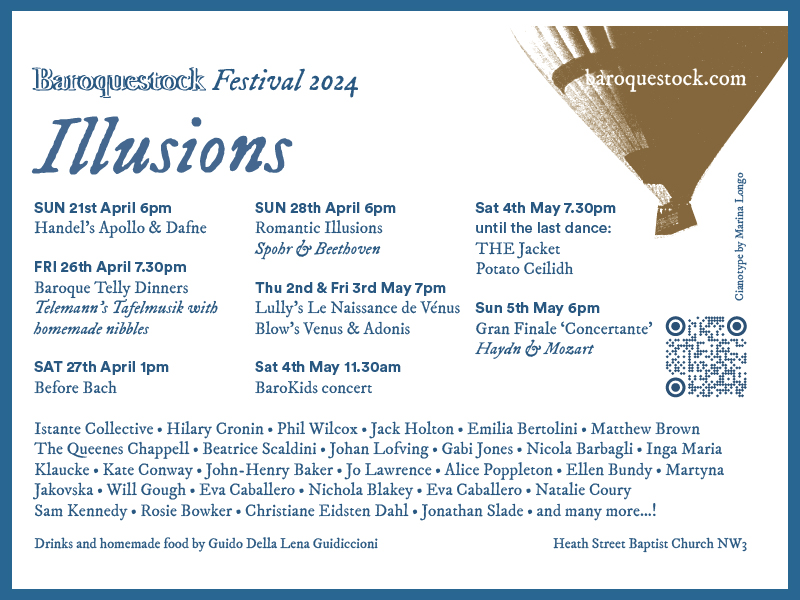
Under the title of Illusions, the ever-enterprising Baroquestock presented their Baroquestock Festival 2024 at their accommodating home base of Heath Street Baptist Church in Hampstead. The festival included 8 events spread over two weeks, one of the highlights being two semi-staged performances of Lully’s and Blow’s takes on the story of Venus. A fascinating pairing that covered the birth of Venus and Blow’s French-inspired version of the later story of Venus and Adonis.
Jean-Baptiste Lully’s La naissance de Vénus was composed for the dancing Sun King Louis XIV to honour his sister-in-law, Henrietta of England, the youngest daughter of England’s King Charles I and, by marriage, Duchess of Orléans. It was performed in 1665 with Henrietta portraying the goddess of love and youth. It is not an easy piece to perform, let alone stage. Unlike the traditional opéra-ballets of the time, it is an almost endless sequence of short dances, several lasting less than a minute. There are only occasional vocal contributions: Neptune and Thétis appear during the prologue, a trio from The Graces (Recit de trois Graces) and laments from Ariane (Plaintes D’Ariadné) and Orphée (Recit D’Orphée: Dieu de Enfers). Staging director Natalie Coury (with the eight singers and one dancer: Hilary Cronin, Jack Halton, Emilia Bertolini, and The Queenes Chappell (Mariana Rodrigues, LucyAnne Fletcher, Max Robbins, and Seán Purtell) with dancer Mirabelle Haddon) made a valiant attempt at choreographing tiny dance/drama sequences to match the storytelling of the dances, the audience aided by projected slides, mostly of classical origin, hinting at the theme of each sequence.
Musically much centred on the instrumentalists of the Istante Collective, directed from the harpsichord by Matthew Brown. They caught the distinctive French mood and distinctive musical characteristics well, my only quibble being that having less of a gap between the tiny pieces would have helped to keep the momentum going. But I imagine much of that was to allow the singer/dancers to change between scenes.

They were on more familiar ground with John Blow’s Venus and Adonis, composed around 1681 and variously described as a semi-opera, the first English opera, or a masque. It is described in one manuscript “A masque for the entertainment of the king“. Like the Lully, it was performed in the rather select surroundings of the Royal Court of Charles II and includes several allusions to the various goings-on in the Restoration Court. It has been suggested that Cupid was played by Lady Mary Tudor, Charles II’s 10-year-old illegitimate daughter, with Venus portrayed by the King’s former lover, Moll Davis. There are several additions to the myth, one being a delightful comic scene when Cupid gives a spelling lesson he gives to some young cupids. The singing roles were more clearly delineated, with Hilary Cronin as Venus,
Jack Halton, Adonis, and Emilia Bertolini, Cupid.
As is usual with the delightfully relaxed Baroquestock events, there was homemade food available before and during the interval – in this case focaccia. There was an additional food item for sale, although it was explained during the interval that an essential item had not been added to the . . .
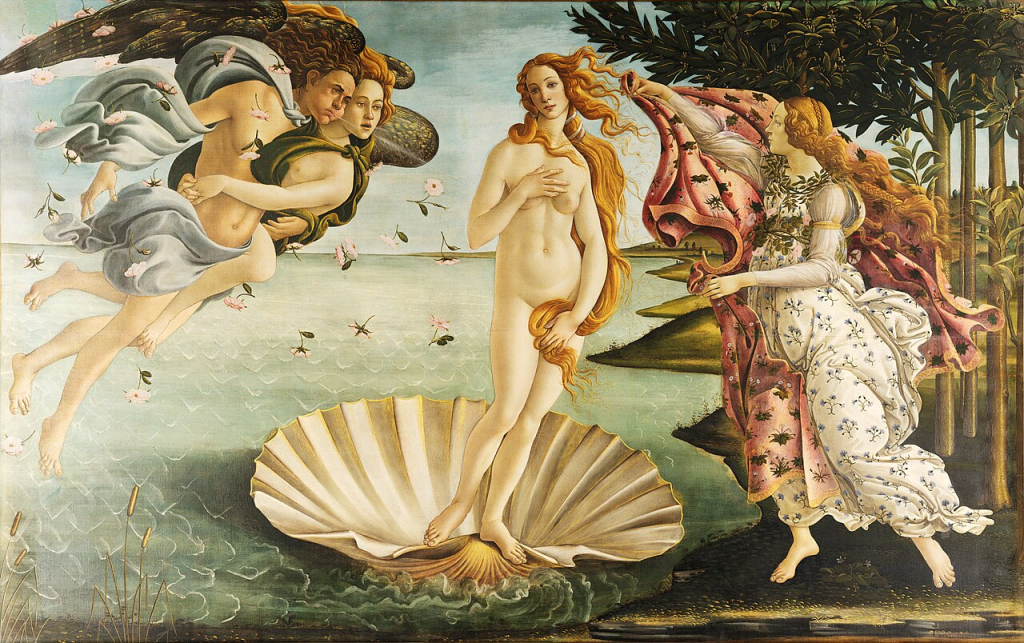
In case that image becomes the default one, I had better add this image of the birth of Venus.
 Andrew Benson-Wilson : Early Music Reviews +