The Chapel of Christ of Alleyn’s College of God’s Gift
Gallery Road, Dulwich, SE21 7AD
Sunday 24 March 2024, 7:45
AFTER BACH
Andrew Benson-Wilson
Andrew’s annual Early Music Day concerts usually include music by JS Bach, reflecting the fact that Early Music Day is on 21 March, the date of Bach’s birth under the current calendar. This year Andrew is giving two Early Music recitals, with the titles of BEFORE BACH and AFTER BACH. As well as focussing on music from England, Germany and France (John Stanley, CPE Bach and Michel Corrette) published in the years immediately following Bach’s death in 1750, the AFTER BACH recital also reflects the date of the 1760 George England organ and the rather unusual concert time of 7:45 in the evening.
AFTER BACH and AFTER DARK!
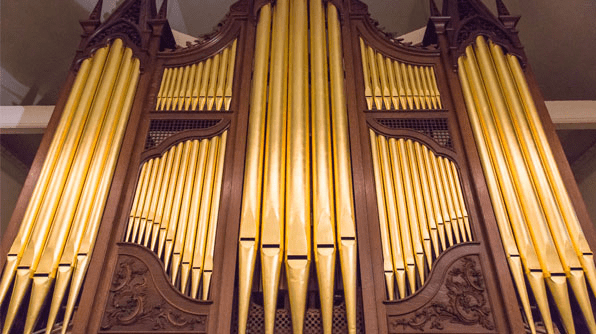
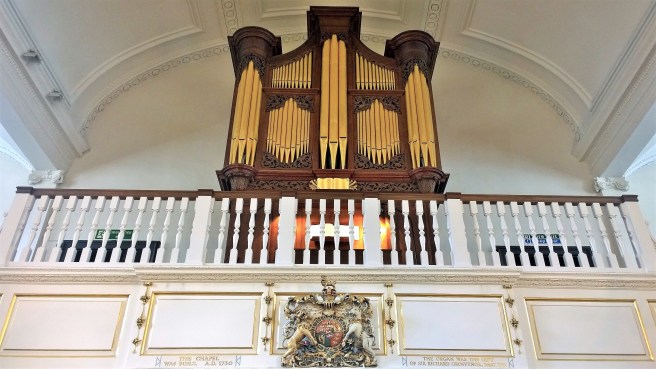
The 1760 George England organ was restored in 2009 by William Drake.
Organ details can be found here.
A link to the programme notes will eventually be posted here.
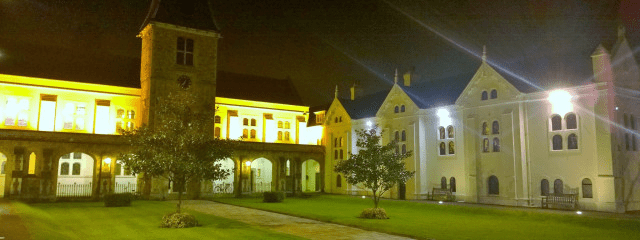
The Chapel of Christ and Alleyn’s College of God’s Gift adjoin the Dulwich Art Gallery.
Free street parking.
Admission is free, with a generous retiring collection.
Post-concert refreshments.
The first of the two linked Early Music Day recitals has the title BEFORE BACH and is on Tuesday 19 March at 1:10 in The Grosvenor Chapel.



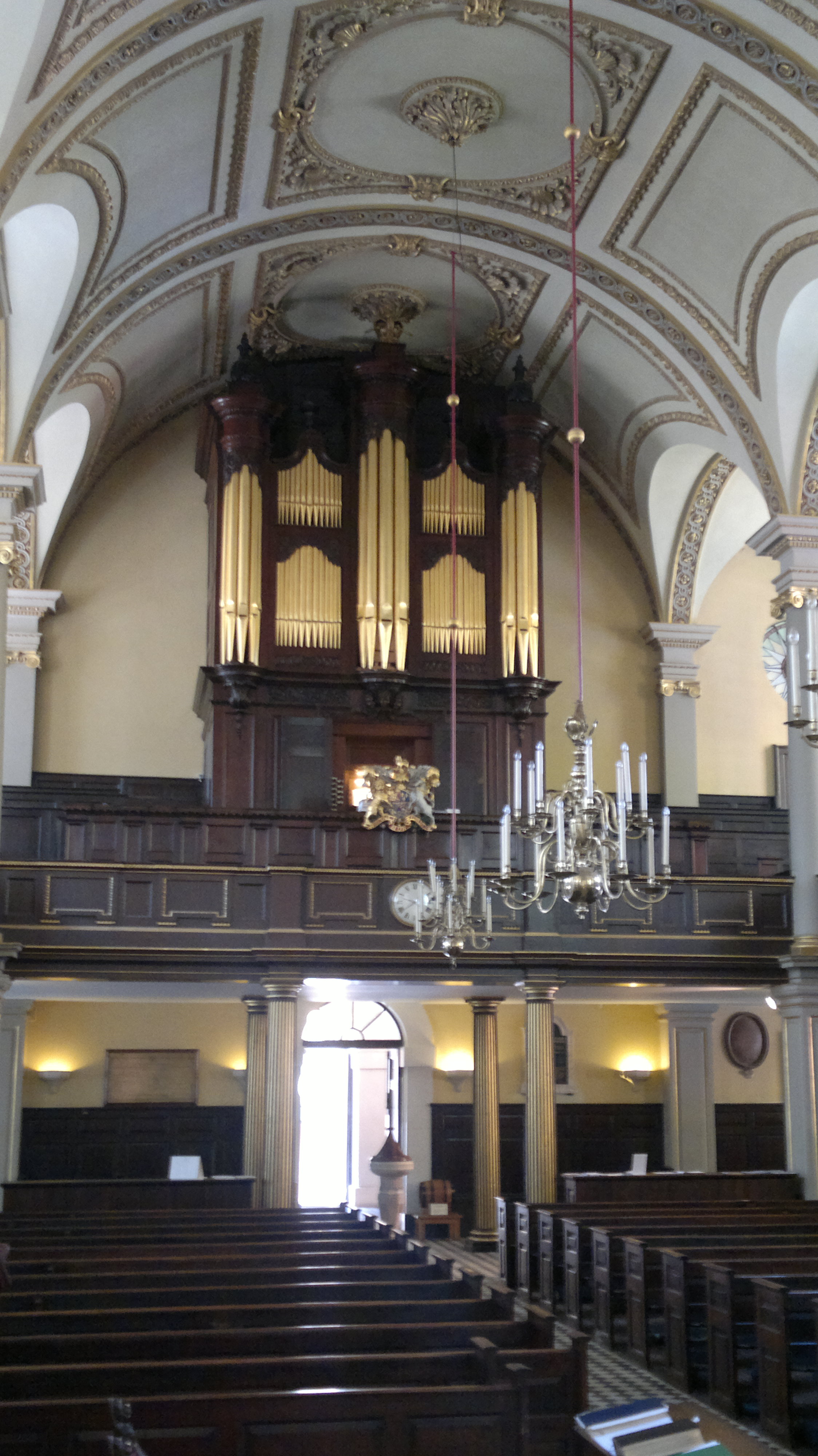
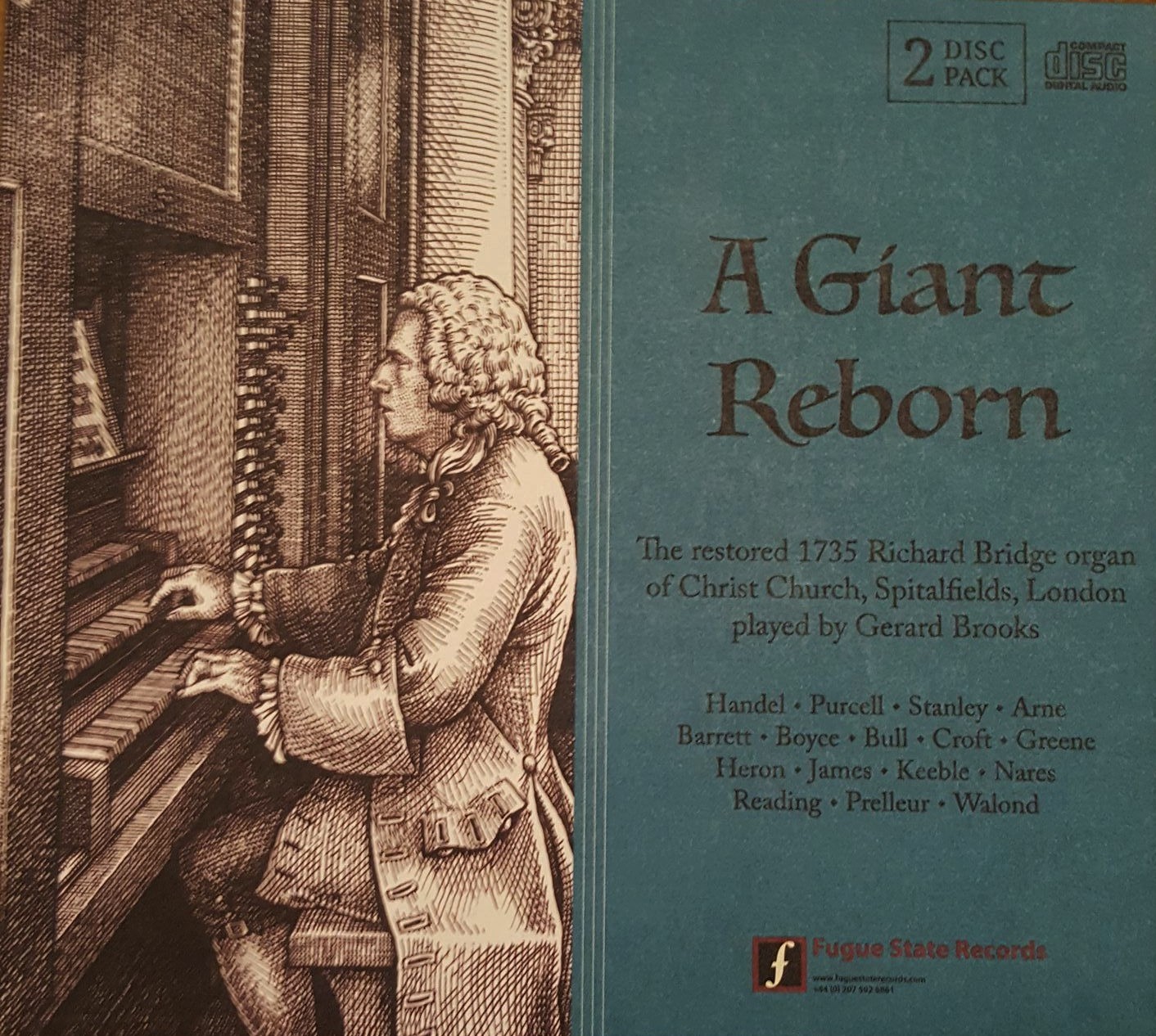 The completion of the restoration of the famous 1735 Richard Bridge organ in Hawksmoor’s Christ Church, Spitalfields was one of the most important musical events in London during 2015. My review of John Scott’s opening recital, and details of the organ, can be seen
 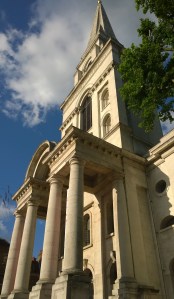 designed by the famed Baroque architect Nicholas Hawksmoor. The organ was built in 1735 by Richard Bridge, who became one of the leading organ builders of the day. Spitalfields seems to have been only his second commission, perhaps explaining the comparatively low price of £600 for such a substantial instrument. For the following 100 years or so, it was the largest organ in the country. It suffered the inevitable changes over the years, but retained enough of its original pipework to form the basis for a historically based reconstruction, returning it broadly to its original specification and construction. It was dismantled in 1998 while the church was being restored and was then restored to its 1735 specification, with very few concessions. Its completion in 2015 makes this by far the most important pre-1800 organ in the UK.
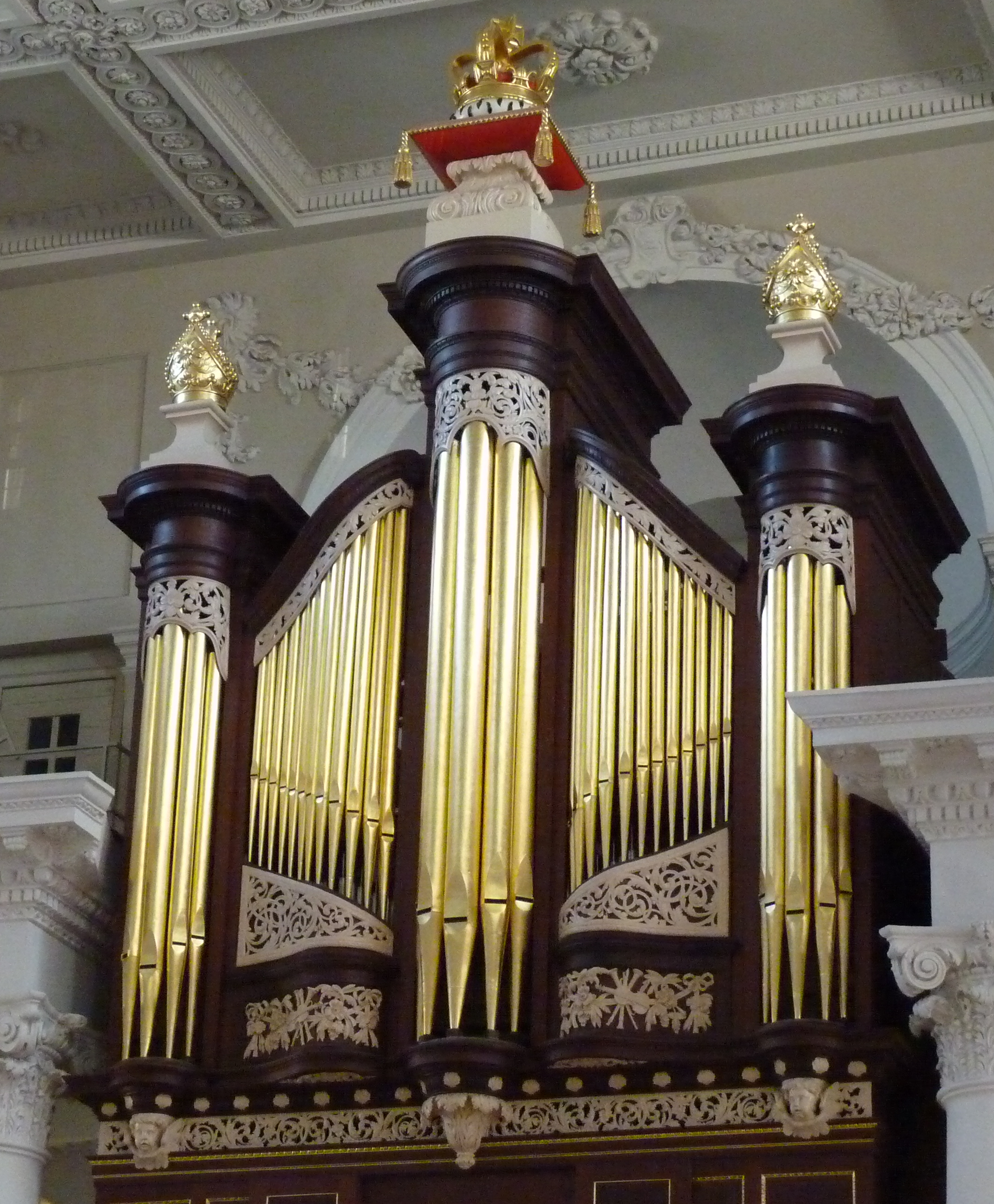 One of the most important musical events in London in 2015 was the long-awaited opening of the 1735 Richard Bridge organ (restored by William Drake) in the Hawksmoor designed Christ Church, Spitalfields. For many decades it was the largest organ in the UK, and its musical importance is immeasurable. My review of the gala opening recital, given by (the now sadly, late) John Scott, and information about the restoration and an organ specification can be found
  child prodigy, writing his first oratorio, Ruth, aged 6. When he was 8, the composer Dr William Boyce referred to him as the ‘English Mozart’. His family moved to London when he was about 12, living in Marylebone. He led a colourful life, some of his apparent eccentricities possibly being caused by a serious head injury when he was about 21. An organ virtuoso, Samuel Wesley was the leading pioneer of the Bach revival in England. Bach seems to have been a strong influence on his Opus 6 Organ Voluntaries, published between about 1807 and 1820, and the focus of this recital.
 Christ’s Chapel of Alleyn’s College of God’s Gift in Dulwich was consecrated 400 years ago, in 1616. The chapel and adjoining almshouses were the first of the charity foundations set up by the wealthy actor, Edward Alleyn, owner of the manor of Dulwich. Shortly afterwards, the foundation’s status as a educational college was confirmed, leading to the present day Dulwich College.
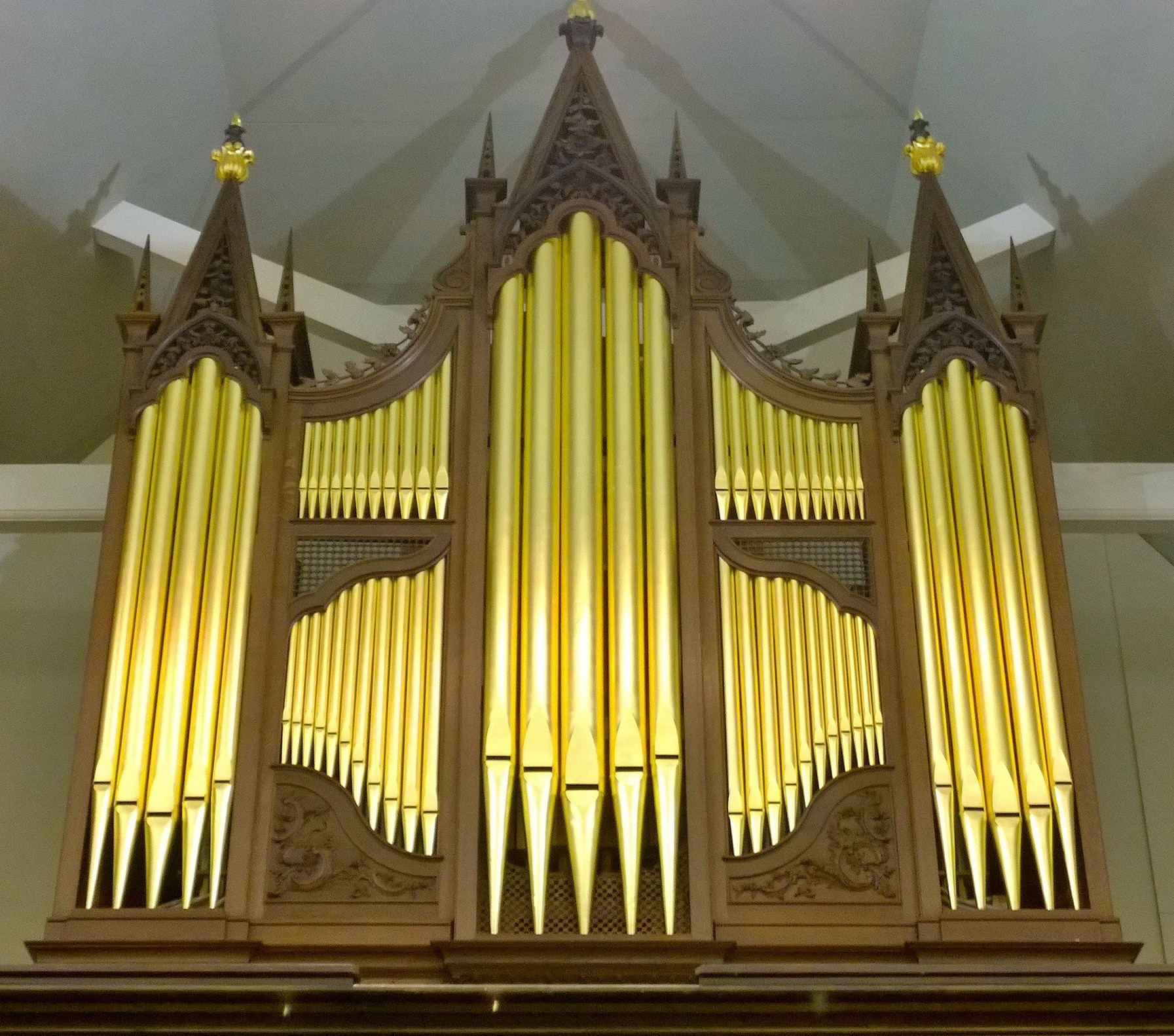 time the Chapel’s first organ was installed. In 1760 it was replaced by a new organ by George England which, despite the usual additions and alterations over the years, still survives with a considerable amount of mid- 18th century pipework and a fine Gothick case. In 2009 it was restored back to its 1760 state (with modest additions) by the UK’s leading specialist on historic organs, William Drake. The original pitch (A430) and modified fifth-comma meantone temperament was restored. It is now one of the most important historic instruments in the UK.
 Andrew Benson-Wilson : Early Music Reviews +