
CPE Bach: Works for violin & keyboard
Tamsin Waley-Cohen, James Baillieu
Signum SIGCD573. 3 CDs. 153’12.
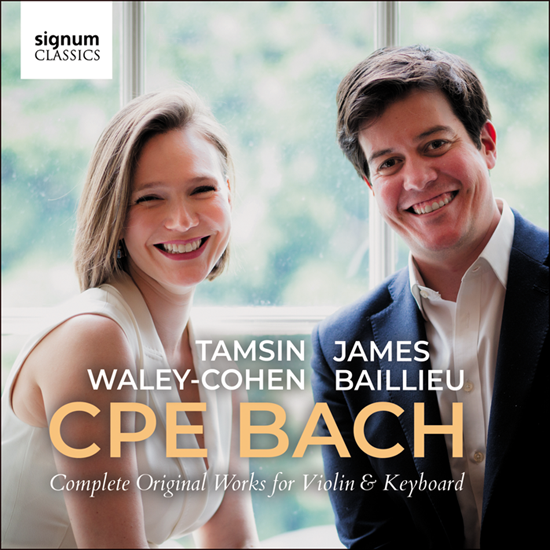
My heart sank when I read the blub for the recording, announcing “The full power and range of Stradivarius plus modern Steinway grand in the service of CPE Bach’s eight violin sonatas”. The liner notes go on to opine that “CPE Bach would have embraced the colour and dynamic possibilities that a Steinway and Stradivarius can create”. This was an argument that was dismissed decades ago by most in the organ world when it came to the performance of JS Bach’s organ music on large-scale romantic organs – or indeed, performance on modern orchestral instruments with 20th-century techniques, such as vibrato. But as I listened I grew more tolerant of the sound and the playing. Continue reading
 This short recording is of two pieces by composer Freya Waley-Cohen, written for her older sister, the violinist Tamsin Waley-Cohen. The key work, Permutations (c18′), is described as a “roaming performance artwork”. It has a fascinating compositional background. It was commissioned as part of Aldeburgh Festival’s 2017 season and composed during a residency at Aldeburgh and is intended as an exploration of the relationship between architecture and music.
 Andrew Benson-Wilson : Early Music Reviews +